
The best grapes to grow in Georgia are American bunch grapes and French-American hybrids, not European vinifera varieties. Specifically, Blanc du Bois (white wine/fresh), Chambourcin (red wine), Traminette (white wine), Norton (red wine), and Delaware (red/juice) are among the top performers depending on which part of the state you're in. Where you live in Georgia matters a lot: the mountains in the north play by completely different rules than the hot, humid flatlands near Macon or Tifton.
Best Grapes to Grow in Georgia: Varieties and Care Guide
Marcus Whitfield
5 May 2026
Georgia's grape-growing basics: what you're working with
Georgia has a lot going for it as a grape-growing state, but it also throws some serious curveballs. The summers are long and hot, humidity is a real issue for fungal diseases, and winter cold varies dramatically from the Blue Ridge Mountains in the north to the coastal plain in the south. That combination rules out most European wine grapes (Vitis vinifera) pretty quickly. UGA Extension is direct about this: Georgia's climate is simply not well-suited for home-garden production of European bunch grapes. If you've been eyeing Cabernet Sauvignon or Chardonnay vines at the nursery, set those aside and focus on what actually works here.
The two big constraints you'll fight are Pierce's disease and fungal pressure. Pierce's disease, spread by a sharpshooter insect, is a bacterial disease that kills grapevines and is very common in middle and south Georgia. Below roughly 1,300 feet in elevation, you should only plant Pierce's disease-resistant cultivars, full stop. Above that elevation in the mountains, susceptible varieties have a fighting chance, but you still need to be thoughtful. On the fungal side, downy mildew, powdery mildew, and black rot are all active threats in Georgia's humid summers, and bloom time is especially critical because infections that start on flowers often don't show up until fruit is forming.
For site selection, grapes in Georgia need full sun for most or all of the day. Partial shade doesn't just slow them down, it invites disease by reducing air circulation and keeping foliage wet longer. You also want well-drained soil. Georgia soils tend to be acidic, which works for some varieties but not all, and you'll likely need to lime your soil to hit the 6.0 to 7.0 pH sweet spot that most bunch grapes prefer. Get a soil test before you plant; it's inexpensive and it'll tell you exactly what amendments to add.
North vs. south: matching varieties to your part of Georgia
UGA Extension breaks Georgia into three grape horticultural areas, and understanding which one you're in is the single most useful thing you can do before buying a single vine. Area 1 covers the mountain region, places like Blue Ridge and Chatsworth. Area 2 is the Upper Piedmont, running through Cedartown, Dallas, Cartersville, Gainesville, Toccoa, and straddling Atlanta and Athens. Area 3 is everything south of that: Columbus, Macon, Augusta, Sandersville, and Tifton. The further south you go, the worse Pierce's disease risk becomes and the hotter and longer your growing season gets.
Area 1: Mountain Georgia (north of roughly Chatsworth and Blue Ridge)
This is the most forgiving area for grape growing in the state. You have cooler summers, higher elevations (above 1,300 ft in many places), and Pierce's disease is less of an immediate threat. You still have to manage fungal diseases, but you have more varietal options here than anywhere else in Georgia. Norton is a fantastic red wine grape for this region, producing deeply colored, full-bodied wine. Delaware works well for both red wine and juice. Traminette, a French-American hybrid with excellent disease resistance, makes a quality aromatic white wine. Chambourcin is a solid red hybrid that handles disease pressure well. Spring frost is a real concern in the mountains, so site your vines on higher ground and avoid planting in low-lying pockets where cold air pools after the vines break bud in spring.
Area 2: Upper Piedmont (including the Atlanta/Athens corridor)
This is where things get more complex. You're at the transition zone between Pierce's disease risk and manageable conditions. Varieties need to lean toward at least moderate Pierce's disease tolerance here, and disease management through the growing season becomes more important. Chambourcin, Traminette, and Chardonel are good bets. Norton can work in the higher elevations of this zone. Blanc du Bois starts to become a great option as you move south through this area, especially because it offers resistance to both Pierce's disease and powdery mildew.
Area 3: Lower Piedmont, Middle, and South Georgia
Pierce's disease is very common here, so your variety shortlist gets shorter but the winners are still good ones. Blanc du Bois is arguably the star of this region: UGA considers it one of the best southeastern cultivars for premium white wine, and it has solid resistance to both Pierce's disease and powdery mildew. It ripens mid- to late July in areas west of Atlanta and about one to two weeks earlier further south. On sandy soils common in parts of south Georgia, you'll also want to think about nematode-resistant rootstocks like Tampa, Florilush, or Dog Ridge. OSU Extension also lists root-knot nematode-resistant grape rootstocks including Freedom, Harmony, and Dog Ridge nematode-resistant rootstocks like Tampa, Florilush, or Dog Ridge. For juice and table grapes in this zone, Muscadines (a separate species, not a bunch grape) dominate, but if you want bunch grapes specifically, Blanc du Bois is your most reliable starting point.
| Variety | Type | Best Region | Pierce's Disease Resistance | Primary Use |
|---|---|---|---|---|
| Blanc du Bois | French-American hybrid | Areas 2 and 3 | Good | White wine, fresh eating |
| Chambourcin | French-American hybrid | Areas 1 and 2 | Moderate | Red wine |
| Traminette | French-American hybrid | Areas 1 and 2 | Moderate | White wine |
| Norton | American | Area 1, upper Area 2 | Fair | Red wine |
| Delaware | American | Area 1 | Fair | Red wine, juice |
| Chardonel | French-American hybrid | Areas 1 and 2 | Moderate | White wine |
Cold hardiness and winter protection in Georgia
Most of Georgia doesn't experience the deep winter cold that gardeners in places like Colorado or Utah deal with, but that doesn't mean winter is a non-issue. If you are growing grapes in Utah, winter protection and cold-hardiness matter even more than in most parts of Georgia, so choose varieties rated for your local lows and plan for shielding best grapes to grow in utah. For Colorado, you'll want to focus on cold-hardy grape varieties and plan for winter protection from day one. In the mountains, hard freezes are real and can damage canes. In the Piedmont, late winter cold snaps can injure vines that started waking up early during a warm spell. One of the smarter moves you can make is training two trunks on each vine rather than one. If one trunk gets cold-injured or hit by a mechanical problem, you have a backup and don't lose the entire vine's development. UGA Extension recommends this approach specifically for Georgia's conditions.
Blanc du Bois is worth a special note here: it breaks bud early, typically in March, which makes it more vulnerable to late spring frosts than varieties that wake up later. If you're growing it in the mountains or Upper Piedmont, pay attention to late frost forecasts and have frost cloth or row cover ready to throw over young vines if needed. Dormancy pruning can be delayed slightly in frost-prone areas to take advantage of late budbreak, but even then, monitor closely. Sap will bleed from pruning cuts made close to bud break, but this doesn't harm the vine, so don't panic if you see it.
Pruning timing during dormancy runs from late November through late March depending on your zone. Mountain growers can prune earlier; lower Piedmont and south Georgia growers have more flexibility and can push toward late winter. The goal is to prune while the vine is fully dormant but not so early that you're unnecessarily exposing wood to winter cold before it's hardened off fully.
Disease and pest resistance: choosing right and managing well
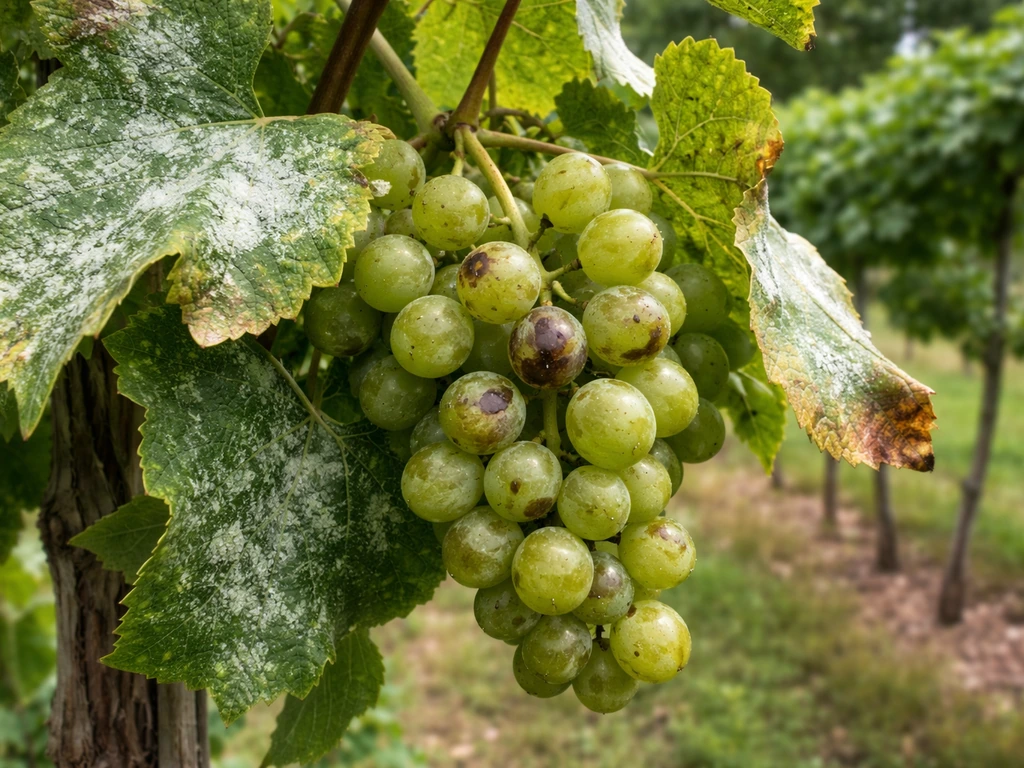
Disease management is not optional in Georgia. The humidity that makes Georgia summers lush is the same humidity that drives powdery mildew, downy mildew, black rot, Botrytis, and ripe rot through a vineyard. The bloom period is especially critical because all of these pathogens can infect flowers, even if symptoms don't show up until fruit starts to develop weeks later. Missing a spray window at bloom is one of the most common reasons Georgia gardeners end up with rotted or shriveled clusters at harvest.
Choosing resistant varieties is the first and most powerful line of defense. Blanc du Bois resists both Pierce's disease and powdery mildew. Chambourcin and Traminette both have better-than-average resistance to the common fungal diseases compared to European vinifera. French-American hybrids as a group generally require more intensive pest management than straight American bunch grapes like Norton, but they often deliver better wine or table quality in return. American grapes like Norton don't need grafting in north Georgia and can be grown on their own roots, which simplifies establishment.
Even with resistant varieties, you'll still want a spray program that covers the bloom window and continues through fruit development. Fungicide resistance is a real concern in Georgia: UGA viticulture researchers track downy mildew resistance to specific fungicide classes used here, so check current UGA Extension recommendations each season rather than relying on the same product year after year. Rotating fungicide classes is standard practice. If you're in sandy south Georgia soils, also get your soil tested for root-knot nematodes before planting and use a resistant rootstock if nematodes are present.
Planting setup: spacing, trellis, sun, and soil prep
Georgia's long growing season means vines can make surprisingly impressive growth in year one, so get your trellis in place before or right at planting time. UGA Extension recommends spacing vines 6 to 8 feet apart within the row and 9 to 12 feet between rows. The wider between-row spacing is mostly about equipment and airflow; even in a home garden, giving rows more room helps reduce disease pressure by improving air circulation.
For trellis height, the most common systems used in home Georgia plantings are the double curtain, two-wire vertical, and single-wire high trellis systems, all of which put the top wire at about 5 to 5.5 feet above ground. A low-trellis cordon system sets the cordon wire at about 3 to 3.5 feet with catch wires positioned above it. If you're a first-timer, start with a simple two-wire vertical system: it's easier to manage, prune, and understand as you're learning, and you can always upgrade later.
Full sun is non-negotiable. Pick the sunniest spot on your property, avoiding the shade of trees or buildings. Beyond sun, pay attention to slope and air drainage. Planting on a convex landform (a gentle rise or ridge) rather than a concave low spot lets cold air drain away from the vines in spring, which reduces frost risk meaningfully in the mountain and Piedmont regions.
Soil prep starts with a test. Most Georgia soils are naturally acidic, which needs to be corrected for most bunch grapes. Target pH of 6.0 to 7.0 for most varieties; Blanc du Bois is a bit of an exception and actually prefers a more acidic range around 5.5 to 6.5 (and can tolerate higher pH if grafted on an appropriate rootstock). Apply lime based on your soil test results and work it in well before planting. Good drainage is essential: if water stands in the spot after rain, find a different location or build a raised bed before you plant.
Growing timeline: how long before you get fruit?
Here's the honest answer: plan for your first real harvest in year three, possibly year four. Year one is about establishment, getting roots deep and the vine's framework started. You might see some flower clusters in year two, and it's tempting to let them set fruit, but pinching them off and letting the vine put energy into wood development pays dividends in year three and beyond. A vine that produces a small cluster in year two and a large one in year three is worse off than a vine that skips year two and harvests big in year three.
From bud break to harvest, the timing depends heavily on variety and location. Blanc du Bois, for example, requires roughly 110 to 125 days from bud break to fruit maturity. With a typical March bud break, that puts harvest in mid- to late July in the Atlanta area and a week or two earlier in south Georgia. Other varieties have different windows, which is why planting two or three varieties with staggered harvest times lets you extend your picking season rather than having everything ripen at once.
A well-managed, mature Blanc du Bois vine can yield around 5.3 tons per acre under good conditions. For a home garden with a few vines, think of it this way: a healthy mature vine might give you 15 to 20 pounds of fruit per season, sometimes more depending on variety and management. That's enough for fresh eating, juicing, or several gallons of wine. Establish your vines well in years one and two, and the reward in years three through twenty-plus is substantial.
Ongoing care: watering, fertilizing, pruning, and that first harvest
Watering
Young vines in year one need consistent moisture to get established, especially during Georgia's hot summer stretches. Water deeply and less frequently rather than lightly every day; this encourages deep rooting. Once established after year two, most Georgia bunch grapes are relatively drought-tolerant, but you'll want to supplement during extended dry spells, especially as fruit is sizing up. Drip irrigation works best because it keeps foliage dry, which helps with disease management.
Fertilizing
Don't go overboard with nitrogen. Overfertilized vines put out lush vegetative growth at the expense of fruit and also become more disease-prone because dense canopy dries slowly. In year one, a modest application of balanced fertilizer in early spring is fine. From year two onward, base your fertilizer program on a soil test and vine performance. If your vines are making plenty of shoot growth and leaves look healthy and green, hold back on nitrogen. More is not better with grapes.
Pruning and training
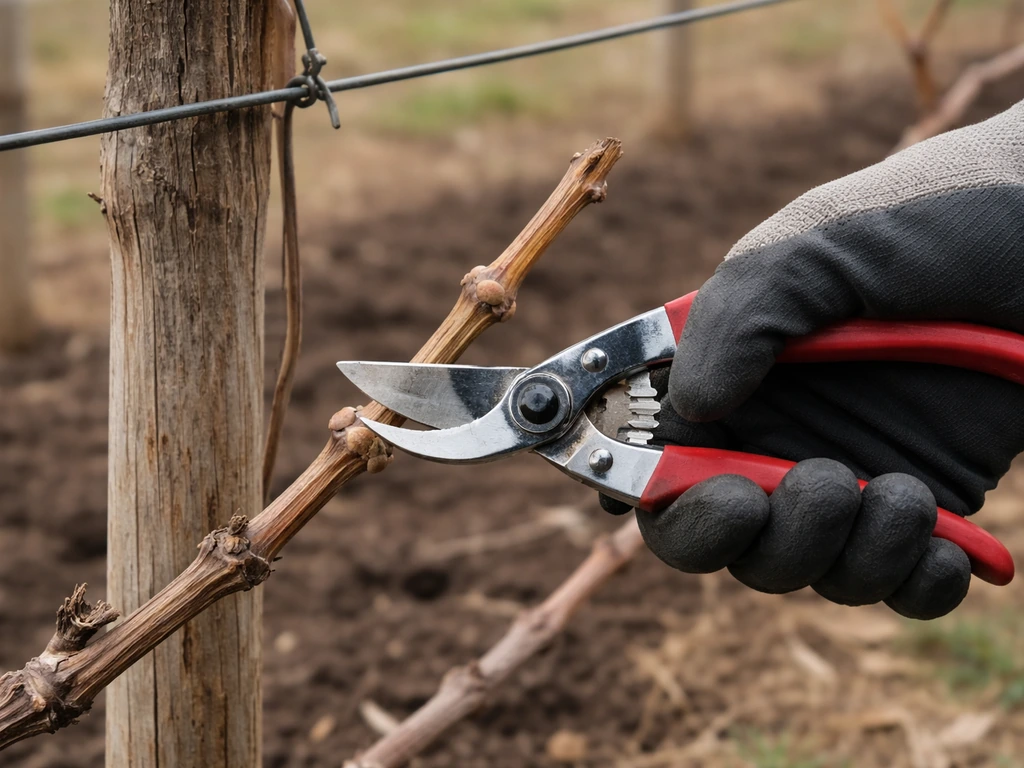
At planting, cut the strongest cane back to just 2 to 3 strong buds and remove everything else. If your trellis isn't ready yet, drive a 4 to 5 foot stake near each vine and train the growth to that temporarily. Training two trunks from the start is smart in Georgia because it gives you backup if one trunk suffers cold or mechanical damage. Once dormant in late fall or winter, prune back to the framework you're building: keep the cordon arms or canes you want, and remove the rest. Annual dormancy pruning is what keeps the vine productive year after year; skipping it leads to tangled, overcrowded canopy and dropping fruit quality fast.
First harvest steps
Don't harvest by color alone. Grapes don't ripen all at once across the whole vine, and color change (veraison) happens weeks before the fruit is fully ripe. Taste berries from different clusters and different parts of the vine. Ripe grapes should taste sweet and balanced, with seeds that have turned from green to brown. For wine grapes, a refractometer to measure sugar content (Brix) takes the guesswork out of timing. Harvest in the morning before the heat of the day, handle clusters gently, and process or refrigerate them quickly.
How to pick the right grapes for you: a beginner checklist
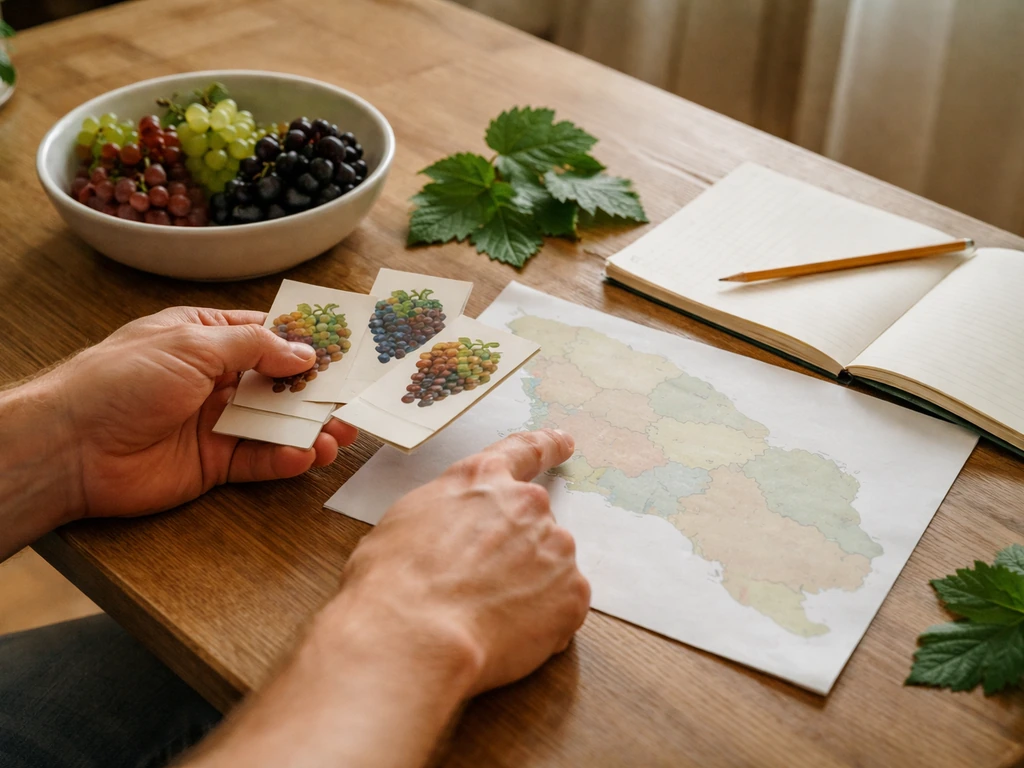
Before you order vines, work through this quick checklist. It'll save you from the most common beginner mistakes in Georgia.
- Find your UGA horticultural area: Are you in the mountains (Area 1), Upper Piedmont (Area 2), or Lower Piedmont/Middle/South Georgia (Area 3)? Your location determines your Pierce's disease risk and your cold exposure.
- Check your elevation: If you're below roughly 1,300 feet, only plant Pierce's disease-resistant varieties. Blanc du Bois is the safest bet in Area 3. Above 1,300 feet, you have more options but still need disease management.
- Decide on your use: Table grapes and juice grapes? Wine grapes? Different varieties suit different goals. Blanc du Bois and Delaware work for fresh eating and wine. Norton and Chambourcin are red wine-focused. Mix variety types if you want to extend the season.
- Get a soil test: Before you plant anything, test your soil's pH and nutrient levels. Most Georgia soils need lime to reach the 6.0 to 7.0 pH range that most bunch grapes prefer.
- Pick your sunniest, best-drained spot: Avoid low spots where cold air and water pool. A gentle slope or rise is ideal.
- Plan your trellis before planting day: Get posts and wire in before or at planting so you can start training immediately. A simple two-wire vertical trellis is the easiest starting point.
- Commit to a disease management plan: Even resistant varieties need a spray program from bud swell through harvest. Check current UGA Extension recommendations for Georgia-specific fungicide guidance each year.
- Be patient: Expect your first meaningful harvest in year three. The vine is building infrastructure in years one and two.
Common problems and quick fixes
- Vine dies back to ground in winter: Check if it's coming back from roots. If so, retrain a new shoot. Next time, choose a more cold-hardy variety and consider dual-trunk training.
- Clusters rot before ripening: This is almost always fungal disease, usually black rot or ripe rot. You missed a spray window at or before bloom. Add a bloom-time spray to your program next season.
- Poor fruit set or uneven ripening: Can be caused by frost at bloom, wet weather during pollination, or overcropping. Thin clusters early in years three and four to avoid overloading young vines.
- Vine is growing vigorously but not fruiting: Usually too much nitrogen or the vine is still too young. Cut back on fertilizer and wait another season.
- Yellowing leaves mid-season: Often a pH or nutrient issue. Revisit your soil test and check whether your pH has drifted since you amended.
If you're in neighboring states like Tennessee, the variety recommendations overlap quite a bit with north Georgia, especially in the mountain and Upper Piedmont zones. In Tennessee, you can use many of the same disease-resistant cultivars, especially if you pick varieties suited to your local Pierce's disease and humidity pressure. In Arizona, you can often grow grapes, but the best choices depend on heat, irrigation, and disease pressure that differ from the Southeast. The core principle of matching disease resistance to your local Pierce's disease risk holds across the entire Southeast, from Georgia up through the Appalachian corridor. Georgia's challenge is that it spans such a wide range of conditions, which is exactly why knowing your specific region matters so much before you dig that first planting hole.
FAQ
Are European wine grapes like Cabernet Sauvignon or Chardonnay ever worth trying in Georgia if I’m careful with spray programs?
They are usually a losing bet for home gardens because Georgia’s humidity and Pierce’s disease pressure combine to overwhelm most European vinifera, even with good protection. If you want a vinifera style anyway, consider grafted vines on locally appropriate resistant rootstocks and be prepared for higher labor and cost than resistant hybrids or American bunch grapes.
How do I know whether Pierce’s disease risk is low enough for a less-resistant variety in my specific Georgia location?
Use your elevation and region as the first filter, then confirm by local patterns. If you live near areas with lots of infected plants in past years, assume risk is higher than the general map. When in doubt, start with cultivars described as resistant, because delaying to “see how it goes” often means losing the vine after it’s established.
What spacing should I use if I’m planting more than a few vines in my backyard?
Keep the same within-row spacing (6 to 8 feet) and expand between rows (9 to 12 feet) when possible, even if you want a dense planting. Extra airflow reduces the amount of time foliage stays wet, which directly lowers infection pressure. If you must crowd due to space, prioritize trellis and pruning discipline to keep canopy density down.
Should I plant in a raised bed or on the ground level in Georgia?
If water sits in the planting spot after rain, raised beds or a different location are better than trying to “fix” drainage with fertilizer or more watering. Standing water increases root problems and can worsen disease by keeping the canopy and understory conditions favorable for pathogens.
Does Blanc du Bois prefer a different fertilizer or soil pH than the other grapes?
Yes. Blanc du Bois generally does better with more acidic soil than most bunch grapes, and it can tolerate a wider pH range when grafted appropriately. The most important step is still a soil test, then target the pH range recommended for Blanc du Bois specifically rather than applying the standard 6.0 to 7.0 goal used by many other varieties.
I missed the bloom spray window. Is it still worth treating during fruit development?
Usually yes, but you should adjust expectations. If infections start on flowers and symptoms appear later, the “early miss” can lead to rotted or shriveled clusters even with later sprays. Going forward, plan your schedule around bloom and have products and timing set in advance so you do not rely on last-minute decisions during wet or humid weeks.
How do I rotate fungicides correctly if I’m using home-available products?
Rotate by fungicide group or mode of action, not just by brand name. Keep a simple season log that records the active ingredient and the group each application uses. If you repeat the same mode of action too often, resistance risk increases, and rotating only “different labels” without changing the underlying chemistry does not help much.
Can I grow grapes successfully without irrigation once the vines are established?
In many Georgia locations, vines become somewhat drought-tolerant after establishment, but fruit development still needs consistent moisture. For the highest quality clusters, supplement during prolonged dry spells, especially after berries start sizing up. Drip irrigation is preferred because it reduces wetting of foliage, which helps limit mildew and rot.
Should I let flowers set fruit in year two, or should I remove clusters again?
For most backyard growers, remove clusters in year two to push vine framework development, even if that feels disappointing. A vine that skips a small harvest year now often performs better in year three than a vine that spends energy making a few early clusters while still building structure.
What’s the simplest way to decide when to harvest if color change happens early?
Use taste and seeds as your primary indicators, not just color. Seeds that have turned from green to brown are a practical readiness sign, and berries can vary across the canopy. If you want extra precision, measure sugar (Brix) and confirm it aligns with your desired style for wine or table fruit.
Do I need a special trellis system, or is a basic one-wire or two-wire setup enough?
A basic two-wire vertical system is a strong starter choice because it is easier to prune and manage while you learn the vine’s structure. More complex systems can be useful later, but the bigger win is stable training, correct wire height, and keeping canopy airflow adequate for disease control.
Are nematode-resistant rootstocks always required in south Georgia?
Not always. Sandy areas in the south can have root-knot pressure, but the only way to know is a soil test for nematodes before you plant. If nematodes are present, choose a resistant rootstock, then pair it with a variety that matches your Pierce’s disease risk level.
What winter protection steps matter most in the mountains or Upper Piedmont?
Late freezes are the main concern, especially for early budbreak varieties. Focus on reducing cold injury during active growth by selecting a frost-favorable site and having frost protection ready (frost cloth or row cover). Training two trunks also helps because one trunk can fail from cold or mechanical injury without killing the entire vine’s productive framework.