
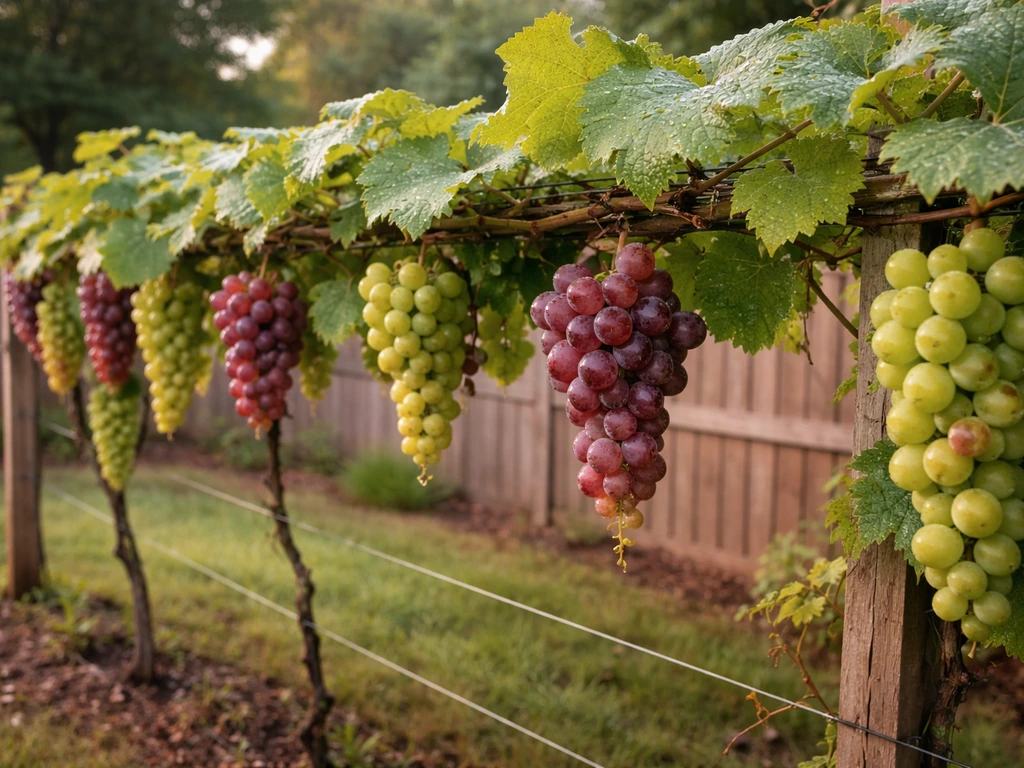
The best table grapes for North Carolina depend heavily on where you live in the state. For the Piedmont and mountains, your top picks are American-type bunch grapes like Joy (early, seedless, blue) and Vanessa (mid-season, seedless, red). For the coastal plain, skip bunch grapes entirely and grow muscadines instead. Bunch grapes can technically survive on the coast, but Pierce's disease will kill or severely shorten their lives. Get your region right first, then pick your variety.
Best Table Grapes to Grow in North Carolina

Marcus Whitfield
17 May 2026
Will table grapes actually grow well in North Carolina?
Yes, but with some honest caveats. North Carolina spans USDA Hardiness Zones 6a through 9a, from the cold mountain elevations in the west to the warm coastal plain in the east. That range means there is no single answer for the whole state. The mountains sit in zones 6a to 7a and can see bitter winters that challenge less hardy varieties. The Piedmont runs through zones 7a to 8a, and the coast reaches into zone 9a, where winters are mild but Pierce's disease makes bunch grapes nearly impossible to sustain.
The bigger challenge in most of NC is not actually winter cold. It's the combination of warm temperatures, high humidity, and frequent summer rainfall that creates relentless fungal disease pressure. NC State Extension calls bunch grapes one of the most difficult fruits to grow in the state specifically because of this disease susceptibility. That's not meant to discourage you. It means variety selection and consistent preventive care matter more here than in drier states. If you go in with realistic expectations and choose the right cultivar for your location, you can absolutely grow table grapes at home.
Late spring frosts are another regional variable to plan for. Near the coast, the last frost often passes by late March. In the mountains, a hard freeze can hit in May. This affects when buds break and how much frost-protection thought you need to put into site selection.
How to choose varieties by NC region and ripening time
The first decision is region, not variety. Think of NC in three broad growing zones, each with different constraints.
| NC Region | USDA Zones | Grape Type | Key Constraint |
|---|---|---|---|
| Mountains (western NC) | 6a–7a | American bunch grapes | Late spring frosts, cold winters |
| Piedmont | 7a–8a | American bunch grapes | High humidity, fungal disease |
| Coastal Plain | 8a–9a | Muscadines only | Pierce's disease kills bunch grapes |
Once you know your region, think about ripening time. In the NC Piedmont, early-ripening varieties like Joy can be ready in mid-to-late July, while mid-season cultivars like Vanessa ripen from late July into early August (trial data from Oxford, NC shows a ripening window of roughly July 27 to August 10 for Vanessa). Later-ripening varieties like Catawba finish the season in September. In the mountains, where the growing season is shorter, leaning toward earlier-ripening varieties gives you more buffer before fall temperatures drop. On the coast, muscadines ripen in late summer and fall and are perfectly timed for that climate.
Top table grape varieties for North Carolina
Joy (Piedmont and mountains)
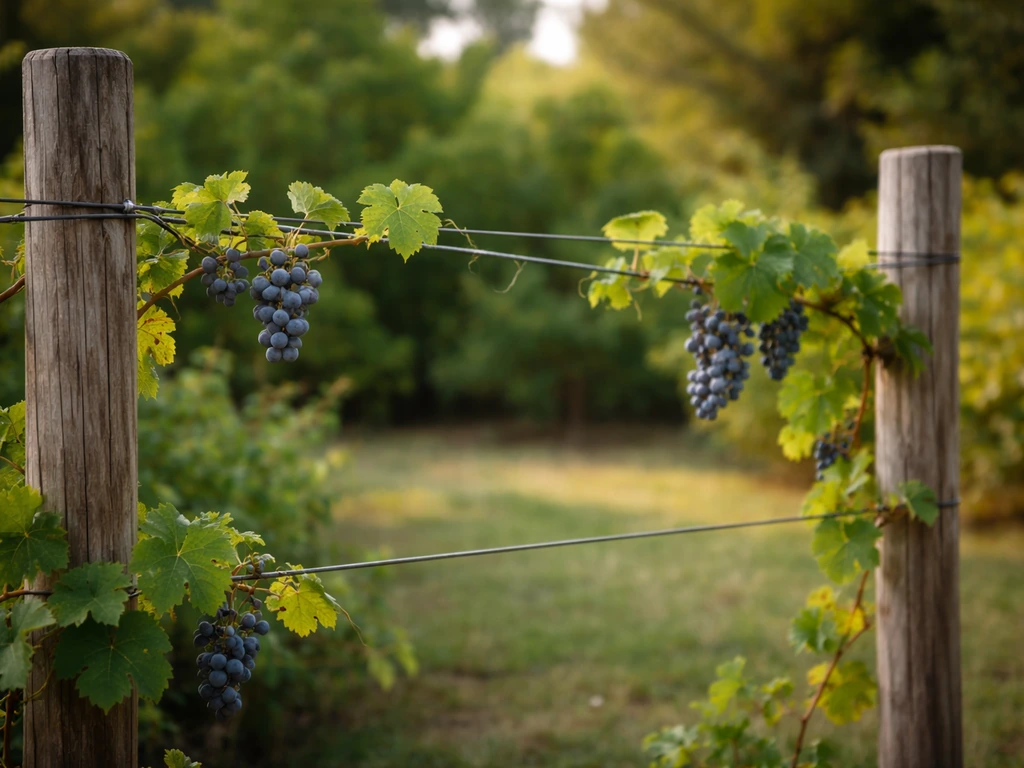
Joy is an early-season, seedless blue bunch grape that NC State Extension specifically lists as suitable for NC home gardens. It ripens ahead of most other cultivars, which is a real advantage in the mountains where the window is tight, and it gives Piedmont growers an early harvest before the peak disease pressure of August. The skin is non-slipskin, meaning you eat the whole berry rather than popping out the pulp. One honest note: Joy can show variability in berry set, including shot berries (undersized berries in the cluster) in some years. That's worth knowing upfront, not a dealbreaker.
Vanessa (Piedmont, adaptable)
Vanessa is a mid-season, seedless red table grape with good eating quality and solid performance in NC Piedmont trials. Its late-July to early-August ripening window makes it a reliable summer harvest for home gardeners in central NC. The main watch-out is fruit cracking, which becomes more likely in wet summers. NC gets plenty of those, so keep this in mind if your location tends toward heavy August rain. That said, Vanessa remains one of the more dependable seedless table grapes for this region.
Catawba (late season, Piedmont)
Catawba is a late-season American bunch grape, typically finishing in September. It's been grown in NC for generations and carries solid regional adaptation. It's not seedless, but it's a good choice if you want to extend your harvest season into fall and don't mind seeds. It's better suited to the Piedmont than the mountains, where its longer growing season requirement can run into early frost risk.
Muscadines (coastal plain, and worth considering statewide)
If you live in the NC coastal plain, muscadines are not a fallback option. They're the right choice. They're naturally resistant to Pierce's disease and phylloxera, both of which make bunch grape production on the coast unrealistic. Muscadines thrive where temperatures rarely drop below 10°F, which fits the coastal plain well. They ripen in late summer and fall, produce large flavorful berries, and require far less disease management than bunch grapes. Popular table varieties include Carlos (bronze, sweet) and Jumbo (large, black). Even in the Piedmont, muscadines deserve consideration if you want lower maintenance.
If you're comparing NC options to neighboring states, note that Arkansas and Georgia share some of the same American bunch grape and muscadine logic given similar humidity and disease pressure in their coastal and Piedmont regions. If you want the best results, compare which American bunch grapes and muscadines match Arkansas humidity, disease risk, and your growing zone Arkansas and Georgia share some of the same American bunch grape and muscadine logic.
Planting site and soil requirements
Site selection in North Carolina is as important as variety selection. For grape establishment, the key site requirements are adequate depth and internal drainage, and factors like slope, elevation, and cold-air drainage matter for reducing frost risk. Here's what you're optimizing for: maximum sun, good air drainage, and soil that sheds water without staying soggy.
- Full sun: at least 8 hours of direct sun daily. Shaded vines produce less fruit and stay wet longer, which feeds fungal problems.
- Slope and elevation: a gentle slope is ideal. Cold air drains downhill on still nights, so low-lying spots and valley floors accumulate frost. An elevated site above the valley floor gives passive frost protection without any extra effort.
- Soil drainage: internal drainage matters more than surface drainage. Grapevines hate wet feet. Avoid heavy clay sites without amendment or raised-bed modification.
- Soil pH: target 6.0 to 6.5. NC soils tend toward acidity, so most sites will need lime. Test your soil at least a year before planting so you have time to adjust pH before roots go in.
- Avoid disease-prone spots: low-lying areas with poor air circulation hold moisture around leaves and clusters, which accelerates fungal disease. Position vines where breezes move freely through the row.
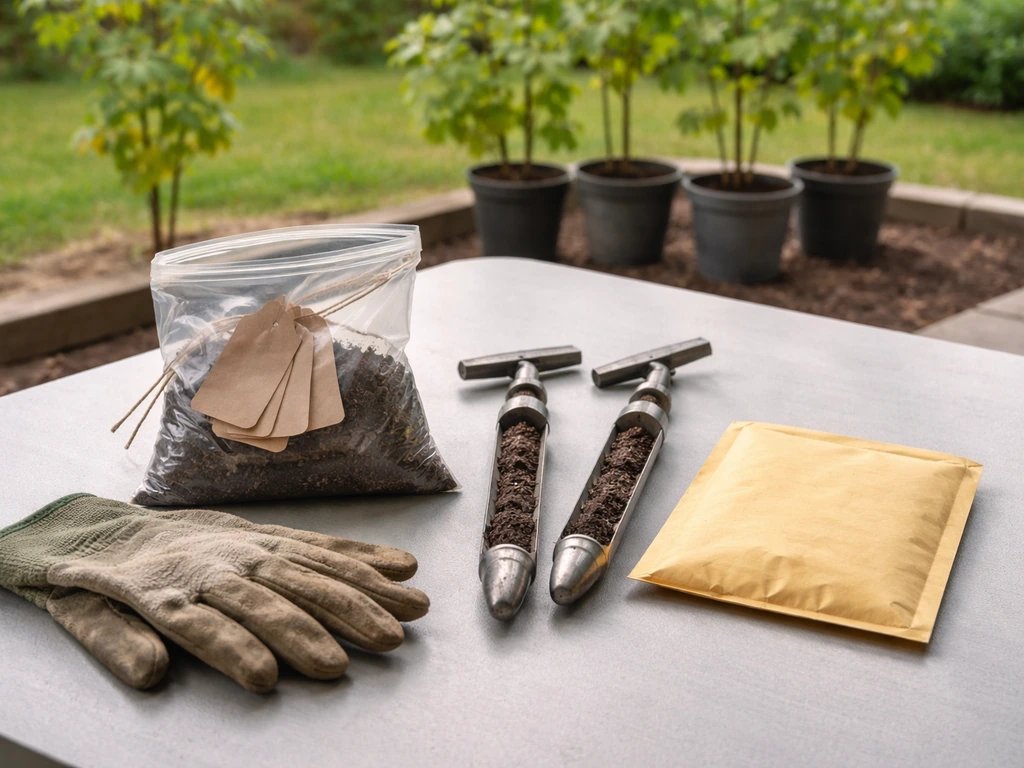
If you're starting from scratch, get a soil test through NC State Extension or your county cooperative extension office. It costs very little and tells you exactly how much lime and fertilizer to apply before planting. Don't skip this step.
Training, trellising, and pruning basics for home gardeners
Grapevines need structure. Without a trellis, they sprawl, the canopy clumps together, disease explodes, and harvest becomes a mess. The good news is you don't need a complex vineyard setup for a few home vines.
Setting up a basic trellis
A simple two-wire trellis works well for home bunch grape training. Use 8-foot wooden or metal line posts set about 2 feet into the ground, giving you roughly 6 feet of working height. String wire at about 36 to 44 inches above ground for the cordon (main horizontal arms of the vine), and a second wire about 12 to 18 inches higher to support shoot growth. Space your posts every 15 to 20 feet. Plant vines 6 to 10 feet apart along the row, staying toward the wider end if you're doing a divided or open canopy system.
Training the vine: a three-year process
- Year one: let the vine establish. Select the strongest shoot and tie it to a stake, training it vertically toward the cordon wire. Remove all other shoots. Don't let it fruit yet.
- Year two: when the shoot reaches the cordon wire, bend it horizontally and begin establishing the cordon arms. NC State Extension describes using a roughly 24-inch cane extension during this phase to start building the horizontal framework.
- Year three: complete the cordons out to roughly 4 feet in each direction from the trunk. Once the cordon is established, begin spur pruning: cut back the previous season's shoots to 2-bud spurs each dormant season. These spurs produce the fruiting shoots each summer.
Spur pruning on a cordon system is the most manageable approach for home gardeners and works well with the American bunch grape varieties recommended here. Prune during full dormancy, which in NC typically falls between late January and early March before bud break. Remove roughly 80 to 90% of the previous year's wood each dormant season. This sounds aggressive but it's what keeps the vine productive rather than turning into an unmanageable tangle.
Summer canopy management
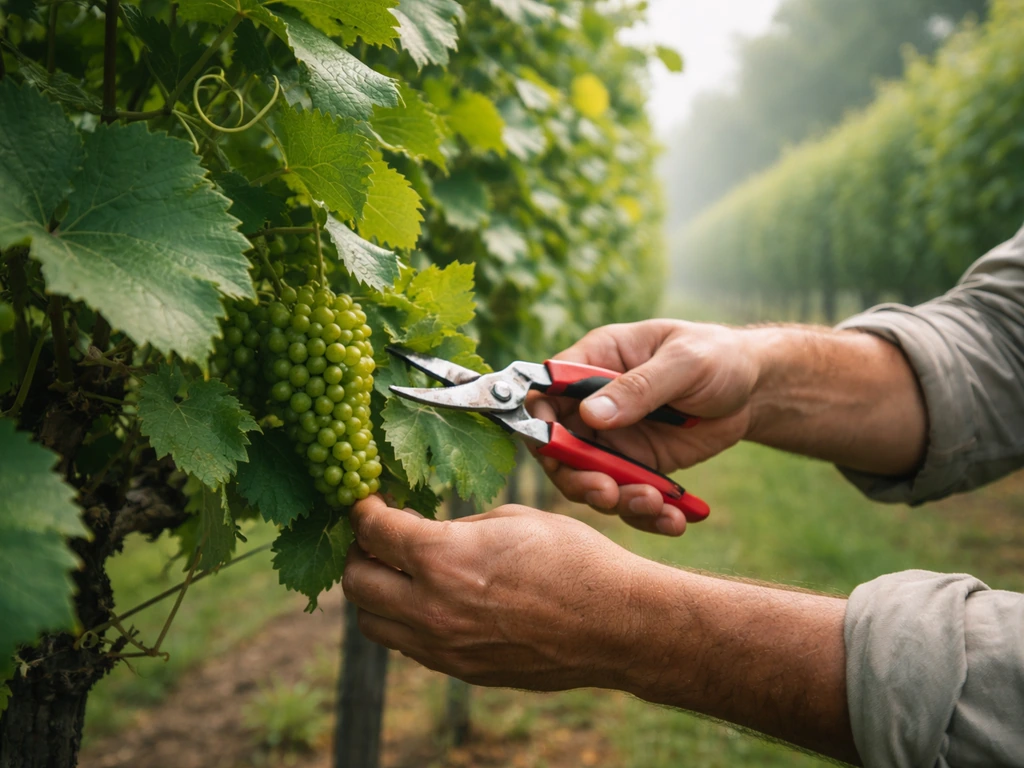
In NC's humid climate, how you manage the growing canopy during summer directly affects disease pressure. Thin crowded shoots in late May or June, remove leaves around the fruit zone to improve air circulation and spray penetration, and position shoots upright along the trellis wires rather than letting them droop. These aren't optional aesthetic steps. They're disease management.
Season-by-season care: watering and fertilizing
Watering
Established grapevines are reasonably drought-tolerant once their root system develops, but young vines in their first two years need consistent moisture. Water deeply once or twice a week during dry stretches, letting the soil dry slightly between waterings. Drip irrigation is ideal because it delivers water to roots without wetting foliage, which reduces fungal disease. In NC's typical summer pattern, you may not need to water much during rainy spells, but pay attention during any dry stretch in July or August when berries are sizing up.
Fertilizing
Grapevines don't need heavy feeding. In the first year, apply a modest amount of balanced fertilizer (roughly a quarter pound of 10-10-10 per vine) about a month after planting, once roots are established. By the second year, split applications work well: a light feeding in early March before bud break, a second application in May, and a third in July. Roughly double the first-year rate for second-year vines. By year three and beyond, base your fertilizer on soil test results and vine performance rather than a fixed schedule. Over-fertilizing pushes excess leafy growth, which worsens disease pressure. If your vines are dark green and vigorous, ease back.
Common NC problems and how to handle them
This is where North Carolina grape growing gets real. The warm, wet summers create a nearly ideal environment for fungal diseases and some significant pests. None of this is insurmountable, but you need to go in with a plan.
Black rot
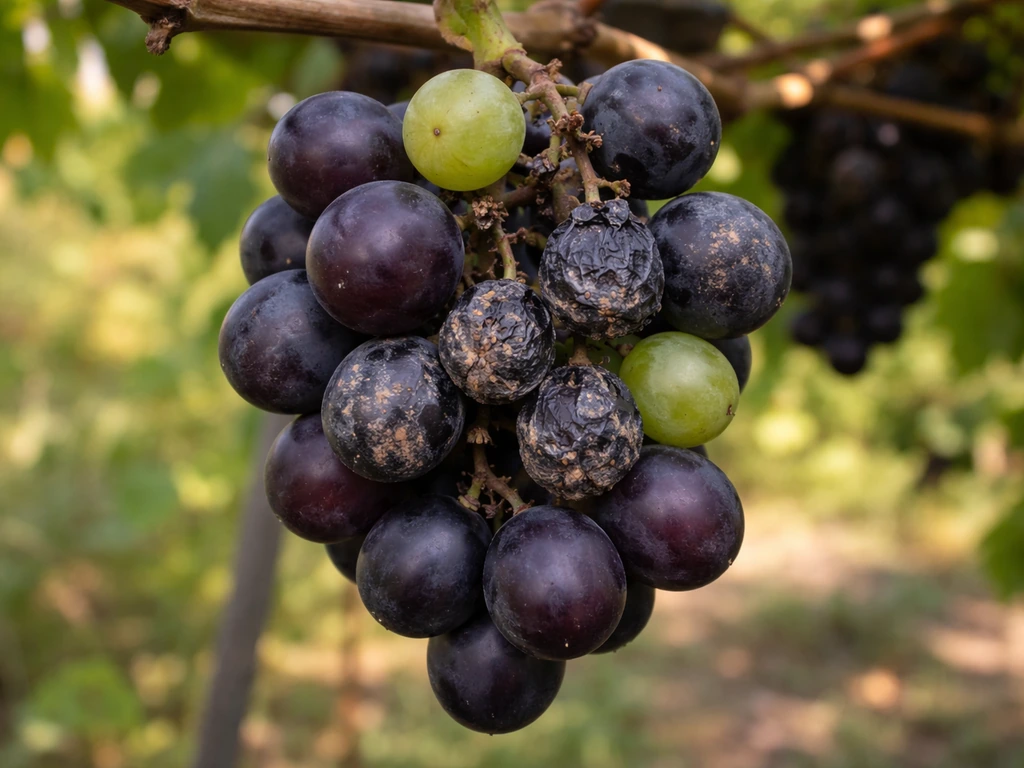
Black rot is the most common early-season fruit disease in NC bunch grapes, and it can destroy anywhere from 5 to 80% of your crop depending on conditions and how susceptible your variety is. It starts with leaf lesions in late spring and progresses to infected berries that shrivel into hard, mummified 'raisins' on the cluster. Prevent it with a preventive fungicide program starting at bud break and continuing through bloom and fruit set. Copper-based and sulfur-based fungicides are common home-garden options. Removing mummified berries from the vine after harvest and keeping the vineyard floor clean reduces overwintering inoculum.
Summer bunch rots (botrytis and sour rot)
NC's warm, wet summers drive more severe bunch rot pressure than most US grape-growing regions. Botrytis (gray mold) and sour rot (a complex of yeasts, bacteria, and vinegar flies) are particularly problematic in dense, tight-clustered varieties. Sour rot is increasingly recognized as a serious threat in humid southeastern states. The best prevention is canopy management: thin shoots, remove leaves around clusters, and keep the fruit zone open to sunlight and airflow. When clusters can dry quickly after rain, rot pressure drops significantly.
Pierce's disease
Pierce's disease is a bacterial disease spread by sharpshooter leafhoppers, and it is a dealbreaker for bunch grapes on the NC coastal plain. There is no cure once a vine is infected. Leaves scorch, the vine declines, and it dies within a few years. This is exactly why the recommendation for coastal growers is muscadines, which are naturally resistant. If you're in the Piedmont, Pierce's disease risk exists but is lower. In the mountains, risk is minimal.
Phylloxera
Grape phylloxera is a tiny root-feeding insect that can devastate vinifera (European) grapevines. American varieties and muscadines have natural resistance, which is another reason they're the sensible choice for NC home gardens. If you're tempted by European table grape varieties (like Thompson Seedless or Flame), be aware they're far more vulnerable to both phylloxera and fungal disease in NC's conditions.
Grape berry moth and other insects
Grape berry moth is the main insect pest to watch in NC vineyards. Larvae tunnel into developing berries, creating entry points for rot. Monitoring with pheromone traps and timing any spray applications to larval emergence is the standard IPM approach. Japanese beetles can also defoliate vines quickly in midsummer. Hand-picking or targeted insecticide applications manage them at the home-garden scale.
What to do next: planting checklist and first-season timeline
Here is a practical sequence to get from decision to first growing season with confidence.
Before you plant
- Identify your NC region: mountain, Piedmont, or coastal plain. This determines whether you're growing bunch grapes or muscadines.
- Get a soil test. Contact your county NC Cooperative Extension office or use the NC Department of Agriculture soil testing service. Do this at least 6 to 12 months before planting so you can amend pH with lime if needed.
- Select your site: full sun, good drainage, elevated enough to avoid frost pockets. South- or southeast-facing slopes are excellent in western NC.
- Choose your variety: Joy if you want early and seedless, Vanessa for mid-season red, Catawba for a late-season option, muscadines for the coast or lower-maintenance growing.
- Source your plants: buy from a reputable nursery that ships bare-root vines in late winter or sells potted vines in spring. Certified disease-free stock is worth seeking out. Grafted rootstock offers phylloxera protection but is less critical for American varieties.
First-season planting timeline
| Timing | Task |
|---|---|
| Fall before planting | Soil test, apply lime if needed, begin site prep |
| Late winter (Jan–Feb) | Build trellis, order bare-root vines, finish soil amendments |
| Early spring (Mar–Apr) | Plant bare-root vines after last frost risk passes for your area |
| May–June | Train single strongest shoot vertically, remove competing shoots, water during dry spells |
| July–August | Monitor for black rot and insects, apply fungicide preventively if needed |
| Fall (Sept–Oct) | Allow vine to harden off naturally, don't fertilize after July |
| Dormant season (Jan–Mar) | Prune to single trunk, plan cordon development for year two |
Don't try to rush fruit production. Letting a vine fruit heavily in years one or two weakens its root system and long-term productivity. A vine that establishes well in years one through three will reward you with years of reliable harvests. That's the real payoff of doing it right from the start.
If you're also thinking about growing seedless varieties specifically, or comparing options for neighboring southeastern states, the same disease-pressure logic applies across the region. If you are looking for the best seedless grapes to grow in Georgia, focus on picking cultivars that match your local humidity, rainfall, and disease pressure seedless varieties. For a focused shortlist of the best seedless table grapes to grow in North Carolina, use the regional recommendations above as your starting point.
The variety shortlist changes slightly by location, but the fundamentals of site selection, canopy management, and preventive disease care stay consistent. In Australia, the best table grape choices also depend on your local climate, disease pressure, and ripening season best table grapes to grow in australia. Use a similar approach in Australia: match the grape type to your climate and disease pressure, then pick a ripening window that fits your growing season best table grapes to grow in australia.
FAQ
What should I do if my Vanessa grapes start cracking after heavy summer rain?
If you live in the Piedmont, you can grow bunch grapes, but you need to treat “rainy August” as part of the plan. For cracked fruit, focus on even irrigation (avoid big swings), keep the canopy open, and consider a variety with earlier ripening so berries finish before peak wet weather hits.
How do I protect bunch grapes from late frosts in the mountains versus the coast?
In North Carolina, frost protection is mostly about timing. If you are in the mountains and buds break late, even “normal” late freezes can damage new growth. Use row cover on cold nights after you see bud break, and avoid fertilizing with nitrogen too early because it can push tender growth that is more frost-susceptible.
Can I grow European seedless table grapes like Thompson Seedless in North Carolina?
Yes, but with two cautions. First, European seedless grapes are much more vulnerable to phylloxera and fungal pressure in NC, so they usually underperform without advanced pest and disease management. Second, many European table grapes also require more precise heat timing for ripening, which can make harvest inconsistent across zones 6a to 9a.
Is it okay to plant in a spot that stays damp after rain if I have good sun?
Not necessarily. If your yard has consistently wet soil (even if you add mulch), bunch grapes will struggle because they need air drainage and a root zone that does not stay soggy. If the soil test shows poor drainage or high water-holding capacity, consider raised planting or a different site before spending effort on disease sprays.
How much fruit should I aim for in the first year or two after planting?
Start smaller and plan for training. For your first vines, choose a simple cordon system and prioritize disease-preventive canopy work over fruit size. Heavy crop in years one or two usually weakens vines, so your “first harvest” goal should be learning the canopy and pruning rhythm, not maximizing pounds.
When should I start fungicide or disease prevention for bunch grapes in NC?
If you are seeing leaf spots early, act before symptoms reach berries. In NC’s humidity, waiting until you “confirm the disease” often means the crop is already at risk. Use a preventive program that starts at bud break and continues through bloom and fruit set, then switch to sanitation after harvest.
How do I use grape berry moth monitoring effectively if I only have a few vines?
For home gardeners, pheromone traps are useful for detecting grape berry moth activity, but timing matters. Treat based on when larvae are expected to be active, not just when adult moths show up, and keep traps positioned throughout the vineyard area so you can spot changes from one week to the next.
How much does cleaning up mummified berries actually help versus spraying during the season?
Better sanitation can reduce future disease pressure, but it does not replace preventive care during the season. Remove mummified berries and keep the area under vines cleaner after harvest, yet still manage canopy density and sprays in spring because overwintering inoculum is only one part of the problem.
What’s the best way to choose seedless grapes if I’m near the coast of North Carolina?
If you want seedless fruit in the Piedmont, focus on seedless American-type bunch cultivars already suited to NC conditions. For the coast, seedless bunches are a poor fit because Pierce’s disease is the limiting factor, and muscadines provide the resistant alternative with far less management.
Can I use a simple trellis if I’m growing only two or three vines?
Yes, but match the trellis to the training system and avoid overcrowding. A two-wire setup works well for cordons, but if you plant too close or let shoots droop and tangle, you will create dense clusters that stay wet longer and rot more easily.