Quick verdict: easy vs hard based on your situation
Grapes are not beginners' fruit. They are not impossible either, but if someone told you grapes are easy to grow, they were probably leaving out the part about three years of setup, annual pruning that actually matters, and real disease pressure in humid climates. Clemson Extension ranks grapes among fruit crops with more complex insect, disease, weed, fertility, and cultural demands than fruits like blueberries or figs. That ranking exists for a reason. With the right variety, the right site, and a clear first-year plan, grapes become very manageable. Without those three things, you will fight the vines every season.
Here is the honest difficulty split. If you live in a region with a long growing season, well-drained soil, and low humidity (think the Pacific Northwest, California, or the high plains of Texas), and you choose a variety that matches your zone, grapes are a moderate project. If you live in the humid Southeast, the upper Midwest, or the Northeast, difficulty climbs fast because fungal disease pressure is constant and winter damage is a real threat. Your situation determines your difficulty level more than any growing tips ever will.
Key conditions grapes need
Before you buy a single vine, check these four conditions against your actual yard. If you can hit all four, you are set up to succeed. If you are missing one or two, you will need a workaround or a rethink.
Sun
Grapes want full sun, and that means a genuine 7 to 8 hours of direct sunlight per day during the growing season. Anything less and you get weak vines, poor fruit set, and a fungal disease paradise because the foliage never dries out properly. South-facing slopes are ideal. If your yard has tall trees on the south side, grapes are going to struggle there. how much sun grapes need to thrive is one of the most common questions beginners get wrong, usually by underestimating it.
Soil and drainage
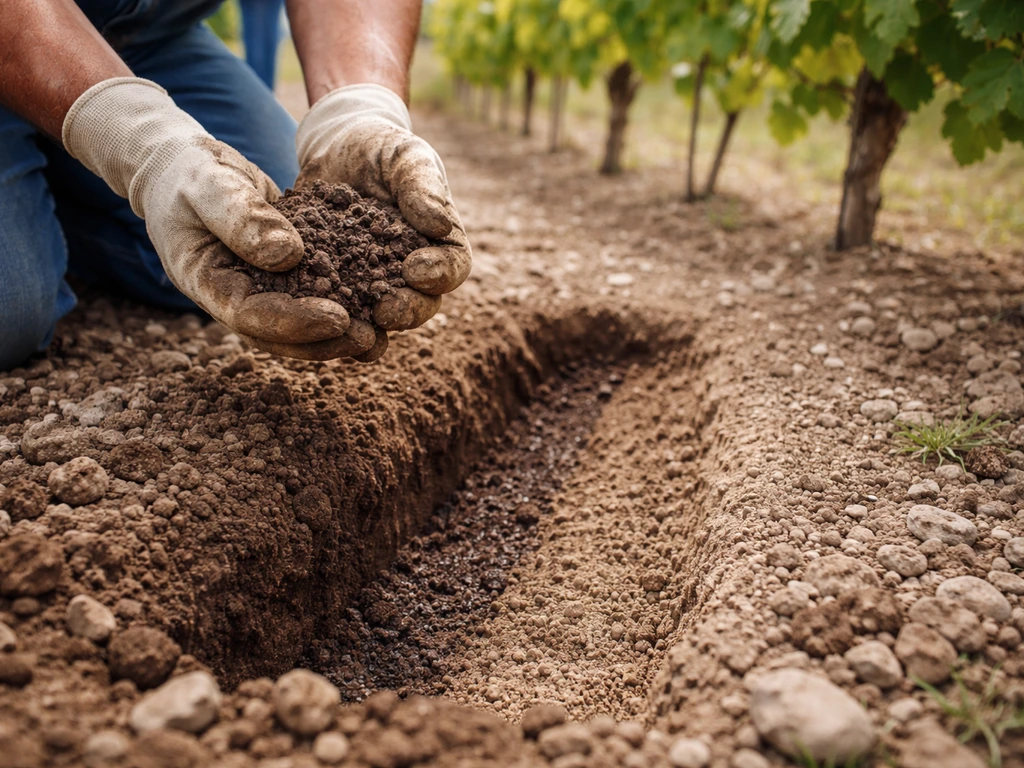
Grapes grow best in soil with a pH between 5.5 and 6.5. Oklahoma State Extension is clear that excess watering and poorly drained soil can kill roots outright. Grapes actually prefer to be slightly stressed by dry conditions. They develop deeper root systems, better fruit quality, and more resistance to disease when they are not sitting in wet ground. Standing water after rain is a dealbreaker unless you can build raised beds or improve drainage. If you are curious whether your site has any chance, what happens when grapes grow in wet soil explains exactly what goes wrong and how to tell before you plant.
Rocky or sandy soil
Rocky or gravelly soil is not the problem many gardeners assume it is. In fact, it often drains well, warms up fast in spring, and keeps vines from getting too vigorous. If your yard is more rocks than loam, that might actually be an advantage. whether grapes can grow in rocky soil goes deeper on this if you want to know what amendments, if any, you actually need.
Space
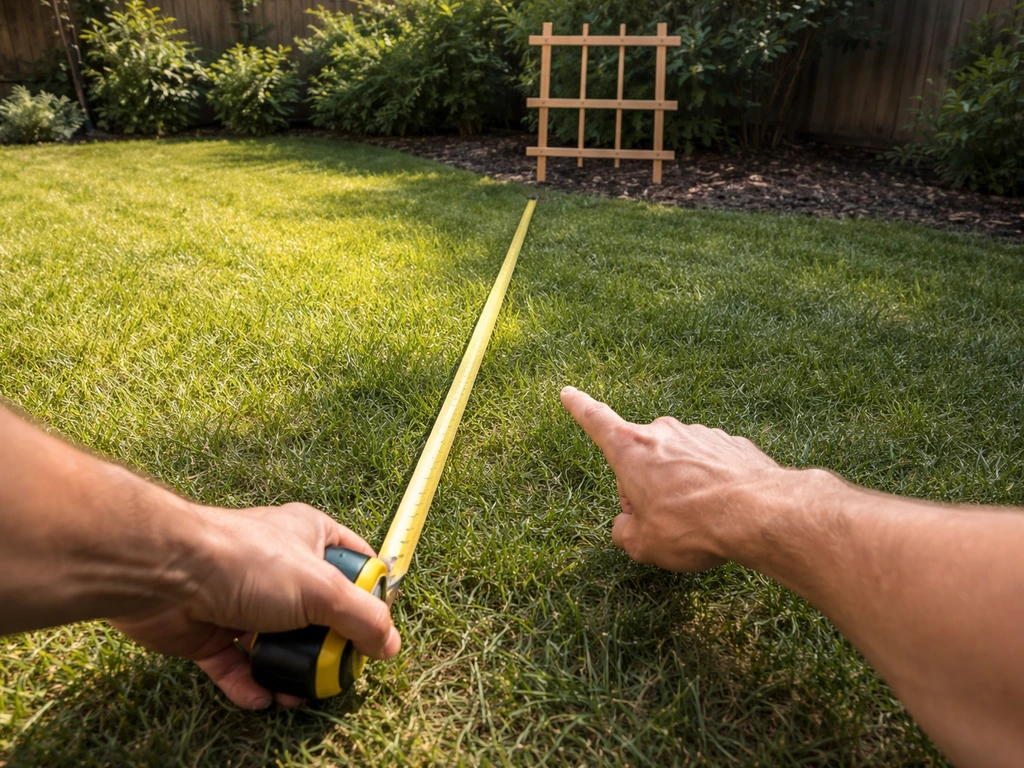
A single vine trained on a trellis needs about 6 to 8 feet of linear space. Rows should be spaced 8 to 10 feet apart if you are planting multiple rows. This is not a container plant hobby for most people. You need a real run of fence, a dedicated trellis system, or an arbor. Make sure that space gets the sun you measured above.
Climate and growing season check
The single biggest variable in whether grapes work for you is climate. the environment grapes grow best in covers this in detail, but the short version is this: grapes need a frost-free growing season of at least 150 to 180 days for most varieties. European wine grapes (Vitis vinifera) need even longer and are far less cold-tolerant. University of Maryland Extension is direct about this: Vitis vinifera can be grown in some regions but requires more specialized knowledge of site requirements, pruning, and pest management. They are genuinely harder for beginners than cold-hardy American or hybrid varieties.
Winter injury is one of the most common reasons home gardeners fail with grapes, especially in USDA zones 5 and colder. University of Minnesota Extension specifically highlights that blank" rel="noopener noreferrer">winter injury to the fruiting wood is a major failure point. The vine can look perfectly healthy in fall and still die back to the graft union over winter, wiping out the season's fruiting potential. If you are in a cold region, whether grapes can actually survive cold climates will tell you which varieties have the cold hardiness to make it and which ones do not.
On the other end of the spectrum, dry and hot regions present different but solvable challenges. Grapes are more naturally at home in arid climates than most people expect. how grapes can grow in the desert breaks down what heat and low humidity actually mean for your growing plan, including irrigation strategy and variety picks that handle extreme heat.
Variety selection: matching grape types to your region
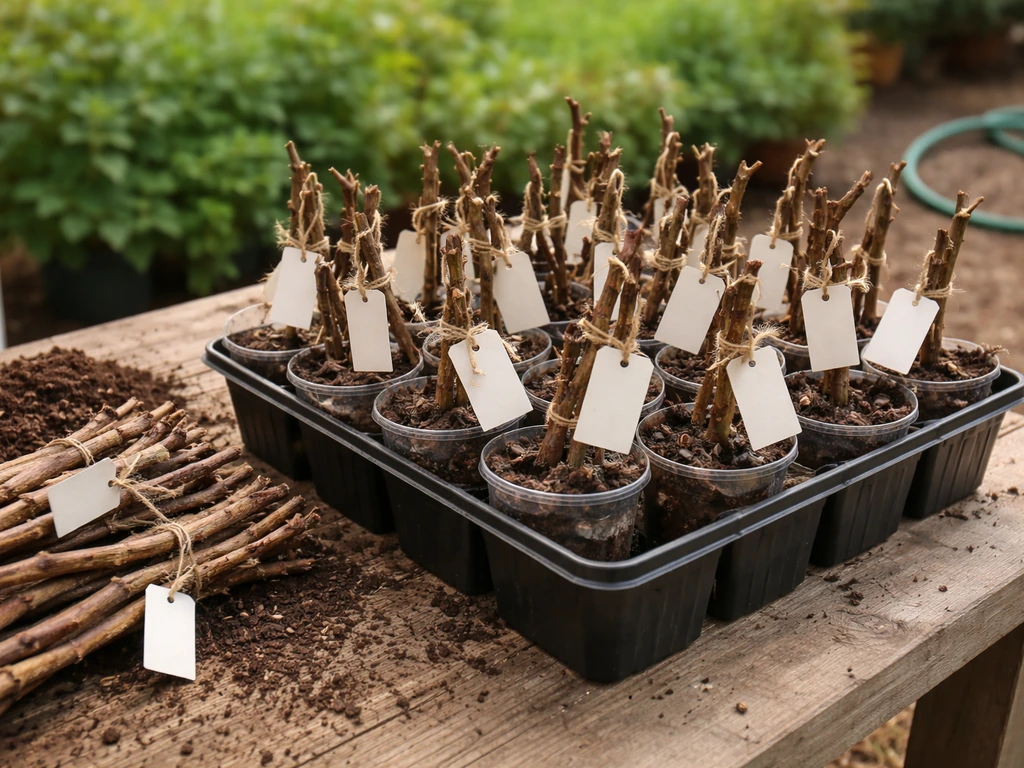
This is where beginners make the most expensive mistake: buying whatever looks good at the nursery rather than choosing a variety built for their climate. Here is a practical breakdown of the main grape types and where they work best.
| Grape Type | Best Climate | Cold Hardiness | Disease Resistance | Beginner Friendliness |
|---|
| American (e.g., Concord, Niagara) | Northeast, Midwest, humid regions | Zones 4–7 | High | High |
| Hybrid (e.g., Marquette, Frontenac, Chambourcin) | Upper Midwest, Northeast, mid-Atlantic | Zones 4–7 | Moderate to high | Moderate to high |
| Muscadine (e.g., Carlos, Magnolia, Noble) | Southeast, Gulf Coast | Zones 7–10 | Very high | High in right region |
| European/Vinifera (e.g., Cabernet, Chardonnay, Thompson Seedless) | Pacific Coast, California, arid West | Zones 6–9 (varies) | Low | Low — not beginner-friendly |
If you are in the upper Midwest or Northeast and you want wine-style grapes, cold-hardy hybrids like Marquette, Frontenac, or La Crescent are your best bet. They were bred specifically to handle harsh winters and still produce quality fruit. Muscadine grapes are the go-to for the Southeast, where summers are long and humid and European varieties struggle with disease. If you are in California or the arid Pacific Northwest, vinifera varieties are realistic, but you are also taking on a higher-maintenance, more knowledge-intensive project.
Planting and setup: trellises, spacing, and timing
Plant bare-root vines in early spring as soon as the soil can be worked, typically March through April depending on your zone. Container-grown vines can go in through early summer, but spring planting gives the root system the longest possible establishment window before the first winter.
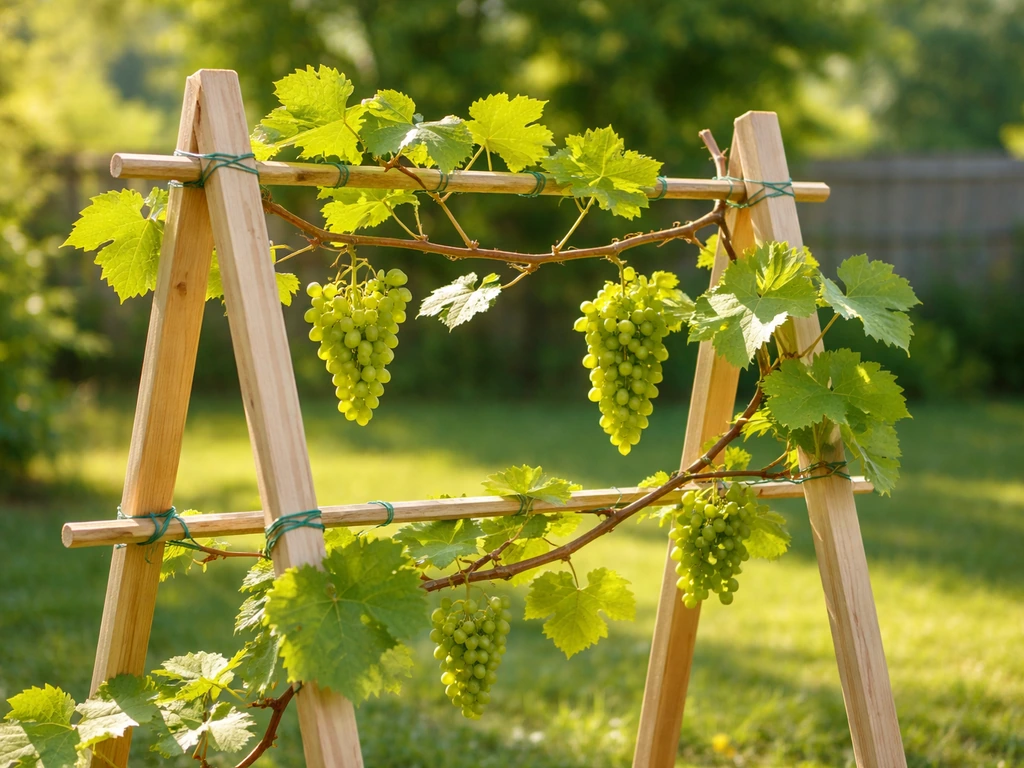
Build your trellis before you plant, not after. The most practical setup for a home garden is a two-wire trellis: posts set 8 feet apart, with the first wire at 3 feet and the second at 5 to 6 feet. Use 4x4 treated posts and 12.5-gauge high-tensile wire. The support needs to be sturdy because a mature vine loaded with fruit and foliage is heavy. Spacing between vines depends on variety vigor, but 6 to 8 feet between plants is standard for most American and hybrid varieties.
Penn State Extension makes a strong point that beginners overlook: remove all flower clusters in the first year. It feels counterintuitive when you are excited to see the vine flower in June, but letting the vine fruit in year one pulls energy away from root development and slows long-term establishment. The payoff of skipping year-one harvest is a stronger vine that produces more reliably from year two onward.
Ongoing care workload
Grapes are not a set-it-and-forget-it plant, but the work is concentrated at specific times of year rather than spread out daily. Here is what the real maintenance schedule looks like once your vines are established.
Watering
Established vines need about 1 inch of water per week during the growing season, either from rain or irrigation. The key word is established. In years one and two, you may need to water more consistently to help roots develop. Once established, grapes prefer deep, infrequent watering rather than shallow daily watering. Avoid overhead irrigation, which keeps foliage wet and encourages fungal problems. Drip irrigation at the base of the vine is ideal.
Feeding
Most established vines in decent soil do not need heavy fertilizing. Over-fertilizing with nitrogen is actually a common problem that creates excessive leafy growth at the expense of fruit. A soil test before planting is the best investment you can make. Adjust pH with lime or sulfur as needed to stay in the 5.5 to 6.5 range, then use a balanced fertilizer sparingly in early spring.
Pruning and training
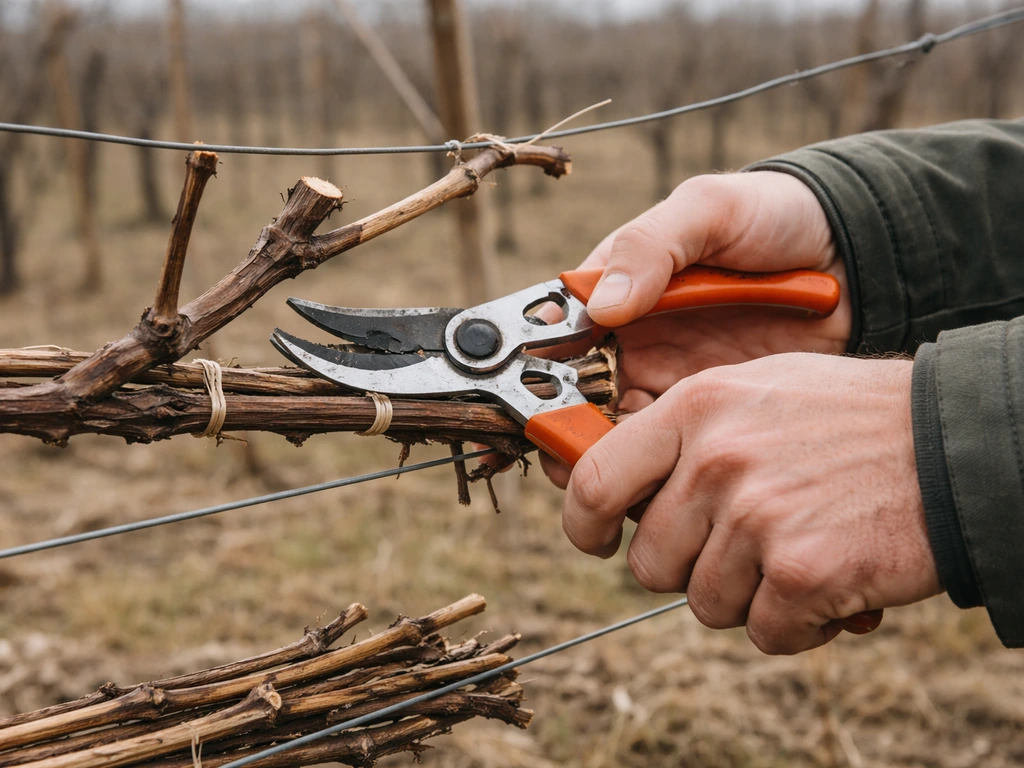
This is the skill that separates gardeners who succeed with grapes from those who struggle. Annual dormant pruning (done in late winter, before bud break) is non-negotiable for good fruit production and vine health. Oregon State Extension specifically calls out a common mistake: hedge-pruning head-trained vines, which leaves too many spurs and buds and leads to poor fruit quality. You need to remove 70 to 90 percent of last year's growth. That sounds extreme, but it is what keeps the vine productive. Learn the difference between cane pruning and spur pruning for your chosen training system, and stick with the one that matches your variety's fruiting habit. Oregon State University Extension defines cane pruning as removing most of the previous year’s growth and retaining only a few long canes or spurs, and notes it is commonly used for table grapes and some wine grapes in cooler climates.
Thinning
Cluster thinning in early summer (removing some fruit clusters when they are small) improves the size and quality of remaining fruit and reduces disease pressure by improving airflow. It is extra work but pays off visibly in the harvest. Most home gardeners can skip this in the first couple of productive years and add it in once the vine is fully mature.
Common problems and how hard they are to manage
Grapes have real pest and disease pressure, and pretending otherwise sets beginners up for frustration. The good news is that most problems are predictable and manageable with the right variety and a basic spray program.
- Powdery and downy mildew: The most common fungal diseases in humid climates. Disease-resistant varieties dramatically reduce the spray burden, but in the Southeast or mid-Atlantic, you will likely still need a preventive fungicide program during wet springs. Kaolin clay, sulfur, and copper-based sprays are the main tools.
- Black rot: Another fungal disease that kills developing fruit clusters. It is most severe in warm, wet weather. Removing mummified fruit and infected canes helps break the cycle.
- Japanese beetles: A serious pest in much of the eastern US. They skeletonize leaves and can cause major defoliation. Hand-picking and neem oil work at small scale; row covers protect young vines.
- Grape berry moth: A key pest in the Northeast and Midwest. The larvae tunnel into berries, causing rot and secondary infection. Pheromone traps help with monitoring, and organic options like Bacillus thuringiensis (Bt) help with control.
- Birds: One of the most frustrating harvesting problems. Bird netting is the most reliable solution and worth installing before fruit colors up.
- Winter damage: In zones 5 and colder, cane dieback from cold snaps can set the vine back significantly. Mound soil over the graft union in fall, and choose cold-hardy varieties to reduce this risk.
The difficulty level here depends almost entirely on your climate and variety choice. A Concord vine in upstate New York with basic annual pruning and a couple of fungicide sprays is genuinely low-maintenance. A Pinot Noir vine in New Jersey is a constant battle. Match the variety to the region and you cut your problem list in half.
Your first-year roadmap and next steps to start today
Here is a concrete plan you can start working through right now, regardless of where you are in the calendar.
- Assess your site this week. Measure sun hours with a sun calculator app or just observe your yard on a clear day. Check soil drainage by digging a hole 12 inches deep, filling it with water, and timing how fast it drains. If it takes more than 4 hours to drain, you have a drainage problem to fix.
- Get a soil test before you order anything. Most state extension services offer cheap soil tests ($15 to $25). You want to know your pH and basic nutrient levels before you plant. Adjust if needed.
- Choose your variety based on your climate zone, not on what you want to drink. Use your USDA hardiness zone and average last frost date to narrow down cold-hardy options in zones 5 and below, muscadines in zones 7 to 9 in the South, or vinifera only if you are in a low-humidity, long-season region.
- Order bare-root vines from a reputable nursery for spring planting. Reputable online nurseries ship bare-root stock in early spring. Order by late winter to get your first choice of variety.
- Build your trellis before the vines arrive. Have posts set and wires strung so you can plant and train from day one.
- Plant in early spring, stake the main shoot to the trellis, and remove any flower clusters that appear in year one. Water consistently for the first season. That is your entire job in year one.
- If grapes feel too demanding for your site, consider easier alternatives like blackberries or blueberries, which require less pruning precision and have lower disease pressure in humid climates. There is no shame in matching your plant to your available time and site conditions.
One thing worth settling now: grape seeds are not going to sprout into a productive vine worth harvesting, and no, swallowed grape seeds are not going to grow inside you, but even planting seeds in the garden will get you a random seedling with unpredictable fruit quality. Always start with named, grafted or own-rooted varieties from a nursery. That is what gives you reliable fruit, predictable cold hardiness, and a vine you can actually plan around.
Grapes reward patience and a bit of upfront knowledge more than almost any other backyard fruit. The first year is about roots and structure, not harvest. If you pick the right variety for your region, build proper support, and commit to annual pruning, you are genuinely set up for a vine that can produce fruit for 20 to 30 years. That is a pretty good return on a few weeks of spring effort.