
A healthy, mature home-garden grape vine typically produces between 15 and 35 pounds of table grapes per season, or roughly 8 to 25 pounds for bunch grape varieties depending on management. That works out to somewhere in the range of 200 to 800 individual grapes per vine, though the honest answer is that the number varies enormously based on variety, vine age, how you prune, and where you live. If you want a useful ballpark right now: plan on 15 to 20 lbs per vine once your vine hits full production at year 3 or 4, and adjust from there based on your specific conditions.
How Many Grapes Grow on a Vine Here’s a Realistic Guide

Marcus Whitfield
11 May 2026
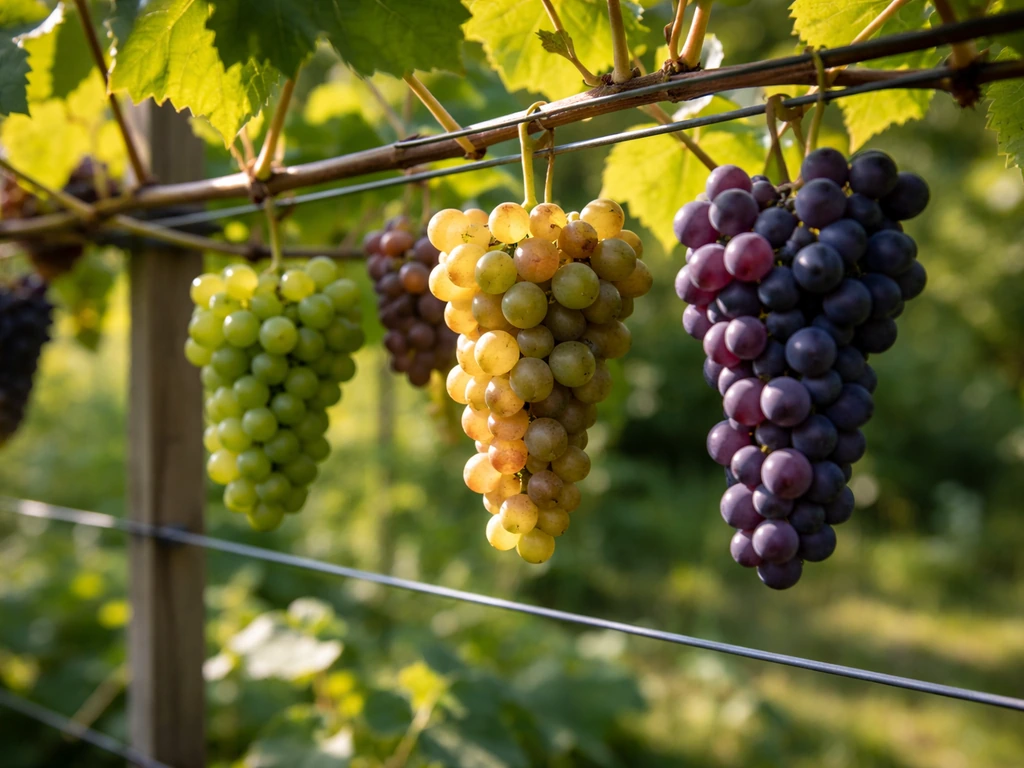
What 'number of grapes per vine' really depends on
Before you can predict your harvest, it helps to understand what actually drives the number. This isn't one thing, it's a stack of factors working together, and changing any one of them can shift your yield dramatically in either direction.
- Variety: A compact wine grape like Marquette produces far fewer clusters than a vigorous table grape like Concord or Reliance. Wine varieties are intentionally kept at lower crop loads for fruit quality.
- Vine age: Young vines (years 1 and 2) should produce nothing or almost nothing. Year 3 is your first real partial harvest. Full production typically arrives in years 4 to 7.
- Pruning severity: This is the single biggest lever you control. Too little pruning leaves too many buds and produces a ton of small, underdeveloped clusters. Too much pruning reduces yield below the vine's potential.
- Training system and trellis: A well-managed high-cordon or VSP (vertical shoot positioning) system exposes more foliage to sunlight, which directly translates to more sugar, better fruit set, and higher yield.
- Canopy density: A crowded canopy shades fruit and reduces bud fruitfulness for the following year. Leaf pulling and shoot thinning matter more than most beginners expect.
- Water and nutrients: Drought stress at bloom or veraison tanks fruit set and berry size. Too much nitrogen early in the season pushes excessive shoot growth at the expense of fruit.
- Pollination and fruit set: Most wine and juice grapes are self-fertile, but poor weather at bloom (rain, cold, wind) reduces fruit set noticeably.
- Disease pressure: Black rot and downy mildew can destroy an entire crop, especially in humid climates across the Southeast and Midwest.
- Frost timing: A late spring frost after bud break can wipe out primary buds and slash your yield by 50 to 100 percent for that season.
Typical home-garden yield ranges by vine age and variety
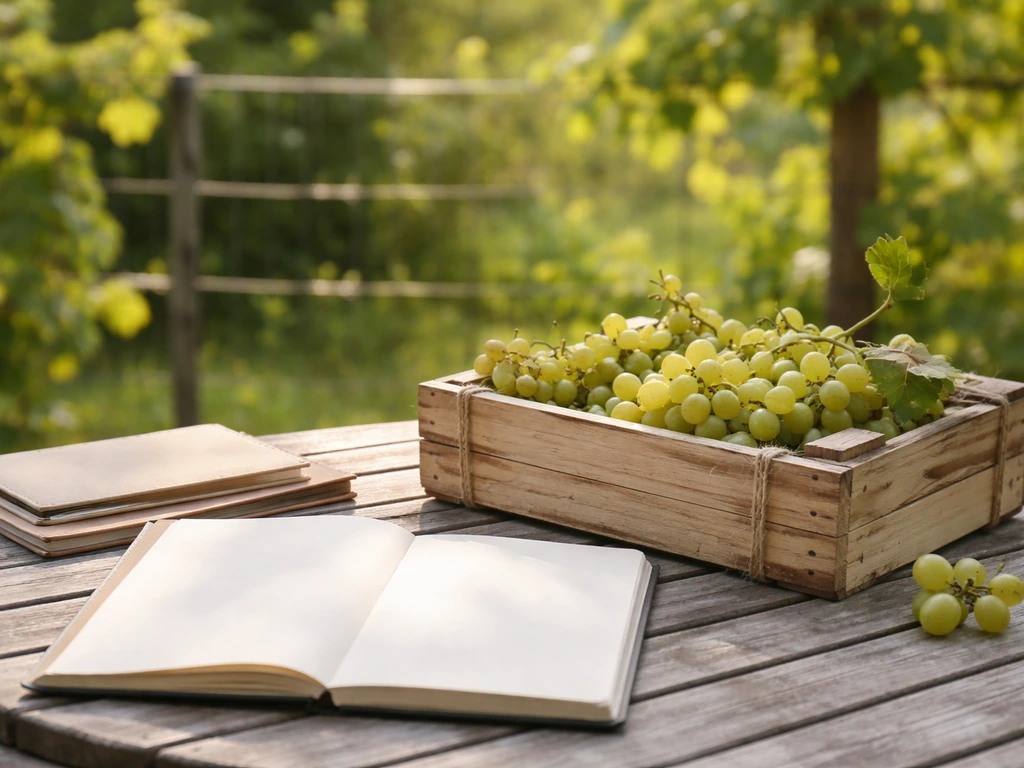
Oklahoma State University Extension puts the home-garden yield range at roughly 1 lb on the low end up to about 25 lbs per vine, while Oregon State University Extension reports that mature, well-managed table grape vines can yield 15 to 35 lbs. Those ranges aren't contradictory, they reflect how wide the spread is depending on management quality. Here's how yield typically builds over time:
| Vine Age | Expected Yield (per vine) | Notes |
|---|---|---|
| Year 1 | 0 lbs | Remove all flower clusters; let the vine establish roots |
| Year 2 | 0–1 lb | Allow 1–2 clusters at most to test; still building structure |
| Year 3 | 2–5 lbs | First partial harvest; vine is still maturing |
| Year 4–5 | 8–15 lbs | Approaching full production for most varieties |
| Year 6+ | 15–35 lbs (table); 10–25 lbs (bunch/juice) | Full production with consistent management |
Variety makes a big difference too. Vigorous table grapes like Concord, Reliance, and Niagara are natural heavy producers and can hit the upper end of those ranges in good conditions. Wine varieties like Chambourcin, Marquette, or Cabernet Franc are typically managed to produce less per vine on purpose, crop quality drops when you let them overload. Seedless table grapes like Himrod or Einset tend to fall in the middle range.
How to estimate grapes per vine using clusters and berries
You don't have to guess at the total, you can estimate your harvest pretty accurately once the clusters have formed and berries have set. Here's the method I use, and it works well for any variety.
- Count the total number of clusters on the vine. Walk around the whole vine and count every visible cluster — don't skip the ones tucked inside the canopy.
- Pick 5 to 10 representative clusters from different parts of the vine. Count the individual berries on each one and find the average.
- Multiply: total clusters × average berries per cluster = estimated total berry count.
- Convert to weight: most table grape berries weigh about 4 to 8 grams each (small seedless closer to 4g, large table grapes up to 8g). Multiply total berry count by your estimated berry weight in grams, then divide by 453 to get pounds.
As a rough reference, a typical cluster on a table grape variety like Concord contains 50 to 100 berries. On a wine grape variety, expect 60 to 150 berries per cluster depending on how tight the bunch is. A vine with 30 clusters averaging 75 berries each gives you roughly 2,250 berries. At 5 grams per berry, that's about 11,250 grams, or roughly 25 lbs. That math checks out for a healthy mature Concord or similar variety.
University of Minnesota Extension recommends targeting 40 to 60 buds per vine after pruning for table, juice, and jelly varieties, and only 20 to 30 buds per vine for wine grapes. Those bud counts give you a pre-season ceiling on how many shoots, and therefore clusters, the vine can realistically support. One shoot typically produces one to two clusters, so a 50-bud table grape vine could theoretically carry 50 to 100 clusters, though you'd thin that down based on vine vigor.
How climate and region change what your vine will produce
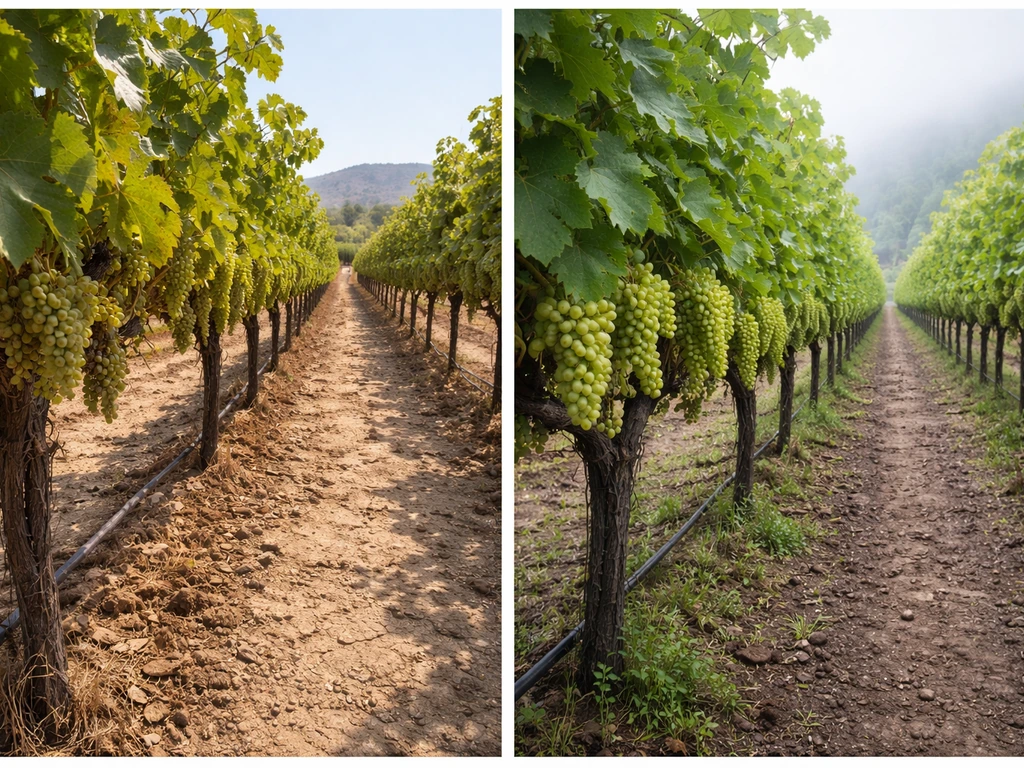
Where you live shapes your yield ceiling more than most gardeners realize. It's not just about whether grapes will survive your winters, it's about how many heat units, sunny days, and frost-free weeks you actually get during the growing season.
Hot, dry climates (Southwest, California valleys, parts of the South)
Long, warm growing seasons with low humidity are ideal for high yields and excellent fruit quality. Vines in USDA zones 8 to 10 can hit the upper end of yield ranges consistently, especially with drip irrigation. The main challenge is heat stress at fruit set and managing water during a dry summer. Varieties like Thompson Seedless, Flame Seedless, and Muscat thrive here and can produce 20 to 40 lbs per mature vine.
Cool, short-season climates (Upper Midwest, New England, Pacific Northwest)
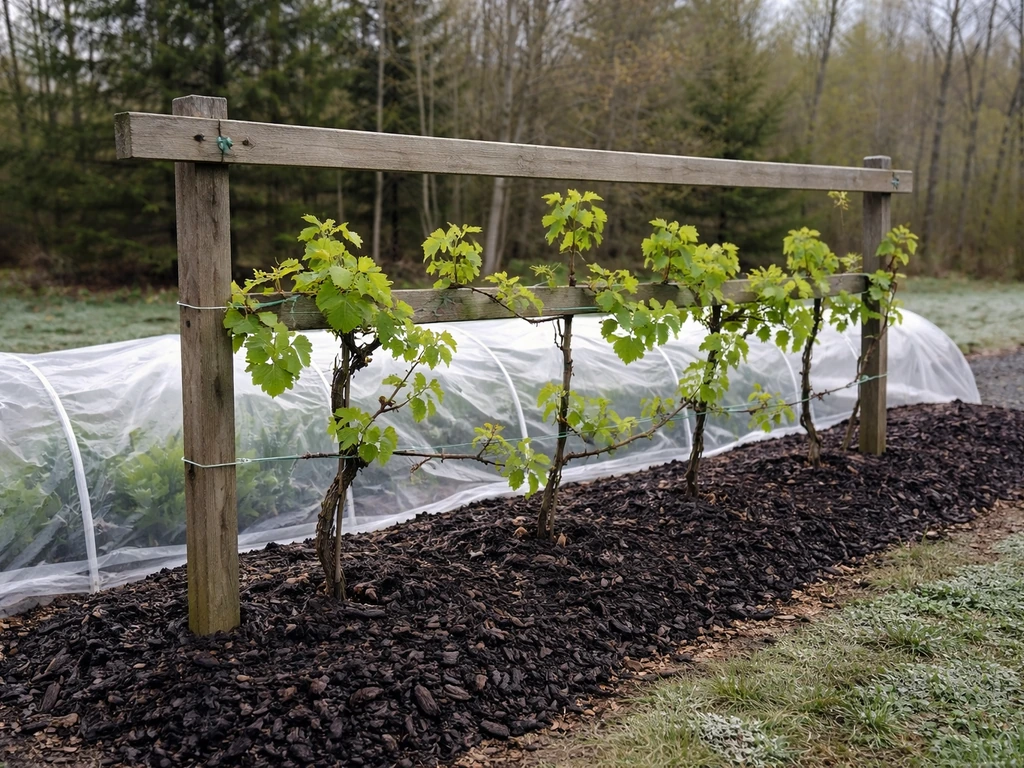
In zones 4 to 6, your growing season is compressed, and late frosts are a real threat. In cooler regions, your vines still develop deep root systems, but the shortened season can limit how much fruit they can produce above ground growing season is compressed. Cold-hardy varieties like Marquette, La Crescent, Frontenac, and Swenson Red are specifically bred for these conditions and consistently outperform standard varieties here.
Yields are more modest, expect 8 to 18 lbs per mature vine in most years, but cold damage to primary buds can tank a season entirely. Bud fruitfulness in cold-hardy varieties is also lower per bud than in traditional varieties, so Minnesota Extension's recommendation of 40 to 60 retained buds for juice and table grapes is especially relevant here.
Humid Southeast and Midwest
Heat and moisture drive aggressive vine growth and serious disease pressure. Black rot, downy mildew, and bunch rots can destroy a crop fast if you're not on a spray schedule. Muscadine grapes are the smart choice from Virginia through Texas, they're naturally resistant to most fungal diseases and can produce 15 to 40 lbs per mature vine in good years. For bunch grapes in these zones, plan on more active disease management, and expect your realized yield to be lower than the potential ceiling if pressure is high.
Mid-Atlantic and Transition zones
This is where variety selection gets most critical. You're dealing with warm summers, humid conditions, occasional late frosts, and variable winters. French-American hybrids like Chambourcin, Vidal Blanc, and Seyval Blanc handle these conditions better than pure vinifera. Expect 10 to 25 lbs per mature vine with solid disease management.
Common reasons your vine is producing fewer grapes than it should
If your vine looks healthy but the harvest is disappointing, one of these is almost certainly the culprit. I've run into most of them personally, and the fix is usually simpler than it looks.
- The vine is too young: Vines under 3 years old simply don't have the root system or cane structure to support a real crop. Don't fight it — train patiently and the yields come.
- You're not pruning enough: This is the most common mistake. An unpruned or lightly pruned vine produces dozens of weak, shaded shoots with poor fruit set. Grapevines need to be cut back aggressively each winter — typically 70 to 90 percent of last year's growth is removed.
- Too much shade: Grapes need full sun — at least 7 to 8 hours of direct sun daily. A shaded canopy means poor bud fruitfulness, reduced sugar accumulation, and more disease.
- Wrong variety for your climate: A vinifera variety planted in zone 5 Minnesota is going to underperform or die back every winter. Match the variety to your zone, and yields follow.
- Frost hit your primary buds: If you had a late frost after bud break, your primary buds (the most fruitful ones) are gone for the season. Some varieties have fruitful secondary buds that partially compensate, but most won't recover to full yield that year.
- Nutrient imbalance: Too much nitrogen early drives foliage at the expense of fruit. Too little potassium at veraison affects sugar loading. A soil test every two or three years keeps you calibrated.
- Disease took the crop: Black rot infects clusters at bloom and can destroy them before you even realize it. Downy mildew on clusters causes similar losses. Muscadines aside, most bunch grapes in humid regions need a preventive fungicide program.
- Overbearing on a young vine: Letting a vine 2 to 3 years old carry too many clusters weakens the root system and sets back development by a full year or more. Remove excess clusters at bloom — University of Minnesota recommends no more than 2 flower clusters per shoot.
How to increase your grape yield next season
Most of the levers that increase yield are things you do during dormancy or early in the growing season, not at harvest time. Here's what actually moves the needle.
Pruning: the biggest single factor
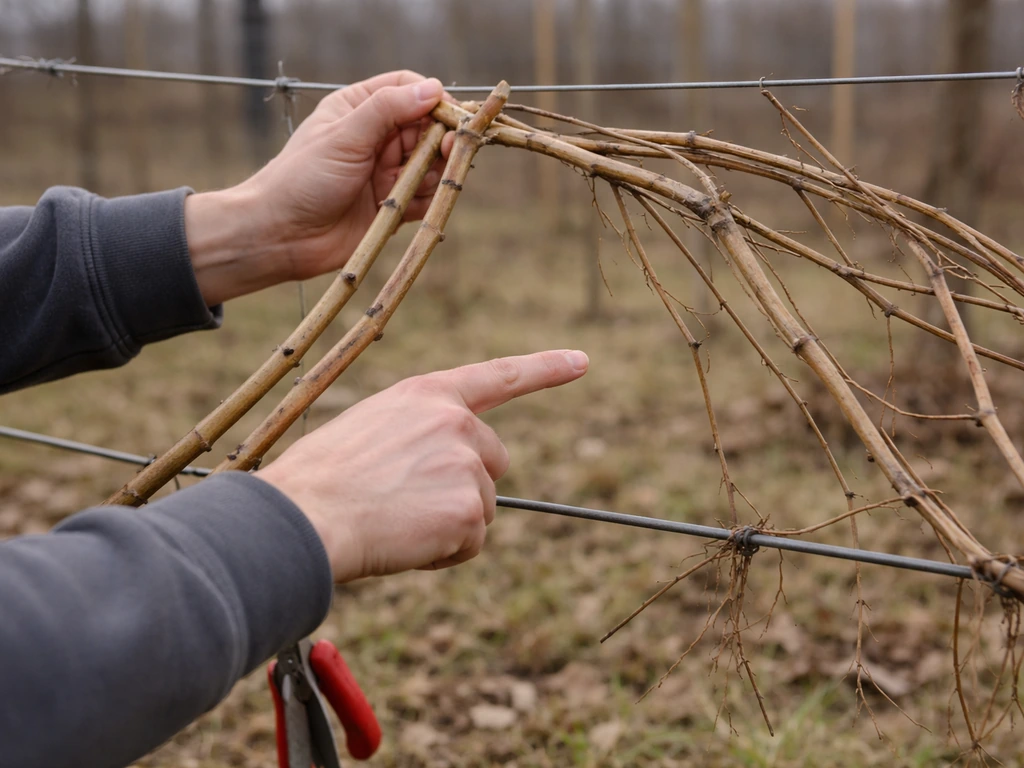
Prune in late winter when the vine is still dormant, after the coldest weather has passed but before bud swell. For cane-pruned systems (like Kniffin), select 2 to 4 healthy one-year-old canes with 8 to 15 buds each and remove everything else. For spur-pruned systems (like cordon), cut each spur back to 2 to 3 buds. The bud count targets from Minnesota Extension are worth keeping in mind: 40 to 60 buds for table and juice varieties, 20 to 30 for wine grapes. These numbers are your calibration point.
Canopy management during the season
After shoots reach about 12 to 18 inches, start shoot positioning, tuck shoots into the trellis wires to keep them upright and spaced 4 to 6 inches apart. Once the canopy closes (usually midsummer), remove leaves around the fruit zone to improve air circulation and sun exposure on the clusters. This reduces disease risk and improves fruit set and ripening. If a shoot has more than 2 clusters, pinch off the extras at or just after bloom.
Fertilizing basics
Get a soil test before you add anything. Most home gardeners over-fertilize with nitrogen, which pushes vegetative growth and delays or reduces fruiting. A light application of balanced fertilizer (10-10-10) in early spring at bud swell is a reasonable starting point if you haven't tested. Avoid heavy nitrogen applications after bloom. Potassium matters most at and after veraison when sugar loading into berries peaks.
Irrigation timing
Consistent moisture through bloom and early fruit development is critical for good fruit set and berry size. Water stress at bloom causes poor set; stress at veraison reduces final berry weight. After veraison, reduce irrigation gradually to concentrate sugars and firm up the berries. Drip irrigation at 1 to 2 gallons per vine per day during active growth is a solid starting point in dry climates.
Trellis and spacing
If your vines are crowded, they're competing for light and air. A standard spacing of 6 to 10 feet between vines and 8 to 10 feet between rows works for most home-garden situations. A two-wire trellis with a catch wire at 3 feet and a top wire at 5 to 6 feet gives enough vertical space for shoot positioning. More trellis height and wire options are covered in depth when discussing how tall grape vines grow, but the short version is that more vertical shoot space usually means better light interception and higher yield.
Quick checklist: assess your vine today and predict your harvest
Run through this list right now for each vine you're tracking. It takes about 10 minutes per vine and gives you a realistic picture of what to expect this season.
- How old is the vine? If it's under 3 years, adjust expectations down significantly. Year 1 and 2 vines shouldn't be carrying a crop at all.
- Count the visible clusters right now. A rough cluster count gives you the upper limit on this season's harvest before you do any thinning.
- Check sun exposure. Is the vine getting 7+ hours of direct sun daily? Shade is a silent yield killer.
- Look at shoot density. Are shoots spaced roughly 4 to 6 inches apart, or is the canopy a wall of foliage? Crowded canopies need immediate shoot thinning.
- Count berries on 5 representative clusters. Average them and multiply by total cluster count for a berry estimate. Divide by roughly 100 to 150 for a pound estimate on medium table grapes.
- Check for disease symptoms on leaves and clusters. Black rot lesions on clusters appear as brown spots that quickly turn hard and mummified. Act immediately with a labeled fungicide if you see them.
- Did you have a frost after bud break this spring? If yes, check a few canes for secondary bud development. Your yield is likely reduced 30 to 70 percent depending on variety.
- How did you prune last winter? If you left more than 60 buds on a table grape vine, you're likely looking at overbearing — thin clusters now to no more than one per shoot on young vines, two on mature vines.
- Are you in a humid region? If yes, is your spray schedule current? Skipping fungicide applications at bloom is the fastest way to lose your entire crop to black rot.
- What variety do you have, and is it matched to your climate zone? If you're not sure, dig up the planting tag or contact your local extension office — variety mismatch explains a lot of chronic underperformance.
One last thing worth keeping in perspective: yield per vine is just one piece of the picture. If you're curious how yield scales up to a larger planting, the math changes quite a bit when you go from a few home vines to a full acre, spacing, training systems, and variety selection all interact differently at that scale.
For a full-acre planting, you can use the per-vine yield ranges and multiply by your vineyard spacing to estimate how many grapes you can grow in 1 acre how many grapes can you grow in 1 acre. But for a home gardener managing 2 to 10 vines, hitting a consistent 15 to 25 lbs per mature vine each season is a completely realistic target with good pruning, the right variety for your zone, and basic disease management in place.
If you’re growing grapes in pots in the UK, growth rate and eventual yield depend heavily on your variety, container size, and how you manage watering and feeding how fast do grape vines grow uk in pots.
FAQ
If a vine produces 15 to 35 pounds, how many grapes is that in real life?
The conversion depends on berry weight and cluster size, but as a practical home-garden estimate, 15 to 35 lbs typically lands around 200 to 800 grapes per vine for many common table varieties. If you want a tighter number, count berries on 3 to 5 representative clusters, multiply by total cluster count, then use your average berry weight (often around 5 grams for many table types, but it can be lighter or heavier).
Why do I get a lot of clusters but small berries and fewer grapes than expected?
That pattern usually points to water stress around bloom or veraison, or nitrogen pushing canopy growth at the wrong time. Check your irrigation schedule for uneven wetting, and if you fertilized heavily with nitrogen, switch to a balanced approach after bud swell and avoid late-season high-N feeding that competes with fruit development.
How early should I expect grapes, and does “how many grapes grow on a vine” change year by year?
Yes. Production usually ramps up as the vine reaches full production around year 3 or 4, earlier years may be much lighter even if the vine looks vigorous. If your vine is in its second season, your berry count and pounds will often be below the “mature vine” targets because the retained bud load and vine structure are still building.
Does pruning determine the number of grapes more than my weather does?
Pruning sets the vine’s potential by controlling retained buds and fruiting canes, but weather determines how much of that potential you actually realize. A simple way to think about it is, bud count sets the ceiling, while heat stress at bloom, frost on primary buds, and disease pressure determine how close you get to it.
What bud count should I aim for if I’m not sure whether I’m growing a wine or table grape?
If you’re growing for eating fresh (table or juice) plan around the higher retained bud range, and if it’s a wine grape, plan around the lower retained bud range. When in doubt, identify the cultivar goal, then use bud count as your ceiling and thin clusters only if shoots carry more than about two clusters each.
Can I estimate grapes per vine before berries fully develop?
Yes, once clusters are formed and berries have set you can estimate by using cluster size plus your cluster count. A practical method is to count total clusters, then measure berry count on 5 to 10 clusters, average it, and multiply. This avoids waiting for maturity when birds, rot, or uneven ripening can skew final numbers.
Why does one vine in the same yard produce far fewer grapes than another?
The most common causes are differences in sunlight, disease history, and trellis and shoot spacing. Even if two vines are the same cultivar, a vine that is shaded or has poor air circulation often loses fruit to mildew or rot, and a vine with crowded shoots may carry too many clusters or ripen unevenly.
How does disease control affect how many grapes I actually harvest?
Disease can reduce realized yield by killing flower buds, damaging berries, or causing bunch rots that wipe out entire clusters. If you’re in humid areas, improve airflow first (leaf removal around fruit zone) and consider a preventive approach, because once rot starts within a cluster it’s hard to salvage berries even if the vine kept growing.
Do muscadines follow the same grape count math as bunch grapes?
Not perfectly. Muscadines often produce different cluster structures and berry sizes than typical bunch types, so the “berries per cluster” numbers may not match. If you’re growing muscadines, base your estimate on cluster berry counts you observe locally and convert pounds using an average berry weight from your harvest.
What’s the biggest mistake that makes gardeners end up with too few grapes?
Over-fertilizing with nitrogen is a frequent culprit, it drives canopy growth at the expense of fruiting. The second most common issue is inconsistent watering from bloom through early fruit development, because it directly affects berry set and final berry size, which reduces total grape count even if clusters form.