
Grapes grow actively from spring through fall, with the main productive season running roughly from budbreak in March or April through harvest in August, September, or October, depending on where you live and what variety you're growing. Dormancy fills the winter months. That's the short answer. But if you want to actually time your pruning, watering, and harvest prep correctly, you need a little more detail, because a 'growing season' in Minnesota looks very different from one in Southern California or Georgia.
What Season Do Grapes Grow? Timeline and Planting Guide
Marcus Whitfield
7 Apr 2026
The basic grape growing timeline you need to know
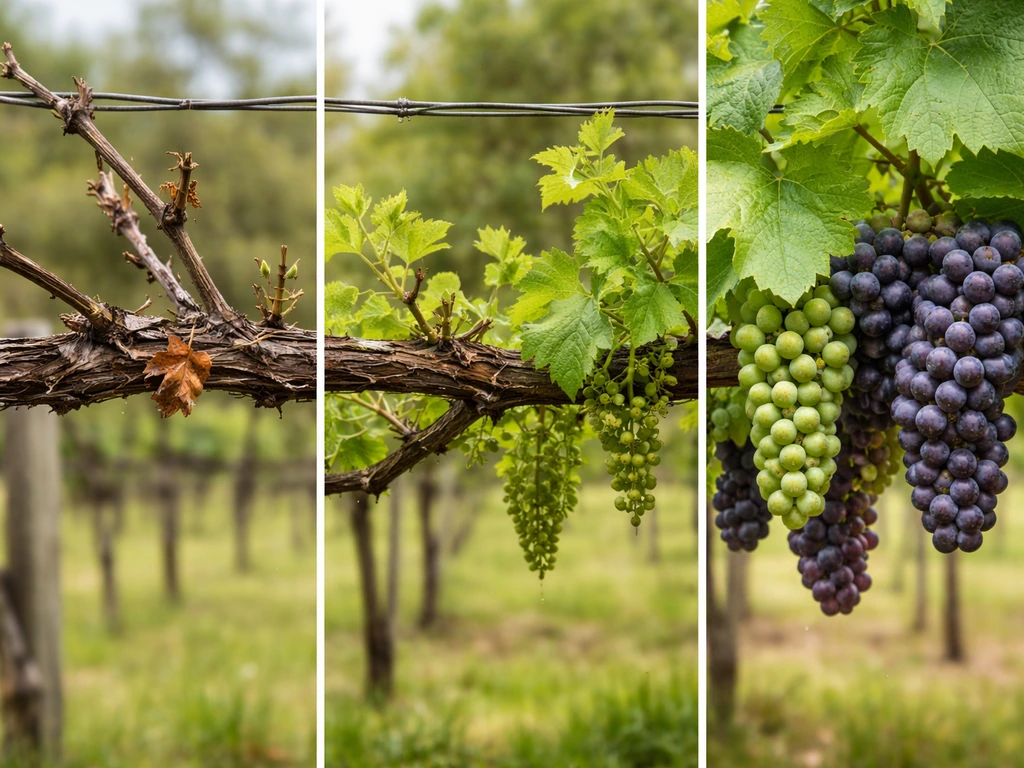
Grapevines follow a predictable annual cycle, and once you understand the sequence, it becomes much easier to plan your whole year around the vine. The stages go like this: deep dormancy in winter, then budbreak in spring, followed by flowering and fruit set, then veraison (the point where berries soften and start coloring up), then full ripening and harvest, and finally post-harvest leaf drop before the vine goes dormant again. Every single year, the same loop.
The critical thing to understand is that 'active growth' doesn't mean the vine is producing fruit the whole time it's leafed out. Grapevines grow leaves well before the fruit clusters are doing much of anything. Fruit set happens after flowering, which is a relatively short window. Under warm, dry conditions flowering can last just one to two days per cluster. Under cool, wet weather it can drag on for close to a month. That variability matters because cool, wet flowering weather often leads to poor fruit set and smaller yields.
Veraison and fruit maturation are their own distinct stage, not just a continuation of flowering. Once you see the berries start to change color and soften, the sugar is ramping up fast and you're on the clock toward harvest. Don't confuse 'the vine looks busy' with 'the fruit is developing.' Each stage has its own care needs.
What season grapes grow in, broken down by climate
There is no single universal answer here, which is exactly why so many beginner gardeners get frustrated. Your climate determines when every single milestone happens. Here's how it shakes out across three broad climate bands:
| Climate Type | Budbreak | Flowering | Veraison | Harvest | Dormancy Begins |
|---|---|---|---|---|---|
| Cool (Upper Midwest, New England, Northern states) | Late April to mid-May | June | Late July to August | September to early October | Late October |
| Temperate (Mid-Atlantic, Pacific Northwest, Midwest) | Late March to mid-April | May to early June | July | August to September | October to November |
| Hot/Long season (California, Southwest, Southeast) | February to March | April to May | June to early July | July to August | November to December |
If you're in a cool northern climate, you're working with a compressed growing season. That's why cold-hardy varieties like Marquette, Frontenac, or Edelweiss exist. The University of Minnesota extension lists Edelweiss with an average harvest time of late August to early September, which tells you the whole productive window is packed into about four months from budbreak. Hot climates in California's San Joaquin Valley or in the Southwest can run well over six months of active vine growth.
If you're curious about how grapes grow seasonally in India, the timing is essentially inverted from the Northern Hemisphere, and the monsoon season creates an entirely different set of management challenges compared to most American climates.
A year-round breakdown for home gardeners
Here's how the whole year maps out from a practical home gardener standpoint. This is structured around a temperate mid-latitude baseline (think Pennsylvania, Oregon, or Missouri), but I'll flag where cool and hot climates shift the timing.
Winter (December through February): deep dormancy
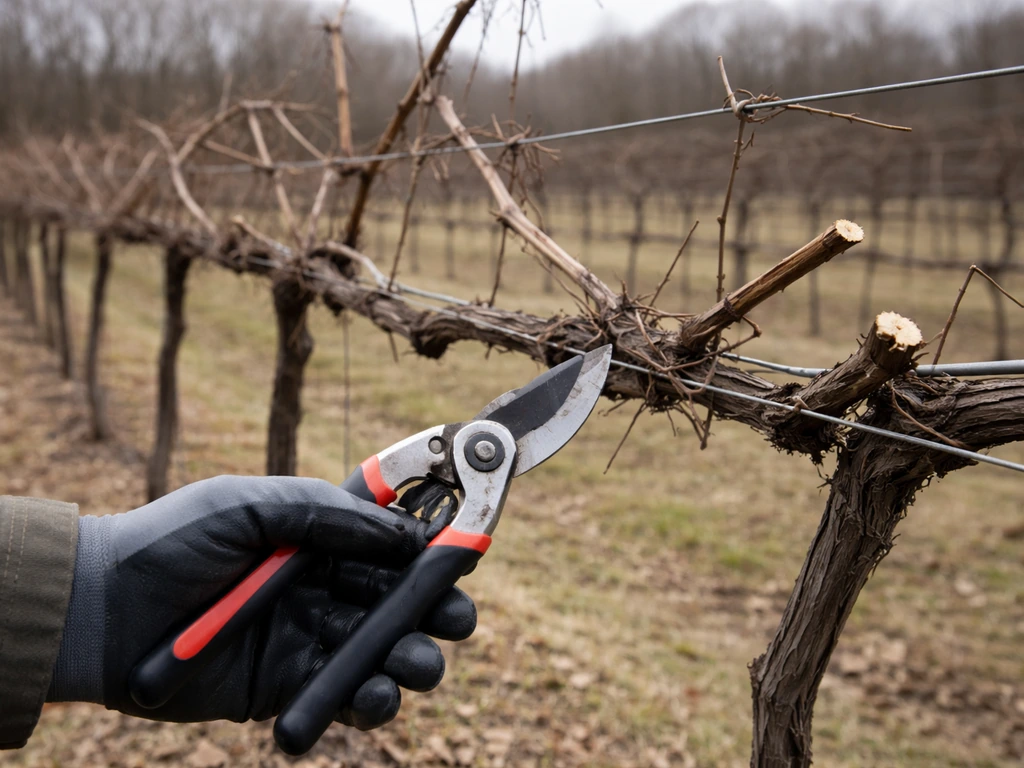
The vine is dormant and leafless. This is actually one of the most important windows of the year for you as a grower, because it's when dormant pruning happens. Pruning can be done any time between leaf drop in fall and budbreak the following spring. Most experienced growers in colder climates aim for late winter, often February into early March, to reduce the window where cut canes are exposed to deep cold. In places like Montana, the typical dormant pruning window lands somewhere in March.
Early spring (March to April): bud swell and budbreak
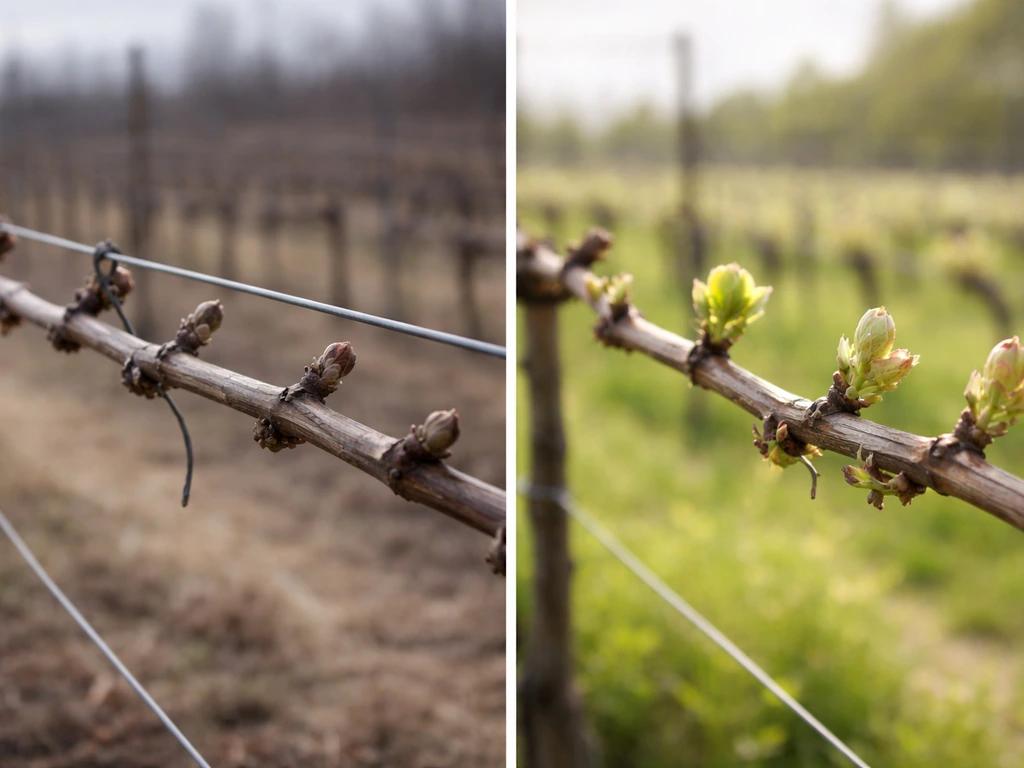
This is the most nerve-wracking time of year. Buds start to swell and eventually break open as temperatures rise, but late frosts can wipe out your entire crop if they hit at the wrong moment. Budbreak readiness depends on the vine having fulfilled its chilling hour requirements through winter. Once those are met, the vine enters ecodormancy and becomes increasingly sensitive to warm temperatures. A warm spell in late February can pull buds out early, and then a frost in March can cause serious damage. WSU has done detailed work on cold hardiness and variety-specific bud damage thresholds, which is worth knowing if you're in a frost-prone location.
To understand exactly when grapevines start to grow in your specific area, your best anchor point is your average last frost date combined with the typical temperatures in your region following that date.
Late spring (May to June): flowering and fruit set
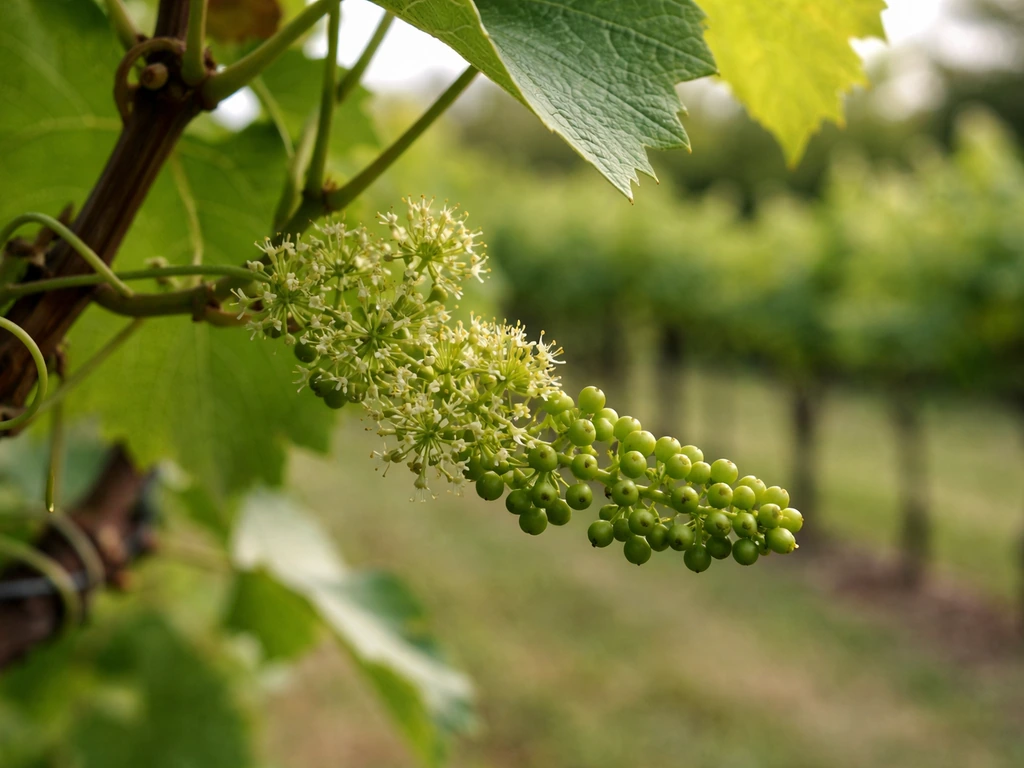
This is a short but critical window. Shoots are growing fast, the canopy is filling in, and flowering occurs. Disease pressure is high during bloom, and Penn State recommends applying protective sprays just before bloom, then again 7 to 10 days later at the end of bloom, and then 10 to 14 days after that. Proper canopy management is essential right now, because a tangled, dense canopy during bloom promotes disease and poor air circulation through the entire growing season.
Summer (July to August): veraison and fruit development
Once fruit set is confirmed and clusters are sizing up, you enter the long development phase toward veraison. At veraison, berries soften, change color, and start accumulating sugar rapidly. This is when you take your foot off the nitrogen and focus on letting the fruit ripen. University of Minnesota extension recommends taking petiole samples at bloom and again at early veraison to check nutritional status, which helps you make smart late-season adjustments. The specific month when grapes grow most actively in terms of fruit development is typically July for hot climates and August for cool ones.
Late summer to fall (August to October): harvest
Harvest timing depends entirely on your variety and your heat accumulation through the season. In cooler climates you're often racing the first fall frost to get fruit off the vine with enough sugar. In warmer climates, managing the window between veraison and over-ripening is the bigger concern. After harvest, let the vine continue to photosynthesize through the remaining leaves until natural leaf drop occurs. That post-harvest period is the vine building reserves for next year.
How to figure out your exact growing window
The most reliable tool for pinpointing your seasonal milestones is Growing Degree Days, or GDD. MSU Enviro-weather provides growing degree-day monitoring using a 50°F base and cumulative GDD calculations to support grape phenology planning Growing Degree Days, or GDD. The method is simple: every day you calculate how much the average temperature exceeded 50°F (the base temperature for grapevines), and you accumulate those degree-day units through the season. WSU uses this approach in their viticulture work. Missouri State University uses a practical convention of setting the GDD clock to zero on April 1 and accumulating from there. If your region is warmer, GDD accumulates faster and your vine hits milestones earlier. Cooler regions accumulate slowly and milestones come later.
Penn State and Iowa State both publish cultivar-specific GDD benchmarks. MSU extension uses GDD alongside days-post-bloom tracking, noting for example that Concord berries reach 50% of final berry weight at around 1,100 to 1,210 GDD. If your location typically accumulates that number by late August, that's roughly when you'd expect to be thinking about harvest for that variety. NMSU adds a useful note: if your budbreak happens in March rather than April, you may need to adjust GDD accumulation expectations upward because you're starting from a different heat baseline.
The simplest approach for a home gardener: look up your average last spring frost date and your average first fall frost date. That window is your maximum growing season. Then check what GDD your location typically accumulates between those dates and compare it to the requirements of the varieties you want to grow. Penn State emphasizes that knowing both your growing season length and your cumulative GDD is essential for setting realistic ripening expectations.
If you're not sure how this plays out month by month in your location, working out which month grapes grow most actively in your area is a good starting exercise. Pair it with your local frost date data and you'll have a usable planning framework pretty quickly.
What to actually do in each stage
Knowing the seasons is only useful if you know what to do during each one. Here's the practical action list:
- Dormancy (winter): Complete dormant pruning before budbreak. You can prune long first to get a rough cut done, then refine once budbreak shows you which buds are viable. Tying canes and setting up your training structure now saves time in spring.
- Budbreak (early spring): Watch frost forecasts closely. Know your variety's bud hardiness threshold. If a late frost is forecast after budbreak, have row covers or frost protection ready. Avoid nitrogen-heavy fertilizing that pushes overly soft, frost-susceptible early growth.
- Shoot growth and flowering (late spring): Focus on canopy management. Tuck shoots into the wire system, remove suckers, and keep the fruit zone open. Apply disease protection sprays timed to bloom, not just at calendar dates.
- Veraison and ripening (summer): Ease off irrigation as fruit ripens unless you're in an extremely dry climate. Take a petiole sample at early veraison if you're tracking nutrition. Start monitoring sugar levels (Brix) as you approach harvest.
- Harvest (late summer to fall): Harvest timing is about flavor and sugar, not just color. Taste the fruit, check Brix, and don't rush. After picking, let the vine hold its leaves as long as possible to build root reserves.
- Post-harvest (fall): Reduce irrigation, let canes harden off, and start preparing for dormant pruning once leaves drop naturally.
Understanding where grape leaves grow on the vine is genuinely useful during canopy management, because knowing how the shoot and leaf architecture works helps you make smarter decisions about which shoots to keep and which to remove during the growing season.
Mistakes people make when they think about 'grape season'
The most common mistake I see beginners make is treating 'when grapes grow' as a single event rather than a multi-stage process. They plant in spring, assume the vine is 'growing' all summer, and then get confused when harvest timing doesn't match their expectations. Here are the specific traps to avoid:
- Confusing vine activity with fruit development: The vine is leafed out and photosynthesizing long before the fruit is doing much. Seeing a full, green canopy in June doesn't mean the grapes are close to harvest. Fruit set, veraison, and ripening are all still ahead.
- Using neighbor's timing instead of your own frost dates: Even two or three miles away, a frost pocket or south-facing slope can shift budbreak and harvest by two to three weeks. Use your own last and first frost dates, not someone else's.
- Pruning too early in cold climates: Dormant pruning done in December or January sounds efficient, but in cold climates it leaves cut wood exposed to the worst cold of winter. Late winter pruning (February to early March) is usually smarter in zones 4 to 6.
- Ignoring the chilling hour requirement: Vines that don't get enough winter cold don't break dormancy properly in spring. This is a real problem in mild-winter areas of the South. Choosing low-chill varieties for warm winters, or high-chill varieties for cold regions, is not optional.
- Assuming grapes ripen 'in summer': In cool northern climates, harvest can push well into October. Planning a variety with a 160-day growing requirement in a 140-day season is a recipe for unripe fruit every single year.
- Skipping post-harvest care: After harvest, many growers mentally check out for the year. But the vine needs those remaining weeks of leaf function to pack carbohydrates into roots and canes for next year's growth. Mowing the vineyard floor and calling it done too early shortchanges next season.
One less obvious mistake: confusing grapes with other fruit trees. If you've ever wondered when grapefruits grow, you'll quickly find they're on a completely different seasonal schedule and have very different climate requirements than grapevines. The two share almost nothing in common from a growing-calendar standpoint, so any crossover assumptions will steer you wrong.
Your next steps right now
Since it's early April, here's what you should be doing today depending on where you are. If you're in a cool northern climate (Minnesota, Michigan, northern New England), budbreak is likely just starting or imminent. Double-check your frost forecast for the next two to three weeks and make sure your pruning is done or nearly done. If you're in a temperate mid-latitude climate (Oregon, Pennsylvania, Missouri), you may already be past budbreak and into early shoot growth.
Focus on canopy management and get your disease spray schedule set up around anticipated bloom timing. If you're in a hot climate (California Central Valley, Texas, Arizona), you could easily be past bloom already and approaching fruit set. Your focus now is canopy management and starting to track GDD toward veraison.
Whatever your region, the framework is the same: anchor your whole season to your local last frost date in spring and your first frost date in fall. Use GDD accumulation as your guide for variety selection and harvest-window estimation. Match variety to season length, not the other way around. And treat dormancy as a productive time for preparation rather than a break from gardening. The growers who stay one step ahead of the vine's seasonal clock are the ones who consistently get good fruit.
FAQ
Do grapes grow year-round, or is there a true dormancy period?
There is a true dormancy period. In most climates the vine is leafless and largely inactive through winter, then resumes active growth after budbreak, with flowering and fruit development occurring only during the warmer months. If you see growth in winter, it is usually mild regrowth or new shoots from a damaged or partially broken dormant cycle, not a normal full growing season.
What season does grapevines grow fruit, versus just grow leaves?
Fruit development is concentrated after flowering and into veraison, with harvest typically in late summer or fall depending on variety and location. Leaves and shoots can expand well before clusters are ready, so if you judge “growing season” by canopy size alone, you can mis-time pruning, feeding, and harvest prep.
Can I start planting grapes in fall, or does spring planting work better?
Spring planting is usually the safer choice for beginners because roots establish as temperatures rise and there is less risk of winter injury. Fall planting can work in mild regions if the plant has time to root before cold weather, but it is higher risk in climates with early freezes or unstable winter temperatures.
When do grapes start growing after pruning, and why do some buds break earlier than others?
Budbreak timing depends on chilling fulfillment and how quickly temperatures warm after ecodormancy. Warm spells can trigger earlier swelling, but fruit damage can still happen if a frost follows. Different buds also break unevenly, which is why thinning or selective shoot management is often needed once you see which shoots establish.
How do I use frost dates if my yard gets microclimates (valleys, slopes, or nearby walls)?
Use the average last frost and first frost for your general region as a starting point, then adjust based on your site. Low areas trap cold air longer, slopes often stay warmer, and south-facing walls can warm buds earlier. Practically, if you are in a frost pocket, plan for protection during the budbreak to early shoot growth window rather than assuming averages will protect you.
What if my grapes are already in leaf but I missed pruning timing?
Avoid major pruning once buds are fully active unless you are doing light correction. Late pruning can remove developing buds or increase stress, especially if vines are already near bloom. If you must adjust, focus on training and removing only clearly unwanted shoots, and keep nitrogen modest to avoid pushing excessive vegetative growth.
Do table grapes and wine grapes follow the same seasonal timeline?
They follow the same general seasonal stages (dormancy, budbreak, bloom, veraison, harvest), but their harvest windows and heat requirements can differ significantly. A variety that reaches veraison quickly in warm climates may not ripen fully in cooler areas, so choose based on your local growing season length and accumulated GDD rather than assuming all grapes behave the same.
How should I track “what month grapes grow most actively” if my temps swing a lot year to year?
Instead of relying on a calendar month, track milestones using Growing Degree Days. Year-to-year temperature variability can shift budbreak, bloom, and veraison, even if the month is the same. Using GDD helps you estimate when your variety should reach stages like early veraison for nutrition and ripening management.
Is it normal for flowering to take only a few days, or can it last weeks?
It can vary. Under hot, dry conditions, flowering may be very short, while cool or wet weather can extend the bloom window and still increase disease pressure. If bloom lasts longer than expected in a cool, damp spring, expect more careful canopy airflow management and timely protective coverage.
What is the biggest “season mistake” beginners make?
The most common error is treating “grapes grow” as one event. Budbreak, flowering, veraison, and harvest are distinct stages with different care priorities. If you plan everything based only on when leaves appear, you can overfeed early, underprepare for bloom disease pressure, or miss the nutrition shift needed around veraison.
Should I fertilize the same way throughout the season?
No, fertilization timing should change as the season progresses. A common adjustment is to reduce or stop nitrogen focus as berries approach veraison, since continued nitrogen emphasis can promote leafy growth at the expense of ripening. If you use petiole sampling, check again around bloom and early veraison so late-season decisions are based on your vine’s actual nutritional status.
How can I estimate harvest timing if I do not know my variety’s exact requirements?
Start with your frost dates to estimate the maximum possible window, then use typical GDD accumulation in your area to see whether the variety’s ripening stage is likely to complete before fall cold. If you are unsure, choose varieties known to ripen reliably in climates similar to yours, and use GDD and days post-bloom to refine expectations during the season.