
Yes, grapes absolutely grow in the wild across most of North America, and depending on where you live, there's a decent chance wild vines are already growing within a short drive of your home. In the eastern U.S. alone, you'll find at least five common native Vitis species including Vitis riparia (riverbank grape), Vitis labrusca (fox grape), Vitis aestivalis (summer grape), Vitis rotundifolia (muscadine), and Vitis vulpina. Each one has a slightly different habitat preference, but most wild grapes share a love of edges: edges of woods, edges of water, edges of roads, and edges of old fields. Once you know what to look for and where to look, you'll start spotting them everywhere.
Where Do Wild Grapes Grow Find Vines Near You
Marcus Whitfield
7 May 2026
What 'wild grape' actually means and which species you're likely to find
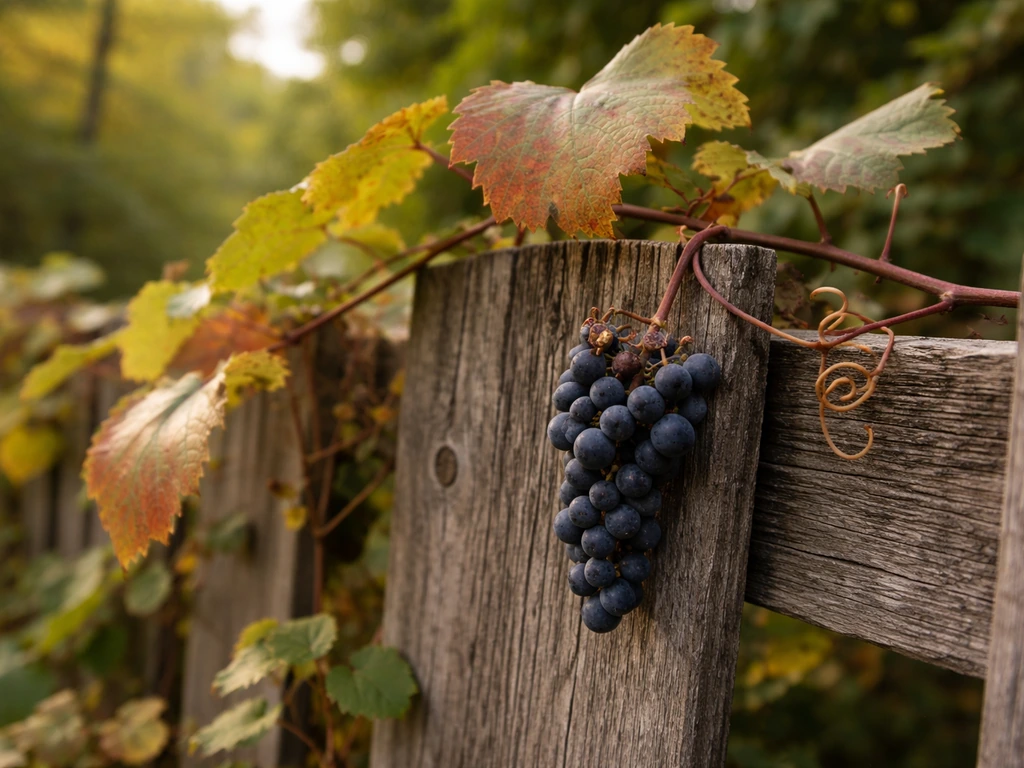
When people say 'wild grape,' they're usually talking about one of the native North American Vitis species that established themselves long before anyone planted a vineyard. These aren't escaped cultivated grapes gone feral (though that does happen). They're true native plants with their own ecological roles, hardiness ranges, and fruit characteristics. The species you're most likely to encounter depends almost entirely on where you live.
| Species | Common Name | Primary Range | Hardiness Zones | Key Habitat |
|---|---|---|---|---|
| Vitis riparia | Riverbank grape | Central and eastern Canada, much of the U.S. | 3–7 | Stream banks, pond edges, fencerows, roadsides |
| Vitis labrusca | Fox grape | Eastern U.S. and southern Canada | 4–8 | Wetland edges, thickets, woodland margins |
| Vitis aestivalis | Summer grape | Eastern and central U.S. | 5–9 | Upland sites, open woodlands, forest edges |
| Vitis rotundifolia | Muscadine | Southeast U.S. (GA to TX, north to DE) | 7–10 | Sandy Coastal Plain soils, roadsides, thickets |
| Vitis cinerea | Possum grape / graybark grape | South-central and southeastern U.S. | 6–9 | Bottomlands, thickets, disturbed areas |
If you're in the Midwest or Great Plains, riverbank grape (V. riparia) is probably the one you'll run into most. Head into the Southeast and muscadine takes over. In New England or the mid-Atlantic, fox grape and summer grape are the usual suspects. Knowing which species is realistic for your area narrows down your scouting significantly.
Where wild grapes actually show up: the habitats they love
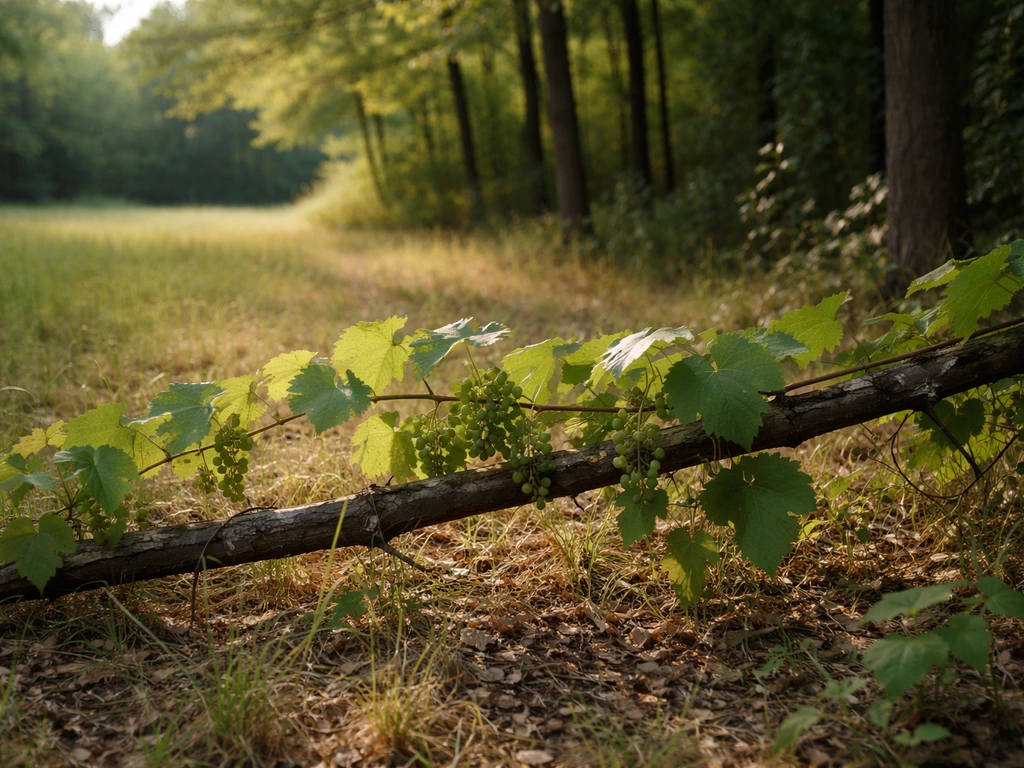
Wild grapes are edge plants. They aren't typically growing in the middle of a dense, mature forest or in the open center of a field. They want the transition zones where sunlight hits the ground at an angle and they can scramble up into the canopy. Once you internalize that, finding them gets much easier.
Here are the specific land features worth checking first, roughly in order of likelihood:
- Stream banks and river corridors: Vitis riparia in particular is strongly tied to waterways. Look along creek edges, pond margins, alluvial woodlands, and ravines. Anywhere water runs seasonally, there's a good chance riparia has established itself nearby.
- Fencerows and old fence lines: Wild grapes use any vertical structure they can find. A fence line running along a field edge or property boundary is one of the most reliable places to spot established vines.
- Roadsides and railroad rights-of-way: Disturbed ground plus edge light plus no competition from mature trees equals perfect wild grape territory. Rural roadsides are some of the best scouting locations available.
- Abandoned fields and old lots: Once a field stops being mowed or farmed, wild grapes move in fast. Look for vines draped over shrubs and small trees in fields that have been left alone for five or more years.
- Woodland edges and forest margins: Where a tree line meets a meadow, clearing, or road cut, you'll find vines climbing up the outermost trees, sometimes heavy enough to bend branches.
- Thickets and scrub: Dense shrubby areas with multiflora rose, sumac, or young trees are ideal habitat. Wild grapes weave through these thickets and are sometimes only visible by the fruit hanging out above the shrub layer.
Penn State Extension notes that wild grapes can become so abundant in some woodlands that they actually outcompete overstory trees for sunlight and contribute to branch breakage during storms. That's a sign of just how aggressively they can colonize good habitat once established.
The conditions that control where wild grapes grow
Sunlight
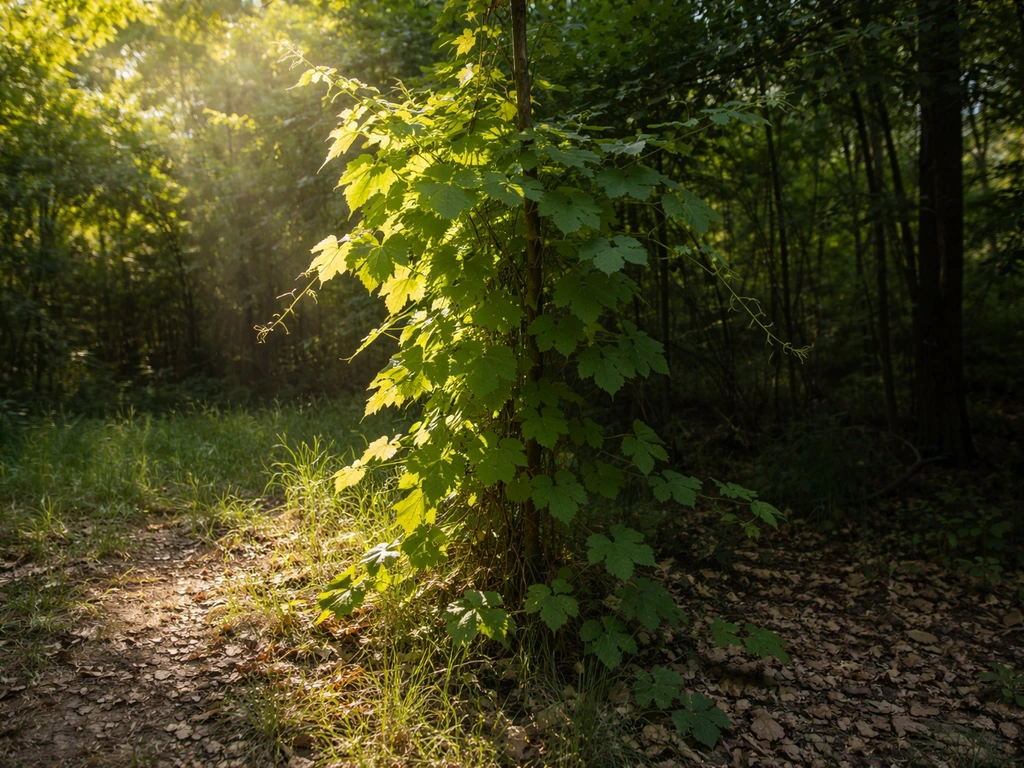
All wild grape species want at least partial sun, and most perform best in full sun. This is exactly why you find them at edges rather than inside closed-canopy forest. Muscadine in particular is described consistently as a full-sun plant, which lines up with its preference for open roadsides and the sunny margins of Coastal Plain forests.
Soil
Wild grapes are surprisingly flexible on soil. Vitis riparia tolerates most soil textures and a wide pH range, from moist to moderately dry conditions. Summer grape (V. aestivalis) grows on sand, clay, and loam but is most abundant on lighter, nutrient-rich soils with decent moisture. Muscadine is the pickiest of the group: it strongly prefers sandy loams with a pH of around 5.5 to 6.5 and good drainage, which explains why it's concentrated in the sandy soils of the Coastal Plain rather than spreading into heavier clay country.
Moisture
Most wild grapes like consistent moisture but not waterlogged soil. Riverbank grape is the exception in that it naturally grows right at the water's edge, in alluvial soils that flood seasonally. Fox grape is described as usually associated with wetlands, which is unusual compared to most other Vitis species. If you're scouting low-lying or consistently wet areas, those are actually the right places to look for labrusca, not just riparia.
Disturbance history
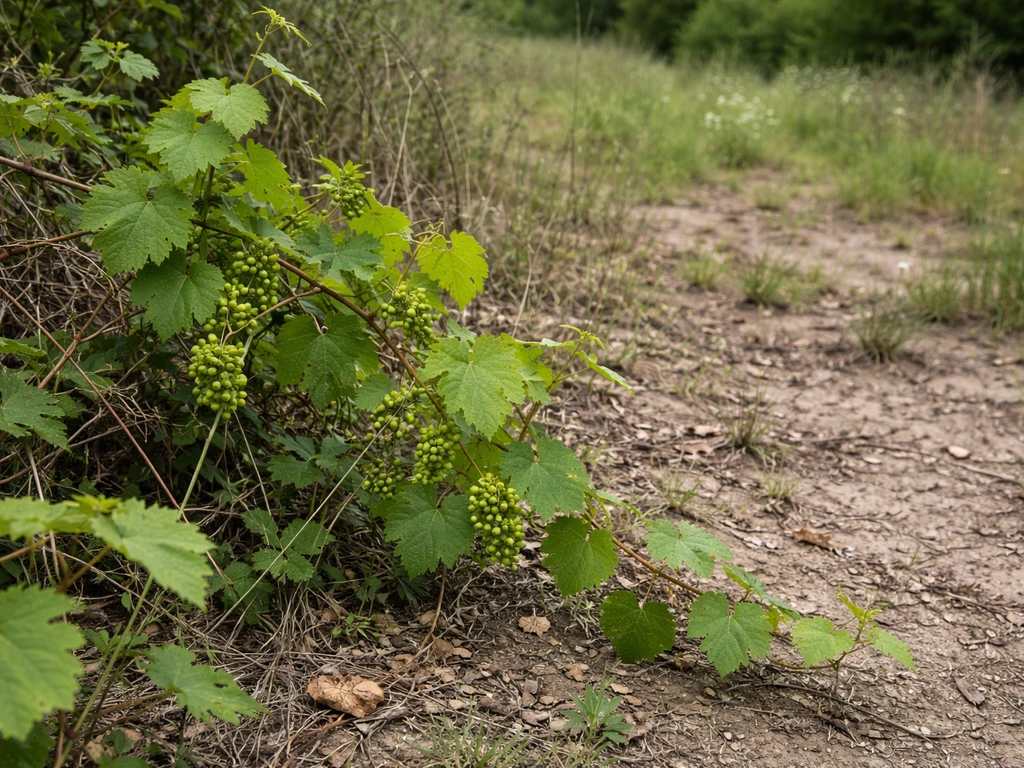
This one is underrated. Wild grapes thrive in disturbed environments. Old fields, abandoned railroad beds, roadsides with periodic mowing, and logged-over woodlands all create the kind of open, edge-heavy conditions that wild grapes exploit. If you're trying to assess whether an area is likely to have wild grapes, ask yourself whether it's been disturbed in the last 5 to 50 years. Fresh disturbance plus light plus a seed source nearby is basically a recipe for wild grape colonization.
How to figure out if wild grapes grow in your area
The easiest way to assess your local likelihood is to combine your hardiness zone with your region's geography. Here's a rough breakdown:
- Zones 3–6, Upper Midwest and Great Plains: Vitis riparia is your most likely wild grape. It's native from eastern Montana to Nova Scotia and south into Texas. If you're near any waterway or have rural roadsides nearby, there's a high probability it's already there.
- Zones 5–8, Mid-Atlantic and New England: Fox grape (V. labrusca) and summer grape (V. aestivalis) are both realistic finds. Fox grape is somewhat uncommon but possible near wetland edges; summer grape is more widespread on upland sites.
- Zones 6–9, Southeast and South-Central: Muscadine (V. rotundifolia) is the dominant wild grape from Georgia to Texas and up the Atlantic coast to Delaware. Sandy soils, full sun, and the humid South are its sweet spot. You may also encounter possum grape (V. cinerea) in bottomlands and thickets.
- Zones 7–9, Pacific Coast and Southwest: Native wild grapes are much less common here. Vitis californica (California wild grape) exists in California along streams, but the diversity and abundance of wild Vitis drops off sharply west of the Rockies.
For a more precise county-level check, iNaturalist and GBIF both have observation maps you can filter by species. Search Vitis riparia or Vitis labrusca and zoom to your county. If there are observations near you, there's a solid chance more vines are present that haven't been logged yet. Go Botany (from Native Plant Trust) has state-level maps for northeastern species if that's your region.
How to scout and identify wild grape vines in the field
The best time to scout is either late summer through fall (mid-August through October) when fruit is visible and ripe, or early spring when you can spot the shaggy bark before leaves block your view. Summer grape fruit can actually persist on the vine from mid-August into early winter, so even a November walk can turn up confirmed plants with fruit still attached.
What to look for
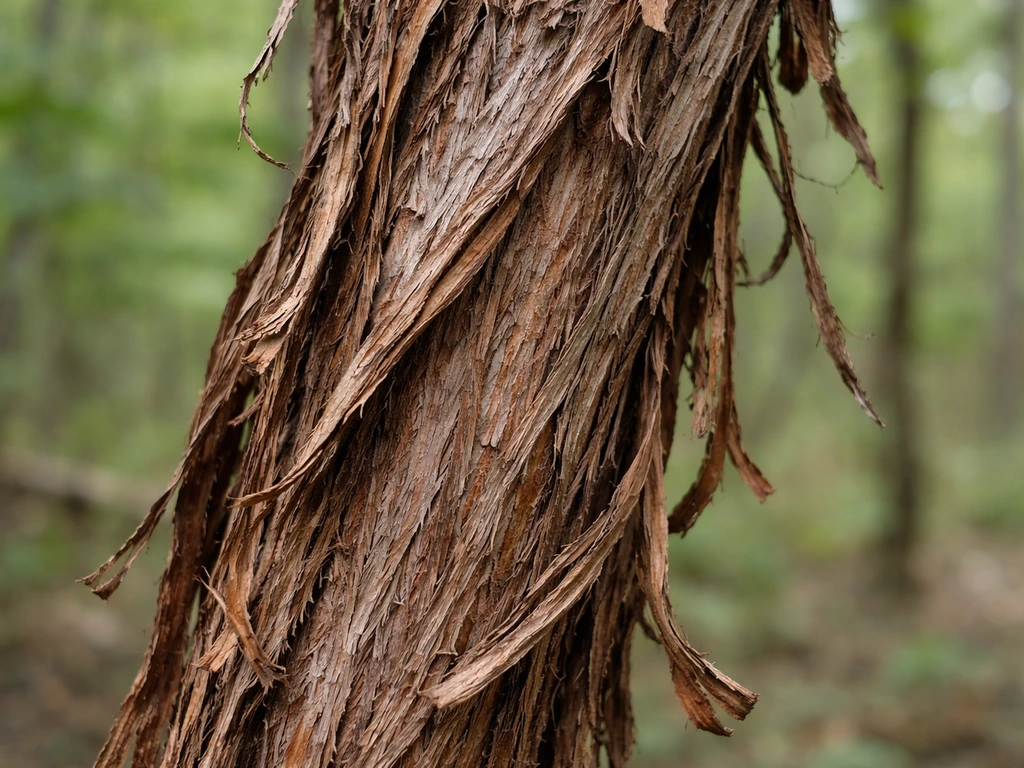
- Shaggy, peeling bark on older vines: Mature wild grape trunks have a distinctive loose, fibrous, reddish-brown bark that shreds in long strips. This is one of the best winter and early-spring ID cues when no leaves are present.
- Forked tendrils opposite the leaves: Most native Vitis species climb using bifid (two-branched) tendrils that appear opposite a leaf on the stem. This is a reliable field marker. Muscadine is the exception: its tendrils are simple and unbranched.
- Alternate, heart-shaped to lobed leaves with toothed margins: Wild grape leaves are typically broad, somewhat heart-shaped at the base, with serrated or toothed edges. Vitis riparia leaves have noticeably toothed margins.
- Small, dark berries in clusters: Wild grape fruit is small (usually under 1 cm for most species), dark blue to black at maturity, and grows in loose clusters. The berries have a powdery bloom and smell distinctly grape-like when crushed.
- Foxy aroma in fox grape: Vitis labrusca fruit has a distinctive musky, 'foxy' smell and the berries slip easily from their skins (slipskin character), which is a reliable ID cue if you can reach ripe fruit.
Don't confuse wild grape with these common lookalikes
Virginia creeper is the biggest source of confusion. It climbs aggressively, shows up in the same habitats as wild grape, and produces dark berries in fall. But Virginia creeper has palmately compound leaves made up of five separate leaflets (wild grape has one simple, lobed leaf), and its tendrils end in adhesive pads that stick to surfaces rather than wrapping around stems. If the vine is glued flat against a wall or tree trunk, it's almost certainly Virginia creeper, not grape. Moonseed (Menispermum canadense) is another lookalike with similar leaves but produces crescent-shaped seeds (not round grape seeds) and lacks tendrils entirely.
What to do after you find wild grape vines
Finding established wild vines near your property is genuinely useful information for a home gardener, for a few reasons. First, it confirms that grape growing is viable in your local climate and soil without you having to do any research. If a grape vine has survived on its own through winters, drought, and competition, your cultivated conditions will likely be even better. Second, wild vines can be a source of propagation material, with some important caveats.
Cuttings versus seeds: which is worth your time
If you're going to propagate from a wild vine, cuttings or layering are almost always the better choice over collecting seeds. Seeds from wild grapes don't come true to the parent plant: you'll get genetic variation and likely a weaker or more variable result than you started with. Hardwood cuttings taken in late winter or early spring, by contrast, give you a vine that is genetically identical to the parent. NC State Extension is explicit about this: propagation by cuttings provides true-to-type vines, while seed propagation does not.
One important warning from NMSU's propagation guides: if you're taking cuttings from a vine that might be a hybrid or an escaped cultivated grape (which does happen near old homesteads and gardens), label everything carefully and keep those cuttings separate. You don't want to accidentally propagate something you can't identify later.
Know the rules before you collect anything
If the wild vine is on public land, including national parks, national forests, or state parks, collecting any plant material is typically illegal. The NPS explicitly lists wild grapes among protected plants in its parks. Stick to vines on private property where you have permission, or better yet, use the wild population as a guide to which cultivated varieties will work in your climate and purchase those from a reputable nursery.
Using wild grape sightings to choose cultivated varieties
This is honestly the most practical takeaway for home gardeners. If you're finding Vitis riparia growing wild in your area (zones 3–6), that's a strong signal that cold-hardy hybrid varieties bred from riparia parentage, like Frontenac, Marquette, or Bluebell, have a real shot in your garden.
If muscadine is growing wild in your part of the Southeast, that confirms you're in muscadine territory and should look at named muscadine cultivars rather than trying to grow standard European or labrusca varieties that will struggle with your heat and humidity. If you are wondering where do muscat grapes grow, your best bets are warm, sunny parts of the Southeast where muscadine conditions match sandy, well-drained soils. Wild grape distribution is essentially free climate data.
If you're curious about specific wild species like possum grapes or muscadines, or you're wondering whether named cultivars like Moon Drop can be grown at home, those are separate but related questions worth digging into alongside this one. For help with that exact question, see where possum grapes grow and what conditions they prefer. Moon Drop grapes grow best in warm, sunny regions with well-drained soil, where they can ripen reliably. The core point is the same across all of them: where wild grapes already grow tells you a lot about where cultivated grapes can thrive.
FAQ
If I want to scout for wild grapes near me, what spots should I check first if I only have an hour?
Start with the land edges the vine uses most, then check what species is likely for your region. In general, look along sunny woodland borders, stream banks with partial shade, roadsides, and old field margins, then narrow by local habitat (sandy, well-drained for muscadine, low wet areas for fox grape, and streamside alluvium for riverbank grape).
What if I don’t see grapes, can wild grape still be there?
Wild grape can be present without obvious fruit, especially if birds removed it or the vines are young. Use structure clues instead: twining vines that climb into shrubs or trees, tendrils, and the typical single simple lobed grape leaf, then confirm by searching for prior year stem scarring or any berry remnants.
When is the best time to find wild grapes if the season is already late?
Yes, but it depends on the species and year. Summer grape fruit can persist well into late fall, so fruit visibility varies by species, temperature, and how quickly wildlife harvests it. If you miss late summer through fall, check again early spring for bark and growth habit, then use leaf and tendril traits to confirm.
What common plants get confused with wild grape, and how can I tell them apart quickly?
Many lookalikes share similar leaves or berries, but wild grape leaves are not the same as Virginia creeper leaves, and Virginia creeper’s tendrils attach with adhesive pads rather than wrapping. Moonseed also lacks tendrils and has distinctive crescent-shaped seeds, so seed checks or tendril behavior are often the deciding factor.
Will wild grapes grow in shade, or do they need full sun?
Most wild grapes will want partial to full sun, so a shaded spot under a closed canopy is less likely. However, “shade” at an edge can still work if the vine gets enough angled light, for example a woodland margin where the canopy opens seasonally.
Why do wild grapes show up in some places but not others that look similar on a map?
Even within the same region, microclimate matters. Riverbank grape often tracks seasonally flooded alluvial soils right at water’s edge, while muscadine is strongly tied to sandy loam and good drainage. If you find one species, expect neighbors with similar soil moisture and sun exposure, not random vines everywhere.
Is it always legal to take cuttings from wild grapes if they’re growing in public parks?
If you’re harvesting cuttings or any plant material, rule out public-land restrictions first. Many jurisdictions treat protected plants differently by park or agency, so permission and legality can vary, even when the plant is widespread.
How can I use what I find growing wild to choose grape varieties I can actually grow?
For backyard planting decisions, identify the most likely wild species first, then match cultivars to that climate tolerance. Finding riverbank grape often points to cold-hardy hybrids, while muscadine presence is a strong signal for hot, humid, sandy, well-drained conditions and muscadine-type cultivars.
If I collect seeds from wild grapes, will the new vines taste and perform like the parent?
If your goal is to propagate true plants, use cuttings or layering from the identified vine. Seed-based propagation usually produces genetic variation and can yield grapes that perform differently than the parent, so cuttings are the safer bet for predictable results.
What should I watch out for if the wild vine looks like it might be an escape or hybrid?
Yes, but be careful: hybrids and escaped cultivated grapes can appear near old homes, farmsteads, and gardens, and they may not match “native” expectations. Use careful labeling and keep material from different vines separated so you can identify what you actually propagated later.