
The best grapes for pots are compact, disease-resistant varieties that ripen before your first fall frost and don't need acres of root run to produce fruit. For most home gardeners, that means reaching for tried-and-true options like Reliance (seedless, pink, zones 5–8), Concord Seedless (blue, zones 4–9), or Venus (blue, zones 5–9) for colder and mid-range climates, and Flame Seedless or Thompson Seedless for warm-winter zones (8b–10). These are manageable, forgiving, and productive in a 15–20 gallon container with a little trellis support. Keep reading and I'll walk you through picking the right one for your state, then setting it up so it actually fruits.
Best Grapes to Grow in Pots: Top Varieties and Setup
Marcus Whitfield
28 Jun 2026
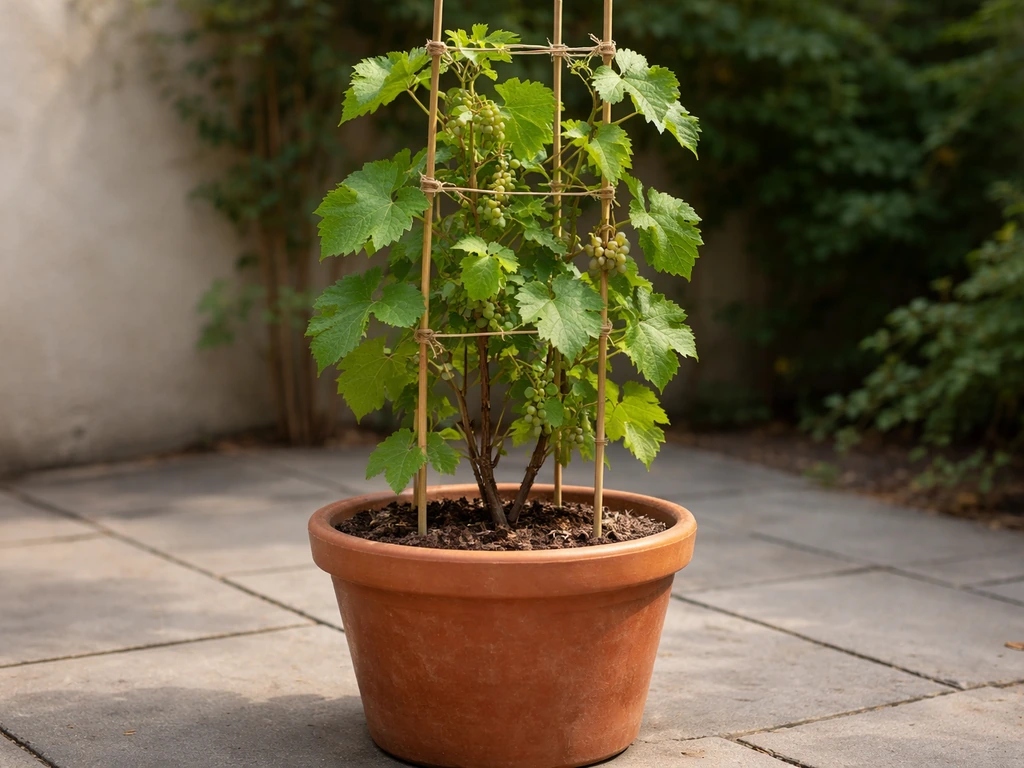
The best grape varieties to grow in pots
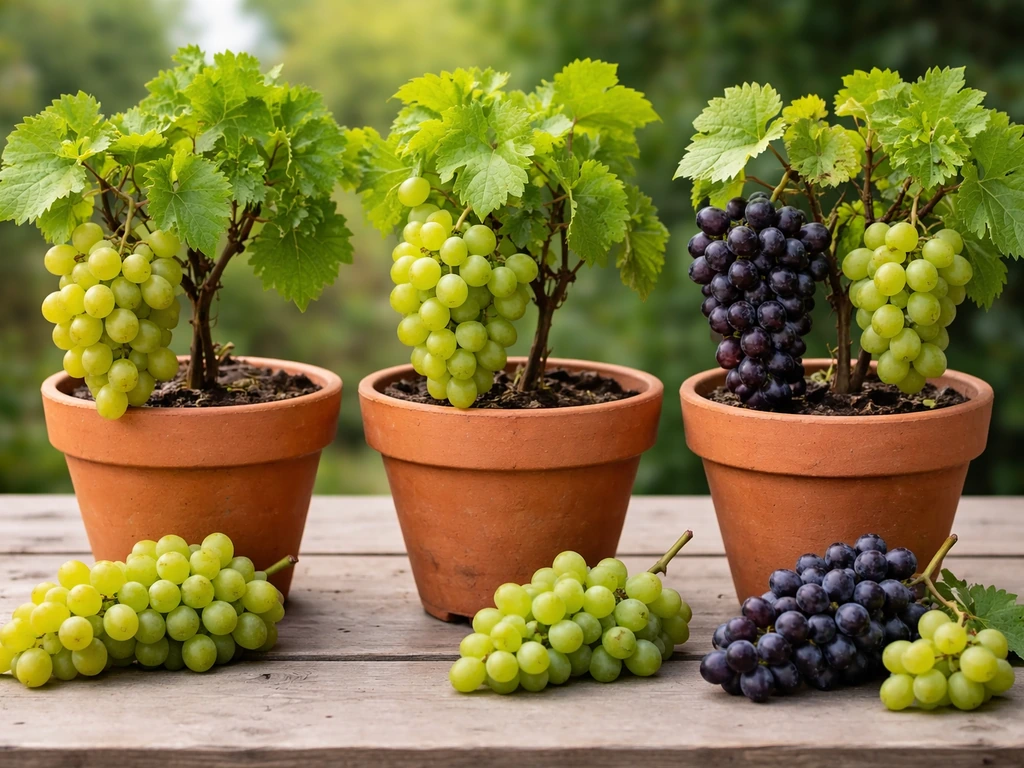
Container grapes succeed when you pick a variety that matches three things: your climate zone, your desired fruit type (seeded vs. best grape plants to grow. seedless, table grape vs. juice), and a vine that stays manageable in a confined root zone. Vigorous giants like some Muscadine selections or standard Concord (which can run 20+ feet) will fight you. Compact, disease-resistant cultivars cooperate.
Seedless table grapes are almost always the right call for home growers. They're easier to eat, kids love them, and several of the best ones happen to be cold-hardier than most people expect. If you want the best grapes to grow for eating, focus on seedless table varieties that ripen reliably in your climate. Here are my top picks across climate groups:
| Variety | Type | Hardiness Zone | Days to Maturity | Why It Works in Pots |
|---|---|---|---|---|
| Reliance | Seedless red/pink | Zones 5–8 | ~130 days | Compact habit, excellent disease resistance, reliable bearer in small containers |
| Concord Seedless | Seedless blue/purple | Zones 4–9 | ~140 days | Very cold-hardy, forgiving of pruning mistakes, classic flavor |
| Venus | Seedless blue | Zones 5–9 | ~130 days | Moderate vigor, good disease resistance, ripens mid-season |
| Suffolk Red | Seedless red | Zones 5–8 | ~135 days | Compact, excellent fresh flavor, adapts well to containers |
| Flame Seedless | Seedless red | Zones 7–10 | ~115–120 days | Early ripening, thrives in heat, great for Southern and Western pots |
| Thompson Seedless | Seedless green | Zones 7–10 | ~145 days | Classic California table grape, needs long hot summers to ripen fully |
| Marquette | Seeded red/wine | Zones 4–8 | ~145 days | Extremely cold-hardy UMN release, handles harsh winters well |
| Edelweiss | Seeded white/table | Zones 4–7 | ~110 days | Very early ripening, great for short-season northern climates |
| Himrod | Seedless gold | Zones 5–8 | ~120 days | Early, productive, loose clusters reduce rot risk in humid climates |
One thing worth knowing: grapes are self-fruitful, so you only need one vine to get fruit. You don't need a second variety for pollination, which makes container growing much simpler if you're working with limited space.
If you're also considering grapes for eating fresh versus winemaking, or comparing in-ground planting with container culture, the overlap with what works best for eating or in general home garden settings is significant. The varieties above appear consistently across those contexts for good reason: they're just reliable.
Matching your grape to your climate and state
This is where most container grape projects succeed or fail before a single vine is planted. The core question isn't just 'what grows in a pot?' It's 'what ripens reliably before my frost date, survives my winters (even in a pot), and handles my summer humidity?' Those three filters narrow your list fast.
Cold climates: Zones 4–6 (Upper Midwest, New England, Mountain West)
European Vitis vinifera varieties like Cabernet Sauvignon or Chardonnay are a poor choice here. They're not cold-hardy enough for Minnesota, Wisconsin, Michigan, or northern New England winters without burying the vines, which is impractical in a pot. Stick with cold-climate hybrids bred specifically for these zones: Reliance, Concord Seedless, Marquette, Edelweiss, and Himrod are your strongest options. Edelweiss is especially useful for Zone 4 gardeners because it ripens around 110 days, well ahead of a typical September frost.
Mid-range climates: Zones 6–8 (Mid-Atlantic, Pacific Northwest, Transition South)
This is the sweet spot for container grapes. You have enough summer heat to ripen mid-season varieties and winters mild enough that overwintering pots isn't a crisis. Reliance, Venus, Suffolk Red, and Himrod all perform well here. If you're in the Pacific Northwest, powdery mildew resistance matters more than in arid zones, so Venus and Reliance are smart picks. The Pacific Northwest also has the added benefit of a long, dry ripening season in many areas, which reduces fruit rot pressure significantly.
Warm climates: Zones 8b–10 (California, Texas, Gulf Coast, Desert Southwest)
Here you can grow true European varieties like Flame Seedless and Thompson Seedless, which need long hot summers to ripen fully. Thompson Seedless in particular needs around 145 days and real heat accumulation, which is why it thrives in California's Central Valley but struggles in shorter-season regions. In humid parts of zones 8–9 (Gulf Coast, Southeast Texas), disease pressure from downy mildew and black rot is real, so look for disease-resistant American and hybrid varieties even in warm climates. Black rot is considered one of the most serious grape diseases for home growers in Oklahoma and similar states, and an unprotected vinifera in that environment will struggle.
A simple zone-to-variety cheat sheet
| USDA Zone | Example States/Regions | Recommended Varieties for Pots |
|---|---|---|
| Zone 4 | Minnesota, North Dakota, Maine | Edelweiss, Marquette, Concord Seedless |
| Zone 5 | Wisconsin, Michigan UP, Nebraska | Reliance, Concord Seedless, Himrod |
| Zone 6 | Pennsylvania, Indiana, Oregon Coast | Reliance, Venus, Suffolk Red, Himrod |
| Zone 7 | Virginia, Kansas, Pacific NW lowlands | Venus, Reliance, Suffolk Red, Flame Seedless |
| Zone 8 | Pacific NW west side, N. Texas, Georgia | Flame Seedless, Venus, Reliance |
| Zone 9–10 | Central California, S. Texas, Florida | Flame Seedless, Thompson Seedless, Black Monukka |
Setting up your container the right way
Container size is non-negotiable. Michigan State University Extension recommends at least a 15–20 gallon pot with drainage holes, and I'd lean toward 20 gallons if you're planning to keep the vine in the same container for several years. Grapes are long-lived plants that want root run. A cramped pot stresses the vine, limits fruit set, and makes watering a constant battle. Go big from the start.
Pot material and drainage
Terracotta looks great but dries out fast and can crack in freezing temperatures. Thick-walled plastic or fabric grow bags are more practical for container grapes. Fabric pots in particular air-prune the roots, which reduces circling and can actually improve vine health over time. Whatever you choose, drainage holes are mandatory. Wet, waterlogged soil leads directly to root rot, and grape roots sitting in saturated medium won't survive long.
The right potting mix
Don't just dump bagged potting soil in and call it done. Grapes want excellent drainage combined with enough moisture retention to avoid daily watering stress. A good mix for container grapes is roughly two parts quality potting mix, one part perlite or coarse grit, and one part compost. This gives you drainage, aeration, and some fertility without staying waterlogged. Avoid mixes with heavy moisture-retaining gels or excessive peat that compacts over time.
Trellis and support options
Grapes need something to climb. For a single pot, the simplest approach is a sturdy stake (at least 5–6 feet tall) anchored directly in the container, with horizontal wires strung between it and a nearby fence, wall, or additional stakes. This mirrors the cordon training system used commercially, where the main trunk runs vertically and two horizontal arms extend along wires. You can also lean your pot against a fence and train the vine directly onto it. Trellising isn't just about support: good airflow through an open canopy reduces disease pressure significantly, especially in humid climates.
Watering and fertilizing in a limited root zone
This is where container growing gets demanding compared to in-ground vines. A pot dries out much faster than garden soil, and the root zone can't buffer dry spells the same way. University of Minnesota Extension recommends about half an inch to one inch of water per week for young vines during the growing season. In a pot, especially in hot weather, you may be watering every 2–3 days. Check soil moisture by sticking your finger 2 inches deep: if it's dry, water thoroughly until it drains from the bottom.
That said, overwatering is just as dangerous as underwatering. Constantly saturated soil invites root rot and can cause fruit skin splitting as the vine takes up too much water too quickly near harvest. In late summer and early fall, pull back on watering intentionally. Reducing water in fall encourages the canes to harden off for winter, which improves cold hardiness significantly.
For fertilizing, start light. Grapes in containers need regular feeding because nutrients leach out with every watering, but too much nitrogen produces lush leafy growth at the expense of fruit. A balanced slow-release fertilizer (10-10-10 or similar) in early spring as growth starts is a solid foundation. Follow up with a low-nitrogen, higher-potassium feed in midsummer to support fruit development and cane maturation. Skip heavy feeding after July in cold climates: pushing new growth too late in the season leaves soft tissue vulnerable to early frost.
Pruning and training your container vine
New grape growers are almost always shocked by how much wood comes off during dormant pruning. University of Minnesota Extension warns about this directly, and Utah State University Extension cites figures of 80–90% of cane growth removed annually. That's not a mistake or a sign something went wrong. That's exactly how grapes are supposed to be managed.
The goal in container growing is to establish a clean, simple cordon system: one vertical trunk (the permanent main stem), and two horizontal arms extending left and right along your trellis wire. Fruit-bearing shoots grow up from spurs on those arms each year. Keep the structure simple. A container vine doesn't have room for complexity.
Year-by-year training plan
- Year 1: Let one strong shoot grow straight up as the future trunk. Remove all other shoots. Stake it firmly. Don't let the vine fruit this year.
- Year 2: Once the trunk reaches your trellis wire height, pinch the tip and let two lateral shoots extend in opposite directions along the wire as your permanent cordon arms. Remove any other growth. You may get a small fruit cluster or two but don't stress the vine.
- Year 3 and beyond: Each dormant season (late winter to early spring, before bud break), prune back the lateral shoots that grew from your cordon arms to spurs of about 2–4 buds each, spaced roughly 6–8 inches apart. Missouri Extension recommends cutting spurs back to around four buds. This is your annual reset. Fruit forms on the current season's shoots growing from those spurs.
During the summer, do some light canopy management: remove any shoots crowding the center of the vine, tuck long shoots under or over the trellis to keep them off each other, and pinch shoot tips if growth is getting wild. UMN Extension also notes that certain cold-climate grape training systems require summer hedging or summer pruning to prevent shading or canopy collapse light canopy management. You're not doing major surgery in summer, just keeping airflow open and light reaching the fruit clusters.
Managing pests and diseases on potted vines
The good news about container grapes is that you're dealing with one vine, not a vineyard. Problems are easier to spot early and treat quickly. The bad news is that a limited root zone means a stressed vine, and stressed vines are more vulnerable to disease and pest damage. Here's what to watch for.
Fungal diseases
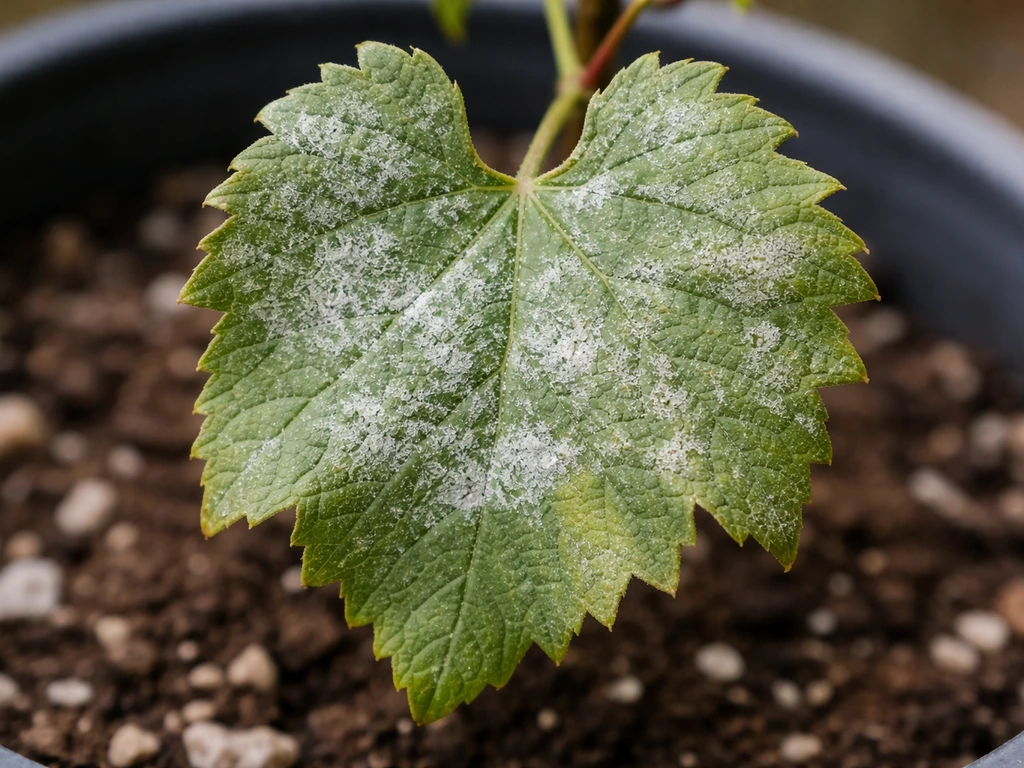
Powdery mildew is probably the most common problem for home container growers, especially in humid climates or wherever airflow around the container is limited. Cornell IPM notes it can destroy infected clusters and significantly reduce fruit quality. It shows up as a white powdery coating on leaves, young shoots, and berry surfaces. Start preventive fungicide applications (sulfur-based products work well for most home gardeners) before symptoms appear, roughly at bud break, and repeat every 10–14 days during humid weather.
Downy mildew is more of a problem in warm, wet springs and summers. European vinifera varieties are significantly more susceptible than American-bred hybrids and labrusca types. This is one of the reasons I recommend Reliance, Venus, and similar hybrids for humid climates: their built-in resistance takes some of the pressure off. If you're growing a vinifera variety in a wet-summer climate, downy mildew prevention sprays with copper-based products are worth adding to your routine.
Black rot is especially serious in Oklahoma and the broader mid-South and Midwest, and Botrytis bunch rot, anthracnose, phomopsis, and sour rot all show up in Minnesota and similar states. The common thread for managing all of them: good airflow, resistant varieties, clean pruning cuts, and removing any mummified berries or diseased canes rather than leaving them in the pot where they harbor spores.
Insect pests
Grape berry moth is the most economically damaging insect pest for home growers in many parts of the country. Larvae bore into berries, and after veraison (when berries start to color and soften), damage creates entry points for Botrytis and sour rot, and attracts fruit flies, wasps, and ants. For a single container vine, monitoring is very achievable: check clusters regularly, remove and dispose of damaged berries, and if you see consistent problems, pheromone traps help track adult moth activity. Japanese beetles, aphids, and spider mites round out the common pest list, all of which are manageable on a single container vine with targeted hand-picking or insecticidal soap.
Overwintering your container vine
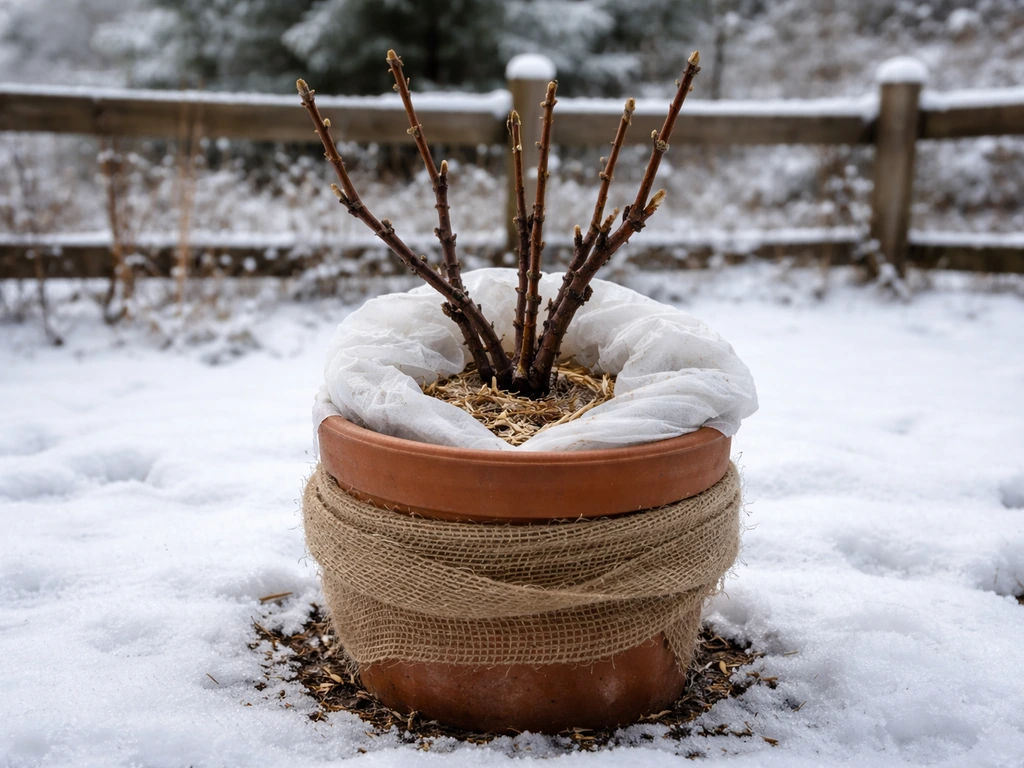
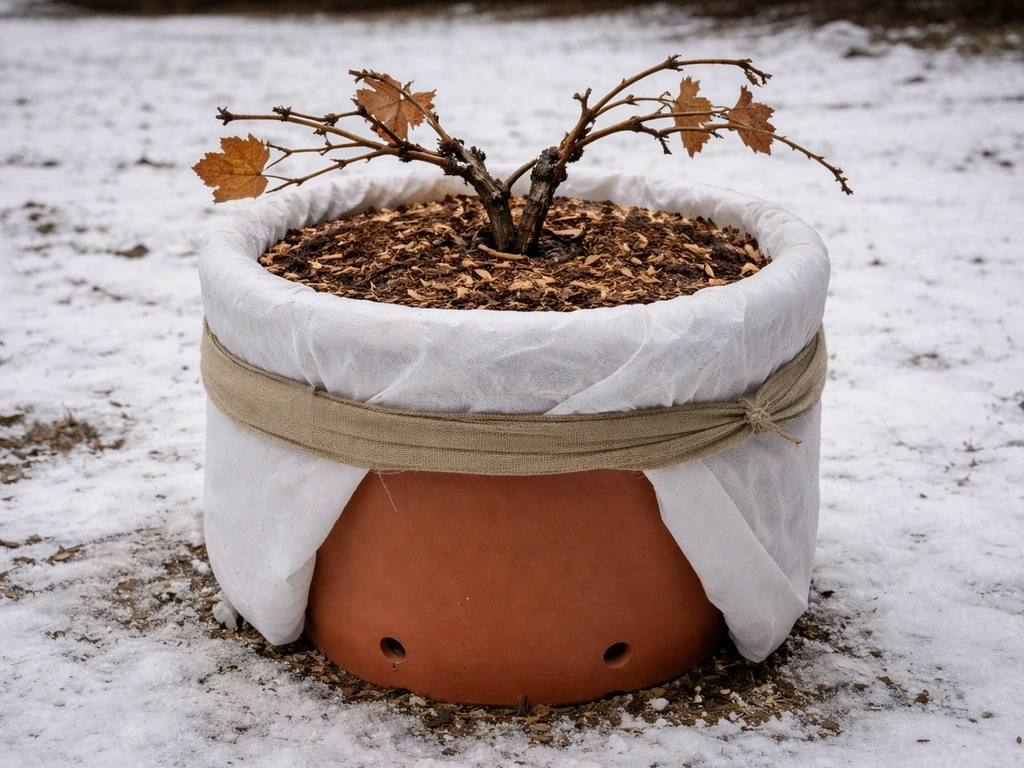
This is the part that trips people up most often with container grapes, especially in Zone 6 and colder. In the ground, grape roots are insulated by the soil mass. In a pot sitting on a patio, those roots are exposed to air temperatures on all sides. A variety rated to Zone 5 in the ground may suffer serious root damage in a pot at Zone 5 winter temperatures, because the pot doesn't provide the same insulation.
Penn State Extension warns directly that container roots are exposed to winter air temperatures, and that you may need larger pots and extra protection to get through the winter safely. Illinois Extension frames the goal simply: prevent the soil mass from freezing solid, while maintaining some moisture throughout winter. Those two principles drive all overwintering strategies.
Overwintering strategies by zone
- Zones 7–10: Minimal intervention needed. Move the pot to a sheltered wall or covered area if hard freezes are possible. The vine goes dormant naturally and resumes in spring with no special treatment.
- Zone 6: Move the pot to an unheated garage, shed, or basement after the vine has fully defoliated and gone dormant in late fall (usually after the first hard frost). Keep it cool but above 15°F (-9°C). Check soil moisture monthly and water lightly to prevent complete drying out.
- Zone 5 and colder: Bring the pot into an unheated but frost-protected space. An attached garage that stays above 10–15°F is ideal. Alternatively, bury the pot in the ground up to its rim, and pile mulch around the above-ground portion of the vine. Water periodically during mild spells to maintain moisture without waterlogging.
- Zone 4 and colder: Choose only the hardiest varieties (Marquette, Edelweiss, Concord Seedless) and plan to overwinter indoors in a cool space. Exposed pots at these temperatures need serious protection, and some growers simply treat the vine as needing essentially indoor dormancy storage from November through March.
One more spring concern worth noting: after a vine wakes up and buds break, late spring frosts can cause significant damage. Young green shoots are much more frost-sensitive than dormant canes. If you've brought a pot out of storage in early spring and a frost is forecast, move the pot back inside temporarily or cover it with frost cloth overnight. Penn State Extension emphasizes this risk of winter-to-spring temperature swings specifically for grapes, and container vines are more exposed to it than in-ground plants.
Your first-season checklist and next steps
Before you buy a vine, run through these decisions to make sure you're setting yourself up for a harvest, not a frustration:
- Find your USDA hardiness zone and count your frost-free days between last spring frost and first fall frost. You need at least as many days as your target variety's days-to-maturity, with a buffer.
- Match your variety to your zone using the table above. Prioritize cold-hardiness if you're in Zone 6 or colder. Prioritize disease resistance if you're in a humid summer climate.
- Source a one- or two-year-old grafted or own-rooted vine from a reputable nursery. Avoid bare-root plants that are too thin or have poor root development.
- Set up your 15–20 gallon container with a drainage-friendly potting mix before the vine arrives. Have your trellis stake or support system in place.
- Plant in a full-sun location (at least 8 hours of direct sun daily). Grapes ripen on sun and heat, so don't compromise on this.
- Focus year one entirely on establishing the trunk. No fruit pressure. Water consistently and let the vine build its root system.
- Plan your overwintering strategy before fall, not during. If you're in Zone 6 or colder, decide now where the pot will spend winter.
- Set a dormant pruning reminder for late February or early March (for most zones). Annual pruning is what makes the difference between a thriving container vine and a tangled, underproducing mess.
Container grapes are genuinely rewarding, and if you pick the right variety for your climate, you can get fruit in year two or three without a lot of fuss. If you want the easiest start, focus on the best grapes to grow for your zone and container size rather than trying to match supermarket fruit. The gardeners who struggle are usually the ones who picked a beautiful-sounding variety without checking the cold hardiness or days to maturity for their location, or who skipped the annual pruning because it felt too drastic. Do those two things right, and a pot grape will produce clusters for a decade or more.
FAQ
Can I grow seedless grapes in pots, or do I need a seeded variety for better yields?
You can usually stick with seedless table types in containers. Since grapes are self-fruitful, you typically do not need a second vine for pollination. What matters more is matching the variety to your frost timing and ensuring you have trellis support so fruiting shoots can be trained and exposed to airflow.
What’s the best pot size if I want grapes to stay in the same container for many years?
Go larger than the minimum if you plan to avoid repotting. A 15 to 20 gallon pot can work, but many growers transition to about 20 gallons for long-term container stays because root stress and watering swings are harder to manage. Also confirm the container has ample drainage holes, not just a single bottom hole.
Do grapes need to be repotted every year in a container?
Usually not. If the plant is healthy and you are using fresh, well-structured potting mix initially, you can often keep it in the same container for several years. Instead, top-dress with compost in spring and adjust fertilizing, then repot only if roots become tightly bound, growth stalls, or the mix breaks down and stays wet too long.
How do I protect the grape roots during winter without smothering the vine?
Aim to keep the pot’s soil from freezing solid, but do not keep it wet and airtight. Good approaches include wrapping the pot (insulation around the sides) and using a sheltered location, then maintaining slightly moist soil rather than waterlogged conditions. Avoid sealing the pot so tightly that it traps moisture and encourages rot.
Should I prune hard in the first year, or can I wait until the vine is older?
For container grapes, it’s usually best to prune to your cordon system early so the vine builds structure correctly. However, the exact intensity depends on vine age and how much wood you have to work with. If you are unsure, focus on removing most canes while preserving a clean main trunk and the two planned horizontal arms for future spurs.
Why do my grape clusters fall off or fail to set fruit in a pot?
Common causes in containers are stress from inconsistent watering, excessive nitrogen that promotes leaves over fruit, and poor trellis training that shades clusters. Check that you are watering deeply when the top portion dries, feeding with a balanced fertilizer early and lower nitrogen later, and keeping the canopy open for airflow and light.
How often should I water container grapes, and what’s the fastest way to tell if it’s too much or too little?
Use soil checks, not a strict schedule. Stick your finger about 2 inches down, if it’s dry, water thoroughly until it drains from the bottom. If water runs through too quickly and the pot dries out in a day or two, you may need a better moisture-retentive mix or a larger container, while persistently wet mix signals overwatering and root-rot risk.
What should I do if a late frost hits after buds break?
Act quickly to protect young green shoots. Move the pot back under cover if you can, or cover the vine overnight with frost cloth. Dormant canes tolerate cold better than tender new growth, so don’t wait until you see damage to start protection.
Are European vinifera grapes ever a good choice for pots?
They are often a poor fit for cold climates unless you can provide real winter protection. Even if the vine survives above ground, container roots are exposed to colder air temperatures, and roots can suffer serious damage. If you want vinifera in a container, choose a location with maximum winter insulation and be prepared for additional overwintering steps, otherwise hybrids bred for your zone are safer.
What grape diseases are most likely in humid climates, and how can I reduce them without heavy spraying?
Powdery mildew and downy mildew pressure are higher when humidity and airflow issues combine. Practical non-spray steps include training for airflow, pruning to open the canopy, removing diseased material promptly, and choosing varieties with built-in resistance. If you do use sprays, start at the right growth stage (often near bud break) and follow a calendar during humid stretches.
Do fabric grow bags help or hurt for container grapes?
Fabric bags can help because they air-prune roots, reducing circling and often improving long-term root quality. They can also dry out faster than thick plastic, so you may need more frequent moisture checks in hot weather. Use them only with a reliable watering routine and confirm drainage is excellent.
Should I worry about fruit splitting or poor berry quality near harvest?
Yes, it can happen when the vine takes up water too quickly. Sudden increases after a drier period can lead to splitting and may worsen quality. In late season, keep watering more steady and avoid heavy late nitrogen that can keep vines too leafy and water-hungry.
How can I manage grape berry moth on a single container vine?
You can keep it manageable by monitoring clusters regularly, removing and disposing of damaged berries as soon as you see them, and watching for activity after berries start coloring. If problems repeat, pheromone traps help you time your response around adult moth activity, and prompt sanitation reduces secondary issues like rots.