
Yes, you can absolutely grow grapes in Georgia, but the variety you choose and where you live in the state matter more than almost anything else. Muscadine grapes thrive across nearly all of Georgia. American bunch grapes and French-American hybrids work well in many regions too, especially with some disease management. The one grape type to skip for most Georgia gardeners is the classic European Vitis vinifera, varieties like Cabernet and Chardonnay just aren't well-suited to Georgia's heat and humidity at typical elevations.
Can You Grow Grapes in Georgia? How to Succeed

Marcus Whitfield
29 Apr 2026
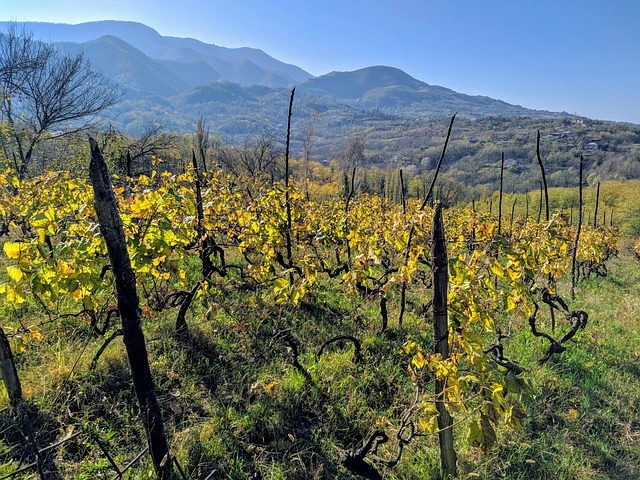
Can grapes grow in Georgia? (Yes, with the right variety)
Georgia's climate ranges from the humid, low-elevation coastal plain in the south to the cooler Blue Ridge mountains in the north, and grapes perform differently across those regions. The biggest threat to bunch grapes in Georgia is Pierce's disease, a bacterial infection spread by sharpshooters (a type of leafhopper). USDA APHIS notes that the glassy-winged sharpshooter is a leafhopper that spreads Xylella fastidiosa, causing Pierce’s disease [Pierce's disease, a bacterial infection spread by sharpshooters](https://direct. aphis.
usda. gov/plant-pests-diseases/glassy-winged-sharpshooter). UGA Cooperative Extension is very direct about this: [below 700 feet in elevation](https://site. extension.
uga. edu/colquittag/files/2023/10/Bunch-Grapes. pdf), Pierce's disease can wipe out susceptible bunch grape vines within about 3 years. Between 700 and 1,000 feet, you've got maybe 5 years before susceptible varieties fail.
Above 1,000 feet in the upper Piedmont and above 1,300 feet in the mountain regions, the risk drops significantly and a much broader range of bunch grapes becomes viable.
For most of middle and south Georgia, including the coastal plain, the lower Piedmont, and suburban Atlanta-area yards at typical elevations, muscadine grapes are the clear winner. They're native to the Southeast, resistant to Pierce's disease, and they genuinely love Georgia's long, hot growing season. If you're in north Georgia or up in the mountains, you have more flexibility and can grow hardy American bunch varieties or French-American hybrids with good results. In the North Carolina growing season, you can take the same approach by picking cold-hardy, disease-resistant varieties and planning around local frost dates can you grow grapes in north carolina.
| Georgia Region | Elevation | Best Grape Types | Pierce's Disease Risk |
|---|---|---|---|
| Coastal Plain / South Georgia | Below 700 ft | Muscadines only | Very high — destroys susceptible vines within ~3 years |
| Central / Lower Piedmont | 700–1,000 ft | Muscadines, disease-resistant hybrids | High — susceptible varieties fail within ~5 years |
| Upper Piedmont | 1,000–1,300 ft | Muscadines, American bunch, some hybrids | Moderate — feasible with resistant varieties |
| Blue Ridge / North Georgia Mountains | Above 1,300 ft | Hardy American bunch, French-American hybrids, muscadines | Low — not a significant problem |
What Georgia's climate means for your vines
Georgia's growing season is genuinely long, typically March through October in the coastal plain and only slightly shorter up north. That's a lot of heat and sunshine, which grapes love. The challenge is humidity. Georgia summers are wet and muggy, and that creates serious fungal disease pressure: black rot, downy mildew, and powdery mildew are all common. Even muscadines, which handle this climate better than any other grape type, benefit from good air circulation and timely management.
Winter cold is less of a concern across most of Georgia than it would be in states like Virginia or Tennessee, but north Georgia gardeners should still choose varieties rated for USDA Hardiness Zones 6b to 7a. Most of Georgia falls in Zones 7 to 9, and even the coldest mountain areas rarely see the brutal lows that knock out marginally hardy vines. The bigger seasonal challenge is spring frost timing: north Georgia can see late frosts into April, which can damage tender new growth on vines that break dormancy early.
Sun exposure is straightforward: grapes want full sun, at least 6 to 8 hours per day. In Georgia's humid climate, a south- or west-facing slope with good air drainage is ideal. Avoid low spots where cold air pools in spring and where moisture lingers after rain, as both conditions invite disease and frost damage.
Best grape varieties for Georgia gardens
The trait to prioritize above all others in Georgia is disease resistance, specifically Pierce's disease resistance for anyone below 1,000 feet, and fungal disease resistance everywhere. Cold hardiness matters more in the mountains. Avoid pure Vitis vinifera varieties unless you're a serious hobbyist farming above 1,300 feet with good technical knowledge.
Muscadine grapes (best for most of Georgia)
Muscadines are the native Southeast grape and they dominate home gardens in middle and south Georgia for good reason. They thrive in heat and humidity, resist Pierce's disease naturally, and a well-established vine can produce impressive yields. One thing to know: many muscadine varieties need a pollinator nearby (a self-fertile variety or a separate vine). Look for self-fertile varieties like Carlos, Noble, Fry Seedless, or Supreme, and you won't need to plant two vines to get fruit. Carlos is a classic bronze variety; Noble is one of the most reliable black-fruited options.
American bunch grapes and French-American hybrids (better for north Georgia)
For upper Piedmont and mountain growers, American bunch grapes like Concord, Niagara, and Catawba are proven performers. French-American hybrid varieties, crosses between American Vitis labrusca and European Vitis vinifera, are also worth considering. Varieties like Chambourcin, Vidal Blanc, and Seyval Blanc bring better wine quality traits than straight American varieties while retaining disease resistance. UGA specifically notes that hybrid bunch grapes are worthy of trial plantings in middle Georgia too, as long as you're willing to spray for diseases when pressure builds. Bunch grapes don't require cross-pollination, which simplifies planting compared to muscadines.
Quick variety reference
| Variety | Type | Best Region in Georgia | Key Trait |
|---|---|---|---|
| Carlos | Muscadine | All of Georgia | Self-fertile, bronze, reliable producer |
| Noble | Muscadine | All of Georgia | Self-fertile, black fruit, disease resistant |
| Fry Seedless | Muscadine | Middle and south Georgia | Large, sweet, seedless bronze fruit |
| Supreme | Muscadine | All of Georgia | Large black fruit, self-fertile |
| Concord | American bunch | North Georgia (above 1,000 ft) | Cold hardy, classic flavor |
| Catawba | American bunch | North Georgia | Cold hardy, good for juice and wine |
| Chambourcin | French-American hybrid | Upper Piedmont and mountains | Disease resistant, wine quality |
| Seyval Blanc | French-American hybrid | North Georgia | White wine variety, disease resistant |
How to plant grapes in Georgia
Site and soil prep
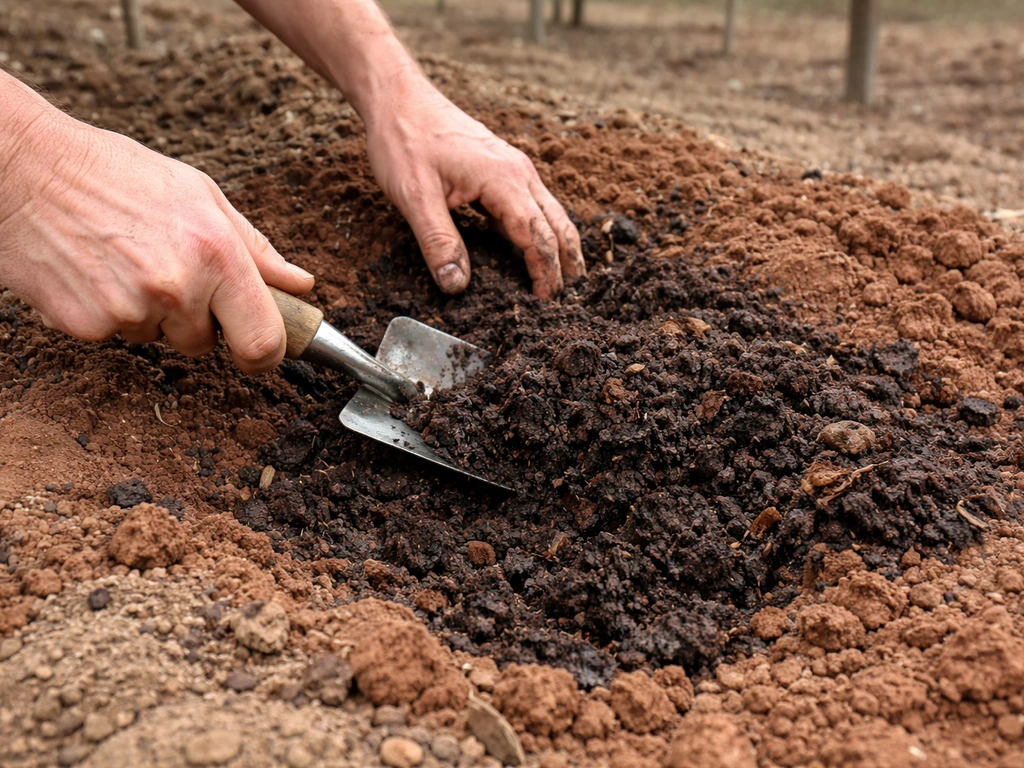
Pick your sunniest spot with good air movement, don't plant in a corner where air gets trapped. Georgia's red clay soils are workable for grapes but need organic matter and good drainage. Grapes hate wet feet. If your soil stays soggy after rain, build a raised row or amend heavily with compost before planting. Aim for a soil pH of 6.0 to 6.5. Get a soil test through your county extension office before planting and adjust accordingly, lime if you're too acidic, sulfur if too alkaline. Most Georgia soils lean acidic, so lime additions are common.
When to plant
Late winter to early spring is the ideal planting window in Georgia, typically late February through March. You want dormant bare-root vines in the ground before they break dormancy, giving roots time to establish before the summer heat hits. Container-grown vines can be planted a bit later, up through April or May, but earlier is always better. In north Georgia, wait until after the last expected frost date for your county before planting tender new growth is exposed.
Spacing
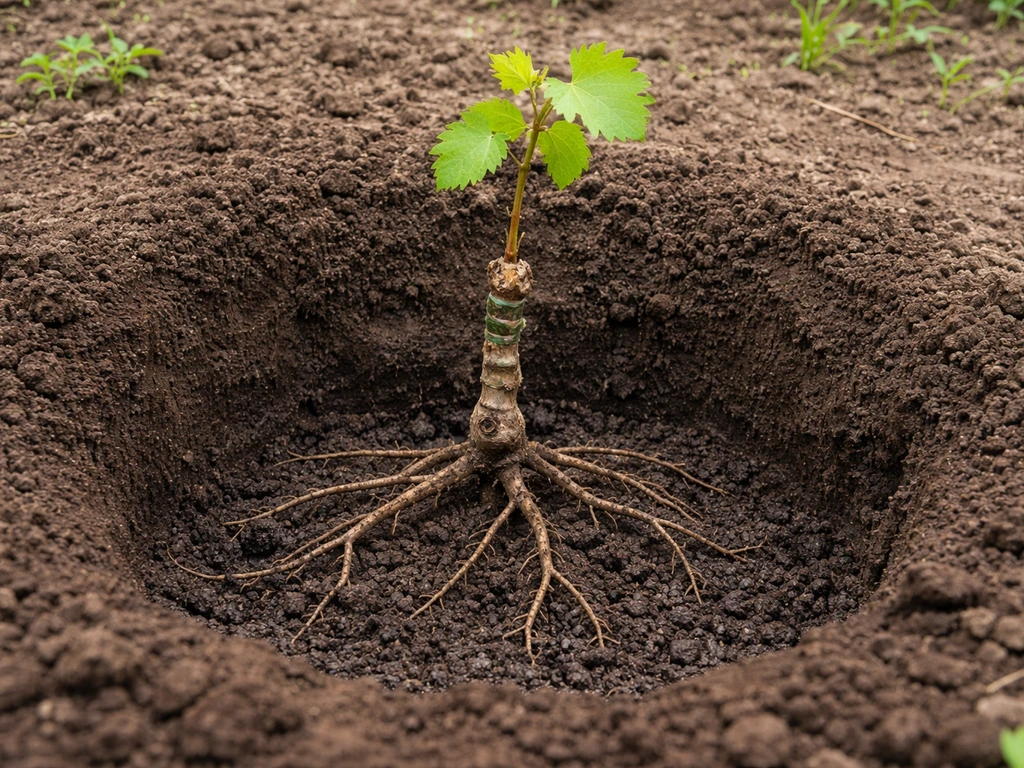
Muscadine vines need generous spacing, 20 feet apart along a row, with rows at least 10 feet apart. They're vigorous and need the room for air circulation, which directly helps with disease control. American bunch grapes and hybrids can be planted a bit closer, typically 8 to 10 feet apart in a row, with rows 10 feet apart. Don't crowd them. Better airflow means less fungal disease pressure, which is the number one ongoing challenge in Georgia's humid climate.
Planting steps
- Dig a hole wide enough to spread roots without bending them, about 12 inches deep.
- Set the vine so the graft union (if present) is just above soil level.
- Backfill with native soil mixed with compost, firm gently around roots.
- Water thoroughly right after planting.
- Cut the vine back to 2 to 3 buds above the ground at planting — this forces strong, low growth and a better root system in year one.
- Install your trellis before or immediately after planting, not two years later.
Trellis, training, and pruning basics
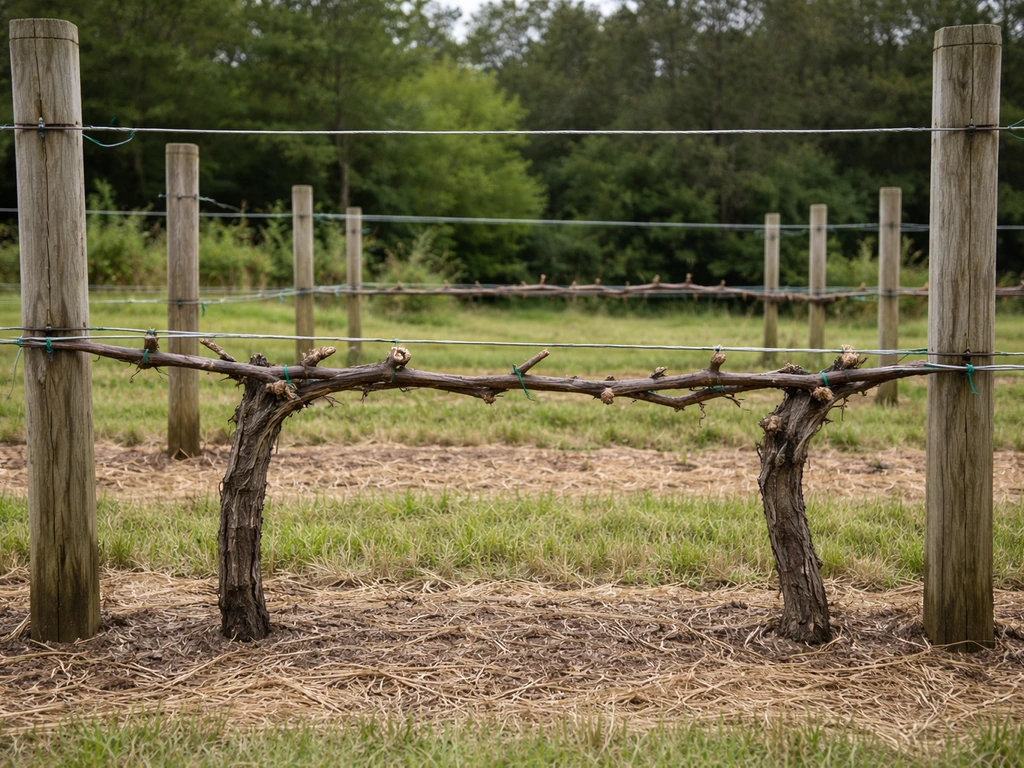
You need a trellis system before your vines start growing seriously. For muscadines, a two-wire trellis system works well: one wire at about 3 feet, another at 5 to 6 feet, supported by posts every 20 feet. The classic training method for muscadines is a single trunk up to the top wire with two horizontal arms (called cordons) running in each direction. For American bunch grapes and hybrids, a 4-arm Kniffin system (two wires, two pairs of canes trained in opposite directions) is the traditional approach and works well in Georgia.
Pruning is non-negotiable for productive vines and disease control. In Georgia, prune during dormancy, January through mid-February is ideal, before buds swell. Remove about 80 to 90 percent of last year's growth. That sounds dramatic, but grapes fruit on new wood, and heavy pruning keeps vines productive, well-shaped, and better ventilated. Skipping annual pruning is one of the most common mistakes home gardeners make, and it leads to crowded, disease-prone vines that produce poorly. In year one and two, focus on training the trunk and main arms rather than worrying about fruit.
Watering, fertilizing, and keeping disease in check
Watering
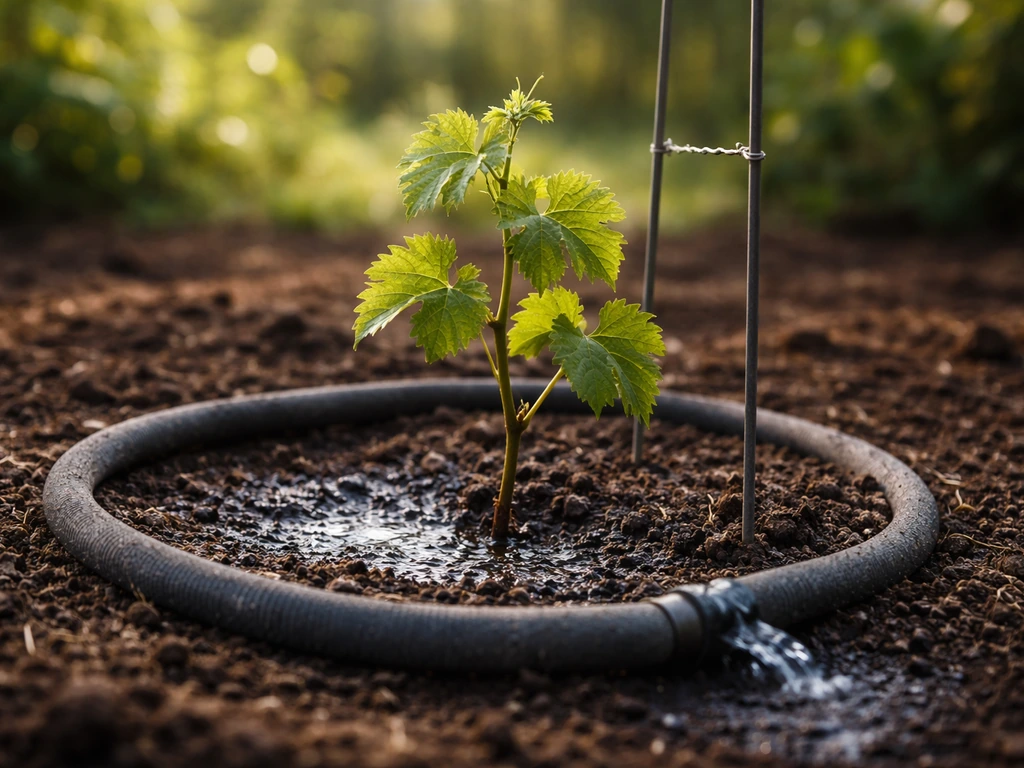
During the first year, water regularly, about 1 inch per week if rain doesn't cover it. Established vines (year 3 and beyond) are surprisingly drought-tolerant and Georgia's summer rainfall usually handles most of their needs. Drip irrigation or soaker hoses are far better than overhead watering in Georgia's humid climate. Wet foliage is an open invitation for black rot and downy mildew. Water at the base, not on the leaves.
Fertilizing
Hold off on fertilizing at planting, giving young roots too much nitrogen stresses them. In late winter of the second year, apply a balanced 10-10-10 fertilizer at about 1/4 pound per vine, increasing to 1/2 pound in year three. For mature established vines, 1 pound of 10-10-10 per vine each spring is a reasonable starting point, adjusted based on how vigorously the vine is growing. Too much nitrogen produces lush leafy growth at the expense of fruit and makes vines more susceptible to fungal disease.
Disease and pest management
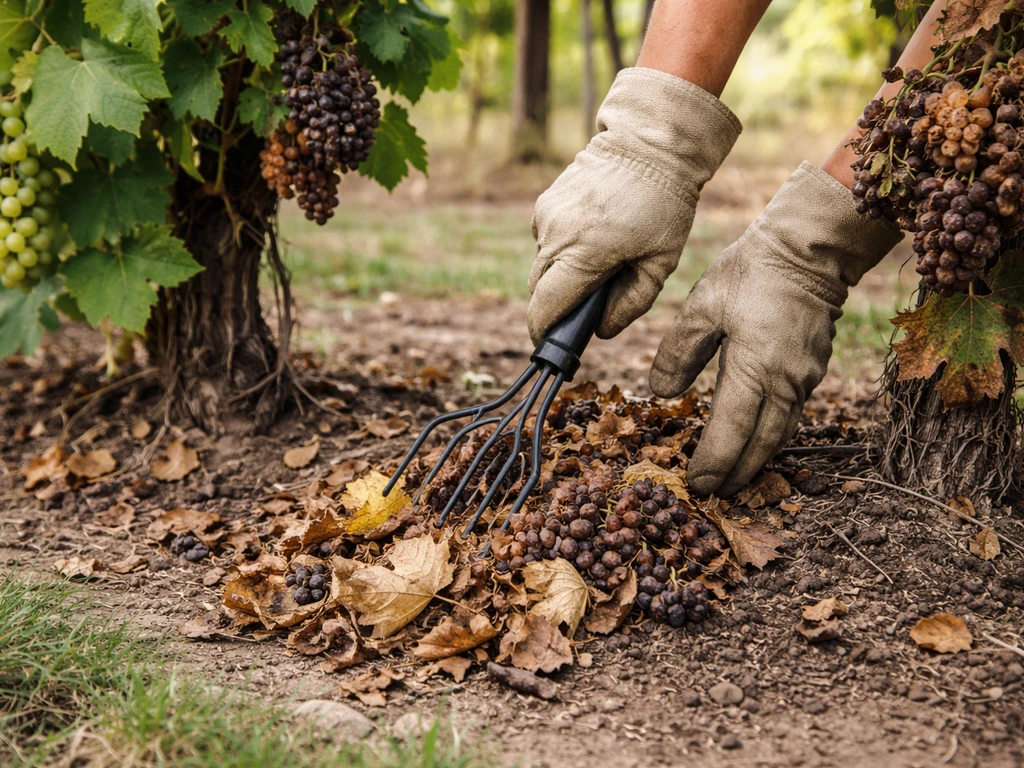
Fungal diseases are the biggest ongoing challenge for Georgia grape growers. Black rot is the most damaging bunch grape disease in the state, it can destroy an entire crop in a wet year. Downy mildew and powdery mildew are also common. A preventive spray program starting at bud break and continuing every 10 to 14 days through early summer is the realistic approach for bunch grapes. Fungicides containing copper, mancozeb, or myclobutanil are commonly used. Muscadines are much more forgiving but still benefit from a simplified spray program in rainy years.
Good cultural practices cut your spray needs significantly. Remove fallen leaves and mummified fruit from around vines each fall. Prune aggressively to open up the canopy. Don't let weeds and grass crowd the base of vines. Japanese beetles are a nuisance in north Georgia particularly, hand-picking or trapping works for small plantings. The bottom line is that grapes in Georgia can be productive if you're willing to stay on top of disease management. Ignore it and you'll lose your crop.
Georgia seasonal maintenance calendar
| Month(s) | Task |
|---|---|
| January–mid February | Prune while dormant; remove 80–90% of last year's canes |
| February–March | Apply dormant spray (lime sulfur) for overwintering disease; plant bare-root vines |
| March–April | Apply first-year fertilizer; begin preventive fungicide program at bud break |
| April–June | Continue fungicide sprays every 10–14 days; train new shoots to trellis; watch for Pierce's disease symptoms |
| July–August | Reduce spray frequency; harvest muscadines (late summer); manage Japanese beetles |
| September–October | Harvest later varieties; clean up fallen leaves and fruit debris |
| November–December | Let vines go fully dormant; plan any new plantings or trellis repairs |
How long until you get fruit?
Be patient for the first two years. A grape vine you plant in spring of year one should be devoted entirely to establishing its root system and building its trunk. You'll see some growth, maybe a few fruit clusters by late year two or year three, but don't get excited and let them all develop on a young vine. Remove flower clusters in years one and two so the vine puts energy into roots and structure rather than fruit. It's frustrating, but it pays off.
A well-managed Georgia muscadine or American bunch grape vine should give you a real, harvestable crop by year three, and a solid producing vine by year four or five. UGA research shows that productive vines can yield 20 to 30 pounds of fruit per vine once fully established. That's a lot of grapes from even a small planting. The vines are also long-lived, a properly maintained muscadine can produce for 20 to 30 years.
If you're comparing notes with gardeners in neighboring states, the fundamentals are similar to what works in Tennessee or the Carolinas, though Georgia's lower-elevation heat and Pierce's disease pressure make variety selection even more critical here than in those slightly cooler states. Yes, the same general approach can work in South Carolina too, but you'll still need to match grape type and disease strategy to your specific region and conditions Tennessee or the Carolinas. If you want grapes in Tennessee, focus on matching the variety to your local conditions and managing disease pressure early. Get the variety right for your region, build good trellis infrastructure from the start, and stay on top of disease management, and Georgia is genuinely one of the better states in the South for home grape growing.
Your next steps right now
- Confirm your elevation and county to understand your Pierce's disease risk and which grape types are realistic for your yard.
- Get a soil test from your county UGA Cooperative Extension office — it's inexpensive and tells you exactly what to adjust before planting.
- Choose your variety based on region: muscadines for south and middle Georgia, hardy bunch or hybrid varieties for north Georgia above 1,000 feet.
- Order bare-root vines in late fall or early winter for late-February planting — good varieties sell out early.
- Install your trellis posts and wire before or at planting time, not as an afterthought.
- Buy a basic fungicide labeled for grapes and have it ready before bud break in March.
FAQ
Can you grow grapes in Georgia for eating fresh, not just wine or jelly?
If you mean classic table grapes for fresh eating, muscadines can work but many people find them different in flavor and texture. For the closest “bunch grape” experience in Georgia, choose American or French-American hybrid varieties that are specifically described as disease resistant, and plan for regular fungal prevention in humid summers.
What if I really want Cabernet or Chardonnay in my Georgia yard?
Yes, but there is a practical ceiling on where European Vitis vinifera makes sense. In Georgia’s typical conditions it usually fails unless you are in the highest elevations and you treat it like a hobby vineyard with consistent disease control and appropriate microclimate.
How do I choose a grape type if I do not know my exact elevation in feet?
First check your elevation, because Pierce’s disease risk drives the decision between muscadines and bunch grapes. If you are below about 1,000 feet, prioritize muscadines or disease-resistant hybrids, and treat any bunch-grape planting as a high-management project.
Do muscadine grapes always produce fruit without another vine?
Muscadines sometimes need an additional vine because many cultivars are not reliably self-fertile. If you buy a variety label that does not clearly say self-fertile, assume you may need a second plant of a compatible variety or you will get poor fruiting.
What are the biggest planting mistakes for grapes in Georgia yards?
Begin with the simplest layout: full sun plus good air drainage, not the coldest or wettest pocket in your yard. If water sits after rain, consider a raised bed or raised row before planting, because wet feet increase fungal disease pressure and slow vine establishment.
Is it okay to water grapes with a sprinkler in Georgia?
In Georgia’s humidity, overhead watering is a common reason gardeners think a “spray schedule should work.” Use drip or soaker hoses, water at the base, and water early in the day so the soil surface can dry rather than keeping foliage damp overnight.
What causes low yields in Georgia grapes even when I fertilize and water?
The most common missed step is skipping annual pruning. Another frequent issue is leaving too much dense canopy early on, which raises humidity around the leaves and makes fungal problems worse even if you spray.
When should I plant grapevines in north Georgia specifically?
Dormant planting in late winter is ideal, but if you are in north Georgia and you leaf out too early, late frosts can damage new growth. A safer plan is to plant around the last frost date for your county when using tender container vines, and watch buds closely in early spring.
Can I grow grapes on a patio, fence line, or small lot in Georgia?
If you have a small space or want an easy trellis, muscadines are often more forgiving but they still need room and airflow. For bunch grapes, plan the trellis first and respect spacing, because crowded vines tend to become a disease problem faster than a “space problem.”
Do I really need to spray grapes in Georgia if I buy resistant varieties?
Even with disease-resistant varieties, Georgia still punishes neglect. Set expectations: muscadines may need less, but bunch grapes usually require a preventive program starting at bud break with follow-up intervals during humid weeks.
How strict are the spacing distances for muscadines and bunch grapes in Georgia?
Yes, but “don’t crowd” is key. If you must adjust spacing, aim for the maximum airflow your site allows, because spacing affects how quickly leaves dry after rain and how well you can manage both Pierce’s risk and fungal disease.
Should I let my grapevine fruit in the first year or two?
For year one and year two, remove flower clusters so the vine can build trunk and root structure. You can see growth, but delaying fruit development for the first two seasons typically results in a stronger, more productive vine by year three or four.
How can I tell if my soil is suitable for grapes in Georgia?
If your soil is not draining well or is very acidic, vines can struggle to establish and become more vulnerable to disease. Get a soil test, target a pH around 6.0 to 6.5, and only lime or sulfur after the test so you do not create new nutrient imbalance problems.