
Yes, grapes can absolutely grow in cold climates, but which grapes you plant makes all the difference. Cold-hardy varieties from the University of Minnesota breeding program, like Marquette, Frontenac, and La Crescent, survive winter lows of -30°F to -35°F and reliably produce fruit in USDA zones 3 through 5. European wine grapes (Vitis vinifera) like Cabernet Sauvignon or Chardonnay, on the other hand, will likely die to the ground or suffer major dieback in those same zones. So the honest answer is: grapes can grow where you are, but you need to pick the right ones and manage your site carefully.
Can Grapes Grow in Cold Climates? Practical Guide for Gardeners
Marcus Whitfield
16 Jul 2026
What counts as a "cold climate" for grapes?
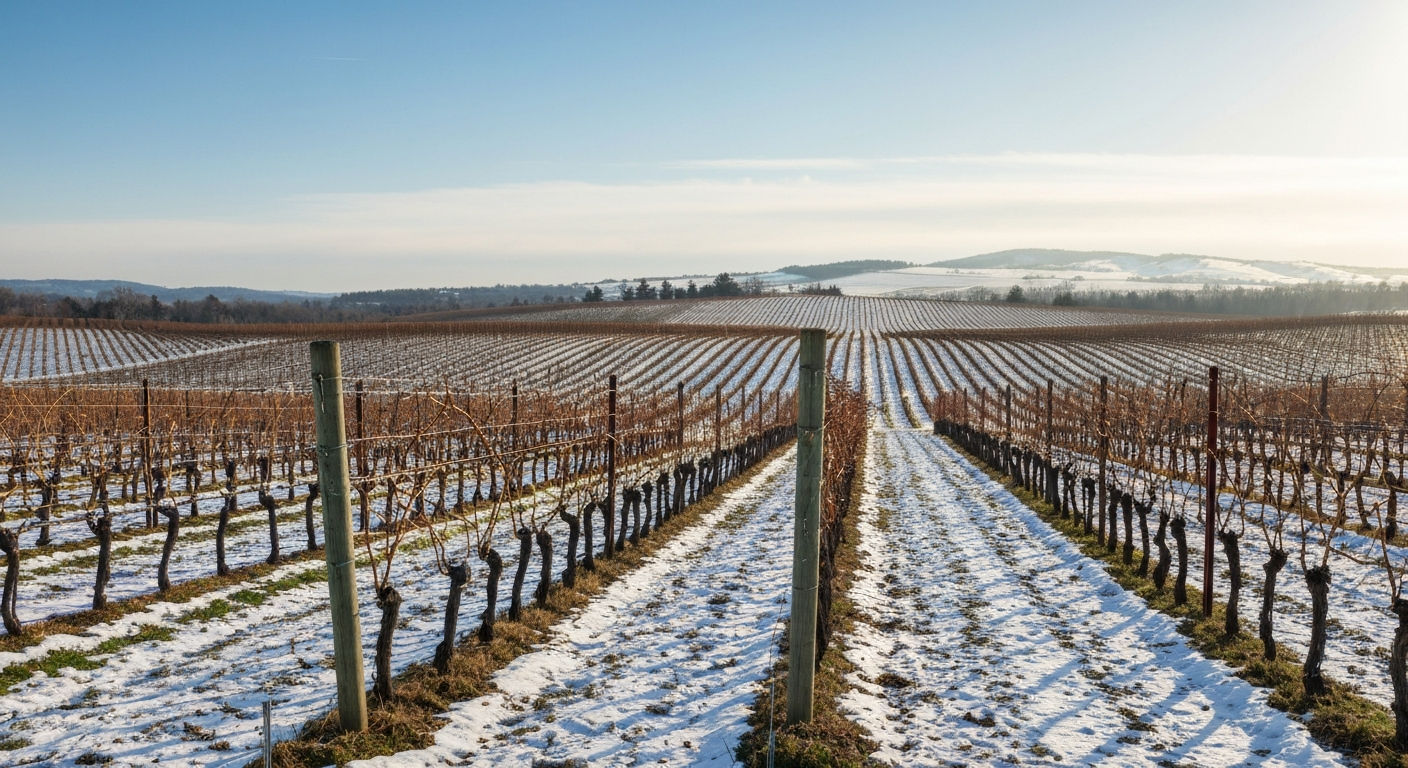
The most widely used reference is the USDA Plant Hardiness Zone Map, last updated in 2023 using 1991–2020 climate normals. Each zone represents a 10°F range in average annual extreme minimum winter temperature, split into 5°F "a" and "b" subzones. You can look up your exact property on the USDA's interactive map. For grapes, the conversation about cold really starts at zone 6 and gets increasingly challenging as you move into zones 5, 4, and 3.
But hardiness zones only tell part of the story. Growing season length is just as critical as winter low temperatures. Grapes need roughly 150 to 180 frost-free days to ripen most cultivars, and early-ripening cold-hardy hybrids can manage closer to 140 days. If your last spring frost falls in late May and your first fall frost arrives in mid-September, that 110-day window is genuinely tight. You can check growing-season norms for your county through NOAA's Climate Data Online or the PRISM Climate Group's gridded datasets at Oregon State University. Climate Data Online (CDO) - National Climatic Data Center (NCDC) provides station-based historical climate data and tools, including daily normals and frost-date information you can use to derive first/last frost dates and growing-season length for specific stations and counties.
Microclimates add another layer. Two properties a mile apart can differ by a full USDA zone in effective winter low temperatures and frost-free days. A hillside with good cold-air drainage might see its last spring frost two weeks earlier than a low-lying property nearby. That hillside grape planting has a real advantage. Urban settings also tend to run warmer than surrounding rural land, which can open up variety options that would fail just outside city limits.
How frost and cold winters actually hurt grapevines
Winter cold injures grapevines in distinct ways depending on the tissue involved. Dormant buds, one-year-old canes, and the permanent trunk or cordons all have different cold tolerance thresholds. Dormant buds, one‑year canes and trunks/xylem/phloem have different lethal temperatures; researchers typically assess bud LT50 by differential thermal analysis (DTA) to track seasonal cold hardiness and deacclimation Dormant buds, one‑year canes and trunks/xylem/phloem have different lethal temperatures; researchers typically assess bud LT50 by differential thermal analysis (DTA) to track seasonal cold hardiness and deacclimation.. Researchers use a metric called LT50 (the temperature lethal to 50% of buds) to measure cold hardiness. Studies on Vitis riparia-derived hybrids show those vines can reach LT50 values as cold as -35°C to -40°C in midwinter, while many Vitis vinifera primary buds hit their LT50 around -10°C to -15°C in the hardiest cases, though some vinifera selections push closer to -26°C under optimal hardening conditions. The practical takeaway: a -20°F (-29°C) winter night will wipe out unprotected vinifera buds but leave well-acclimated Frontenac or Marquette largely unharmed.
Late-spring frosts are arguably more damaging than the coldest midwinter nights, because by the time buds swell and break dormancy in April or May, they lose most of their cold hardiness. A hard frost at 28°F after bud break can kill emerging shoot tissue on any variety, hardy or not. This is called spring frost damage, and it destroys the current season's crop because the fruiting shoots come from those buds. Similarly, early-fall frosts cut the ripening season short, leaving fruit underripe and reducing carbohydrate reserves that the vine needs to survive the following winter. Cornell's cold-hardiness monitoring program tracks LT50 values seasonally to help growers understand when their vines are most vulnerable to this spring deacclimation risk.
The best grape varieties for cold climates by zone
This is where the real decision-making happens. There are three main groups of grapes suited to cold regions: Vitis labrusca varieties (the native American grapes, like Concord and Niagara), interspecific hybrids developed from crosses involving V. riparia, V. vinifera, and other species, and the newest generation of cold-hardy University of Minnesota and Elmer Swenson releases. Each group has different cold tolerance, fruit character, and ease of management.
University of Minnesota releases (zones 3–5)
If you're in the upper Midwest, Great Lakes, northern New England, or anywhere with -20°F winters, these are your workhorses. The University of Minnesota's breeding program has spent decades crossing cold-hardy wild Vitis riparia genetics with wine-quality varieties. Marquette, released in 2006, produces a red wine grape with good tannic structure and reliably survives zone 3b winters (-35°F) without burial. Frontenac and its siblings Frontenac Gris and Frontenac Blanc offer red, pink, and white options with similar cold tolerance. La Crescent is a popular white hybrid that ripens early and handles zone 4 winters well. These aren't compromise grapes. I've tasted Marquette-based wines that surprised people who assumed anything cold-hardy would taste foxy or flat.
Older French-American and Swenson hybrids (zones 4–6)
Varieties like Edelweiss, La Crosse, St. Croix, and Swenson Red fill the zone 4 to 5 window. They're hardy enough for serious winters but not quite in the -35°F category. They tend to be vigorous growers and ripen early to mid-season, which suits shorter growing seasons well. The Northern Grapes Project, a multi-state collaboration led by Cornell, has published extensive regional trial data on these and newer releases, and their findings consistently show solid performance in zones where vinifera simply fails.
Vitis labrusca (zones 4–6)
Concord is the classic example: zone 4 hardy, disease-resistant, and reliable. It's not a fine wine grape, but it produces excellent juice and table grapes and is genuinely forgiving for beginners. Niagara is the white counterpart. If you're not aiming for wine production and just want fruit in a cold backyard, labrusca varieties are a low-stress option with a long track record.
| Variety | Type | Hardiness Zone | Winter Low Tolerance | Notes |
|---|---|---|---|---|
| Marquette | UMN hybrid (red) | 3b–7 | -35°F (-37°C) | Excellent wine quality; vigorous |
| Frontenac | UMN hybrid (red) | 3b–7 | -35°F (-37°C) | High acid; good for blending |
| Frontenac Gris | UMN hybrid (pink/white) | 3b–7 | -35°F (-37°C) | Rosé and white wine styles |
| La Crescent | UMN hybrid (white) | 4–7 | -30°F (-34°C) | Aromatic; early ripening |
| Edelweiss | Swenson hybrid (white) | 4–7 | -30°F (-34°C) | Very early ripening; mild flavor |
| St. Croix | French-American hybrid (red) | 4–7 | -30°F (-34°C) | Reliable producer; easy management |
| Concord | Vitis labrusca (blue/red) | 4–7 | -25°F (-32°C) | Classic table/juice grape |
| Niagara | Vitis labrusca (white) | 4–7 | -25°F (-32°C) | White counterpart to Concord |
Why Vitis vinifera struggles in the cold (and when to skip it entirely)
Vitis vinifera is the species behind every classic European wine grape: Chardonnay, Pinot Noir, Riesling, Cabernet Sauvignon. In warmer zones 7 and above, vinifera is the default choice and produces the wine character most people are aiming for. But its cold hardiness is fundamentally limited. Research studies have measured primary bud LT50 values for even the hardiest vinifera selections rarely going below -26°C under the best acclimation conditions, and many varieties fail at temperatures far warmer than that. A Minnesota or Wisconsin winter that regularly hits -20°F to -30°F will kill unprotected vinifera wood outright.
In zones 5 and 6, some growers do manage Riesling, Pinot Noir, or Gewürztraminer with aggressive winter protection (more on that below), but it's a significant amount of annual labor and a bad winter can still set you back years. In zones 4 and colder, vinifera without burial is not a realistic option for home gardeners. I'd encourage you to be honest with yourself about the time commitment before planting vinifera north of zone 6. The cold-hardy hybrids have improved dramatically in quality, and for most home gardeners in those zones they're the smarter choice.
Own-root vs grafted vines: what matters in cold climates
Most commercial grapevines are grafted, meaning the fruiting variety (the scion) is joined to a rootstock selected for disease resistance or soil adaptability. For cold-climate growers, this choice has some practical implications. Common rootstocks recommended for cooler regions include 3309 Couderc, 101-14 Mgt, and 420A. Research shows rootstocks can influence how quickly vines acclimate and deacclimate in fall and spring, though the effect size is modest (typically fractions of a degree to a few degrees Celsius in LT50).
The critical point for cold-climate gardeners is the graft union itself. The union is often the most cold-sensitive point on the vine, and it sits at soil level. If that union freezes and dies, you lose the graft entirely and the vine may regrow from the rootstock (which is not the variety you wanted). Extension guides from Oregon State, Purdue, and Virginia Cooperative Extension all recommend mounding 6 or more inches of soil or mulch over the graft union before winter to insulate it. Remove that mound in spring before bud break to avoid moisture-related diseases at the base.
Many of the cold-hardy UMN hybrids are sold and grown on their own roots (not grafted), which actually simplifies things. If the top of an own-rooted Marquette vine dies back in a brutal winter, the vine can regrow true-to-variety from the root system. That's a meaningful advantage in zones 3 and 4 where catastrophic winters happen every decade or so.
Choosing the right spot: site and microclimate tips for cold regions
Site selection is where you can gain or lose a full USDA zone's worth of effective hardiness without moving a foot off your property. If you're asking whether can grapes grow in the desert, extreme heat and limited water make it challenging, though with careful irrigation, shade, and variety choice some grapes can be grown in arid regions. Cold air is dense and flows downhill like water, pooling in low spots, valleys, and areas blocked by buildings or tree lines. These low-lying frost pockets can see late-spring frosts two to four weeks later than a gentle slope just 20 feet higher in elevation. Plant your grapes on a slope with good cold-air drainage whenever you can.
Aspect matters too. South- and southeast-facing slopes receive more solar radiation, which warms the soil and air faster in spring, extends the effective growing season, and helps fruit ripen before fall frosts arrive. North-facing slopes in cold climates are genuinely difficult for grapes. They can also cause vines to break dormancy later in spring, which sounds like a problem but actually reduces late-spring frost damage risk in some situations. It's a tradeoff worth thinking through based on your specific frost dates.
Windbreaks on the north and northwest sides of a planting dramatically reduce wind chill and desiccation damage to canes during winter. A tree line, a fence, or even a building can shelter a row of vines from the coldest wind exposure. Urban gardeners often benefit from reflected heat off buildings and pavement, which can push their effective microclimate a half-zone or more warmer than the surrounding area. If you're gardening in a city, you may have more flexibility with variety selection than your official USDA zone suggests.
- Plant on a gentle slope with natural cold-air drainage, not in a valley or depression
- Choose south- or southeast-facing aspects to maximize solar heat and growing season length
- Install a windbreak (trees, fence, or building) on the north and northwest sides of your planting
- Avoid planting at the base of slopes, near bodies of cold water, or in areas surrounded by dense tree cover that traps cold air
- Urban gardeners should check actual local frost dates rather than relying solely on their USDA zone number
- Check NOAA's Climate Data Online or PRISM data for your county's specific frost-free day averages
Soil, drainage, and sun: getting the basics right in a cool climate
Grapes need full sun, and this matters even more in cold climates where the growing season is already compressed. Aim for a minimum of 6 to 8 hours of direct sun daily. In a short growing season, those extra hours of sunlight are doing real work: warming the soil, accelerating shoot growth, and building the sugar levels in fruit that determine whether your harvest is ripe or not. If your site is partially shaded for most of the day, you're stacking the odds against yourself.
Well-drained soil is non-negotiable. Grapevine roots need oxygen, and waterlogged soil suffocates them and dramatically increases the risk of root rot and crown diseases. Extension guidance consistently recommends well-drained loam as the ideal, with tile drainage or raised planting beds as fixes for sites with poor internal drainage. The good news for cold-climate gardeners is that rocky, gravelly soils, which drain extremely well and absorb heat during the day, can actually work in your favor. For a concise overview of what environment do grapes grow in, see the internal guide on site conditions and climate needs. For a deeper look at how rocky soils affect vine health and productivity, see our guide on whether grapes can grow in rocky soil can grapes grow in rocky soil. Rocky soils release stored warmth overnight, moderating temperature swings around the vine base. So if you're wondering about rocky soil in your region, that's often an asset for grapes rather than a liability.
Wet soils are a different story and create compounding problems in cold climates: poor root health, reduced cold hardiness in weakened vines, and increased disease pressure, particularly from fungal pathogens that thrive in high humidity. If your site has standing water in spring or stays soggy after rain, improve drainage before you plant rather than hoping the vines will adapt. Cold and wet together is the most challenging combination for any grapevine. If you're wondering whether can grapes grow in wet soil, see our guide on growing grapes in poorly drained or wet soils for drainage fixes and variety recommendations.
Winter protection methods that actually work
For vinifera and marginally-hardy varieties in zones 5 and 6, and for any young vines in their first two winters regardless of variety, winter protection extends what's survivable. The methods used depend on your training system, the variety's cold tolerance, and how much labor you're willing to put in each fall and spring.
Mounding and trunk wraps
The simplest protection is mounding 6 to 10 inches of soil or wood-chip mulch around the base of the trunk and over the graft union before the ground freezes. OSU Extension's PNW 603-E publication details this approach and notes it protects the most vulnerable part of the vine (the base and union) while accepting that canes above the mound may be damaged. This is low-labor and appropriate for most home gardeners in zones 5 to 6.
Cane burial (hilling)
In the Upper Midwest and Great Lakes regions, growers managing more tender varieties or vinifera sometimes bury entire canes under soil or straw for the winter. This is genuinely labor-intensive: you disconnect the canes from the trellis in fall, lay them flat on the ground, and cover them with 6 or more inches of soil or insulating material. In spring, you uncover them before bud break. Michigan State University Extension has documented this practice in southwest Michigan as a way to protect heads and fruiting wood in zones where winter lows would otherwise destroy them. It works, but it requires a training system designed for detachment (like low-head, cane-pruned systems), and it adds several hours of work per row each fall and spring.
Assessing cold damage after winter
Before you write off a vine that hasn't leafed out in spring, cut through a few buds with a sharp knife and look at the cross-section. Live bud tissue is green and moist; dead tissue is brown and dry. Check primary buds first, then secondary and tertiary buds (grapevines have three bud types per node, each progressively less fruitful but still capable of producing foliage). If primary buds are dead but secondary buds are alive, you'll get shoot growth but reduced or no crop that year. If the trunk wood is brown throughout, the vine may need to regrow from the base. Patience is warranted here: I've seen vines that looked dead in April push new growth in May from below-ground wood.
Training, pruning, and seasonal timing in a short growing season
Training systems for cold climates favor flexibility and low-head architecture. Vertical Shoot Positioning (VSP) is widely recommended for most cold-hardy varieties because it keeps the canopy tidy, maximizes sun exposure, and suits cane or spur pruning. For varieties that will be buried or need low-head protection, training the trunk short and keeping renewal canes near the ground makes the burial process practical. OSU and other state extensions offer step-by-step canopy and pruning guides calibrated to different variety types.
Timing is everything in a short season. Prune in late winter or early spring after the worst cold has passed but before bud swell, typically late March to mid-April in zones 4 to 5. Pruning too early on marginally-hardy varieties leaves fresh cut wood exposed to late freezes. After a cold winter, delay pruning a week or two to assess bud survival before making your final cuts. Harvest timing with early-ripening cold-hardy hybrids like Marquette and Frontenac typically falls in late August to late September in zone 4, well ahead of October frosts.
Disease and pest challenges in cool, wet climates
Cool and wet conditions, common in cold-climate regions like the Great Lakes, the Northeast, and the Pacific Northwest, create elevated pressure from fungal diseases. Powdery mildew, downy mildew, and Botrytis bunch rot are the main culprits. The good news is that many of the cold-hardy hybrid varieties bred from American Vitis species carry meaningful disease resistance. Marquette, Frontenac, and most UMN releases have better resistance to these diseases than vinifera varieties, reducing (though not eliminating) the need for fungicide applications. Vinifera grown in cool, humid zones requires a rigorous spray program because its disease susceptibility is compounded by the moisture-retaining canopy conditions that come with a cooler, wetter climate.
Japanese beetles and grape berry moth are common pests across much of the cold-climate grape growing range. Neither is climate-specific, but both can be managed through monitoring, appropriate row covers for small plantings, or targeted sprays when populations are high. Good canopy management that opens the vine to airflow and sunlight reduces both fungal disease and pest habitat simultaneously.
Can you grow grapes where you live? A zone-by-zone checklist
Use this as a starting-point filter. If your situation fits one of these descriptions, you have a practical path to growing grapes at home.
| USDA Zone | Typical Winter Low | Recommended Approach | Best Variety Groups |
|---|---|---|---|
| Zone 3 (3a/3b) | -40°F to -30°F | Cold-hardy hybrids only; own-root vines preferred; winter mulch essential | Marquette, Frontenac, Frontenac Gris, La Crescent |
| Zone 4 (4a/4b) | -30°F to -20°F | Cold-hardy hybrids; protect graft unions; site selection critical | UMN releases, Edelweiss, St. Croix, Concord |
| Zone 5 (5a/5b) | -20°F to -10°F | Hybrids most reliable; vinifera possible with burial and protection | UMN hybrids, French-American hybrids, Concord, Niagara; some vinifera with protection |
| Zone 6 (6a/6b) | -10°F to 0°F | Hybrids easy; hardier vinifera (Riesling, Pinot Noir) viable with site care | Hybrids, Riesling, Pinot Gris, Pinot Noir, Marquette |
| Zone 7+ | 0°F and above | Most vinifera varieties viable; full range of hybrids too | Full vinifera range plus hybrids |
Beyond the zone number, ask yourself these questions before committing to a planting:
- What is my average last spring frost date and first fall frost date? (Check NOAA Climate Data Online for your nearest station.)
- Do I have at least 140 frost-free days for early-ripening varieties, or 150+ for mid-season types?
- Is my planting site on a slope with good cold-air drainage, or in a low-lying frost pocket?
- Does my soil drain well, or do I need to address drainage before planting?
- Can I provide a minimum of 6 to 8 hours of direct sun daily?
- Am I willing to mound or protect graft unions each fall and remove mulch each spring?
- If I'm in zone 5 or colder and want vinifera, am I prepared for the labor of cane burial?
Next steps: getting started with cold-climate grapes
If you've made it through this checklist and you're in zones 3 to 5, start with one or two UMN cold-hardy hybrids like Marquette and La Crescent. They're available from regional nurseries in Minnesota, Wisconsin, Michigan, and the Northeast, and directly from specialty suppliers like Cooks Nursery, Double A Vineyards, and Itasca Nurseries. Your state's Cooperative Extension Service, especially in Minnesota, Michigan, Wisconsin, New York, and Oregon, publishes free cultivar guides, pruning calendars, and regional pest management recommendations that are worth downloading before you plant.
Plan to give vines at least two to three years before expecting a real harvest. The first year focuses on root establishment, the second on building a permanent trunk, and the third on beginning to fruit. This timeline is similar regardless of where you garden, though cold-climate vines may need an extra season of patience. The effort is front-loaded, and once established, a well-sited cold-hardy grape planting runs for decades with routine annual pruning and modest seasonal care.
Growing grapes in a cold climate is genuinely achievable, and the variety landscape has improved enormously in the past 20 years thanks to university breeding programs. The learning curve is real, but it's not steep. Pick the right variety for your zone, choose your site carefully, protect young vines through their first winters, and you'll have fruit sooner than you expect. The question of whether grapes are easy to grow in your specific region comes down largely to these same factors: zone, variety match, sun, and drainage. If you’re curious about related myths, like whether grape seeds can grow in your stomach, see our explainer on can grape seeds grow in your stomach. For a concise, practical answer, see the article titled are grapes easy to grow for a straightforward checklist and quick tips. Get those right and the rest is manageable.
FAQ
Short answer: can grapes grow in cold climates?
Yes — but success depends on how cold and how short the growing season is. Cold-hardy grape species and interspecific hybrids can survive and fruit in USDA zones 3–6 in many locations, while most Vitis vinifera (classic wine grapes) generally require milder winter minima and longer seasons (typically zones 6–9).
What counts as a 'cold climate' for grape growing?
Use USDA Plant Hardiness Zones (based on average annual extreme minimum temperatures) plus local frost risk and growing-season length. Generally 'cold' means zones 3–5 (extremes −40°F to −10°F / −40°C to −23°C) or areas with frequent late-spring or early-fall frosts that shorten the frost-free season.
How do frost dates and growing-season length affect grape viability?
Grapes need enough frost-free days from budbreak to harvest. Late-spring frosts can kill emerging shoots and buds; early fall frosts shorten ripening and reduce sugar/quality. Short seasons favor early-ripening, cold-hardy cultivars. Check local first/last frost dates (PRISM, NOAA) and compare to cultivar ripening windows.
Which grape species and varieties work best by zone?
Zones 3–5: cold-hardy interspecific hybrids and Vitis riparia‑derived cultivars (e.g., Frontenac, Marquette, La Crescent, Edelweiss, La Crosse). Zones 5–6: many hybrids plus some site-protected V. vinifera cultivars (Riesling, Pinot noir in favorable microclimates). Zones 6–9: broader V. vinifera choices. Avoid depending on classic vinifera in zones below ~6 without strong winter protection and a long season.
Do rootstocks matter in cold regions?
Yes. Choose rootstocks adapted to local soils and cold: commonly used ones include 3309C, 101‑14 Mgt and 420A. Rootstocks can influence site adaptability, drainage tolerance and modestly affect cold acclimation, but scion species/cultivar cold hardiness is usually the dominant factor.
How important are sun, soil drainage, and site selection?
Very important. Grapes need full sun (at least 6–8 hours direct sun daily) for ripening. Well-drained soils are essential—waterlogged or compacted soils increase root injury and disease. Favor sites with good air drainage (avoid frost pockets), southern or southeast aspects, slight slopes and rocky, well-drained soils are often suitable if fertility and water are managed.