
Here's the honest answer: from the day you plant a grapevine, expect to wait about three years before you harvest anything worth eating or fermenting. Most extension programs across the country agree on that number. Oklahoma State, University of Maryland, and Penn State all put the first real harvest in the third growing season. Full, steady production takes even longer, typically the fifth or sixth year. So if you're hoping for fruit this summer from a vine you just put in the ground, I'd gently reset those expectations now, because that's not how grapevines work.
How Long Does It Take Grapes to Grow and Harvest?
Marcus Whitfield
2 Apr 2026
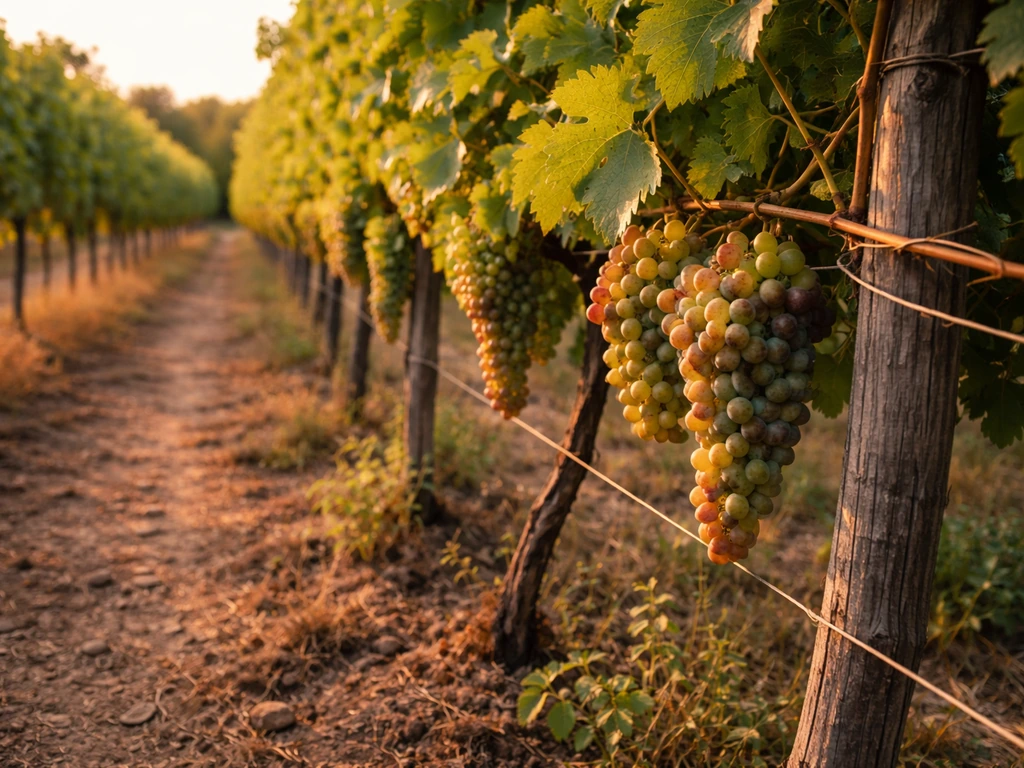
That said, the "how long" question actually has two very different answers depending on what you're asking. If you mean how many days within a single season from bud break to harvest, that's roughly 95 to 130+ days depending on variety and climate. If you mean how many years from planting to your first bottle or bowl of grapes, that's three to six years. Both answers are correct, and understanding the difference will save you a lot of frustration.
The real timeline from planting to first harvest
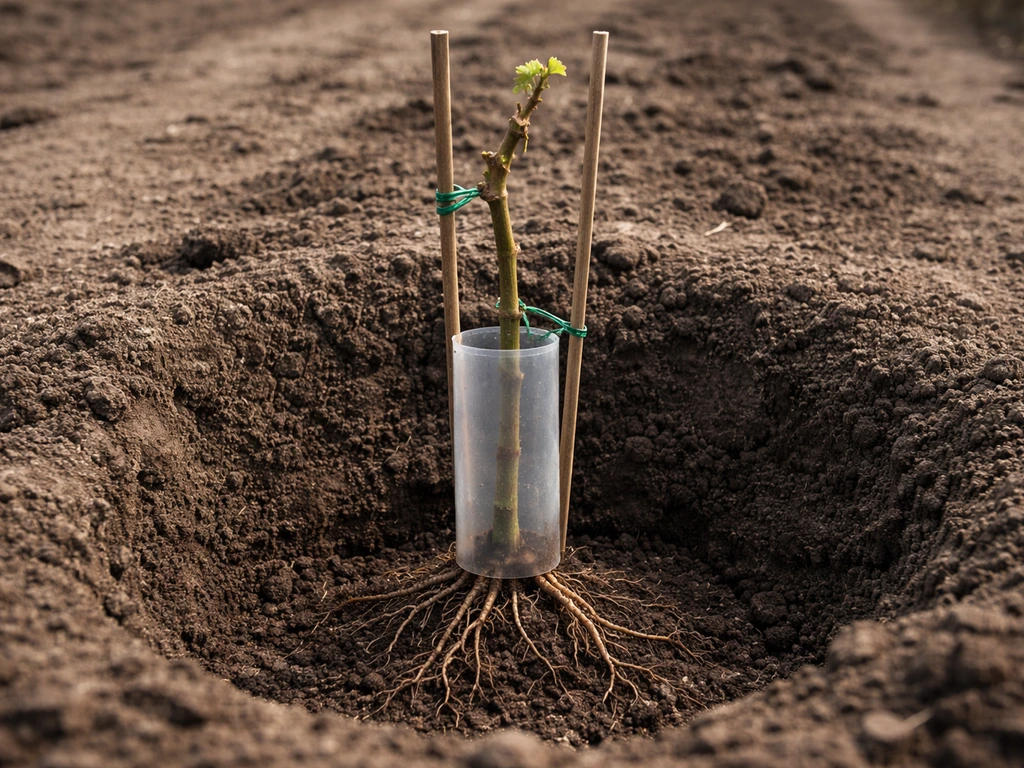
Let's break this down year by year so you know exactly what to expect. The first growing season is entirely about roots and structure, not fruit. You plant, the vine pushes out shoots, and your job is to help it build a strong foundation. University of Missouri Extension is explicit about this: remove any flower clusters that form in year one. Yes, even if the vine surprises you with a few. Letting it fruit too early steals energy from root development and sets you back.
Year two is more of the same. The vine is growing more vigorously now, maybe starting to look like something real, but Missouri Extension recommends removing all flower clusters in the second year too. You're building the permanent structure, selecting the canes and arms that will carry fruit for decades. Skipping this step is one of the most common mistakes new growers make.
By year three, you finally leave some clusters on the vine and let them ripen. Penn State Extension specifically notes that beginning with the third season, you can begin to leave flowers and fruit. This is your first real harvest. Don't expect abundance yet. You might get a small yield per vine, enough to taste, evaluate, and get excited about. Penn State Extension frames it clearly: the third year is when you start leaving clusters rather than pulling them off.
From year three through about year five or six, yields climb steadily as the vine matures and the root system deepens. Oregon State Extension puts full production at years five and six. After that, a well-tended grapevine can produce reliably for decades, and some old vines are still fruiting after 50 to 100 years.
| Year | What's happening | Your job |
|---|---|---|
| Year 1 | Root establishment, first shoots and leaves | Water consistently, remove any flowers, prune to 2 strong buds |
| Year 2 | Stronger shoot growth, vine starts taking shape | Build permanent structure, remove all flower clusters |
| Year 3 | First real fruit clusters, small harvest possible | Leave some clusters, taste-test for ripeness |
| Years 4–5 | Increasing yield, vine reaching maturity | Manage canopy, thin clusters for quality |
| Year 5–6+ | Full production, steady reliable harvest | Annual pruning, pest/disease management |
Grapevine growth stages through the season
Within each growing season, grapevines move through a predictable set of stages that extension viticulture programs track closely. Understanding these stages helps you know whether your vine is on track or falling behind.
- Dormancy: The vine is dormant through winter, storing carbohydrates in the roots and trunk.
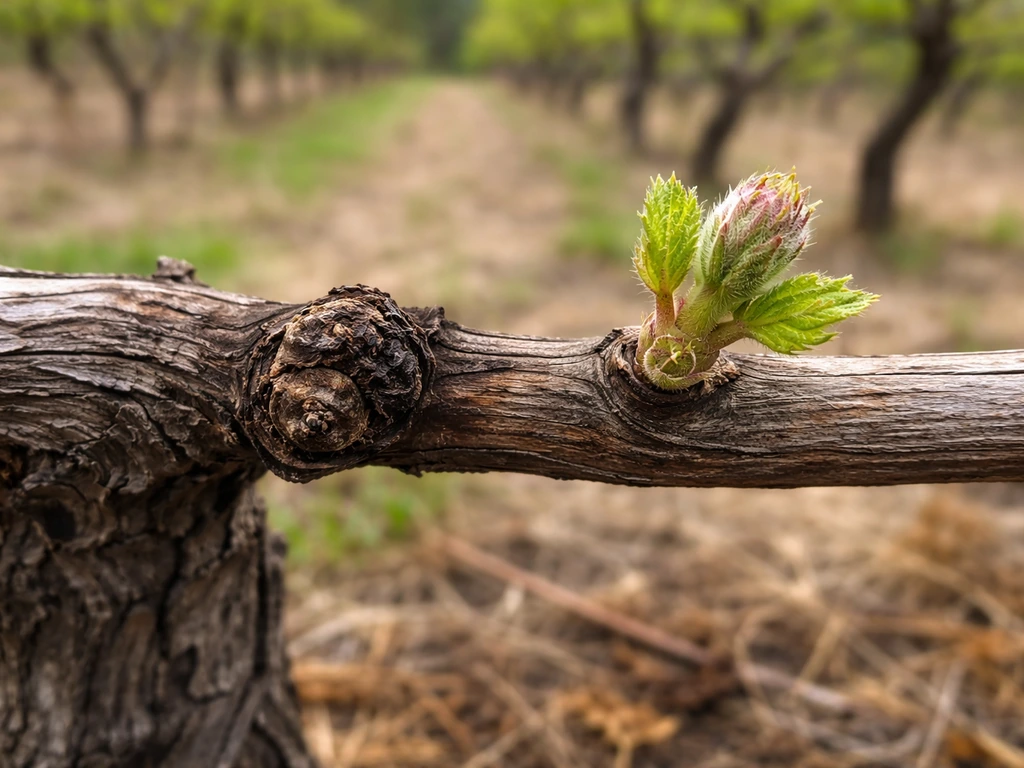
- Bud break: In spring, buds swell and push out new green tissue. This is one of the most frost-vulnerable moments of the year.
- Shoot growth and flowering: Shoots extend rapidly, and small flower clusters appear. Warm, dry conditions speed up flowering; cool, wet weather slows it.
- Fruit set: Fertilized flowers become tiny green berries. Not all flowers set fruit, and that's normal.
- Veraison: Berries shift from hard and green to soft and colored (red/purple or golden depending on variety). This is the clearest visual signal that ripening has begun.
- Harvest: Sugars peak, acids balance out, and the fruit is ready to pick.
- Post-harvest and dormancy prep: The vine hardens off, stores energy, and enters dormancy again.
The time from veraison to harvest is one of the most closely watched windows in viticulture. Cornell's extension viticulture program built an entire newsletter series around using veraison to forecast harvest timing, because once you see those berries turning color, you're typically 4 to 6 weeks out from picking. Flowering duration also varies: under warm, dry conditions bloom can move fast, while cool, wet weather can stretch it out and delay everything downstream.
It's worth noting that if you've ever wondered how many months grapes take to grow within a single season, the answer for most varieties is roughly 3 to 5 months from bud break to harvest, with earlier varieties on the short end and late-season wine grapes on the long end.
Wine grapes vs table grapes: does the type change the timeline?
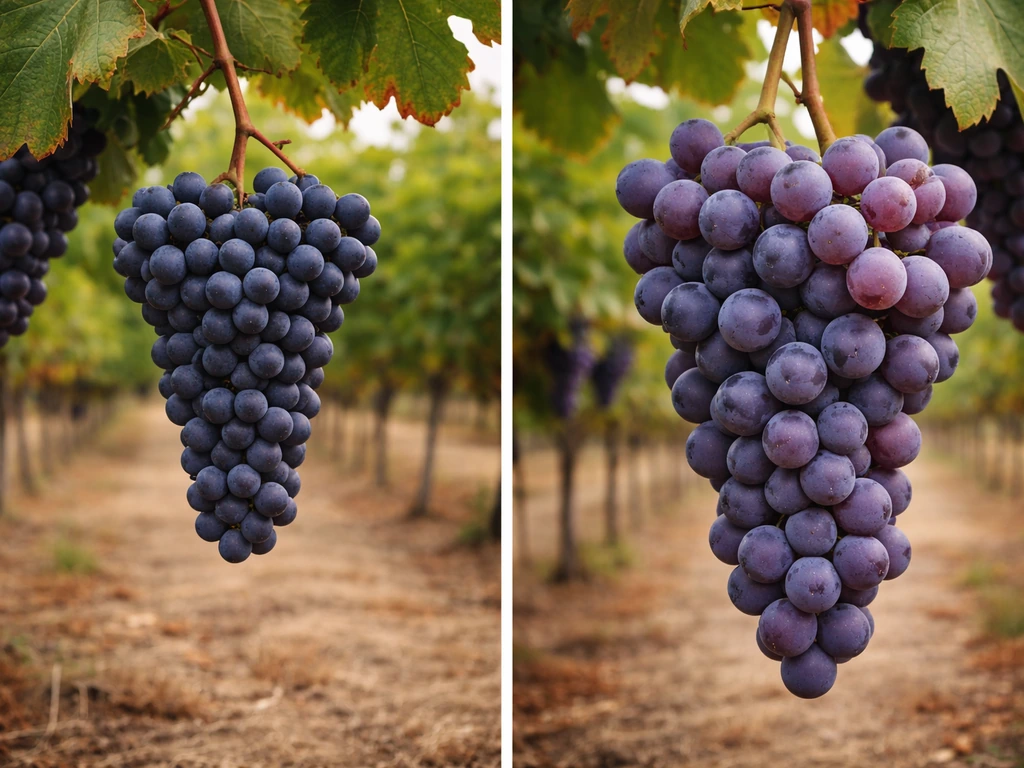
The basic multi-year establishment timeline is similar for both wine and table grapes. You're still looking at a third-year first harvest and fifth-to-sixth-year full production regardless of whether you're growing Cabernet Sauvignon or Reliance seedless. But there are some real differences worth knowing.
Table grapes are judged ready to harvest by taste. You pop a berry, and if it's sweet and flavored the way you like it, it's done. Oregon State Extension puts it simply: maturity for table grapes is assessed by eating them. That's it. No lab equipment needed.
Wine grapes are a different story. Harvest timing for wine is driven by chemistry: sugar content measured in degrees Brix, pH, and titratable acidity. Iowa State Extension identifies those three measurements as the standard tools for estimating grape maturity. Temperature plays a huge role here too. Cooler conditions slow sugar accumulation and preserve higher acid levels, while heat speeds ripening. That's why wine-grape harvest windows in cool climates can feel agonizingly tight. You need enough warmth to ripen the fruit fully, but if a frost arrives before the grapes hit target Brix, you may end up with underripe fruit that makes poor wine.
There's also a variety-specific maturity window to consider. Ohio State groups wine grape cultivars by season based on days between bloom and harvest. Early-season cultivars need fewer than 95 days; late midseason cultivars need around 105 to 110 days or more. In a short-season climate (say, Minnesota or upstate New York), choosing a late-ripening Vitis vinifera variety like Cabernet Sauvignon isn't just difficult, it's practically a guarantee of underripe fruit. Michigan State Extension research shows that sugar accumulation and Brix development can actually be modeled from fruit set to harvest, which is a useful tool once your vines are established and you're trying to fine-tune your harvest timing each year.
How variety, rootstock, and planting method affect your timeline
Not all grapevines start at the same place. A two-year-old dormant bare-root plant from a reputable nursery is going to establish faster than an unrooted cutting you stuck in the ground yourself. The Grapes Extension Network puts it bluntly: establishment from non-rooted cuttings is a gamble. You might succeed, but you're adding uncertainty to an already multi-year process. For home gardeners who want the most reliable path to fruit, a rooted nursery plant is the better bet.
Rootstock matters more in commercial settings, but it's worth understanding even as a hobbyist. Certain rootstocks promote more vigorous establishment, which can shave time off your path to first harvest. Others are chosen for disease resistance or soil adaptability. If you're buying grafted vines (common for Vitis vinifera varieties), ask your nursery what rootstock was used and whether it suits your soil type and drainage.
Variety selection is probably the single biggest factor most home gardeners underestimate. How fast Concord grapes grow compared to a European wine grape is a meaningful difference in practice. Concord is a vigorous, adaptable American variety that establishes reliably across a wide range of climates. Vitis vinifera varieties like Chardonnay or Pinot Noir are more finicky, slower to hit full production in marginal climates, and more vulnerable to cold injury that can set your timeline back by a year or more.
University of Minnesota Extension is direct about this: Vitis vinifera wine grapes are not cold-hardy enough to thrive in regions like Minnesota without serious interventions such as burying vines over winter. If you're in a cold climate and committed to wine grapes, cold-climate hybrids like Marquette, Frontenac, or La Crescent are a much smarter starting point. They were bred specifically for cold-region viability, and they'll reach reliable production on a faster, less interrupted timeline.
How your climate and region shape the whole timeline
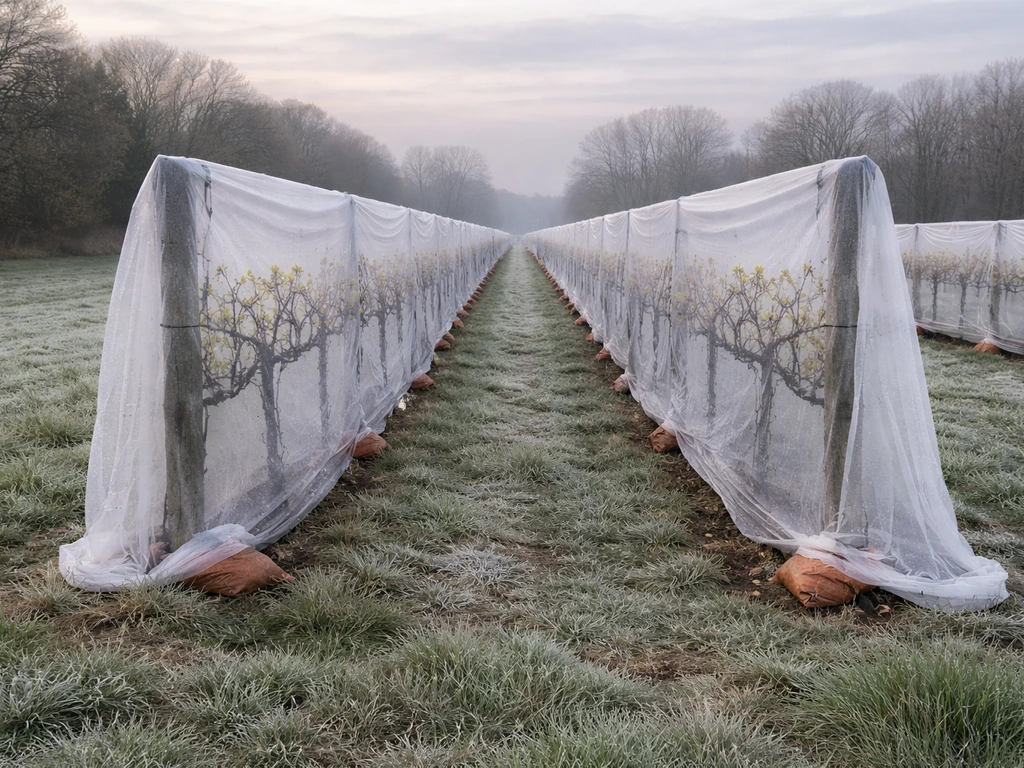
Where you grow grapes matters enormously, and this is where a lot of generic "grapes take 3 years" advice breaks down. Three years assumes a climate where the vine survives winter intact, gets enough growing-degree days to push through all its growth stages, and reaches harvest before a killing frost. In mild climates like California's Central Valley, coastal Virginia, or the Willamette Valley, that three-year timeline is realistic. In colder or shorter-season areas, it can easily stretch to four or five years, especially if winter injury knocks the vine back.
Winter cold is one of the most underappreciated timeline disruptors. University of Maryland Extension explains that bud cold hardiness changes throughout winter, and swelling bud tissue in late winter can be damaged at just a few degrees below freezing. A late-season cold snap after buds start to swell can wipe out an entire year's potential fruit in a single night. University of Minnesota's IPM resources note that stress going into winter, such as poor nutrition or low energy reserves, makes winter injury more likely. If a vine loses its buds to freeze damage, you're not just losing that year's crop. You're often losing a year of structural development too.
Growing season length is equally important. Oregon State Extension is clear: if the season is too short, fruit quality and sugar at harvest will be poor even if the vine is the right age. Grapes don't continue to ripen after picking, so if frost arrives before your variety hits peak Brix, you're stuck with underripe fruit. This is why matching variety to your specific climate zone isn't just a nice-to-have, it's fundamental to actually harvesting on schedule.
Concord grapes are a great example of a variety designed for regional success. Where Concord grapes grow best tells you a lot about what regions are realistic for home grape growing without heroic measures. They thrive in the Northeast, Midwest, and Mid-Atlantic, surviving cold winters and producing reliably in shorter seasons. What hardiness zone Concord grapes need is zones 4 through 7, which covers a huge swath of the country and gives many gardeners a reliable starting point.
How to estimate your specific timeline
Here's a simple way to estimate when you'll actually be harvesting grapes based on your situation. Start with these questions:
- What's your last spring frost date? That tells you roughly when bud break is safe and when your growing season actually starts.
- What's your first fall frost date? That defines your harvest deadline. Any variety that needs more days to ripen than your frost-free window allows is the wrong choice for your location.
- What hardiness zone are you in? USDA zones 5 and below require cold-hardy varieties. Zone 6 and above opens up more options.
- Are you planting a rooted nursery plant or an unrooted cutting? Add 6 to 12 months of uncertainty if it's the latter.
- What variety are you planting? Check the days-from-bloom-to-harvest for your specific cultivar and compare it to your frost-free growing window.
Once you have those answers, the math is straightforward. If you plant this spring, count on year one and year two as establishment years with no fruit. Mark year three on your calendar as your first realistic harvest. If you're in zone 5 or colder, add a year as a buffer for possible winter setbacks. If you're planting a late-season Vitis vinifera variety in a cool climate, be honest about whether your growing season is long enough, because the variety's days-to-harvest number must fit inside your frost-free window or you'll never hit full ripeness.
University of Maryland Extension's year-by-year management guide reinforces this thinking: they explicitly divide management into planting year, second year, and third year sections, each with different goals. Using that framework to plan your own calendar is exactly the right approach.
When your grapes aren't growing on schedule
If you're past year three and still not seeing fruit, or your vine looks stunted, there are several well-documented reasons this happens. The most common culprits:
- Winter injury: Cold damage to buds is probably the most frequent cause of delayed or missing harvests in colder regions. If your vine sprouts poorly after winter, check the buds for browning. Significant bud loss can mean no crop that year and structural setbacks that push your timeline back.
- Poor establishment in year one: If the vine didn't get enough water or was stressed early on, the root system may be weak. University of Minnesota Extension emphasizes that the root system must establish to drive vigorous shoot growth. A weak root system equals slow growth equals delayed fruiting.
- Over-pruning or mis-training: If you accidentally pruned too aggressively or trained the vine incorrectly, you may have removed the wood that would have produced fruit. University of New Hampshire Extension frames training as a structured multi-year plan. Deviating from it, especially in the first two years, can cost you a harvest cycle.
- Fruit set problems: Poor pollination, wet and cool conditions during flowering, or nutrient imbalances can result in poor fruit set even on a mature vine. Penn State Extension lists practices like cluster thinning, girdling, and leaf removal as tools for improving fruit set when it's inconsistent.
- Variety-climate mismatch: If you planted a variety that needs 120 days to ripen in a zone with 90 frost-free days, no amount of management will fix that. Be honest about whether your variety suits your location.
- Nutrient deficiency or poor soil: Oklahoma State Extension recommends spring fertilization as part of vigorous establishment. Vines growing in poor, compacted, or nutrient-deficient soil will lag behind vines growing in well-prepared ground.
If the problem is ripening rather than vine age, and you're seeing fruit that just won't sweeten up, that's a separate issue. Oregon State Extension notes that grapes don't continue to ripen after picking, so if you're harvesting early because of frost risk and the fruit tastes flat or sour, the problem is your growing season length or variety choice, not your vine's age.
A quick note on growing grapes in games vs real life
If you landed here from a gaming search, I'll acknowledge it briefly: how grapes grow in Stardew Valley and how long grapes take to grow in Dreamlight Valley are very different questions from real-life viticulture. And if you're curious about the game OSRS and grape growing timelines, that's a completely different world too. In real life, there's no skipping the three-to-six-year establishment arc. That's actually part of what makes growing grapes genuinely rewarding. The patience required forces you to learn the plant, understand your climate, and develop real skill as a grower.
Your practical next steps
Here's what I'd recommend doing right now if you're serious about growing grapes. First, identify your USDA hardiness zone and note your average last spring and first fall frost dates. Second, choose a variety specifically suited to that zone, not the variety you think sounds coolest or makes the wine you like drinking. Third, buy a rooted nursery plant rather than starting from an unrooted cutting. Fourth, prepare your soil, plan your trellis, and plant in spring after frost risk passes. Then follow a year-by-year management plan: establishment focus in year one, structural development in year two, and first harvest in year three.
Three years feels like a long time when you're excited about growing grapes. But it goes faster than you think, and every year you'll learn something new about your vine, your soil, and your climate. By the time year three arrives and you're actually tasting your own fruit, the wait will feel completely worth it.
FAQ
If I buy a bigger, older grapevine, will I get grapes sooner than three years?
Often yes, because a plant that already has established wood and a stronger root system can skip part of the “build roots” phase. Still, many growers will not get reliable fruit until around the third season, and you may still be advised to thin or limit clusters early to avoid stressing the vine.
Do grapes grow faster if I plant them in a container instead of in the ground?
Containers warm up sooner in spring, which can help early growth, but they also restrict root volume and can increase water and nutrient stress. For most home growers, container vines still follow a similar establishment timeline, and winter protection becomes more critical to keep buds alive.
Can I harvest a little in year two, even if extension says to remove clusters?
You might get a small amount, but it usually comes at a cost. Leaving clusters in year one or two can reduce the energy the vine needs to build permanent arms, which can delay the transition to consistent yields in year three and beyond.
How long does it take before my vine looks “big enough,” even if I’m still waiting for fruit?
Expect major changes in vigor during years one and two, especially shoot growth and developing trunk or cane structure. But “looks ready” is not the same as “ready to crop,” because the vine still needs enough established structure to support reliable fruiting wood.
What’s the difference between bud break to harvest timing and planting to first harvest?
Bud break to harvest is within a single season (often around 95 to 130+ days depending on variety and conditions). Planting to first harvest is multi-year establishment, commonly about three years for a first meaningful crop, then several more years for fuller production.
If I get blooms early, does that mean I’ll also harvest early?
Not necessarily. Blooms and set depend on the vine’s age, but ripening timing still depends on variety and weather. A young vine might bloom yet still be developing the fruiting structure, and early bloom can be followed by slower maturation if conditions are cool or wet.
How much winter injury can delay the timeline?
If buds are killed, you typically lose that year’s crop potential, and you may also lose developing fruiting wood. Even if the vine regrows, rebuilding productive structures can push first harvest and full production back by a year or more, especially in colder regions or after late winter freezes.
My grapes taste sour and never sweeten, is it because the vine is too young?
Usually it’s a ripening mismatch rather than age. Grapes do not continue ripening after picking, so flat or sour fruit commonly points to insufficient heat units for your variety, picking too early due to frost pressure, or choosing a variety that needs a longer maturity window than your season provides.
For table grapes, can I judge maturity the same way as wine grapes?
Yes for your palate, table grapes are typically assessed by eating, sweetness, and flavor. Wine grapes require target chemistry, such as sugar level (Brix) and acidity balance, so “tasting good” can still be the wrong maturity for making wine.
If I choose a late-ripening variety, can I just wait longer and harvest after frost risk passes?
You can only wait if your variety reaches maturity before your first killing frost. In short-season climates, late varieties may be forced into early harvest due to frost, resulting in underripe flavor and poor sugar development, even if the vine is otherwise healthy.
What should I check if my vine is healthy but still has no fruit by year three?
Look for winter bud loss, inadequate sunlight (grapes need strong direct sun), improper pruning that removes the correct fruiting canes, and nutrient or water stress. Also confirm you have a grape variety suited to your climate, since some are simply unlikely to mature reliably in colder or shorter-season areas.
Does pruning affect how long it takes to get grapes?
Yes. Incorrect pruning can remove the wood that would have carried fruit, which can make it seem like the vine is “behind” even if it is the right age. Using a year-by-year approach for building structure usually shortens the time to dependable cropping.
Will using the “wrong” spacing on a trellis delay production?
If vines are too crowded, airflow and light penetration drop, which can weaken growth and reduce fruiting performance. Crowding can lead to stunted vines and fewer viable fruiting shoots, effectively pushing back the timeline for meaningful yields.
How can I estimate my likely first harvest date more precisely?
Use your planting date to count establishment years, then sanity-check against your frost-free window and the variety’s days from bloom to harvest (for the specific cultivar). If the variety’s maturity needs exceed your frost window, plan on a longer wait for successful harvest or choose an earlier variety.