
The crossword answer you're looking for is most likely VINE (4 letters) or VINEYARD (8 letters). VINE is the individual climbing plant that produces grapes, while VINEYARD is the planted area where many vines grow together. Both show up repeatedly as solutions to 'where grapes grow' clues in major puzzles including the Guardian, NYT, and Newsday. If the grid gives you 4 letters, go with VINE. If it gives you 8, VINEYARD is your answer.
Where Grapes Grow Crossword Clue: Vine vs. Vineyard Guide
Marcus Whitfield
15 Jul 2026
Vine vs. vineyard: what each word actually means
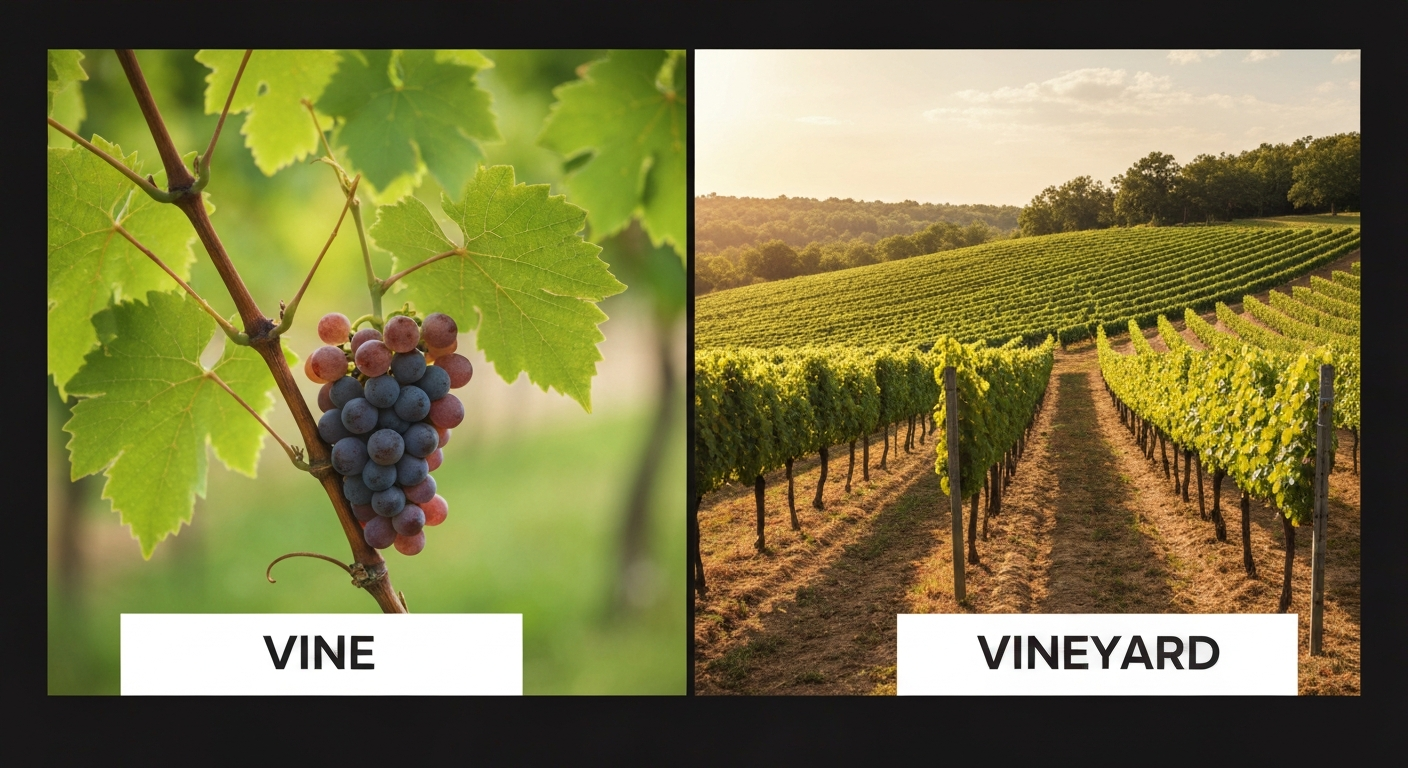
These two words are closely related but not interchangeable. A vine (from the Latin vitis) is a single climbing or trailing plant. In everyday gardening use, 'grapevine' and 'vine' are used almost synonymously to describe the individual grape plant itself, with its woody canes, leaves, and fruit clusters. Merriam-Webster traces the word directly back to this grape-bearing plant. A vineyard, on the other hand, is a planted area or plantation of grapevines, typically grown for wine production but also used for table grapes. Vineyard | Encyclopedia.com defines a vineyard as a plantation of grapevines, typically for wine production. Think of it this way: one vine lives in your backyard; a vineyard holds hundreds or thousands of vines across a cultivated site. Both words answer 'where grapes grow' depending on the scale of the question.
Where grapes actually thrive
Grapes are not as forgiving as many gardening books suggest. They thrive in a specific climate window, and knowing whether your location fits that window is the single most important thing you can do before buying a plant. The main variables are heat accumulation, winter cold, frost timing, and growing-season length.
Heat accumulation and the Winkler scale
Viticulture researchers Amerine and Winkler developed a practical heat-accumulation index that sums growing degree-days (GDD) from April 1 through October 31 using a base temperature of 50°F (10°C). The result places a site into one of five blank" rel="noopener noreferrer">Winkler regions. Region I (roughly 1,500 to 2,000 GDD) covers cooler zones like parts of coastal California and parts of the Pacific Northwest. Region V (3,501 to 4,900 GDD) covers the hottest desert regions. Most home gardeners fall somewhere in Regions II through IV. Knowing your local GDD helps you pick varieties that will actually ripen before fall frost arrives.
| Winkler Region | GDD Range (base 50°F) | Example Climates | Suitable Grape Types |
|---|---|---|---|
| I | 1,500–2,000 | Coastal California, western Oregon/Washington | Cool-climate vinifera (Pinot Noir, Riesling) |
| II | 2,001–2,500 | Napa Valley, Willamette Valley | Most vinifera (Cabernet, Chardonnay) |
| III | 2,501–3,000 | Parts of Virginia, Missouri, mid-Atlantic | Vinifera, French-American hybrids |
| IV | 3,001–3,500 | Inland California, parts of the Southeast | Heat-tolerant vinifera, muscadines |
| V | 3,501–4,900 | San Joaquin Valley, desert Southwest | Table grapes, muscadines, Thompson Seedless |
Frost risk and growing-season length
Most grapes need at least 165 frost-free days to ripen fruit and harden their canes before winter. That threshold is a practical minimum, not a guarantee of success. Check your local average last spring frost and first fall frost dates and count the days between them. If you're regularly under 150 frost-free days, you'll need cold-hardy hybrid varieties, not European wine grapes. Winter lows matter just as much as season length. Many Vitis vinifera varieties suffer significant primary-bud injury at around -8°F (-22°C). If your winters regularly drop to that level or below, vinifera varieties are a gamble without mitigation strategies like hilling soil over the graft union.
Soil, site exposure, and microclimates for home gardeners
Grapes are famously forgiving about soil fertility (they actually produce better wine fruit under moderate stress) but they are not forgiving about drainage. Poor drainage kills vines faster than almost any other factor. Roots need to penetrate at least 30 to 40 inches of permeable soil. If your site has a high water table, mottled subsoil, or standing water after rain, you need to either build raised rows or choose a different spot entirely.
Soil pH matters too. Vitis vinifera prefers a near-neutral range of about 6.0 to 7.0. North American species and French-American hybrids tolerate slightly lower pH, down to around 5.5. Get a soil test before you plant. Correcting pH after vines are established is slow and frustrating. While you're at it, check for nematodes if you're in the Southeast or Southwest, as they can devastate rootstocks.
Slope and aspect are underrated by home gardeners. In the Northern Hemisphere, a south- or southwest-facing slope captures more solar radiation, increases your effective heat accumulation, and drains cold air downhill rather than letting it pool around your vines. Valley bottoms and low spots collect cold air on still, clear nights and dramatically increase spring and fall frost risk. I've watched entire crops get wiped out in late May frost events in low-lying spots while vines on a gentle slope 200 yards away came through fine. If you can site your vines on even a 3- to 5-degree south-facing slope, do it.
- Use USDA/NRCS Web Soil Survey to screen your site for drainage class and soil depth before purchasing plants
- Aim for well-drained, loamy to sandy loam soils with at least 30–40 inches of rooting depth
- Target a soil pH of 6.0–7.0 for vinifera or 5.5–6.5 for hybrids and labrusca types
- Choose south or southwest slopes to maximize heat accumulation and reduce frost pockets
- Avoid valley bottoms, drainage ways, and sites near large bodies of standing water
USDA hardiness zones and state-by-state guidance
USDA plant hardiness zones are a quick first screen for grape viability, though they measure average annual minimum winter temperatures, not heat accumulation or frost-free days. As a starting point: zones 5 through 9 cover the widest range of viable grape growing in the continental US. Zones 3 and 4 are not off-limits, but they restrict you to the hardiest cold-climate hybrids developed by university programs like the University of Minnesota. Zone 10 and above presents the opposite challenge: insufficient winter chill for most varieties to break dormancy properly.
Here's a practical state-level breakdown to get your bearings quickly. California, Oregon, Washington, and the mid-Atlantic states (Virginia, Maryland, Pennsylvania) are strong vinifera territory in the right sites and zones. The Midwest (Missouri, Iowa, Wisconsin, Minnesota) demands cold-hardy hybrids. The Southeast (Georgia, the Carolinas, Mississippi, Alabama) is prime muscadine country, where Vitis rotundifolia varieties handle heat and humidity that would destroy European wine grapes. The Northeast (New York, Michigan, Ohio) sits in between and can support both cold-hardy hybrids and, in the best microclimates near large lakes, some vinifera varieties. The Southwest (Arizona, New Mexico, Texas Hill Country) has the heat, but altitude and site selection matter enormously for frost timing.
| Region / State Group | USDA Zones | Best Grape Type | Key Challenge |
|---|---|---|---|
| Pacific Coast (CA, OR, WA) | 6–10 | Vitis vinifera (wine grapes) | Site heat matching, drought in some areas |
| Mid-Atlantic (VA, MD, PA, NC) | 5b–7b | Vinifera + French-American hybrids | Late spring frost, disease pressure |
| Great Lakes (NY, MI, OH) | 5–6b | Hybrids + cold-tolerant vinifera | Winter cold, short season in north |
| Midwest (MO, IL, IN, WI, MN, IA) | 3b–6 | Cold-hardy hybrids (Frontenac, Marquette) | Extreme winter lows, short seasons |
| Southeast (GA, SC, AL, MS, NC Piedmont) | 7–9 | Muscadines (V. rotundifolia) | Humidity, Pierce's disease, heat |
| Southwest (TX, AZ, NM) | 5–9 (varies) | Vinifera at altitude, hybrids in lowlands | Extreme heat, spring frost at elevation |
| New England (ME, VT, NH, MA) | 4–6 | Cold-hardy hybrids only | Short season, severe winter cold |
Choosing the right grape variety
The grape world divides into three main species groups for home gardeners: Vitis vinifera (European wine grapes like Cabernet Sauvignon, Chardonnay, and Riesling), Vitis labrusca (American slip-skin varieties like Concord and Niagara, familiar from grape juice and jelly), and hybrids that cross European and American species to combine quality with cold or disease resistance. There are also muscadines (Vitis rotundifolia) for the Deep South and Gulf Coast, which are essentially their own category.
Table grapes and wine grapes have different priorities. Table grapes need to be sweet, seedless if possible, have a good texture, and store well. Wine grapes need a specific balance of sugar, acid, and flavor compounds that depends heavily on how the season progresses. If you want fresh eating and backyard snacking, varieties like Concord, Himrod, Reliance, Swenson Red, or Einset Seedless are solid choices for a wide range of zones. If you want to make wine, your climate has to match the variety's ripening timeline, which I'll cover in the winemaking section below.
For gardeners in zones 3 through 5 who think grapes are out of reach, the University of Minnesota breeding program has changed the game. Varieties like Frontenac (zone 3b, used for red wine), Marquette (zone 4, excellent wine quality), Itasca (zone 4, white wine), and table varieties like Bluebell and Somerset Seedless were specifically bred for northern conditions. I've seen Frontenac vines survive -30°F in Minnesota with minimal damage. These aren't consolation prizes; some of them make genuinely excellent wine.
Do red and green grapes grow on the same vine?
No, red and green grapes do not grow on the same vine. Each vine is a single variety, and the color of the fruit is determined by the genetics of that variety. A Concord vine produces only dark blue-black grapes. A Himrod vine produces only pale green grapes. Color in grapes comes from anthocyanin pigments in the berry skin, and whether a vine produces those pigments is fixed in its genetics. You can plant red and green varieties side by side in the same garden row, and they'll cross-pollinate (most varieties are self-fertile anyway), but each vine will keep producing its own color. The only way to get multiple colors from one plant would be to graft multiple varieties onto a single rootstock, which some nurseries do sell as novelty 'cocktail' grape plants.
Planting and care basics for home gardeners
Getting vines in the ground
Plant bare-root or potted vines in early spring after the last hard frost, spacing them 6 to 8 feet apart in the row (8 to 10 feet for muscadines). Dig a hole deep enough to spread roots without bending them, plant at the depth the vine was grown in the nursery, backfill with native soil (no amendments in the hole itself, which can create drainage problems), and water thoroughly. Cut the vine back to one or two strong buds on a single cane at planting. I know it feels brutal to cut a perfectly healthy vine down to a stub, but it forces energy into root development in year one, which is what sets you up for long-term success.
Trellising systems
Grapes need a trellis from day one. A simple two-wire system works well for most home gardens: posts set every 20 to 24 feet, with a lower wire at 3 feet and an upper wire at 5 to 5.5 feet. For vigorous varieties or warmer climates, a high-wire cordon (single wire at 5 to 6 feet, canes drooping down) is popular and easy to manage. Geneva Double Curtain and Scott Henry systems are worth exploring once you have a few seasons of experience. The system you choose affects air circulation, sun exposure, and how easy pruning will be, so think about it before you plant rather than retrofitting later.
Pruning schedule
Pruning is where most home gardeners go wrong, usually by not pruning hard enough. Grapes produce fruit on one-year-old wood (canes that grew last season). Every dormant season (late winter, after the worst cold has passed but before bud swell), you prune back to a framework of short spurs or selected canes depending on your training system. A mature vine in a home garden might keep 20 to 40 buds total after pruning; leaving more than that leads to overcropping, small berries, poor flavor, and vines that gradually weaken. Summer pruning (removing shoot tips, leaf thinning) improves air circulation and ripening. Build your pruning schedule around your last spring frost date and your average first fall frost so you understand exactly how long your ripening window is.
Water and fertility
Young vines need regular watering in the first two seasons to establish roots, especially in dry climates. Once established, most vines in moderate climates need about 1 inch of water per week during the growing season, either from rainfall or irrigation. Avoid overwatering: consistently wet soils promote fungal root diseases and reduce fruit quality. On fertility, grapes are not heavy feeders. Excessive nitrogen produces lush vegetative growth at the expense of fruit quality and increases disease susceptibility. A soil test is your guide; in many home gardens, an annual light application of a balanced fertilizer (or compost) in early spring is all that's needed. Potassium is particularly important for grape quality; deficiency shows up as brown leaf margins.
Grapes used for winemaking: what the climate actually needs to deliver
Making good wine from homegrown grapes comes down to one thing: ripening the fruit fully before frost while preserving enough natural acidity to keep the wine balanced. For more detail on which climates grapes used for winemaking grow best between, see the climate guide for wine grapes. Sugar (measured as Brix) and acidity (measured as titratable acidity or TA) move in opposite directions as grapes ripen: sugar rises, acidity drops. Wine grapes need to hit a target range, typically 22 to 26 Brix for most varieties, with TA around 6 to 8 grams per liter. That balance is almost entirely determined by your climate and the variety's inherent ripening timeline.
Vitis vinifera wine grapes (Cabernet Sauvignon, Merlot, Chardonnay, Riesling, Pinot Noir) generally need long, warm growing seasons with low humidity, warm days, and cool nights near harvest to maintain acidity while building sugar and flavor complexity. Cabernet Sauvignon is one of the latest ripening varieties and is genuinely difficult outside of Winkler Regions II through IV. Riesling and Pinot Noir ripen earlier and tolerate cooler conditions, making them better candidates for shorter-season sites like the Finger Lakes in New York or the Willamette Valley in Oregon.
For home winemakers in cooler climates (zones 4 to 6), the cold-hardy hybrids mentioned above produce wine that is distinct in character but genuinely good. Frontenac Gris makes an excellent white or rosé. Marquette produces a structured red with solid tannin and aging potential. The key winemaking challenge with many hybrids is managing higher natural acidity, so cold stabilization and blending become useful tools. If you're in the Southeast, muscadine wines have their own devoted following and the varieties are perfectly suited to that climate.
Site selection for wine grapes specifically should prioritize afternoon sun exposure, good air drainage to reduce late-season botrytis pressure, and as long a frost-free window as possible. A south-facing hillside with 180 or more frost-free days is a genuinely meaningful advantage when you're trying to get Cabernet Franc ripe before October.
Can you grow grapes alongside strawberries?
It's a common question, and the short answer is: plant them in separate beds. For more on compatible conditions, see grapes and strawberry can grow best in. Strawberries and grapes both grow best in well-drained, slightly acidic soil, so they're not fundamentally incompatible on that front. The practical problem is competition and management. Grapevines are permanent, long-lived plants that you'll prune, trellis, and spray for decades. Strawberry beds are typically renovated every 3 to 4 years and require different fertility and moisture management. Interplanting them in the same space makes caring for both harder. More importantly, strawberries can harbor Botrytis cinerea (gray mold) and some soil-borne pathogens that can move to grape clusters. If you want both in your garden, grow them side by side but in clearly separated rows or beds with defined spacing.
Your pre-planting checklist
Before you order any vines, run through this checklist. It takes an afternoon and will save you years of frustration.
- Find your USDA hardiness zone and your average last spring frost and first fall frost dates, then count your frost-free days
- Look up your approximate Winkler GDD (many university extension sites have regional maps) or check your nearest weather station data
- Identify a site on your property with good drainage, at least 6 hours of direct sun, and ideally a slight south-facing slope
- Pull a soil test from your local cooperative extension; check pH, basic fertility, and if you're in the South or Southwest, nematodes
- Use USDA Web Soil Survey to confirm soil drainage class and rooting depth for your chosen site
- Match your climate zone to a suitable species or variety group using the table above
- Decide whether your goal is table grapes, wine grapes, or juice/jelly, since this changes variety selection significantly
- Order vines from a reputable regional nursery in late fall or early winter to ensure availability for spring planting
Quick variety cheat sheet by zone
| USDA Zone | Use | Recommended Varieties | Notes |
|---|---|---|---|
| 3b–4 | Wine | Frontenac, Marquette, La Crescent | University of Minnesota releases; zone 3b hardiness |
| 4–5 | Table | Bluebell, Somerset Seedless, Swenson Red | Good fresh eating; reliable in short seasons |
| 5–6 | Wine | Marquette, Chambourcin, Vidal Blanc | French-American hybrids; disease tolerant |
| 5–7 | Table | Concord, Niagara, Reliance | Classic American types; reliable, easy to grow |
| 6–8 | Wine | Cabernet Franc, Riesling, Traminette | Vinifera or vinifera-hybrid; site selection critical |
| 7–9 | Wine/Table | Muscadine varieties (Carlos, Noble, Triumph) | Essential for humid Southeast; Pierce's disease resistant |
| 8–10 | Table/Wine | Thompson Seedless, Flame Seedless, Grenache | High heat requirement; ideal for arid West |
Grapes reward patience more than almost any other fruit crop. The first year, you're building roots. The second year, you're building structure. By year three, you'll see your first meaningful crop, and by year five, a well-sited vine in the right climate will give you more fruit than you know what to do with. The key is matching your site and variety to your actual climate, not the climate you wish you had. Get that right and grapes are genuinely one of the most satisfying crops a home gardener can grow.
FAQ
What is the concise crossword answer(s) to “where grapes grow”?
Common short crossword answers are VINE (4 letters) and VINEYARD (8 letters). "Vine" refers to an individual grapevine or climbing plant; "vineyard" is a planted area or plantation of many grapevines.
Quick definitions: what’s the difference between a vine and a vineyard?
Vine: a single grape plant (the climbing habit of the grape). Vineyard: a managed planting or field of many grapevines, usually cultivated for table grapes or wine production.
Where do grapes actually thrive—what are the key climate requirements?
Grapes need adequate heat during the growing season (measured as Growing Degree‑Days/GDD). Wine grape growers commonly use the Winkler (Amerine & Winkler) Index to match varieties to regional GDD. Other climate needs: a frost‑free season long enough for ripening (practical minimum ≈165 frost‑free days), low frequency of damaging spring frost, and winter minima that won’t kill primary buds (many Vitis vinifera varieties are vulnerable to prolonged lows below about −8°F/−22°C).
How do I know if my state/area is suitable for grapes (USDA hardiness zones and growing‑season guidance)?
Use three quick checks: 1) USDA hardiness zone: many V. vinifera do best in Zones 7–10; cold‑climate hybrids and American species are adapted to Zones 3–6. 2) Growing season length: target ≥165 frost‑free days for reliable ripening. 3) Heat accumulation (Winkler/GDD): Region I–V classification helps match varieties (Region I coolest, Region V hottest). Check local extension pages for state‑specific lists—extensions provide variety recommendations and site tips for each state.
Which grape species/varieties should homeowners choose (table vs. wine grapes, cold‑climate options)?
For eating (table) and fresh use: Concord, Flame Seedless, Interlaken (depending on zone). For wine: Vitis vinifera (Cabernet Sauvignon, Chardonnay, Merlot) in warmer, low‑winter‑risk sites; French‑American hybrids (e.g., Seyval Blanc, Chambourcin) in wetter or cooler regions; cold‑climate hybrids (Frontenac, Marquette, Petite Pearl) for Zones 3–5. Choose based on climate (heat accumulation), winter lows, disease pressure, and desired use (table vs. wine).
Do red and green grapes grow on the same vine?
Yes and no. Each grapevine produces one grape color per variety: a vine of a red (purple) variety produces red grapes; a vine of a green (white) variety produces green grapes. You can grow multiple varieties (different colors) in the same vineyard or garden, but each vine is genetically fixed for its variety's berry color. Grafting different scions onto one rootstock can also produce different varieties on a single trunk if purposefully done.