
Yes, grapes absolutely grow in Egypt, and they have for thousands of years. Egypt is actually one of the world's oldest grape-growing regions, and today it produces millions of tons of table grapes annually. For a home gardener, that history matters because it tells you the climate is fundamentally compatible. The real question isn't whether grapes can survive in Egypt, it's how to manage the heat, irrigation, and disease pressure to get a good harvest from your own backyard vines.
Do Grapes Grow in Egypt? How to Succeed at Home
Marcus Whitfield
6 Jul 2026
Egypt's climate and where grapes thrive best
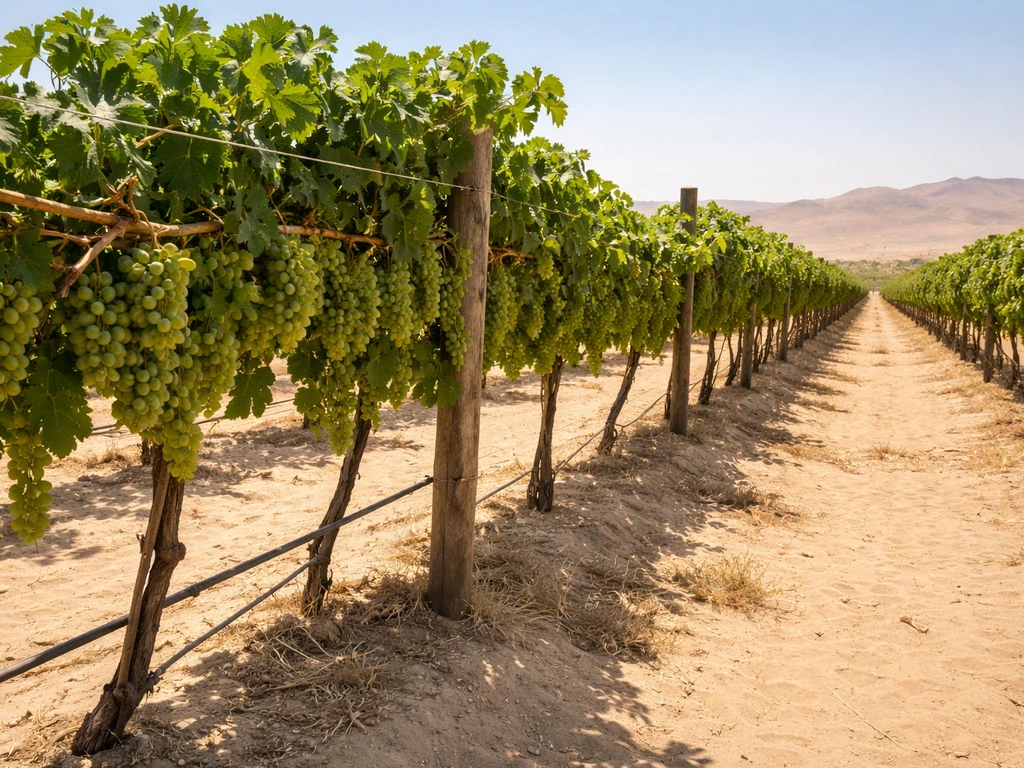
Egypt's climate is largely hot, dry, and sunny, which is actually excellent for ripening grapes. Grapes can also be grown in Nigeria, but success depends heavily on choosing the right site and managing water and disease ripening grapes. The country gets virtually no rain during the growing season, temperatures in summer regularly push above 35°C (95°F), and humidity varies significantly depending on where you are. That variation matters a lot for home growers.
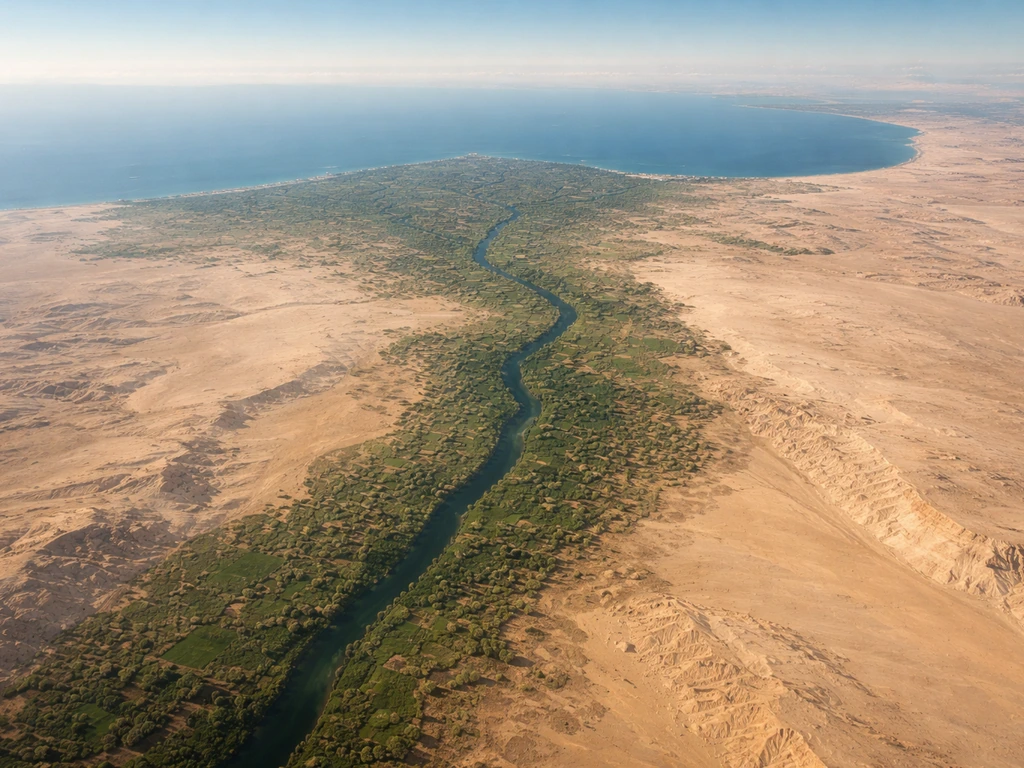
The Nile Delta and areas around Alexandria are more humid due to their proximity to the Mediterranean. That humidity brings higher disease pressure, particularly powdery and downy mildew. Historically, Baladi grapes were grown around Menoufia and Giza, and the classic Fayoumy grape comes from the Fayoum region, which sits at the edge of the Western Desert. Further south and into true desert conditions, the dry air actually suppresses fungal disease and, according to blank" rel="noopener noreferrer">research published in Acta Horticulturae, Flame Seedless vines grown in desert locations can produce far superior cluster and berry quality compared to the same variety grown in heavy Nile Delta clay soils. The takeaway for home gardeners: if you're in a drier, inland location, you have some real advantages. If you're wondering about a different climate like Japan, you can compare how growing grapes there depends on local temperature, rainfall patterns, and season length do grapes grow in japan. If you're near the coast or in the Delta, you'll need to stay on top of disease management.
- Nile Delta and Lower Egypt: productive but higher humidity means active disease management is essential
- Fayoum and Middle Egypt: excellent conditions, traditional grape-growing area with reliable heat and manageable humidity
- Desert fringes and Upper Egypt: low humidity favors fruit quality; irrigation management becomes the dominant challenge
- Alexandria and Mediterranean coast: cooler winters aid dormancy but coastal humidity increases mildew risk
Across all of these regions, the single limiting factor isn't heat or sunlight. It's water. Egypt gets almost no useful rainfall during the growing season, so irrigation isn't optional. It's the foundation of every successful home vineyard in the country.
Best grape varieties for Egyptian conditions
Egypt's commercial grape industry is almost entirely table grapes, and that's a useful signal for home growers. The varieties that have been selected and refined for Egyptian conditions are overwhelmingly bred for eating fresh rather than winemaking. That said, wine grapes aren't impossible if you're in a cooler elevation or coastal area, but table grapes are the practical, lower-stress choice for most Egyptian home gardeners.
Table grape varieties and their harvest windows
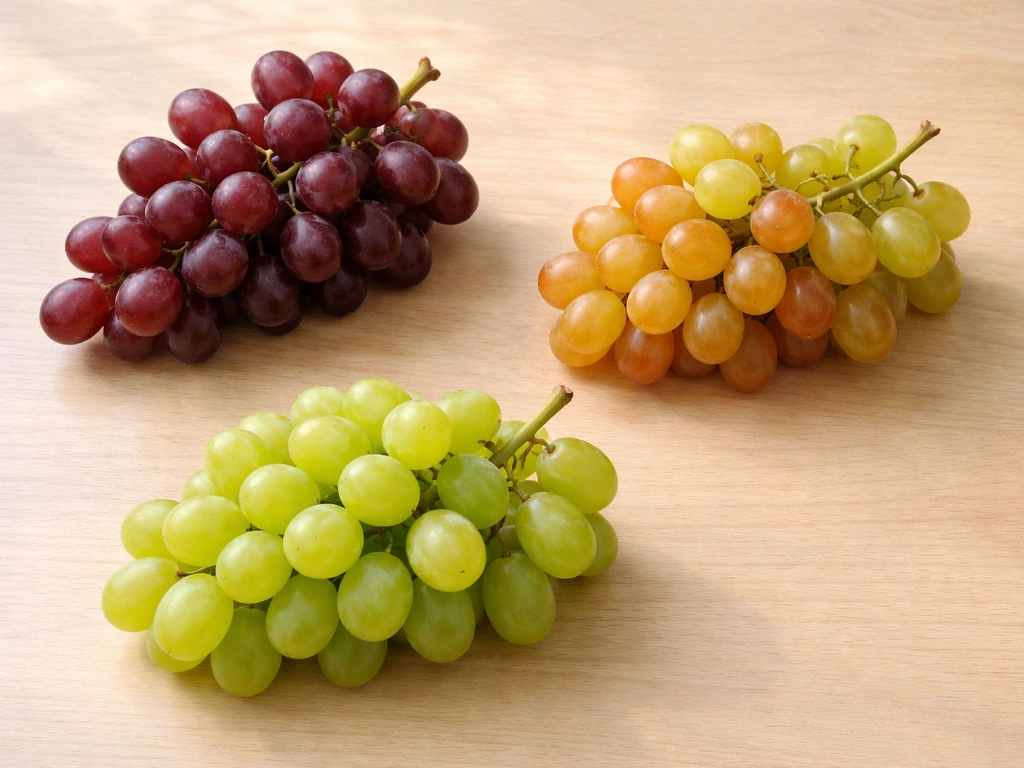
The USDA Foreign Agricultural Service tracks Egypt's variety landscape closely. These are the varieties that commercial growers and extension programs consider proven performers in Egyptian conditions, with their typical harvest windows:
| Variety | Harvest Window | Notes |
|---|---|---|
| Flame Seedless | Mid-May to early June | Red, seedless, performs especially well in drier desert-fringe locations |
| Superior (Sugraone) | Mid-May to early June | Green seedless, widely grown, good early season option |
| Early Sweet | Mid-May | One of the earliest to harvest, good for hot inland areas |
| Prime | Mid-May to June | Early season, seedless |
| Red Globe | Mid-July | Large seeded red variety, well-established in Egypt |
| Thompson Seedless (Sultana) | Mid-July | Classic green seedless, long-proven in Egyptian heat |
| Autumn Royal | Mid-July to early August | Black seedless, later season extends your harvest window |
| Crimson Seedless | Mid-August | Popular late-season red; actively studied for irrigation management in Menoufia |
For a home gardener, I'd suggest starting with one early variety like Flame Seedless or Superior and one later variety like Crimson or Autumn Royal. That spreads your harvest over several months and reduces the pressure of everything ripening at once.
What about wine grapes?
Modern Egyptian wine production does exist, and historic vineyards in the Nile Delta grew wine grapes using drip irrigation to compensate for the lack of rain. But wine grapes are generally more finicky about heat stress during ripening and often need cooler nights to develop good acidity and flavor complexity. If winemaking is your goal, look into growing in cooler microclimates or exploring grafted European varieties, but understand that it's a more challenging path than table grapes in most Egyptian locations.
What grapes actually need to grow well in Egypt
Soil
Grapes are more flexible about soil than most people expect. The FAO notes that with proper irrigation, grapes can succeed even on shallow soils less than 0.6 meters deep. What they can't tolerate is waterlogged, poorly drained ground. If you're in a Delta area with heavy clay soil, amend it with sand and organic matter, or build raised rows to improve drainage. Sandy desert soils drain too fast and hold fewer nutrients, but they're actually excellent for disease suppression and produce high-quality fruit when irrigation is managed precisely. Slightly acidic to neutral pH (6.0 to 7.0) is ideal.
Water and irrigation
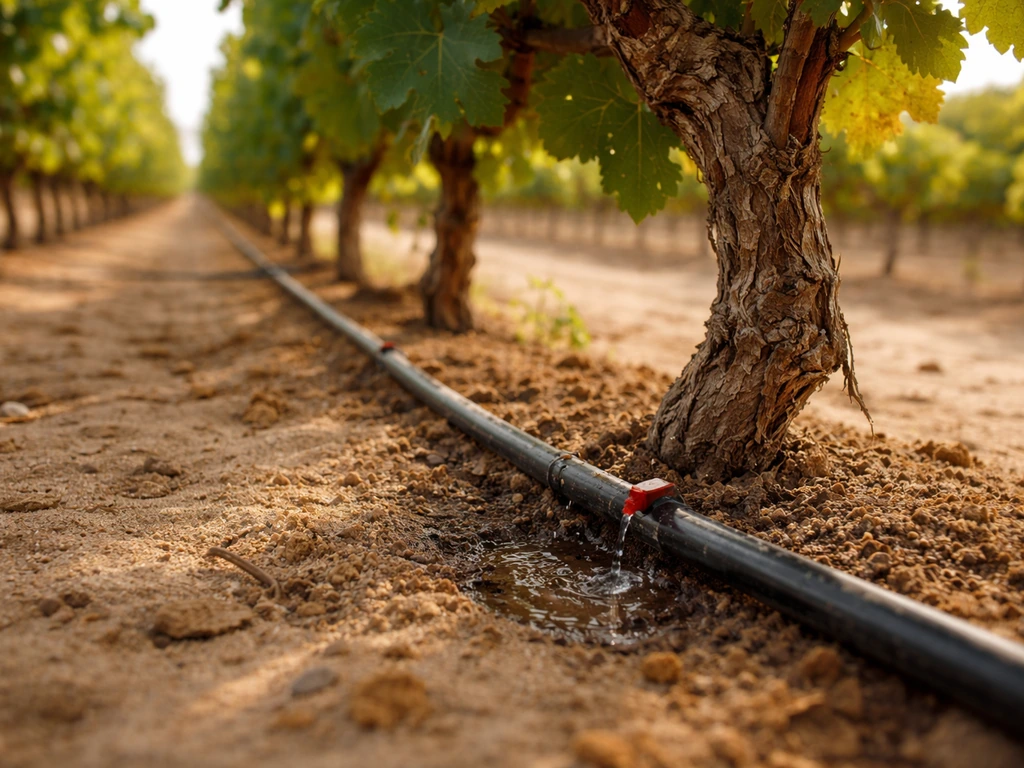
This is the most critical factor for Egyptian home vineyards. Drip irrigation is the gold standard, used by commercial Egyptian grape growers specifically to manage water efficiency in a country with essentially no growing-season rainfall. Drip systems deliver water directly to the root zone, reduce humidity around the foliage (which helps with mildew), and let you maintain consistent soil moisture through the summer heat. UC Davis IPM confirms drip irrigation as excellent for home vineyards, and in Egypt's context it's practically non-negotiable for consistent production. UC Statewide IPM notes that drip irrigation is an excellent watering method for home/garden grape growing drip irrigation is an excellent method of watering. Grapes can survive low water, but as UC Statewide IPM notes, their fruitfulness drops significantly without adequate irrigation. Budget your water carefully but don't skimp during fruit set and berry development.
Sun and heat
Grapes want full sun, at least 8 hours per day, and Egypt delivers that in abundance. If you're wondering can grapes grow in Kenya, the key factors are similar: enough sun, careful irrigation, and choosing varieties that match your local conditions. The intense summer heat in inland and southern areas can actually stress vines if they're water-stressed at the same time, so your irrigation schedule and sun exposure need to work together. Don't plant in areas that get any significant afternoon shade from buildings or trees.
Trellising and training
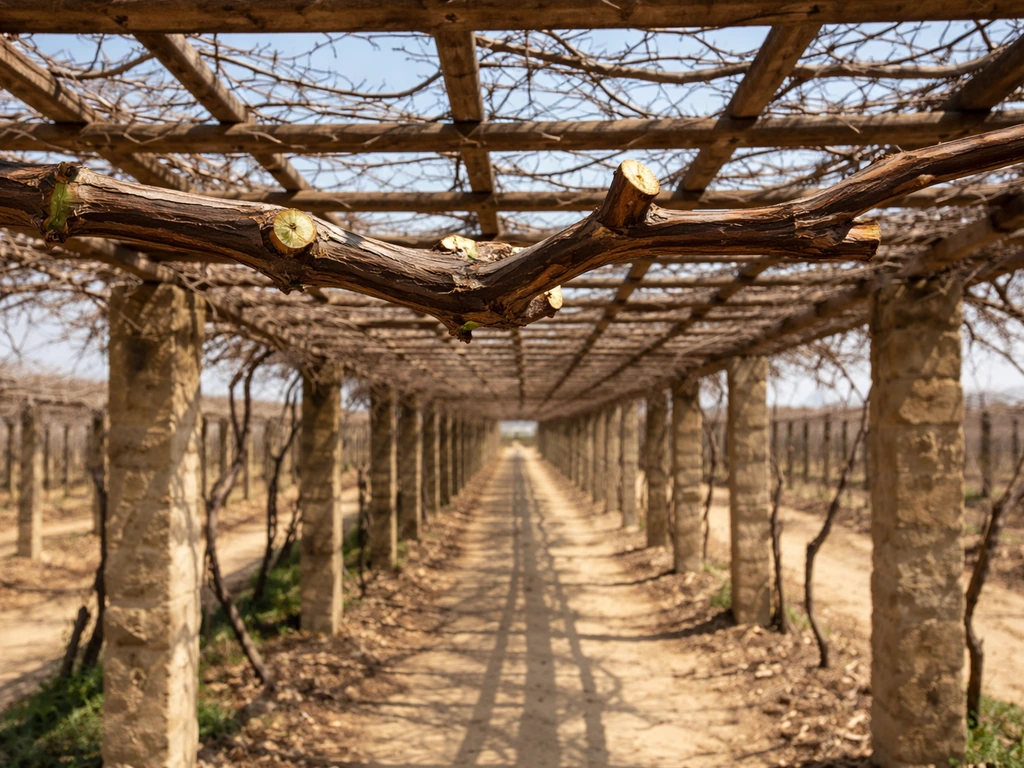
You'll need a trellis system from day one. Egyptian commercial operations often use overhead pergola-style trellises (arbor or tendone systems), which provide good air circulation and spread the canopy for maximum sun exposure. For a home garden, a simple two-wire trellis (one wire at about 1 meter, another at 1.8 meters) trained to a bilateral cordon works well and is manageable for beginners. Set your posts firmly, at least 60 cm into the ground, because a mature vine loaded with fruit puts serious weight and wind load on the structure.
From planting to first harvest: realistic timeline
Egyptian commercial growers plant cuttings starting in early February, according to USDA FAS data. That timing works well for home gardeners too. February planting lets the vine establish roots before the intense summer heat arrives, giving it the best possible start.
- Year 1 (planting): Plant cuttings or grafted vines in early February. Focus entirely on root and shoot development. Remove any flower clusters that form this year so the vine builds energy rather than spending it on fruit.
- Year 1 (summer): Train the strongest shoot up to your first trellis wire. Water consistently. Expect modest growth.
- Year 2: Establish your permanent cordon (the main horizontal arms of the vine). A small crop is possible but keep it limited to 1 to 2 clusters per shoot to avoid overloading a young vine.
- Year 3 onward: This is where you get a real harvest. A well-established vine in Egyptian conditions can produce 5 to 10 kg or more per vine depending on the variety, your irrigation, and how well you've pruned.
The honest expectation is that year 3 is your first meaningful harvest. Trying to rush production in year 1 or 2 by letting the vine overbear will weaken the plant and set back the timeline, not accelerate it. Be patient in the early years and you'll be rewarded later.
Ongoing care: pruning, pests, and seasonal tasks
Pruning
Annual winter pruning is essential and non-negotiable. Grapes fruit on new growth from one-year-old wood, so if you don't prune back aggressively each winter, you'll end up with a tangled mess that produces little fruit and is harder to manage for disease. In Egypt, prune during the dormant period, typically December through January. Most home growers should aim to remove 70 to 90 percent of the previous year's growth. It feels brutal the first time, but it's exactly what the vine needs.
Disease pressure
The three diseases to watch for in Egypt are powdery mildew, downy mildew, and Botrytis (berry rot). BASF Agricultural Solutions Egypt specifically flags all three as significant concerns in Egyptian grape production, and a 2024 study published in the Alexandria Journal of Agricultural Science confirms that downy mildew management and treatment timing are active research topics in the country. Powdery mildew (Erysiphe necator) is particularly common and can reduce yield and quality significantly if left unchecked, as Cornell IPM notes. Cornell also recommends rotating biopesticides with conventional products to manage resistance. The practical approach for Egyptian home growers: start preventative spraying at bud break, keep a consistent schedule through flowering and fruit set, and prioritize good air circulation through proper pruning and canopy management to reduce humidity within the vine.
Feeding and seasonal tasks
- Apply a balanced fertilizer at bud break (February to March) to support shoot growth
- Follow with a lower-nitrogen, higher-potassium feed around fruit set to support berry development
- Keep the area under your vines free of weeds, which compete for water and harbor pests
- Thin shoots and leaves around fruit clusters in summer to improve air circulation and reduce mildew risk
- After harvest, reduce irrigation gradually but don't let the vine go into complete water stress before dormancy
- Clean up fallen leaves and debris at the end of the season to reduce overwintering disease inoculum
How to start your Egyptian home vineyard today
If you're reading this in July 2026, you're outside the ideal February planting window for this season. You may be wondering about other climates, like Malaysia, but the key is matching grapes to heat, rainfall, and irrigation can grapes grow in malaysia. Use the next few months to prepare properly so you're ready to plant in February 2027. That preparation time is genuinely valuable because a well-prepared site makes a real difference in how quickly your vines establish.
- Choose your site: Pick the sunniest, most open spot available. Avoid low-lying areas where water pools after irrigation. If your soil is heavy clay, plan to amend it or build a raised planting bed.
- Plan your irrigation: Source drip irrigation supplies now. A basic drip system for a home vineyard is inexpensive and straightforward to install. Map out where your emitters will go before you plant.
- Source your varieties: Contact local agricultural cooperatives, nurseries, or the Ministry of Agriculture extension offices in your governorate. Ask specifically for certified cuttings or grafted vines of Flame Seedless, Superior, or Crimson Seedless as a starting point.
- Build your trellis before you plant: Having the structure ready at planting means you can train the vine immediately rather than scrambling to catch up as it grows. Use treated wooden posts or galvanized metal with heavy-gauge wire.
- Prepare your disease management plan: Buy a basic fungicide labeled for powdery and downy mildew before the season starts. Note bud break (roughly February to March) as the trigger for your first spray application.
- Plant in early February: Set cuttings or vines 2 to 3 meters apart in your row. Water them in well and mulch around the base to retain soil moisture.
- Focus year 1 on establishment: Resist the urge to let the vine fruit. Train the main shoot, keep it watered, and let it build a strong root system for future seasons.
Egypt's combination of intense sun, heat, and minimal rainfall creates an environment that, with good irrigation and consistent disease management, is genuinely excellent for growing table grapes at home. The constraints are real but manageable. Other countries in the region face similar challenges: grape growers in Israel have long worked with similar hot, dry conditions, and growers in African countries like Kenya and Ghana are also exploring how to adapt viticulture to warm-season climates. If you are wondering can grapes grow in Ghana, the good news is that the same core factors like sunlight, irrigation planning, and disease control are what determine success. What makes Egypt particularly well-suited is the long established knowledge base, the availability of proven local varieties, and the fact that commercial drip irrigation systems are already widely used across the country. You're not pioneering unknown territory. You're joining a long tradition, with modern tools to make it easier than ever.
FAQ
How much irrigation do I actually need for grapes in Egypt, and how do I avoid overwatering?
Use drip to keep the root zone consistently moist, especially during fruit set and berry enlargement. In hot weather, plan for more frequent, smaller pulses rather than long soakings, and check soil 15 to 25 cm down before adding water. Overwatering in heavy soils can trigger root stress even if the air is dry.
What should I do differently if I live in the Delta or near Alexandria, where humidity is higher?
Expect more frequent pressure from powdery and downy mildew, so prioritize canopy airflow with stricter pruning, remove crowded shoots, and keep the trellis trained to open the canopy. You may also need tighter spray timing around flowering and early fruit development, not just at the first signs of disease.
Can I grow grapes without spraying in Egypt if I focus on pruning and airflow?
You can reduce disease pressure with pruning and trellis management, but mildew and berry rot often still require some preventive approach in Egypt’s conditions. Plan for at least a bud-break preventative program, and treat quickly if symptoms appear on leaves or clusters rather than waiting for full outbreaks.
When is the best time to prune if I want to harvest earlier or later?
Egypt’s dormant pruning window (typically December to January) sets the framework for new growth. If you prune much later, you can delay bud break and shift the harvest later, so adjust timing carefully rather than skipping or extending the window.
Should I plant one variety or multiple varieties in the same garden?
Multiple varieties help spread harvest, but do not mix varieties randomly in the same trellis zone. Keep early and late types separated enough that you can manage sprays and irrigation timing consistently, since bunch development and disease risk stages will not line up.
What spacing should I use between grapevines in a home garden?
Plan spacing that supports airflow and trellis training, typically enough room for you to walk between rows and work the canopy. If vines are too close, you will trap humidity inside the canopy and make disease control harder, especially in the Delta.
Can I grow grapes in containers on a balcony or rooftop in Egypt?
It’s possible only if you can provide deep root volume, strong drainage, and full sun. Avoid small pots, because limited soil means faster drying and higher heat stress, which can cause poor fruit set even with drip irrigation. Ground planting or large raised beds are more reliable.
How can I tell whether my grapes are under water stress during the hottest months?
Watch for loss of vigor, reduced shoot growth, and berries that fail to enlarge properly after fruit set. Leaf wilting during midday can be a symptom, but confirm by checking soil moisture at depth, because some midday droop can look similar to heat effects.
Do I need to fertilize differently in sandy desert soils versus Delta clay soils?
Yes. Sandy soils drain quickly and lose nutrients faster, so you usually need a more targeted program with smaller, more frequent feedings. Heavy clay can hold nutrients but may still limit root oxygen if drainage is poor, so focus first on drainage improvements like amendments or raised rows.
Can I train grapes on a pergola, and will that increase disease problems?
Pergola and overhead systems can work if the canopy stays well exposed and airflow is good, but they can also trap humidity if the structure shades foliage. If you use overhead training, keep vigorous shoots controlled, maintain sun on clusters, and be stricter about pruning density.
Why is my vine fruiting poorly in years 1 to 2, even though it’s alive?
In Egypt, grapes commonly look fine but take time to build a productive fruiting structure. If you let the vine overbear early, you can delay meaningful yields by weakening the plant, so remove excess bunches in early years and aim for the vine to establish strong one-year-old wood.
What’s the biggest mistake home growers make with grapes in Egypt?
Skipping or under-managing irrigation. Heat and sun are not the main issue by themselves, the problem is water inconsistency during fruit set and berry development, which reduces yield and can increase stress susceptibility.