
Yes, grapes do grow in Nigeria, and they can produce fruit twice a year under the right conditions. The catch is that location matters enormously. The northern highlands, particularly Kaduna State's Kudan Local Government Area, are where virtually all of Nigeria's commercial grape farming happens. Kudan alone accounts for roughly 85% of the country's grape production, with over 80 vineyards operating there. So if you are in the right part of Nigeria with a suitable climate, growing grapes at home is not just possible, it is something your neighbors may already be doing.
Do Grapes Grow in Nigeria? How to Grow Them Successfully
Marcus Whitfield
1 Jul 2026
Which parts of Nigeria can actually grow grapes
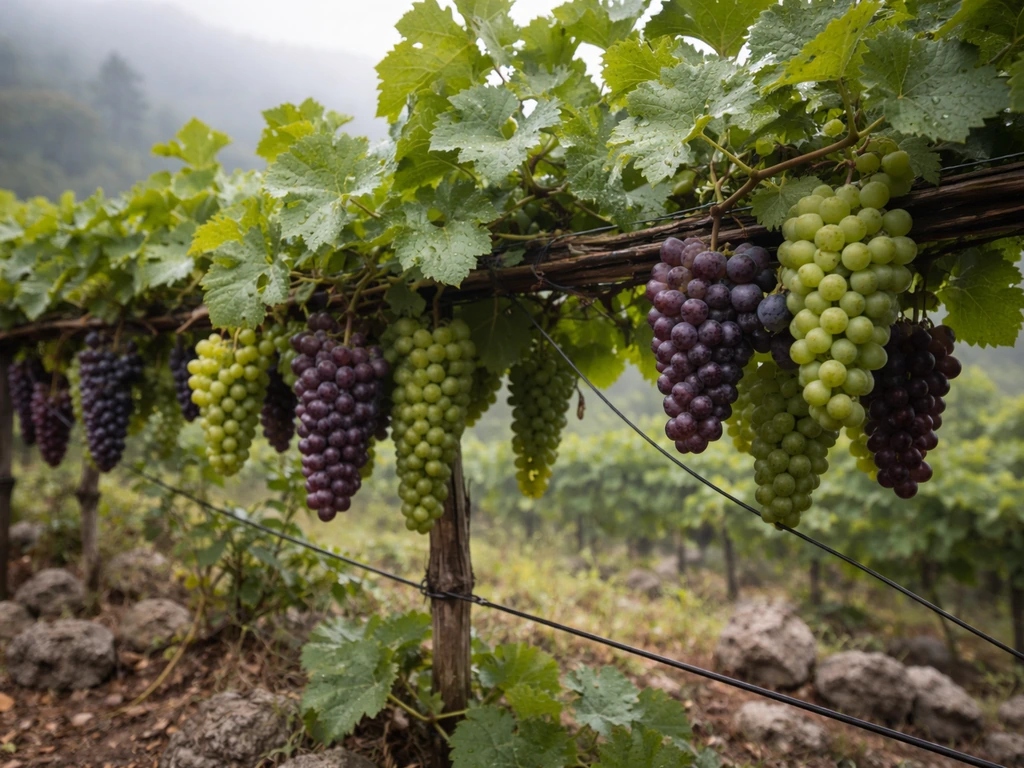
Grapes are not a blanket-the-whole-country crop. Yes, grapes can grow in Kenya, but you need a suitable climate and careful site choices like drainage and full sun can grapes grow in Kenya. They need a clear distinction between a dry season and a wet season, some degree of temperature variation to trigger dormancy and budbreak, low humidity during fruit development, and well-drained soils. Most of southern Nigeria, including Lagos, Port Harcourt, and the Niger Delta region, is too humid and too consistently warm for grapes to thrive. The year-round heat and moisture create perfect conditions for fungal diseases and make it hard for vines to go through the rest period they need.
The northern savanna and the highlands are a different story. If you are asking can grapes grow in Malaysia, the key is matching grapes to a dry season, manageable humidity, and well-drained soils. Kaduna State sits at roughly 600 meters above sea level, and its climate delivers a genuine dry-season break that mimics the dormancy grapes need. Monthly rainfall in Kaduna can drop to near zero in the dry months and peaks around 149 mm in the wet season, which gives vines a clear seasonal rhythm. Farms in Kudan are reportedly producing around 25 tonnes per hectare twice a year, which tells you this is not marginal production, it is real, repeatable agriculture.
The Jos Plateau is another strong candidate. If you are curious about broader regional options, do grapes grow in egypt? At elevations above 1,200 meters, Jos has average temperatures running between 18 and 22°C, with annual rainfall around 1,411 mm spread across the wet season. That cooler, near-temperate climate is arguably even better for certain grape varieties than Kaduna. If you are based in Plateau State or Kaduna State, you are starting from a genuinely favorable position. Other northern states like Kano, Zamfara, and Katsina can also work, though you will want to pick heat-tolerant varieties and invest heavily in irrigation management.
Picking grape varieties that suit Nigerian conditions
Not every grape variety will cooperate with Nigeria's climate, so variety selection is one of the most important decisions you will make. The good news is that Vitis vinifera varieties (the classic European wine and table grapes) have already been proven in Nigeria's northern highlands, which tells you they can adapt when the climate is right. You want to focus on varieties that tolerate heat, have some resistance to common fungal diseases, and can be induced into dormancy through pruning rather than cold temperatures.
- Cardinal: A popular table grape variety known to perform well in warm climates. Large, red, sweet berries with good productivity. Widely grown by Nigerian farmers in Kaduna.
- Muscat of Alexandria: A classic warm-climate variety that handles high temperatures reasonably well and produces aromatic, sweet fruit used for both fresh eating and juice.
- Italia (Italian Muscat): Another warm-climate performer with large, pale green to golden berries. Often used as a table grape in tropical viticulture settings.
- Black Muscat (Muscat Hamburg): Tolerates warm conditions and produces dark purple berries. Can work well in the highlands.
- Alphonse Lavallee: A heat-tolerant table grape with large, dark berries that has been grown successfully in tropical and subtropical settings.
- Local or regionally adapted clones: If you can source cuttings from established Kudan vineyards, those vines have already self-selected for the local conditions and are worth prioritizing over imported planting material.
One thing to know upfront: grapes grown from seed rarely produce fruit that matches the parent plant. Always source your planting material as rooted cuttings or grafted plants from known, productive vines. Propagation from dormant cane cuttings is the standard method and produces vines genetically identical to the parent. If you can connect with the Grapes Farmers Association in Kudan or a local agricultural extension office in Kaduna or Plateau State, that is your best route to getting quality planting material for Nigerian conditions.
Getting your site and soil right before you plant
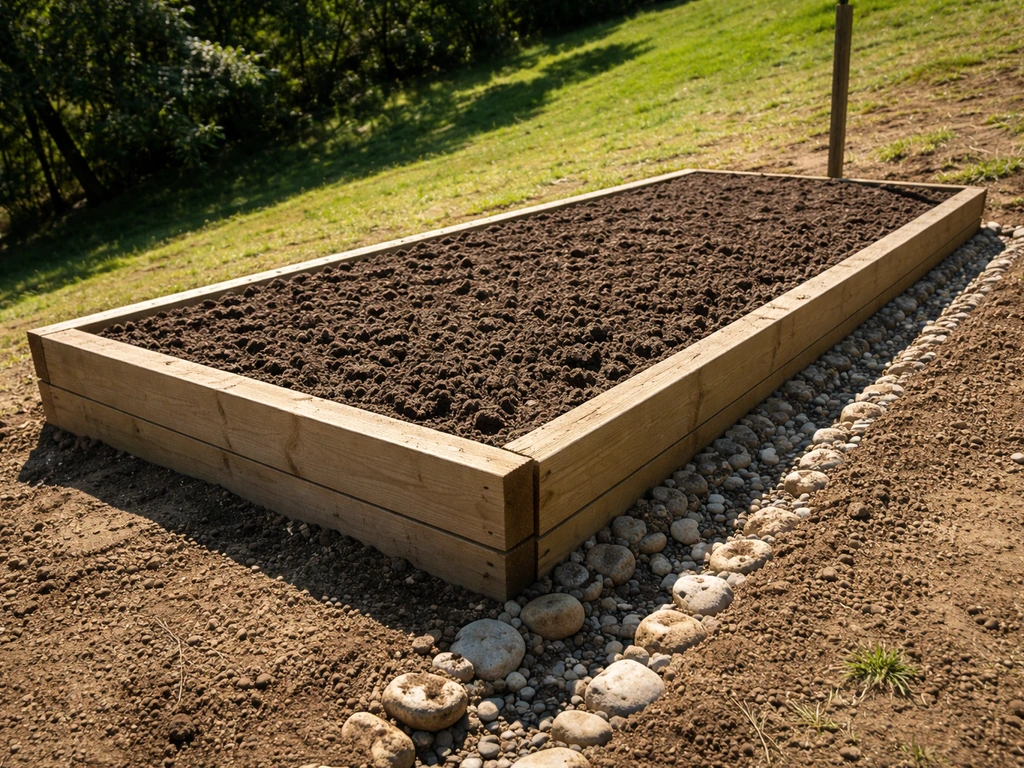
Grapes are not forgiving about waterlogged soil. The number one site requirement is drainage. If water sits in your soil for more than a few hours after heavy rain, your vines will struggle with root rot and disease. Pick a spot that either naturally drains well or that you can build up with raised mounds or ridges. A gentle slope is ideal because it lets water run off without eroding your planting area.
Sun exposure is equally critical. Grapes need full sun, meaning at least six to eight hours of direct sunlight per day. Avoid planting near tall trees or structures that will shade the vines during peak daylight hours. In Nigeria's northern states, the afternoon sun can be intense, but vines handle heat much better when they have good airflow and are not competing with shade.
Soil pH should land between 5.5 and 6.5. Below 5.5, nutrient availability drops and aluminum toxicity can become a problem. Above 6.5, iron and manganese deficiencies start showing up as yellowing leaves. Get a basic soil test done before you plant. If your soil is too acidic, agricultural lime raises pH; if it is too alkaline, sulfur lowers it. If you are in a northern Nigerian state with sandy to sandy-loam soils, you may need to add organic matter to improve water retention without sacrificing drainage. Dig in composted materials, well-rotted manure, or crop residues to a depth of at least 30 cm before planting.
| Soil Factor | What Grapes Need | How to Fix It |
|---|---|---|
| pH | 5.5 to 6.5 | Add lime to raise pH; sulfur to lower it |
| Drainage | Free-draining, no waterlogging | Build raised mounds or ridges; improve with coarse organic matter |
| Texture | Sandy loam to loam preferred | Add compost to sandy soils; add grit to heavy clay |
| Organic matter | Moderate (3–5%) | Incorporate well-rotted manure or compost before planting |
| Depth | At least 60 cm workable depth | Deep till or mound soil to ensure roots can establish freely |
How to plant and care for young vines
Plant at the start of the dry season in Nigeria's northern states, typically November to December. This gives roots time to establish before the stress of the hot months and allows the vine to hit the wet season already anchored in the soil. If you are using rooted cuttings, they should be at least 20 to 30 cm tall with a visible healthy root system before going into the ground.
- Dig your planting holes about 45 to 60 cm wide and 45 cm deep. Backfill with a mix of topsoil and compost.
- Space vines 1.8 to 2.4 meters (about 6 to 8 feet) apart in a row, with rows at least 2.5 to 3 meters apart to allow sunlight and airflow between plants.
- Set the vine in the hole at the same depth it was in the nursery or container. Backfill firmly and water in thoroughly.
- Right after planting, prune the young vine back to a single cane with just 2 to 3 living buds. This seems drastic but it forces the plant to direct its energy into roots, not shoots.
- Mulch around the base with dry grass, straw, or wood chips to a depth of about 5 to 8 cm. Keep mulch a few centimeters away from the stem to prevent rot.
- Water every 2 to 3 days in the dry season during the first year. Young vines cannot tolerate drought stress while establishing.
- Hold off on heavy fertilizing in the first few months. A light application of a balanced fertilizer (such as NPK 15-15-15) at 4 to 6 weeks after planting is enough to get things going without burning roots.
Training, trellising, pruning, and keeping up with watering
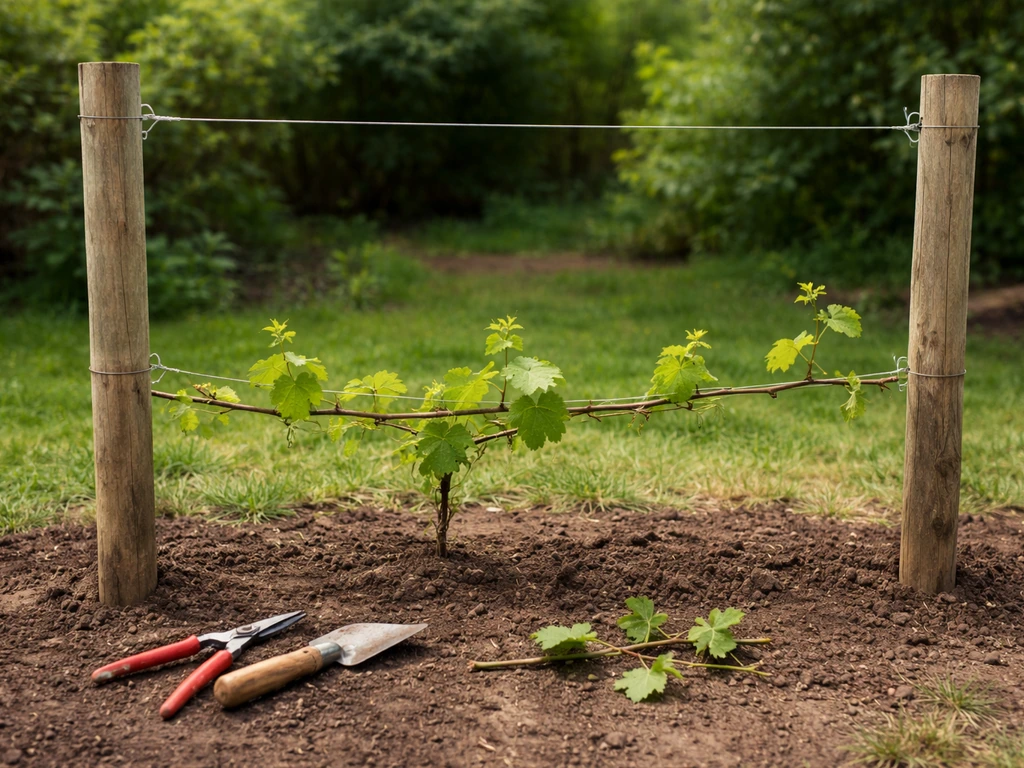
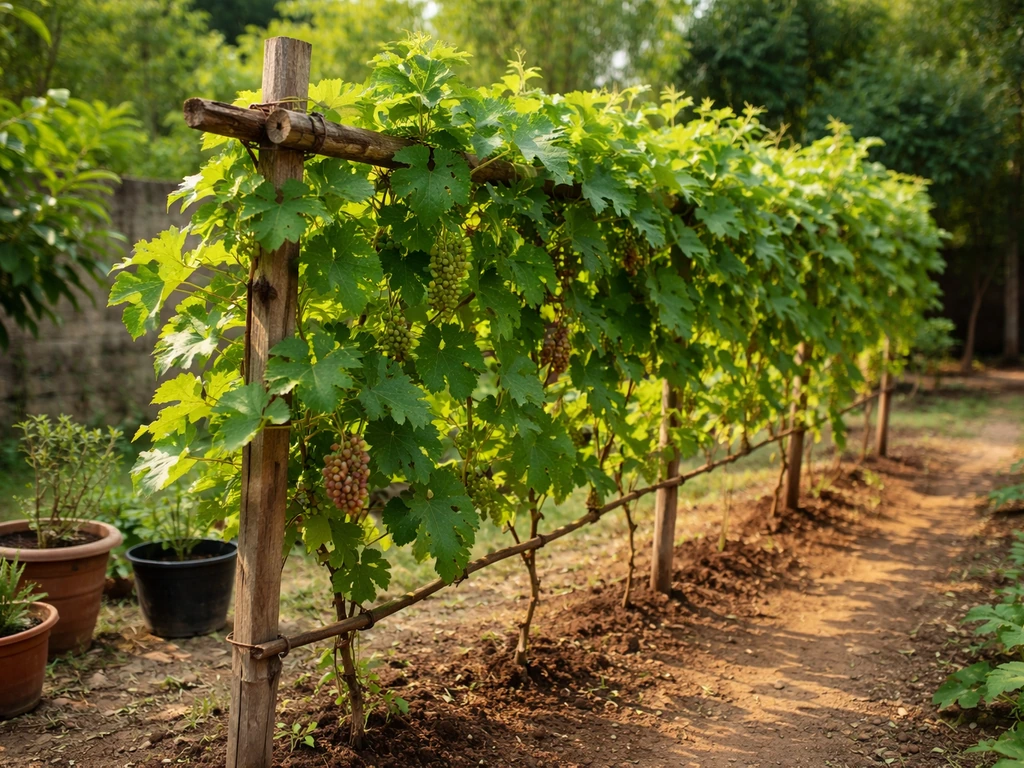
Grapes need a support structure from day one. A simple two-wire trellis is the standard setup for home gardeners. Drive wooden or metal posts into the ground every 4 to 5 meters along the row, to a depth of about 60 cm. Run a bottom wire at around 60 cm off the ground and a top wire at about 1.5 to 1.8 meters. As your vine grows, train the main stem (called the trunk) straight up to the top wire, then allow two horizontal arms (cordons) to extend in both directions along the wire.
Pruning in a tropical and subtropical setting like Nigeria requires a slightly different mindset than classic temperate viticulture. Because vines do not experience true cold dormancy, you induce dormancy through pruning. In Nigerian viticulture practice (as done in Kudan), farmers typically prune twice a year, timing the cuts to manage two cropping cycles. The key principle is that grapes fruit on new growth that emerges after pruning, so regular pruning is not optional, it is how you get a crop. Cut back to short spurs of 2 to 3 buds per shoot, remove dead, diseased, or crossing wood, and thin out any congested growth to keep airflow through the canopy.
Watering discipline is where many home growers go wrong. Grapes want deep, infrequent watering rather than shallow daily sprinkling. In the dry season, water deeply once or twice a week depending on your soil type, enough to wet the soil to at least 40 to 50 cm depth. Drip irrigation or a watering ring around each vine is more efficient than overhead watering, which keeps the canopy wet and invites disease. During the wet season, natural rainfall usually covers your needs, but watch for drainage issues if rains are unusually heavy.
How long until your first harvest, and what problems to watch for
Realistic expectation: most grape vines in Nigeria will produce a first meaningful harvest in year two or three after planting. The first year is almost entirely about root and trunk establishment. You will see vigorous shoot growth, but you should actually remove any flower clusters that form in year one and sometimes year two. It feels counterintuitive, but letting young vines carry fruit too early weakens the permanent structure and leads to smaller yields long-term. By year three, a well-managed vine should produce its first real crop, and by year four or five you should be seeing solid yields.
The double-cropping cycle in Nigeria means that with two pruning events per year, you can potentially harvest twice annually once vines are mature. That is the system practiced in Kudan, where yields of around 25 tonnes per hectare twice a year have been recorded commercially. At a home garden scale, expect your first harvests to be modest before vines hit their full productive stride. Grapes can be grown successfully in some parts of the world, but the conditions in Japan are different from those in Nigeria do grapes grow in japan.
Diseases you will likely encounter
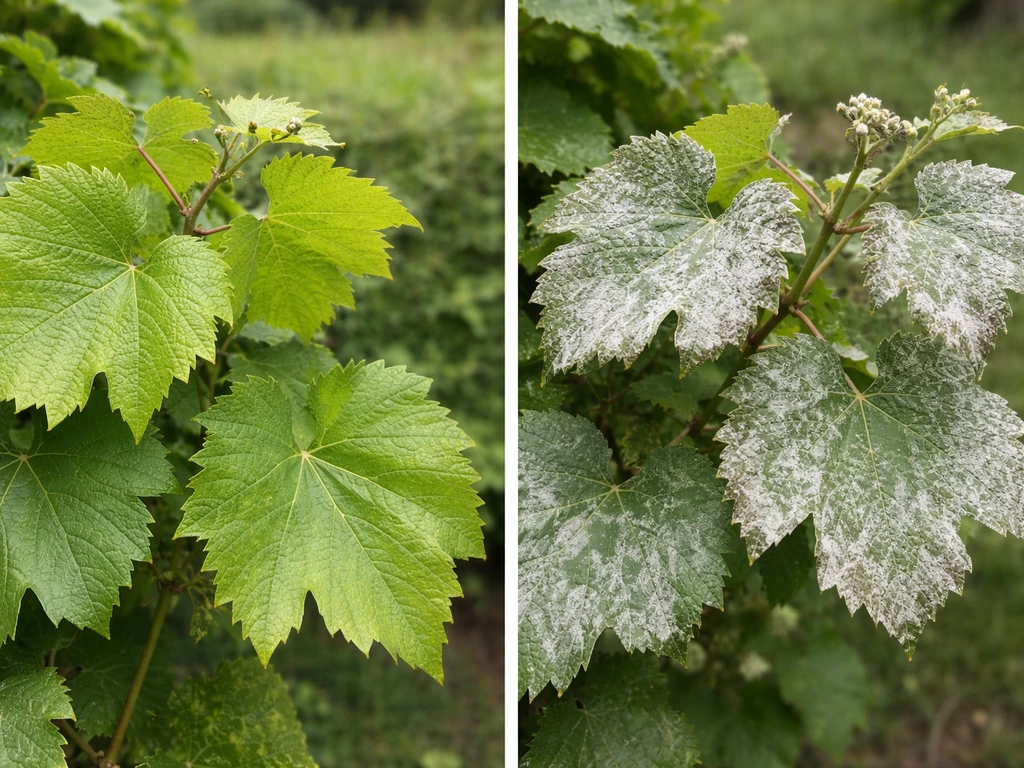
Disease management is not optional in Nigeria's growing conditions. The humidity during the wet season creates a prime environment for fungal diseases. Research conducted in Zaria, Nigeria has specifically documented anthracnose-blight-dieback complex affecting grapevines locally, so this is not a theoretical risk, it is a documented Nigerian problem. Beyond anthracnose, you should also be prepared for powdery mildew, downy mildew, grey mold (botrytis), and black rot.
- Powdery mildew: Shows as white powdery coating on leaves, shoots, and berries. Most damaging around flowering and early fruit development. Control with sulfur-based fungicides applied before and during flowering. Removing lower leaves to improve airflow helps significantly.
- Downy mildew: Yellow oily patches on upper leaf surface with white downy growth underneath. Spreads rapidly in wet, warm conditions. Copper-based fungicides are the standard management tool.
- Anthracnose: Dark, sunken lesions on shoots, leaves, and berries. Particularly damaging in Nigeria's wet season. Prune out affected material and apply registered fungicides at the first sign of infection.
- Grey mold (Botrytis): Soft brown rot on berries, especially in dense clusters. Improve canopy airflow through leaf removal and avoid overhead irrigation.
- Black rot: Brown circular spots on leaves with small black dots, and shriveled mummified berries. Remove and destroy infected plant material; fungicide programs help during wet seasons.
A preventive spray program starting at budbreak and continuing through fruit development is far more effective than reacting once disease takes hold. Rotate between fungicide chemistries (copper, sulfur, systemic fungicides where available locally) to avoid resistance. Check with agrochemical suppliers in your area for products registered and available in Nigeria, as local availability matters more than what works on paper.
Common pests and other challenges
Birds are a significant pest at harvest time. Netting your vines as bunches approach ripeness is the most reliable protection. Insects including mealybugs, spider mites, and various caterpillars can also cause damage, particularly on stressed vines. Keeping vines healthy, well-fertilized, and properly pruned is the best defense against pest pressure because vigorous vines recover faster and are less attractive targets.
If you are gardening in Nigeria's south, be honest with yourself about the climate constraints. The consistent year-round warmth and high humidity make grape growing extremely difficult and disease management near-constant. Gardeners in other similarly hot and humid parts of West Africa face comparable challenges, much like those in parts of Ghana or Malaysia where humidity is the primary obstacle. If you are wondering can grapes grow in Ghana, the short answer is that humidity often makes it tough unless you have a cooler, drier site. Your time and money may be better spent on crops suited to your specific zone. But if you are in Kaduna, Plateau State, or another northern highland region with a real dry season, you are genuinely set up for success. Get good cuttings, nail your soil preparation, build a solid trellis, and keep up with your disease spray program. Grapes in Nigeria are not a gamble, they are a proven crop in the right hands and the right place.
FAQ
What’s the single biggest reason grapes fail in southern Nigeria?
Usually it is the combination of persistent humidity and poor seasonal dormancy. Even if you irrigate correctly, high moisture around the canopy keeps fungal pressure high and slows the vine’s ability to cycle through dormancy induced by pruning.
Can I grow grapes in Lagos or Port Harcourt if I use shade nets and extra airflow?
Airflow helps, but it typically does not solve the core issue, the lack of a true dry-season break. For grapes you still need a long window of low humidity during fruit development, so many gardeners in the south end up switching to disease-heavy management with inconsistent results.
Which grapes should I choose for Nigeria, and should I stick to Vitis vinifera?
If you are in a suitable northern highland area, Vitis vinifera is a practical starting point, especially varieties known to handle heat and mildew pressure. For hotter locations, prioritize heat-tolerant choices and those that respond well to pruning-based dormancy rather than relying on cold winter chilling.
Is it okay to start grapes from store-bought grapes or grape seeds?
It is the fastest way to waste time, because seed-grown vines rarely match the parent and may have weaker fruit quality or uneven growth. Use rooted cuttings or grafted plants from productive local sources so you know what you are planting.
How do I know my site truly has the drainage grapes need?
Do a simple water test before planting. After heavy rain or a controlled watering, observe whether water sits around the planting area for hours. If you see pooling or soggy soil, use raised ridges or choose a different slope, grapes are extremely sensitive to root-zone saturation.
What soil pH should I target if I don’t have a lab for testing?
Aim roughly for mildly acidic to near-neutral, about 5.5 to 6.5. If you cannot test, prioritize organic matter improvements and avoid extreme amendments. But for a serious attempt, do at least a basic pH test because lime or sulfur are powerful, and over-correction can trigger nutrient lockouts.
Do grapes need fertilizer during the wet season in Nigeria?
Yes, but with a different emphasis. During the wet season, avoid heavy nitrogen that encourages soft, disease-prone growth, and focus on maintaining vine balance. Your pruning and canopy thinning decisions also determine how much nutrient the plant actually needs.
How often should I water once the rainy season starts?
Watch the soil, not the calendar. If the vines are on well-drained mounds and rainfall is normal, you may rely mostly on rain, but if there are prolonged heavy rains or persistent wet soil, pause watering and improve drainage rather than adding more water.
Do I need a trellis even for backyard vines?
Yes, at least from the start. Grapes produce quality fruit and manageable disease control when trained on a support, so plan your trellis early rather than trying to retrofit later when the vine structure is already set.
How do I prune in Nigeria if there is no real cold winter dormancy?
Treat pruning as your dormancy control. In Nigeria, growers typically prune multiple times to manage two cropping windows, and the vine fruits on new growth after cuts, so consistent pruning is what makes production possible.
Should I remove flowers in the first year?
In most home setups, yes. Remove flower clusters in year one, and sometimes year two, because early fruit can divert energy from building the trunk and framework, leading to smaller yields once the vine becomes mature.
When should I start a fungicide program?
Start at budbreak and keep going through the period when berries are developing, then adjust based on local disease pressure. The key is preventive coverage, if you wait until leaves show symptoms, you typically lose time and yield.
What if fungicides are hard to find locally in my area?
Build your strategy around what is registered and available, but also reduce reliance by controlling canopy density and improving sanitation. Rotate chemistries when possible, and if options are limited, focus harder on spacing, pruning airflow, and removing infected material promptly.
How can I prevent birds from destroying ripening grapes?
Use netting before bunches fully color, once fruits are visible and approaching ripeness. Make sure the net is secured so birds cannot reach the bunches from the sides, loose netting often fails at the first serious feeding.
What’s the realistic timeline for my first harvest?
Expect the first meaningful crop in about year two or three in most Nigerian garden conditions. Year one is mainly for establishing strong roots and a reliable trunk, so plan for a low or no harvest rather than assuming quick production.