
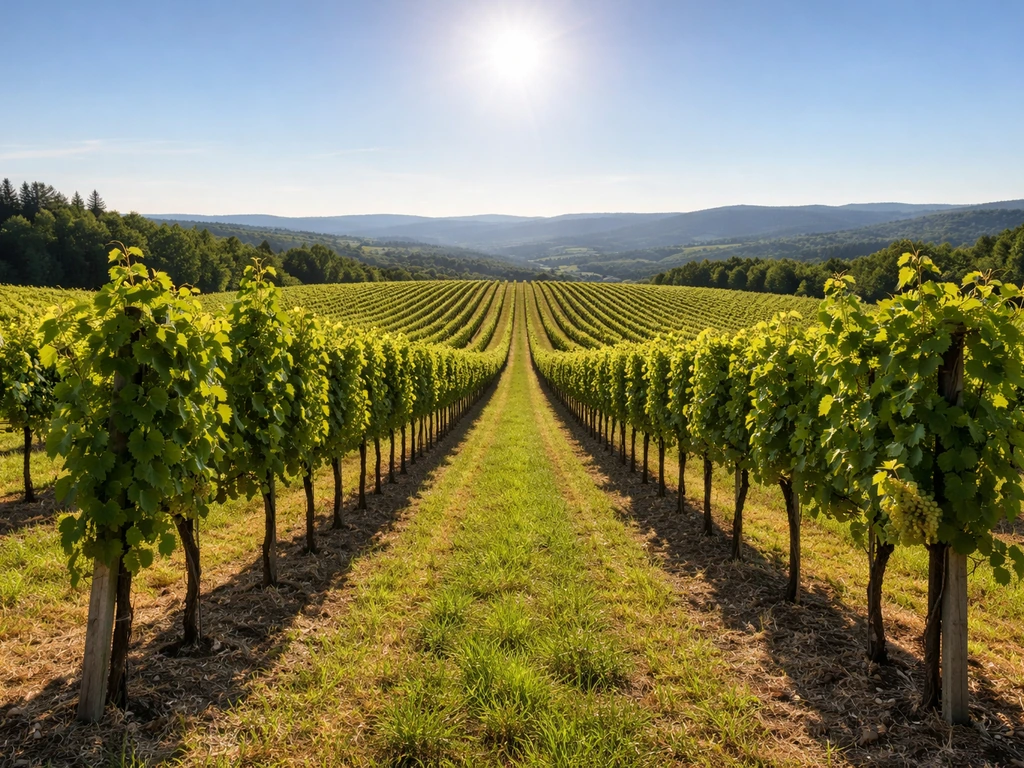
The best place to grow grapes is a south- or southwest-facing slope with full sun, well-drained soil, and good airflow. That is the short answer. But whether that spot exists in your yard, and which grapes will actually thrive there, depends almost entirely on where you live. This guide walks you through every factor that matters, from sun hours and soil pH to frost pockets and variety selection, so you can walk outside today and figure out if your yard can grow grapes, and what to plant if it can.
Best Places to Grow Grapes: Site, Climate, and Varieties
Marcus Whitfield
10 Apr 2026
What 'best place' actually means for grapes
People often think of grape growing as mysterious, but the site requirements are pretty concrete. Before you commit to planting, run through this checklist for any spot you are considering. If a location checks most of these boxes, it is worth a closer look.
- At least 7 to 8 hours of direct sun per day (full sun, not dappled)
- Well-drained soil, no standing water after rain
- Soil pH in the 5.5 to 6.5 range (6.0 to 6.5 for vinifera wine grapes)
- A gentle slope of around 4 to 8% to help cold air drain away
- No low-lying frost pockets directly in the planting area
- Protection from strong prevailing winds, but not fully enclosed
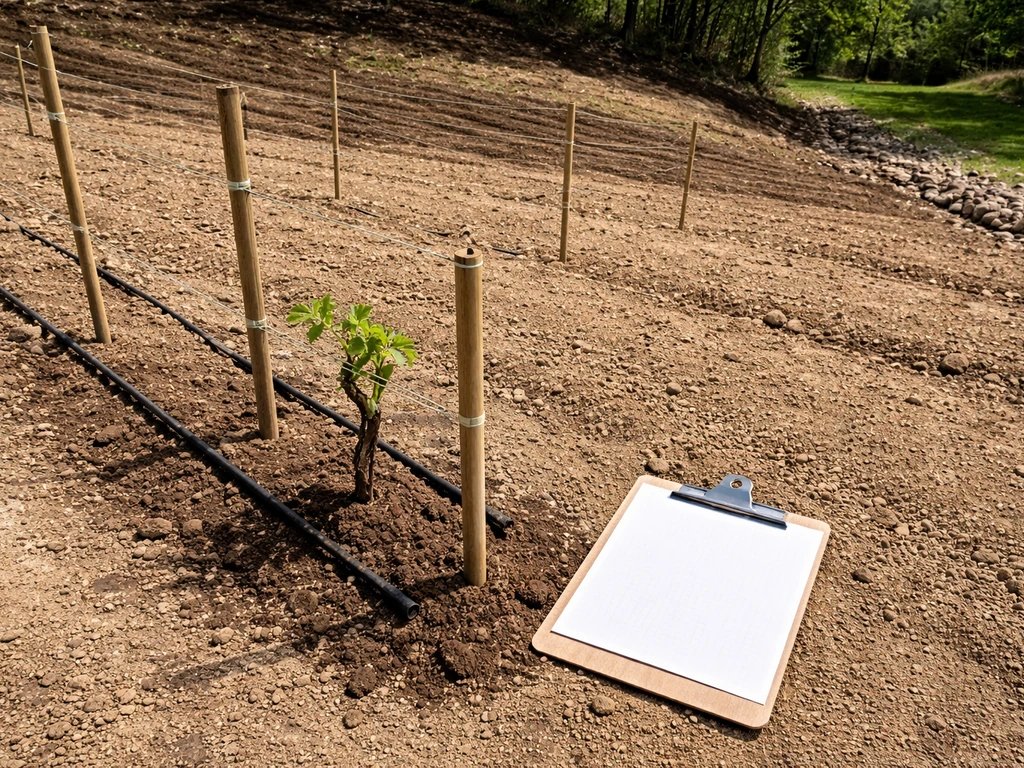
- Room for a trellis and vine spacing of at least 6 feet per vine
- Enough growing season length for your chosen variety to fully ripen
If a spot fails on drainage or sun, do not try to compensate with better varieties or more fertilizer. Those two factors are non-negotiable. Everything else can be managed to some degree.
Sun, heat, and ripening: how much exposure grapes really need
Grapes are a high-sun crop. UC Master Gardeners recommend a minimum of 7 to 8 hours of direct sun daily, and more is better for both fruit quality and disease resistance. Shaded vines do not just produce less fruit, they tend to stay wet longer and become magnets for fungal problems. So that partially shaded corner near the fence is not a borderline call, it is a no.
Beyond daily sun hours, the total seasonal heat accumulation in your climate determines which types of grapes you can grow at all. Viticulture researchers use growing degree days (GDD), calculated by adding up daily temperatures above 50°F across the growing season, to classify climates. OSU Extension notes that cool-climate grape varieties may need roughly 1,800 to 2,500 GDDs to ripen properly. The Winkler Index, the most widely used GDD-based classification system, divides wine regions into zones (Region I through V) that map directly to which cultivars can reach full ripeness before the season ends.
Practically speaking: if your summers are short and cool (think Minnesota, Wisconsin, or northern New England), you are in the 1,500 to 2,200 GDD range and need very early-ripening, cold-hardy cultivars. If you are in a warm continental region like Missouri, Virginia, or central California's valleys, you have the heat budget for a much wider range of wine and table grapes. Row orientation also matters once you get to the wine grape level: Penn State Extension recommends a north-south row orientation in the Mid-Atlantic to maximize sun interception across the canopy, though you will need to weigh that against your actual topography.
Soil and drainage: the foundation grapes cannot live without
Grapes are surprisingly tolerant of poor soil fertility, but they absolutely cannot tolerate poor drainage. UC IPM is blunt about this: avoid soils with drainage problems. Standing water around vine roots creates ideal conditions for Phytophthora root and crown rot, a soil-borne disease that kills roots and causes gradual decline, wilting, and eventually vine death. Illinois Extension describes the symptoms well: stunting, poor growth, sudden wilting, and dieback that looks like other problems until it is too late. The fix is preventing wet conditions in the first place, not treating them after the fact.
If your only available site has marginal drainage, UC IPM recommends planting on raised berms or mounds to keep root crowns above the wet zone. Penn State Extension goes further for commercial wine grape setups and recommends installing drainage tile before planting, which is worth considering if you are putting in more than a few vines and the site has any drainage concerns.
For soil pH, the target depends on what you are growing. Nebraska Extension recommends a range of about 5.5 to 6.5 for grapes generally. For Vitis vinifera wine grapes specifically, the target narrows to 6.0 to 6.5, and soils below that range need to be limed before planting. Hybrid varieties tend to be more forgiving of slightly acidic soils, which is one practical reason they dominate in the eastern US and upper Midwest. Get a soil test done before you plant. It is a ten-dollar investment that can save you years of frustration.
Frost, airflow, and the microclimates hiding in your yard
This section trips up more home gardeners than any other. You can have a yard with a great overall climate and still lose your grape crop to frost damage year after year because of one bad micro-location choice. Cold air behaves like water: it flows downhill and settles in low spots. If your proposed planting site sits at the bottom of a slope or in a hollow, cold air will pool there on still nights and temperatures will drop several degrees below what your weather station records. That is a frost pocket, and it is where grape buds and young shoots die in spring.
Michigan State University Extension explains this clearly: cold air sinks to the lowest available point until it disperses, and grape sites should have an "airflow storage" area nearby, within about half a mile, where that cold air can drain away from the vines. Even on still nights, a gentle downslope can create 1 to 3 mph of air movement that meaningfully reduces frost risk. UConn Extension recommends a site with a gentle slope of about 4 to 8% specifically for this reason: it lets cold air drain away from the plant zone without creating enough wind to cause damage.
Avoid fully enclosed spaces too. A site surrounded by tall fences, hedges, or buildings on all sides may feel sheltered, but it traps cold air and limits the airflow that helps dry canopies after rain. That combination of trapped cold and trapped moisture is a recipe for both frost damage and disease. You want some protection from the prevailing wind direction, but the site should still breathe.
Table grapes vs. wine grapes: how the goals change the site requirements
The fundamental site requirements (sun, drainage, airflow) are the same whether you are growing for the table or for wine. But once you get past those basics, the two goals diverge in some important ways.
| Factor | Table Grapes | Wine Grapes |
|---|---|---|
| Primary goal | Large, sweet, seedless or low-seed fruit | Concentrated flavor, sugar/acid balance for fermentation |
| Sun exposure | Full sun (7+ hours) | Full sun, often maximize canopy exposure for flavor development |
| Soil fertility | Moderate fertility acceptable | Lower fertility often preferred to limit excessive vine vigor |
| Variety coldiness | Many tolerant to around -15°F (e.g., Venus) | Vinifera sensitive to cold; cold-hardy hybrids needed in USDA zones 4-5 |
| GDD requirement | Wide range; early and mid-season types available | Must match cultivar ripening window to your seasonal GDD budget |
| Disease pressure | Moderate concern | High concern; skin thickness and cluster tightness affect rot risk |
| Row orientation | Flexible | N-S preferred in many regions to maximize light interception |
| Trellis complexity | Simple systems work well | Often more complex canopy management for quality |
Oregon State University Extension notes that table grapes need full sun and that regional differences in winter cold and summer GDD accumulation determine which cultivars are realistic. Oregon State University Extension’s “Growing table grapes” also states that Oregon table grapes need a cool winter (chilling requirements) and a warm growing season, citing about 150 to 180 frost-free days to develop and mature the crop. OSU also points out that using multiple cultivars with staggered ripening times can extend your harvest season, which is a smart strategy for home gardeners who want fresh fruit over a longer window rather than everything ripening at once.
For wine grapes, the goal flips in one key way: you generally want slightly less vegetative vigor so the vine puts energy into fruit quality rather than leaf growth. That means the fields where winemakers grow grapes are often on leaner, less fertile soils than you might expect. Reproducing that in a home garden usually means avoiding heavy fertilization and choosing a site that naturally limits excessive vine growth.
Matching variety to location: a practical guide by climate
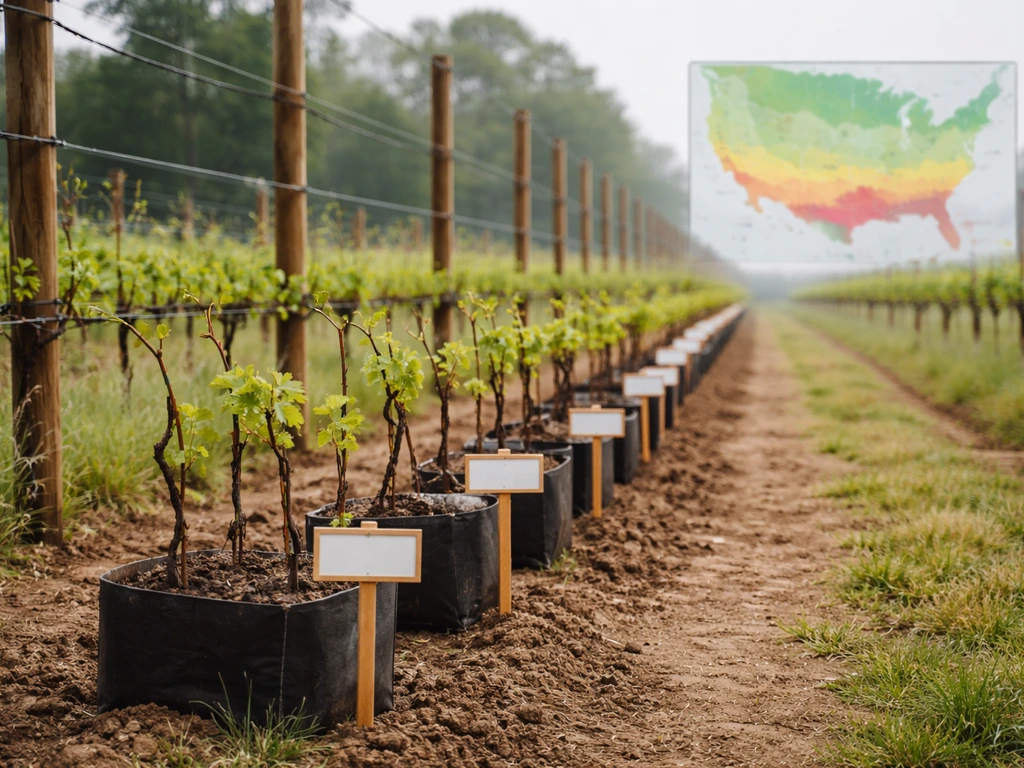
Variety selection is where most beginner mistakes happen. People buy what looks appealing at the nursery rather than what is actually rated for their climate. Here is how to think about it by broad region.
Cold climates: USDA zones 3 to 5 (Minnesota, Wisconsin, northern Michigan, upstate New York)
Vitis vinifera (classic European wine grapes like Cabernet, Chardonnay, Pinot Noir) are not reliably cold-hardy enough for these zones without burying vines over winter, which is a significant annual labor commitment. University of Minnesota Extension is direct about this: vinifera varieties will not thrive in colder states like Minnesota without interventions. Instead, look to cold-hardy hybrids developed specifically for these conditions. The University of Minnesota breeding program has released several excellent wine cultivars: Marquette, Frontenac, Frontenac Gris, Frontenac Blanc, La Crescent, Itasca, and Clarion. UW Extension provides maturity evaluation guidance specifically for Frontenac and Marquette, and UMN notes that Frontenac is extremely hardy, with canopy management focused on improving fruit exposure for ripening.
For table grapes in cold climates, look for cultivars rated to around -15°F or colder. Variety-specific cold hardiness is not static; it changes through the season depending on how well the vine has hardened off. Washington State University maintains cold-hardiness modeling tools that track this over time by cultivar, and UMN Extension's ColdSnap tool estimates the lethal temperature (LT50) for specific cultivars using real air temperature data, which is useful for timing protective measures during late-season cold snaps.
Moderate climates: zones 6 to 7 (Missouri, Virginia, Pennsylvania, Oregon's Willamette Valley)
This is the sweet spot for the widest variety range. Zones 6 to 7 can support both cold-hardy hybrids and many vinifera cultivars with appropriate site selection. In the Mid-Atlantic and Midwest, French-American hybrids like Chambourcin, Vidal Blanc, Norton, and Traminette have proven track records. True vinifera (Cabernet Franc, Riesling, Chardonnay) are viable in zone 7 with well-chosen sites. NC State Extension research links cultivar suitability directly to GDD zonation by physiographic region, which is a useful framework: match your county's typical GDD accumulation to cultivar ripening requirements before buying.
Warm and hot climates: zones 7 to 10 (California, Texas, Arizona, the Southeast)
High heat and long seasons open up the full range of vinifera wine grapes and most table grape cultivars, but introduce different challenges: disease pressure from humidity (southeastern US), drought stress (Southwest), or overly vigorous growth that hurts quality. In California's Central Valley and parts of the Southwest, heat accumulation is not a limiting factor at all. The challenge becomes managing excessive vigor and choosing cultivars that can handle high summer temperatures without losing acid balance in the fruit. In the humid Southeast, disease-resistant muscadine varieties and tough hybrids often outperform classic vinifera even where heat is sufficient.
If you are exploring options beyond North American varieties, it is worth knowing that some unusual cultivars have niche appeal. For example, growing Koshu grapes in the US is possible in limited contexts, though this Japanese variety, native to Yamanashi Prefecture, has very specific climate needs that do not translate easily to most American yards.
Where grapes will and will not grow: climate-zone and state viability
Grapes grow in every US state in some form, but the type you can grow and the effort required varies enormously. What states grow grapes commercially gives you a sense of the range, but home gardeners have more flexibility than commercial producers because you can baby your vines in ways that are not economically viable at scale. That said, there are honest limits.
For a broader picture of regional viability, where grapes grow in the US breaks down climate suitability by region in more detail. The general pattern is this: the West Coast (California, Oregon, Washington) dominates commercial production because of Mediterranean-style climates with dry summers and mild winters. The upper Midwest, Northeast, and mid-Atlantic have significant home and commercial growing thanks to cold-hardy hybrid development. The Deep South and Gulf Coast are challenging because of humidity and disease pressure, but muscadines thrive there. The high-altitude Mountain West has cold winters that limit options but some excellent microclimates at lower elevations.
Growing season length is the other variable that maps directly to state. Grapes need a frost-free period long enough to bud out, flower, set fruit, and ripen before the first fall frost. In zones 4 to 5, that window is roughly 130 to 150 days. Early-ripening hybrids like Marquette (about 140 days from bud break to harvest) are specifically bred to fit inside that window. In zones 7 to 9, you have 180 to 220+ frost-free days, which is plenty for mid- and late-season vinifera cultivars. If you are curious how grapes fare globally and what climates produce the best results worldwide, what countries grow grapes offers useful context about how climate and variety interact across different regions.
How to evaluate your yard and plan your planting
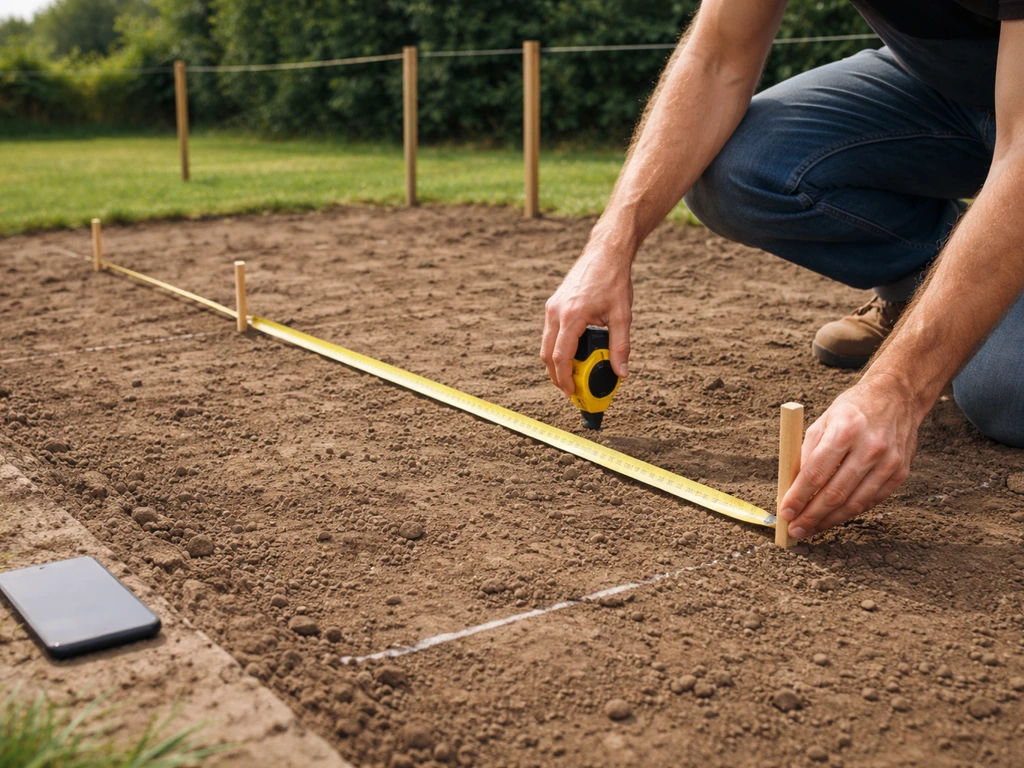
Here is a practical step-by-step process you can do in a weekend. This will give you a clear answer on whether your yard can grow grapes and what to plant.
- Track sun exposure: On a clear day, note what time direct sun first hits your candidate site and when it moves into shade. You need 7 to 8 uninterrupted hours. If you are unsure, do this on a midsummer-equivalent sunny day.
- Check for frost pockets: Walk your yard after a light frost and look for where frost lingers longest. Low spots, enclosed hollows, and areas at the base of slopes are frost traps. Avoid them.
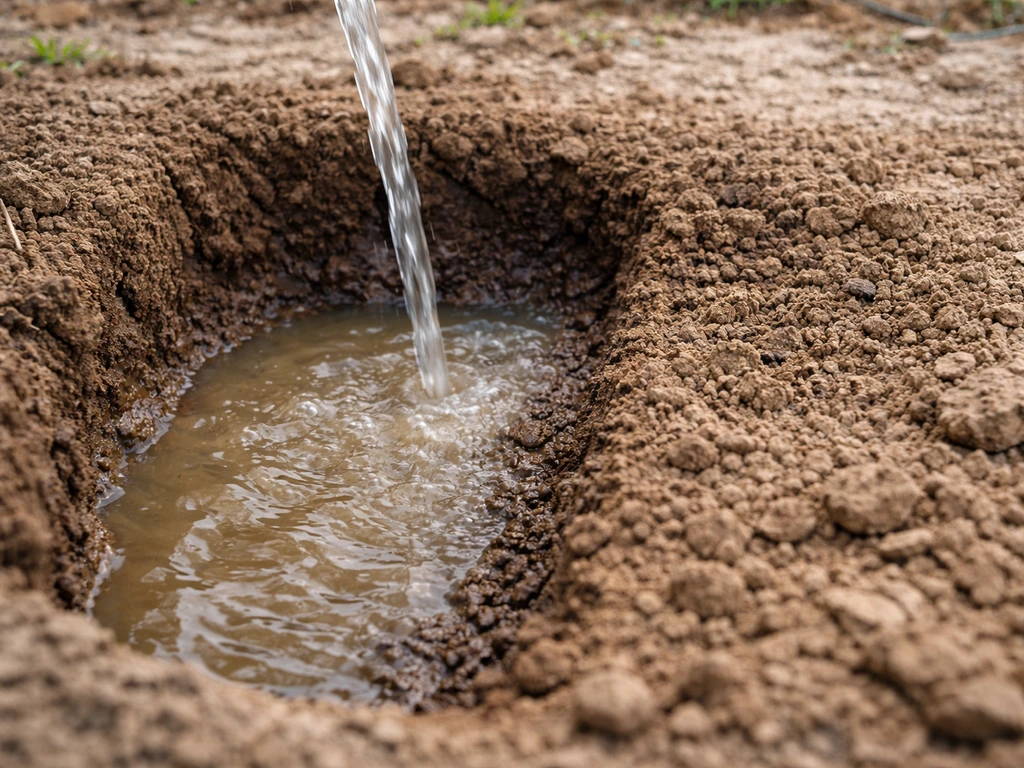
- Do a drainage test: Dig a hole about 12 inches deep, fill it with water, and check it after an hour. If water is still sitting in the hole, drainage is inadequate. Either choose a different spot or plan to build raised berms.
- Get a soil test: Contact your local cooperative extension office for a soil test kit. Results take 1 to 2 weeks and give you pH and basic nutrient levels. Budget for lime if pH is below 6.0 and you plan to grow vinifera.
- Look up your GDD and frost dates: USDA plant hardiness zone maps give you winter cold data, but also find your county's average last spring frost and first fall frost dates. Calculate your frost-free season length. Cross-reference that against cultivar ripening timelines.
- Match variety to your actual conditions: Use your zone, GDD estimate, and frost-free window to narrow down cultivars. Cold-hardy hybrids for zones 3 to 5, hybrids and vinifera for zones 6 to 7, full vinifera range for zones 7 to 10. Choose 2 to 3 varieties rather than one.
- Plan your trellis before you plant: Illinois Extension is clear that a backyard grape trellis should be built to last 20 or more years. Use 8-foot line posts set 2 to 3 feet deep, creating a trellis height of about 5 to 6 feet. Space vines 6 to 8 feet apart in the row, with 6 feet being the minimum for home garden spacing according to UMN Extension.
- Orient rows for maximum sun: Aim for a north-south row orientation where your topography allows it. This maximizes morning and afternoon sun on both sides of the canopy.
- Prepare soil the season before planting: Incorporate lime if needed (it takes months to raise pH meaningfully), remove perennial weeds, and avoid heavy nitrogen fertilization that will push excessive shoot growth.
- Plant in spring after last frost risk: Bare-root vines go in as soon as soil is workable and frost risk is low. Container-grown vines can go in slightly later. Do not rush it.
One thing worth repeating: grapes are a long-term investment. The trellis you build now will be standing in 20 years. The vines you plant this spring may not produce a meaningful crop until year three or four. That is not a reason to avoid them, it is a reason to get the site right before you plant rather than fixing problems later. A well-chosen site with appropriate varieties is genuinely low-maintenance once established. A poorly chosen site with the wrong varieties will cost you more time and money every single year.
If you nail the basics (full sun, good drainage, the right variety for your zone, and a solid trellis), grapes are far more forgiving than their reputation suggests. Most of the "grapes are too hard" complaints trace back to one of those four factors being ignored. Get those right, and you are more than halfway there before you ever dig a hole.
FAQ
How do I confirm the sun is really right for the best places to grow grapes?
Measure the hours of direct sun at the exact spot from late morning through late afternoon, not just “sunny yard” impressions. Then check whether afternoon shade comes from moving shadows (trees, fences) later in the season when berries are developing, because that is when canopy wetness and ripening are most sensitive.
What drainage test can I do at home before planting grapes?
A quick test is to dig a hole about one foot deep, fill it with water, and time how long it takes to drain. If water remains for many hours or the soil stays soggy the next day, it is a drainage red flag, even if the vine looks healthy in spring.
How can I tell if my yard has a frost pocket when weather reports look fine?
Do not rely on “average” temperatures from your town. Use local low-spot mapping, such as watching where cold air sits during a still, clear night or using elevation tools if available, because frost pockets can be limited to a single backyard basin or the leeward side of a structure.
Can I grow grapes on a slope if I cannot orient rows north-south?
Yes, but only if the row orientation and airflow still work. If the slope forces you to plant on an east-west axis, you may need to manage canopy density and keep vine rows from becoming windbreak-like walls (for example, avoid very tight hedges on both sides).
Do I need to fertilize a lot to get grapes to produce if my soil is poor?
Avoid heavy nitrogen or high-fertility amendments when you are trying to grow wine-quality fruit. In practice, you want modest vine vigor, so fertilize based on a soil test and target an “enough growth to cover the trellis” level rather than fast, leafy growth.
If I can’t find perfect drainage, will raised beds alone solve wet soil?
Not exactly. Raised berms help if water is the main issue, but you may still need drainage improvements if you have a persistent high water table or clay that stays saturated. If you see springtime standing water or see persistent wetness after rain, plan on consulting drainage options before planting.
When should I correct grape soil pH, and is it too late if I already bought vines?
Soil pH matters, but timing matters too. If pH is low and liming is recommended, do it before planting and let the amendment react over time, then re-test later. Liming right before planting often gives uneven results in the root zone.
What should I do if my vines grow great leaves but poor fruit?
For common home settings, start pruning and training early, then watch bud break and shoot growth across the whole season. If growth is too vigorous, you likely have an “excessive vigor” issue (often fertility, too much water, or too-shaded fruit zone), not simply a planting location problem.
Why do my grapes not ripen even when vines survive the winter?
Often, it is variety and ripening mismatch, or it is that harvest can be delayed by frost risk. For late-season cultivars, confirm maturity timing against your first fall frost, not against spring-only expectations, and consider staging multiple early-to-mid cultivars to reduce “all-or-nothing” timing.
If I really want to grow Cabernet or Chardonnay, what’s the realistic decision checklist for cold climates?
Vinifera can be possible in some places with strong site selection and protective measures, but the labor is the catch. If you are in a cold region, plan for winter protection systems ahead of time (burying or covering) and budget time every year, because “just try it” failures are usually winter-related.
How do I account for late-season cold snaps when choosing cold-hardy table grapes?
For cold-hardy table grapes, choose cultivars with ratings suited to your expected minimums and remember that hardiness shifts through the season. If you get a late fall cold snap after vines have not fully hardened off, you may still need protection even when “average winter” looks safe.
What is the simplest way to extend harvest if my site ripens grapes unevenly?
Yes, and it is especially useful where the frost window or heat window is narrow. Use at least two cultivars with different ripening schedules so one cultivar’s delayed or disrupted season does not wipe out your entire harvest.
Why do grapes in a “sheltered” spot sometimes fail despite good sunlight?
Airflow is not just about wind exposure, it is about drying after rain. Keep vines from being trapped against walls and make sure there are clear paths for air to move across the canopy, because humid, still corners increase fungal risk even when sun hours seem adequate.