The best grapes to grow in Kentucky are American and French-American hybrid varieties, specifically cultivars like Concord, Niagara, Chambourcin, Norton, Catawba, and Marquette. For more Alabama-specific tips on selecting cultivars and planning your vineyard, see our guide on the best grapes to grow in Alabama. If you're in southern Kentucky and have well-drained soil, muscadines like Carlos and Noble are also worth planting. European (Vitis vinifera) varieties like Cabernet Sauvignon or Chardonnay are a tough sell here: Kentucky's cold winters, humid summers, and relentless disease pressure push those vines to their limits, and University of Kentucky extension research is blunt about it, noting that vinifera cultivars typically produce lower yields, reduced fruit quality, and often outright die. Stick with what the climate rewards, and you'll be harvesting grapes within a few years.
Best Grapes to Grow in Kentucky: Varieties and Tips

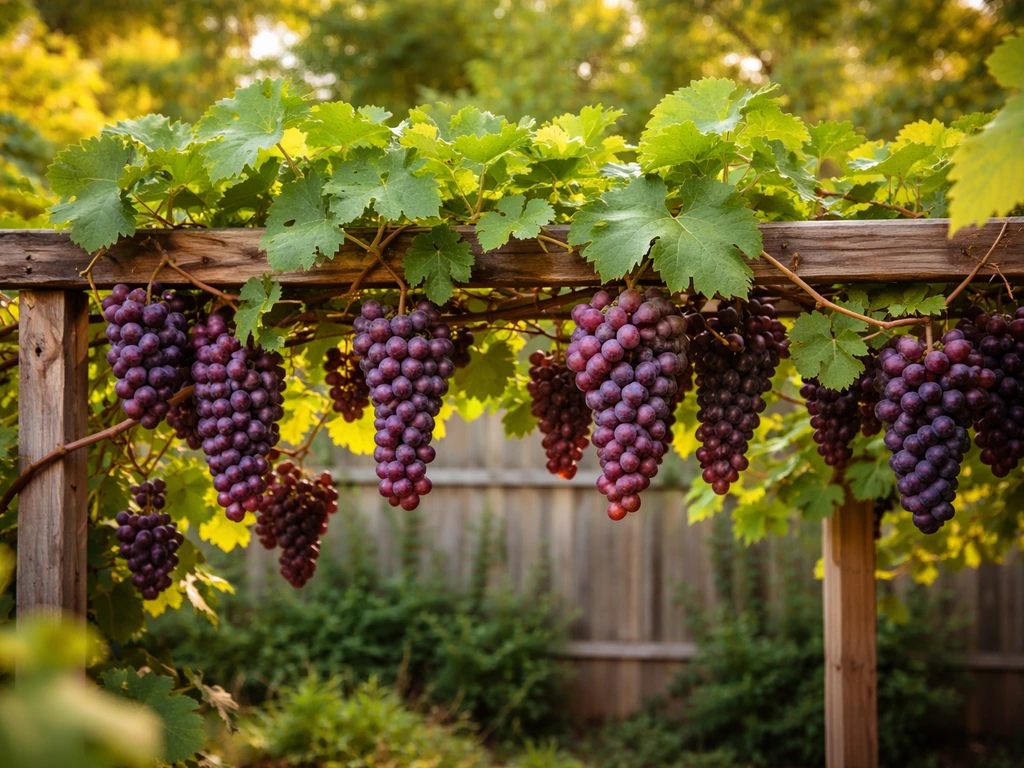
Table Grapes vs. Wine/Juice Grapes vs. Muscadines: Which Type Fits Kentucky?
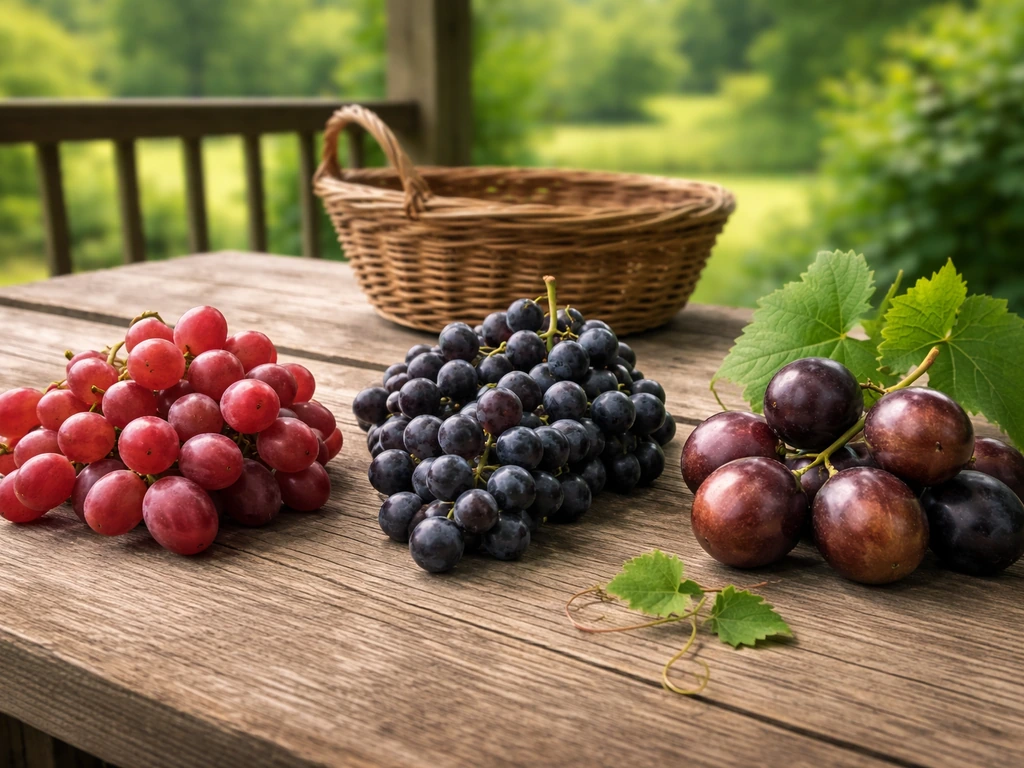
Before you pick a specific variety, it helps to know which category of grape you're working with, because they each behave differently in Kentucky's conditions and suit different goals.
| Type | Best For | Kentucky Suitability | Disease Resistance | Winter Hardiness |
|---|---|---|---|---|
| American bunch grapes (Concord, Catawba, Niagara) | Fresh eating, juice, jams, jellies | Excellent statewide | Good to very good | Very good (Zone 5–7) |
| French-American hybrids (Chambourcin, Norton, Marquette) | Wine and juice | Excellent statewide | Good (better than vinifera) | Good to very good |
| Muscadine (Carlos, Noble, Nesbitt) | Fresh eating, juice, wine, preserves | Best in southern KY; marginal in north | Excellent | Moderate (Zone 6–9) |
| European vinifera (Cabernet, Chardonnay, etc.) | Wine | Poor to marginal; high-risk | Poor | Poor; prone to winter kill |
For most Kentucky home growers, American bunch grapes and French-American hybrids cover just about every goal you might have, whether that's fresh fruit off the vine, making grape juice, or fermenting your own wine. Muscadines are a genuine option if you're in the Pennyrile, Purchase, or other warmer zones of western and southern Kentucky, but if you're in central Kentucky, Lexington, or the Bluegrass region, a late hard freeze can set muscadines back significantly. Vinifera is something you can try if you're an experienced grower willing to manage the extra work, but I wouldn't recommend it as a starting point.
The Best Grape Varieties for Kentucky Specifically
Here's a closer look at which varieties consistently perform well for Kentucky home growers and what each one brings to the table.
American Bunch Grapes

- Concord: The workhorse of Kentucky home gardens. Deep blue-black berries with classic 'grape' flavor. Outstanding for juice, jelly, and fresh eating. Vigorous, winter-hardy to Zone 5, and relatively disease-tolerant. If you only plant one variety, this is it.
- Niagara: The white/green counterpart to Concord. Similar hardiness and ease of care. Sweet, fruity flavor great for fresh eating and white juice. Ripens mid-season.
- Catawba: A pinkish-red variety with a long track record in Kentucky. Slightly later ripening than Concord, excellent for wine and juice. Good disease resistance and reliable production.
- Steuben: Blue-black berries with a spicy, sweet flavor that many prefer over Concord for fresh eating. Very winter-hardy and moderately disease-resistant. Often underplanted despite being excellent.
French-American Hybrids (Wine and Juice)
- Chambourcin: One of the most widely planted wine grapes by Kentucky's small farm wineries, and for good reason. Deep red color, good tannin, and solid disease resistance. Handles Kentucky's humidity better than almost any red wine variety.
- Norton (Cynthiana): A native American grape that's been grown in Kentucky since the 1800s. Produces big, bold red wines with good acidity. Highly disease-resistant and cold-hardy. If you want to make serious red wine in Kentucky, this is your variety.
- Marquette: A newer cold-hardy hybrid with excellent disease resistance and impressive wine quality. Complex red with notes of cherry and black pepper. Hardy to around -30°F, which makes it a strong choice for northern Kentucky winters.
- Vidal Blanc: A reliable white wine hybrid with good acidity and versatile flavor. Cold-hardy, productive, and notably resistant to disease. Makes crisp dry whites and even late-harvest dessert wines.
- Chardonel: A Chardonnay hybrid that gives you some of that familiar Chardonnay character with much better disease resistance and winter hardiness. A good pick if you want a white wine grape that can actually thrive here.
Muscadines (Southern Kentucky Focus)
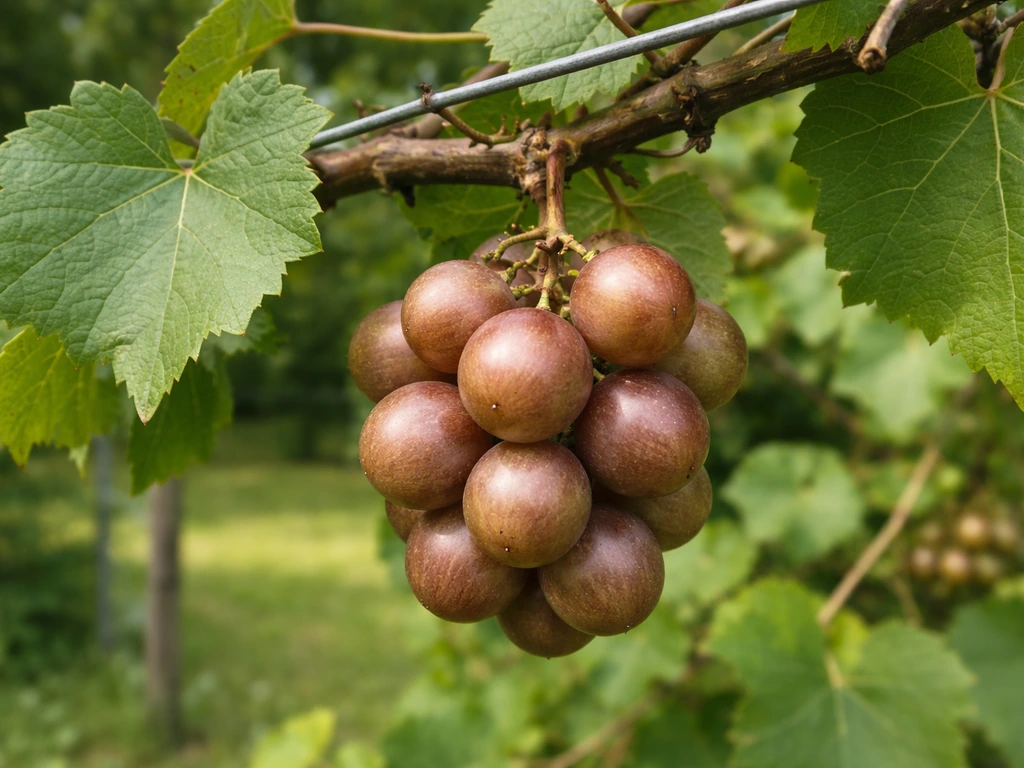
- Carlos: Self-fertile, bronze-skinned, mid-season ripening. One of the most widely recommended muscadines for home gardens. Disease resistance is excellent, and it's productive even without a pollinator. Great for juice and fresh eating.
- Noble: Self-fertile, dark purple berries, good productivity. Strong disease resistance, ideal for juice and wine. One of the most reliable muscadines you can grow.
- Nesbitt: Large, dark berries with sweet flavor. Self-fertile and highly disease-resistant. Great fresh-eating muscadine if you want big clusters with impressive berry size.
- Triumph: Bronze, self-fertile, known for high yields. Excellent choice if you want maximum production for home processing.
Site and Growing Conditions That Matter in Kentucky
You can grow the right variety and still struggle if the site is wrong. In Arizona, choosing the best wine grapes to grow also starts with matching the variety to your site conditions like sun, heat, and drainage grow the right variety. Kentucky's combination of humid summers and variable spring frosts adds a few location-specific priorities that matter more here than in drier states.
Sunlight
Full sun is non-negotiable. Aim for at least 8 hours of direct sun per day. In Kentucky's humid climate, good sun exposure also helps dry the foliage after rain, which dramatically reduces your fungal disease pressure. Shaded vines that stay wet after a summer storm are a recipe for black rot and downy mildew. Avoid low spots surrounded by trees, and if you have a sloped site, a south or southeast-facing slope is ideal.
Soil and Drainage
Grapes are adaptable to a wide range of Kentucky soils, from the clay-heavy soils of central Kentucky to the sandier soils of the western coalfields. The non-negotiable is drainage. Standing water around roots is a death sentence for grape vines. This is especially true for muscadines, which can handle a variety of soil types as long as internal drainage is solid. If your site is prone to pooling after heavy rain, raised rows or a different location will save you a lot of heartache. Target a soil pH of 6.0–6.5 across all grape types. Muscadines sit comfortably in that range too, and you can bring pH up with dolomitic lime worked into the soil before planting if needed.
Air Circulation and Frost Risk
Good air movement around your vines helps dry foliage and reduce disease. Avoid planting in depressions or against walls that trap cold air. Late spring frosts are a real threat in Kentucky, particularly in April, and young shoots emerging in April are vulnerable. Sites on slopes allow cold air to drain downhill rather than settle around your vines. Northern Kentucky, the Knobs region, and higher elevations in eastern Kentucky tend to see more spring frost variability, so factor that into your variety selection by leaning toward later-budding varieties or planting in protected areas.
How Long Before You're Actually Picking Grapes
Realistic expectations help here. Grape vines are not instant gratification plants, but they're not painfully slow either. In Kentucky, most well-established vines can begin producing a meaningful crop within 3 years of planting, and some vigorous American varieties like Concord can show you fruit in year 2 if conditions are ideal. Year 1 is all about root establishment and getting the vine to the top wire of your trellis. Year 2 you're building the permanent framework. Year 3 onward, the vine starts producing annually once established. University of Kentucky extension confirms this multi-year timeline, and the good news is that once a vine is established and well-pruned, it can produce reliably for decades. Muscadines take a similar path: expect a light crop in years 2–3 and full production by year 4–5.
Planting, Trellising, and Pruning Basics
Planting
Plant bare-root vines in early spring as soon as the soil can be worked, typically March in Kentucky. Container-grown vines can go in a bit later. Space vines 6–8 feet apart within rows, with rows 8–12 feet apart if you're planting more than one. Plant at the same depth the vine grew at the nursery, firm the soil around the roots to eliminate air pockets, and water thoroughly. If spring weather is dry, plan to water newly planted vines weekly once they break dormancy and start growing. Buy disease-resistant stock from reputable nurseries, and if you can get certified virus-free planting material, do it.
Trellising
Install your trellis before or at planting, not years later. University of Kentucky's guidance is clear that vines need a trellis for high-quality crop production, and starting without one means losing ground you'll never get back. A simple two-wire trellis works well for most Kentucky home growers: posts set 2–3 feet deep (use treated wood or metal T-posts), 15–20 feet apart, with wires at roughly 3 feet and 5.5 feet high. This supports a bilateral cordon system, which is the most practical training approach for beginners. Think of it as two arms extending left and right from the trunk along the top wire, with fruit-producing shoots hanging down or growing up from those arms each season. Build it to last 20 or more years because you're not going to want to redo it.
Pruning
Pruning is the skill that separates productive vines from scraggly, disease-ridden tangles. The short version: grapes only fruit on new growth from buds on last year's wood. That means you have to prune hard every year to set up fruiting shoots for the coming season. In Kentucky, prune in late winter, ideally late February into early March. Waiting until later in winter is actually smart here because it lets you assess winter cold injury after the worst freeze risk has passed, then prune around any dead wood. Winter injury is a meaningful risk on grapes, and UKY notes that good winter hardiness links to management practices such as selective, well-timed pruning, shoot thinning, cluster thinning, and nitrogen fertilization management. Avoid pruning in fall, which leaves wounds open during the coldest part of winter.
For American bunch grapes like Concord, cane pruning works well: remove most of last year's canes and leave 2–4 new canes with 10–15 buds each to bear fruit this season. USU Extension explains that pruning is done using either cane pruning or spur pruning, depending on the grape variety and training system. For French-American hybrids and muscadines, spur pruning is more common: cut the previous year's canes back to short spurs of about 2–3 buds. UGA extension notes that cane pruning of American bunch grapes can actually help reduce disease pressure by removing old wood each season. Whichever method you use, prune off 70–80% of last year's growth. It feels brutal, but it's right.
Your Kentucky Grape Care Calendar
Kentucky's growing season runs roughly from bud break in April through harvest in August–October depending on variety. Here's a practical month-by-month guide:
| Month | Key Tasks |
|---|---|
| February–March | Prune dormant vines; assess winter injury; apply dormant spray if disease was an issue last year; install or repair trellis |
| April | Watch for bud break; apply first fungicide spray as shoots emerge; watch for late frost; begin weed control |
| May | Shoot thinning (remove weak/excess shoots); continue fungicide spray program every 7–14 days; light fertilizer application (balanced 10-10-10 or similar) |
| June | Cluster thinning if vine is overcropped; continue spray program especially around bloom and early fruit set; hand-weed or mulch under vines |
| July | Monitor for grape berry moth and Japanese beetles; reduce nitrogen; continue fungal spray if humid; water if soil is dry |
| August–October | Harvest (timing varies by variety); stop spraying 2–3 weeks before harvest per label directions; note vine health for fall planning |
| November | Clean up fallen leaves and debris to reduce disease inoculum; do NOT prune yet; note any winter injury risk areas |
Watering
Newly planted vines need about 1 inch of water per week during their first growing season if rainfall doesn't provide it. Established vines are more drought-tolerant, but dry spells during fruit development (July–August) can reduce berry size and quality. Avoid overhead watering if you can; drip irrigation or soaker hoses at ground level keep the canopy drier and reduce disease.
Fertilizing
Less is more with nitrogen. Overfertilizing with nitrogen produces lush, shaded canopies that are perfect for fungal diseases and poor fruit production. In year 1, a light application of balanced fertilizer (like 10-10-10) in spring is sufficient. For established vines, a soil test is your best guide. Generally, a small application of balanced fertilizer in early spring is enough. Avoid high-nitrogen fertilizers after June or you'll push late-season soft growth that's vulnerable to winter injury.
Weed Control
Keep the area under your vines weed-free, especially in the first 2–3 years when competition from weeds can noticeably slow vine establishment. A 4-inch layer of wood chip mulch works well and also conserves moisture. Pull or hoe weeds before they get established; herbicides can be used carefully if you keep them away from the vine trunk.
Kentucky's Biggest Grape Pests and Diseases (and What to Do About Them)
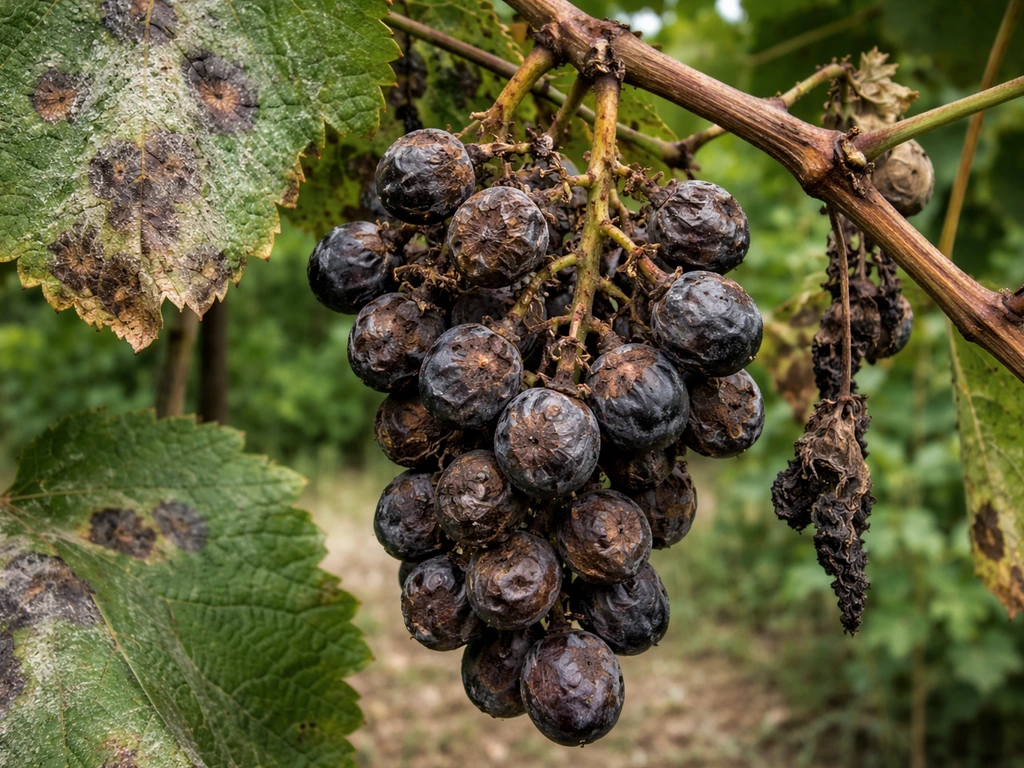
Kentucky's humid summers make disease management the most critical skill for home grape growers here. This is not a state where you can skip sprays and hope for the best. The good news is that with disease-resistant varieties and a consistent spray schedule, you can grow excellent grapes without a chemistry degree.
Black Rot
University of Kentucky extension identifies black rot as one of the most important grape diseases in the state. It starts as tan spots on leaves and ends with berries that shrivel into hard, black mummies hanging in the cluster. It spreads fast in wet, warm weather. Management: plant resistant varieties, remove mummified fruit and diseased leaves immediately, and apply fungicides from bud break through about 4 weeks after bloom when berries are most vulnerable. Captan and myclobutanil (Immunox) are effective and available to home growers.
Downy Mildew
Downy mildew thrives in exactly the conditions Kentucky provides in summer: warm temps, high humidity, and frequent rain. It creates oily-looking yellow spots on the tops of leaves with white fuzzy growth underneath. UKY's own disease prediction model shows that cluster stems remain susceptible throughout the entire season, even after berries themselves become more resistant about 3–4 weeks after bloom. Keep up your spray program through the season and prioritize coverage of the undersides of leaves. Copper-based fungicides and mancozeb work well for downy mildew control.
Powdery Mildew
Powdery mildew shows up as a white, dusty coating on leaves, shoots, and berries. Unlike downy mildew, it actually prefers drier conditions but can still be a problem in Kentucky's shoulder seasons. Sulfur-based fungicides applied preventively work well. Berries become more resistant about 3–4 weeks after bloom begins, so early-season protection during and just after bloom is the priority window.
Grape Berry Moth
This small caterpillar bores into berries and cluster stems, creating entry points for secondary rot. Multiple generations per season make it progressively harder to control through summer because later populations are buried inside clusters where sprays can't reach. Management relies on early-season control (targeting first and second generations in May–June), canopy management to improve spray penetration, and removing infested clusters quickly. Spinosad is an effective organic option; check UKY entomology resources for timing guidance.
Japanese Beetles
These copper-and-green beetles skeletonize grape leaves in July and August and can cause significant canopy damage. Hand-pick them in the morning when they're sluggish, or use neem oil or pyrethrin-based sprays. Don't use Japanese beetle traps near your vines; they attract more beetles than they catch.
Prevention Is the Strategy
- Choose disease-resistant varieties as your first line of defense
- Prune and train vines for an open, airy canopy that dries quickly after rain
- Start fungicide sprays at bud break and don't skip applications during wet periods
- Remove and destroy diseased leaves, berries, and canes rather than composting them
- Clean up all fallen leaves and fruit debris in fall to break the disease cycle
What to Plant: A Starter Plan Based on Your Goal and Location
Here's a practical way to think about your first planting based on what you actually want from your vines and where in Kentucky you're located.
| Your Goal | Location | Start With These Varieties |
|---|---|---|
| Fresh eating grapes off the vine | Anywhere in Kentucky | Concord, Steuben, Niagara |
| Homemade grape juice or jelly | Statewide | Concord (purple), Niagara (white), Catawba (pink/red) |
| Home winemaking: red | Statewide | Norton/Cynthiana, Chambourcin, Marquette |
| Home winemaking: white | Statewide | Vidal Blanc, Chardonel |
| Low-maintenance, disease-resistant planting | Statewide | Norton, Marquette, Concord |
| Muscadine growing: fresh or juice | Southern/western KY (Zone 6b–7) | Carlos, Noble, Nesbitt |
| Mixed goal: eating and juice | Central/northern KY | Concord plus Niagara (plant one of each) |
If you're a first-time grower in Kentucky, the single most practical starter combination is one Concord vine and one Niagara vine. In Arizona, choosing heat-tolerant grape varieties that can handle long, hot summers makes a big difference what vines grow best in arizona. You get a red/purple and a white variety that are both hardy, productive, disease-resistant, and useful for fresh eating, juice, or jam. Add a Norton if you want to try wine. All three are available from Midwestern nurseries and many online sources; look for one- or two-year-old dormant bare-root stock in spring from suppliers who grow in comparable climates.
If you're in the warmer parts of southern Kentucky and want to try something different, a self-fertile muscadine like Carlos or Noble alongside a standard bunch grape gives you diversity in your harvest season and takes advantage of that extra warmth. Growers in neighboring states like Virginia and Alabama have had success mixing muscadines with cold-hardy hybrids for the same reason: different varieties give you a longer harvest window and a backup if one type has a hard season. If you're aiming to grow grapes in Virginia, focus on Virginia-suited varieties and match them to your local conditions for best results.
Set up your trellis, get your soil pH tested and adjusted before planting, and commit to a spring spray schedule starting at bud break. Kentucky will throw disease pressure at your vines every single summer; the growers who succeed are the ones who choose resistant varieties, manage their canopy, and stay ahead of the fungal calendar. Do those things and you'll have grapes within three years and vines producing for decades.
FAQ
What are the best grapes to grow in Kentucky if I only want to plant one variety?
For a single-vine approach, Concord is the most forgiving choice for central and northern Kentucky because it is cold-hardy and can reliably produce on a beginner-friendly pruning routine. If you strongly prefer a white grape for fresh eating or juice, Niagara is the easiest white pairing option, but if you must pick only one, Concord usually gives the widest margin for error across site and disease pressure.
Are Niagara and Concord both good for wine and juice, or do I need different grapes?
Both can be used for juice and can work for simple fermented wine, but they are different in flavor profile and tannin structure. Concord tends to be more intense for juice and jelly, while Niagara is often easier for lighter, sweeter styles. If your goal is table grapes plus jam, Concord and Niagara are a practical two-variety pairing; if your goal is a more wine-focused result, consider adding Norton for a darker juice and better-bodied fermentation.
Can I grow European grapes like Cabernet Sauvignon or Chardonnay in Kentucky if I’m willing to work harder?
You can try them as an experiment, but plan for higher failure risk even with good care. Cold winter injury, inconsistent spring bud survival, and intensive disease management make vinifera harder to sustain than hybrids in Kentucky. If you do try, treat it like a long-term trial with extra winter protection and be prepared for lower yields compared with hybrid varieties.
What’s the biggest mistake that stops Kentucky grape growers from getting fruit after planting?
Most commonly, people do not prune hard enough or they prune at the wrong time. Grapes in Kentucky need annual renewal pruning because fruit forms on new growth from buds on last year’s wood. If you leave too much old growth, you often get dense canopy and fewer productive shoots, plus higher disease pressure from shade and trapped humidity.
Do I really need a trellis before planting, or can I add one later?
You should install it at planting or immediately after, because training fruiting wood depends on having a stable framework early. Waiting years usually leads to poor alignment of the trunk and arms, and reworking a mature vine can reduce productivity for seasons. A simple two-wire setup is sufficient for getting a bilateral cordon established.
How much sun is enough if my yard is partially shaded?
Aim for at least 8 hours of direct sun, not filtered light. Morning sun is especially helpful because it helps the canopy dry faster after any dew or light rain. If you have only 4 to 6 hours, you will still grow vines sometimes, but disease pressure climbs and fruiting quality often suffers.
My site pools after heavy rain, can I still grow muscadines or hybrids there?
Pooling is a deal-breaker unless you change the drainage. Raised rows or moving the planting location is usually the fix, because grape roots cannot survive long periods of standing water. Muscadines tolerate a wider range of soils than some hybrids, but they still need internal drainage, so you should not assume muscadines will “handle it” if the ground stays wet.
What spacing should I use if I’m planting multiple varieties for cross-pollination?
Use the same spacing rules for most Kentucky grapes: about 6 to 8 feet between vines in rows, and 8 to 12 feet between rows if you plan multiple rows. Also, do not rely on proximity for cross-pollination unless your variety is known to be compatible and, when relevant, self-fertile. For muscadines, selecting self-fertile cultivars like Carlos or Noble can simplify planning, but for bunch grapes, variety choice matters more than “planting pairs” close together.
How should I water new vines in Kentucky during dry springs?
New bare-root vines typically need consistent moisture until they establish. If spring is dry, plan on weekly deep watering during the first growing season after growth begins, and avoid frequent shallow watering that encourages surface roots. Once established, focus watering on fruit development (roughly July through August), since dry spells then can reduce berry size and quality.
What pruning method should I use for Concord versus French-American hybrids and Norton?
Concord is usually best with cane pruning, where you retain a few productive canes and remove most older wood. French-American hybrids and Norton are commonly managed with spur pruning (keeping short spurs with buds). If you switch methods, you may not get the fruiting wood you expect, even if the plant is healthy.
Do I need to spray fungicides if I plant the most disease-resistant grapes?
Disease-resistant varieties reduce risk, but they do not eliminate it, especially in Kentucky’s humid summers. Black rot and downy mildew can still build if you skip coverage at the vulnerable windows. The practical approach is to start at bud break and follow a schedule through and shortly after bloom, then continue based on disease pressure and weather.
What’s the right timing for fungicide applications for downy mildew and powdery mildew?
For downy mildew, keep coverage through the season because cluster stems remain susceptible for longer than many gardeners expect, not just immediately at bloom. For powdery mildew, the priority is early protection around and just after bloom, since berries become more resistant a few weeks later. If you miss the early window, you may see persistent infections even if you spray later.
How do I prevent Japanese beetles from making grape problems worse?
Do not place Japanese beetle traps near your vines. Traps can concentrate beetles in the immediate area, increasing leaf damage and stressing the canopy. If you suspect beetles, switch to targeted hand-picking, morning collection, or a product approach appropriate for your pest pressure.
When can I expect a crop from muscadines versus bunch grapes in Kentucky?
For bunch grapes, you may see fruit as early as year 2 in ideal conditions, but a meaningful annual crop is more typical starting year 3. Muscadines often lag slightly, with a light crop in years 2 to 3 and more consistent production by year 4 to 5. Plan your expectations based on this timeline so you do not over-fertilize or change training too early.