
Virginia is genuinely one of the better states in the Mid-Atlantic for growing grapes at home. The climate suits both table grapes and wine grapes, and if you pick the right variety for your zone, you can realistically harvest ripe, sweet fruit within two to three years of planting. The best table grape varieties for Virginia home gardens are Concord, Reliance, Mars, Vanessa, and Suffolk Red. For wine grapes, Cabernet Franc, Viognier, Norton, and Chambourcin are proven performers across most of the state. Your zip code matters though, so let's work through the whole picture.
Best Grapes to Grow in Virginia: Table Grape Picks & Care
Marcus Whitfield
8 Jun 2026
Is Virginia actually a good place to grow grapes?
Yes, with some caveats. Virginia sits in [USDA Plant Hardiness Zones 5b through 8a](https://planthardiness. ars. usda.
gov/pages/how-to-use-the-maps), depending on where you are in the state. The mountainous western regions (think the Allegheny Highlands and parts of the Shenandoah Valley) can dip into Zone 5b, where winter lows regularly hit -15°F. The Piedmont and most of central Virginia fall in Zones 6b to 7a. The coastal Tidewater region and Hampton Roads area trend into Zone 7b to 8a, with milder winters and higher humidity.
Use the USDA's 2023 Plant Hardiness Zone Map (it has an interactive GIS tool where you can zoom directly to your county or even your street) to confirm your exact zone before buying plants.
That one step alone will save you from planting something that dies in its first winter.
Virginia's growing season runs roughly 170 to 220 frost-free days depending on location. In the mountains, last frost can come as late as mid-May, which compresses the season and matters a lot for late-ripening varieties. Along the coast, last frost is typically early April. First fall frost generally arrives between mid-October (mountain areas) and mid-November (Tidewater). That window determines which varieties will fully ripen before cold shuts things down. Early- and mid-season varieties are the safest bet for most of Virginia. Late-season varieties are fine for Zones 7 and warmer, risky in Zone 6 or colder.
The main challenges Virginia growers face are humidity-driven fungal diseases, late spring frosts that can damage new buds, and Japanese beetle pressure in summer. None of these are deal-breakers, but you need to plan for them. More on that in the pest and disease section below.
Table grapes vs. wine grapes: picking the right goal first
Before you pick a variety, get clear on what you want out of your vines. Table grapes and wine grapes are bred for very different things, and that affects every decision from variety selection to training system to when you harvest.
Table grapes are bred for fresh eating: thin skins, sweet flavor, large berries, and low seed counts (or no seeds at all). They're what you'd grab off a bowl and pop in your mouth. For home gardeners who want to snack on their harvest, make juice, or share with neighbors, table grapes are the obvious choice. They tend to be vigorous, productive, and relatively forgiving compared to finicky wine grape cultivars.
Wine grapes are bred for concentrated flavor, high acidity, and the right sugar-to-acid balance for fermentation. The berries are smaller, skins are thicker, and they're often not particularly pleasant to eat fresh. If you want to make your own wine at home, wine grapes are worth the extra attention they require. Virginia's wine industry is built largely on Cabernet Franc, Viognier, Petit Verdot, Norton, and Chambourcin, all of which can be grown on a backyard scale. Just know they require more precise canopy management and disease monitoring.
If you're not sure yet, start with table grapes. They're more rewarding out of the gate, they're harder to mess up, and several dual-purpose varieties (like Concord) can be used for both juice and fresh eating. You can always add wine grape vines later once you've got the basics down.
Best table grape varieties for Virginia
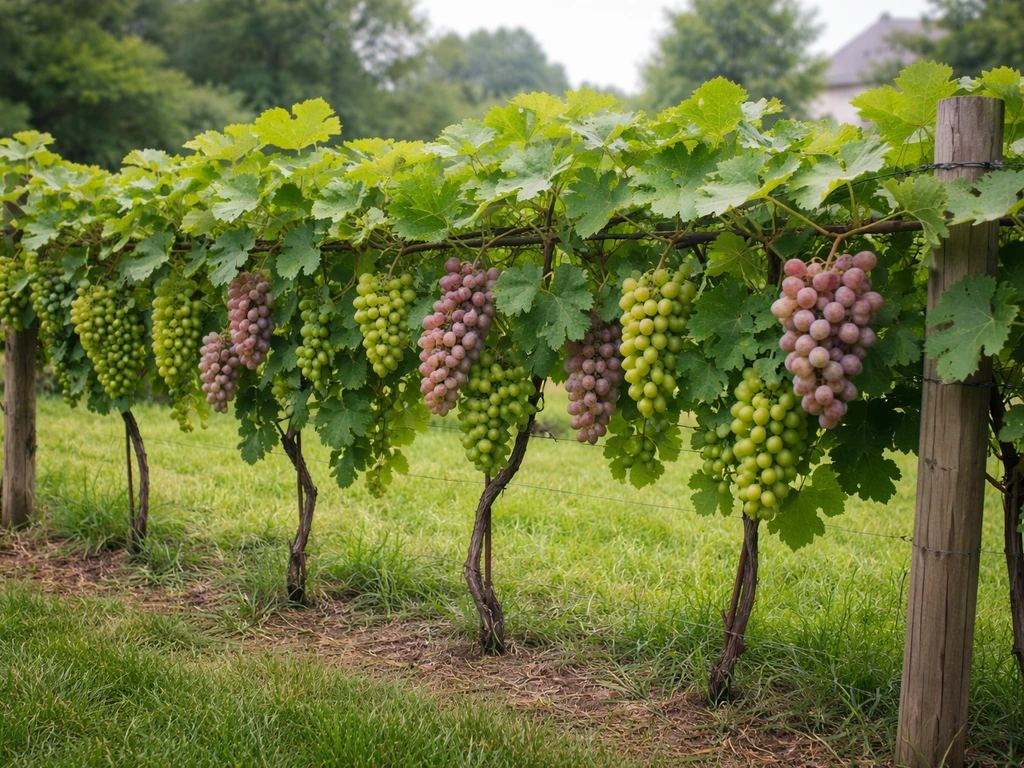
The varieties below are proven performers in Virginia conditions. I've filtered for cold hardiness (surviving Zone 6 winters at minimum), reliable ripening before fall frost, and quality that makes the harvest worth the effort. They're listed with their key traits so you can match them to your zone and taste preferences.
| Variety | Ripening Season | Cold Hardiness | Seedless? | Best For | Notes |
|---|---|---|---|---|---|
| Concord | Mid-season (Sept) | Zone 4 | No | Juice, jelly, fresh eating | Classic American grape; very vigorous; slip-skin type |
| Reliance | Early-mid (Aug) | Zone 4 | Yes | Fresh eating | One of the hardiest seedless reds; excellent flavor |
| Mars | Early-mid (Aug) | Zone 5 | Yes | Fresh eating | Blue-black berry; disease resistant; great for humid areas |
| Vanessa | Mid-season (Sept) | Zone 5 | Yes | Fresh eating | Red grape; sweet, firm berries; good disease tolerance |
| Suffolk Red | Mid-season (Sept) | Zone 6 | Yes | Fresh eating | Premium sweet flavor; needs slightly warmer site |
| Catawba | Late-mid (Sept-Oct) | Zone 5 | No | Juice, wine, fresh | Pinkish-red; tangy-sweet; long Virginia tradition |
| Niagara | Mid-season (Aug-Sept) | Zone 5 | No | Juice, fresh eating | White/green; classic American flavor; very productive |
Which table grape should you actually plant?
If you're in Zone 6 or colder (western Virginia, Shenandoah Valley, mountain areas), Reliance or Mars are your safest bets. Both are rated to Zone 4 or 5, ripen early enough to beat fall frost, and handle humidity better than most. Reliance in particular has impressed me with its ability to produce sweet, seedless red grapes even in tough seasons. Mars is almost as cold-hardy and has excellent disease resistance, which matters a lot in Virginia's muggy summers.
In Zone 6b to 7a (most of the Piedmont and central Virginia), you have more options. Concord is a classic for a reason: it's nearly bulletproof, incredibly productive, and if you want grape juice or jelly, nothing beats it. Suffolk Red is worth trying here for its exceptional eating quality, but give it your best-drained, sunniest spot. Vanessa is a reliable mid-season red that's particularly good for fresh eating and handles humidity better than some European cultivars.
In Zone 7b to 8a (Tidewater, Hampton Roads, the Eastern Shore), your table grape options open up further. You can push into some of the more finicky varieties, though humidity and disease pressure are higher here. Stick with disease-resistant cultivars and prioritize airflow in your training setup. Catawba and Niagara both do well in this zone and give you a nice range of flavors.
Setting up your site in Virginia
Grapes are not particularly demanding plants once established, but the site decision is the most important thing you'll do. Get this wrong and no amount of care will fix it.
Sun, slope, and airflow
Full sun is non-negotiable. Aim for at least 7 to 8 hours of direct sunlight daily. South-facing or west-facing slopes are ideal in Virginia because they maximize sun exposure and promote good air drainage (cold air flows downhill, so a slope protects buds from late spring frost pockets). Avoid low-lying areas and the base of hills where cold air pools. Airflow matters enormously in Virginia's humid climate: still air equals fungal disease. Don't plant vines against a solid fence or wall with no air movement.
Soil type and drainage
Grapes tolerate a wide range of soil types, but they absolutely require good drainage. Standing water for more than a few hours after rain will stress or kill your vines. Most of Virginia's clay-heavy Piedmont soils need amendment or raised bed preparation. Sandy loam is ideal. Aim for a soil pH of 5.5 to 6.5; most Virginia soils fall in this range naturally, but get a soil test (Virginia Cooperative Extension offers them inexpensively) before planting. If your pH is below 5.5, add lime. If it's above 6.8, add sulfur. Grapes don't love overly rich soils, so skip the heavy compost loading that you'd do for vegetables.
Spacing and trellis
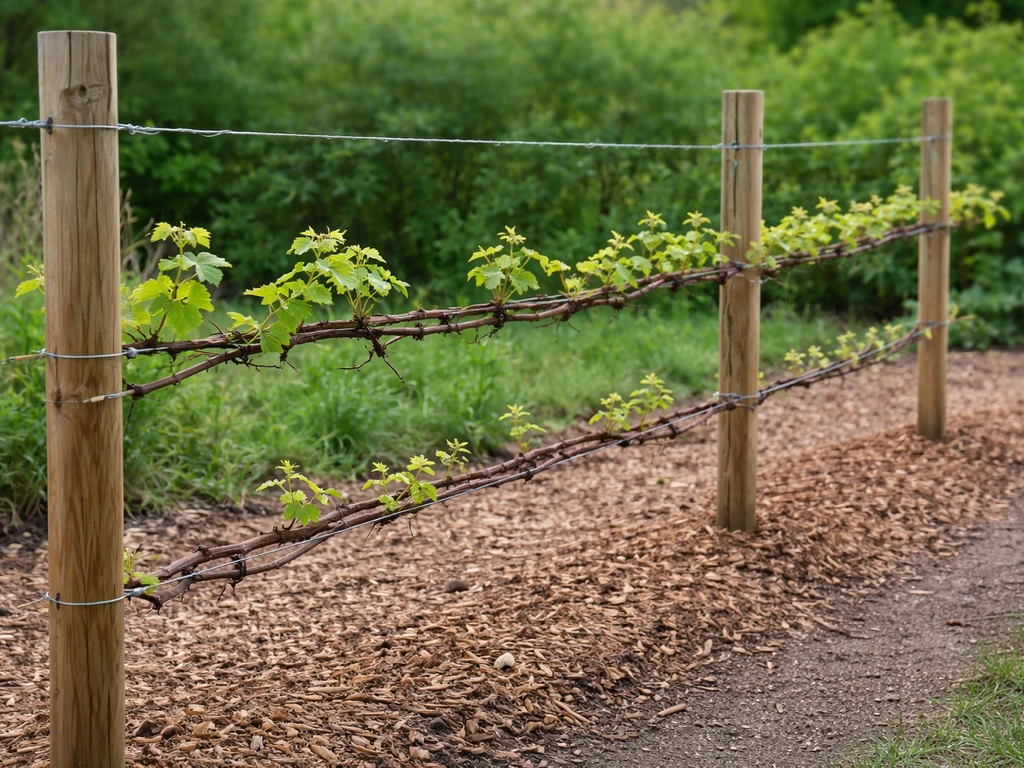
For home gardens, the most practical setup is a two-wire high cordon or a simple Geneva Double Curtain (GDC) trellis. Space posts 8 to 10 feet apart in a row. Vines should be spaced 6 to 8 feet apart for vigorous American varieties like Concord or Mars, and 8 feet apart for most others. Rows need at least 10 feet between them if you're planting multiple rows, to allow sunlight penetration and equipment (or just your body) to move through. For a single backyard row, one wire at 3 feet and one at 5 to 6 feet works well. Run the wire end-to-end with good tension; grapes get heavy and loose wire causes problems.
The full Virginia growing season, broken down
Planting (March to April)
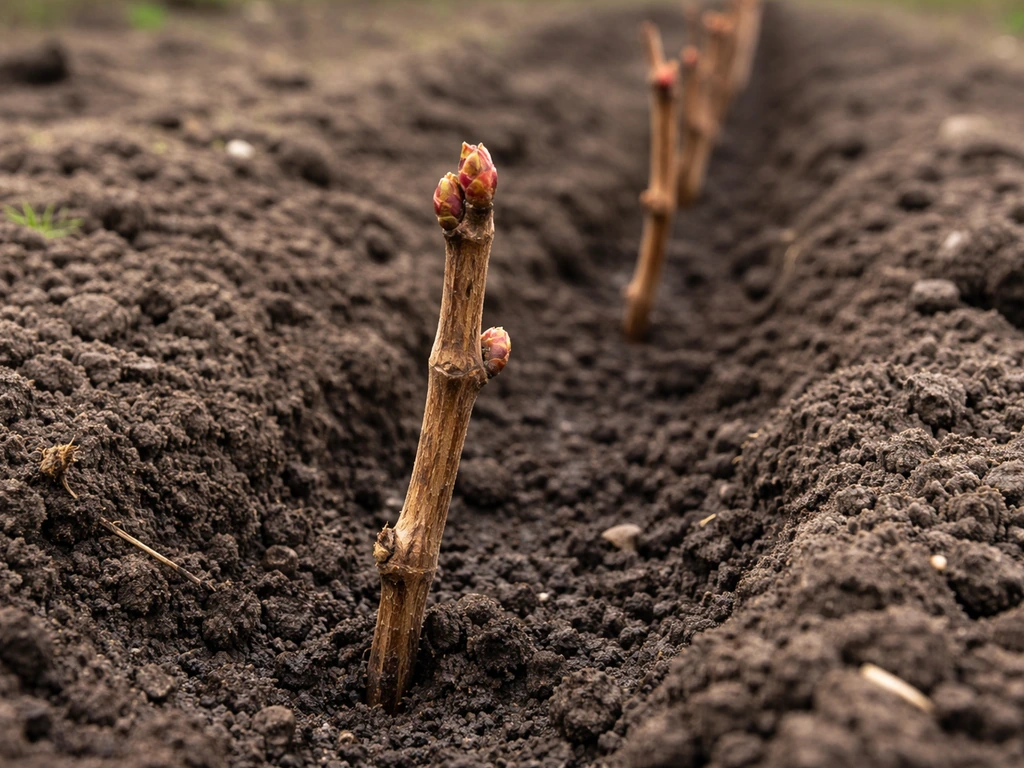
Plant dormant bare-root vines in early spring, as soon as the soil is workable and frost is past. In Zone 6, that's typically late March to mid-April. In Zones 7 and 8, you can plant as early as mid-March. Dig a hole wide enough to spread the roots, set the vine so the graft union (if present) is just above the soil line, and firm the soil around the roots. Water thoroughly at planting and keep soil consistently moist for the first few weeks. In the first year, your only job is getting roots established. Don't try to grow a big vine yet.
Pruning (late winter, every year)
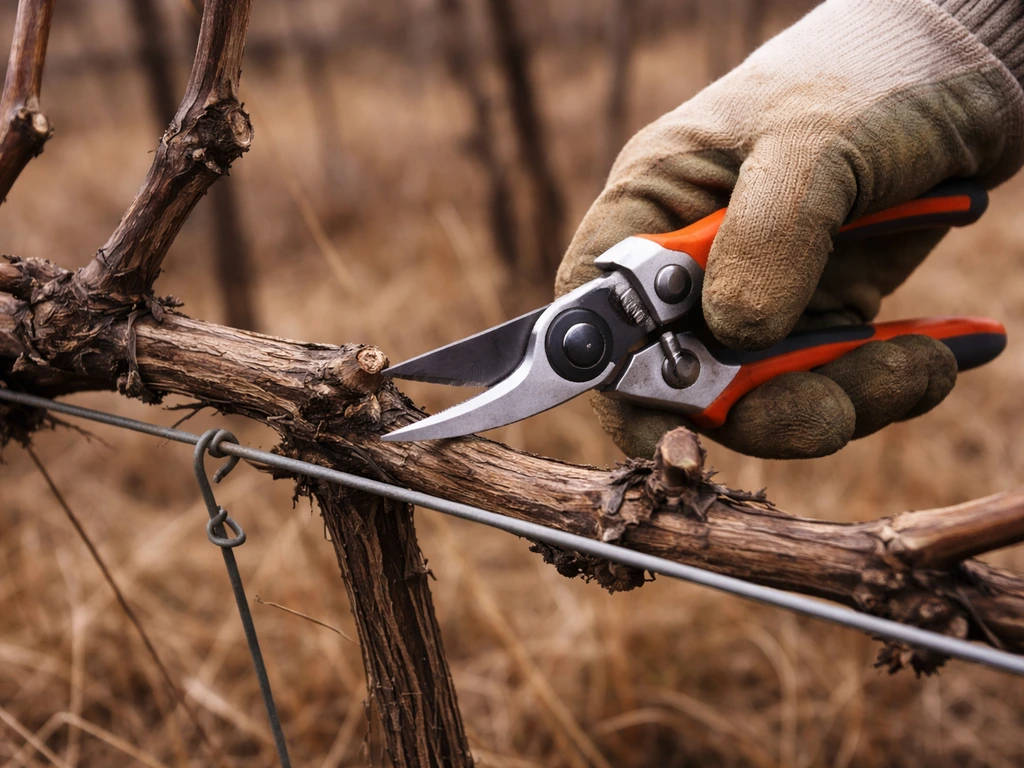
Prune in late winter while vines are fully dormant, typically February to early March in Virginia before bud swell. This is the single most important annual task. Grapes fruit on new wood that grows from one-year-old canes. If you don't prune aggressively, you'll get a tangled mess of unproductive wood and small clusters. The rule of thumb for home gardeners: remove 70 to 90 percent of last year's growth. Leave 4 to 8 healthy canes (or 2 to 4 renewal spurs depending on your training system) with 2 to 4 buds each. It feels brutal the first time, but it's what the plant needs.
Canopy management (May through August)
Once shoots start growing in spring, tuck them up into the trellis wires and remove any suckers coming from below the graft. As the canopy fills in, the goal is to have an open, airy structure where sunlight can reach the fruit zone. When shoots get long and start to shade clusters, trim the tips (called hedging or shoot tipping). Remove lateral shoots that crowd the interior. In Virginia's humidity, dense canopies are fungal disease nurseries. Keep it open and you'll fight half your disease battles automatically.
Watering and fertilizing
Established vines (year 3 onward) are surprisingly drought-tolerant and generally don't need regular irrigation if Virginia's normal summer rain pattern holds (typically 3 to 4 inches per month). First and second year vines need consistent moisture to build root systems. Water deeply once or twice a week if it hasn't rained. Drip irrigation is the best option: it keeps water off the leaves (reducing disease) and delivers it where roots can use it. Avoid overhead watering entirely.
Fertilize sparingly. Too much nitrogen produces lush, soft growth that's a magnet for disease and delays ripening. In spring (around bud break), apply a balanced fertilizer at half the recommended rate, or use a soil test to guide you. Potassium helps fruit quality; a light application of a balanced NPK in late spring is usually enough. If vines are growing vigorously and the leaves are deep green, skip fertilizing that year.
Virginia's biggest grape threats: pests and diseases
This is where Virginia's warm, humid summers create real work for grape growers. Don't let it scare you off, but go in with eyes open and a spray program ready.
Fungal diseases
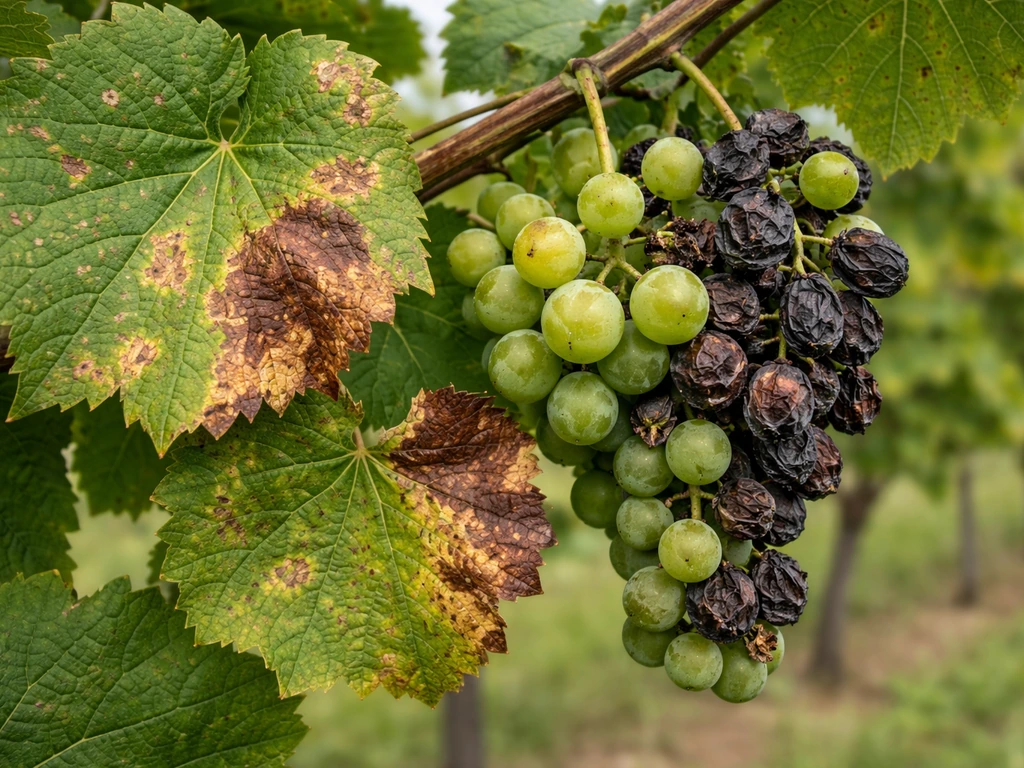
Black rot is the number one disease problem for Virginia home grape growers. It starts as small tan spots on leaves, then spreads to berries, which shrivel into hard, black mummies. It's worst in warm, wet springs. Powdery mildew and downy mildew are also common, especially on European (vinifera) varieties. The defense strategy has two parts: variety selection (American and French-American hybrid varieties like Mars, Concord, and Chambourcin have much better natural resistance than vinifera) and a preventive spray program. Start spraying with copper-based fungicide or a fixed-copper product at bud break and repeat every 10 to 14 days through fruit set, especially after rain. Organic options like copper and sulfur work well for most home growers.
Japanese beetles
Japanese beetles are a serious pest across most of Virginia from late June through early August. They skeletonize leaves rapidly and can defoliate a vine in bad years. Hand-picking in the morning (when they're sluggish) works for small plantings. Neem oil or pyrethrin sprays offer some control. Avoid Japanese beetle traps near your vines; they attract more beetles than they catch. Row covers can protect individual vines during the peak infestation window if you're willing to put in the work.
Grape berry moth
Grape berry moth larvae tunnel into developing berries, causing them to rot and drop. It's a significant problem east of the Appalachians in Virginia. The larvae are tiny and hard to spot until damage appears. Pheromone traps can help you monitor population levels. Organic control options include Bacillus thuringiensis (Bt) sprays timed to egg hatch, or kaolin clay applications. Timing is critical, so tracking moth activity with a trap in your garden pays off.
Birds
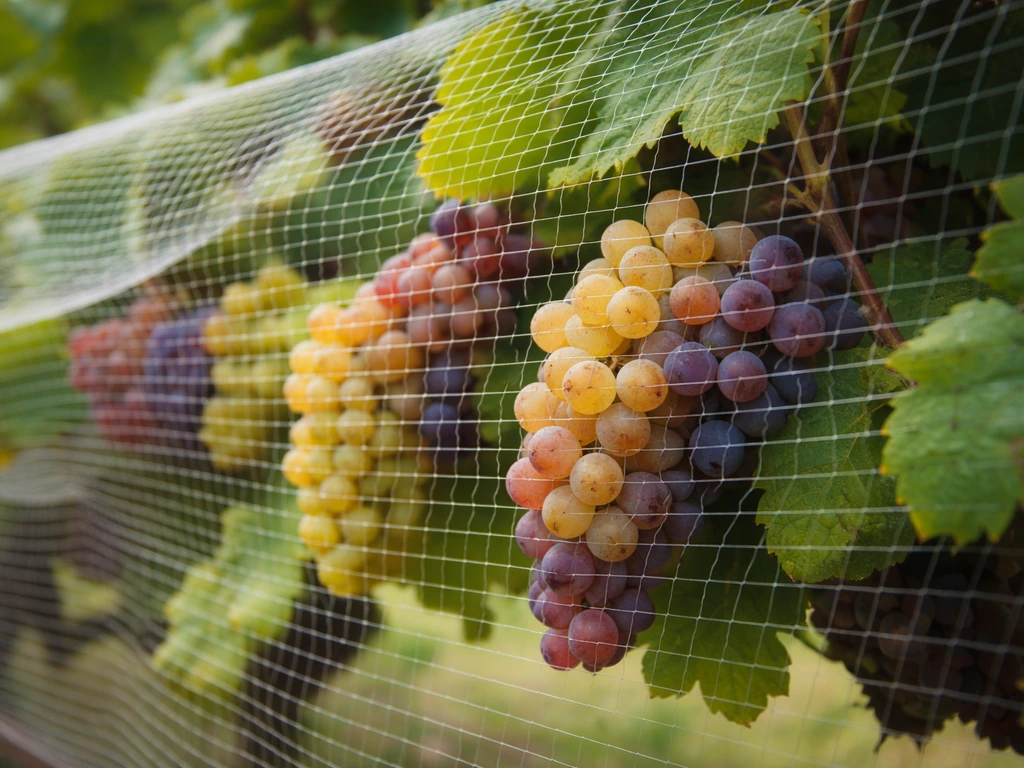
As clusters start to color up, birds will find them. This is not a minor annoyance; a flock of starlings can strip a vine in an afternoon. Bird netting draped over clusters or over the entire trellis row is the most reliable solution. Put it on about two weeks before expected harvest. It's fiddly but worth it.
When to expect your first harvest (and what to expect)
Grapes are a long-term investment. Year one is about establishment: you'll likely see a few small clusters, but you should remove most or all of them to redirect energy into root and vine development. Year two, you can let a few clusters develop for a taste test. Year three is your first real harvest. By year four and five, a healthy vine can produce 15 to 30 pounds of fruit depending on variety, training, and management. Concord and Mars tend to be the most productive of the table grape options listed here.
In Virginia's Piedmont and Tidewater, table grapes typically ripen between mid-August and late September depending on variety. Early varieties like Reliance and Mars are usually ready by late August. Mid-season varieties like Concord and Vanessa ripen in September. In the mountains (Zone 6 and colder), push your ripening estimates a week or two later and prioritize early-ripening varieties to stay safely ahead of first frost.
Grapes don't continue to ripen after picking, so timing your harvest right matters. Don't rely on color alone; taste a berry. When it's sweet all the way through with a pleasant flavor (not tart or thin), the whole cluster is ready. Brix meters (refractometers) are cheap and give you a sugar reading if you want to be precise; most table grapes are best at 16 to 22 Brix.
Your first-year action plan
- Confirm your USDA hardiness zone using the 2023 interactive map before purchasing any plants.
- Choose 1 to 2 varieties suited to your zone from the table above (Reliance or Mars for Zone 6; Concord, Vanessa, or Suffolk Red for Zones 6b to 7a; more flexibility in Zone 7b+).
- Order bare-root vines from a reputable nursery by February for spring delivery.
- Prepare your site: soil test, correct pH if needed, install trellis posts and wire before vines arrive.
- Plant in early spring as soon as frost risk has passed; water deeply at planting.
- Remove any flower clusters that form in year one; focus all energy on root establishment.
- Begin a preventive fungicide program at bud break using copper-based spray.
- Monitor for Japanese beetles starting late June and intervene early.
- At the end of the season, mark your calendar for late-winter pruning (February to early March).
Virginia rewards patient grape growers. Pick the right variety for your zone, set up your trellis properly, stay on top of fungal disease in the first couple of seasons, and you'll be eating your own sweet grapes by year three. In Alabama, the best grapes to grow are typically cold-hardy table varieties and disease-resistant hybrids that can handle local heat and humidity best grapes to grow in alabama. It's not complicated, but it is deliberate.
If you're curious how Virginia's approach compares to neighboring states, the variety choices and climate considerations for Kentucky share a lot in common given the similar zone range across much of both states. If you're curious how this approach compares to other hot, dry regions, check the best wine grapes to grow in arizona for another set of practical variety and site choices.
Kentucky’s best grapes to grow are the same kinds of cold-hardy, early-ripening varieties that perform well across similar USDA zones Kentucky share a lot in common. If you're in Arizona, the best vines depend even more on extreme heat, low winter chilling, and your local microclimate neighboring states.
FAQ
Can I grow the same grape variety across all of Virginia, or do I need different choices by region?
You can grow some varieties statewide, but you will get better results if you shift to early-ripening options in colder zones. For example, Reliance or Mars tend to be more reliable in Zone 6 and colder because they finish before the first fall frost, while late-ripening types often stall or get hit by cold in western Virginia.
What’s the biggest mistake people make when planting grapes in Virginia?
Planting in a spot where cold air pools or where water lingers after rain. Low areas and poorly drained clay pockets can lead to winter injury, chronic stress, and fungal outbreaks even if you do everything else correctly.
Do I need male or female vines for table grapes?
Most of the common table grape choices listed for Virginia are self-fertile, so you usually do not need a second variety for pollination. If your vines ever produce poorly shaped clusters, then consider whether you have a less self-fertile cultivar or a cold-damaged bloom window rather than adding a pollinator immediately.
How do I know if my soil drainage is truly good enough for grapes?
Do a simple percolation test before you commit. Dig a hole, fill it with water, and see how long it takes to drain, if it still holds standing water after a rain or within hours, plan on a raised bed or a drainage improvement because grapes require fast, breathable root conditions.
Should I plant in-ground or use raised beds in Virginia clay soil?
Raised beds are often worth it in clay-heavy areas, especially if your yard stays wet after storms. If you can create a consistently well-drained root zone in-ground, that works too, but the key is preventing long periods of saturated soil around the crown.
When should I remove the first clusters in year one, and how strict should I be?
Remove most or all clusters as soon as they form in year one, even if you want to sample. The tradeoff is real, grapes that fruit too early can slow root and vine establishment, which can delay your first meaningful harvest into year four instead of year three.
How can I reduce black rot without going overboard on sprays?
Focus on timing and canopy openness more than on heavy, frequent applications. Start at bud break, repeat after significant rain, and keep the fruit zone airy through pruning and shoot positioning, since shaded, dense foliage is where black rot expands fastest.
Do grapes need overhead irrigation at all during Virginia summers?
Avoid it. Overhead watering increases leaf wetness and can worsen fungal pressure. Use drip irrigation and water deeply when needed in years one and two, once the vines are established, rely more on rain and occasional deep watering rather than frequent light watering.
If birds strip my clusters, what’s the correct netting timing and placement?
Install netting about two weeks before your expected harvest window, then secure the edges so birds cannot reach in from the sides or under slack fabric. If you wait until you see damage, it can be difficult to stop a flock that already learned the pattern.
How do I choose between a two-wire system and a Geneva Double Curtain trellis?
If you want a simpler setup with less training complexity, a two-wire high cordon is a good fit for a single backyard row. If you are willing to manage more canes and want efficient light distribution and fruit zone control, a Geneva Double Curtain can be more productive, but it requires more disciplined pruning and shoot positioning.
What pruning approach works best for home growers in Virginia’s humid conditions?
Prune aggressively in late winter and then maintain openness during the season with hedging and selective shoot removal. Grapes fruit on new growth from one-year wood, so removing 70 to 90 percent of last season’s growth helps prevent a tangled, disease-prone canopy.
Should I measure sugar (Brix) for table grapes in Virginia, or is taste enough?
Taste is sufficient for most home gardeners, since grapes do not continue to ripen after picking. A refractometer can be useful if you want consistency across multiple varieties, but prioritize flavor balance (sweetness plus non-tart taste) over chasing a single number.