
Grapes are genuinely one of the best vines you can grow in Arizona, but which varieties succeed depends almost entirely on where in the state you live. Low-desert gardeners around Phoenix and Tucson have the heat to ripen almost anything, but need heat-tolerant, mildew-resistant varieties. Gardeners at higher elevations around Prescott, Flagstaff, or Willcox deal with cooler nights, shorter seasons, and occasional frost, which opens the door to different cultivars entirely. Get the variety-to-location match right and you have a vine that produces reliably for decades. Get it wrong and you spend years babying a plant that never really thrives.
What Vines Grow Best in Arizona: A Practical Guide
Marcus Whitfield
16 Jun 2026
Reality check: can vines actually succeed in Arizona?
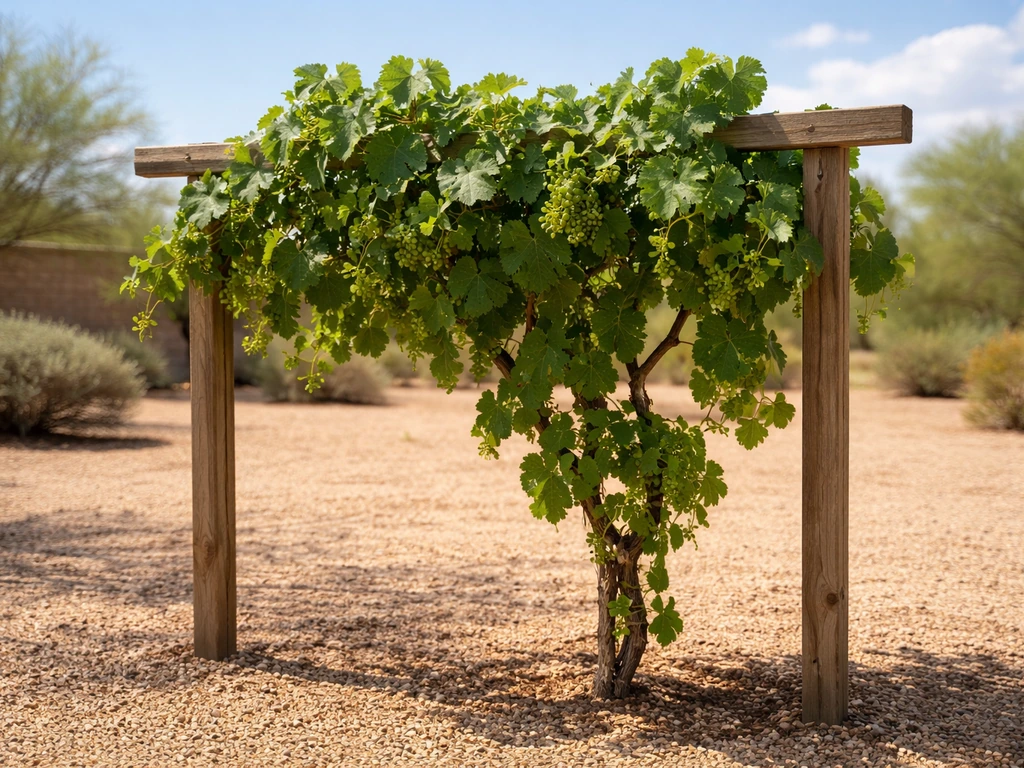
Yes, absolutely, but Arizona is not one climate. The state runs from sea-level Sonoran Desert to 7,000-foot mountain terrain, and the difference matters enormously. The low desert (Phoenix, Yuma, Tucson) gets brutal summer heat, mild winters, and very low humidity. Higher-elevation areas like Prescott (around 5,400 feet), Willcox (around 4,200 feet), and Flagstaff (around 7,000 feet) have cooler summers, cold winters, and a legitimate frost season. Both environments can grow excellent grapes and vines, but the playbook is completely different.
The good news is that Arizona's dry climate actually works in your favor for disease management. Powdery mildew is the most economically important grape disease in the state, but Arizona's low humidity keeps fungal pressure manageable compared to wetter states. Pierce's disease, which is spread by sharpshooter insects, is a real threat in warmer, lower-elevation areas where winters don't get cold enough to check the bacterium. The University of Arizona Cooperative Extension frames home-garden grape success around two non-negotiables: full sunlight on the site and the right variety for your altitude. Get those two things right and most of the other challenges become manageable.
One thing worth knowing if you're in an elevation zone with cold winters: calm, clear nights are when frost does the most damage to grape buds and flowers. Without wind to mix warm air down and without cloud cover to radiate heat back to the soil, temperatures can plunge fast in a low-lying yard. If your yard has a frost pocket, where cold air drains and pools, that's the spot to avoid. Slopes and elevated spots in your yard are often safer for a vine.
Best vine types for Arizona home gardeners
Grapes are the priority here because they're the most rewarding, most versatile, and most regionally adaptable vine you can plant in Arizona. They handle the heat, they're productive once established, and Arizona actually has a thriving wine grape scene (especially around Willcox and Sonoita) that tells you what the climate can do. Beyond grapes, other vines like trumpet vine, bougainvillea, and queen's wreath are popular in the low desert for ornamental coverage, but if you want edible production from a vine, grapes are your best bet by a wide margin.
Within grapes, you're choosing between table grapes (eating fresh), wine grapes, and occasionally muscadines, though muscadines are far more at home in the humid Southeast. For most Arizona home gardeners, table grape varieties are the most immediately rewarding. They ripen faster, you can eat them straight off the vine, and many of the best performers are also beautiful on a trellis or pergola.
Top grape varieties by location and conditions
Low desert (Phoenix, Tucson, Yuma): heat is your asset
In the low desert you have a long, hot growing season, which sounds perfect for grapes but also means you need varieties that ripen before the most brutal July and August heat sets fruit quality back. Early to mid-season varieties are your friends here. The UA Extension specifically highlights table grapes for Arizona home gardens, and in the low desert, these are the cultivars that show up repeatedly as reliable performers.
- Black Monukha: a seedless black table grape that handles heat well and ripens reliably in the desert summer
- Cardinal: an early-season red table grape, large-berried, and a classic low-desert performer
- Perlette: one of the earliest-ripening seedless green grapes, excellent for Phoenix-area timing since it matures before peak heat
- Fantasy Seedless: a late-season black seedless with strong flavor; works well where the season is long enough
- Thompson Seedless: the all-time classic, though it ripens later and needs the full season the low desert provides
- Flame Seedless: reliable, disease-tolerant, and produces consistently in heat
Pierce's disease is a genuine concern in the lower-elevation, warmer zones. If you're in an area where winters barely dip and you have nearby wetlands or irrigation canals, choosing Pierce's disease-resistant varieties gives you long-term insurance. The UA Extension has released and evaluated resistant winegrape varieties specifically for this reason (see their AZ1861 publication for the latest). For table grapes, sticking to early-ripening varieties reduces your exposure window.
Mid-elevation zones (Prescott, Globe, higher Tucson foothills): the sweet spot
The 4,000 to 5,500 foot elevation range is arguably Arizona's best territory for home grape growing. You get enough heat to ripen mid-season varieties, cold enough winters to meet chilling requirements (grapes need a dormant cold period), and the diurnal temperature swings, warm days and cool nights, that develop excellent flavor. This is also where the Prescott-area viticulture guidance from UA Extension becomes really useful. UA Extension’s Prescott-area grape guidance also emphasizes powdery mildew and other localized pest and disease considerations when choosing cultivars for this higher-elevation zone Prescott-area viticulture guidance from UA Extension.
- Cabernet Sauvignon: thrives at mid-to-high elevation with cool nights to retain acidity
- Syrah/Shiraz: performs excellently at the 4,000-5,000 foot range; it's a core variety in the Willcox AVA
- Malvasia Bianca: does well with Arizona's heat and is forgiving about soil
- Sangiovese: suited to higher-elevation sites with good sun and drainage
- Muscat of Alexandria: excellent table and wine grape at mid-elevations; flavorful and productive
- Zinfandel: handles the diurnal swings well and produces excellent fruit at elevation
High elevation (Flagstaff area, 6,000+ feet): short season, cold-hardy choices
At Flagstaff elevations and above, your growing season shortens dramatically and frost risk is real into late spring. You need early-ripening, cold-hardy varieties. American hybrid grapes become genuinely relevant here because they were bred specifically for cold tolerance. Concord, Niagara, and Marquette are worth serious consideration at these elevations. The tradeoff is that classic Vitis vinifera wine grapes struggle to ripen fully before the first fall frost, which in Prescott typically arrives around mid-October, give or take two weeks.
How to match a vine to your specific yard
Sun, aspect, and wind
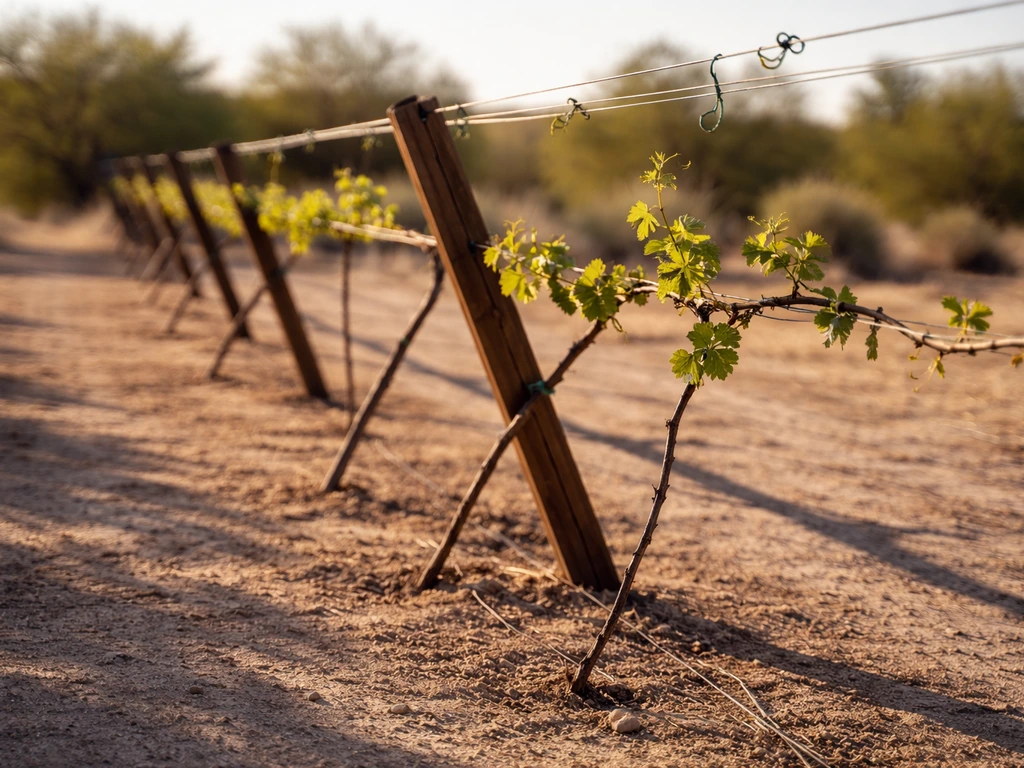
Grapes need full sun, meaning at least 8 hours of direct sun daily, and in Arizona that's rarely the limiting factor. What matters more is which direction your trellis faces. South or west-facing walls in the low desert can actually get brutal afternoon reflective heat that stresses vines and scalds fruit. In the low desert, an east-facing or partially shaded afternoon exposure can be a blessing. At higher elevations, south-facing slopes get more sun and warm up faster in spring, which helps with both frost avoidance and season extension. Cold air drains downhill, so planting on a gentle slope rather than in a valley bottom protects buds from the late frost events that cause the most damage.
Soil and drainage
Arizona soils are typically alkaline, often sandy or rocky, and frequently have caliche layers that block drainage. Grapes can handle alkaline soil better than many fruits, but caliche is a problem because it creates a perched water table that drowns roots. Before planting, dig down 3 feet and check for caliche. If you hit a layer, you either need to break through it or choose a different site. Grapes need well-draining soil. They will not tolerate waterlogged roots. If your soil is heavy clay or you're irrigating heavily, rootstock selection matters: rootstocks like 1103P and 110R are better suited to coarse, well-drained, drier soils and are widely noted for drought tolerance, which fits most Arizona scenarios well.
Irrigation setup
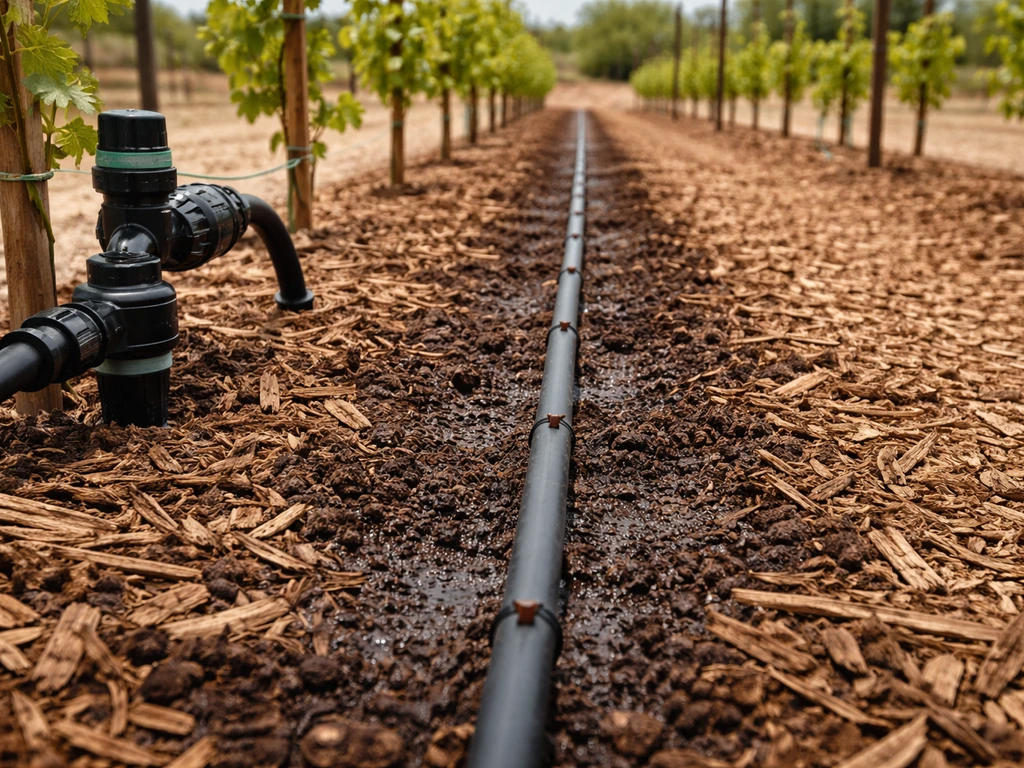
Drip irrigation is not optional in Arizona, it's the standard. Grapes respond well to drip irrigation and the UA Extension's home-garden guidance is specific: water when the soil is dry 3 to 4 inches down. In practice during the desert summer, that often means watering every 7 to 10 days for established vines, but younger vines in sandy soil may need more frequent attention. The goal is deep, infrequent watering that encourages roots to go deep rather than staying near the surface. A deep root system is what gives Arizona vines their drought resilience. Don't guess at the schedule; actually check the soil moisture before running your drip system.
Planting and growing timeline in Arizona
Planting timing differs by zone. In the low desert, bare-root vines go in from late January through February when temperatures are mild and roots can establish before summer heat hits. Container-grown vines can go in later, through March, but the earlier the better. In mid- and high-elevation zones, wait until after the last frost risk has passed, which means late April in Prescott and potentially late May in the Flagstaff area. The UA Extension's Prescott-area guidance notes that warm daytime temperatures in early to mid-September give newly planted vines a strong start before winter cold sets in, so fall planting is an option at those elevations too.
Here's what a realistic multi-year timeline looks like for Arizona grapes:
| Year | What to expect | Key tasks |
|---|---|---|
| Year 1 | Vine establishes roots; minimal top growth | Water consistently, train one or two main shoots upward, remove all flower clusters so the vine puts energy into roots |
| Year 2 | Stronger cane growth; beginning to build framework | Continue training, remove most flower clusters (allow a small crop at most), prune during dormancy in late winter |
| Year 3 | First real crop possible; framework maturing | Allow a modest crop; continue annual dormant pruning; thin flower clusters if vine seems stressed |
| Years 4-5 | Vine approaches full production | Full dormant pruning each year; manage crop load; scout for pests and disease |
| Year 5+ | Full production; 15-25+ lbs per vine typical for table grapes | Annual maintenance pruning is the most important ongoing task |
Be patient with years one and two. The temptation is to let the vine fruit as soon as it sets clusters, but a vine that fruits too early before it has a strong root system is a vine that takes longer to reach real productivity. Removing those early clusters feels wrong but pays off by year three.
Seasonal rhythm for established Arizona vines
- Late January to February (low desert) or March to April (higher elevations): dormant pruning before bud break
- March to April: bud break; watch for late frost at elevation; begin drip irrigation as temperatures rise
- April to May: shoot growth; apply first fertilizer of the season as growth accelerates
- May to June: flowering and fruit set; thin flower clusters if vine is overloaded
- July to August: fruit development; maintain consistent irrigation; monitor for powdery mildew
- August to September: harvest for most low-desert varieties; mid-elevation varieties follow through October
- October to November: vines go dormant; reduce irrigation; prepare for pruning cycle to begin again
Care basics that actually determine success in Arizona
Trellising and training
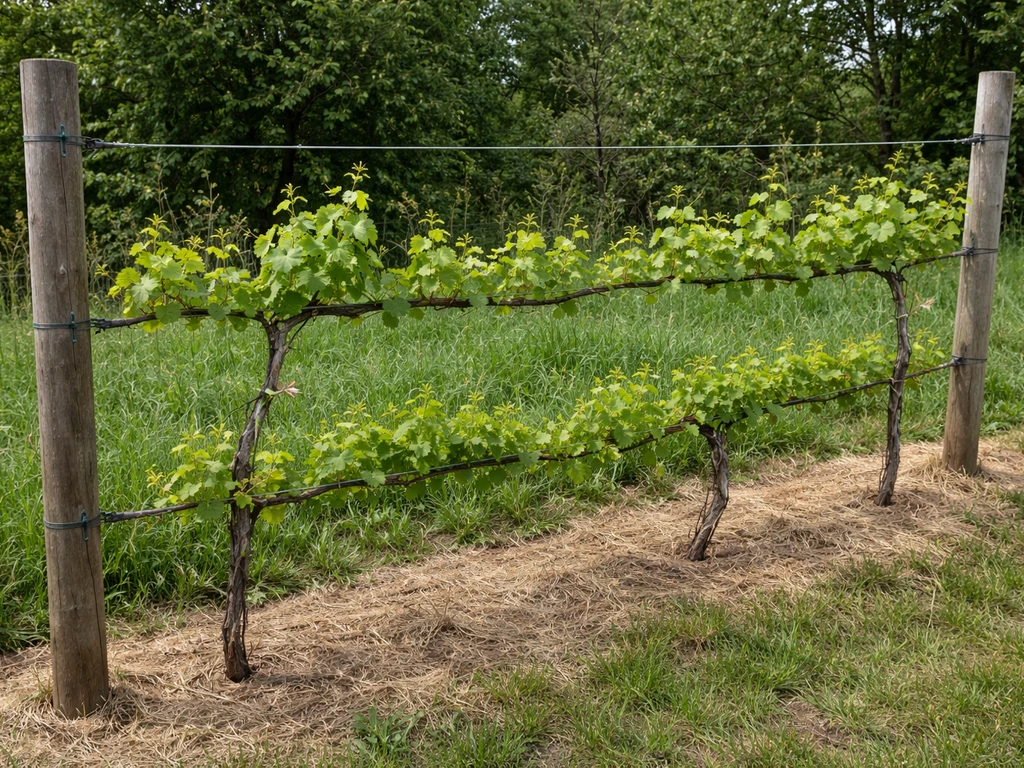
Grapes need a trellis from day one. A simple two-wire trellis (wires at about 3 feet and 5 feet on sturdy posts set 8 feet apart) handles most home-garden situations. The most common training system for home gardeners is the bilateral cordon, where you train two arms along the lower wire in opposite directions and then let fruiting canes grow upward. The training system you choose determines the trellis you'll need, and it also determines your pruning method going forward, so decide before you plant. In Arizona, a south- or east-facing trellis orientation works well for most sites.
Pruning: the most important thing you'll do
UA Extension is direct about this: training and pruning is the most important practice for maximum fruit quality in Arizona home grape growing. Grapes fruit on one-year-old wood, meaning new shoots that grow from canes that grew last season. If you don't prune, you get a jungle of old wood and very little fruit. Dormant pruning happens once a year, after the coldest temperatures have passed but before buds swell, which in the low desert means late January to February. At higher elevations, prune in March. Cane-pruned varieties (most American and hybrid grapes) have you leaving a few long canes with 8 to 15 buds each. Spur-pruned varieties (most European vinifera) leave short spurs of 2 to 3 buds along the cordons. When in doubt, ask what pruning system the nursery recommends for your specific variety.
Fertilizing
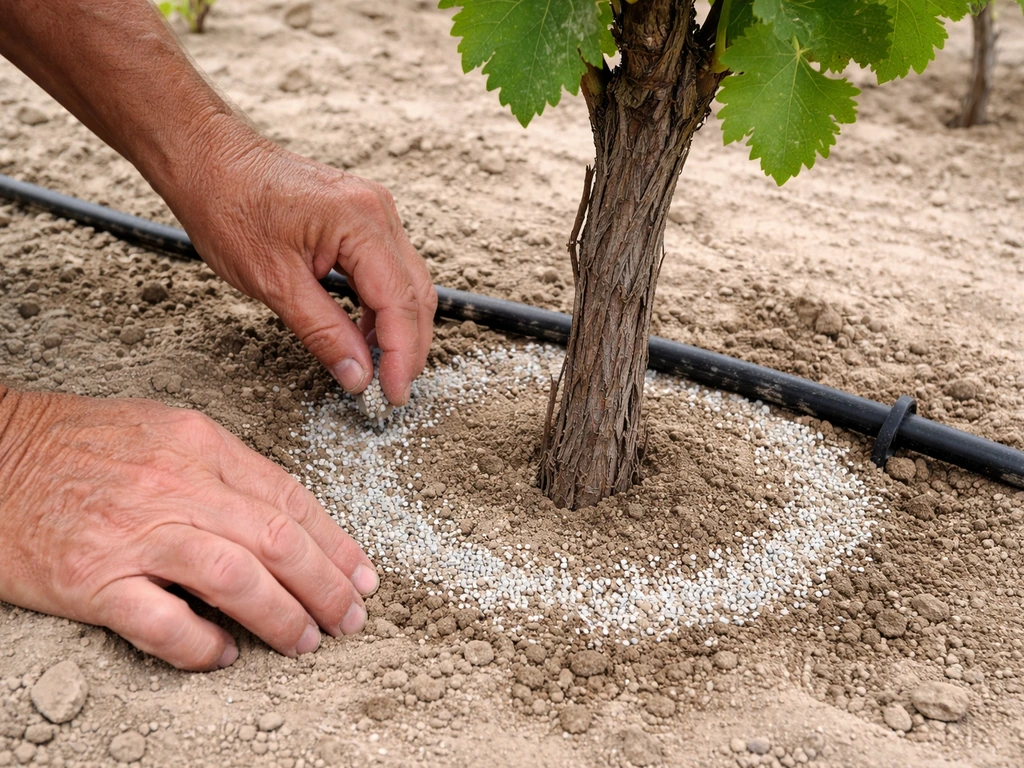
Grapes are not heavy feeders but they do need support, especially in Arizona's sandy, low-organic-matter soils. The UA Extension's guidance is to fertilize when the vine is growing rapidly, which means early spring as shoots push out. A balanced fertilizer or a nitrogen-forward one applied in early spring covers most home-garden needs. Don't fertilize heavily in late summer or fall; you want the vine to harden off for winter, not push tender new growth into frost weather. Watch for yellowing leaves during the growing season, which often signals nitrogen or iron deficiency (iron chlorosis is common in Arizona's alkaline soils and shows as yellow leaves with green veins).
Pest and disease awareness
Powdery mildew is your number one disease concern statewide. Arizona's bimodal precipitation pattern (winter rains and summer monsoon) combined with high ambient temperatures and intense light creates a unique management window. UA Cooperative Extension notes that powdery mildew is arguably the most economically important grape disease and that Arizona’s “unique management scenario” is shaped by bimodal precipitation, high ambient temperatures, and intense light unique management window. Spores can spread even in dry conditions, so don't assume your dry climate protects you completely. Scout vines regularly and look for the white powdery coating on leaves and young berries. Sulfur-based sprays are the classic low-toxicity treatment and work well as a preventive during the pre-bloom and early fruit-set window.
Pierce's disease is the second major concern, especially in the low desert and in areas near water sources. It's caused by a bacterium spread by sharpshooter leafhoppers, and once a vine is infected there's no cure. The best protection is choosing resistant varieties in high-risk areas and keeping weedy host plants cleared from around the vineyard. Phylloxera, the root-attacking insect that devastated European vineyards historically, is managed by growing vines on resistant rootstock. If you're buying grafted vines, confirm the rootstock and choose 1103P or 110R for most Arizona dryland/desert sites; these are noted for strong drought resistance and performance in coarse-textured, well-drained soils.
Scout your vines at least once a week during the growing season. The UA Extension recommends a deliberate, symptom-specific approach: look at the undersides of leaves, inspect clusters, and check the base of the vine. Catching a problem early is almost always easier than managing it after it spreads.
Choosing your vine and knowing your next step
If you're a beginner and you just want a simple answer: start with Perlette or Flame Seedless if you're in the low desert, or Syrah or Muscat of Alexandria if you're in the 4,000 to 5,000 foot elevation zone. These are forgiving, productive, and well-documented in Arizona conditions. Buy a grafted vine from a reputable Arizona nursery, plant it in a spot with all-day sun and good drainage, set up drip irrigation, and build a simple two-wire trellis. That's your entire first-year job.
If you're a more experienced gardener looking to fine-tune: spend time matching your rootstock to your soil conditions and irrigation style. If you're in a drier, coarser-soil site and plan to irrigate conservatively, 1103P and 110R rootstocks are well-supported for Arizona. If you're interested in wine grapes specifically, the Willcox AVA has proven that Syrah, Malvasia Bianca, and Viognier can produce world-class fruit at Arizona elevations, and the best wine grape varieties for Arizona deserve their own deep dive. Look into Pierce's disease-resistant winegrape releases from the UA Extension if you're in a warm, low-elevation wine-grape situation.
No matter your experience level, the single biggest predictor of Arizona grape success is committing to annual dormant pruning. Vines that get pruned every year produce reliably and stay manageable. Vines that don't get pruned become woody, unproductive messes within a few seasons. That one task, done once a year in late winter, is worth more than any fertilizer or irrigation tweak you'll ever make.
Arizona is genuinely a great state for growing grapes. The climate challenges are real but very manageable once you understand which part of the state you're working with. If you’re specifically wondering about the best grapes to grow in Alabama, the key is matching cultivars to your heat, humidity, and winter lows Arizona grape success. Match your variety to your elevation, set up drip irrigation, build a trellis before you plant, and prune every single year. If you want to focus on Kentucky, the best grapes to grow in Kentucky are the ones that match your local winter lows and growing-season length Match your variety to your elevation. Do those four things and you'll have a productive vine that rewards you for a very long time. With the right variety selection, you can also find the best grapes to grow in Virginia that match your local conditions.
FAQ
Can I choose one “best” grape variety for all of Arizona?
Not really. For most Arizona home sites, the biggest “bottleneck” is getting a grape variety that matches your elevation and ripens before your hottest or coldest cutoff (July heat in the low desert, fall frost in higher areas). If you pick the wrong cultivar, you can lose entire seasons even with perfect irrigation and pruning.
What’s the practical way to tell if my location is a frost pocket for vines?
If your yard has a frost pocket (cold air drains and pools in a low spot), the risk is not just lower temperatures, it is repeated bud damage. Planting on a gentle slope or an elevated bed improves airflow and reduces the chance that buds sit in cold air overnight.
Should I fertilize in late summer to boost vine growth in Arizona?
Yes, but treat it as a short, deliberate window. In the low desert, you generally want to avoid fertilizing in late summer or fall because new shoots will not harden before cold nights, increasing winter damage risk and disease susceptibility on tender growth.
If I buy drought-tolerant rootstock, do I still need to worry about caliche and drainage?
Rootstock helps, but only if your site can actually drain. Even drought-tolerant rootstocks struggle if caliche creates perched water or if irrigation leads to waterlogging. The fix is addressing drainage or changing the planting spot after you confirm caliche depth and soil texture.
How do I avoid overwatering or underwatering with drip irrigation in Arizona?
For grapes, drip frequency should be guided by soil moisture depth, not the calendar. A common mistake is shortening intervals but using less water each time, which leaves roots near the surface. Check moisture 3 to 4 inches down and aim for deep, infrequent watering that encourages rooting downward.
Since Arizona is dry, do I still need to prevent powdery mildew?
Don’t assume “drier air” eliminates disease. Powdery mildew spores can move and still infect, especially during warm stretches with intense light. The helpful shift in Arizona is that prevention timing (pre-bloom and early fruit set) is especially important, so start scouting and consider sulfur before problems show.
What should I do differently if I suspect Pierce’s disease risk in my area?
Yes. Pierce’s disease can be devastating because there is no cure once established. If you are in a warmer, higher-risk zone near wetlands, irrigation canals, or sharpshooter habitat, prioritize resistant varieties and remove weedy host plants around the vine area.
Can I change pruning style after I’ve already trained my grape on a trellis?
As a rule, train the vine early, then choose a pruning system that matches the wood type your variety produces. A very common beginner mistake is starting with one training layout, then pruning as if a different system is required, which can reduce fruiting wood and keep yields low.
Why do vinifera grapes struggle in higher-elevation parts of Arizona?
If you are growing in the Flagstaff range or higher elevations, focus on cold-hardy, early-ripening grapes first because first fall frost can arrive before vinifera fully ripens. For many sites, American hybrids like Concord or Niagara are more dependable for fruiting than classic vinifera wine grapes.
Does trellis orientation really affect grape success in Arizona?
Pick your first trellis orientation based on sun exposure and heat stress, not just where the fence is. In the low desert, south or west-facing reflective afternoon heat can scorch fruit and stress vines, while an east or partially shaded afternoon position often performs better.
What should a beginner do before buying a vine or scheduling planting?
If you want a fast, low-maintenance start, select grafted vines from a reputable Arizona nursery and buy the variety that matches your zone and your disease risk. Also, plan your site and trellis before planting, because “fixing” trellis orientation or drainage after the vine is established is much harder.
If my grape vine grows leaves but won’t produce, what is the first thing to check?
Most “no yield” problems come from not pruning, poor sunlight, or frost-damaged buds, not from fertilizer mistakes. Since grapes fruit on one-year-old wood, annual dormant pruning is the lever that most strongly determines whether you get consistent clusters.