
For most Southern California home gardeners, the most reliable table grapes are Flame Seedless, Thompson Seedless, and Perlette, while Syrah, Grenache, and Tempranillo are your best bets for wine grapes. Which one you plant depends on whether you're near the coast in San Diego, tucked into a warm inland valley, or somewhere in between, because those microclimates are different enough to genuinely change which varieties ripen well and which ones struggle. If you want to grow grapes in Houston, you'll need to match varieties to heat, humidity, and disease pressure in a similar way best grapes to grow in Houston.
Best Grapes to Grow in Southern California: Top Table and Wine Varieties
Marcus Whitfield
21 May 2026
What 'best' actually means for a backyard grape grower
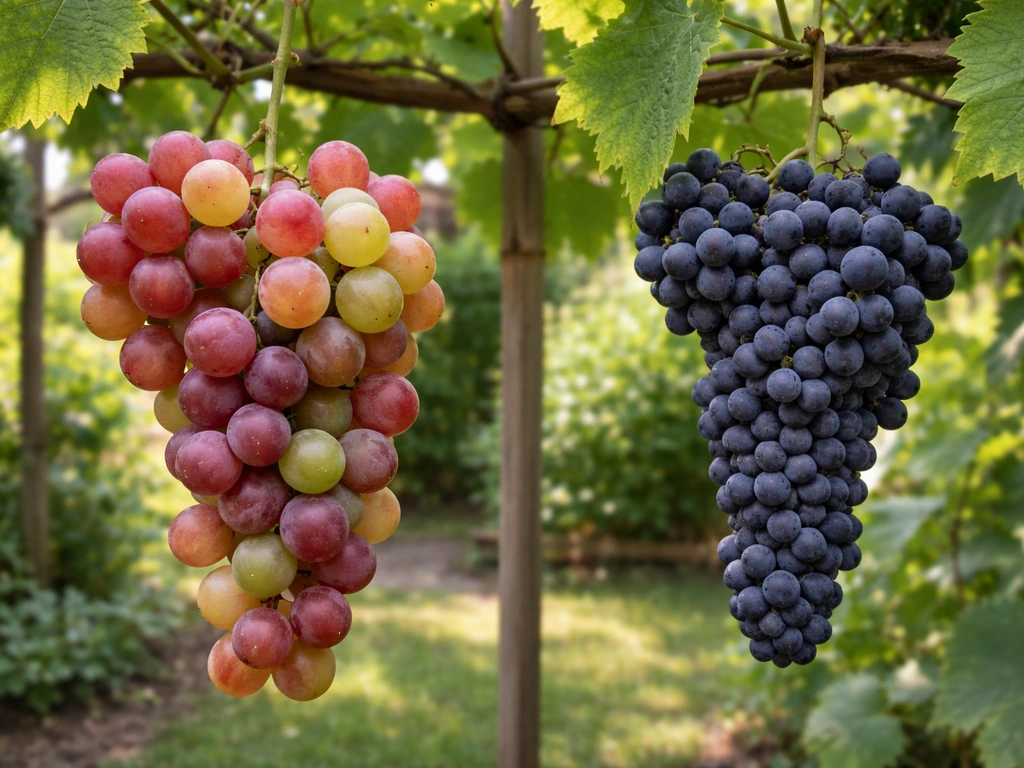
When you're choosing a grape for your home garden, 'best' doesn't mean the same thing as it does for a commercial vineyard. You're not chasing yield per acre or winery contract specs. What you actually want is a vine that ripens reliably in your specific spot, tastes great off the vine (or makes decent wine), doesn't collapse under disease pressure, and doesn't demand a ton of intervention every summer. That combination looks different for table grapes versus wine grapes.
Table grapes are judged on eating quality: sweetness, seedlessness, skin texture, and how reliably they hit that sugar level (Thompson Seedless, for example, is considered ripe at a minimum of 15% soluble solids in the juice, while Perlette clears its bar at 14%). Wine grapes are judged differently since you're chasing a flavor profile and fermentable sugar balance, not snackability. They're also usually harvested later, which means they need to handle SoCal's long, hot summers without baking or splitting. Both categories share one important trait for home growers: disease tolerance matters a lot. Powdery mildew is the single biggest headache for backyard vineyards in California, and choosing a variety with at least moderate tolerance will save you a huge amount of work.
Southern California's grape climate: what's working in your favor
Southern California is genuinely one of the better places in the country to grow grapes at home. Summers are long and warm, winters are mild, and the region accumulates plenty of heat units to ripen most varieties. One thing that surprises new growers is how low the chill-hour requirement is for grapes. While apples often need 500 to 1,000 hours below 45°F to break dormancy reliably, most grape varieties need fewer than 200 chill hours. Even coastal SoCal microclimates that rarely see sustained cold typically meet that threshold, which means dormancy and budbreak happen on schedule rather than being erratic like they can be for stone fruit in the same mild conditions.
That said, SoCal isn't perfectly uniform. The coast brings cool mornings, marine influence, and humidity that can ramp up powdery mildew pressure. Move inland 20 or 30 miles and you're looking at triple-digit summer days, dry air, and a longer heat accumulation window. Your site conditions within those zones also matter: a south-facing slope with reflected heat from a wall behaves very differently from a shaded north-facing bed. The basic rules are: more heat means later-ripening varieties can succeed, and more coastal fog or humidity means disease management moves up your priority list.
Frost is rarely catastrophic in Southern California compared to what growers deal with in places like Western Washington or parts of Texas, but low spots and cold inland valleys can still surprise you in late winter when vines are pushing new growth. Western Washington grape growers also benefit from choosing varieties that can handle cooler conditions, similar to how you plan for frost risk in low spots and cold inland valleys. Give your vines a protected spot with good air circulation, and you sidestep most of that risk while also reducing disease pressure.
Best table grapes for Southern California
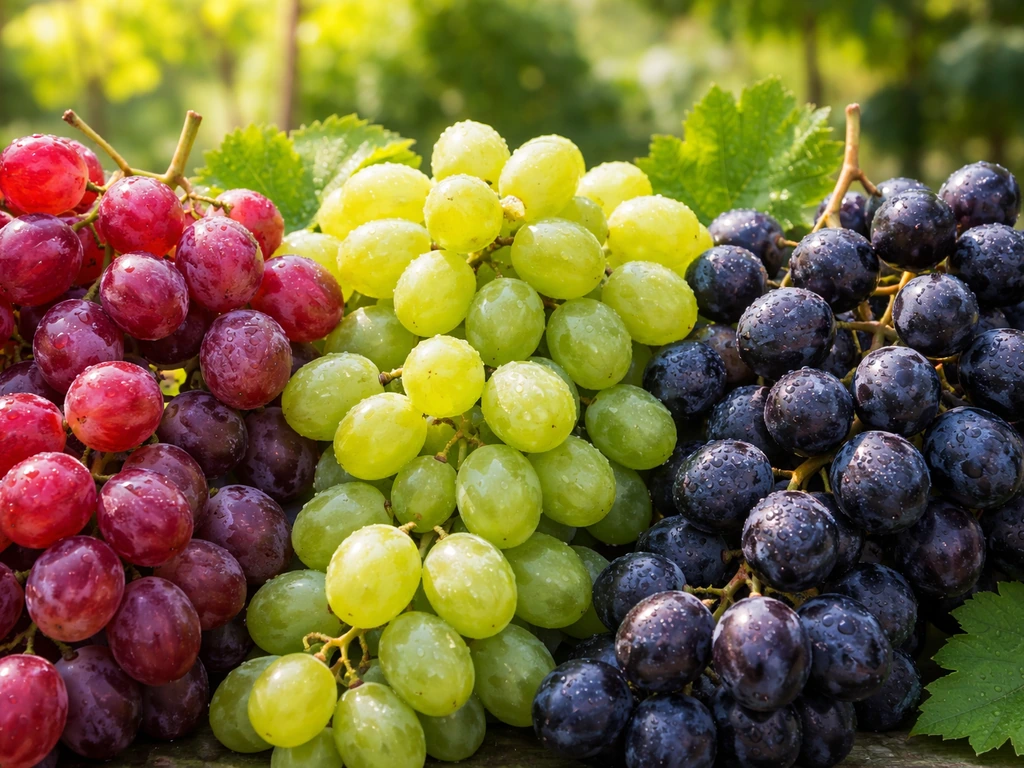
These are the varieties UC ANR and California Master Gardeners consistently recommend for home growers in the region. All four perform well in SoCal's heat and have a track record in home gardens across the state.
| Variety | Type | Ripening | Flavor Notes | Heat Tolerance | Best For |
|---|---|---|---|---|---|
| Flame Seedless | Red, seedless | Early-mid season | Sweet, crisp, mild berry flavor | Excellent | Most SoCal locations, including inland |
| Thompson Seedless | Green, seedless | Mid season | Very sweet, neutral, classic raisin grape | Excellent | Hot inland valleys, high-heat microclimates |
| Perlette | Green, seedless | Very early | Crisp, mildly sweet, thin skin | Good | Coastal and mild areas needing early harvest |
| Delight | Green, seedless | Early | Mild, sweet, crunchy texture | Good | Coastal areas, moderate-heat zones |
Flame Seedless is probably the single most versatile pick for SoCal home gardens. It handles heat well, ripens reliably, and produces clusters that look and taste like what you'd find at a farmers market. Thompson Seedless thrives in the hottest inland locations where it can accumulate the sugar needed to hit that 15% soluble solids target, but it can underperform in cooler coastal spots where the season isn't long enough. Perlette and Delight are your go-to choices if you're near the coast or in a microclimate with a shorter effective summer, since they ripen early enough to finish before fall fog or cooler temps slow things down.
One thing worth knowing about all table grapes: sugar level is how you determine actual ripeness, not color alone. A grape can look fully colored weeks before it's actually sweet enough to eat well. Get a cheap refractometer if you want to stop guessing.
Best wine grapes for a SoCal backyard vineyard
Wine grapes in Southern California have a real advantage: the region's warm, dry summers closely match the conditions that make Rhône varieties shine in southern France. If you’re wondering what grapes grow in Bordeaux, the answer is different, since Bordeaux whites and reds are built around specific varietals like Cabernet Sauvignon and Merlot Rhône varieties. San Diego County's AVAs, including Ramona Valley and San Pasqual Valley, have proven that Syrah, Grenache, Mourvèdre, Tempranillo, and Carignane all ripen successfully here. For home growers, that's useful validation: these aren't exotic experiments, they're varieties with a documented track record in SoCal soils and heat.
| Variety | Style | Heat Need | Disease Tolerance | Notes for Home Growers |
|---|---|---|---|---|
| Syrah | Full-bodied red | High | Moderate | Excellent in warm inland sites; thrives in San Diego County valleys |
| Grenache | Medium-bodied red | High | Moderate | Performs well across SoCal warm zones; Rhône classic, forgiving vine |
| Tempranillo | Medium-full red | Moderate-high | Moderate | Grown successfully in Ramona Valley and San Luis Rey AVA; earlier ripening than Cabernet |
| Mourvèdre | Full-bodied red | High | Good | Needs real heat to ripen fully; ideal for hottest inland microclimates |
| Carignane | Medium-full red | High | Good | Productive, reliable in warm zones; documented in Ramona Valley AVA |
| Petite Sirah | Full-bodied red | High | Good | Thick skins help resist bunch rot; popular in warm California home vineyards |
Syrah and Grenache are the top two starting points for most SoCal home winemakers. They're heat-loving, they ripen well across a range of warm to hot microclimates, and they produce wines with genuinely good complexity even from backyard-scale production. Tempranillo is worth considering if you want something a little earlier-ripening than a Cab or Syrah, since it finishes before the late-season heat of October hits. Mourvèdre is fantastic but demanding: it really does need significant heat accumulation to ripen properly, so save it for your hottest spot or your hottest years.
White wine grapes are less commonly planted in SoCal home vineyards but Grenache Blanc, Viognier, and Roussanne can all work in the right spots. They're Rhône varieties too, and they fit the same warm-climate pattern. Viognier in particular is worth a single vine if you like aromatic whites and have a hot-enough microclimate.
Matching varieties to your microclimate
Coastal San Diego and marine-influenced areas
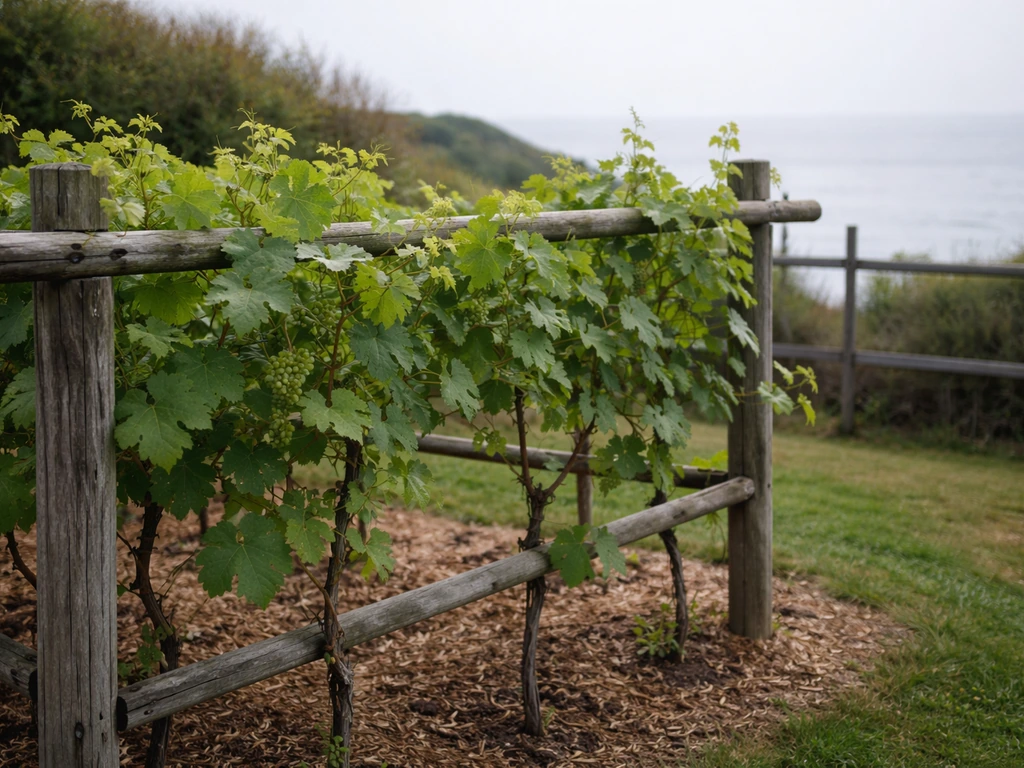
If you're in coastal San Diego, Del Mar, Encinitas, or anywhere that gets regular June Gloom and marine layer, your priority is early-ripening varieties and disease-resistant choices. Powdery mildew pressure is higher here than it is inland, and UC guidance is explicit: in mild coastal climates, early-ripening varieties produce best. Perlette and Delight for table grapes fit this rule perfectly. For wine grapes, Grenache and Tempranillo are better fits than Mourvèdre or Petite Sirah, which need more heat than a coastal microclimate reliably delivers. Canopy management and basal leaf removal to improve airflow are not optional here; they're how you keep powdery mildew from taking over.
Inland San Diego County (Ramona, San Pasqual, Escondido area)
Inland North County San Diego is genuinely excellent grape country. The Ramona Valley and San Pasqual Valley AVAs both sit in warm, dry valleys where summer heat accumulation is high and the Rhône varietal list reads like a shopping list of things that work. For home growers in this zone, almost every variety on the wine grape list above is fair game. Syrah, Grenache, Mourvèdre, Carignane, Tempranillo, and Petite Sirah all have documented success here. For table grapes, Flame Seedless and Thompson Seedless both thrive in this kind of heat. This is where you have the most flexibility.
Inland SoCal: Temecula, IE, and the inland valleys
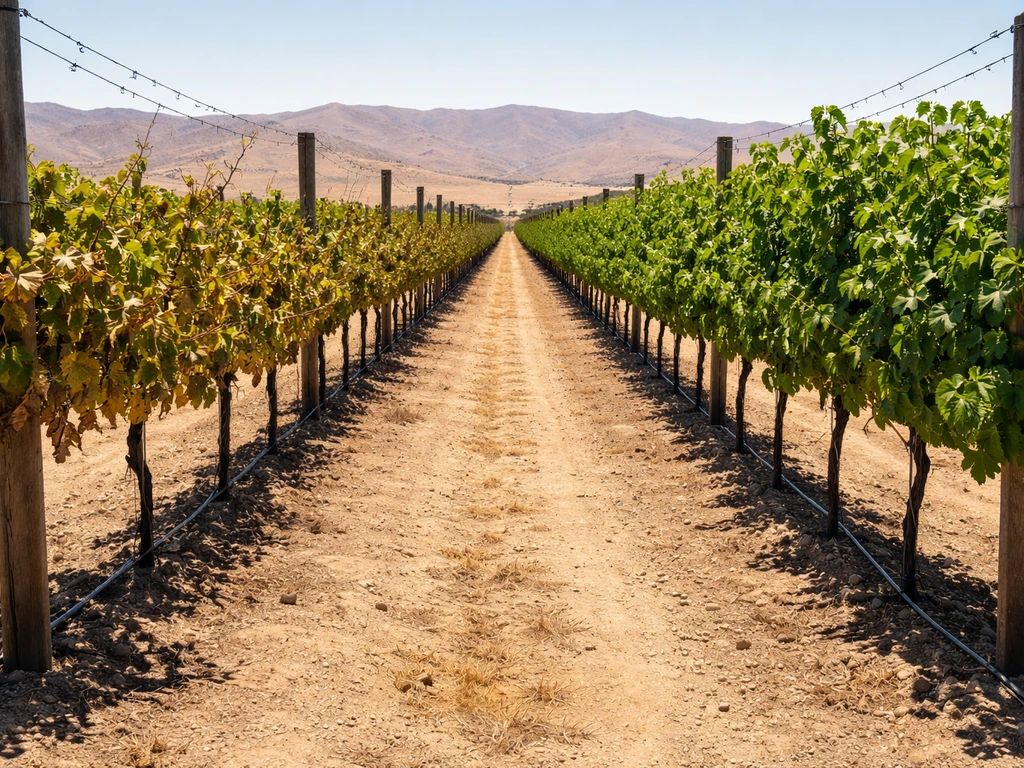
The Inland Empire and Temecula wine country share a similar profile: high heat, low humidity compared to the coast, and long summers. Temecula's reputation for Rhône varieties and Zinfandel holds up for home growers too. Zinfandel is actually worth adding to your list here: it loves heat, ripens into the fall, and makes some of the most satisfying backyard wine you can produce in California. Syrah, Grenache, and Petite Sirah are all strong picks. For table grapes, Flame and Thompson Seedless are practically made for this climate.
One note for very hot inland spots: extreme heat events above 105°F can sunburn clusters if you've done heavy leaf pulling on the sun-exposed side. A bit of afternoon shade or leaf cover on the west-facing side of the canopy can protect clusters in the worst heat spells without sacrificing the overall light and airflow you need for disease prevention.
A quick note if you're actually in Northern California
If you landed here while researching grapes for the Bay Area, Sacramento Valley, or Napa/Sonoma, the variety list looks somewhat different. Coastal NorCal locations like Marin, where marine influence is stronger, deal with more consistent powdery mildew and disease pressure than SoCal coastal zones, and they have a shorter effective ripening window. The Napa and Sonoma inland valleys support Cabernet Sauvignon, Chardonnay, and Pinot Noir in ways that SoCal's heat doesn't suit as well. If you're in a cooler NorCal location, the SoCal Rhône-heavy recommendations above don't necessarily apply. Start with your local UC Cooperative Extension office for region-specific guidance.
How to plan your SoCal grape garden and what to realistically expect
Picking your site and setting up support
Grapes need full sun, at least six to eight hours a day, and good air circulation. A south or west-facing wall or slope is ideal in most SoCal locations. Training onto a trellis is strongly recommended over an arbor if your primary goal is fruit production, because a trellis lets you manage the canopy so light reaches leaves and clusters, which improves both ripening and disease resistance. If you're going with an arbor for aesthetic reasons, match your variety and pruning system to that structure, since spur-pruned varieties work better on arbors than cane-pruned ones.
The first few years: what's actually happening
Year one, let the vine grow with minimal intervention. That shoot and leaf growth is building the root system that will power your future harvests. In the second summer, you start selecting the best shoots and training them into your permanent structure, using either spur or cane training depending on your variety and setup. Don't rush fruit production: a vine that's pushed too hard early will be weaker and more disease-prone long-term. A well-trained, healthy vine typically won't hit a full productive crop until year four or five. That sounds like a long wait, but those early years of good establishment pay off in consistent, quality harvests for decades.
Disease management: powdery mildew is the main event
Powdery mildew is the most common and damaging disease you'll deal with in a SoCal home vineyard. The best strategy is prevention, not reaction. Basal leaf removal to open up the canopy around clusters, good spacing between vines, and avoiding overhead irrigation all reduce pressure significantly. If you do need to spray, horticultural oil and biological controls like Serenade are registered options for home use. Botrytis bunch rot is a secondary concern, especially in years with late-season humidity: it often enters through damage from birds, insects, or earlier mildew infections, which is another reason to stay on top of powdery mildew prevention from the start.
Practical next steps
- Identify your microclimate: coastal marine influence, warm inland valley, or hot interior. That determines whether early-ripening or heat-demanding varieties fit better.
- Choose one or two varieties to start: Flame Seedless for table grapes, Syrah or Grenache for wine grapes, are the lowest-risk starting points for most SoCal gardeners.
- Plant bare-root vines in late winter (January to March is ideal in SoCal) when they're dormant and easy to establish.
- Build or install your trellis before planting so you're not retrofitting around an established vine.
- In year one, focus on root establishment over shoot training. Let the vine grow and resist the urge to prune heavily.
- Plan for a first real harvest around year three, and a full productive crop by year four or five.
- Start a simple powdery mildew prevention routine in spring, especially if you're near the coast or in a more humid microclimate.
The reality is that Southern California makes grape growing more approachable than most places in the country. You have the heat, the chill hours are easy to meet, and the Rhône-style wine grapes that do best here are some of the most forgiving varieties to work with. Pick the right variety for your specific spot, give the vine a few years to establish, and you'll have a productive backyard vineyard that earns its space. If you want the best grapes to grow in Texas, start by matching varieties to your hot climate and local disease pressure.
FAQ
Can I grow the same grape variety across the whole Southern California region, or do I need different picks for coast versus inland?
You generally need different picks because the coastal marine layer changes both ripening timing and disease pressure. Even 20 to 30 miles can shift powdery mildew severity and the available heat window, so a variety that reliably reaches sugar targets inland can lag and struggle near the coast.
How do I choose between Thompson Seedless and Flame Seedless if I’m not sure how hot my microclimate gets?
If you want the safer “first try,” Flame Seedless usually gives more consistent results across a wider range of warm to hot sites. Thompson Seedless is more dependent on accumulating enough heat for your area to reach its sweetness target, so it can underperform where summers are shorter or cooler.
What’s the quickest way to confirm grapes are actually ripe if color looks right?
Use a refractometer and aim for juice soluble solids, not just berry color. Table grapes can color early, so measuring is the fastest way to avoid picking a cluster that looks ready but tastes under-sweet.
I get powdery mildew every year. What vineyard setup change has the biggest payoff besides spraying?
Canopy airflow management usually matters more than growers expect. Basal leaf removal around clusters, good vine spacing, and preventing persistent dampness from overhead irrigation reduce mildew pressure and help treatments work better when you do spray.
Does frost mean I should avoid grapes in inland low spots or cold winters?
Not always, but cold pockets are the real risk. Late-winter cold can hit new growth, so prioritize a site with better air drainage and protection, and use trellis training and airflow to keep vines healthier and less disease-prone after cold events.
What’s the most common mistake new SoCal grape growers make with irrigation?
Overhead watering and inconsistent wetting are major triggers for disease problems, especially when combined with dense canopies. Drip irrigation and careful scheduling to avoid wet foliage are usually the higher-impact fix than changing fertilizer or pruning alone.
When should I expect a full grape harvest, and what should I do if year one seems slow?
A well-established vine often needs about four to five years to reach full productivity, because early growth is for building root strength and permanent structure. If it seems slow, focus on training and vine health rather than pushing fruit early, and avoid heavy crop loading in the first few seasons.
Are arbor-trained grapes always worse than trellis-trained vines for fruit production?
Not always, but arbors are easier to manage poorly for airflow. A trellis usually makes it simpler to control canopy density and light distribution, which improves ripening and reduces mildew risk. If you choose an arbor, match the pruning system to the variety so the vine produces on the right growth.
For very hot inland summers, how can I prevent sunburn on clusters without ruining disease prevention?
Avoid excessive leaf removal on the hottest, sun-exposed side. Consider partial afternoon shade or west-side cluster protection during heat spikes, while keeping enough canopy openness for airflow so powdery mildew prevention still works.
Which red wine grapes are better for coastal San Diego if I’m trying to avoid needing extreme heat accumulation?
Grenache and Tempranillo are typically the more practical starts in coastal conditions because they ripen better within a shorter, cooler season. Mourvèdre and Petite Sirah often need more heat units than coastal microclimates reliably provide.
Can I make good wine from the same table grape varieties I’d eat fresh?
It’s possible, but table varieties are optimized for eating quality (like sweetness and seedlessness), not wine-specific flavor and fermentability balance. If your goal is wine, the Rhône-style picks tend to be a better match for SoCal’s warm, dry pattern.