
Grapes absolutely can grow in Western Washington, but you need to pick the right varieties. The region's cool, maritime climate means heat is your limiting factor, not rain or cold. Stick with very early or early-maturing cultivars like Reliance, Canadice, Van Buren, Lynden Blue, Saturn, and Vanessa, and you can realistically harvest sweet, homegrown grapes in the Seattle area and across the Puget Sound region. If you're in Houston instead, you'll want to choose heat-tolerant varieties tailored to the city’s warm summers best grapes to grow in houston. Go with midseason or late varieties and you'll spend years babying vines that never quite ripen.
Best Grapes to Grow in Western Washington (Seattle)
Marcus Whitfield
16 May 2026
Climate and site realities for Western Washington grape growing
The biggest misconception I hear from Western Washington gardeners is that it's too rainy to grow grapes. Rain isn't actually the main problem. The real challenge is heat, or more precisely, the lack of it. WSU Extension data shows that growing degree days (GDD, base 50°F) across maritime western Washington can range from about 1,400 to 2,300 depending on your exact location. For context, Seattle's Sea-Tac Airport averages around 1,863 GDD, which is workable. But coastal spots like Aberdeen sit around 1,348 and Bellingham around 1,321, which is genuinely marginal for most varieties. That difference of a few hundred heat units is the difference between a good harvest and a bunch of unripe grapes.
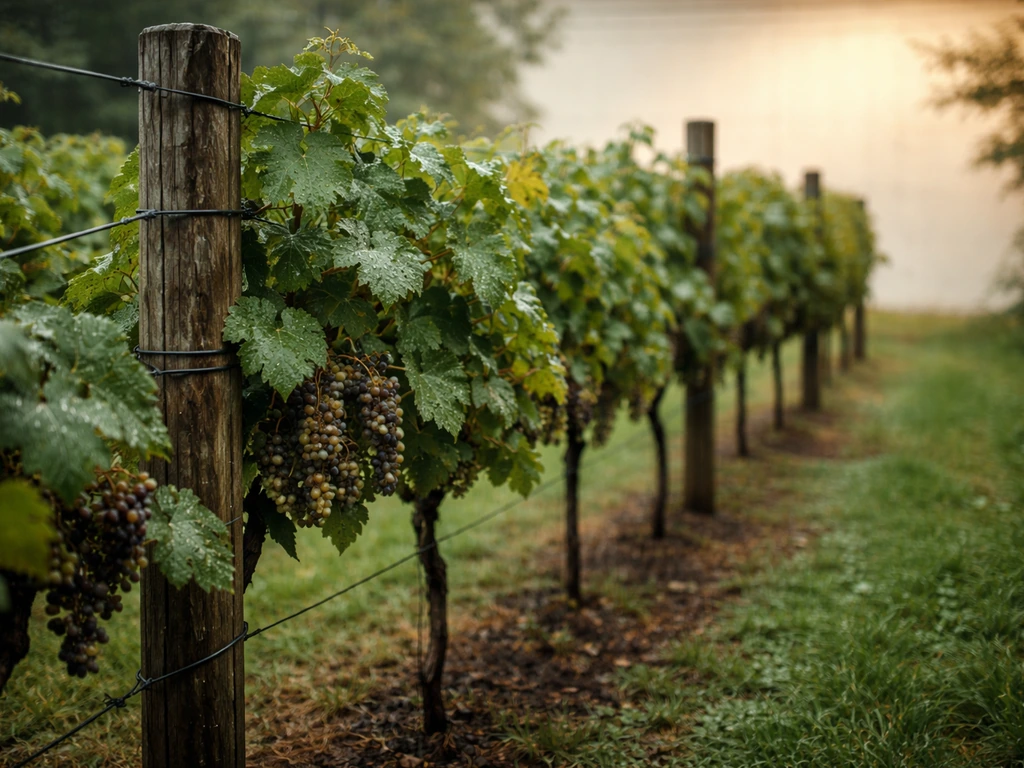
Disease pressure is real but manageable. Botrytis bunch rot is the primary disease threat here, and it thrives in the cool, wet conditions Western Washington delivers regularly during moderate temperatures of 60 to 77°F. The good news is that powdery mildew, which devastates grapes in many other regions, is often held in check by the region's long daylight hours, clean air, and ocean breezes. [Powdery mildew](https://hortsense.
cahnrs. wsu. edu/fact-sheet/grape-powdery-mildew/) is a fungal disease that affects all aboveground portions of grape, with spores spread by wind and the fungus able to overwinter on bark or in infected buds. So your main disease battle is with botrytis, not powdery mildew, and you fight it mostly through canopy management: keep the fruit zone open to airflow, remove leaves around clusters, and time your harvest to avoid extended wet spells.
Picking after two to three consecutive dry days makes a real difference in fruit quality and rot risk.
Washington State also has strict grapevine quarantine rules, so you can't just order bare-root vines from any out-of-state nursery. You need to source certified, disease-free plant material. This matters because bringing in uncertified stock risks introducing viruses and pests that can devastate a planting. Stick with nurseries that carry Washington-compliant certified stock, and you're starting on solid ground.
Top-performing grape varieties for Seattle and Western Washington
The table below covers the cultivars WSU Extension and the UW Miller Library recommend specifically for the Puget Sound and Seattle area, with notes on maturity, berry type, and best use. These are the varieties that actually ripen reliably under maritime conditions.
| Variety | Maturity | Berry Type | Best Use | Notable Traits |
|---|---|---|---|---|
| Reliance | Very early | Pink, seedless | Table / fresh eating | Slight muscat flavor, full bunches, excellent for snacking |
| Canadice | Early | Red, seedless | Table / fresh eating | Sweet with a mild foxy note, small compact clusters, very reliable |
| Van Buren | Very early | Blue/black, seeded | Table / juice | Earliest blue type, Concord-like flavor, very cold hardy |
| Lynden Blue | Very early | Blue/black, seeded | Table / fresh eating | Large berries in open clusters, sweet, bred locally for Pacific Northwest |
| Saturn | Early | Bright red, seedless | Table / fresh eating | Very large berries, crisp flesh, compact clusters, precocious bearer |
| Vanessa | Early | Red, seedless | Table / fresh eating | Firm crisp flesh, Flame Seedless type, medium berries |
| Venus | Early | Blue/black, seedless | Table / fresh eating | Blue seedless, good for fresh eating, early enough to ripen reliably |
| Mars | Early | Blue, seeded | Table / fresh eating | Slipskin texture, strong labrusca flavor, suits traditional PNW taste |
| Buffalo | Mid-early | Blue/black, seeded | Table / juice / wine | Productive Concord-type, solid multipurpose variety for mild sites |
| Interlaken Seedless | Earliest | Green/gold, seedless | Table / fresh eating | Extremely vigorous vine, very earliest white seedless, excellent flavor |
One important call-out: standard Concord is not on this list by accident. WSU Extension explicitly notes that Concord does not mature satisfactorily in most areas of western Washington. It's one of the most commonly planted grapes in the country, and it simply doesn't get enough heat here to ripen well. This is exactly why leaning on early and very early cultivars is non-negotiable for this region.
Pacific Northwest-friendly varieties for home vineyards
If you're setting up even a small home vineyard and want the best odds of success, I'd build your planting around a core group of three to five of these varieties rather than chasing a single cultivar. Reliance is probably my first recommendation for anyone who wants a reliably sweet, seedless grape without fussing over flavor complexity. Canadice is a close second for the same reason. If you want a blue grape that tastes like a Pacific Northwest classic, Van Buren or Lynden Blue give you that early ripening and a familiar Concord-adjacent flavor without the maturity gamble.
Saturn stands out if you want to impress people with table presentation. The berries are unusually large for a home garden variety, the flesh is crisp and snappy, and it starts producing fruit relatively quickly (WSU calls it precocious, which means it bears sooner than most). Interlaken Seedless is worth including if you want the earliest possible harvest window and a vine that grows vigorously enough to cover a trellis fast. Just know it needs to be managed carefully to keep fruit quality up.
For sites in more marginal heat zones, like Bellingham or the coast, concentrate exclusively on the very early group: Reliance, Lynden Blue, Van Buren, and Interlaken. Anything rated midseason is a real gamble under 1,500 GDD. The heat unit math matters: WSU guidance suggests that locations accumulating less than 1,500 GDD should focus on very early cultivars only, 1,500 to 1,700 GDD opens the door to early cultivars, and midseason varieties are really only viable if you're actively trapping extra heat on your site.
Table grapes vs. eating grapes: how to choose based on flavor and use
In everyday gardening conversation, table grapes and eating grapes mean essentially the same thing: grapes you harvest and eat fresh off the vine. The distinction that actually matters here is flavor style and texture, and it breaks down into two camps. First, there are the classic labrusca-type grapes, which have that bold, jammy, slightly foxy flavor most people associate with Concord grape juice or old-fashioned grape jam. Varieties like Van Buren, Mars, Buffalo, and Canadice fall into this camp.
They're sweet, intensely flavored, and often have a slipskin texture where the skin slips off the pulp. Second, there are the vinifera-style table grapes, which taste more like what you'd find in a grocery store produce section: clean, mild, sometimes with a faint muscat note. Reliance, Vanessa, Saturn, and Interlaken lean this direction.
If you're growing primarily for fresh snacking and your family is used to grocery-store grapes, Reliance, Saturn, or Vanessa will feel most familiar. If you want to make juice, jelly, or juice concentrate, Van Buren and Buffalo are workhorses. If you love that classic Pacific Northwest grape flavor and want something that evokes nostalgia, go with Canadice or Mars. There's no wrong answer, but knowing what you'll actually do with the fruit makes the choice easy.
Planting basics: site, sun, soil, spacing, and trellising
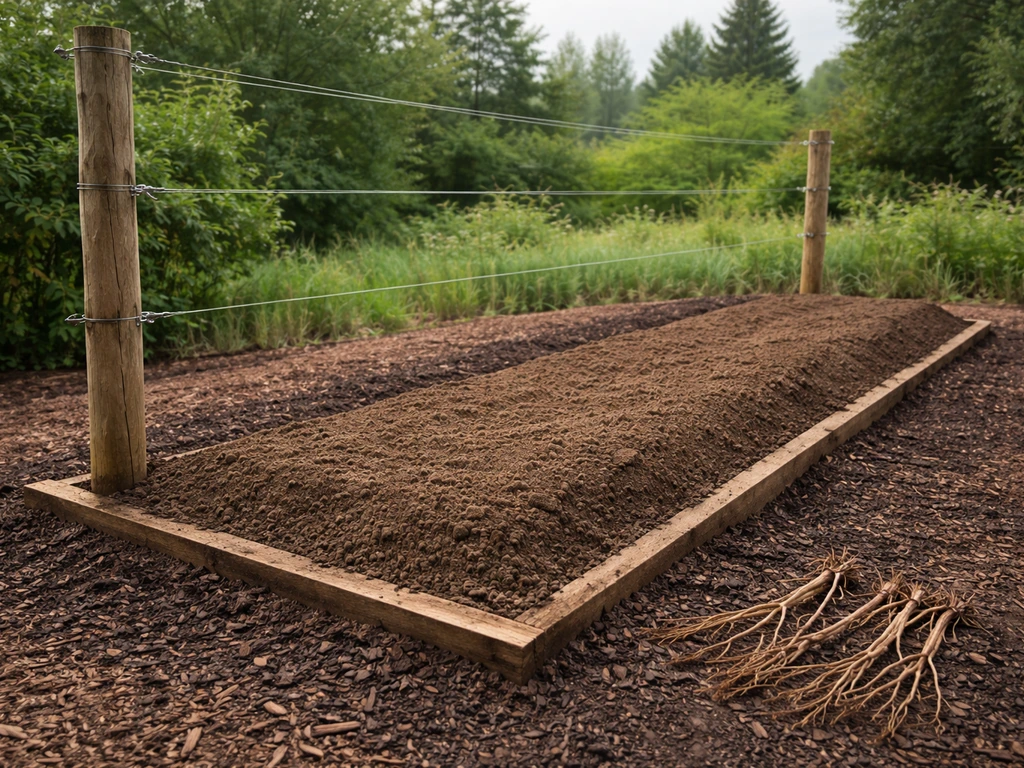
Site selection is where you make or break a Western Washington grape planting. Because heat accumulation is the limiting factor, you want to maximize every degree you can capture. South, southwest, and west-facing slopes are ideal because they get the most direct sun exposure through the afternoon. Avoid low spots, valley floors, and anywhere cold air pools in spring, since late spring frosts can kill early bud break and wipe out a whole season's fruit. The warmest microclimate on your property is where the grapes go, full stop.
Soil drainage matters almost as much as sun. Grapes prefer sandy or gravelly, well-drained soils that warm up faster in spring and hold heat through the season. Heavy clay soils stay cold and wet too long and increase disease pressure. Do a soil test before planting, amend for drainage if needed, and don't skip this step since established grapevines are essentially permanent. You can't easily move them once they're in the ground and trained.
You can boost heat accumulation on marginal sites with a few tricks WSU Extension recommends: use black plastic mulch or dark-colored rocks around the base of the vine to absorb and radiate heat, plant with wind protection to reduce the chilling effect of breezes, and train vines lower to the ground where temperatures are warmer. In truly marginal spots, some growers even use soil heating cables.
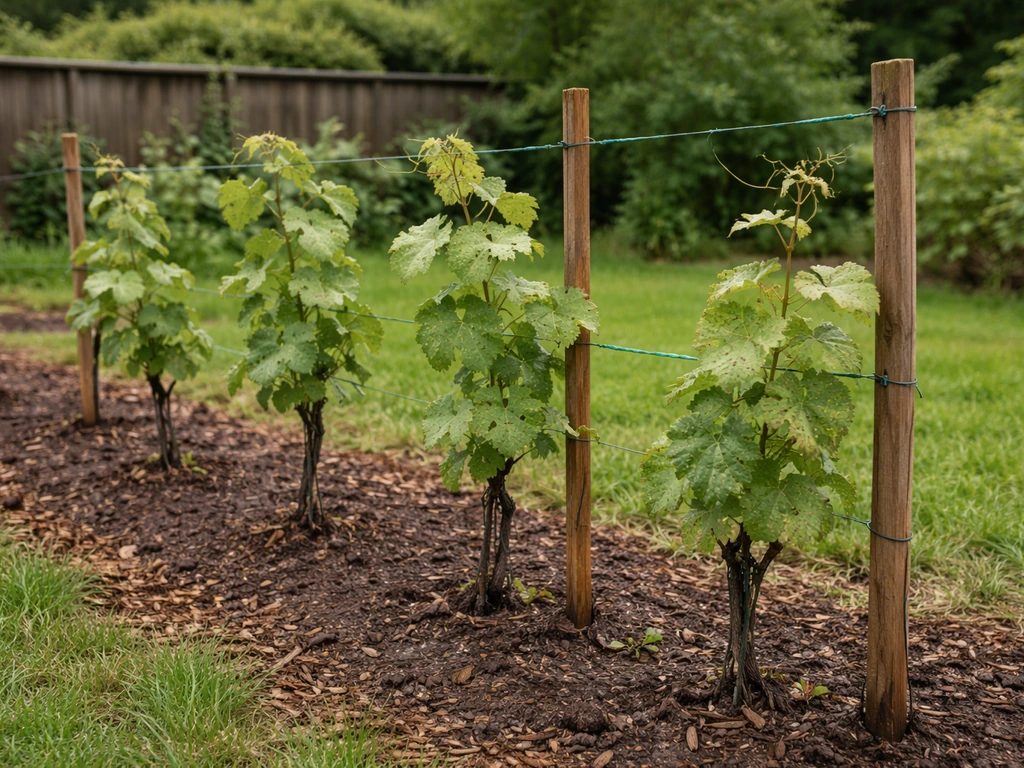
For spacing and trellising, orient your rows north to south so both sides of the canopy get sun through the day. A simple two-wire trellis works well for home gardens. Space vines about 6 to 8 feet apart on the trellis. Training and pruning during the first few years is critical: prune back hard after planting to build a strong trunk and framework before you let the vine put energy into fruit. Remove lower suckers as they appear. Getting the structure right in years one and two sets you up for decades of good production.
To keep botrytis under control, prioritize open canopy structure from the beginning. Removing leaves around the fruit zone improves air circulation and light penetration, which are your best non-chemical tools against bunch rot. If you do need to spray, rotate fungicide modes of action to reduce the risk of resistance, which WSU Extension flags as a real concern when the same product class is used repeatedly.
What to expect for timing: growing season length and harvest window
Set realistic expectations from day one. You won't harvest a meaningful crop in year one or two. Most Western Washington home growers see their first real harvest in year two or three, with full production maturity not arriving until years five or six. That sounds like a long wait, but once established these vines are productive for decades, so the patience pays off.
The frost-free growing season in maritime western Washington typically needs to run at least 160 days for many cultivars to ripen successfully. For early and very early varieties at Seattle-area heat levels, this is generally achievable in good years. Harvest for the earliest varieties typically falls in late August through September. Midseason varieties can push into October, which is when Western Washington weather turns wet and cool, making ripening unreliable and botrytis pressure spike.
Knowing when to pick takes a little practice. Watch the stem that attaches to the cluster: when it transitions from green to brown, the cluster is approaching maturity. Seeds inside the berry should be darkening. And taste a grape from the tip of the cluster, since those ripen last. If the tip tastes good, the whole cluster is ready. Time your harvest to follow two to three consecutive dry days if possible. Picking right after rain leads to cracking, splitting, and rot that can ruin a cluster you've waited months for.
Western Washington growing is genuinely different from the hot, dry conditions that produce the wine grapes Eastern Washington is famous for, and it's a completely different challenge compared to growing grapes in places like Texas or Southern California, where summer heat is abundant. Texas and Southern California have the opposite heat challenge, so the best approach there is choosing grapes bred to ripen reliably in hot summers places like Texas.
The maritime climate here demands that you work with it rather than against it: choose early varieties, maximize your site's heat, manage your canopy aggressively, and source certified planting stock. Do those things, and you can absolutely harvest sweet, homegrown grapes in Seattle or anywhere across the Puget Sound region. If you want to grow Bordeaux-style grapes closer to home, look to cool-climate adaptations of vinifera used in that region, and match them to your heat level.
FAQ
If I only have a small yard, how many grapevines should I plant in Western Washington?
Aim for 1 to 3 vines if you have limited space, but plan to dedicate serious time to training and canopy thinning. Two to five vines is usually the sweet spot for home harvests because you can stagger ripening across early cultivars and still keep airflow strong around clusters. If you plant more than you can prune and leaf-thin promptly, botrytis risk rises quickly.
Can I grow grapes in Seattle if I’m on a north-facing slope or mostly shaded spot?
It’s possible but the odds drop because shade steals afternoon sun, which is when you capture the heat you need for ripening. If you must use a cooler site, limit yourself to very early cultivars only (Reliance, Lynden Blue, Van Buren, Interlaken) and add heat-capture aids like dark mulch or rocks near the trunk. Consider reflective surfaces on the sun-facing side, but avoid blocking winter wind paths you want to keep the canopy from staying wet.
Do I need to grow grapes on a trellis, or can I let them sprawl for easier maintenance?
For Western Washington, trellising matters more than convenience because open airflow is a main botrytis defense. Letting vines sprawl typically creates dense, humid fruit zones that stay wet longer after fog or drizzle. A simple two-wire system, north to south row orientation, and consistent suckering keep the canopy ventilated and make leaf removal realistic.
What’s the safest way to avoid cracking and splitting after rainy stretches?
Don’t harvest the moment you see color. Wait until the cluster is truly mature (stem browning and good tip flavor), then pick after two to three consecutive dry days when possible. If rain is unavoidable, prioritize removing individual affected berries or trimming off severely compromised clusters to prevent rot from spreading to nearby fruit.
How do I tell whether my site heat is enough without doing complicated calculations?
If your area regularly struggles to ripen early tomatoes and peppers fully late in the summer, you should treat most midseason grape varieties as too risky. As a practical next step, compare your microclimate to known marginal zones in your area (coast and Bellingham-like climates are often borderline) and then choose only very early cultivars unless you can add heat trapping, like south-facing placement and dark ground amendments.
Should I fertilize heavily to speed ripening in Western Washington?
Usually no. Heavy nitrogen can push leafy growth at the expense of fruit ripening and can also thicken the canopy, which increases botrytis pressure. If vines look weak early on, use conservative, targeted feeding based on a soil test rather than blanket fertilizer. Focus on pruning, canopy management, and heat capture first, since those address the real limiting factor.
What’s the best way to handle fall and winter for these early varieties?
Plan for dormancy and winter protection decisions based on your cold pockets, not just your overall region. Since late spring frost can ruin early bud break, also pay attention to where cold air pools near the ground. For marginal sites, keep the vine system trained and off the wettest areas, and avoid leaving heavy, dense growth that stays damp into cool periods.
Are self-pollinating grapes reliable here, and do I need more than one variety?
Many table and early home varieties can be fruitful without complicated cross-plans, but fruiting consistency improves when you match flowering timing and follow proper pruning for the first couple of years. If you plant multiple cultivars for a longer harvest window, still keep management practices consistent, since canopy density and cluster airflow will drive disease outcomes as much as pollination.
Do I have to spray for botrytis in Western Washington, or is airflow alone enough?
Airflow and timing often do most of the work, especially if you remove leaves around clusters and harvest after dry stretches. Spraying may still be needed in wet years or if your canopy management is imperfect, but if you do spray, rotate modes of action and follow label directions to reduce resistance risk. In practice, improving canopy structure is the first lever before increasing chemical reliance.
What should I expect for yield in year two versus year five or six?
A meaningful harvest is uncommon in year one or two, even when the plants look healthy. Many growers see first real production in year two or three, then reach full maturity around years five or six. If you want decent fruit sooner, prioritize pruning that builds a strong framework rather than forcing fruit, because the vine needs time to store energy and produce consistently in a cool, heat-limited climate.