
Grapes grow on this season's new shoots, but those shoots have to come from last year's wood. That one sentence is the whole answer, and if you get it wrong at pruning time, you lose the entire crop. Specifically, the fruiting buds sit on one-year-old canes (the wood that grew last summer), and when spring arrives those buds push out fresh green shoots that carry the flower clusters and, eventually, your grapes. One common question is whether can grapes grow near black walnut trees, since walnut roots can release compounds that affect nearby plants. You need both: the old cane to hold the bud, and the new shoot to produce the fruit.
Do Grapes Grow on New or Old Wood? Pruning Guide
Marcus Whitfield
20 May 2026
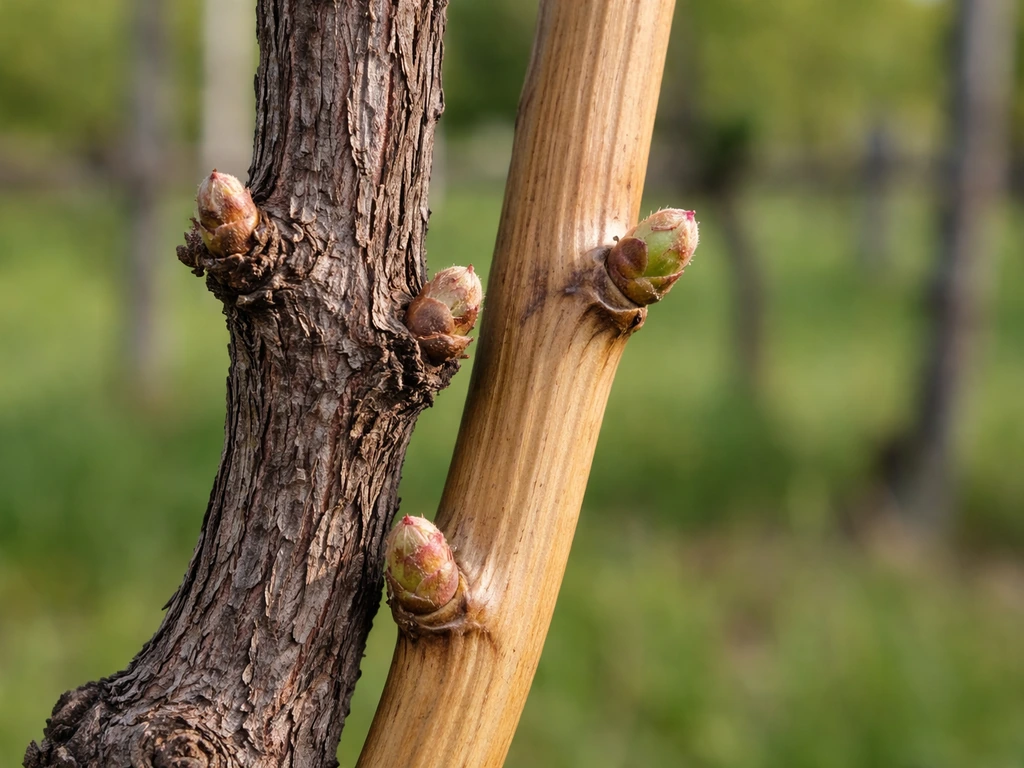
How grapevine wood actually works year to year
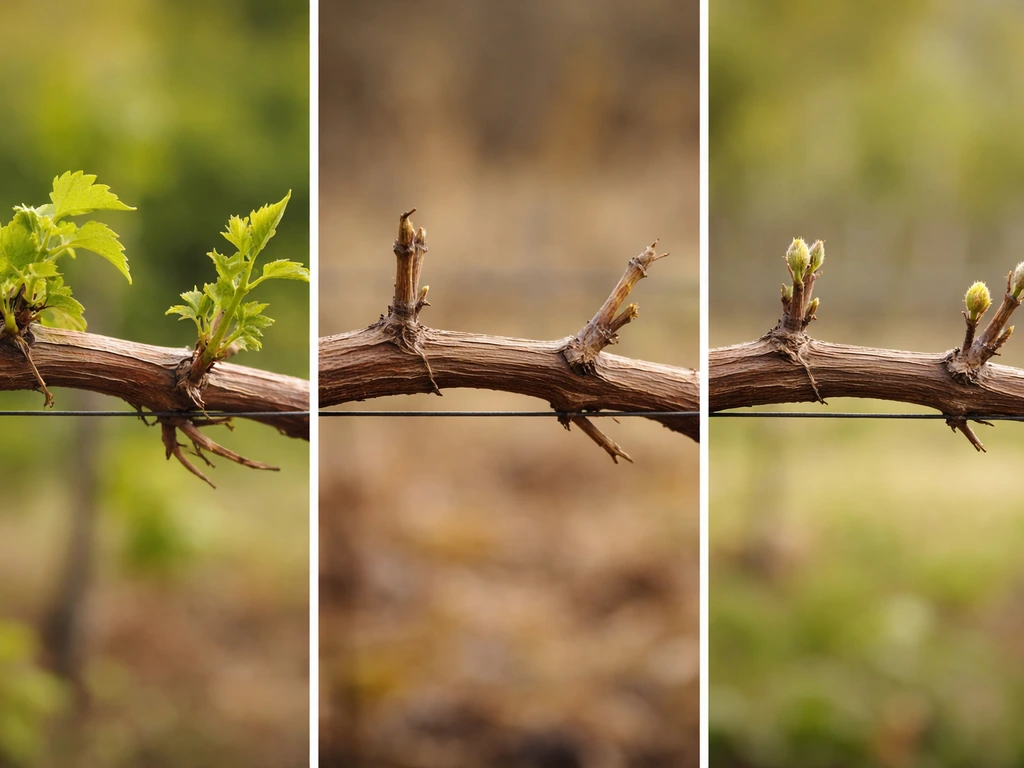
Every fall, after harvest, your grapevine has hardened off its new growth into brown, woody canes. Those are the one-year-old canes that matter most to you as a grower. Come spring, the buds packed along those canes swell and push out shoots. Those shoots are what you see as 'new growth,' and they are what carry the grape clusters. So yes, grapes fruit on new growth technically, but that new growth can only happen if you kept the right old wood from last season.
Here is where most beginners get tripped up. They see a vine exploding with vigorous green shoots in June and assume the plant is doing its own thing, that pruning earlier was optional. But the number of fruiting shoots, and how productive they are, was set in stone by what you left or removed during dormant pruning in late winter. Two-year-old wood (the thick trunk and main arms) anchors the vine but does not fruit. Wood that is three or more years old is essentially just plumbing. The productive zone is always that one-year-old cane or spur, never older, never the brand-new shoot on its own.
According to University of Illinois Extension research, the most productive buds on any one-year-old cane are the six to eight buds closest to the base of that cane. That detail changes how you think about pruning: you are not just keeping canes, you are keeping the right section of the right canes.
Pruning basics that actually give you fruit
The goal of every dormant pruning session is to remove most of the vine and leave behind only the buds that will produce next year's crop. Grapevines are aggressive growers, and without heavy pruning they put energy into canopy and shoot production rather than fruit quality. blank" rel="noopener noreferrer">Oregon State University Extension puts it plainly: grapes are produced from buds that grow into shoots on one-year-old canes. Do grapes grow on bushes? No, grapevines produce fruit from buds on one-year-old canes, not from bush-style growth grapes are produced from buds. Grapes grow on vines because they develop fruiting shoots from the vine’s seasonal wood, not from roots or separate plant parts grapes are produced. Remove those canes and you remove your fruit for the year.
A typical mature vine should be pruned back to somewhere between 40 and 60 buds at most, depending on the variety, your training system, and the vine's overall vigor. Beginners almost always under-prune because cutting back 80 to 90 percent of a vine feels wrong. It is not. That is exactly what the vine needs to channel energy into quality fruit rather than a leafy jungle.
The buds you are looking for are plump, healthy, and positioned on smooth brown wood from last season. Avoid buds on wood that looks grayish, shriveled, or two-plus years old. When you scratch a cane with your thumbnail and see green underneath, it is alive and worth keeping. Brown or hollow inside means it is dead and should come off.
Cane pruning vs spur pruning: which one is right for you
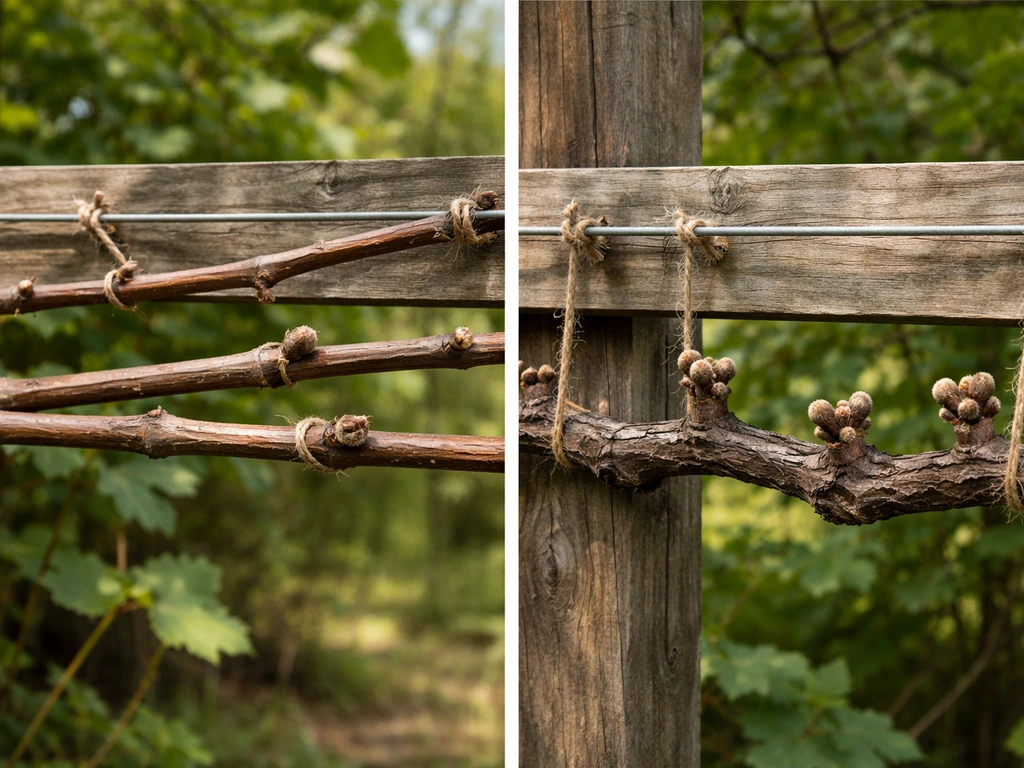
There are two main approaches home gardeners use, and your choice affects how you manage that critical one-year-old wood every season.
Cane pruning
With cane pruning, you select two to four of the best one-year-old canes each winter, tie them horizontally along a wire, and cut everything else off. Each selected cane might carry 8 to 15 buds. You also leave a couple of short renewal spurs (two buds each) near the trunk so you have new cane candidates growing for next year's pruning. This method works especially well for Concord-type grapes and many American varieties, which tend to produce better fruit farther out on longer canes.
Spur pruning
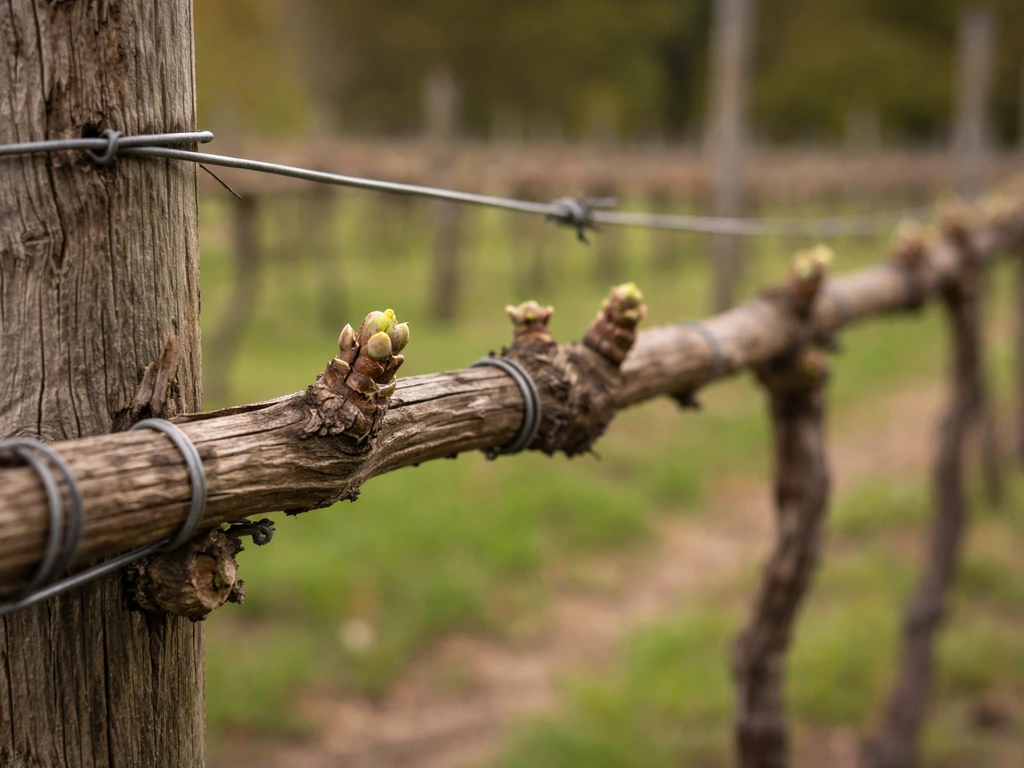
With spur pruning, you maintain a permanent framework of arms (cordons) along your trellis wires, and each dormant season you cut the previous year's growth back to short stubs of two to three buds called spurs. Those spurs push new shoots every spring. This method is common for many European varieties (Vinifera types like Cabernet and Chardonnay) and some hybrids. It is simpler to execute year after year once the cordons are established, though it requires consistent renewal to prevent spurs from getting too long and moving the fruiting zone away from the cordon.
| Feature | Cane Pruning | Spur Pruning |
|---|---|---|
| One-year-old wood kept | Long canes (8-15 buds each) | Short spurs (2-3 buds each) |
| Best for | American varieties, Concord types | European/Vinifera varieties, many hybrids |
| Permanent structure | Trunk only; canes replaced yearly | Trunk plus permanent cordon arms |
| Annual complexity | Higher (selecting best canes each year) | Lower once cordons are set |
| Risk if skipped | Fruiting zone moves too far from trunk | Spurs elongate, reduced quality |
If you are growing a cold-hardy variety like Marquette, Frontenac, or Concord in the Upper Midwest or Northeast, cane pruning is usually the better fit. If you are in a milder zone and growing Vinifera or Vinifera-based hybrids, spur pruning on a bilateral cordon is often simpler to manage over the long haul.
What to do based on where your vine is right now
New plantings (year 1 and 2)
If you planted this spring or last year, fruit is not the goal yet. In year one, you are building a trunk. Cut the vine back to a single strong shoot and let it grow vertically. In year two, you are still building structure. You might see a cluster or two form, and I know it is tempting, but remove them. Let the vine put all its energy into roots and a sturdy trunk. Rushing fruit on a young vine weakens it and sets back your timeline by another season or two.
Established vines (year 3 and beyond)
By year three, you should have a trunk tall enough to reach your first trellis wire and enough one-year-old wood to begin your pruning system in earnest. This is when you start selecting canes or establishing spurs deliberately. Prune during full dormancy, after the coldest weather has passed but before buds start to swell. In most parts of the country, that window falls somewhere between late January and late March depending on your zone. Do not rush this. Pruning too early in cold climates can expose tender wood to late freezes that kill the buds you just carefully selected.
Expect your first real harvest in year three or four, and do not judge variety performance until year five. Grapes are slow to show you what they can really do, and that is completely normal.
Pruning timing and bud protection by climate zone
Where you live changes the pruning calendar and sometimes the strategy more than most guides admit. Here are the practical adjustments worth knowing.
- Zones 3-5 (upper Midwest, northern New England, northern Plains): Prune as late as possible in dormancy, ideally March into early April, to minimize the window between pruning and a damaging late freeze. In these zones, cold-hardy varieties like Marquette, Frontenac, La Crescent, and Concord are your best bet. After an unusually harsh winter, scratch test every cane before committing to it. Kill rates on buds can hit 50 percent or higher after extreme cold snaps, and you may need to leave extra buds as insurance.
- Zones 6-7 (mid-Atlantic, Midwest transition, Pacific Northwest inland): The February to early March window usually works well. Watch for early warm spells that trick buds into swelling ahead of schedule. If buds have started to swell and a hard freeze is coming, you can delay pruning since unpruned vines handle freezes slightly better than freshly pruned ones. Many hybrid varieties (Chambourcin, Traminette, Norton) fit this zone well.
- Zones 8-10 (Southeast, Southwest, coastal California, Texas Hill Country): Dormancy is shorter and less reliable. Prune in January or as soon as the vine has had enough chill hours to complete dormancy. In very mild winters, vines may not fully harden off, which can make selecting good one-year-old wood trickier. Vinifera varieties like Cabernet Sauvignon, Viognier, and Muscat generally perform best here, and spur pruning on a bilateral cordon is the standard approach.
- High-elevation or wind-exposed sites regardless of zone: Even in warmer zones, exposed sites can suffer bud damage from wind desiccation and temperature swings. Consider delaying pruning by two to three weeks compared to sheltered sites nearby, and mulch the base of young vines heavily.
One thing that trips up gardeners in colder zones specifically: if a late freeze kills the primary buds after they have pushed, do not panic and cut the vine down. Grapevines have secondary and tertiary buds at each node that can still push shoots. Those shoots are less fruitful than primaries, but you will often still get a partial crop. Leave the vine and assess honestly before making any drastic cuts.
Putting it all together for next season
The practical upshot is this: every grape cluster you eat this summer grew from a bud on wood your vine made last summer. That is the loop. Your job as a gardener is to keep the right one-year-old canes or spurs during dormant pruning, remove everything that is too old or too new to fruit, and set the vine up to push productive shoots from those buds in spring. Do that consistently and you will have fruit. Skip it or do it at the wrong time and the vine will still look great but give you little to harvest.
If you are curious about the bigger picture of how grapevines grow and what kind of structure they form, it is worth understanding that grapes are true vines (not trees or bushes) with a very specific relationship between their permanent woody structure and their annual fruiting wood. That same old-wood-to-new-growth idea is why you usually do not see figs managed like grapevines in a vineyard can a fig tree grow in a vineyard. That relationship is exactly what makes pruning the most important skill in grape growing, and the good news is that once you understand the old-wood-to-new-shoot cycle, everything else about managing a grapevine starts to make sense.
FAQ
So do grapes fruit on new wood, or is it really always the previous year’s cane?
If your pruning was done correctly, the cane itself was old (one year old), while the grape-bearing shoot is new (this spring). The buds you kept on last season’s cane swell in spring and become the current year’s fruiting shoots, so “new shoots on old wood” is the right mental model.
What happens if I prune too hard or remove most one-year-old canes?
Yes, but only when those new shoots arise from retained buds on one-year-old canes. If you remove all or most of the one-year-old fruiting wood and keep only bare framework, you can still get green growth, but it usually will not produce many clusters.
Will my vine still make grapes if the main buds get winter damage or a late freeze?
After pruning, you should still see green shoots in spring even if the buds were damaged or you removed the wrong section. However, fruit comes mainly from the primary buds; secondary and tertiary buds may push later and give a smaller or later crop.
Can I prune again in late winter or early spring once buds start swelling to shape the vine?
Yes for the vine, but not directly for the crop. If you cut back in winter, the buds on that one-year-old wood determine next year’s fruit. Once buds swell, pruning for “tidying” can reduce the bud count and indirectly reduce clusters, so avoid major cuts once growth has started.
How can I tell if a cane is dead, especially when part of it looks questionable?
Use your thumbnail to check viability, but also check along the cane, because canes can be partially dead. Keep the cane if the portion near the buds you plan to retain is green under the bark, and remove only the dead sections.
If my vine has many canes, which ones should I keep for fruiting buds?
Aim to retain buds that are on smooth, healthy one-year-old wood, and avoid very gray, shriveled, or hollow canes. If your vine has lots of weak short canes, you may need to adjust cuts to balance cane length with bud number rather than just keeping the thickest wood.
My vine looks leafy and healthy in summer, why are there so few grape clusters?
If you see vigorous shoots in June, that does not automatically mean fruit will be plentiful. The fruiting capacity was set during dormant pruning, so the fix is usually better pruning next season, not chasing the canopy you see after the fact.
Does cane pruning versus spur pruning change which wood actually produces grapes?
Cane pruning and spur pruning both rely on one-year-old wood for fruiting, but the selection logic differs. With cane pruning you choose specific canes each winter, while with spur pruning you cut back to short spurs on a permanent cordon, then renew those spurs periodically to keep the fruiting zone from drifting.
Should I remove clusters in the first couple of years even if I want an early harvest?
For year-one and year-two vines, prioritize establishing the trunk and framework. Removing clusters early usually speeds long-term success because the vine can invest in permanent structure and enough one-year-old fruiting wood by later years.