
Concord grapes typically take 2 to 3 years from planting to produce their first real harvest, and they don't hit full production until year 5 or 6. If you're wondering how long grapes take to grow in Disney Dreamlight Valley, the timeline can feel different than real-world vineyards, but the same patience principles apply how long do grapes take to grow Dreamlight Valley. That's the honest answer most people don't expect when they're standing in the nursery aisle. The good news: Concordes are one of the most vigorous, cold-hardy American grapes you can grow, and once they get going, they grow fast every season. You just have to be patient in the early years while the vine builds its root system.
How Fast Do Concord Grapes Grow From Planting to Harvest
Marcus Whitfield
31 May 2026
The typical growth timeline for Concord grapes
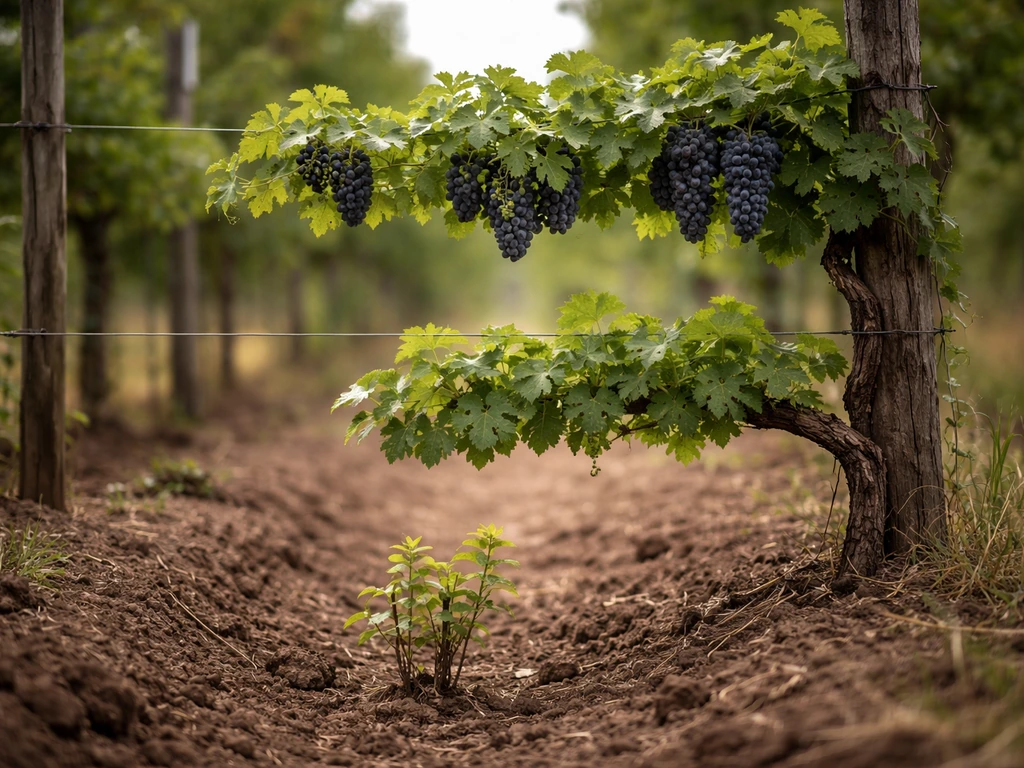
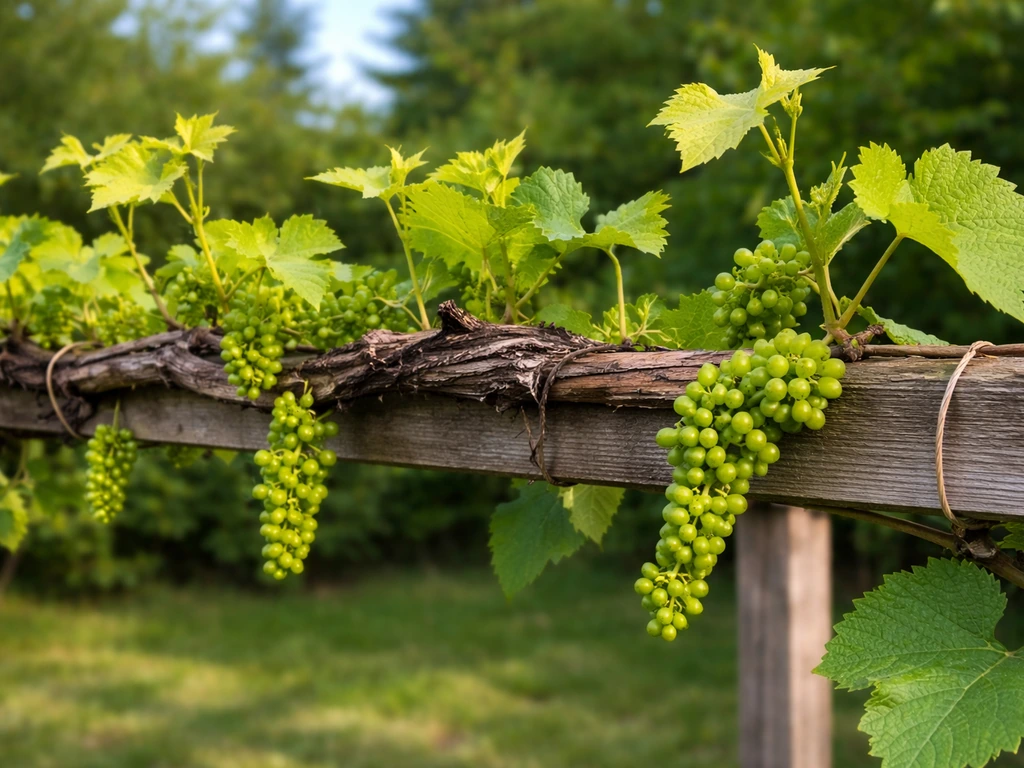
Most university extension programs, including Oregon State and Oklahoma State, agree that grapevines need several years before producing a meaningful harvest, with full production usually arriving in year 5 or 6. For Concord specifically, year 3 is the target for your first real picking. That said, University of Minnesota research notes it's technically possible to get a small amount of fruit in year 2 under ideal conditions, though it's not something to count on or encourage in a young vine.
| Year | What to Expect | Goal |
|---|---|---|
| Year 1 | Vine establishes roots; shoot growth of 2 to 4 feet is normal | Vigorous vegetative growth, no fruit |
| Year 2 | Stronger cane development; occasional small fruit clusters may appear | Build the framework; remove any fruit clusters |
| Year 3 | First real harvest possible; yields are light but genuine | First taste of fruit; manage crop load carefully |
| Year 4 | Improved yields; vine structure solidifying | Moderate productive crop |
| Year 5-6 | Full production reached; reliable annual harvests | Peak productivity and consistent quality |
One thing worth knowing: if you're starting from a bare-root vine or cutting, your clock starts at planting. If you buy a 2-year-old potted vine from a nursery, you're effectively a year or two ahead. That distinction matters if you're trying to hit a specific harvest window.
What actually determines how fast Concord grapes grow
Growth rate isn't fixed. Several variables can push your vines ahead of schedule or hold them back for years. Here's what actually moves the needle.
Climate and frost risk
Concord grapes are one of the most cold-tolerant cultivars available, thriving in USDA hardiness zones 4 through 7. That's a big range, but it doesn't mean climate is irrelevant. In shorter-season climates like northern Minnesota or upstate New York, cool springs delay budbreak and shorten the window for shoot development. Late frosts can kill emerging buds and set your vine back by weeks. In warmer zones like the mid-Atlantic or Great Lakes region, Concordes often push out faster and stronger because the growing season is longer and the accumulated heat units (growing degree days) are higher.
Sunlight and site
Concord grapes need at least 6 to 8 hours of direct sun daily. A south-facing slope with good air drainage is the ideal setup. Poor site choices, like north-facing walls, low spots where cold air settles, or partial shade from nearby trees, can easily add a year to your establishment timeline. Sun exposure also directly affects ripening speed. Concord fruit ripens roughly 100 days after bloom, and that process depends heavily on accumulated heat. Less sun means slower ripening and sometimes fruit that never fully matures before fall frost.
Soil conditions
Vines push roots aggressively when the soil drains well and stays loose. Heavy clay soils that waterlog after rain suffocate roots and dramatically slow establishment. A soil pH between 5.5 and 6.5 is the sweet spot for Concord grapes. Outside that range, the vine can't efficiently take up nutrients even if they're present in the soil, and growth stalls visibly.
Pruning practices
This one surprises most beginners: proper pruning actually speeds up productive growth over time. Concord grapes produce fruit on the current season's growth from one-year-old wood. That means if you don't prune aggressively enough, you end up with a tangle of old wood that shades itself out and produces less fruit. Annual dormant pruning keeps the vine channeling energy into the right places. Skipping pruning doesn't give you more grapes. It gives you a messy vine and fewer grapes.
Stage-by-stage: from planting to harvest
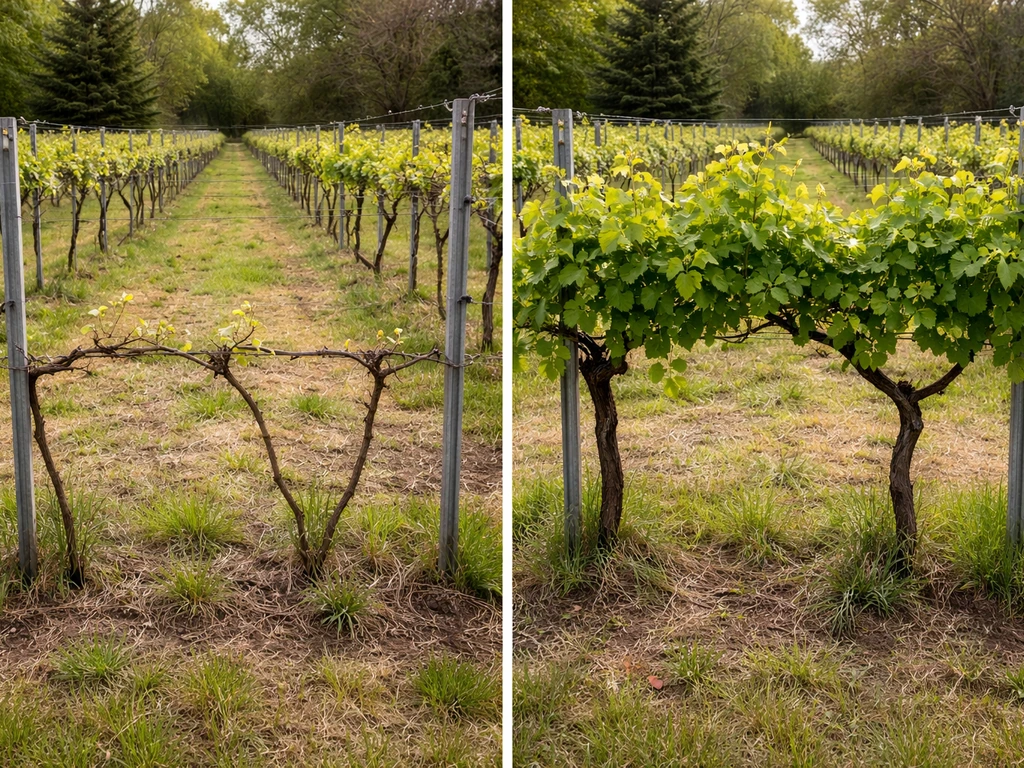
Understanding what 'growing' looks like at each stage helps you know whether your vine is on track or behind. Here's how the season unfolds for a Concord vine in active production (year 3 and beyond). In Stardew Valley, the timing for when grapes grow depends on the season and the year you plant them, so you will want to plan around the game calendar when do grapes grow in Stardew Valley.
Budbreak and early shoot growth (spring)
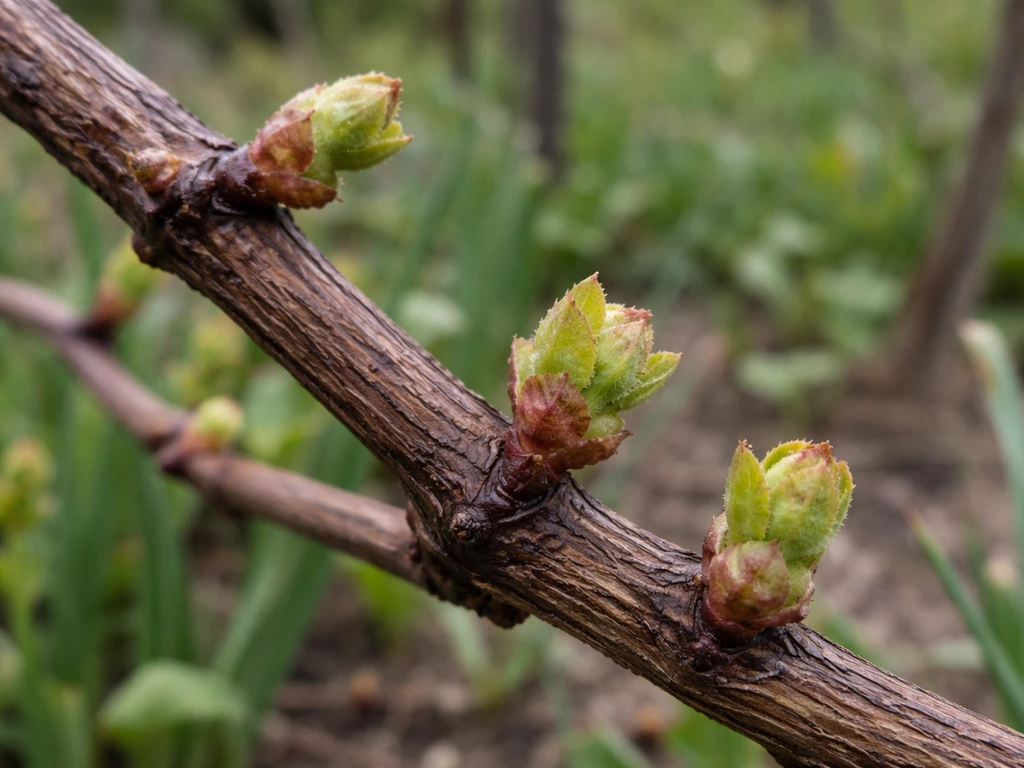
After winter dormancy, buds swell and break when soil temperatures consistently reach about 50°F. In zones 5 and 6, this typically happens in April. In zone 4, it may be early to mid-May. Early shoots are tender and very susceptible to frost damage, so a late freeze at this stage can be devastating. During this period, growth can look almost explosive on an established vine, with shoots extending several inches per day in warm weather.
Vegetative growth (late spring to early summer)
This is the phase when the vine puts on most of its length for the season. Shoots grow rapidly and flower clusters become visible. The vine is building both its canopy and its energy reserves. In years 1 and 2, almost all energy goes here. This is also when you should be training shoots onto your trellis system and making any decisions about which canes to keep.
Flowering and fruit set (early summer)
Concord grapes flower in late May to June depending on your region. The flowers are small and self-fertile, so you don't need a second vine for pollination. After bloom, fertilization leads to fruit set. Not every flower becomes a berry, which is normal. Fruit set kicks off the roughly 100-day countdown to harvest, a timeline documented in detail by Cornell and the Lake Erie Regional Grape Program.
Ripening and harvest (late summer to fall)
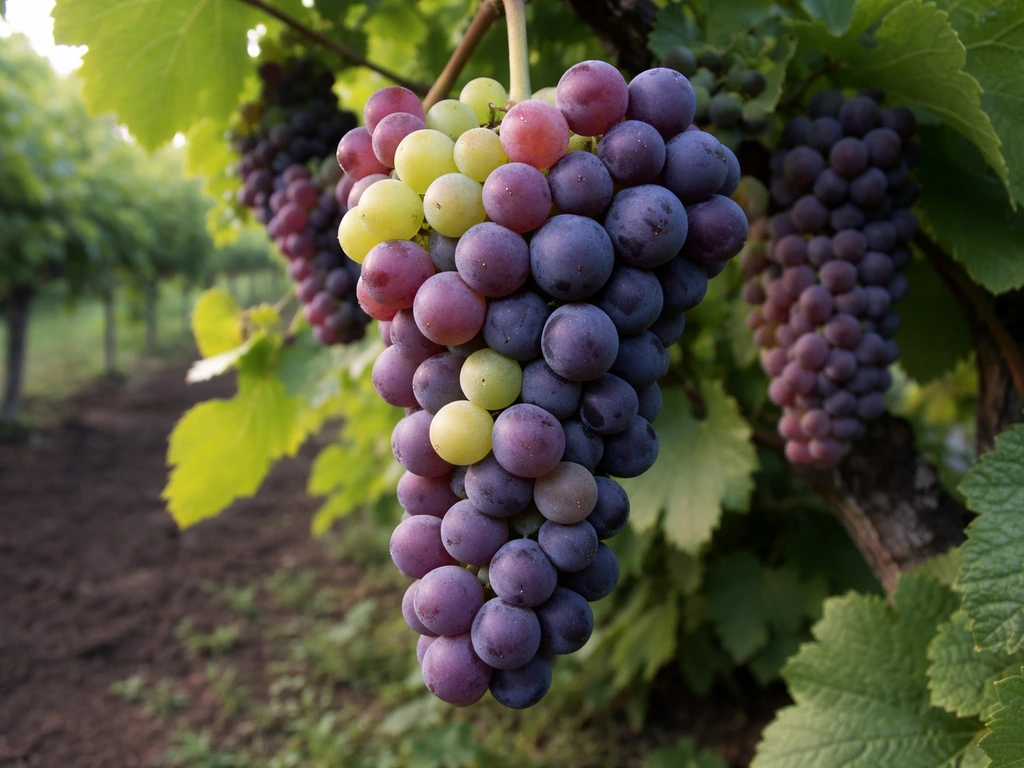
Concord grapes typically ripen from mid-September to early October in most of their core growing regions. Veraison (the color change when berries shift from green to deep purple) happens relatively close to harvest, with only about a week or so between veraison and peak ripeness. The berries soften, organic acid drops, and the characteristic Concord aroma becomes unmistakable. This is the moment you've been waiting for, and it arrives on a fairly predictable schedule once the vine is established.
How to estimate your timeline based on where you live
Where you grow matters enormously for how fast Concord grapes reach harvest each season and how many years it takes to establish productive vines. Concord is well-suited to zones 4 through 7, and that covers a huge swath of the country, from New England and the Great Lakes to the mid-Atlantic and parts of the Pacific Northwest. Concord grapes grow well across much of the United States where the climate matches their cold-hardiness needs zones 4 through 7. But a zone 4 grower in Minnesota and a zone 6 grower in Pennsylvania are not working with the same timeline.
| Climate Zone / Region | Frost-Free Season | Typical Budbreak | Typical Harvest Window | Notes |
|---|---|---|---|---|
| Zone 4 (northern MN, northern NY) | 120-140 days | Early to mid-May | Late September to early October | Tight margin; late frosts can set back vines |
| Zone 5 (Great Lakes, New England) | 140-160 days | Late April to early May | Mid to late September | Near-ideal Concord territory |
| Zone 6 (mid-Atlantic, Ohio, lower Midwest) | 160-180 days | Early to mid-April | Early to mid-September | Longer season means faster establishment |
| Zone 7 (Virginia, NC, Pacific NW coast) | 180-210 days | Late March to early April | Late August to early September | Watch heat stress; Concord may underperform in hot summers |
If you're in zone 4, add at least a year to your mental timeline compared to a zone 6 grower. The shorter frost-free window means less cumulative growth each year and higher risk of frost wiping out early growth. Zones 5 and 6 are where Concord absolutely thrives, which is why the Great Lakes region and upstate New York produce so much Concord commercially. If you're wondering whether your specific state has the right conditions, that's very much a case-by-case answer tied to your local frost dates and growing degree days.
How to speed up growth safely
You can't skip years, but you can absolutely compress the timeline by giving the vine everything it needs during each growing season. Here's what actually works.
- Plant in full sun: 8+ hours of direct sun daily is non-negotiable. If your best available spot gets 6 hours, that's workable but expect slower progress than a vine in full exposure.
- Get the soil right before planting: test your pH and amend if needed. Lime raises pH; sulfur lowers it. Fixing drainage with raised rows or beds before planting saves years of frustration.
- Water consistently but don't overwater: young vines need about 1 inch of water per week during the growing season. Deep, infrequent watering encourages deep root growth, which is exactly what you want for long-term vigor.
- Fertilize strategically in year 1 and 2: a light application of balanced fertilizer (10-10-10) in early spring helps young vines push strong growth. Avoid heavy nitrogen after midsummer; it encourages late-season shoot growth that won't harden before frost.
- Set up your trellis before or at planting: training the vine onto a support system immediately encourages upward, productive growth instead of sprawling on the ground. A simple two-wire trellis at 3 and 5 feet works well for Concord.
- Remove flower clusters in year 1 and year 2: this feels counterintuitive, but letting a young vine fruit too early redirects energy away from root development and delays the vine reaching its full productive potential.
Common reasons Concord grapes grow slowly and how to fix them
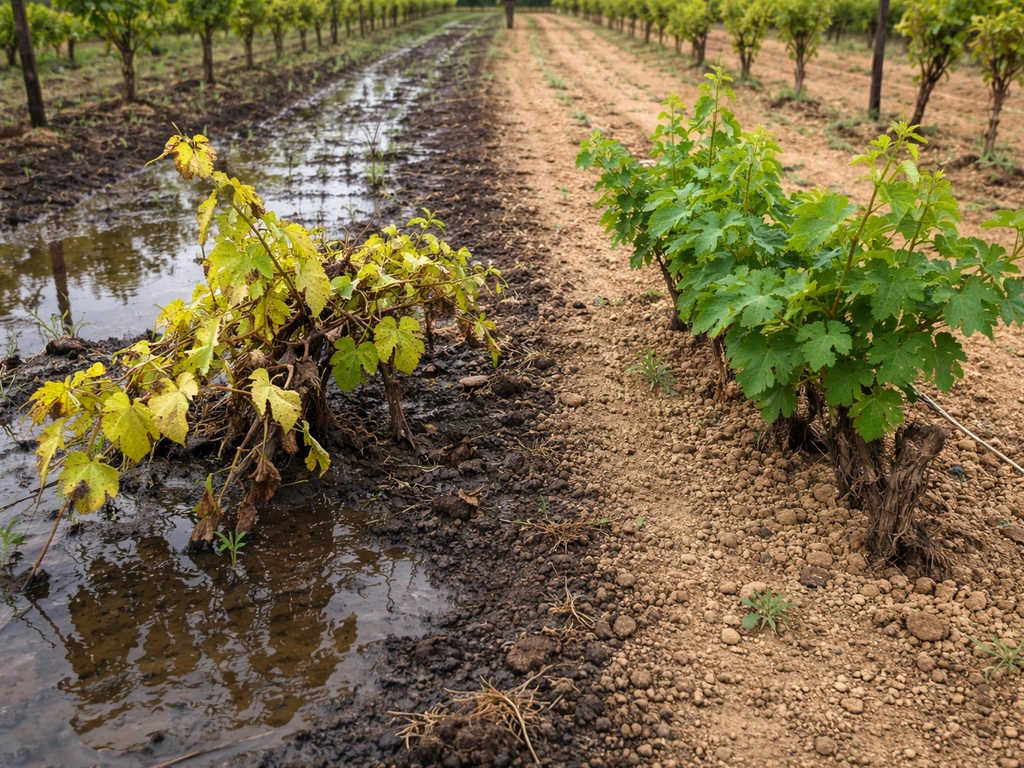
If your vine looks sluggish, one of these is usually the culprit.
| Problem | Symptoms | Fix |
|---|---|---|
| Poor drainage / waterlogged soil | Yellowing leaves, stunted shoot growth, mushy roots | Improve drainage with raised planting rows or add organic matter; relocate if severe |
| Wrong soil pH | Interveinal yellowing (chlorosis), weak shoots despite fertilizing | Test soil; amend with lime (too acidic) or sulfur (too alkaline) to reach pH 5.5-6.5 |
| Insufficient sunlight | Sparse canopy, poor fruit set, weak canes | Prune neighboring plants blocking light; consider relocating the vine if shading is severe |
| Overcropping a young vine | Vine looks exhausted, shoots thin out after fruit set | Remove all fruit clusters in years 1-2; limit crop load in year 3 |
| Skipping dormant pruning | Dense, unproductive tangle of old wood; few new shoots | Resume annual dormant pruning every late winter; remove all but 2-4 strong canes |
| Late frost damage | Dead or wilted new shoots in spring | Wait for secondary buds to push; protect with frost cloth if another freeze is forecast |
| Nitrogen deficiency | Pale green leaves, slow shoot extension | Apply balanced fertilizer in early spring; foliar feed if mid-season deficiency is suspected |
Year 1 vs later years: what to realistically expect
Year 1 is all about roots. The top of the vine will look modest, sometimes disappointingly so, while the root system is quietly spreading. A bare-root Concord planted in spring might only produce 3 to 6 feet of shoot growth in its first season. That's normal and actually a good sign that energy is going underground where it needs to go. Don't panic if your neighbor's ornamental shrub outgrows your grapevine in year 1. Different goals.
By year 2, you'll see noticeably stronger shoot growth, thicker canes, and the vine will start to look like something real. You might see a flower cluster or two. Remove them. The vine's job in year 2 is still establishing, not fruiting.
Year 3 is when things get exciting. A healthy Concord vine in a good site should produce its first genuine cluster, maybe enough for a bowl of fresh grapes or a small batch of jelly. Don't expect a lot, but expect something real.
Years 4 and 5 bring significantly improved yields as the vine fills its trellis and the root system has the capacity to support a full crop. By year 5 or 6, you're looking at a vine that can produce 15 to 20 pounds of fruit or more per season under good management. That's the payoff for the patience you put in during those early quiet years.
If you're curious how Concord's timeline compares to table grape varieties or how growing season length affects the broader question of how long grapes take to grow in general, those are worth exploring separately since variety and location both shift the math considerably.
FAQ
Can I get grapes in the first year, or is it always 2 to 3 years?
Usually, the first “real picking” is about 2 to 3 years after planting, but a small amount of fruit in year 2 can happen if conditions are ideal. If your goal is harvest speed, the practical move is to start with the most established vine you can (a 2-year-old potted plant counts as being ahead of a bare-root vine).
What can I do to make Concord grapes grow faster toward harvest?
Yes, but it is easiest to think of as accelerating establishment rather than “forcing” maturity. The biggest accelerators are full sun (6 to 8 hours), good drainage, and staying consistent with annual dormant pruning so the vine directs energy to one-year wood.
If my spring is warm, will harvest automatically be earlier?
For Concord, the vine can seem to “grow fast” in warm weather, but harvest timing still depends on bloom to ripeness (about 100 days) and local heat accumulation. A warm spring can speed budbreak, yet late frost can wipe early growth and effectively delay the calendar by weeks.
Does the 2 to 3 year timeline start when I buy the vine, or when I plant it?
Start counting from the planting date of that specific vine in your yard. Bare-root and cuttings are truly starting over, while nursery potted vines already have prior growth, so your first meaningful harvest can be effectively a year or so sooner for the potted start.
Should I leave flowers on a year-1 or year-2 Concord vine to speed things up?
Not really. Flower clusters in year 2 should be removed, even if you are trying to get fruit sooner, because the vine’s main job is building roots and cane structure. Letting too much fruit remain early can stall the vine’s establishment and reduce later yield.
Do I need another grapevine to make Concord harvest faster?
Concord is self-fertile, so a second vine is not required for pollination. However, cold snaps during early growth can still reduce fruit set by damaging tender shoots and developing buds.
What should I check if my Concord grapes are not ripening when expected?
Your ripening speed is often sun and heat driven. If berries are slow to turn color, confirm you have real direct sun and then check for vine crowding from skipped pruning, which increases shade and slows veraison.
How do soil drainage problems change the growth and harvest timeline?
If soil stays waterlogged (common in heavy clay), roots lose access to oxygen and establishment slows. That can show up as weak shoot growth in year 1 or 2, so drainage improvements like raised rows or soil structure work can directly affect how fast the vine reaches productive years.
Will skipping pruning make my vine grow more quickly?
Skipping pruning usually does not “save energy” for fruit, it often creates a dense tangle of older wood that shades the plant and reduces fruiting potential on current season growth. The result is slower progress toward good yields, even if the vine is still alive and producing shoots.
Why does the timeline feel different between two people in the same USDA zone?
There is a zone effect, but it is not just about the USDA zone label. What matters day-to-day is frost dates and growing degree days, because a zone 4 site may have less cumulative season heat and higher chance of early bud loss.
How does frost right after budbreak affect how fast the vine reaches harvest?
A reliable guideline is 50°F consistently for budbreak timing, then late frosts at that stage are the main threat. If you have a frost event right after buds swell, expect a setback in the timeline even if the vine later “catches up.”
Does trellis training influence how quickly Concord reaches its first real harvest?
Yes. If you provide a trellis early and train shoots during the rapid growth phase (often years 1 to 2), you can improve canopy management and help the vine reach better yields sooner. However, the biggest gains still come from roots first, sun, drainage, and consistent pruning.