
Grapes can grow in a surprisingly wide range of climates, but they cannot grow just anywhere, and that distinction matters a lot before you dig a hole in your yard. The short answer: grapevines thrive in temperate zones with a warm, sunny growing season of roughly 150 to 180 frost-free days, a cool winter that satisfies their chilling requirement, and well-drained soil. If your location checks those boxes, you can almost certainly grow grapes in your area. The real question is which variety fits your specific conditions, because choosing the wrong one is where most home gardeners run into trouble.
Where Can Grapes Grow? Climate, Regions, and Planting Tips
Marcus Whitfield
24 Mar 2026
Where grapes and grapevines can grow
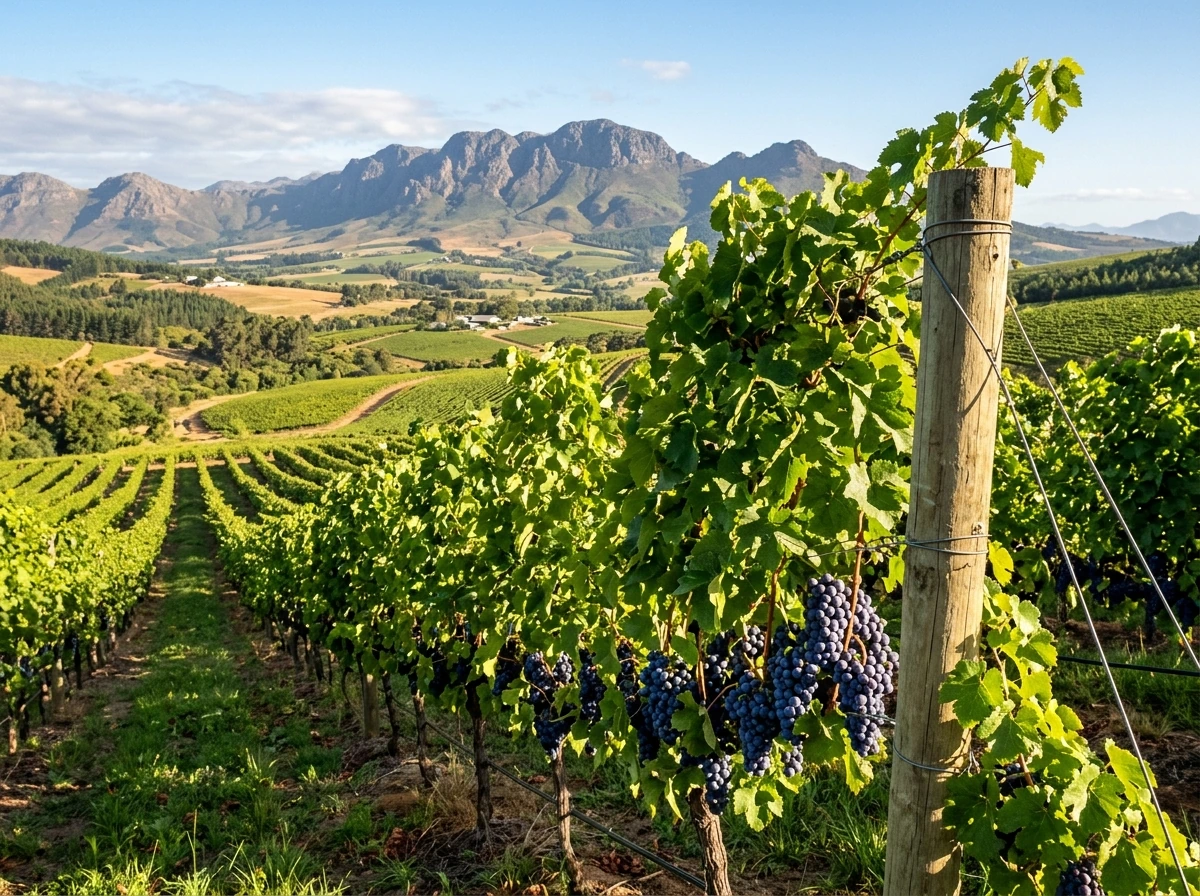
Grapevines grow on every permanently inhabited continent and in nearly every temperate region on Earth. In the U.S. alone, grapes are grown commercially or in home gardens in all 50 states, though the variety choices and challenges vary enormously between, say, Minnesota and Southern California. The key is matching the vine to the climate, not forcing a vine into conditions it was never built for.
Grapevines are woody, climbing perennials that need a structure to grow on, a trellis, arbor, fence, or pergola, not the ground. If you have ever wondered what grapes grow on, the answer is the vine itself, which can live for decades and produces fruit on the current season's canes that grew from last year's wood. That perennial nature is part of why site selection is so important: you are committing that vine to a specific spot for 20 or 30 years, so getting the location right from the start saves enormous headache later.
Broadly, grapevines fall into three main species groups that determine where they can grow: European wine grapes (Vitis vinifera), native American species like muscadine (Vitis rotundifolia) and concord-type grapes (Vitis labrusca), and hybrid varieties bred specifically for cold hardiness or disease resistance. Each group has a different climate tolerance, and knowing which group fits your region is your first practical step.
Natural vs. cultivated growing regions and climate types
Wild grape species are native to several continents. Vitis vinifera originated in the region stretching from the Caucasus Mountains (modern-day Georgia and Armenia) through the Middle East and into the Mediterranean basin. Thousands of years of human selection from those wild populations gave us every classic wine grape we know today, from Cabernet Sauvignon to Chardonnay.
Native North American species evolved independently across a wide range of climates, which is exactly why they tend to be tougher: muscadines developed in the hot, humid Southeast, while Vitis riparia (a parent of many cold-hardy hybrids) evolved in the cold river valleys of the Midwest and Northeast. Understanding that origin matters because it tells you which varieties are genetically built for your conditions versus which ones you are fighting against nature to grow.
In terms of climate types, In terms of climate types, grapes grow best in what viticulturalists call Mediterranean or semi-arid continental climates: warm to hot, dry summers with plenty of sunshine, and cool but not brutally cold winters. That said, modern breeding has pushed those boundaries considerably. Cold-hardy hybrid varieties like Marquette, Frontenac, and La Crescent can survive winter lows of -30°F or colder, opening up grape growing in places like Minnesota, Wisconsin, and Michigan that were once considered impossible territory for grapevines.
Where grapes grow around the world
If you look at a world map, most commercial grape-growing regions cluster between 30 and 50 degrees latitude in both hemispheres. That band captures the temperate zones where you get warm summers without brutal monsoon humidity and winters cold enough to give vines the dormancy they need without killing them outright.
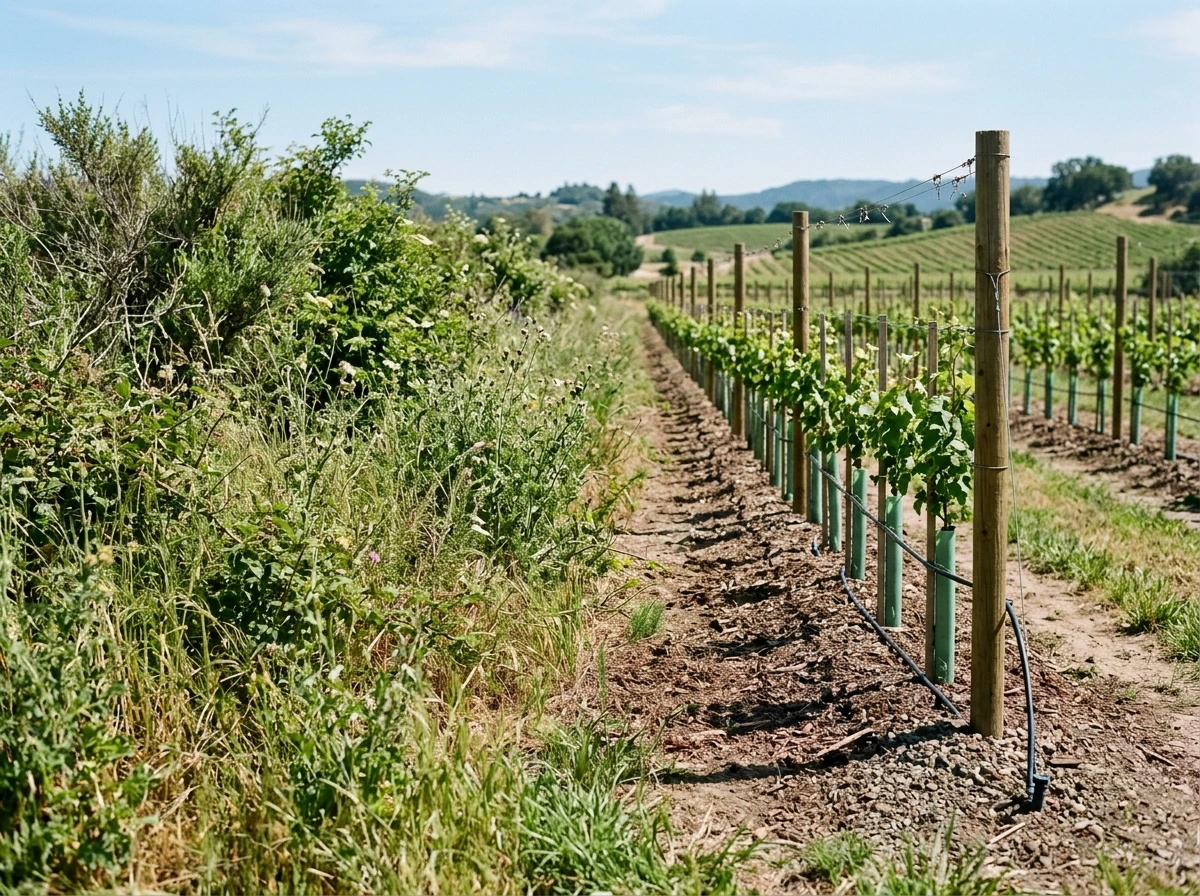
The major wine-producing regions each represent a slightly different version of grape-friendly climate. France's Bordeaux and Burgundy, Italy's Tuscany, Spain's Rioja, and Portugal's Douro Valley all sit in that Mediterranean or oceanic climate sweet spot. South America's top regions, Argentina's Mendoza and Chile's Maipo Valley, benefit from high-altitude conditions and the rain shadow of the Andes, which keeps humidity low. Australia's Barossa Valley and Margaret River, South Africa's Stellenbosch, and New Zealand's Marlborough all sit in that same 30-50 degree latitude band in the Southern Hemisphere.
In the United States, California's Central Valley, Napa, Sonoma, and Paso Robles produce the bulk of commercial wine grapes. Washington State's Yakima Valley (roughly USDA Zone 6a) and Columbia Valley are among the fastest-growing premium wine regions. Oregon's Willamette Valley (approximately Zone 8b) has become famous for Pinot Noir. But grapes also grow very successfully, often with cold-hardy or hybrid varieties, across the Midwest, the Mid-Atlantic, the Northeast, and the Southeast. The South and Southeast, particularly the Carolinas, Georgia, and the Gulf Coast states, are prime muscadine territory, so if you’re wondering where do muscadine grapes grow, that’s a great place to start. If you want to dig deeper into muscadine-specific geography, that is its own fascinating regional story.
Choosing the right spot in your yard
Even if your region is suitable for grapes, your yard still has microclimates, and grapevines are not forgiving of bad site choices. The goal is to find the warmest, sunniest, best-drained spot you have and put your vines there. Here is what to look for.
Slope and orientation
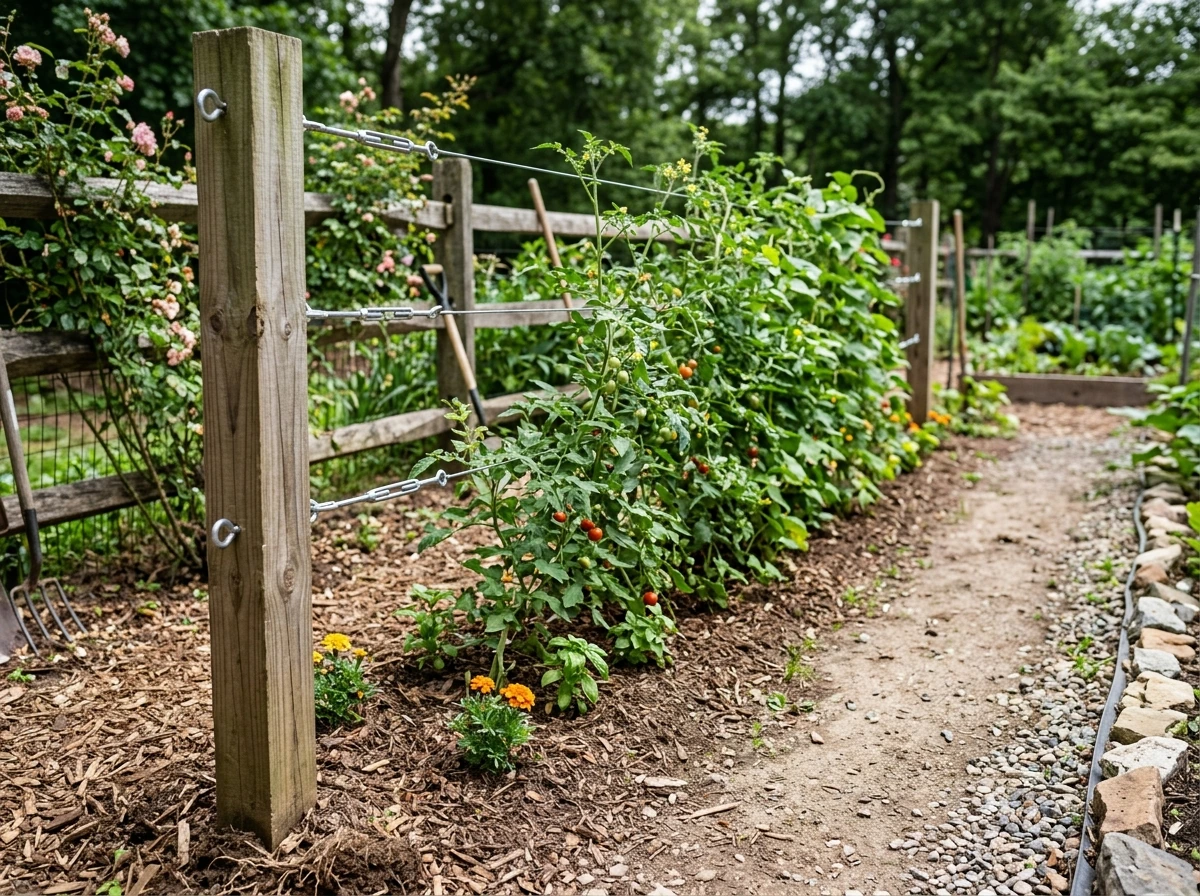
A south-facing or southwest-facing slope is ideal in the Northern Hemisphere. It catches the most direct sunlight across the longest part of the day, warms up earlier in spring, and stays warmer later into fall, all of which extends your effective growing season. Cold air drains downhill at night, so a slope also keeps frost from settling around your vines the way it does in low-lying areas or valley floors. Avoid frost pockets: those low spots where cold air collects.
Even a few degrees of temperature difference between a low spot and a gentle slope can mean the difference between a lost crop and a healthy one, something to keep in mind if you’re asking whether do cotton candy grapes grow naturally in your area.
Trellis orientation and spacing
Most home gardeners do best with rows oriented north-south, which allows both sides of the vine to receive morning and afternoon sun. For a backyard setup, a simple two-wire trellis with posts set about 8 feet apart and wires at roughly 3 and 5.5 feet off the ground handles the most common training systems. Give each vine 6 to 8 feet of spacing along the row. If you are using an arbor or pergola, the same sunlight logic applies: make sure the structure does not create deep shade that reduces fruit quality.
Avoiding problem areas
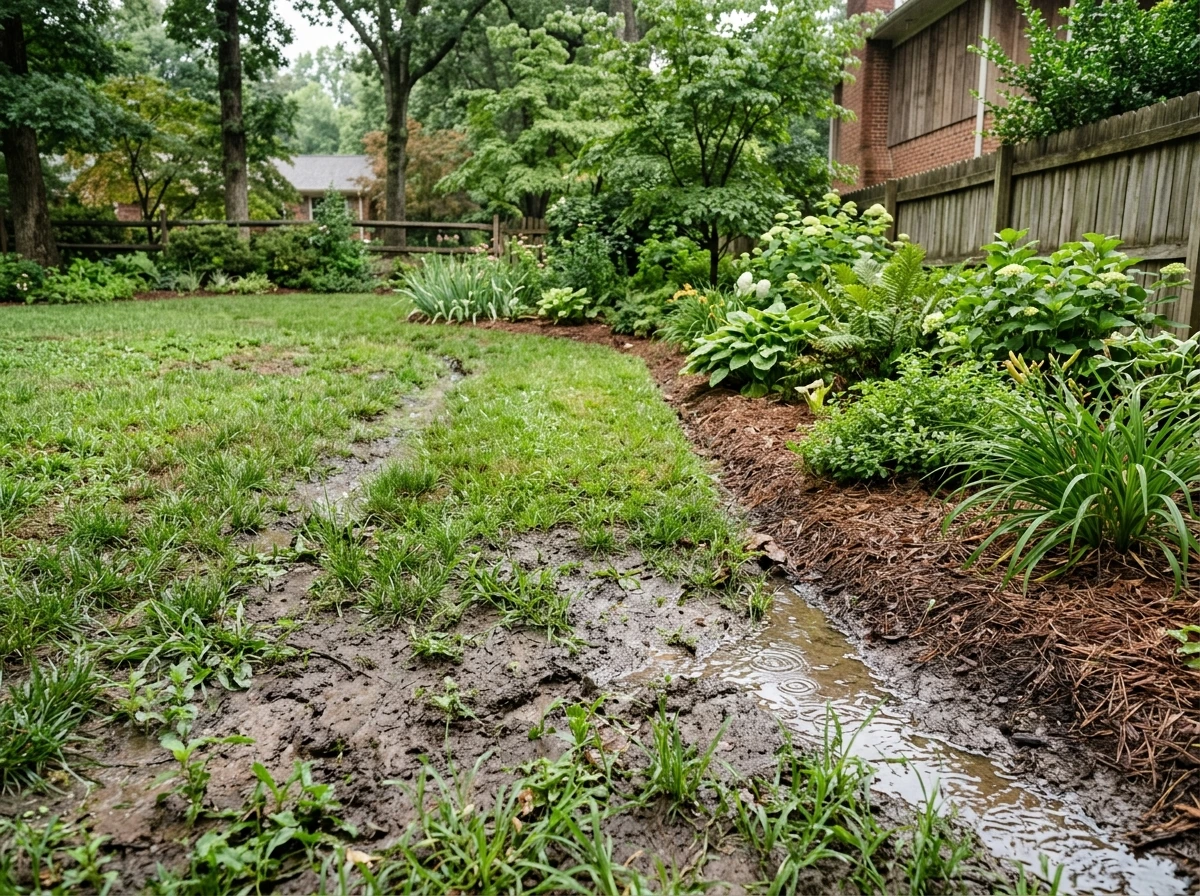
Keep vines away from low areas where water pools after rain, anywhere downwind of large buildings that create shade for part of the day, and spots where overhead tree canopy will compete for light. Grapes also do not want to sit directly next to a wall that reflects heat in excessively hot climates, unless you are growing in a cool region where that extra warmth is actually an asset.
What conditions grapes actually need
Here is where being specific really pays off. Grapes have requirements in several categories, and your region likely checks most of them already. The ones it does not are where you need to either choose a variety that compensates or decide grapes are not the right fit.
| Condition | What grapes need | Why it matters |
|---|---|---|
| Sunlight | Full sun, minimum 6–8 hours per day | Drives sugar accumulation and ripening; low light means sour, thin-skinned fruit |
| Frost-free season | 150–180 frost-free days (varies by variety) | Short seasons produce low-sugar fruit or none at all |
| Winter cold | Enough chill hours to meet dormancy needs, but not so cold it kills buds | Vitis vinifera buds can be damaged below roughly 0°F to -10°F; hybrids handle -30°F |
| Summer heat (GDD) | Accumulation of growing degree days above 50°F (10°C base) | Winkler Index regions I–V classify heat summation; cool climates suit Pinot Noir, hot climates suit Cabernet |
| Rainfall and humidity | Low to moderate; high humidity drives disease pressure | Fungal diseases (mildew, botrytis) are the top killer in humid climates |
| Soil drainage | Well-drained; grapes tolerate poor, rocky, or loamy soils | Waterlogged roots are fatal; raised rows or sloped sites help in clay-heavy soils |
| Soil pH | 6.0–6.5 is ideal, though 5.5–7.0 is workable | Strongly acidic or alkaline soils limit nutrient uptake |
The Winkler Index, developed at UC Davis, is a useful tool for understanding your summer heat. It measures growing degree days using a base temperature of 50°F (the temperature below which grapevines essentially stop growing). A Region I Winkler climate, like the Willamette Valley or parts of coastal California, accumulates fewer than 2,500 GDD and suits cool-climate varieties like Pinot Noir and Riesling. A Region V climate, like California's Central Valley, tops 4,000 GDD and handles warm-climate varieties that would never ripen properly in Oregon.
Humidity and disease pressure deserve special attention if you are in the eastern U.S. High summer humidity is the main reason European wine grapes (Vitis vinifera) struggle in the Midwest, Southeast, and Mid-Atlantic without intensive spraying programs. If you are in one of those regions, disease-resistant hybrid varieties are not a compromise, they are genuinely the smart choice. Varieties like Marquette, Frontenac Gris, Traminette, and Norton were bred specifically to perform in humid conditions without the constant fungicide regimen that vinifera requires.
How long grapes take and what that means for your season
Grapevines are a long-term commitment. In most cases, you will not harvest a real crop until year three, and the vine will not hit its full productive stride until years five to seven. That is not a reason to avoid growing them, but it is a reason to be thoughtful about variety selection from the start, because changing your mind five years in is a pain.
Within a single growing season, the timeline from budbreak to harvest varies by variety and climate. Early-ripening varieties like Marquette or Concord can go from budbreak to harvest in as few as 130 to 140 days. Late-ripening varieties like Cabernet Sauvignon need 160 days or more of frost-free weather to fully ripen. As Oregon State Extension notes, if your growing season is too short, you will end up with fruit that is low in sugar and poor in quality even if the vine technically survives the winter. So matching variety ripening time to your season length is not just a suggestion, it is the whole game.
If you are in a short-season area (think Minnesota, Vermont, Montana, or parts of the Mountain West), focus exclusively on early-ripening varieties. If you are in a long-season, warm region (California, Texas Hill Country, much of the Southeast for muscadines), you have far more flexibility and can chase later-ripening, complex varieties.
Matching varieties to your state and climate zone
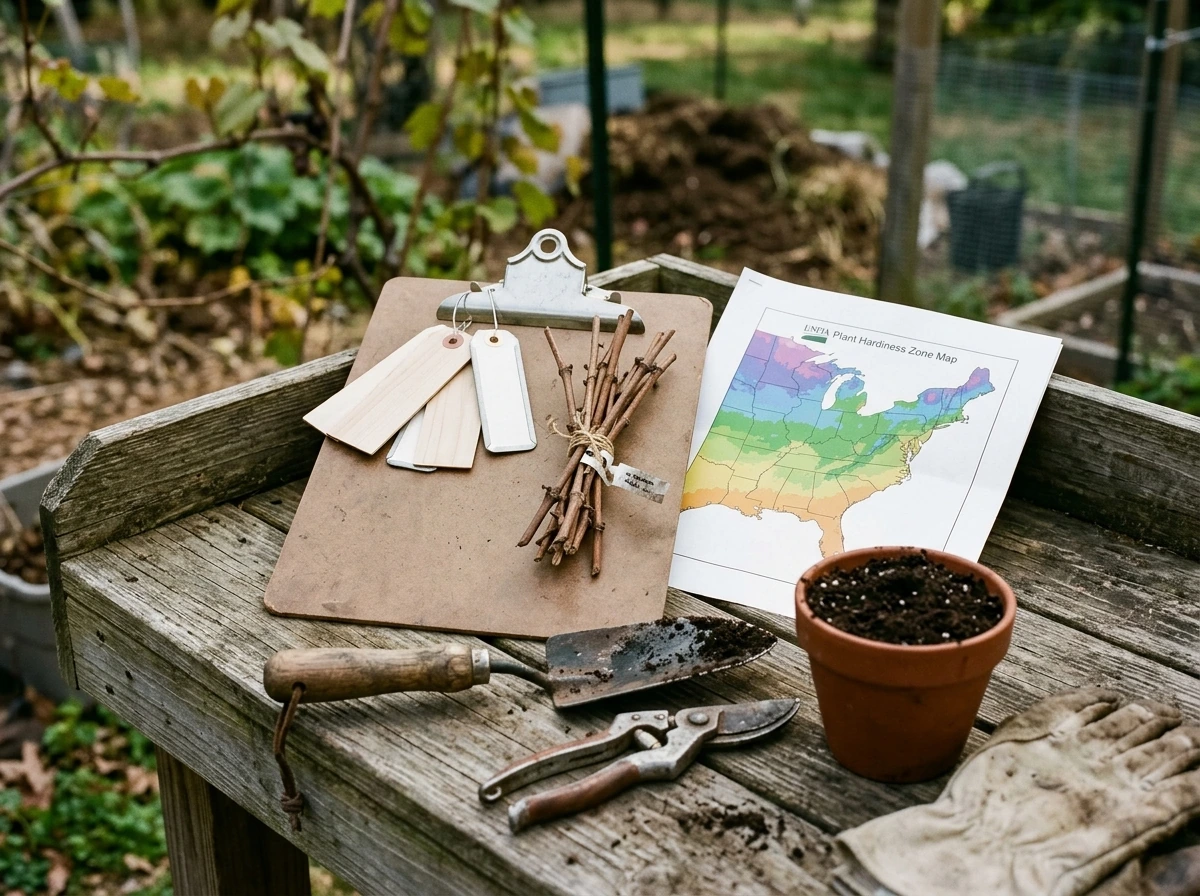
This is the most practical step you can take right now. Check your USDA Plant Hardiness Zone first, it gives you a quick read on your average annual minimum winter temperature and tells you which vine types are likely to survive without heavy winter protection. Then look at your frost dates to estimate your frost-free season length, and think honestly about your summer humidity.
A regional starting point
| Region / Climate | USDA Zone Range | Best variety types | Notes |
|---|---|---|---|
| Pacific Northwest (WA, OR) | 6a–8b | Vitis vinifera (Riesling, Pinot Noir, Syrah) | WSU and OSU provide variety-specific cold hardiness guidance; choose site carefully for frost drainage |
| California (coastal to inland) | 9–11 | Vitis vinifera (wide range) | Winkler Index varies enormously; match variety to local GDD accumulation |
| Upper Midwest (MN, WI, IA, MI) | 4–6 | Cold-hardy hybrids (Marquette, Frontenac, La Crescent) | Hybrids bred for -30°F winters and humid summers; early ripening essential |
| Mid-Atlantic and Northeast (NY, PA, NJ, New England) | 5–7 | Hybrids, Vitis labrusca (Concord, Niagara), some vinifera in Zone 7 | High humidity favors disease-resistant varieties; Finger Lakes region is exception for vinifera |
| Southeast (NC, SC, GA, AL, MS) | 7–9 | Muscadine (Carlos, Scuppernong, Noble), some hybrids | Muscadine is native, requires no spray program, thrives in heat and humidity |
| Gulf Coast and Deep South (TX, LA, FL) | 8–10 | Muscadine, warm-climate hybrids | Long heat, high humidity, mild winters; chilling hours can be a limiting factor in far-south zones |
| Mountain West (CO, UT, NM, AZ highlands) | 4–7 depending on elevation | Cold-hardy hybrids, some vinifera at lower elevations | Short seasons at elevation; wide diurnal temperature swings can benefit quality but require site care |
| Plains (KS, NE, OK) | 5–7 | Cold-hardy hybrids, some Vitis labrusca | Wind protection important; disease-resistant varieties recommended for humid eastern plains |
This table is a starting point, not the whole story. Within each state, you can have multiple zones and microclimates. Western Oregon is not the same as eastern Oregon. Upstate New York is not the same as Long Island. That is why local extension service resources, state-specific variety trial data, and even conversations with nearby growers are worth seeking out once you have your zone and frost dates in hand.
Your next three steps
- Find your USDA Hardiness Zone and last/first frost dates using your zip code at the USDA Plant Hardiness Zone Map or your local extension service website. This tells you your winter cold range and approximate season length immediately.
- Match your zone and season length to a variety group using the table above. If you are in Zone 5 or colder, start with cold-hardy hybrids. If you are in the humid Southeast, start with muscadine. If you are in the West in Zone 7 or warmer with a long season, you have real options with Vitis vinifera.
- Scout your yard for the sunniest, best-drained, most frost-safe spot, ideally a south- or southwest-facing area with good air drainage, and plan your trellis or support structure before you order vines. Order bare-root vines for spring planting from a reputable nursery that specifies the variety and rootstock clearly.
Grapes are genuinely one of the most rewarding things you can grow at home, but they reward honest self-assessment about your conditions more than enthusiasm alone. The good news is that with the variety options available today, including disease-resistant hybrids that did not exist a generation ago, there is almost certainly a grape that can grow well in your specific yard. The goal is just finding the right match, not forcing the wrong one.
FAQ
If my USDA zone allows grapes, will they still fail because of winter damage or thaw cycles?
Zone ratings reflect average minimum temperatures, not how fast temperatures fluctuate. In regions with repeated warm spells followed by hard freezes, vine buds can be damaged even when the overall minimum looks acceptable. If you get freeze-thaw swings, prioritize varieties known for bud hardiness and consider windbreaks to reduce temperature spikes.
How much sunlight does a grapevine actually need in a home yard?
Aim for full sun for most of the day, roughly 6 to 8 hours. Morning sun is especially helpful in spring because it dries dew and reduces mildew risk, while afternoon sun helps ripening. If your best location is only 4 to 5 hours, choose a more disease-resistant variety and expect lower yields or smaller fruit.
Can grapes grow in containers if I do not have the right yard spot or I want to move them?
Yes, but expect limits. Container grapes require large pots, frequent watering, and careful winter protection because roots freeze faster in containers than in-ground vines. Container culture also slows establishment, so plan on smaller harvests for longer than you would in the ground.
What is the biggest mistake people make when trying to grow European wine grapes in humid areas?
Underestimating disease pressure and overestimating how “easy” it will be without regular management. In humid summers, vinifera often develops mildew and rot quickly, even when the site has good sun and drainage. If you choose vinifera, be prepared for a consistent spray and sanitation routine, not just occasional pruning.
Is drainage the only soil issue, or do grapes need specific soil chemistry?
Drainage is the foundation, but pH and fertility still matter. Grapes generally do best in soils that are not overly acidic or alkaline, and they need a balanced nutrition plan rather than excess nitrogen. Too much nitrogen can produce leafy growth at the expense of ripening and can increase susceptibility to disease.
Do I need a trellis right away, or can I grow grapes along a fence temporarily?
You should plan trellising early, ideally at planting. Temporary supports often lead to tangled shoots, uneven sun exposure, and harder training later. Even if you use a fence for the first season, ensure you can guide canes and maintain airflow so fruit zones dry quickly.
Why do some vines survive winter but still produce poor-quality fruit?
Survival does not guarantee ripening. If the growing season heat or day length is insufficient for that variety, sugars may not develop properly and fruit can stay thin or underripe even though the vine rebounds each spring. Match the variety's ripening timeline to your frost-free days and summer heat, not just your zone.
How do I choose between early-, mid-, and late-ripening varieties for my location?
Start with your frost-free season length, then subtract time for establishment if you are planting new vines. In short seasons, prioritize early ripeners because they can reach harvest before cool weather slows sugar accumulation. In long warm seasons, you can use late varieties to improve flavor complexity, but still watch for humidity-driven disease.
What spacing should I use if I am training multiple vines on one trellis?
Many backyard systems use about 6 to 8 feet between vines along the row to prevent crowding and to maintain airflow. If you plant closer, you may get more plants per area, but you also increase shade and disease risk because leaves and fruit stay wet longer after storms. Wider spacing helps especially in humid climates.
Can birds and wasps wipe out my grapes even if the vine grows well?
Yes. Even when ripening is perfect, birds and wasps often target the moment fruit sweetens, and heavy pressure can remove most berries before harvest. Practical fixes include netting once berries start to color and monitoring trap placement carefully so you do not attract more insects to the same spot.
How do I know whether I am dealing with a true frost pocket versus a general site problem?
Look for patterns over multiple years. Frost pockets usually show consistent late-spring damage in low spots while nearby slopes remain fine. Compare temperatures if possible, or observe which areas repeatedly get burned tips, delayed budbreak, or uneven growth. If the problem is consistent and localized, changing micro-location is often more effective than changing variety.
How long should I wait before judging a grapevine as a success or failure?
Do not judge solely by the first season. Most home growers see limited or no meaningful harvest in year one, and better production typically comes by year three, with peak productivity later. If the vine is healthy but still not producing, that is often normal while the root system and training structure mature.
If I want one quick path to success, what should I check in what order?
First confirm your zone and frost dates to ensure you can grow the vine type at all. Next check summer heat and ripening time for your target variety. Then, choose the site with the warmest exposure and best drainage within your yard, because microclimates can make the difference when conditions are borderline. Finally, plan disease strategy based on humidity, not just climate.