
Muscadine grapes grow natively across the southeastern United States, and if you live anywhere from Delaware down to central Florida and west to east Texas, there is a very good chance they will grow in your yard. That is the short answer. The longer answer involves understanding exactly which climates they love, when to expect activity through the season, and what the vines actually look like as they grow, because muscadines are nothing like the European bunch grapes most people picture when they hear the word grape.
Where Do Muscadine Grapes Grow? Regions, Timing, and Tips
Marcus Whitfield
24 Mar 2026
Where muscadines naturally thrive
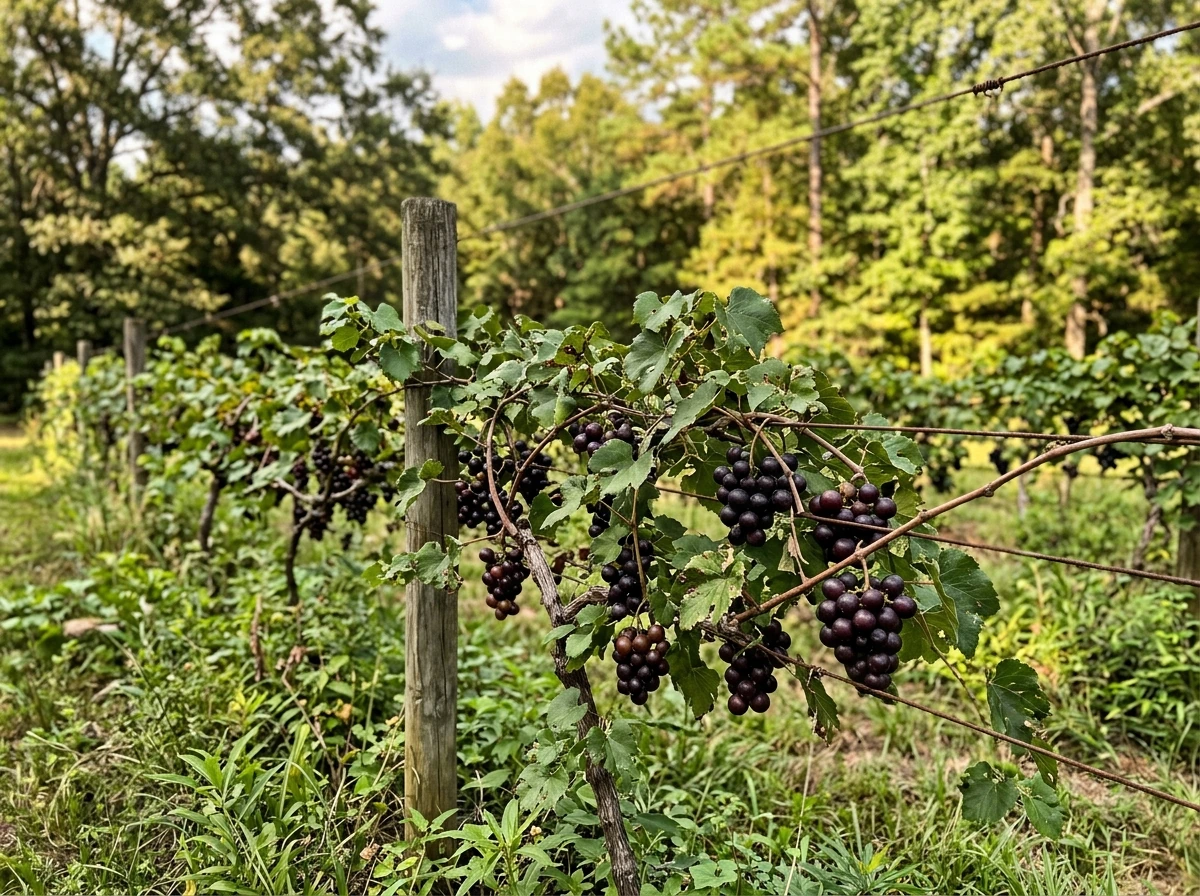
Muscadines (Vitis rotundifolia) are native to the Southeast and have a natural blank" rel="noopener noreferrer">range that stretches from Delaware south to central Florida, across all Gulf Coast states, and west to east Texas and Oklahoma. Their range also extends northward along the Mississippi River corridor into Missouri. That covers a huge swath of the country, and it is why you will hear people from Georgia, Louisiana, North Carolina, and Arkansas all claim muscadines as their own.
The climate they love is warm and humid. Long, hot summers with reliable moisture are exactly what these vines were built for. If you are in USDA zones 6 through 9, you are in a sweet spot. Some cultivars push into the cooler edges of zone 5, but the heart of muscadine country is the Deep South and the mid-South states. Oklahoma is near the edge of their comfortable range, and growers there can still get reliable harvests, just with ripening pushed a few weeks later than what you would see on the Gulf Coast.
If you are farther north or west, it gets harder. Muscadines are not cold-hardy like some European varieties, and they do not handle the dry heat of the Southwest well either. They want humidity. If you are outside the Southeast, If you are outside the Southeast, check our broader guide on where grapes grow best before committing to muscadines specifically. where grapes grow best.
When muscadines grow and ripen through the season
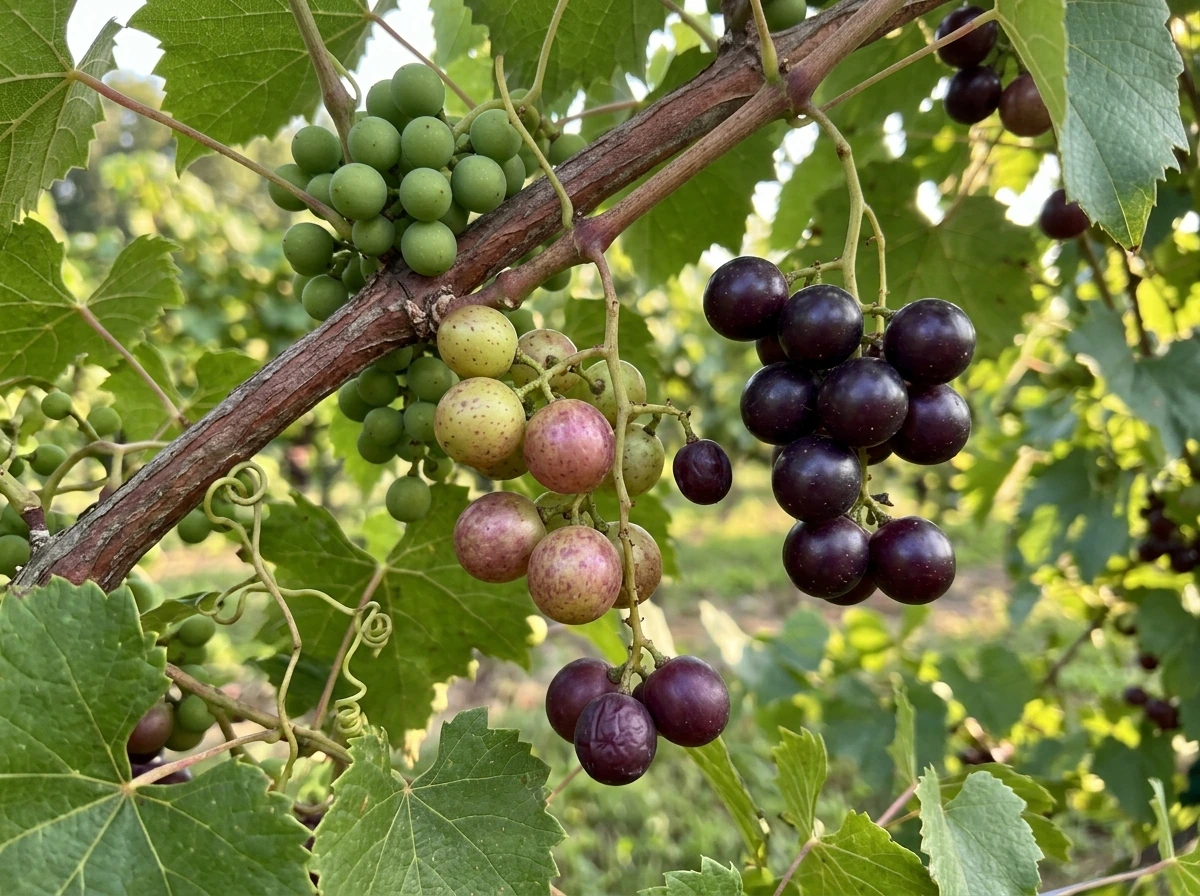
One thing that surprises new growers is how late muscadines wake up in spring. Bud break typically happens in late April to early May in the Georgia piedmont, with full bloom following in early June. That late start is actually a feature, not a bug: because the vines bloom so late, they rarely get caught by a spring frost the way earlier-blooming crops do. If you have lost other plants to a late cold snap, you will appreciate how muscadines seem to just wait out the risk.
From bud break to ripe berries, plan on about 100 to 120 days. That math puts harvest in late summer to early fall for most of the Southeast. On the Gulf Coast, early-maturing cultivars start coming in during mid- to late August, while full-season varieties ripen in mid- to late September. In Florida, some cultivars can be picked as early as late July. In Oklahoma or Missouri, you are looking at late August through September for most of the crop. The further north and inland you go, the later things run.
| Region | Typical Bud Break | Typical Harvest Window |
|---|---|---|
| Florida / Gulf Coast | Early to mid-April | Late July to early September |
| Georgia / Carolinas / Alabama | Late April to early May | August to mid-September |
| Mississippi / Louisiana | Late April to early May | Mid-August to late September |
| Arkansas / Oklahoma / Missouri | Early to mid-May | Late August to October |
Vines, not trees: clearing up the growth habit confusion
do cotton candy grapes grow naturally They do not grow on trees the way an apple or peach does. What sometimes creates that impression is that muscadines in the wild will happily climb into the canopy of a large tree and drape themselves over the top, making it look like the tree is producing grapes. The vine is just using the tree as a trellis. In a home garden, you give them a fence, an arbor, or a purpose-built trellis, and they climb that instead.
These vines grow vigorously, which is an understatement. Arkansas Extension reports that wild muscadine vines can reach 100 feet or more when they have something tall enough to climb. In a managed garden, you train them onto cordons (permanent horizontal arms) that extend along a wire trellis, and you prune back the fruiting wood each year to keep things manageable. The trunk and arms are permanent, the fruiting spurs get renewed annually. It is a system that rewards consistency.
One more structural detail worth knowing: muscadines have simple, unbranched tendrils. Most other native grape species (Vitis) have forked tendrils. If you are ever trying to identify a vine in the woods, that is one of the first things to check. The bark on the main trunk of a muscadine is also smoother and less shaggy than you see on other grape species, another useful ID clue.
Where muscadines grow wild, and how to find them
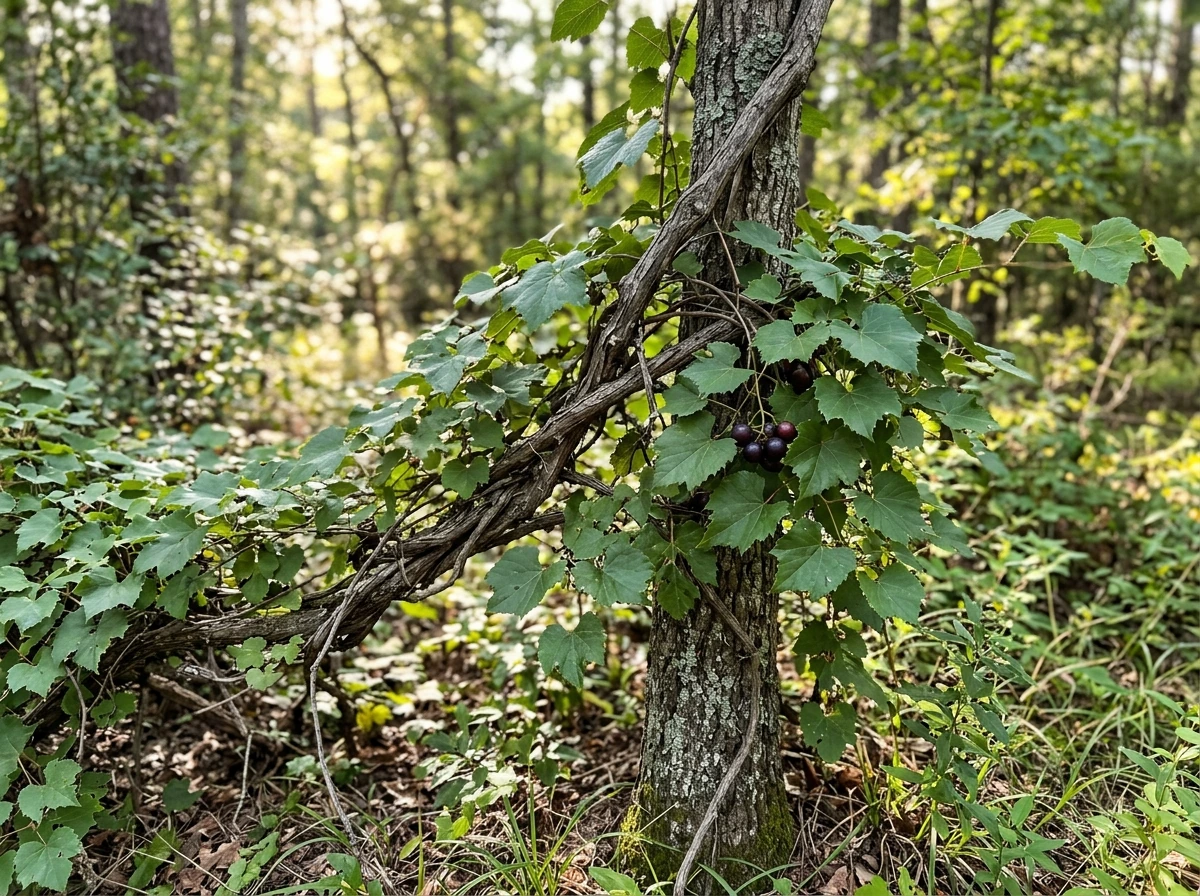
If you live anywhere in the Southeast and have spent time walking wooded paths or exploring forest edges, you have almost certainly walked past muscadines without knowing it. They grow wild in woods, thickets, sandhills, and along stream banks and shores. Their range in the wild mirrors their cultivated range: from the Delaware coastline to central Florida, across the Gulf States, and into east Texas and Oklahoma, with populations following the Mississippi River corridor northward.
The best places to spot them are forest edges where sunlight breaks through, stream banks with moist soil, and disturbed areas like old fence rows where a vine got started and was never cut back. Look up, because the vines climb. You will see the leaves and eventually the fruit hanging from what looks like a tree's canopy. Muscadine berries do not hang in the tight elongated clusters you see on European grapes. They appear singly or in small loose groups, and they are large, round berries, either purplish-black or bronze depending on the cultivar. The simple (unbranched) tendrils and round fruit in small clusters are your best field identification tools.
If you find a productive wild vine, that is useful information beyond just a snack: it tells you the conditions in that specific spot work for muscadines. Note the soil type, sun exposure, and moisture. You can often replicate those conditions in your garden.
What muscadines need to grow well
Sun and soil
Full sunlight is non-negotiable. Muscadines planted in shade produce poorly and are more prone to disease. Aim for a spot that gets at least 8 hours of direct sun per day. For soil, well-drained is the most important factor. Soil pH should fall between 5.5 and 6.5, which is the mildly acidic range that most southeastern soils naturally hit. Test your soil before planting and amend if needed, but chances are if you are in the Southeast, your native soil is already in the right ballpark.
NC State Extension notes that muscadines are tolerant of both moist and dry soils in their native habitats, which explains how they persist across such a wide range of sites in the wild. That said, in a managed planting, consistent moisture during establishment and vegetative growth gives you better results than leaving vines to fend for themselves in dry summers.
Heat, humidity, and water timing
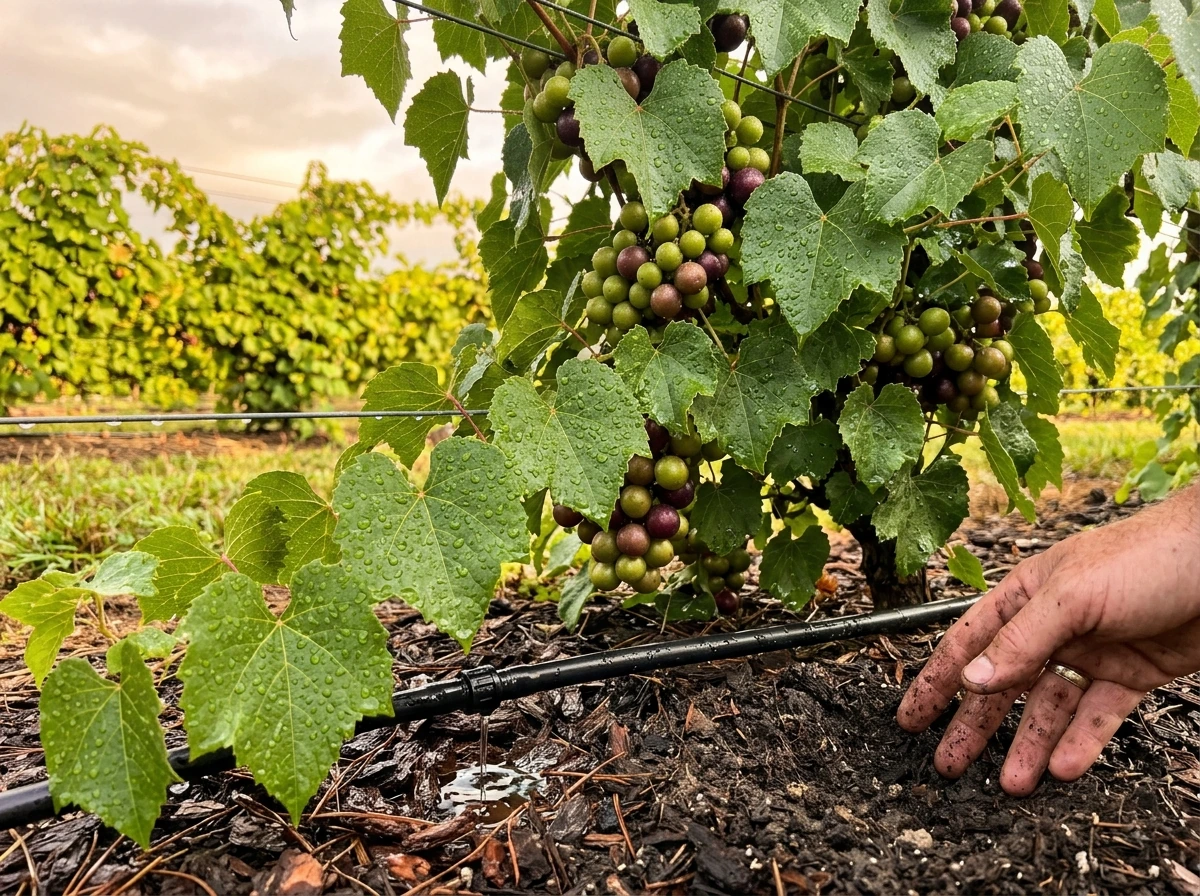
Muscadines love heat and humidity. The long, steamy summers of the Southeast are not a problem for them the way they are for European grapes like Cabernet or Chardonnay. That heat tolerance is a big reason muscadines are the go-to choice for home gardeners in the region where most bunch-grape varieties would struggle with fungal disease and heat stress.
Water management does matter as the season progresses, though. Early in the growing season, moisture supports vigorous vine growth, which is what you want when you are establishing young plants or pushing vegetative development. But as the berries approach ripeness in August and September, you want to ease off the irrigation. Both UF/IFAS and MSU Extension make this point clearly: limiting water during the final ripening period helps sugar accumulate in the berries and prevents the vines from putting energy into new leafy growth instead of finishing the fruit. It is a small but meaningful adjustment that pays off at harvest.
One more thing about pollination
Many muscadine varieties are not self-fertile, meaning a single vine will not reliably produce fruit on its own. Some cultivars are perfect-flowered (self-fertile), but others are female-only and need a self-fertile or male vine nearby for pollination. Clemson Extension is clear on this: check the fertility type of any cultivar you buy. If you plant a female-only vine without a pollinator nearby, you will have a beautiful, vigorous vine and very little fruit. Planting two or more vines, at least one of which is self-fertile, is the standard approach.
How the vines develop year by year
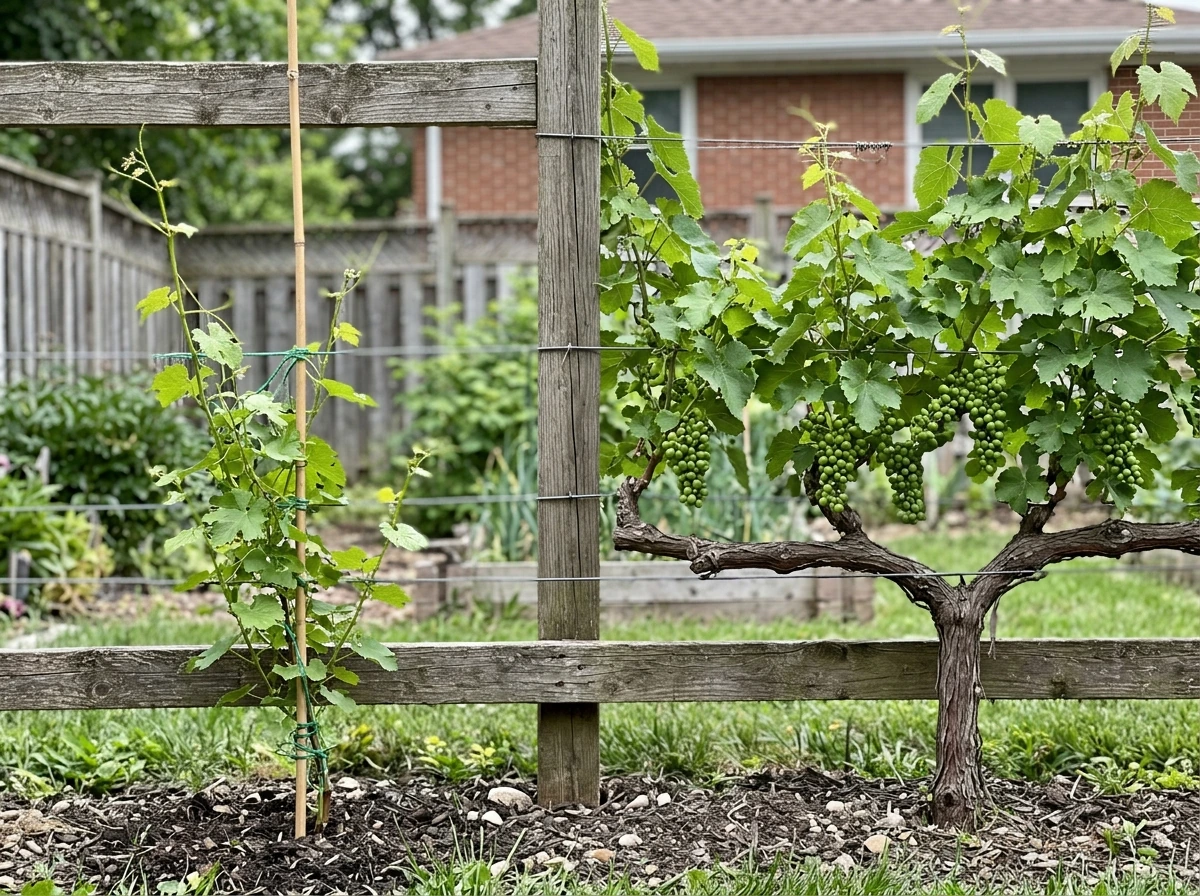
Year one for a muscadine vine is mostly about root development. You will see some shoot growth, but do not expect fruit. In the second year, vines start establishing the permanent trunk and beginning to extend their arms along the trellis wires. By year three, most vines are producing their first meaningful crop, though full production usually comes in years four and five. The wait is worth it. A well-managed muscadine vine can be productive for decades.
Each growing season follows a predictable rhythm: late bud break in late April or May, rapid shoot and leaf growth through late spring, flowering in early June (in Georgia-zone climates), berry development through summer, and harvest from late July through September depending on your cultivar and location. After harvest, the vine goes dormant and you do your pruning in late winter, cutting back the season's fruiting wood to renewed spurs. Then the cycle starts again.
Training the vine correctly from the start makes a real difference. The standard approach is a single trunk system with two horizontal arms (cordons) extending along a wire at trellis height, typically around 5 to 6 feet off the ground. Fruiting spurs grow from those arms each year and are pruned back after harvest. UGA Extension's muscadine production guide goes into the full detail on pruning, and it is worth reading before you start, because correcting a poorly trained vine years later is much harder than getting it right early.
The berries themselves are harvested individually, not in bunches like you would pick European grapes. They are large, round, and separate from the cluster one at a time. That is normal. You can pick by hand or spread a tarp and shake or tap the vine to drop ripe berries. In commercial operations, mechanical harvesters do the shaking. At home, either method works fine.
So will they grow where you live?
If you are in the Southeast, from the mid-Atlantic coast through Florida, across the Gulf States and into Texas and Oklahoma, the answer is almost certainly yes. If you are asking where do grapes grow best and you are in the Southeast, from the mid-Atlantic coast through Florida, across the Gulf States and into Texas and Oklahoma, the answer is almost certainly yes. Muscadines are well-adapted to those climates and will outperform most other grape types in heat and humidity. If you are on the northern or western edges of that range, look for cold-tolerant cultivars and expect a slightly shorter window of reliable performance. If you are outside the region entirely, muscadines are a harder sell and you are probably better served by bunch-grape varieties suited to your climate.
The practical next steps are straightforward: confirm your climate zone, pick a self-fertile cultivar or a female plus pollinator pair suited to your region, get your soil pH into the 5.5 to 6.5 range, build or plan your trellis before the vines need it, and plant in early spring. From there, it is mostly patience and good pruning habits. These vines want to grow in the Southeast. Most of the time, your job is just to direct that energy in the right direction.
FAQ
Can I grow muscadine grapes if I live north of the usual muscadine region?
Yes, but only up to a point. Muscadines generally do best in USDA zones 6 to 9, with zone 5 being an edge case. If you are below zone 6, you should plan for winter damage (especially to the cordons) and use cold-tolerant cultivars, extra winter protection, and a sheltered planting site (near a wall or windbreak) to improve survival.
What location factors besides zone and heat can affect whether muscadines grow well?
Wind matters more than many people expect. Even in the Southeast, very windy sites can tear new growth and increase disease pressure by drying foliage unevenly. Choose a spot that gets your full sun requirement but is not directly exposed to harsh prevailing winds, and keep the trellis well anchored to handle heavy, fast-growing vines.
Do muscadines always produce fruit if I plant more than one vine?
If your goal is fruit, prioritize pollination compatibility before anything else. For female-only cultivars, you need at least one nearby self-fertile vine of a matching bloom time. A common mistake is buying two vines of the same cultivar, then assuming they will pollinate each other; check the fertility type of each plant label before planting.
How much shade is too much for muscadines to fruit well?
Treat “full sun” as a minimum of about 8 hours of direct light. Muscadines will often survive in partial shade, but you are likely to see weaker fruit set and slower ripening, plus more leaf and berry disease problems. If you have a yard with dappled shade, the best practice is to observe sun exposure during summer before planting.
What should I do if my soil stays wet after rain?
Don’t rely on heavy soil drainage alone. You want consistently well-drained ground, meaning water should not pool after rain. If your site is prone to soggy conditions, amend with organic matter and consider raised rows or improved drainage, because poor aeration around the root zone can reduce establishment and long-term productivity.
Should I water muscadines more early in the season or late in the season?
Yes, but the key is how you manage irrigation timing. The article notes easing off as berries ripen, and the practical rule is to avoid late-season overwatering that pushes leaf growth instead of sugar accumulation. For young vines, provide steady moisture during establishment, then reduce irrigation once you see berries begin to color and soften.
What happens if my soil pH is outside the recommended range for muscadines?
Soil pH outside the 5.5 to 6.5 range is one of the quickest ways to lose vigor or create nutrient problems that look like “slow growth.” If your soil is too alkaline, sulfur or other amendments may be needed, and you should confirm with a soil test after amendments before planting multiple vines. It is easier to fix pH before you build your permanent trellis system.
Is it normal to get no muscadine fruit the first year?
In year one, focus on training and root establishment. Expect limited or no fruit, and resist the temptation to “push” production with extra fertilizer or water. A better approach is to keep the vine growing strongly, tie it to your future cordon system, and plan to start fruiting training as the permanent trunk and arms develop in years two and three.
What if I plant muscadines before I have a trellis set up?
If you notice you are late to build a trellis, you can still recover, but you may struggle more with training. Muscadines are vigorous, and letting them scramble can entangle fruiting wood that later becomes difficult to prune correctly. Ideally, set up the trellis before significant growth so you can direct the vine onto the trunk and cordons from the start.
Why do my muscadines grow well but produce little fruit?
Poor pruning is the most common reason “great vines” underperform. Muscadines use a renewal system where fruiting wood is pruned back and renewed via spurs each year. If you prune too lightly or on the wrong wood, you can reduce fruiting and make the vine harder to manage, so follow the annual cycle once the cordons are established.
How can I confidently distinguish wild muscadines from other grape species in the woods?
For wild-vine identification, check tendrils and fruit structure, not just berry color. Muscadines typically have simple (unbranched) tendrils and berries that appear singly or in small loose groups rather than tight bunches. Also look for that draping growth habit in tree canopies, which signals climbing onto a structure rather than bearing fruit from a tree branch.