
Green grapes grow best in climates that offer a cool winter followed by a long, warm, sunny growing season. If you want the practical answer to where do grapes grow best, start by mapping your region's winter chill and summer heat to the variety you plan to grow. That's the short answer.
Where Do Green Grapes Grow? U.S. Climates and How to Plant
Marcus Whitfield
24 Mar 2026
The longer answer is that 'where' depends heavily on which green grape variety you're talking about, because a Thompson Seedless vine and a cold-hardy hybrid like Swenson White have almost nothing in common when it comes to what they can tolerate. If you're trying to figure out whether green grapes can grow in your yard specifically, you need to think about your climate zone, your frost-free window, your soil, and your yard's microclimate.
This guide walks through all of that in a way you can actually apply today.
The climate green grapes actually need
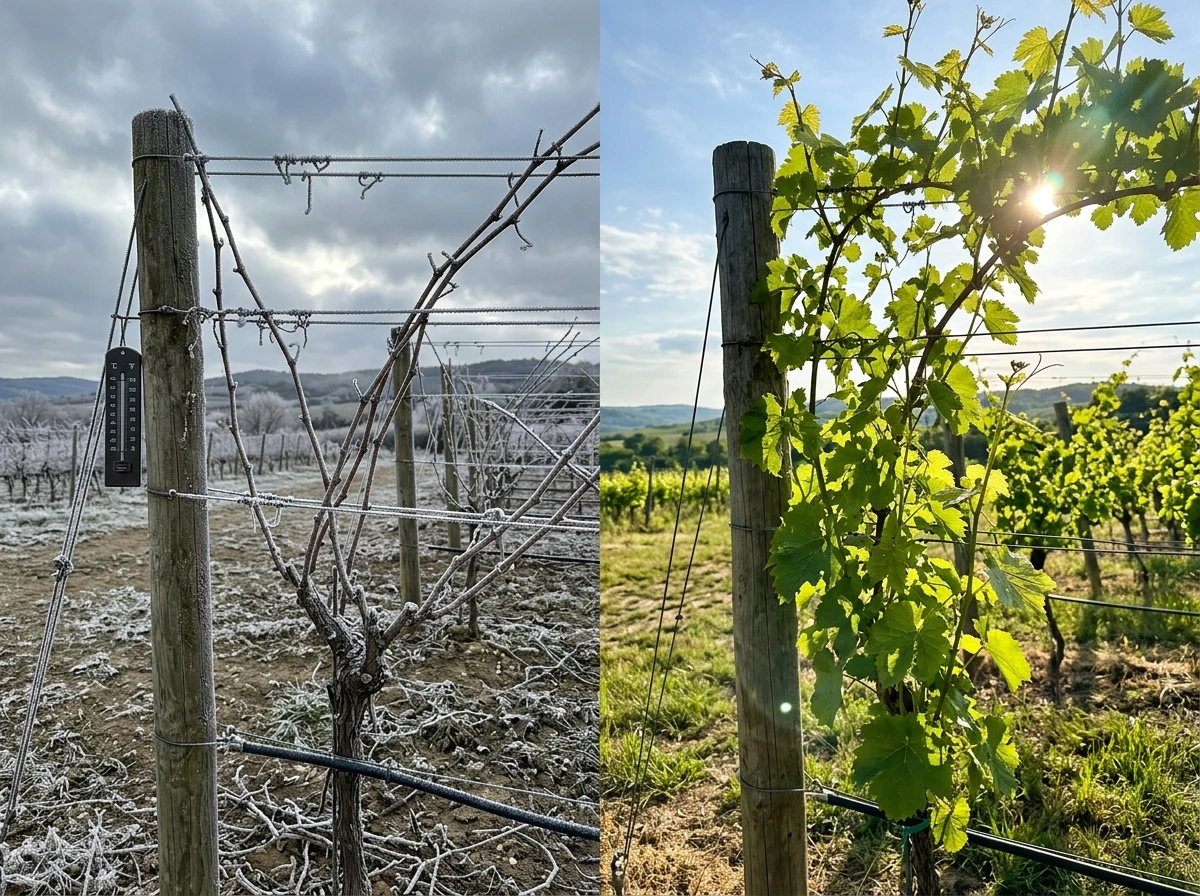
Grapes are temperate-zone plants, which means they need two distinct seasons: a cool winter to satisfy their dormancy (chilling requirement) and a warm growing season to ripen fruit. For most green table grape varieties, that means accumulating somewhere in the range of 50 to 400 hours below 46°F (7.2°C) during dormancy, then getting a frost-free growing season of roughly 150 to 180 days with enough heat to push fruit to full sweetness.
Heat accumulation matters just as much as season length. Growing degree days (GDD), calculated from April 1 through October 31 using a base temperature of 50°F (10°C), are the standard way to measure whether a location gets warm enough, long enough, to ripen a specific variety. Thompson Seedless, the classic green table grape you'd see at a grocery store, needs a lot of heat. Shorter-season climates simply can't deliver that, no matter how careful you are.
Rainfall and humidity are a separate challenge. High summer humidity encourages fungal diseases like powdery mildew and black rot, which are real problems in the eastern U.S. Depending on the variety's disease susceptibility, you may need to start a fungicide schedule at budbreak and keep it up through the season. That's not a dealbreaker, but it's a realistic part of growing grapes in wetter climates.
Where green grapes grow in the U.S.
The straightforward truth is that classic vinifera green table grapes (Thompson Seedless, Perlette, and similar varieties) grow most reliably in the warmer, drier regions of the country: California's Central Valley, the inland Pacific Northwest (eastern Washington and Oregon), parts of the Southwest, and the warmer stretches of the Southeast like coastal Georgia and Florida panhandle areas. Muscadines, for example, have their own ideal growing regions and are often found thriving in the humid Southeast where do muscadine grapes grow. These are the regions that deliver long, hot, dry summers with low disease pressure.
Outside those core zones, it gets more complicated. Here's a practical breakdown by region:
| U.S. Region | Green Grape Viability | Notes |
|---|---|---|
| California (Central Valley, inland valleys) | Excellent | Ideal for vinifera varieties like Thompson Seedless; long heat-accumulation season |
| Eastern Washington / inland Oregon | Good to excellent | Warm summers with low humidity; vinifera-capable with site selection |
| Pacific Coast (western Oregon, western WA) | Moderate | Cooler, shorter seasons; need early-ripening varieties |
| Southwest (AZ, NM, parts of TX) | Good in warmer elevations | High heat but irrigation essential; watch for alkaline soils |
| Southeast (GA, SC, NC, VA, TN) | Moderate | Hybrids and muscadines work well; pure vinifera needs warm sites and disease management |
| Mid-Atlantic (PA, MD, NJ) | Moderate with care | Cold-hardy hybrids preferred; Penn State recommends matching GDD carefully |
| Midwest (MO, KS, NE, IA) | Challenging for vinifera | Cold winters limit vinifera; cold-hardy hybrids are more realistic |
| Upper Midwest / Great Plains (MN, ND, SD, WI) | Difficult for standard varieties | V. vinifera generally can't survive without burying; cold-hardy hybrids only |
| Northeast (NY, NE, New England) | Possible with right varieties | Finger Lakes NY is proven; season length is the key constraint |
| Mountain West (UT, CO, ID at elevation) | Challenging | Short seasons and cold winters; vinifera limited to warmer valley floors |
If you're in California, eastern Washington, or similar warm, dry zones, you have the widest variety selection and the least drama. Everywhere else, variety choice becomes critical, and in colder regions, vinifera varieties like Thompson Seedless are genuinely not a good bet without serious winter protection.
Picking the right spot in your yard
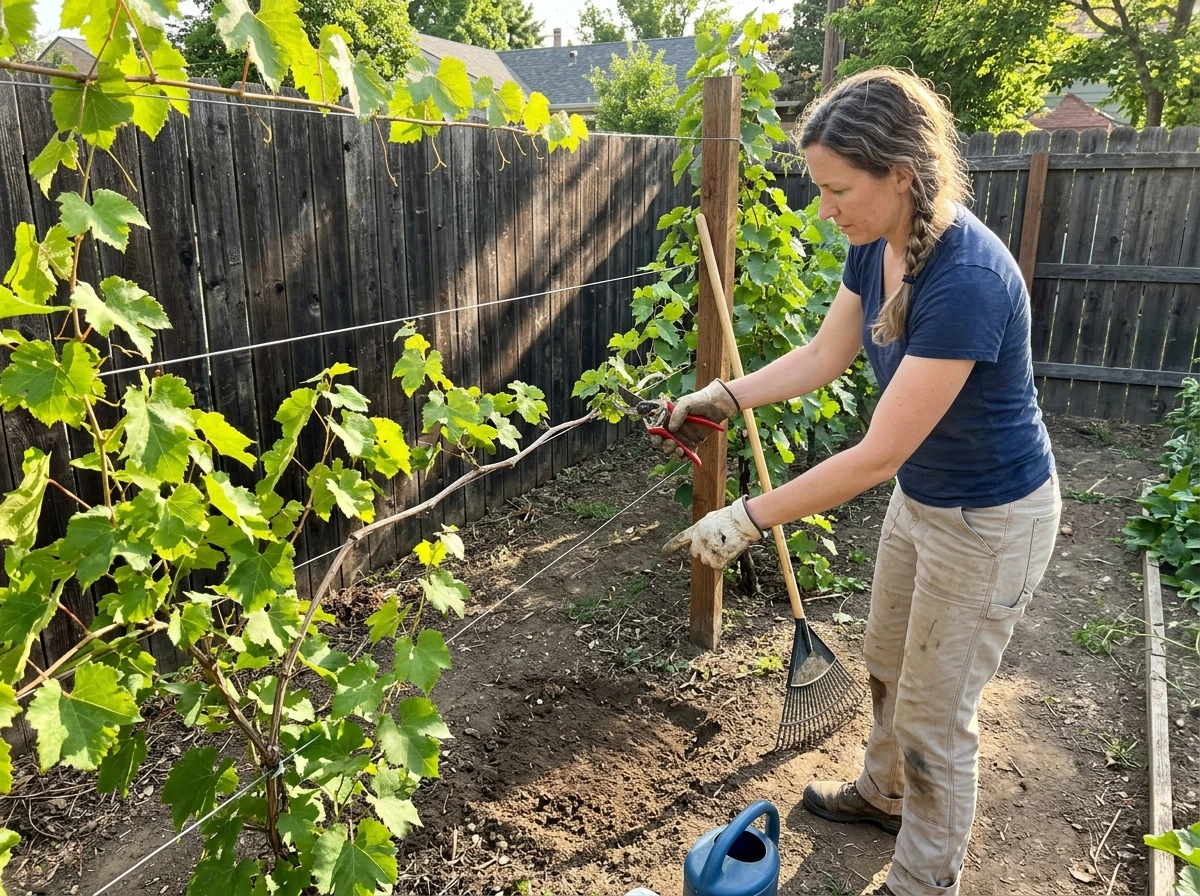
Even in a region that supports green grapes, your specific yard can make or break a planting. The rules here are pretty clear and consistent across every extension service I've come across: full sunlight and well-drained soil are non-negotiable. Penn State Extension notes that grapes require full sun to properly ripen and develop complete flavors full sunlight. Grapes planted in partial shade produce poorly and become disease magnets. You want a spot that gets uninterrupted sun from morning through late afternoon.
Sun, slope, and air drainage
Slope matters more than most home gardeners expect. A gentle slope (ideally facing south or southeast) improves both sun exposure and cold-air drainage. Cold air, like water, flows downhill and pools in low spots, creating frost pockets that can kill buds in spring. NC State Extension is explicit about this: choose a relatively warm thermal belt where cold air can drain away, and avoid planting at the base of slopes or anywhere that dense shrubs, buildings, or fences would trap cold air.
One thing to watch: a south- or west-facing wall can actually work against you in colder climates. South Dakota State University Extension warns that these warm microclimates heat up early, prompting early budbreak when frost danger is still very real. University of Georgia Cooperative Extension also advises planting on convex landforms and at relatively higher elevations to reduce spring frost risk by encouraging cold air to settle away from vines pick a south-facing slope. That's a quick way to lose a whole season's growth to a late frost. A gentle slope with open air movement is safer than a wall that supercharges heat.
Soil requirements
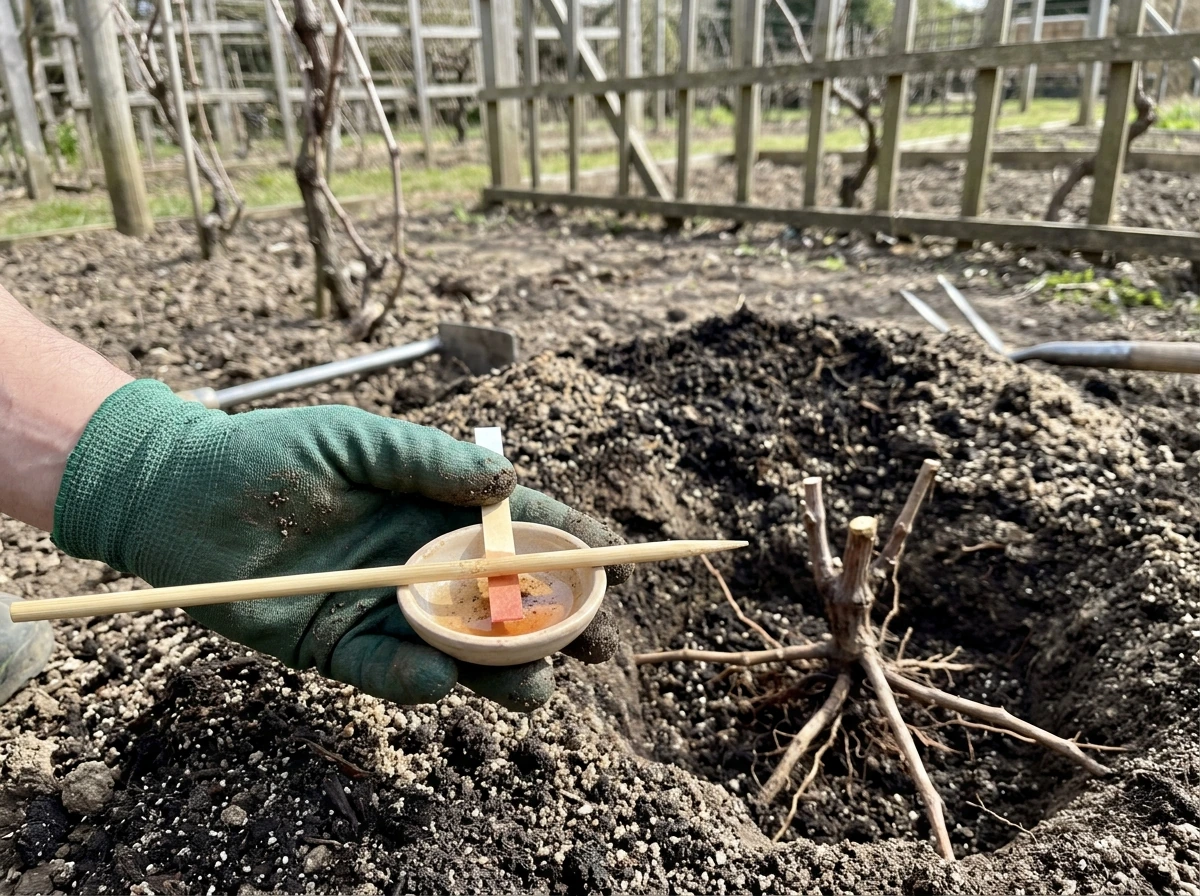
Grapes aren't fussy about soil fertility, but they are particular about drainage and pH. Consistently soggy soil is fatal to vine roots. For pH, you're aiming for 5.5 to 6.5. American varieties (Vitis labrusca) do better toward the lower end of that range (5.5 to 6.0), while European vinifera and French-American hybrids prefer it closer to 6.5. Before you plant anything, get a soil test through your county extension office. It's usually cheap, fast, and will tell you exactly where you stand on pH and nutrients.
- Full sun, all day: no partial-shade compromises
- Well-drained soil: avoid low spots, clay-heavy soils, or anywhere water ponds after rain
- Soil pH 5.5 to 6.5: test before planting, amend if needed
- Gentle slope preferred: improves drainage and cold-air movement
- Open airflow: avoid spots enclosed by buildings, dense hedges, or fences that trap cold air
- Water access: irrigation may be needed in dry spells to help vines mature fruit
Matching green grape varieties to your growing zone
This is where a lot of gardeners go wrong. They see a beautiful bunch of green table grapes at the store, look up 'Thompson Seedless,' and order a vine without checking whether their climate can support it. Thompson Seedless is a vinifera variety suited to USDA Hardiness Zones 7 through 9 (some sources extend that to Zone 10). Plant it in Zone 5 Minnesota without burying the vines in winter, and it won't survive. The University of Minnesota Extension is blunt about this: V. vinifera varieties are simply not cold-hardy enough to thrive in cold-climate regions without extraordinary interventions.
The good news is that cold-hardy hybrid varieties have expanded what's possible. Breeders (especially at the University of Minnesota) have developed green and golden-skinned table grapes that can handle Zone 4 and Zone 5 winters. These aren't Thompson Seedless clones, but they're real, productive table grapes with good flavor, and they're what you should be looking at if you're gardening north of Zone 6.
| Variety | Type | Hardiness Zone | Season Length Needed | Notes |
|---|---|---|---|---|
| Thompson Seedless | V. vinifera | Zones 7–9 | Long (180+ days) | Classic green table grape; needs high heat accumulation; not cold-hardy |
| Perlette | V. vinifera | Zones 7–9 | Long | Early-ripening vinifera; does better in slightly cooler vinifera zones |
| Summer Royal Seedless | V. vinifera | Zone 6+ | Long to moderate | Slightly broader zone tolerance; still needs warm summers |
| Swenson White | Cold-hardy hybrid | Zones 4–5 | Moderate | Good flavor; realistic choice for northern gardeners |
| Brianna | Cold-hardy hybrid | Zones 4–5 | Moderate (short season capable) | University of Minnesota breeding; one of the more reliable northern green options |
| Marquette (green-adjacent hybrids) | Cold-hardy hybrid | Zone 4 | Moderate | Primarily wine grape but shows what cold-hardy programs can achieve |
If you're in Zones 7 through 9 with a long, warm summer, you have real options with vinifera varieties. If you're in Zones 4 through 6, cold-hardy hybrids are the practical path forward. Trying to force vinifera into a cold climate takes significant effort and often ends in failure, so be realistic about what zone you're actually in before selecting a variety.
Why growing season length is the deciding factor
A 150 to 180 frost-free day window is the baseline most extension services cite for maturing a table grape crop. That number isn't arbitrary. Grapes need warm temperatures above roughly 50°F to push growth after budbreak, and they need sustained heat accumulation through summer to develop sugar and flavor. Budbreak itself is triggered when mean daily temperatures consistently climb above that 50°F threshold.
GDD (growing degree days) put a number on this. MSU Extension calculates GDD from April 1 to October 31 with a 50°F base temperature. Different varieties have different GDD requirements: Thompson Seedless needs a lot, while earlier-ripening hybrids need less. If you don't know your local GDD total, your county extension office can usually tell you, or you can pull it from a NOAA climate summary for the nearest weather station. Penn State Extension explicitly recommends knowing your cumulative GDD before selecting a variety, and that's advice worth taking seriously.
Winter cold risk is the other side of the season-length equation. Even if your frost-free window is long enough, a brutal cold snap in January or February can kill buds outright. Vinifera varieties are the most vulnerable here. A single winter with temperatures dropping well below 0°F can wipe out years of vine training. That's the reality check for anyone in the northern half of the country considering a vinifera green table grape.
How to confirm whether green grapes will work where you live
Here's what I'd actually do if I were starting from scratch today. Cotton candy grapes are a newer variety, so it helps to know whether they grow naturally in your climate before you plant do cotton candy grapes grow naturally. These steps take maybe a few hours total, and they'll give you a much clearer picture than any general guide can. Once you know where grapes can thrive, you can narrow down what do grapes grow on in your yard and choose the right setup for healthy vines.
- Find your USDA Hardiness Zone: go to the USDA Plant Hardiness Zone Map and enter your zip code. This tells you your average annual minimum winter temperature and is the first filter for variety selection.
- Count your frost-free days: check your local frost dates (your county extension office or almanac sites work fine) and calculate the window between your last spring frost and first fall frost. If it's under 150 days, you'll need an early-ripening variety.
- Look up your GDD total: contact your county extension office or pull NOAA climate normals for your nearest weather station. Compare that number to the GDD requirement for any variety you're considering.
- Get a soil test: your county extension office can process a sample for a small fee. You need to know your pH (target 5.5 to 6.5) and drainage characteristics before investing in vines.
- Walk your yard for site problems: look for low spots where water (and cold air) collect, spots without full sun all day, and any structures or dense plantings that could trap cold air around a potential planting site.
- Match your zone to realistic varieties: if you're in Zones 7–9 with 180+ frost-free days, vinifera like Thompson Seedless are viable. Zones 4–6 point you toward cold-hardy hybrids. Check your local extension service's variety trial results for the most locally relevant recommendations.
- Check with your local extension service: most state extension services publish grape variety trial results and regional recommendations. A quick search for '[your state] extension table grape varieties' will usually surface the most useful local guidance.
Grapes are not as fussy as their reputation suggests, but they are specific. The gardeners I've seen struggle most are the ones who skip the site and zone homework and just plant whatever looks appealing. where can grapes grow. The ones who succeed check their GDD, test their soil, pick a south-facing slope, and match their variety to their actual climate. Do that groundwork and you'll have a much clearer answer to whether green grapes can thrive where you live, and exactly which ones to plant.
If you're also curious about the broader range of grape types that might work in your area, it's worth exploring what general conditions grapes need across different species and climates, since green table grapes are just one part of a much wider picture.
FAQ
Can green grapes grow in my area if my winters are mild and my summers are hot?
Yes, but you still need a cold winter and enough heat to ripen. If you only have mild winters, most green table grapes will break dormancy poorly and sugars may never develop, even if summers are sunny. For best results, match a variety known to need fewer chilling hours and confirm your local growing degree days (GDD) before planting.
What happens to green grape vines in winters with very low temperatures?
If your winters dip below about 0°F (especially in January or February), vinifera green table grapes are high risk unless you use serious winter protection and choose a site that drains cold air. For colder locations, cold-hardy table hybrids are usually the practical choice, because they are bred to survive winter lows rather than only delaying budkill.
Can I grow green grapes in a container if my yard is in a marginal climate zone?
Container growing is generally a short-term workaround, not a reliable long-term solution for table grapes, because vines need enough root volume plus stable soil temperatures through winter. If you try it, use a very large pot with excellent drainage, a protected microclimate, and plan on winter isolation (cool but not freezing) for the crown and canes.
How much sun do green grapes actually need, and can I grow them with a little shade?
Yes, but it usually trades one problem for another. Partial shade reduces daily light hours, which lowers sugar accumulation and increases mildew risk. If shade is unavoidable, prioritize uninterrupted sun for the fruiting zone during the morning through mid-afternoon and avoid constant leaf wetness from airflow restrictions.
My yard has a south-facing wall, is that always good for green grapes?
A south-facing wall can be beneficial in cool regions for warmth, but early budbreak is the downside. If your area still has late frosts, you may lose fruiting shoots. The safer approach is to choose an open-sky slope with cold-air drainage, then consider wall heat only if you can manage frost risk.
Why do grapes fail in a yard that seems warm enough based on average temperatures?
Yes, especially in low spots or frost pockets. Cold air settling around the vine can kill buds even when the yard’s average temperatures look fine. Look for natural drainage paths, and if possible plant on a gentle slope where air movement and cold-air escape are clear.
Do green grapes need heavy fertilization to produce well?
Yes, overfertilizing can make the problem worse. Grapes do not require high fertility, but too much nitrogen often leads to soft, lush growth that is easier for diseases to attack. If your soil test is high in nitrogen, focus on drainage and pH rather than adding more fertilizer.
When is the best time to plant green grape vines?
They are best planted as dormant vines when they are not actively growing. In warmer zones, that is typically before spring growth begins. The key is to avoid late cold snaps after budbreak, so if your area has spring frost risk, you may need to delay planting until conditions stabilize or use temporary frost protection.
What is the fastest way to decide which green grape variety I should buy?
Start by confirming chilling and heat needs (chilling requirement plus your local GDD), then use soil pH and drainage as your second filter. If you already know you are in a colder zone, switch earlier to cold-hardy hybrids rather than trying to “make” a vinifera work. Finally, plan your disease management based on humidity, not just variety.
My vine grows leaves but produces few or no green grapes, what should I check first?
First confirm you have the right variety for your zone, then check sunlight and drainage, since these usually explain poor fruiting. Also note that bud damage from winter lows or spring frosts can look like “the vine won’t produce,” even when growth appears normal. Take a look at whether shoots are dying back at the same points each year, which can indicate cold injury.