
The best grapes to grow in the UK are Lakemont and Phoenix for eating fresh, and Solaris, Phoenix, and Regent for making wine. These varieties ripen reliably in a UK summer, cope with our unpredictable weather, and hold up against the fungal diseases that knock out less-suited cultivars. If you only want one recommendation: Lakemont for table grapes, Solaris for white wine, Regent for red wine.
Best Grapes to Grow in the UK: Table and Wine Varieties

Marcus Whitfield
29 Jun 2026
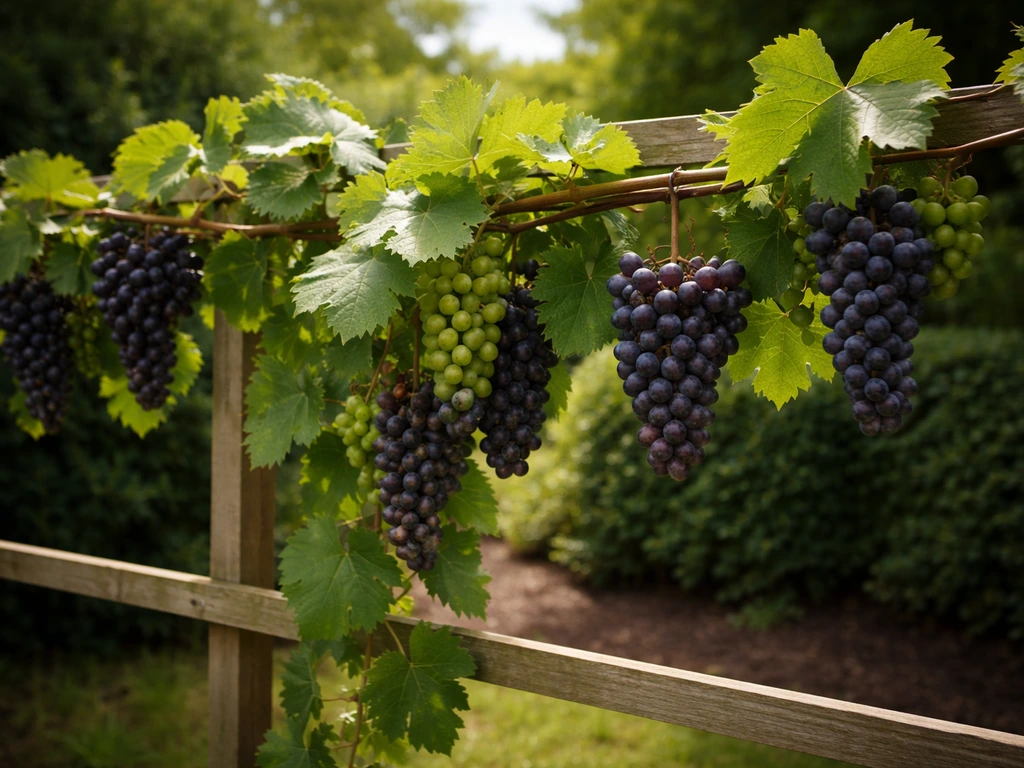
Choosing the right grapes for the UK climate (what really matters)
Not every grape variety belongs in a UK garden. The ones sold cheaply at garden centres in spring aren't always suited to our climate, and you can spend years nursing a vine before realising it's never going to ripen properly north of the Midlands. The good news is that matching variety to climate is straightforward once you know the three things that actually matter: ripening time, winter hardiness, and disease resistance. If you are wondering about other climates, you can also look at whether similar grape types can succeed in India grow ruby roman grapes in India.
Ripening time is the big one. Grapes in the UK ripen between August and October depending on variety and conditions. Early-ripening varieties like Solaris finish in August or September, which matters enormously in Scotland or the north of England where October warmth is unreliable. Mid-season varieties like Phoenix are fine for most of England. Late-ripening varieties are a gamble anywhere north of the South East.
Winter hardiness is less of a problem than most people think, but spring frost is a genuine threat. Late frosts in April and May can kill new shoots and wipe out a whole year's fruiting. Lakemont has an RHS hardiness rating of H6, meaning it survives down to -20°C, which covers the entire UK. The issue isn't the vine dying in winter, it's those tender new shoots getting caught by a cold snap in spring.
Disease resistance shapes how much work you're signing up for. The UK's cool, damp summers create perfect conditions for powdery mildew, downy mildew, and grey mould (Botrytis). Choosing a variety with natural resistance to these diseases means fewer interventions and far less heartbreak at harvest. The RHS recommends looking for varieties with its Award of Garden Merit (AGM), since those have been trialled and proven in UK conditions.
Best eating/table grapes to grow in the UK
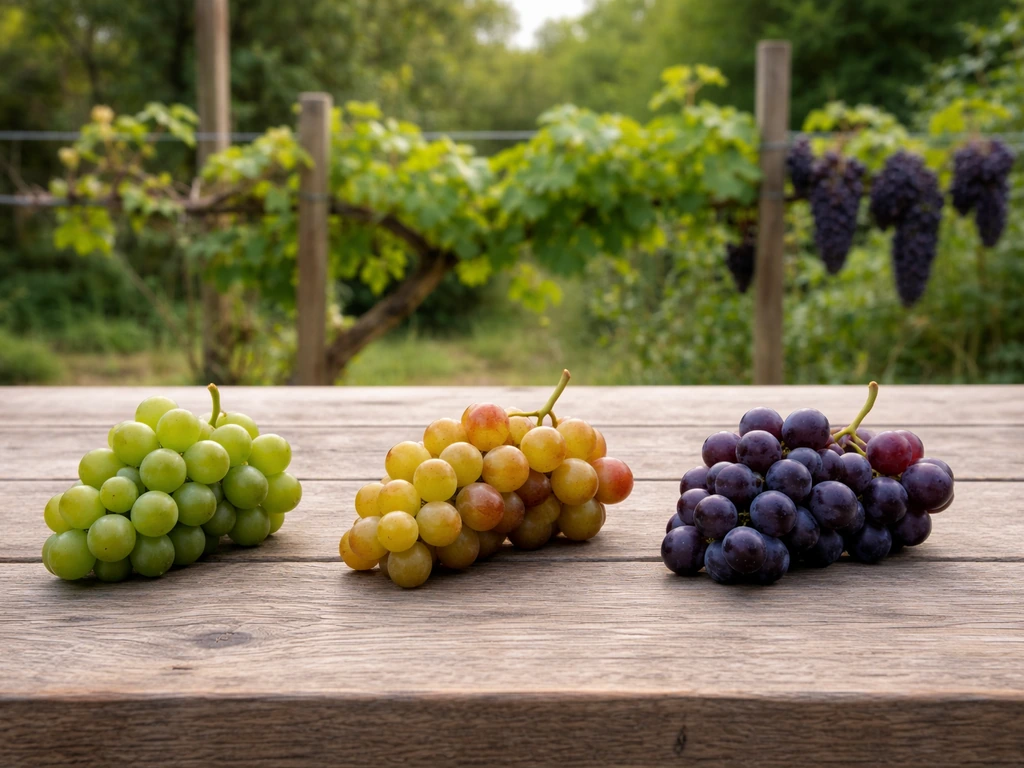
Table grapes need sweetness, a decent berry size, and ideally a thin skin. They're also the ones most often grown in a greenhouse or against a warm south-facing wall, which extends the ripening season and improves flavour. For home gardeners focused on dessert grapes specifically, the variety selection criteria differ slightly from wine grapes, so it's worth treating the two categories separately.
- Lakemont (white/seedless): Probably the easiest table grape for UK outdoor growing. It carries an RHS AGM, has H6 hardiness (survives -20°C), and produces sweet, seedless fruit. It performs well outdoors in most of England and Wales.
- Phoenix (white): Technically a dual-purpose variety used for both eating and winemaking, but its crisp, aromatic berries make it excellent at the table. Mid-season ripening suits most UK regions, and its powdery mildew resistance is a genuine advantage.
- Muscat Bleu (blue/black): A good coloured option for eating, with a distinctive Muscat flavour and reasonable disease tolerance. Best suited to southern England or a warm sheltered spot further north.
- Boskoop Glory (black): A classic UK outdoor variety that's been grown in British gardens for decades. It crops well against a south-facing wall and has better cold tolerance than many red table varieties.
If you're focused purely on dessert grapes, there's a whole world of variety choice beyond this shortlist. If you want the best results, choose dessert grape varieties that reliably ripen and handle UK conditions best dessert grapes to grow in uk. The key filtering criteria remain the same: ripening window, disease resistance, and whether you can give the vine a warm spot. For anyone digging deeper into eating grape selection specifically, that deserves its own focused look.
Best wine grapes to grow in the UK
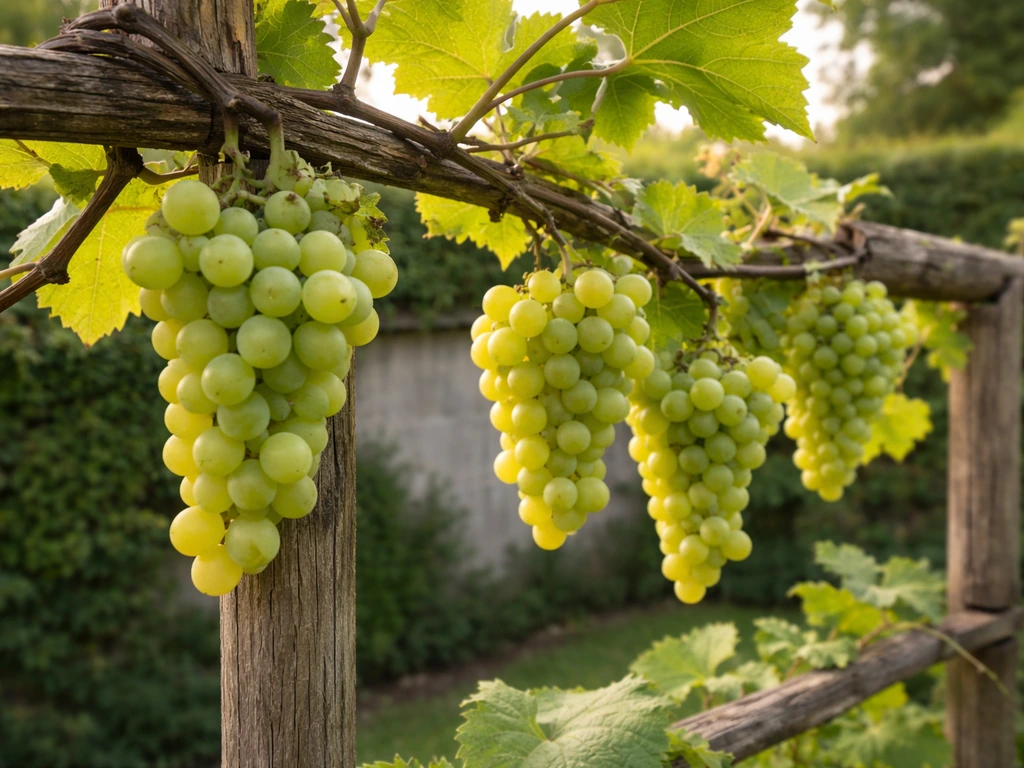
Wine grapes are a different proposition. You're prioritising flavour complexity and fermentable sugar over berry size or seedlessness. The good news for UK gardeners is that wine varieties generally ripen more reliably in cooler climates than table grapes, and many of the best options for UK conditions are modern disease-resistant hybrids (often called PIWI varieties) that were bred specifically for the European Atlantic climate. If you are wondering do grapes grow in the UK, the answer is yes, as long as you pick varieties that reliably ripen in our conditions in cooler climates.
- Solaris (white): The top pick for white wine in UK gardens. It's an early-ripening variety with strong resistance to fungal diseases, making it genuinely suitable for outdoor growing across most of England, Wales, and even parts of Scotland. It produces wines with good acidity and aromatic character.
- Phoenix (white): A reliable mid-season white that works equally well for wine or eating. Good powdery mildew resistance, solid yields, and wines that are clean and easy to make. The RHS describes it as suitable for dessert or wine use with good disease performance.
- Regent (red/black): The standout red wine grape for UK outdoor conditions. The RHS describes it as vigorous, disease-resistant, and suitable for outdoor cultivation, winemaking, and juice. It ripens in mid-season and produces deeply coloured, flavourful red wine. It can develop some susceptibility to powdery mildew or grey mould in very poor conditions, so don't skip the basics of air circulation and hygiene.
- Rondo (red): Another PIWI hybrid that performs well in UK conditions. Earlier ripening than Regent, with bold colour and good tannin structure. A solid backup or blending option alongside Regent.
- Seyval Blanc (white): A long-standing UK commercial and garden choice. Reliable, productive, and makes a neutral but clean white wine. Less fashionable than Solaris but very forgiving of UK weather.
How to match variety to your location (hardiness, ripening time, sun)
Where you are in the UK genuinely changes which varieties make sense. You can also grow grapes in Ireland, but choosing winter-hardy, disease-resistant varieties and giving them a sheltered spot is crucial for reliable ripening grow grapes in the UK. A gardener in Cornwall has a meaningfully longer and warmer growing season than someone in Yorkshire or Aberdeenshire. Here's a practical way to think about it.
| UK Region | Best table grape choices | Best wine grape choices | Key consideration |
|---|---|---|---|
| South East / South West England | Lakemont, Muscat Bleu, Boskoop Glory | Solaris, Phoenix, Regent, Seyval Blanc | Widest choice; mid and late-season varieties viable |
| Midlands / East Anglia | Lakemont, Phoenix, Boskoop Glory | Solaris, Phoenix, Regent, Rondo | Stick to mid-season or earlier; warm wall helps late varieties |
| North of England / Wales | Lakemont, Phoenix | Solaris, Rondo, Seyval Blanc | Early-ripening varieties only unless greenhouse or warm wall |
| Scotland / Northern Ireland | Lakemont (greenhouse preferred) | Solaris, Seyval Blanc | Greenhouse strongly recommended; outdoor only in sheltered coastal spots |
The single biggest thing you can do to extend your effective growing season regardless of region is to plant against a south-facing wall. The wall absorbs heat during the day and radiates it back at night, creating a microclimate that can add several weeks of effective ripening warmth. In northern England and Scotland, a south-facing wall isn't just a nice-to-have, it's often what makes the difference between ripe and unripe fruit.
Spring frost protection is worth planning for everywhere. Keep an eye on late April and May forecasts. If new shoots emerge and frost threatens, a double layer of horticultural fleece over the vine overnight can save the whole season's crop. It's low effort and genuinely works.
Site setup and planting for UK home gardeners
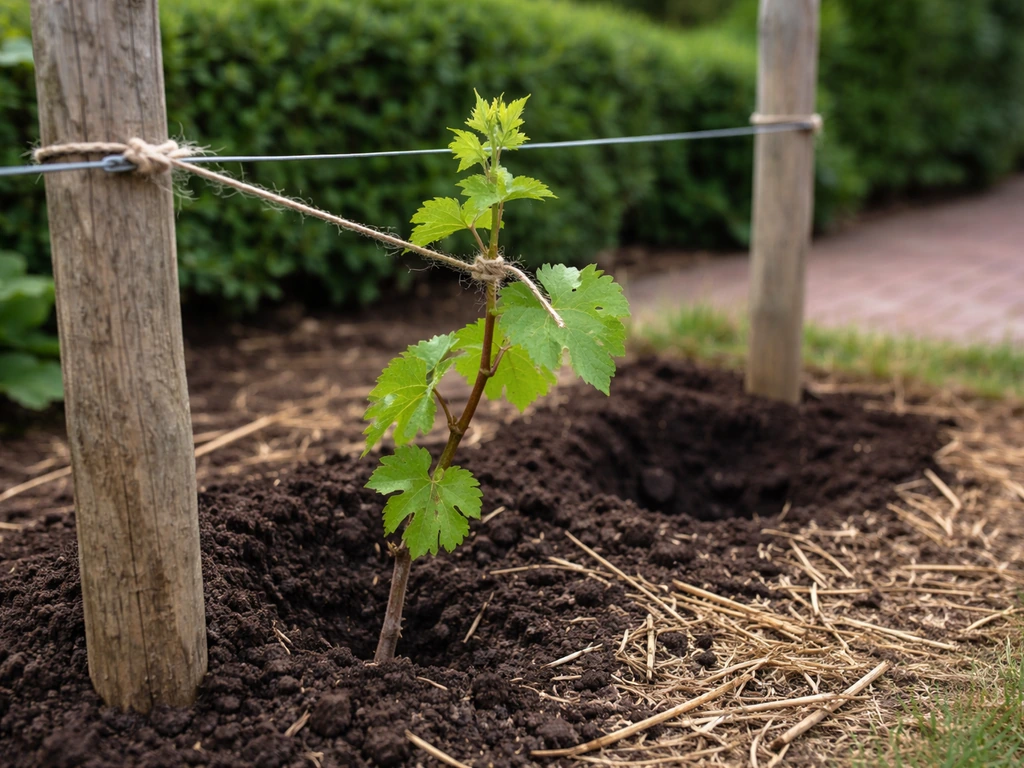
Grapes are permanent plants. You're making a 20-plus year commitment when you put one in the ground, so it's worth getting the site right from the start. Choose the sunniest, most sheltered spot you have. South or south-west facing is ideal. Avoid frost pockets and anywhere that stays damp and shaded.
Soil matters, but grapes are forgiving if drainage is good. They prefer a pH of 6.5 to 7, but the more important thing is that the soil doesn't waterlog. Grapes will struggle and eventually die in wet, compacted ground. If your soil is heavy clay, improve it before planting. When planting near a wall or fence, dig a generous hole and mix in a bucketful of garden compost with the removed soil before backfilling. This isn't about making the soil rich, it's about getting establishment right.
For wall-trained vines, set up horizontal wires spaced about 30cm apart before you plant, so you're not trying to attach wires to a brick wall with a newly planted vine in the way. If you're growing on a pergola, arch, or open trellis, the same principle applies: have the structure ready first.
Planting in spring or autumn both work, but spring planting in March or April gives bare-root vines a full season to establish. Water in well and mulch around the base to retain moisture, keeping the mulch clear of the main stem. For gardeners with limited space, containers are a realistic option. The RHS notes that compact standard-trained vines work well in pots and even in greenhouse contexts, which suits many smaller UK gardens perfectly.
Care basics: training, pruning, feeding, and watering
Training is the part that intimidates most new grape growers, but it follows a consistent annual rhythm once you understand the two main systems used in UK gardens: the Guyot system (most common for outdoor vines) and the rod-and-spur/cordon system (popular for greenhouse and wall-trained vines).
In the Guyot system, the vine is trained to a permanent upright stem. Each winter, you prune out the previous year's fruiting side-arms completely and replace them with new horizontal arms selected from fresh growth. These new arms then carry the fruiting shoots through the coming summer. It sounds dramatic to cut out large sections of established growth, but this annual renewal is exactly what keeps the vine productive and prevents the vine from becoming a chaotic tangle.
Through summer, the key job is pinching back the fruiting shoots. New shoots that carry fruit clusters are pinched back to one or two leaves beyond the bunch, which directs the plant's energy into ripening fruit rather than endless vegetative growth. Lateral shoots (side shoots from the main fruiting shoots) are also pinched back to one leaf. This sounds fiddly but takes less than an hour on a well-maintained vine.
On feeding: grapes don't want a nitrogen-rich fertiliser. Too much nitrogen pushes the vine into producing leaves and shoots at the expense of flowers and fruit. A balanced potassium-rich feed in spring is better, and in many established garden soils no additional feeding is needed at all. The Arbor Day Foundation puts it plainly: excess nitrogen makes plants vegetative rather than fruitful. Less is more.
Watering needs are moderate once established. Young vines in their first two seasons need consistent moisture during dry spells to get roots down. Established vines are surprisingly drought-tolerant, though a dry spell right around fruit swell can reduce berry size. Avoid overwatering, which promotes disease and soft, diluted fruit.
Disease and pests in the UK (and how to prevent heartbreak)
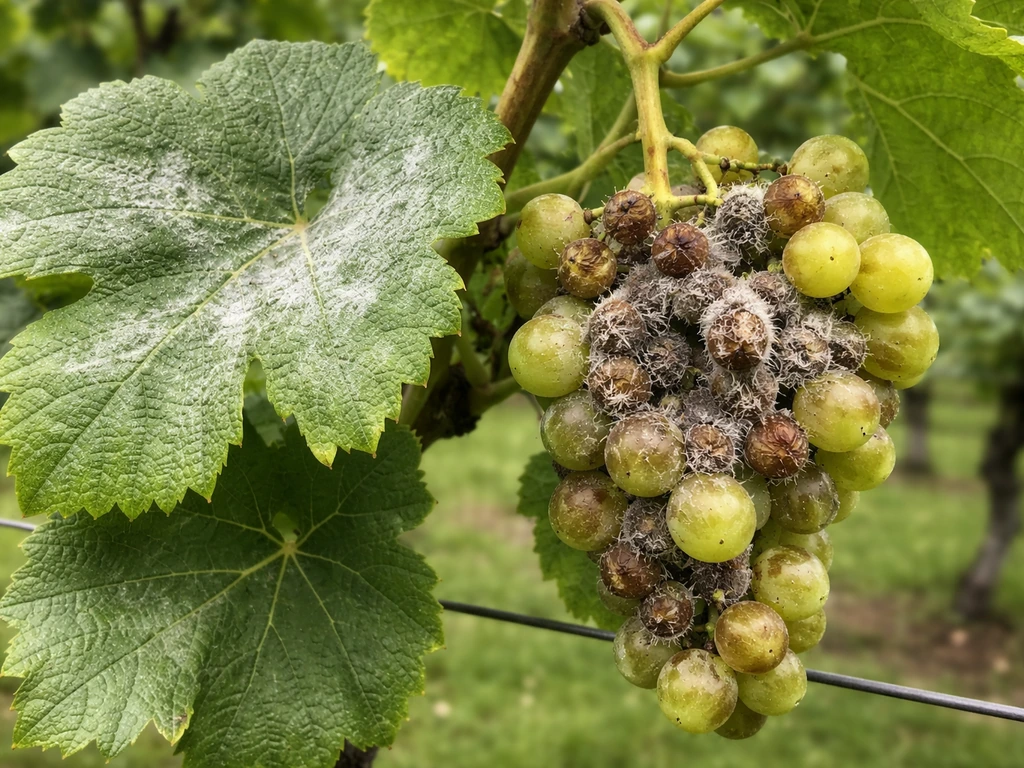
The three diseases that cause most grief for UK grape growers are powdery mildew, downy mildew, and grey mould (Botrytis cinerea). In a cool damp UK summer, all three can appear even in well-managed gardens. Knowing what to look for and how to prevent them is genuinely the difference between a good harvest and a ruined one.
Powdery mildew
Powdery mildew shows up as a white or grey powdery coating on leaves, shoots, and fruit. It thrives in warm dry conditions with poor air circulation, which makes crowded vines in sheltered spots especially vulnerable. The clusters are most susceptible from just before flowering to about three weeks after bloom, so this is the critical window to manage carefully.
Cornell’s fact sheet explains that powdery mildew can destroy infected clusters and notes that the fungus lives outside the plant, so control measures need to be well timed and managed within an IPM approach critical window to manage carefully. Choosing resistant varieties like Phoenix, Solaris, and Regent takes most of the pressure off.
For less-resistant varieties, ensuring good airflow by removing congested growth is the first line of defence. The RHS provides a list of home-garden legal fungicide options if the problem gets out of hand.
Grey mould (Botrytis)
Grey mould is caused by Botrytis cinerea and is the disease most likely to destroy a UK grape harvest if ignored. It spreads rapidly in humid conditions, particularly in the dense canopy of a mature vine. Infected berries go soft, discolour, and then spread to healthy fruit quickly. The pathogen lives in plant debris and weeds around the base of the vine, so basic garden hygiene matters enormously: remove dead leaves, fallen fruit, and any debris from around the vine regularly. In protected growing (greenhouses, polytunnels) the RHS is very clear that hygiene is especially critical because the fungus spreads faster in enclosed humid spaces.
Downy mildew and other issues
Downy mildew appears as oily yellow patches on the upper surface of leaves with a white downy growth underneath. It prefers cool wet conditions, exactly what a UK June or August can deliver. Again, airflow and variety choice are your best tools. Keeping the canopy open through summer pinching and shoot spacing helps enormously.
On the pest side, birds are the most consistent problem at harvest time. Net your vines with fine mesh before the fruit begins to soften, not after. By the time grapes are obviously ripening, birds already know they're there. Wasps can also cause damage to ripe fruit, particularly in late September. There aren't many practical solutions beyond netting and harvesting promptly once the grapes are ready.
Harvest timing and what to expect for eating vs wine
The best way to tell if grapes are ready to harvest is simply to taste them. The RHS is direct about this: grapes won't ripen further once picked, so you cannot harvest early and hope for the best. If they taste sharp and thin, they need more time. If they're sweet and full-flavoured, they're ready. This is straightforward but it does mean you need to be tasting regularly from mid-August onwards.
For table grapes, the goal is maximum sweetness and good texture. Harvest the whole bunch by cutting the stalk cleanly. Grapes store reasonably well in the fridge for a week or two, but the best flavour is always on the day of picking. Don't rush it: an extra week on the vine in September sunshine can transform a decent bunch into something genuinely delicious.
For wine grapes, the harvest window is a balance between ripeness (sugar) and acidity. In UK conditions, most home wine growers harvest in September or October, accepting that the wines will have higher natural acidity than southern European equivalents. This isn't a flaw, it's a characteristic, and UK-grown whites in particular can have a bright, crisp quality that suits varieties like Solaris and Phoenix very well. If you're curious about history, the Romans are often credited with spreading grape growing across parts of Britain Romans grow grapes in Britain.
Early-ripening varieties like Solaris may be ready by late August or early September in southern England and by mid-September in the north. Mid-season varieties like Phoenix and Regent typically finish in late September. If you're in the north of England or Scotland and growing outdoors without a warm wall, check your earliest-ripening varieties from the first week of September and don't leave harvesting later than early October. At that point, rain and cold will start to drive disease pressure up sharply, and Botrytis in particular can take hold fast in damp autumn conditions.
One realistic expectation worth setting: in a poor UK summer (cold, overcast, wet), even the best varieties will struggle. Your first crop from a young vine will also be small, and that's normal. Vines typically begin producing meaningfully in their third or fourth year. By year five or six, a well-trained outdoor vine in a good UK site can produce several kilograms of fruit. That's not a lot compared to a Mediterranean vineyard, but for a home gardener it's more than enough for fresh eating, a few bottles of wine, or both.
FAQ
Can I grow grapes successfully in the UK without a south-facing wall or greenhouse?
Yes, but you must be realistic about your region and pick earlier ripening varieties. In many gardens the wall (or other sheltered warm microclimate like a south-west fence) is what turns “almost ripe” into “fully ripe”, especially north of the Midlands. If you cannot provide that extra warmth, prioritize early or mid-season types and expect smaller harvests in colder, wetter summers.
What’s the best way to choose between wine grapes and table grapes if I’m new?
If you want reliable ripeness with less fuss, wine grapes are often easier in cool UK conditions because they focus on sugar and acidity rather than large berries and thin skins. Table grapes can be delicious but more likely to end up tasting bland if they do not fully ripen. A practical approach is to decide your end use first, then choose the variety shortlist accordingly.
How can I tell whether my grapes are truly ripe, not just sugar-higher because they are warmed up?
Use taste and texture, not only colour. Taste a couple of berries from different parts of each bunch, especially from the most exposed and the most shaded sides. Ripeness in the UK is often variable within the same vine, and berries in dense canopy areas may lag behind those in sun.
Do I need to use fungicides in the UK, even with disease-resistant varieties?
Often you can reduce or delay spraying, but you usually cannot ignore disease pressure entirely. Resistant varieties help, yet powdery mildew, downy mildew, and Botrytis can still appear in the wrong weather windows or if airflow is poor. Start with hygiene and canopy management, then only escalate if symptoms appear in the critical period around flowering for mildew.
Why do my vines get lots of leaves and tendrils but few grapes?
The most common causes are too much nitrogen, poor pruning renewal, or training that leaves the vine without proper fruiting arms. Avoid high-nitrogen feeds, prune with the intended system each winter, and pinching in summer is essential to push energy into fruit rather than vegetative growth.
Is planting in containers a good option for UK grape growing, and which types work best?
Containers can work, particularly for compact standard-trained vines in a greenhouse or a very sheltered spot. The big limitation is winter exposure, because container soil freezes faster than in-ground soil. If you go this route, plan for insulation and consistent watering in the first growing seasons, when establishment is still forming.
What soil test results should I aim for, and what matters more, pH or drainage?
Drainage matters more than exact pH. Grapes can tolerate moderate variation, but they struggle and may decline if roots sit in waterlogged, compacted ground. If you have heavy clay, improve structure before planting, and consider a raised planting position or drainage strategy rather than relying only on compost.
How far apart should I space grape vines, or can I grow multiple vines against one wall?
If you are wall-training, give each vine enough room for light penetration and airflow, otherwise disease risk rises sharply. In practice that usually means not crowding, leaving space for mature canopy size and pruning access. If you plan multiple vines, consider a wider wire plan and separate fruiting sections so you can maintain an open canopy.
What should I do if spring frosts damage the new shoots?
Do not assume the vine is finished. Damaged shoots can be replaced from secondary buds in some cases, but you need to protect new growth and maintain pruning discipline later. Monitor forecasts closely in late April and May, and if frost threatens, cover overnight with horticultural fleece as soon as fresh shoots are visible.
When is the best time to prune, and why does winter pruning style matter so much?
Winter pruning shapes fruiting wood for the next season, and the “renewal” step is not optional, especially in the Guyot system. If you keep old fruiting arms instead of replacing them, you can end up with a tangled vine and weaker or uneven fruiting. Follow the system you’re using consistently each year, then do summer pinching to keep the vine productive.
How do I prevent birds from ruining ripening grapes?
Net before birds discover the fruit, which is usually before the berries start to soften. Use fine mesh and secure it properly so gaps do not form around bunches. Check after windy weather because loose netting creates entry points, and remove any fruit that is already damaged to reduce ongoing pest attraction.
Why did my berries swell then shrink or stay small?
This often points to water stress around key growth stages, particularly around fruit swell, or uneven conditions during ripening. Overwatering can also contribute to disease pressure and soft fruit. Aim for consistent moisture for young vines in dry spells, and avoid letting established vines swing between drought and heavy watering right at fruit set.