
Ruby Roman grapes can technically be grown in India, but only in a narrow set of locations and with significant effort. 石川県オリジナルぶどう品種「ルビーロマン」 (Ishikawa Prefecture official page) notes that Brand/marketing quality thresholds for Ruby Roman used in Japanese certification (public communications) emphasise very large berry size, bright ruby colour and high sugar, Ishikawa’s materials and producer association require submission/inspection to use the 'Ruby Roman' trademark; official shipping season is reported as mid‑August to mid‑September. The variety's demanding climate requirements, extreme sensitivity to heat and humidity, and the near-impossible task of sourcing certified planting material legally make it a genuinely difficult undertaking for a home gardener. If you are in a cool, well-drained hill station region with dry summers, a small trial is worth attempting. If you are in a hot, humid lowland, the honest answer is: this variety will struggle to meet its own quality standards, and your time is better spent with varieties that actually suit your conditions.
Can We Grow Ruby Roman Grapes in India? Practical Guide Tips

Who this guide is for
This is for home gardeners and hobbyists across India who have seen Ruby Roman grapes in premium fruit photos or news stories and want to know whether they can actually grow them at home. Maybe you have a terrace, a small plot, or a hillside garden and you are willing to put in real effort. This guide will not talk you out of experimenting, but it will be straight with you about where Ruby Roman succeeds, where it does not, and what practical steps to take if you decide to try. You will also find honest alternatives at the end, because some equally beautiful and far better-adapted varieties deserve your attention.
What Ruby Roman actually is
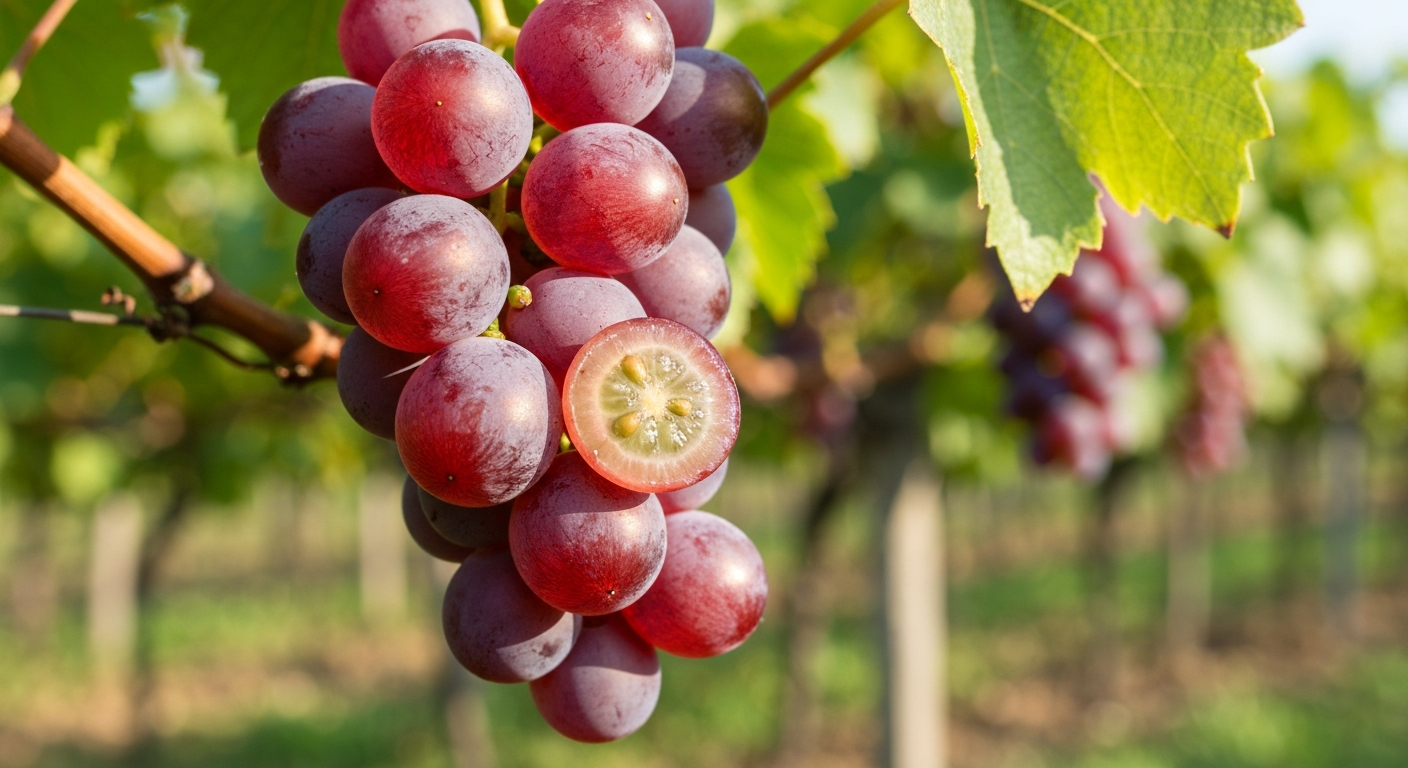
Ruby Roman is a Japanese table grape developed over roughly 14 years by the Ishikawa Prefecture agricultural experiment station. It was registered as a new variety in 2007 and first sold commercially in 2008. The variety is not just any red grape: individual berries typically weigh over 20 grams, often reaching 22 to 24 grams in trial plots, making them roughly twice the size of the already large Kyoho variety. The skin is a vivid ruby red and the flesh is sweet and firm, with sugar levels (measured as total soluble solids) typically in the range of 17 to 18 degrees Brix. In Japan, the certified brand minimum is commonly cited at around 18 degrees Brix.
The variety is trademarked and administered by Ishikawa Prefecture. Producers in Japan must apply and pass inspection to use the Ruby Roman name on their fruit. Outside Japan, there is no formal certification system, but the variety itself remains protected, which creates real sourcing complications for Indian gardeners (more on that shortly).
One thing worth knowing from the outset: even in Japan, this variety is genuinely difficult. Published trial data show that in some growing seasons, only around 40 percent of harvested clusters met brand certification standards. The main failure modes are coloration defects (berries stay pale or develop unevenly), fruit cracking, small berry size, and disease pressure. These challenges are dramatically magnified outside Japan's specific climate.
The climate requirements Ruby Roman actually needs
Ishikawa Prefecture sits on the Sea of Japan coast at mid-latitude, with warm and moderately humid summers, distinct seasons, and cool autumns. If you’re curious how grape growing differs in cooler maritime climates, see the guide on do grapes grow in the UK. The natural growing and ripening window for Ruby Roman runs from approximately mid-August to mid-September in Japan. To replicate that in India, you need a location that can offer the following.
- A full growing season of approximately 150 to 180 days without severe interruption from extreme heat or monsoon waterlogging.
- Summer daytime temperatures that regularly stay below 35°C during the fruit set and ripening period. Sustained temperatures above 35°C impair berry cell division, cause softening and sunburn, and most critically, suppress anthocyanin synthesis, meaning berries will not develop that signature ruby-red colour even if everything else goes right.
- Night temperatures cool enough to encourage sugar accumulation. A meaningful diurnal temperature range (day-night gap of at least 10 to 15°C) during ripening dramatically improves sugar content and skin colour in red table grapes.
- Low to moderate humidity during flowering and ripening. Humidity above 90 percent, especially combined with wetness on berries, creates near-ideal conditions for Botrytis bunch rot, which hits large-berried, tight-cluster varieties like Ruby Roman especially hard.
- Annual rainfall ideally below around 800 mm, or at minimum a dry ripening window. High-rainfall zones require covered cultivation to even attempt this variety.
- A dormancy or semi-dormancy period during winter. Grapevines in general, and Japanese varieties in particular, benefit from a winter rest. Locations with true cool winters (below 10 to 12°C for a sustained period) give vines a proper reset. Chilling requirement for Ruby Roman is not precisely published, but its Japanese origin suggests at least moderate chilling is helpful for uniform budbreak.
- Frost risk must be assessed carefully. Frost below approximately minus 2.2°C at budbreak or near 0°C at flowering causes direct damage to young shoots and flowers.
Soil, drainage, and root environment
Ruby Roman vines, like all Vitis cultivars, are not forgiving of waterlogged roots. Viticulture guidelines consistently recommend soils with at least 90 to 100 cm of workable depth and good internal drainage. Sandy loam to gravelly clay loam textures are ideal because they allow root penetration without holding excess moisture around the crown. Heavy black cotton soils common across Maharashtra's lowlands and the clay-heavy soils of parts of the Gangetic plain are problematic without significant amendment and raised-bed preparation.
In terms of pH, grapevines prefer a mildly acidic to neutral range, roughly 6.0 to 7.5. Many Indian soils, especially in drier Deccan regions and parts of Rajasthan, skew alkaline. This is manageable with rootstock selection. ICAR-NRCG (the National Research Centre for Grapes in Pune, which is India's best resource for local grape guidance) recommends rootstocks like 1103 Paulsen and 110 Richter for alkaline, saline, or drought-prone soils. Japanese trials with Ruby Roman used rootstocks like Kober 5BB, but research showed that lower-vigour Teleki-type rootstocks improved skin colour and sugar accumulation. In India, you would likely need to experiment with locally available rootstocks that balance vigour management with soil tolerance, which means talking to NRCG or a certified nursery before you plant anything.
Indian regions with the best chance of success
I want to be realistic here: no Indian region is a perfect match for Ruby Roman's ideal climate. But some locations come closer than others, and those are where a careful trial has the most potential.
Hill stations and elevated zones (1,500 m and above)
Elevated areas in the Western Ghats (parts of the Nilgiris, Kodaikanal, Ooty belt in Tamil Nadu and Kerala), Himachal Pradesh (Shimla, Kinnaur valley, Manali surrounds), and Uttarakhand hill pockets offer the coolest, most temperate conditions available in India. If you're curious about grape viability in cool maritime climates, see do grapes grow in Ireland for related insights. Kinnaur in Himachal is already a recognised grape-growing belt. These zones have cooler summers, a proper dormancy period, lower humidity than the plains, and a diurnal range that helps colour development. They are your best candidates. The main risks are spring frost during budbreak, waterlogging during monsoon, and transport/market challenges if you ever wanted to sell commercially.
Nashik and plateau Maharashtra (with protected culture)
Nashik and adjacent districts sit at roughly 565 metres elevation on the Deccan Plateau and are India's most established commercial grape belt. Summers are warm to hot, but the growing season is well-defined, drainage is manageable, and growers here already understand viticulture. Open-field Ruby Roman would face serious heat and colour problems in Nashik's summer, but a grower using rain shelters, shade netting, and careful canopy management during the ripening window could attempt a small trial. Research from China and other hot-climate trials shows that grey or blue shade nets reduce peak canopy temperatures and can improve berry firmness and TSS for table grapes under heat stress. Without this kind of infrastructure, the colour target is unlikely to be met.
Parts of Karnataka's Deccan Plateau
Bijapur (Vijayapura), Bagalkot, and parts of the Bangalore plateau have a long grape-growing history and relatively defined dry seasons. The elevation of Bangalore (roughly 920 metres) moderates temperatures somewhat. These zones are on the margins: hot enough during ripening to threaten colour, but structured enough agronomically to support a serious trial with protection measures.
Where Ruby Roman is unlikely to work
There are regions and situations where I would genuinely advise you not to attempt Ruby Roman, at least without extraordinary infrastructure. The problems are fundamental, not just technical.
- Hot, humid coastal zones (Kerala coast, coastal Andhra, coastal Karnataka, Goa, West Bengal coast): High humidity and monsoon rainfall create near-constant Botrytis pressure. Daytime temperatures regularly exceed 35°C during the months when Ruby Roman would need to be ripening. Anthocyanin development will be severely suppressed.
- Low-elevation tropical plains (much of Uttar Pradesh, Bihar, eastern Madhya Pradesh): Extreme summer heat (frequently above 40°C), long humid monsoons, and no meaningful dormancy period make vine management and quality colour development nearly impossible.
- Waterlogged or flooded soils anywhere: Ruby Roman's large berries are particularly susceptible to cracking from irregular water availability. Soils that retain water or flood during monsoon will cause vine stress, root problems, and berry cracking at the worst possible moment.
- Locations without reliable water control: This variety needs precise irrigation management. Areas without drip irrigation infrastructure or reliable water access during key growth stages are poor candidates.
- Northeast India plains (Assam plains, Manipur valley lowlands): Very high humidity and rainfall, combined with heat, will produce disease-prone vines and poor colour development.
Site-selection checklist for a home garden in India
Before you commit to planting, go through this checklist honestly. If you have to answer 'no' to more than two or three of these, I would redirect your energy to a better-suited variety.
- Elevation and temperature: Is your site at 800 metres or above, or do summer daytime temperatures regularly stay below 33 to 35°C during June through September? If you are on the plains with 40-plus-degree summers, flag this as a critical risk.
- Frost window: Can you identify your average last frost date, and is it early enough to avoid coinciding with grapevine budbreak? If spring frosts regularly extend past the time vines would be pushing growth, you need frost cloth or a protected structure ready.
- Sun exposure: Does your intended site receive at least 6 to 8 hours of direct sunlight daily through the growing season? South or south-west facing slopes or walls are ideal. Shade from trees or buildings during key ripening months will hurt sugar and colour development.
- Wind exposure: Is the site sheltered from strong, desiccating winds or damaging storm winds? Some air movement is good for disease control, but exposed hilltop sites with strong prevailing winds need windbreaks.
- Drainage: Does water drain away from the root zone within 30 to 60 minutes after heavy rain? Standing water even briefly during the growing season is a vine health risk. If drainage is slow, plan raised beds or mounded rows before planting.
- Soil depth: Is there at least 90 to 100 cm of soil depth before hitting hardpan, rock, or a perched water table? Shallow soils limit root development and vine balance.
- Water access: Do you have reliable access to irrigation water and ideally drip infrastructure? Ruby Roman under Indian conditions will need precise moisture management, not flood irrigation.
- Humidity and monsoon management: If you are in a monsoon-affected zone, do you have or can you build a rain shelter or polycarbonate cover over the vine rows? Open-field ripening during or just after monsoon is extremely high risk for bunch rot on large-berried cultivars.
- Sourcing: Have you confirmed you can obtain genuine, certified or clean planting material from a reputable nursery or research station? Do not plant from unknown cuttings or informal market material. Contact ICAR-NRCG in Pune as your first call for guidance on legal sourcing.
Planting and vine care: what Ruby Roman needs step by step
Rootstock and grafting
Do not plant Ruby Roman on its own roots in Indian soils. In Japan, Kober 5BB is widely used, and trials showed that lower-vigour Teleki-type rootstocks improved colour and sugar accumulation in the scion. In India, rootstock choice must account for your local soil chemistry and pest pressure. For alkaline, droughty, or saline soils (common across Deccan plateau regions), 1103 Paulsen is a well-supported choice recommended in ICAR-NRCG manuals. For sandier or lighter soils, 110 Richter is another option. Dogridge and Ramsey perform well in very tough, drought-stressed conditions but tend to produce very vigorous vines, which can actually be counterproductive for a colour-sensitive variety like Ruby Roman where excessive vigour reduces skin colour quality. Discuss rootstock options with NRCG or a certified nursery for your specific zone.
Trellis and training system
In India's major grape belts, the bower (overhead pandal) trellis is widely used because it maximises canopy area and reduces direct sun exposure on bunches in hot weather. For Ruby Roman in a marginal Indian climate, a modified bower or a high-wire cordon system that allows good air circulation and sunlight penetration to the fruit zone will serve you better than a dense overhead canopy. The goal is a balance: enough leaf shade to protect large berries from direct sunburn during peak heat, but enough openness to allow air movement through the bunch zone to manage humidity and fungal risk.
Irrigation
Drip irrigation is non-negotiable for Ruby Roman. Irregular soil moisture fluctuations during berry development are a leading cause of fruit cracking, which is already identified as a major quality failure in Japanese trials. In Indian conditions, this risk is amplified by monsoon unpredictability. A well-designed drip system with a soil moisture monitoring approach (even simple tensiometers) lets you maintain consistent moisture from fruit set through veraison (colour change onset) and reduce irrigation gradually as ripening progresses to concentrate sugars.
Pruning and cluster thinning
Ruby Roman's quality depends on limiting the crop load. In Japan, strict cluster thinning is standard practice, leaving only a small number of bunches per vine and thinning individual berries within clusters to allow the remaining ones to size up properly. In an Indian home garden, you should plan on leaving no more than 1 to 2 clusters per shoot and removing smaller or poorly positioned berries within each cluster early in development. This sounds severe, but it is the only way to approach the berry size and colour targets the variety is capable of. Heavy crop loads produce small, poorly coloured, low-sugar fruit.
Pest and disease management
Downy mildew, powdery mildew, and Botrytis bunch rot are the primary threats in India. Botrytis risk peaks when humidity exceeds 90 percent and berry surfaces stay wet for extended periods, especially at temperatures between 15 and 25°C. This is a near-constant risk during and after monsoon in many Indian regions. Management must be proactive: keep the bunch zone open through leaf removal, avoid wetting berries during irrigation, apply registered fungicides on a preventive schedule (consult ICAR-NRCG's pest management advisory for your region), and remove damaged or split berries immediately. Under a rain shelter, Botrytis risk drops substantially.
Protected culture and small-scale trial strategies
If you are serious about Ruby Roman in a marginal Indian location, a protected culture approach is your best path to a fair trial. A simple shade net structure using a grey or blue net (which research shows can reduce peak temperatures and improve berry quality under heat stress) placed over the vine rows during ripening can make a measurable difference in colour development and Botrytis control. A polycarbonate or UV-stabilised plastic rain shelter is the next level up, allowing you to exclude monsoon rain from the bunch zone entirely during the critical late-ripening period. This is exactly the kind of infrastructure used by serious hobby growers attempting Japanese and European premium varieties in non-native climates.
Start small. Plant two to four vines in your best-drainage spot, under shade net protection, using a grafted plant on an appropriate rootstock. Give the vines three full seasons before drawing conclusions. The first season is establishment, the second is early cropping, and the third gives you a true picture of what your site can produce.
Sourcing, legal cautions, and quarantine
This is a part that many gardening guides skip over, but it matters. Ruby Roman is a protected variety with a strict trademark administered by Ishikawa Prefecture. Importing vine material (cuttings, rootlings, budwood) into India without proper phytosanitary clearance is illegal under plant quarantine regulations and risks introducing viruses, nematodes, or other pests not currently present in Indian vineyards. For historical context on early grape cultivation in cooler climates, see the article Did the Romans Grow Grapes in Britain. Do not order cuttings informally from overseas or buy unnamed 'Ruby Roman' material from unverified nurseries without asking for documentation.
Your first contact should be ICAR-NRCG in Pune. They maintain the most current information on which foreign varieties are legally available as certified or quarantine-cleared planting material in India, and they can direct you to registered nurseries. If Ruby Roman clean planting material is not currently available through official channels in India, that is itself a practical answer to the sourcing question.
Realistic costs and yield expectations
Let's be honest about what you are getting into. Even in Japan, where growers have optimised conditions over nearly two decades, roughly 40 percent of clusters in some seasons failed to meet certification standards. In India, without near-perfect site conditions and protected infrastructure, you should expect lower quality consistency in your first several years. This is not a reason to give up on a trial, but it is a reason to set expectations correctly.
| Factor | Japan (optimised) | India home trial (realistic estimate) |
|---|---|---|
| Berry weight per berry | 20 to 24 g | 12 to 18 g (variable, site-dependent) |
| TSS / sugar level | 17 to 18° Brix (certified minimum ~18°) | 14 to 17° Brix depending on site and season |
| Cluster certification rate | ~40% in difficult seasons in Japan | No certification system; expect lower consistency |
| Botrytis risk (monsoon season) | Managed; Japan has defined dry ripening window | High to very high without rain shelter |
| Colour development (anthocyanin) | Good to excellent with cool ripening temps | Poor to moderate in plains; better in hill sites |
| Infrastructure needed | Overhead shelter, drip, cluster thinning | Shade net or rain shelter, drip, rootstock selection |
On cost: a basic drip irrigation setup, shade netting, trellis posts and wires for four to six vines will realistically cost between 15,000 and 40,000 rupees depending on materials and labour. Grafted planting material, if available from a certified source, adds to that. This is a hobby investment, not a commercial proposition at this scale.
Better-adapted alternatives worth growing instead (or alongside)
If your site does not match the demanding requirements above, or if you want a reliable crop alongside a Ruby Roman trial, these red and premium table grape varieties are far better adapted to Indian conditions and still produce beautiful, sweet, large-berried fruit. If you're also interested in varieties suited to cooler maritime climates, see our guide to the best grapes to grow in UK.
| Variety | Berry style | Best Indian regions | Key advantage over Ruby Roman |
|---|---|---|---|
| Sharad Seedless | Black, seedless, large | Nashik, Sangli, Solapur, Bijapur | Excellent heat tolerance, proven Indian commercial variety |
| Flame Seedless | Red, seedless, crisp | Nashik, Karnataka plateau | Good colour in warm climates, widely available certified material |
| Red Globe | Large red, seeded | Nashik, parts of AP/Telangana | Very large berry, better heat tolerance than Ruby Roman |
| Kishmish Chorny (Black Kishmish) | Dark red-black, nearly seedless | Hill zones, cooler plateaus | Handles moderate cold, aromatic, good sugar |
| Muscat Hamburg | Dark purple, large | Cooler hill sites, Himachal | Strong flavour, better cold tolerance, classic variety |
Sharad Seedless in particular is a genuinely excellent black-skinned variety that has been refined for Indian conditions through NRCG's breeding programme and consistently delivers good quality with far less drama than Ruby Roman would. For gardeners interested in dessert varieties elsewhere, see a short guide to the best dessert grapes to grow in the UK. If you want visual impact and sweetness from your home vineyard without fighting the climate every season, Sharad Seedless is hard to beat.
Final verdict: is Ruby Roman worth trying in India?
If you are a motivated hobbyist in a genuinely cool, elevated location in Himachal Pradesh, parts of the Nilgiris, or a well-drained Deccan plateau site with the infrastructure and patience for a multi-season trial, then yes, it is worth a small, careful attempt. Go in with realistic expectations, get proper planting material through official channels, invest in shade netting and drip irrigation, and document every season carefully. You may not get the 22-gram certified-brand berries of Ishikawa Prefecture, but you might get a genuinely impressive large-berried red grape that surprises you.
If you are on the hot plains, in a humid coastal zone, or without irrigation infrastructure, put your energy into varieties that reward Indian conditions. ICAR-NRCG in Pune is your best ongoing resource: their production manuals, variety lists, and extension network are exactly what a serious home gardener needs to make informed decisions. Contact them before you spend money on plants.
FAQ
Can Ruby Roman grapes be grown in India for home gardeners or hobbyists?
Yes — but conditionally. Ruby Roman is a high‑quality Japanese table grape bred for temperate, carefully managed production. Small‑scale success in India is possible where growers can match its needs: cool nights during ripening, long frost‑free growing season, well‑drained soils, strict canopy and cluster management, and careful pest/disease control. In hot, humid lowland districts without protective measures, achieving the large berry size, bright ruby colour and high sugar associated with the brand is unlikely.
Which Indian regions are most likely to succeed with Ruby Roman, and which regions are poor choices?
Most likely: cooler upland pockets with warm days and cool nights, long dry ripening windows and low summer peaks — e.g., higher elevation areas in northern hill states, selected plateau sites in Maharashtra/Karnataka at cooler microclimates, and protected small‑plots near research stations that can provide microclimate control. Poor choices: low‑elevation tropical plains and coastal humid districts where daytime temperatures frequently exceed ~35°C during berry set/ripening and where prolonged wetness is common.
What climate does Ruby Roman require (temperature, season length, humidity)?
Needs a long growing season (~150–180 days), moderate annual rainfall (preferably <~800 mm during the season), cool nights during ripening for colour and sugar accumulation, and avoidance of heatwaves (>35°C) during fruit set/early ripening. High humidity and prolonged berry wetness raise botrytis/cracking risk and reduce colour.
What soil and site conditions are essential?
Deep (≥90–100 cm), well‑drained soils with good structure (sandy‑loam to loamy) are preferred. Avoid waterlogged, strongly saline or extremely alkaline soils unless a tolerant rootstock and remediation are used. Good sunlight exposure with wind protection and frost protection if risk exists; choose sites with minimal spring frost risk during budbreak.
Which rootstocks are recommended for Indian conditions when grafting Ruby Roman?
Rootstock choice matters. For droughty, saline or alkaline Indian soils consider tolerant rootstocks such as 1103 Paulsen, 110 Richter or Ramsey/Dogridge — but note Japanese trials used Kober 5BB and Teleki types to influence vigour and colour. Match rootstock to your soil and check compatibility with the Ruby Roman scion; for colour and sugar under high vigour conditions, lower‑vigour/tetraploid rootstocks performed better in trials.
What practical site‑selection checklist should a home gardener use?
Checklist: elevation/mean summer max (avoid frequent >35°C), winter minimums (avoid spring frost <−2°C at budburst), soil depth and drainage (>90 cm, free draining), soil salinity/alkalinity check, water availability and irrigation control, aspect (full sun with afternoon shade in very hot sites), wind exposure, access to certified planting material and local extension support, and space for trellis/trellis height for canopy management.