
Yes, grapes genuinely grow in the UK, and plenty of home gardeners are harvesting real fruit from them every autumn. You do need to pick the right variety, give the vine a warm sheltered spot, and accept that some years will be better than others. But the idea that grapes are only for Mediterranean climates is just not true. England and Wales have produced wine grapes commercially for decades, and a well-chosen table or wine variety on a sunny south-facing wall in most parts of Britain can absolutely fruit and ripen.
Do Grapes Grow in the UK? How to Grow Them in England

Marcus Whitfield
2 Jul 2026
What the UK climate actually means for grapes
Grapes need warmth, sunshine, and shelter more than they need a Mediterranean postcard. The UK's biggest challenges are a short growing season, unreliable summer heat, and late spring frosts that can catch young shoots. None of these problems are deal-breakers, but you do need to work with them rather than pretend they don't exist.
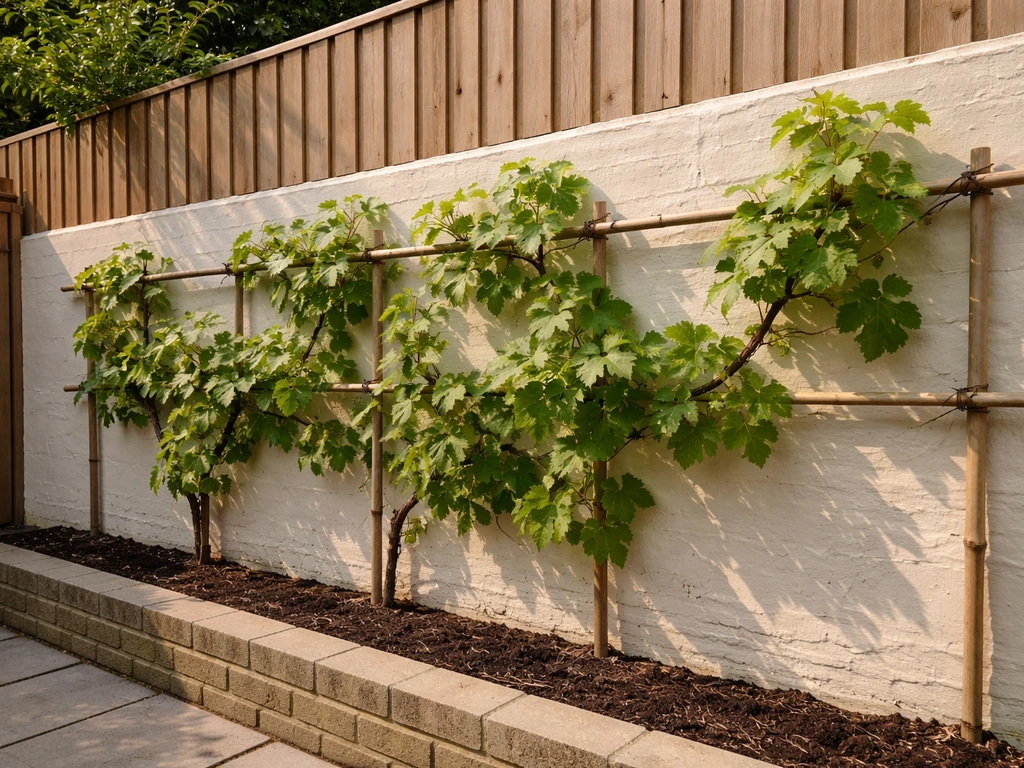
The RHS is pretty clear on site requirements: full sun, a sheltered position, and ideally a south- or south-west facing wall or slope with rows running north to south. That wall does a lot of work. It absorbs heat through the day and radiates it back at night, extending the effective growing season by several weeks. If you don't have a south-facing wall, a south-facing open slope in a sheltered garden can work too, but you'll want to stick to the earliest-ripening varieties.
Soil matters almost as much as sun. Grapes prefer well-drained, neutral to slightly alkaline soil that's reasonably rich in organic matter. Heavy clay that holds water over winter is bad news for roots. If that's what you've got, the fix is to work in well-rotted organic matter and horticultural grit before planting to open up the drainage. Check your soil pH too: vines grow best within a specific range, and alkaline or neutral soil (around pH 6.5–7.5) gives better results than acidic ground.
Frost is the one thing that genuinely worries UK grape growers. Late frosts in April and May can burn off new shoots and wipe out a whole season's fruiting potential. A south-facing wall gives some frost shelter, but if your garden is regularly hit by hard late frosts, you may want to cover the vine with horticultural fleece on cold nights in spring until the risk has passed.
Which grape varieties actually work in Britain
This is where most beginners go wrong. A variety that thrives in Bordeaux or California will struggle in the UK. You need cold-hardy, early-ripening varieties that can finish the job before Britain's autumn sets in. The good news is there are quite a few genuinely excellent options. If you want a quick starting point, this guide also covers the best grape varieties to grow in the UK.
Best wine grape varieties for UK conditions
For wine grapes, Madeleine Angevine is one of the most reliable performers in the UK. It's a white wine variety with a harvest window of roughly late September (around the 25th to 28th of September based on typical data), making it well-suited to cooler British sites. blank" rel="noopener noreferrer">Aurore (also known as Seibel 5279) is even earlier, often ripening in late August to early September, and it's moderately winter-hardy, tolerating freezes down to around -20°F.) That early ripening edge means it reaches full ripeness even before varieties like Chasselas in cool-climate conditions. Maréchal Joffre is another very early-ripening variety that often beats most other cool-climate wines to harvest by several days or even a couple of weeks.
Best table grape varieties for UK gardens
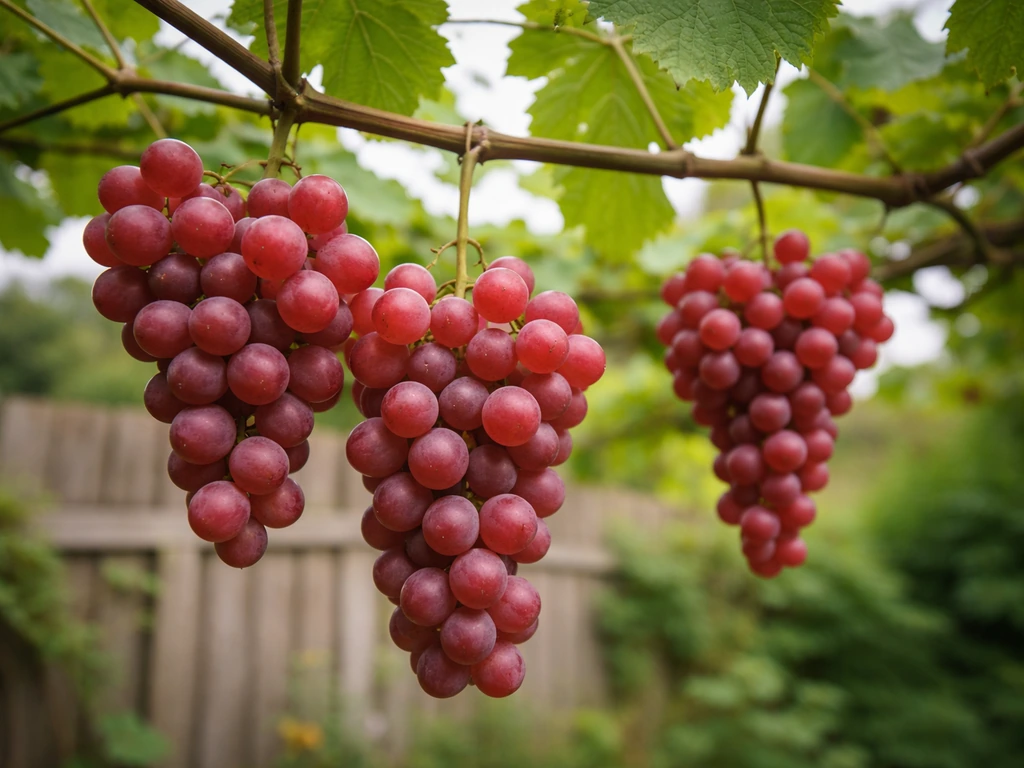
For eating grapes, Einset Seedless is one of the standout choices for UK home gardeners. It's an early-ripening red seedless variety that was specifically developed for colder climates like the UK and Ireland, and the RHS rates it as fully hardy. If you want a seedless dessert grape for a sheltered, warmer spot in the garden, Lakemont is worth considering too, though it really does need that sheltered warm position to do its best work outdoors. If you want dessert grapes with the best chance of success in the UK, choose varieties like Lakemont that are bred for colder conditions and a sheltered, warm spot best dessert grapes to grow in uk.
| Variety | Type | Ripening Time | Hardiness | Best For |
|---|---|---|---|---|
| Madeleine Angevine | White wine | Late September | Good cold tolerance | Most UK sites |
| Aurore (Seibel 5279) | White wine | Late Aug–early Sep | Moderately hardy to -20°F | Cooler and northern sites |
| Maréchal Joffre | Red wine | Very early | Good | Short-season sites |
| Einset Seedless | Red table (seedless) | Early | Fully hardy | Home eating, UK & Ireland |
| Lakemont | White table (seedless) | Mid-season | Moderate | Sheltered warmer gardens |
If you're unsure where to start, Einset Seedless for a table grape or Madeleine Angevine for wine are the two safest bets for most of England and Wales. You can find more detailed variety comparisons in a dedicated guide to the best grapes to grow in the UK.
How to plant, train, and look after your vine
Planting basics
Plant bare-root vines in late autumn or early spring, and container-grown plants from spring through early summer. Before you plant against a wall, prepare the soil thoroughly with organic matter and grit if drainage is an issue. When you fix your training wires or trellis to the wall, make sure to leave at least 20cm (8 inches) between the vine and the wall surface. That gap matters: it lets air circulate, reduces mildew risk, and protects the vine from reflected heat extremes.
Training systems: Guyot vs rod and spur
For most UK home gardeners growing against a wall or fence, the rod and spur system (sometimes called cordon training) is the most practical approach. You keep a permanent main stem (the rod) running along the wall, and each year the side-shoots are pruned back to short stubs (spurs) of two or three buds. New shoots grow from those spurs each spring, carrying the season's fruit. The RHS also describes the Guyot system, which is more common in commercial vineyards and involves replacing the fruiting canes each year. Both work, but for a wall-trained home vine, rod and spur is simpler to manage long-term.
Pruning timing in the UK
Pruning timing is one of those things the RHS is quite specific about, and it really does matter in the UK. Pruning after mid-winter can cause sap to bleed from cuts, which weakens the vine. But here's the UK-specific twist: in frost-prone gardens, it's actually better to delay pruning until March or early April. Pruning later pushes bud burst later, which reduces the chance of young shoots being caught by a late frost. It's a small but genuinely useful trick. New fruit-carrying shoots should then be pinched back in summer to direct energy into the fruit, and the main pruning happens again the following winter.
Watering and feeding
Grapes planted against a wall are often in a rain shadow, so the soil dries out faster than you'd expect. Water thoroughly in dry spells during spring and summer, especially when the roots are becoming established. Established vines are reasonably drought-tolerant but will stress if the soil dries out completely during fruit development. For feeding, a potassium-rich fertiliser in spring supports flowering and fruiting. Avoid high-nitrogen feeds, which push leafy growth at the expense of fruit.
Pollination
Most Vitis vinifera varieties and their hybrids are self-fertile, so you only need one vine to get fruit. Pollination usually happens naturally via wind and insects. If you're growing under glass or in a very sheltered spot where air movement is limited, gently brush the open flowers with a soft paintbrush or give the vine a gentle shake on warm dry days to help pollen move around.
How long grapes take to fruit in the UK and what to expect by season
A newly planted vine won't produce much in its first year, and that's fine. You want to focus on establishing a strong root system and the beginning of the permanent framework. By year two you might see a small crop; by year three a properly trained vine should be fruiting noticeably. Full productive maturity usually comes around years four to five. Don't be tempted to let the vine carry a heavy crop too early, it'll set the plant back.
Season by season, here's roughly what to expect in a UK garden. Spring (March to May) brings bud burst and new shoot growth, along with the frost risk window to watch carefully. Early summer (June) sees flowering on the new shoots. Mid-summer (July to August) is when the berries develop and the vine needs the most sun and warmth. Harvest in the UK typically falls between late August (for the very earliest varieties like Aurore) and October (for later varieties in warmer spots). The season length from berry set to harvest is roughly 70 to 75 days for a variety like Madeleine Angevine, which gives you a sense of how tight the window is in cooler parts of Britain.
UK-specific problems and how to handle them
Late frosts
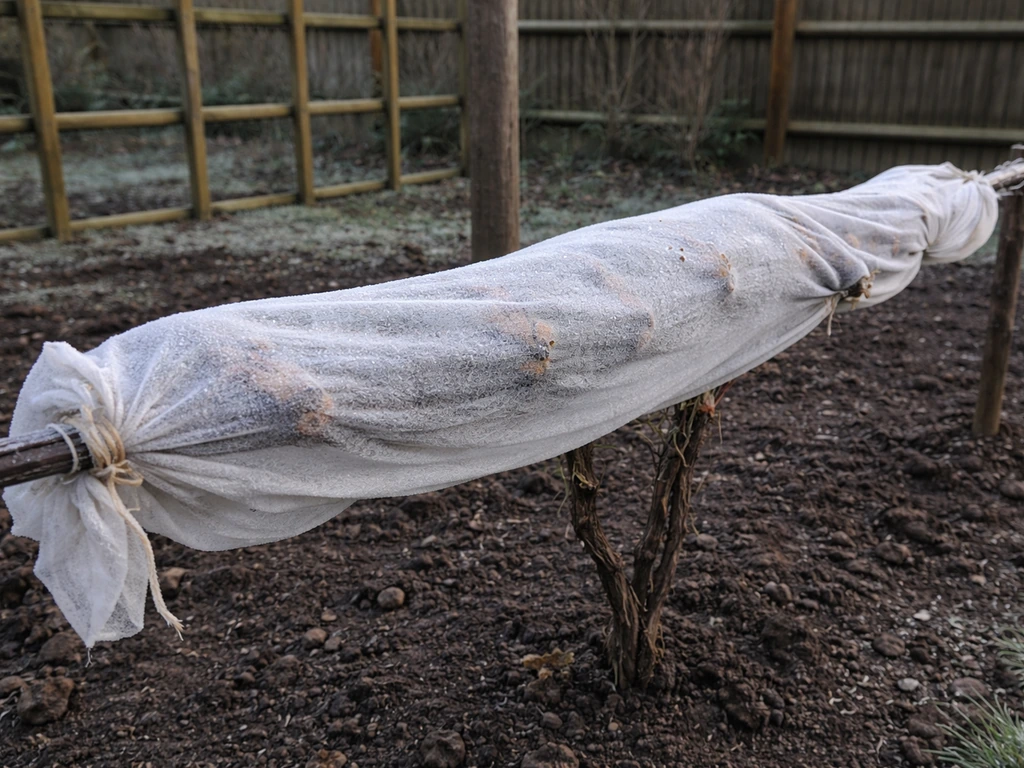
This is the biggest practical risk in most UK gardens. If frost is forecast after bud burst, drape the vine in a double layer of horticultural fleece overnight. Remove it in the morning once temperatures rise. It feels fiddly, but it can save the whole season's crop. Choosing a later-pruning approach (March to April rather than winter) helps delay bud burst and naturally reduces frost exposure.
Mildew (powdery and downy)
Mildew is the most common disease problem on UK grapes. The RHS identifies powdery mildew, downy mildew, and grey mould (botrytis) as the top three grape diseases. Powdery mildew overwinters in the buds and produces airborne spores when growth starts in spring, so good air circulation around the vine is your first line of defence. Keep shoots well-spaced when training, remove the 20cm gap between the vine and the wall, and thin out congested growth during summer. If you see white powder on leaves or shoots, an approved fungicide or a bicarbonate spray can help. Downy mildew tends to appear in wet conditions, so shelter and airflow matter again.
Poor ripening
A common disappointment in cooler UK summers is grapes that just don't ripen fully. The fix is partly about variety choice (which is why early-ripening varieties matter so much), partly about site (maximum sun and wall heat), and partly about management. Reducing the crop load by thinning bunches, removing excess leaves to expose the remaining fruit to sun, and keeping the vine trained tight to a warm wall all help get sugar levels up before autumn sets in.
Spotted wing drosophila (SWD)
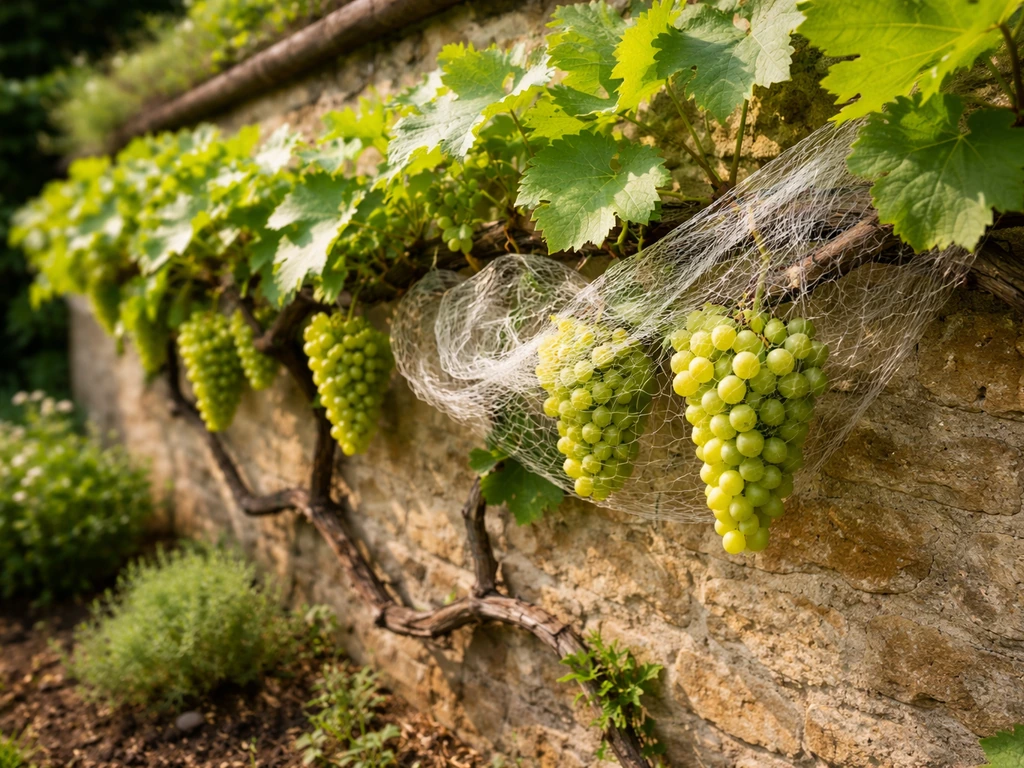
This is a newer pest to be aware of. Spotted wing drosophila was first reported in Britain in 2012. Unlike regular fruit flies that only target damaged fruit, SWD females have a serrated egg-laying organ that can pierce healthy, developing berries. Damage looks like soft, sunken spots on the fruit. Physical barriers like fine mesh netting over ripening bunches are the most practical protection for home gardeners. Good garden hygiene, clearing fallen or split fruit promptly, also helps reduce the population.
Birds
As the grapes colour up and sweeten in late summer, birds will notice before you do. Net the vine or individual bunches from late July onward. Old fruit nets draped loosely over the vine work, but fine mesh netting will also help with SWD at the same time.
Your practical starter plan for growing grapes in the UK
Here's how to go from 'thinking about it' to 'first fruit on the vine' in a way that actually works for a UK garden. In warmer parts of India, you may be able to grow ruby roman grapes outdoors, but you will still need to match the site to grape requirements and manage heat and disease risk growing ruby roman grapes in india.
- Choose your site first. A south- or south-west facing wall, fence, or slope that gets sun for most of the day is your priority. If you don't have a wall, a sheltered open spot in full sun can work with the right variety, but a wall gives you the biggest advantage.
- Check your soil. Dig a small hole and see how water drains. If it puddles for more than 30 minutes, work in grit and organic matter before planting. Test or check the pH if you can: aim for neutral to slightly alkaline (pH 6.5 to 7.5).
- Pick an early-ripening variety suited to your region. For most of England and Wales, Einset Seedless (table) or Madeleine Angevine (wine) are the most reliable starting points. For shorter-season or more northerly sites, go even earlier with Aurore or Maréchal Joffre.
- Put up training wires before you plant. Fix horizontal wires to the wall at roughly 30–40cm intervals, keeping at least 20cm between the wires and the wall surface.
- Plant in late autumn or early spring. Water in well and mulch around the base, keeping the mulch away from the main stem.
- In year one, focus on establishing a single strong shoot as the main rod. Pinch off flowers if they appear: you don't want the vine wasting energy on fruit yet.
- Prune in late winter or early spring (March in frost-prone sites). Cut side-shoots back to two or three buds to build your spur system.
- In spring, watch the weather forecast. Fleece the vine on frosty nights until the risk has passed.
- In summer, pinch back new fruiting shoots beyond two leaves after the bunch, and remove leaves shading the developing grapes in August.
- Harvest when the grapes taste sweet and fully ripe, not just when they look the right colour. Taste is the real test.
Growing grapes in the UK is genuinely achievable, and the learning curve is shorter than most people expect. The main things working against you are late frosts and a cool summer, both of which you can manage with the right variety and a bit of attention in spring. If you're comparing notes with gardeners in Ireland, the challenges are very similar since the climates are closely related. Get the site and variety right first, and the rest will follow. It really is that practical.
FAQ
Do grapes grow in the UK without a south-facing wall?
Yes, but only in limited situations. If your garden is north-facing or the vine will not get consistent sun for most of the day, you will likely struggle to ripen fruit. In that case, focus on the earliest varieties and consider a large pot placed on the hottest patio wall or a sheltered slope, then track ripeness year by year to decide whether to keep the vine.
Will I get grapes from just one vine in the UK?
Most people do best with one vine, because many common varieties are self-fertile. However, if you grow a variety that is not self-fertile, you may need a second compatible vine, and you will also want some airflow. When in doubt, check the variety’s pollination notes before planting.
Do I need to help pollination when growing grapes in the UK?
If the vine is inside a greenhouse or very sheltered area, you can skip pollinator help only if the air still moves. In still, humid conditions, pollen transfer may be poor, so gently brushing the flowers or shaking the vine on dry warm days can noticeably improve set.
When should I start protecting grapes from birds?
Plan on netting from late July onward if birds are common in your area. Use fine mesh that fully covers the bunches rather than loose, draped netting, and secure the edges well to prevent birds and pests from reaching the fruit.
Can I grow grapes in the UK in a pot?
Yes, container growing can work, especially for early varieties, but it limits root volume and drought tolerance. Choose a very large pot with excellent drainage, feed carefully, and accept you may get smaller crops or slower ripening compared with a wall-trained vine.
What should I do if my grapes color up but do not taste sweet?
Not always. In cool UK sites, vines can still produce berries but fail to reach full ripeness. Thinning bunches, removing some leaves shading the fruit, and harvesting promptly at full color and taste are often better than waiting for a Mediterranean-style flavor timeline.
How often should I water grapes in the UK?
Watering needs differ after establishment. Newly planted vines need deeper watering during dry spells in spring and early summer, but once established you should avoid constant light watering. Instead, water thoroughly when the soil dries out, particularly around flowering and fruit sizing, then taper as you approach harvest.
Is it better to prune grapes late in winter or in early spring in the UK?
Yes. Pruning too early can trigger sap bleed and can also affect bud timing. In frost-prone gardens, waiting until March or early April to prune, then pinching in summer, usually gives a better balance of plant health and reduced frost risk.
What is the best non-chemical way to prevent mildew on UK grapes?
If mildew is your main concern, the most effective lever is airflow and leaf management, not repeated sprays. Space shoots properly, avoid overcrowding against the wall, and remove congested growth in summer so spores do not get trapped in damp pockets.
What frost protection actually works at home, and when should I take it off?
The key is timing your response to temperature. If a hard frost is forecast after bud burst, cover overnight with a double layer of horticultural fleece and remove it in the morning to avoid heat buildup and moisture retention.
How do I choose between table grapes and wine grapes for a UK garden?
Most UK growers start with a table-friendly or early-wine variety, but the practical decision is which one fits your ripening window. If you want reliable results, pick a variety that typically harvests in late August to early October in your area, then plan your netting and harvesting days in advance.