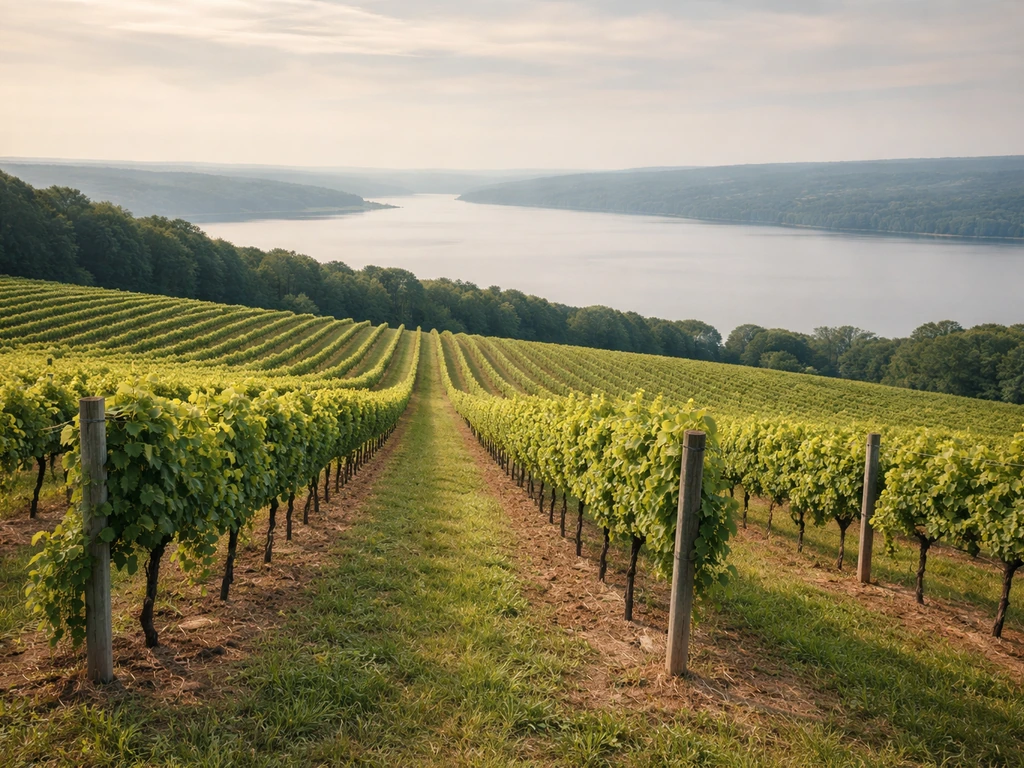
Grapes grow well in the Finger Lakes because the lakes themselves act like a giant climate buffer, keeping spring frosts from killing young shoots and pushing fall frosts back far enough that fruit actually ripens. Add in sloping terrain that drains cold air away from vines, a growing season of roughly 150 frost-free days, and soils with decent drainage, and you have a combination that very few regions in the northeastern U. S. can match.
Why Do Grapes Grow Well in the Finger Lakes Region
Marcus Whitfield
26 Jun 2026
For home gardeners, the exciting part is this: if you can recreate even some of those conditions in your own yard, you can grow grapes successfully in much of New York and the surrounding area. In Pennsylvania, the best grapes to grow tend to be hardy hybrids and selected cold-tolerant vinifera types that can ripen in your length of season.
Finger Lakes climate basics
The Finger Lakes sit in a continental climate zone where summers are warm but not brutal, typically reaching the mid-70s to mid-80s°F, and winters are cold enough to keep vines dormant and accumulate the chill hours they need. That combination of meaningful cold and adequate heat is actually rare, and it matters a lot. Vines that don't get cold enough in winter don't rest properly; vines that don't get warm enough in summer don't ripen fruit. The Finger Lakes thread that needle well.
Growing degree days (GDD, calculated above 50°F) are the main metric for ripening potential, and the Finger Lakes accumulate enough to ripen a wide range of varieties, from early-season hybrids all the way to Riesling and some Cabernet Franc in favorable spots. Cornell's fruit production guides point to a frost-free season of about 150 days as the baseline for reliable grape production, and most Finger Lakes sites hit or exceed that threshold. That's why this region punches above its weight compared to the rest of upstate New York.
Microclimates from lakes, elevation, and slopes
The lakes are the single biggest reason grapes succeed here, and it works in both directions. In spring, the cold water cools the air around the shorelines, which actually slows bud break on nearby vines. That sounds like a disadvantage, but it's a gift: slower bud break means buds open later, after the worst frost risk has passed. In fall, the lakes reverse that pattern. The water holds heat from summer and radiates it outward well into October, delaying the first killing frost and extending the ripening window by several weeks compared to inland sites at the same latitude.
Elevation and slope matter just as much on a local scale. Cold air is denser than warm air, so on calm nights it flows downhill and pools in low spots, creating frost pockets. Vineyards and home gardens on mid-slope positions let that cold air drain past the vines instead of collecting around them. Cornell's Finger Lakes Grape Program is explicit about this: sloping sites promote air movement, reduce radiational freeze vulnerability, and affect both frost dates and heat unit accumulation. Even a gentle slope toward a lake can be the difference between a vine that survives a February cold snap and one that doesn't.
Chill hours and winter survival
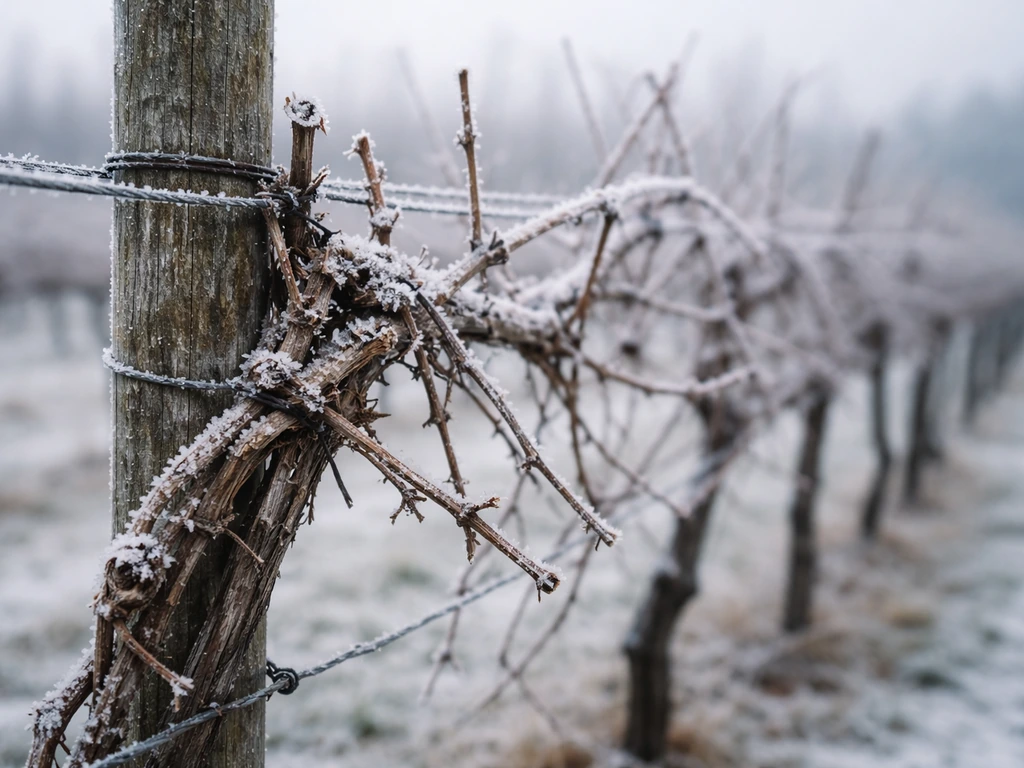
Chill hours (typically counted as hours below 45°F) are almost never a problem in the Finger Lakes. The region gets more than enough cold to satisfy dormancy requirements for every commercially grown grape variety. The real winter challenge here is bud hardiness, which is different from chill hours.
Cornell notes that after warm winter conditions, rapid deep freezes can threaten next season’s buds, and it explains that cold acclimation and re-hardening processes matter for bud survival, not just isolated cold minima warm winter conditions followed by rapid deep freezes threaten next season’s buds. It's not just about how cold it gets, but whether vines have hardened off properly before temperatures drop, and whether a mid-winter thaw is followed by a rapid deep freeze.
Cornell research makes this clear: warm winter stretches that cause partial de-hardening, followed by a sudden return to extreme cold, are more dangerous to buds than a steady cold winter. The NRCC and NEWA both offer grape bud hardiness tools that model the temperature threshold at which buds are likely to be damaged, and those tools exist precisely because raw minimum temperatures don't tell the whole story. For home gardeners, the practical takeaway is to pick varieties with proven cold hardiness for USDA Zone 5 or 6 conditions, and to avoid anything marketed as hardy only to Zone 7.
Cornell's research identified varieties like Marechal Foch, Concord, and Marquette as among the least likely to suffer bud damage during a significant cold event. Newer hybrids like Aravelle, a Riesling-type bred at Cornell, can reportedly tolerate around -7°F without bud damage in midwinter, which is a serious improvement over traditional Vitis vinifera. For anyone gardening more than a few miles from a lake, that kind of cold tolerance becomes essential.
Disease pressure and how the Finger Lakes handle it
Let's be honest: the Finger Lakes is not a low-disease environment. Humidity, fog off the lakes, and the region's rainfall patterns create real pressure from downy mildew, powdery mildew, black rot, Botrytis, and Phomopsis. Cornell IPM notes that downy mildew thrives in cool, wet conditions with relative humidity around 55-86°F and high moisture, which is basically a description of a Finger Lakes spring morning. Botrytis loves high humidity and still air, and Phomopsis can get started on canes and leaves very early in the season. Cornell’s spring disease management overview for New York also highlights Phomopsis, black rot, downy mildew, powdery mildew, and occasionally anthracnose as major early-season grape diseases Phomopsis, black rot, downy mildew, powdery mildew (and occasionally anthracnose).
What makes the Finger Lakes work despite this is a combination of good site selection and active canopy management, not a lack of disease pressure. Vineyards on slopes with good air movement dry out faster after rain. Proper training and leaf pulling expose fruit and foliage to sunlight and airflow, which Cornell's Finger Lakes Grape Program says will almost always be necessary in the region when using VSP (Vertical Shoot Positioning) training with moderate to vigorous vines. You're not avoiding disease in the Finger Lakes; you're managing conditions so the vines can outrun it.
For home gardeners, this means two things. First, disease-resistant varieties are your best friend. The best grapes to grow in New England are the cold-hardy, disease-manageable varieties that can ripen within the region’s cooler growing season disease-resistant varieties. Native American hybrids and modern Cornell-bred cultivars carry resistance to most of these diseases that pure Vitis vinifera simply doesn't have. Second, timing sprays based on actual weather-driven infection risk (which is what tools like NEWA's grape disease models allow you to do) is far more effective than calendar-based spraying. You don't need to spray every week if you know infection conditions haven't been met.
Grape varieties that match the region
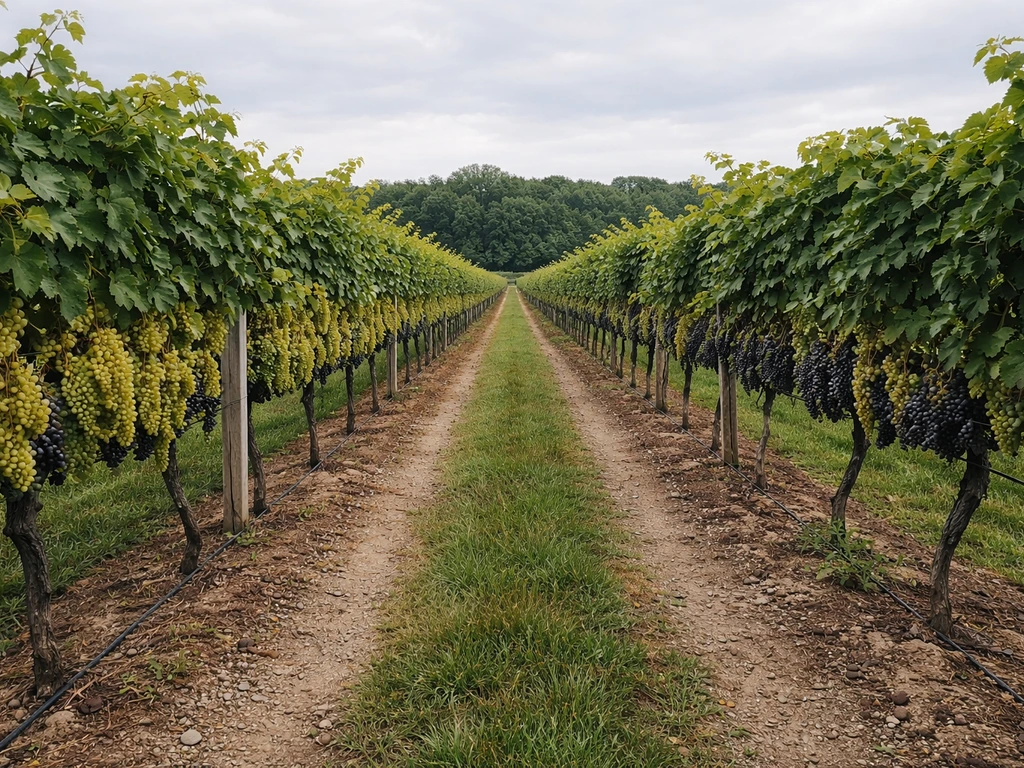
The best varieties for Finger Lakes conditions share a few traits: cold hardiness to at least Zone 5, reasonable disease resistance, and the ability to ripen within the available GDD window. If you are wondering what to plant, the best wine grapes to grow in Maryland are the ones that can handle cold winters, ripen reliably, and resist common diseases best varieties. Here's a practical breakdown for home gardeners:
| Variety | Type | Cold Hardiness | Disease Resistance | Best Use |
|---|---|---|---|---|
| Concord | American hybrid | Zone 4 | High | Table grapes, juice, jelly |
| Marquette | Minnesota hybrid | Zone 4 | High | Red wine, fresh eating |
| Marechal Foch | French-American hybrid | Zone 4 | Moderate-High | Red wine |
| Frontenac | Minnesota hybrid | Zone 3 | High | Red wine, juice |
| Noiret | Cornell hybrid | Zone 5 | Moderate | Red wine |
| Traminette | Cornell hybrid | Zone 5 | Moderate-High | White wine |
| Aravelle | Cornell Riesling hybrid | Zone 5 (-7°F) | Moderate-High | White wine |
| Riesling | Vitis vinifera | Zone 5 (marginal) | Low | White wine (lake-adjacent sites only) |
| Cabernet Franc | Vitis vinifera | Zone 5 (marginal) | Low | Red wine (warm sites only) |
If you're gardening right on a Finger Lake with a good south-facing slope, Riesling and Cabernet Franc become realistic options. If you're a few miles inland or at higher elevation, stick with hybrids. The Cornell-bred varieties like Traminette, Noiret, and Aravelle were specifically developed to perform in New York conditions, so they're a smart starting point for anyone in the region.
Similar principles apply if you're looking at varieties for upstate NY more broadly, or even neighboring states like Pennsylvania and Connecticut, where the climate shares many of the same challenges. Using similar principles is how you choose the best grapes to grow in upstate NY, even if you are not planting specifically in the Finger Lakes varieties for upstate NY more broadly.
Site selection and soil/water drainage requirements
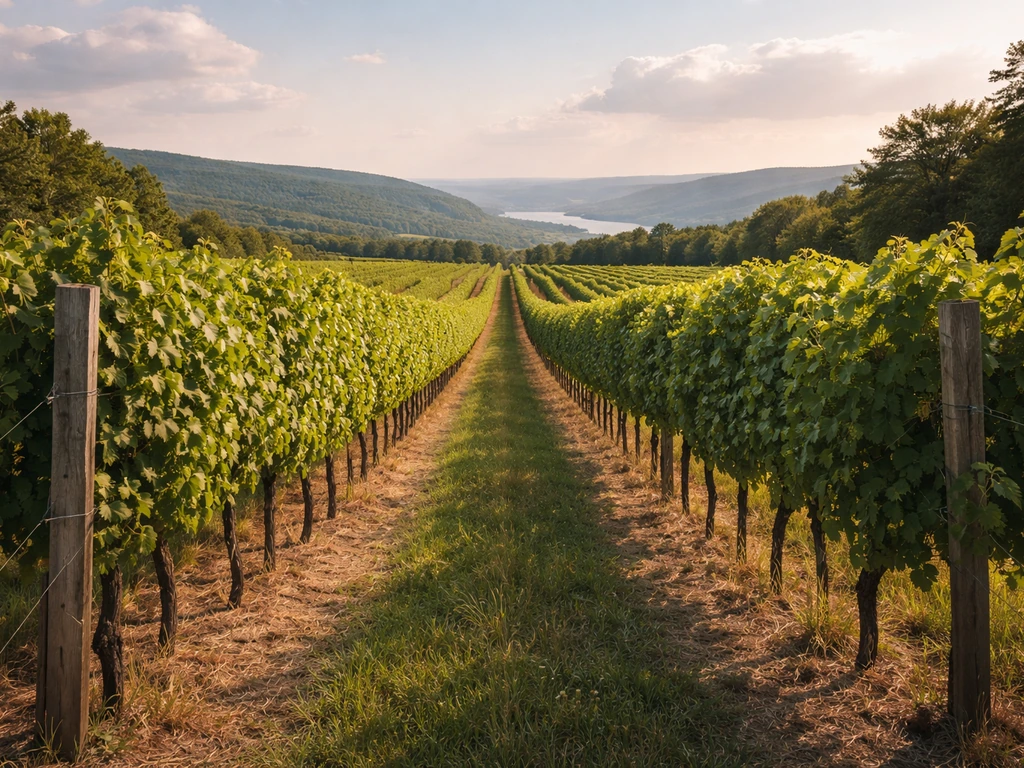
Cornell's Finger Lakes Grape Program offers a NY Vineyard Site Evaluation System that maps suitability using climate factors including frost-free days, GDD accumulation, and winter low temperatures. You don't need to use that exact tool to apply its logic: what you're looking for is a south- or southeast-facing slope, good air drainage, and at least 6 hours of direct sun. The slope doesn't need to be dramatic; even a 5-10 degree incline is enough to help cold air move away from the vines on frost nights.
Soil drainage is non-negotiable. Grape roots don't tolerate wet feet. Well-drained, slightly acidic soils (pH around 5.5-6.5) with some depth are ideal. If your yard has heavy clay that stays soggy for more than a day or two after rain, you'll need to either amend it aggressively, build raised rows, or choose a different spot. The Finger Lakes region benefits from glacially deposited soils with relatively good drainage on most slopes, which is part of why the region works so well. Replicating that in your yard means not planting in low spots, near downspouts, or in areas where water visibly pools.
- Choose a south- or southeast-facing slope for maximum sun exposure and cold-air drainage
- Avoid frost pockets: low spots, areas surrounded by dense tree lines, or bottom-of-hill locations
- Confirm soil drains freely: water should not pool for more than 24-48 hours after heavy rain
- Target soil pH of 5.5-6.5; test before planting and amend if needed
- Look for wind protection on the north and west side (a fence, building, or tree line), but not so enclosed that air circulation is blocked around the vines
- Aim for at least 150 frost-free days at your specific location; check NOAA climate normals for your county
Growing season timing and canopy/trellis support
In the Finger Lakes, bud break typically happens in late April to mid-May depending on variety and site. The lake-moderated sites break later than inland sites, which is protective. Shoot growth, flowering, and fruit set follow through June, and harvest runs from late August through October depending on variety. Early-season hybrids like Marechal Foch or Marquette finish in late August or September; Riesling and Cabernet Franc push into October on good years. Your job from bud break through harvest is managing the canopy so everything gets light and air.
For a home gardener, a VSP trellis system (two to three catch wires above a fruiting wire, training shoots vertically upward) is the most practical and widely recommended choice for the region. Vitis vinifera varieties like Riesling and Cabernet Franc naturally grow upright and suit VSP very well. Cornell explicitly notes that VSP in moderate to vigorous vineyards in Finger Lakes conditions will almost always require leaf pulling around the fruit zone, both for ripening and disease management. Plan to pull leaves on the morning sun side of the canopy by mid-July; it makes a bigger difference than most new growers expect.
Basic trellis infrastructure should be set up before or at planting. A simple system uses end posts sunk 2-3 feet into the ground, line posts every 18-24 feet, and a bottom fruiting wire at about 30-36 inches with catch wires above at 18-inch intervals. Get the infrastructure right in year one; trying to retrofit it around an established vine is frustrating and often damages the plant.
Practical takeaways for home gardeners
The Finger Lakes is special, but its advantages aren't magic. They're a combination of specific, replicable factors: lake-buffered temperatures, slope-driven air drainage, adequate GDD, and informed variety selection. If your yard has even half of those conditions working in its favor, you have a real shot at growing grapes successfully. If your site is flat, shaded, poorly drained, or far from any large body of water at a high elevation, you'll need to lean hard into the most cold-hardy, disease-resistant varieties available and accept that you're working against the odds. For New Jersey gardeners, the best grapes to grow are those that can handle the state’s winter temperatures and short growing season best grapes to grow in nj.
Start by honestly evaluating your site against the criteria above. If your location is within a reasonable distance of one of the Finger Lakes, or even another large lake in the region, there's a good chance you can grow grapes without heroic effort. If you are looking for the best grapes to grow in CT, you can start by choosing varieties that match the same cool-climate, cold-hardy approach used in the Finger Lakes region.
If you're in a colder inland pocket, look at varieties bred for Minnesota or Quebec conditions (Marquette, Frontenac, Petite Pearl) before trying anything from Europe. The New York Vineyard Site Evaluation System from Cornell is worth a look even for backyard projects; it puts real climate data behind site assessment rather than guesswork.
- Identify your frost-free day count and average last/first frost dates using NOAA or your local Cornell Cooperative Extension office
- Check your site for slope, air drainage, and sun exposure before buying a single vine
- Test your soil pH and drainage before planting; fix drainage issues first
- Choose cold-hardy, disease-resistant varieties as your starting point, especially if you're more than a few miles from a large lake
- Install trellis infrastructure before or at planting; VSP is the most practical system for most home growers
- Use NEWA's grape disease models to time any fungicide applications based on actual infection risk, not the calendar
- Pull leaves around the fruit zone by mid-July to improve light exposure and airflow
- Check bud hardiness data from NRCC or NEWA after any significant mid-winter warm spell followed by a cold snap, especially with vinifera varieties
The Finger Lakes didn't become a respected wine region by accident. It happened because growers learned to work with the specific climate advantages the lakes and topography provide. As a home gardener, you're doing the same thing on a smaller scale: reading your site, picking varieties that match your conditions, and managing what you can control. For readers in Massachusetts, you can use the same logic to choose grapes bred for cold winters, good disease resistance, and reliable ripening in your available growing season. That's exactly the approach that works here, and it's the same logic that applies whether you're gardening near the lakes or anywhere else in New York or the broader Northeast.
FAQ
How far from a Finger Lake can you still expect grapes to grow well?
You can often grow grapes a few miles inland if your site has similar sun exposure and good cold-air drainage, but you should expect earlier bud break and higher winter risk the farther you get. If your yard is in a frost pocket, the effective safe range shrinks quickly, so prioritize slope and airflow over “distance” to the water.
If I have a flat backyard, can I still grow grapes there?
Flat sites are doable only if you can prevent cold-air pooling, for example by selecting a slightly raised area, improving drainage, and providing strong air movement. Without slope, you may need to rely more heavily on very cold-hardy, disease-resistant varieties and accept more aggressive winter protection.
Does buying “hardy” grapes guarantee they survive Finger Lakes winters?
No, because bud injury depends not only on the coldest temperature, but also on whether vines partially de-harden during thaws and then get hit by a hard refreeze. Choose varieties with proven cold-bud performance for Zone 5 or 6, and avoid marketing claims that only mention Zone 7 hardiness.
Why do my vines grow leaves but struggle to ripen fruit?
Most often it is an insufficient ripening window or too much canopy shade, both of which reduce heat unit efficiency. In the Finger Lakes approach, leaf pulling around the fruit zone by mid-July and careful VSP management are usually the difference between “lots of growth” and properly ripe clusters.
Which is more important for success, growing degree days or frost protection?
Both matter, but for different stages. Frost protection is critical around bud break, while growing degree days become the limiting factor for harvest readiness. A site that buffers spring frost can still fail if it does not accumulate enough heat for the variety you planted.
Can I grow Vitis vinifera like Riesling or Cabernet Franc if I’m not on a slope?
It’s possible only with a favorable microclimate, typically strong sun, decent air movement, and no persistent wetness. If you are flat, wet, or sheltered from wind, vinifera becomes much harder because bud hardiness and disease management costs rise quickly.
What soil characteristics matter most, beyond “good drainage”?
Depth and consistency matter. If the soil drains after rain but then holds moisture below the root zone, vines can still suffer, especially during cool, humid periods. Aim for slightly acidic pH (around 5.5 to 6.5) and avoid planting where water visibly pools for more than a day or two.
Is disease pressure the same across the Finger Lakes, or does it vary by spot?
It varies a lot by local canopy conditions. Even within the same region, vineyards on slopes with faster drying after rain typically see less severe downy mildew and Botrytis than low, still-air sites. Your pruning, leaf removal, and spacing can reduce disease risk more than changing varieties alone.
Do I really need to spray if I choose disease-resistant varieties?
Often you can reduce frequency, but you may still need targeted intervention in high-risk weather. The practical move is to follow infection-risk conditions rather than a fixed schedule, using weather-driven models so you spray only when the pathogen pressure is actually likely to take hold.
When should I prune and train for the Finger Lakes style, specifically with VSP?
Train and wire the system early, then focus on canopy control through the season. Plan leaf pulling on the sun-facing side by about mid-July, and ensure fruiting shoots are managed so clusters get light during ripening, not just growth during June.
How do I choose between an early hybrid and a late-ripening vinifera-style variety?
Choose based on your site’s heat accumulation and your distance from the lake or higher elevation effects. If you regularly get cooler nights, early hybrids usually provide a safer harvest window. On warmer, south-facing, well-drained slopes, Riesling-type varieties can be realistic, but late varieties require consistent canopy management.