
Yes, you can absolutely grow grapes in North Carolina, and plenty of home gardeners across the state do it successfully every year. The key is matching your variety to your region. NC spans a wide range of climates, from the humid coastal plain to the cooler Blue Ridge Mountains, and that difference matters a lot when you're picking what to plant. Get the variety right for your part of the state, choose a well-drained sunny site, and set up a proper trellis from day one, and you'll have a productive vine that rewards you for decades.
Can You Grow Grapes in North Carolina? How to Start

Marcus Whitfield
18 May 2026
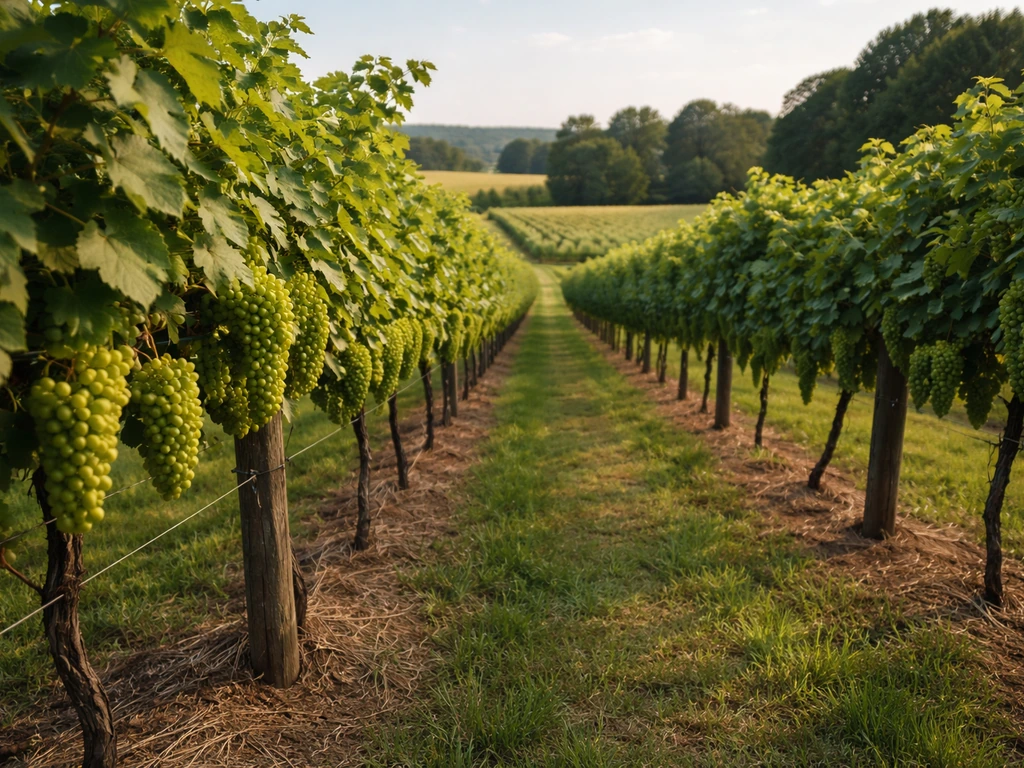
Is NC actually a good state for grapes?
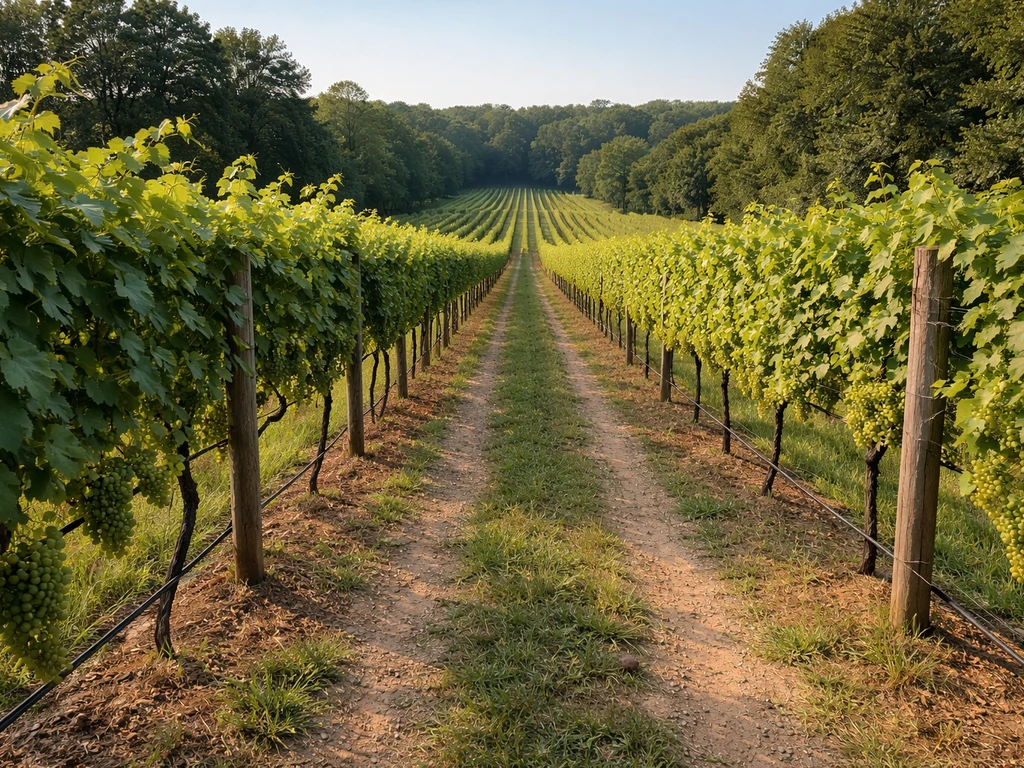
North Carolina has a real, working grape industry, so the baseline answer is yes. But NC State Extension is honest about the main threats: low winter temperatures, late spring frosts, excessive summer heat, and unpredictable rainfall. None of those are dealbreakers on their own, but they do mean you can't just stick any vine in the ground and walk away. The state also has a Pierce's disease problem that gets serious as you move east.
Pierce's disease (PD) is a bacterial infection spread by sharpshooter leafhoppers, and it can wipe out European-style bunch grapes (Vitis vinifera) quickly in warm, humid lowlands.
NC State plant pathologists have observed PD affecting up to 50% of vinifera vines in eastern Piedmont settings, and coastal areas are flat-out not recommended for bunch grape production because of it. The practical upshot: the Piedmont and Mountain regions are your best bets for bunch grapes and European-style varieties, while the eastern part of the state is muscadine territory.
Winter injury is another real concern. NC winters can swing wildly, and cold-injury risk goes up when a relatively warm fall is followed by a sudden, extreme temperature drop in midwinter. That pattern stresses vines that haven't fully hardened off. It's not a reason to give up, but it does influence which varieties you should choose and how you manage your vines in fall.
Best grape varieties for different parts of NC
This is where the state-by-state advice really matters. North Carolina is not one climate, and planting the wrong variety for your region is the single biggest mistake beginners make.
Mountains (western NC, elevations above ~2,000 ft)
The cooler, drier air in the Blue Ridge and surrounding mountains is the friendliest environment for cold-hardy hybrid varieties and even some vinifera with protection. French-American hybrids like Chambourcin, Vidal Blanc, Traminette, and Chardonel perform well here. These hybrids were bred specifically for humid eastern climates and carry good disease resistance. If you want to push toward vinifera, Chardonnay and Cabernet Franc are planted at higher elevations with some success, but expect to babysit them more closely. For table grapes, Reliance (seedless, cold-hardy to -10°F) and Venus are solid choices that produce reliably.
Piedmont (central NC)
The Piedmont is North Carolina's wine country, and for good reason. It offers a longer growing season than the mountains with somewhat lower disease pressure than the coast. French-American hybrids shine here: Chambourcin, Cabernet Franc, Merlot (with careful site selection), and Norton are all grown commercially in this region. For home gardeners, Concord-type American varieties like Concord itself, Niagara, and Catawba are extremely beginner-friendly and very productive in the Piedmont. Pierce's disease pressure exists in the eastern Piedmont, so if you're near Raleigh or east, lean toward PD-tolerant hybrids and muscadines.
Coastal Plain and eastern NC
Muscadines are your grape here, full stop. Muscadine grapes (Vitis rotundifolia) are native to the Southeast, naturally resistant to Pierce's disease, and absolutely thrive in the hot, humid eastern NC climate. Top varieties include Carlos and Magnolia for white/bronze fruit, and Noble, Ison, and Supreme for dark fruit. Many muscadines are self-fertile, but planting a mix of a self-fertile variety alongside a female-only variety (like Fry) will maximize yield. Expect large, intensely flavored clusters that produce heavily once established.
| Region | Best Varieties | Notes |
|---|---|---|
| Mountains (western NC) | Chambourcin, Vidal Blanc, Traminette, Reliance, Venus | Best for hybrids and cold-hardy table grapes; some vinifera possible at elevation |
| Piedmont (central NC) | Chambourcin, Norton, Concord, Niagara, Catawba, Cabernet Franc | State's prime wine and table grape zone; watch PD pressure in eastern Piedmont |
| Coastal Plain (eastern NC) | Carlos, Noble, Magnolia, Ison, Supreme, Fry | Muscadine-only territory due to Pierce's disease; hybrids and vinifera not recommended |
Choosing the right site: sun, soil, drainage, and spacing
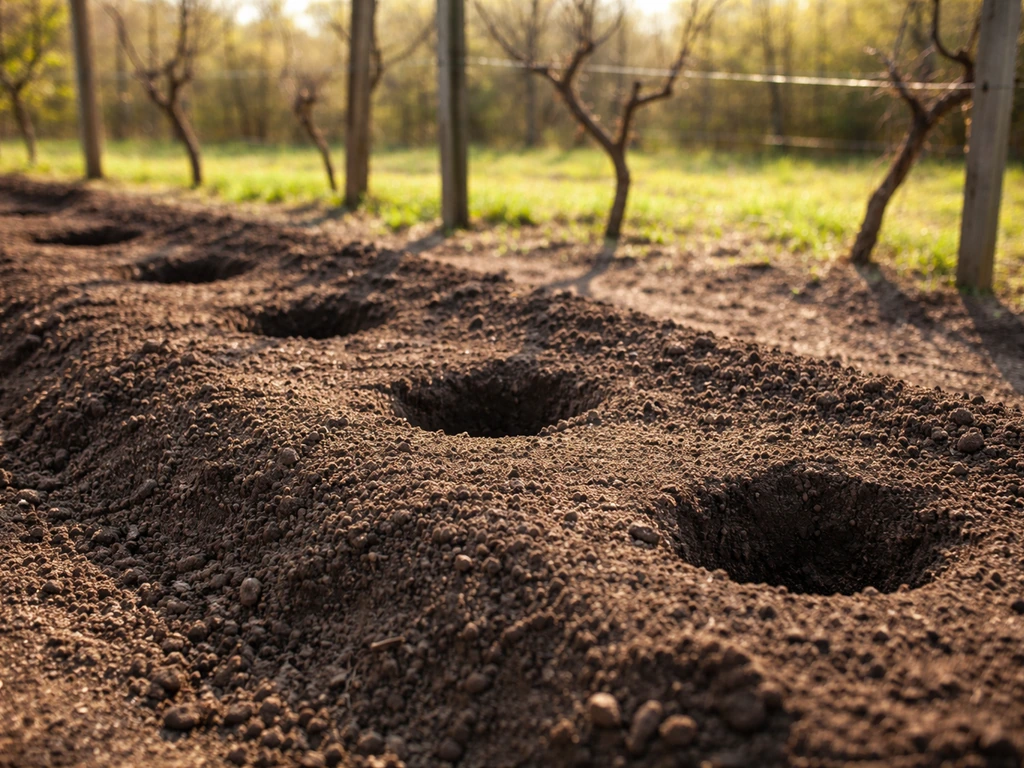
Grapes need full sun, and that means a minimum of 8 hours of direct sunlight per day. Less than that and you'll get weak vines, poor fruit set, and a lot more disease problems. South-facing or southeast-facing slopes are ideal because they warm up faster in spring and drain cold air away from the vines, which matters a lot when late frosts roll through in April. Avoid low-lying areas and frost pockets where cold air settles overnight.
Soil drainage is equally critical. Grapes will tolerate a wide range of soil types, from sandy loam to clay, but they cannot tolerate standing water around their roots. A well-drained site with a soil pH between 5.5 and 6.5 is ideal. If your soil is too alkaline, sulfur amendments can bring it down. If you're working with heavy clay, building raised rows or installing tile drainage before planting will save you a lot of heartache. Get a soil test through NC State Extension before you plant, it's inexpensive and tells you exactly what amendments to add.
For spacing, the standard for home vineyards in NC is 8 feet between vines in the row and 10 to 12 feet between rows. Muscadines need more room and are typically spaced 16 to 20 feet apart. Adequate spacing improves air circulation, which directly reduces fungal disease pressure in NC's humid summers.
Planting plan: timing, bare-root vs. container, and setup basics
In North Carolina, the best planting window is late winter to early spring, typically late February through March for bare-root vines. Georgia grape growing depends a lot on choosing cold-hardy varieties and placing them where they get good sun and drainage grow grapes in Georgia. This timing lets roots establish before the heat of summer arrives. Container-grown vines are more forgiving and can be planted from spring through early summer, but you'll need to water them more consistently in their first year if you plant past April.
Bare-root vines are what most nurseries ship, and they're perfectly fine as long as you don't let the roots dry out before planting. Soak them in water for a couple of hours before going in the ground. Dig your hole wide enough to spread the roots out naturally, set the graft union (the knobby bump near the base) just above the soil line, and backfill with your native soil. Don't amend the planting hole heavily with compost or fertilizer; it encourages roots to stay in the hole rather than spreading outward.
Before you plant, have your trellis posts in the ground. Seriously, do this first. Trying to install posts around established vines is a pain, and young vines need something to tie to from day one. A simple 2-wire trellis with wooden or metal posts set every 20 to 24 feet is all you need to start. Use of high-tensile wire and guidance on wire and post placement can help you build a trellis that works as the plants grow high-tensile wire and trellis post or wire placement concepts.
Trellis system, pruning, and what to expect year by year
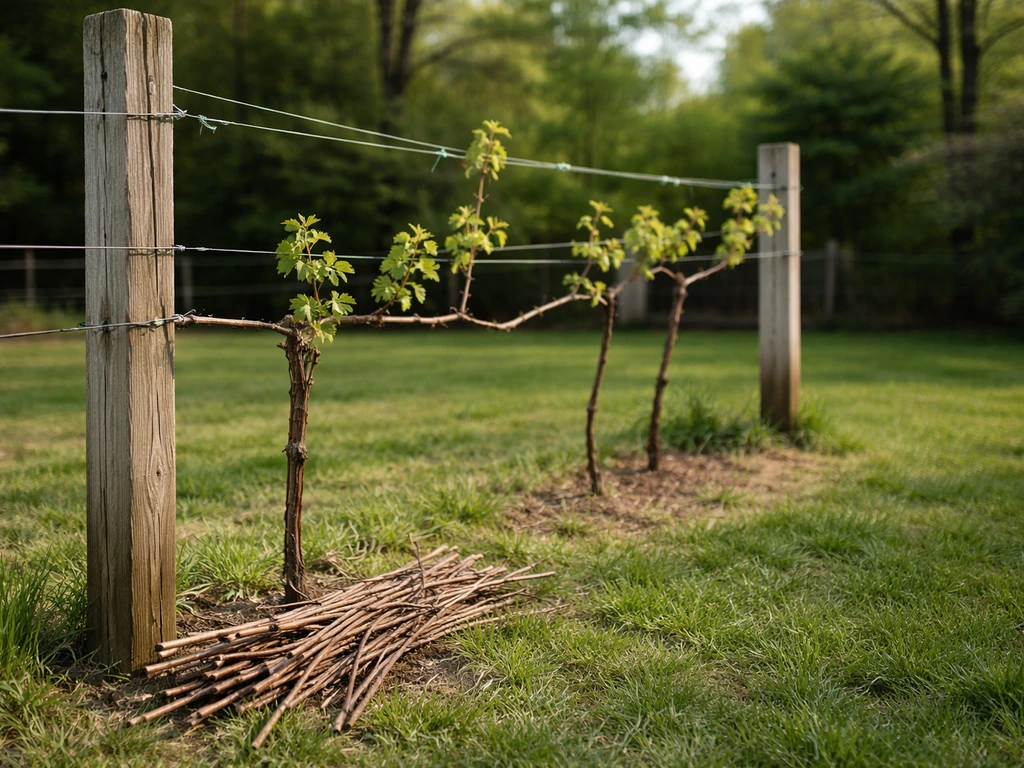
The most practical trellis for home growers in NC is the vertical shoot positioning (VSP) system for hybrid and vinifera varieties, or a simple 2-wire bilateral cordon system for American varieties and muscadines. For muscadines specifically, a single high-wire trellis at about 6 feet is the traditional setup and it works extremely well. Posts should be 8 feet tall set 2 feet deep, with the top wire at 5 to 6 feet and a lower catch wire at 3 feet.
Pruning is what beginners fear most, but the logic is simple: you're managing how much wood the vine carries from one year to the next. More wood means more fruit, but too much wood means overcrowded canopy, disease, and weak fruit. The goal in the first two years is to build a strong trunk and framework, not to produce fruit.
Year-by-year expectations
- Year 1: Focus on establishing roots. Train one strong shoot straight up to the top wire. Remove all flower clusters so the vine puts energy into root and trunk development. Water consistently. Don't fertilize heavily.
- Year 2: Train two horizontal arms (cordons) along the trellis wire in opposite directions. Remove any flowers again, or allow a very light crop. Prune back hard in late winter (February in NC) to build structure.
- Year 3: Your first real crop. The vine should now have a solid trunk and cordon arms with healthy spur positions. Prune in late February to early March, leaving 2-bud spurs every 4 to 6 inches along the cordon. Expect a modest but genuine harvest.
- Year 4 and beyond: Full production. Established vines in NC can produce 15 to 25 lbs of fruit per vine depending on variety and care. Muscadines are even more productive once they hit full stride.
Care in NC: watering, fertilizing, mulching, and winter protection
Established vines are surprisingly drought-tolerant once their roots are deep, but in that critical first and second year you need to water regularly. Aim for about 1 inch of water per week during the growing season, either from rain or supplemental irrigation. Drip irrigation is ideal because it keeps water off the foliage, which helps reduce fungal disease. Avoid overhead watering if you can.
For fertilizing, less is often more with grapes. A soil test will tell you your baseline, but a general starting point is 4 to 6 ounces of 10-10-10 fertilizer per vine in early spring of year one, increasing gradually as the vine grows. Avoid fertilizing after July because you don't want to push new growth that won't harden off before winter. Excess nitrogen is one of the most common beginner mistakes, it produces lush green vines that are weak, disease-prone, and winter-tender.
A 3 to 4 inch layer of mulch around the base of the vine (kept away from the trunk itself) conserves moisture, moderates soil temperature, and suppresses weeds. Wood chips, straw, or pine bark all work well.
For winter protection, most well-adapted varieties in NC don't need heavy intervention. The real risk is that sudden midwinter temperature crash after a warm fall, as NC State Extension warns. In the mountains, mounding a few inches of soil over the graft union in late November and removing it in March gives cold-sensitive varieties meaningful protection. In the Piedmont and east, established muscadines need no special winter care at all.
Common pests and diseases in NC and how to manage them
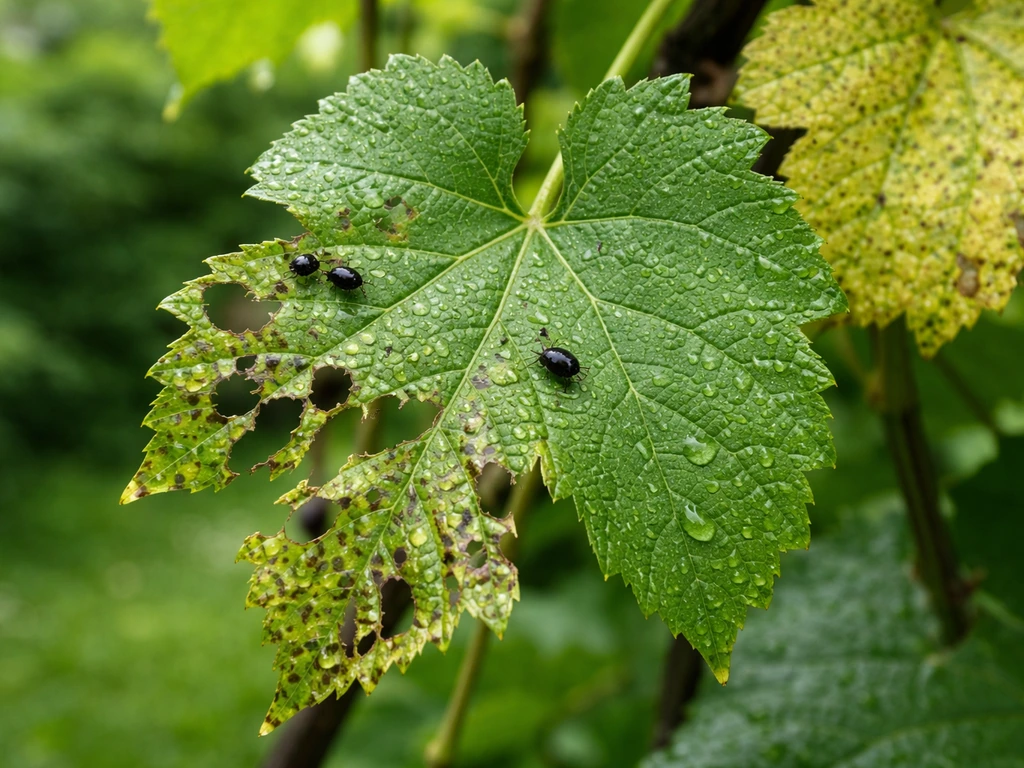
This is where North Carolina growing gets real. The humid southeastern climate is genuinely challenging for grapes, and a do-nothing approach to disease management will not work. The good news is that with the right variety selection and a basic spray program, it's very manageable.
Diseases to watch for
- Pierce's Disease: As discussed, this is a serious concern in eastern NC and the eastern Piedmont. There is no cure. Prevention means choosing PD-resistant or tolerant varieties (muscadines, certain hybrids). If you're in a PD-prone area and see sudden leaf scorch and vine decline, remove the vine and replant with a tolerant variety.
- Black rot: The most common fungal disease in NC. Causes circular brown spots on leaves and mummified, shriveled berries. Managed with copper-based or sulfur fungicides applied starting at bud break and continuing on a 10 to 14 day schedule through berry set.
- Downy mildew and powdery mildew: Both thrive in NC's humidity. Downy mildew appears as yellow patches on upper leaf surfaces with white fuzz beneath; powdery mildew looks like a white dusty coating. Good canopy management (pruning for airflow) and a regular fungicide program keep both in check.
- Botrytis (gray mold): Attacks clusters in wet weather near harvest. Thin your canopy in July to improve air movement around fruit and avoid it.
Pests to watch for
- Japanese beetles: Heavy feeders on grape foliage in July and August. Hand-pick in small plantings or use a targeted insecticide like pyrethrin if populations are high. Avoid Japanese beetle traps near your vines; they attract more beetles than they catch.
- Grape berry moth: Larvae bore into developing berries. Monitor with pheromone traps and treat with spinosad if populations justify it.
- Deer: A genuine problem across much of rural and suburban NC. A simple 8-foot fence or double-row electric fence is the most reliable deterrent if deer pressure is high.
The practical spray schedule for most NC home growers starts at bud break (when green tips emerge, usually March in the Piedmont), with copper or lime-sulfur applied first. Follow with a fungicide rotation every 10 to 14 days through the end of bloom, then taper to every 14 to 21 days through veraison (when fruit begins to color). Disease-resistant hybrid varieties and muscadines require far fewer sprays than vinifera.
First-season to harvest checklist: next steps to start today
If you're ready to move from reading to doing, here's exactly what to tackle in order. This gets you from zero to vines in the ground this season.
- Identify your region (Mountain, Piedmont, or Coastal Plain) and choose varieties accordingly. Eastern NC? Go muscadine. Piedmont? Start with Chambourcin or Concord. Mountains? Look at Traminette, Vidal Blanc, or Reliance.
- Submit a soil test to NC State Extension (costs about $4 through your county Cooperative Extension office). You'll get a precise amendment recommendation before you plant.
- Scout your site for full sun (8+ hours), good drainage, and air circulation. Mark the row direction (north-south is ideal for sun exposure) and measure spacing: 8 feet between vines, 10 to 12 feet between rows (muscadines: 16 to 20 feet apart).
- Order bare-root vines now for late February to March delivery. Good sources include local NC nurseries, Ison's Nursery (muscadines), or Lon Rombough's catalog for heritage varieties.
- Install your trellis posts before the vines arrive. Use treated wood or metal T-posts, set 2 feet deep, every 20 to 24 feet. String your first wire at 3 feet and your top wire at 5 to 6 feet.
- Plant your vines in late February to March. Soak bare roots before planting. Set graft union just above soil level. Water in well.
- Apply 3 to 4 inches of mulch around the base, keeping it away from the trunk.
- Begin your fungicide program at bud break. Even disease-resistant varieties benefit from 2 to 3 early-season copper applications.
- In year one, remove all flower clusters. Redirect the vine's energy to root establishment.
- Plan for your first real harvest in year 3. It's closer than it feels, and watching those first clusters develop is genuinely worth the wait.
If you're comparing notes with gardeners in neighboring states, growing conditions in North Carolina sit somewhere between the cooler, drier climate of Virginia to the north and the warmer, longer seasons of South Carolina and Georgia to the south. Tennessee to the west shares some of the same challenges with humidity and late frosts that NC mountain growers face.
If you’re wondering can you grow grapes in Tennessee, the good news is that some cold-hardy varieties can work, especially with smart site selection and protection in winter. The basic rules hold across all of them: match variety to climate, manage disease aggressively, and don't skip the trellis. If you want to know whether can you grow grapes in Georgia, the same big factors like sunlight, winter lows, and disease pressure apply.
North Carolina's diversity of microclimates actually gives you more flexibility than most southeastern states, which means there's genuinely a good option for almost every corner of the state.
FAQ
Can you grow grapes in North Carolina if you only have a small yard or limited space?
Yes, but you’ll need to choose accordingly. If you can’t provide at least about 8 feet of row length and strong sun, prioritize cold-hardy hybrids or American types that are easier to manage. For very small spaces, consider training a single vine on a sturdy trellis wall (still keep 8 hours of sun) and avoid planting muscadines, since they need more room and airflow.
Is it worth planting Vitis vinifera (like Chardonnay) in North Carolina?
It can work, but it’s the highest-maintenance option. Expect more winter-injury risk in cold snaps and higher disease pressure in humid areas, so only attempt it in the cooler Blue Ridge or higher-elevation sites. Even then, plan on consistent pruning and a more careful spray program than you’d use for hybrids or muscadines.
What should I do if my property is in a frost pocket or low area?
Don’t try to “fix” it with extra pruning or covers. Move the planting to a slope or to the warmest, best-drained spot you have, ideally where cold air drains away overnight. If relocation is impossible, you can reduce risk with site choice plus winter protection for sensitive varieties, but yields and survival will still be inconsistent.
How can I tell whether Pierce’s disease is a concern for my location?
A simple rule is geographic and humidity based: the eastern side of the state, especially coastal and lowland-like conditions, is where PD becomes the major limiter for bunch grapes. If you’re near the eastern Piedmont or coast, default to PD-tolerant hybrids or muscadines, because treatment strategies are not reliable once vines are infected.
Do I really need a trellis before planting, or can I add it later?
Do it before. Young vines grow quickly, and tying them in late often leads to damaged shoots or uneven training. Install posts and a basic 2-wire system early, then train the vine to it during the first growing season so you build structure instead of “catching up” later.
What’s the most common beginner mistake with pruning in North Carolina?
Letting the vine carry too much new wood too soon. In the first couple of years, focus on building a trunk and framework, not fruiting. If you overcrowd the canopy, you increase disease pressure and also create weaker fruiting wood for the future.
How much should I water grapes in North Carolina after planting?
The first year and especially the first growing season matter most. Plan on about 1 inch per week during active growth, preferably from drip irrigation. Once vines are established with deep roots, you can scale back, but don’t assume established vines in clay or poorly drained spots will tolerate drought the same way.
Should I fertilize grapes heavily to get faster growth?
No, heavy nitrogen is a frequent reason vines become weak and winter-tender. Use a soil test to guide nutrients, and if you’re not sure, follow a conservative program and stop fertilizing after July so new growth hardens off. Also avoid piling compost against the trunk, since that can encourage overly lush, shallow root growth.
What’s the best way to handle winter protection in different parts of NC?
Match the approach to the variety and region. In the mountains, mounding a few inches over the graft union late in the year can protect cold-sensitive grapes. In the Piedmont and east, established muscadines typically don’t need winter covers, while sensitive hybrid or vinifera plantings may require more consistent attention to sudden midwinter temperature drops.
Do muscadines need sprays like hybrid or vinifera grapes?
They require far less than vinifera in most cases, but they are not “no-work.” You may still need targeted monitoring for leaf diseases, and you’ll get better results by staying proactive during humid periods. If your hybrids and vinifera are getting a full rotation, muscadines usually justify fewer passes rather than zero.
When can I expect my first meaningful harvest?
Most beginners are surprised by timing. In the first year, focus on establishment and structure, not production. By year two, you might get limited fruit depending on training and vigor, but consistent, reliable harvest quality usually builds in later seasons after the vine framework is established.