
Yes, you can absolutely grow grapes in South Carolina, but the variety you choose makes all the difference. Muscadine grapes are the clear winner for most of the state: they're built for SC's heat and humidity, they resist the fungal diseases that plague other types, and they produce reliably with far less fuss. American bunch grapes and some hybrids can also work with more effort. blank" rel="noopener noreferrer">European wine grapes (Vitis vinifera) are largely a losing battle for home gardeners here because of the climate and disease pressure. Start with the right variety and South Carolina is actually a great place to grow grapes.
Can You Grow Grapes in South Carolina? Varieties, Tips
Marcus Whitfield
14 May 2026
What grapes actually grow in South Carolina
There are three broad categories to think about, and your experience will vary a lot depending on which one you pick.
Muscadine grapes (best overall pick for SC)
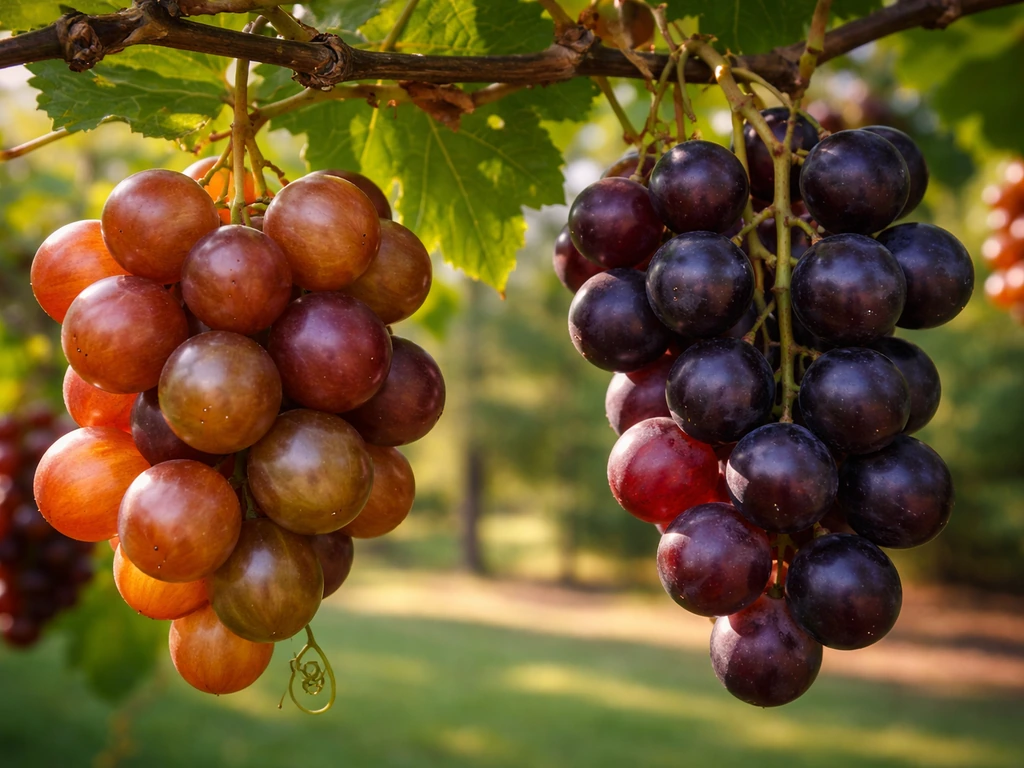
Muscadines (Vitis rotundifolia) were made for the South. They thrive in SC's long, hot summers, handle humidity without collapsing to disease, and produce heavy crops across the Midlands, Lowcountry, and most of the Upstate. Clemson Extension literally calls them 'a fruit for the South,' and I'd agree completely. The main limitation is the mountains: severe winters in the far western corner of the state can damage muscadines, so if you're gardening in the Blue Ridge foothills, choose cold-hardier cultivars or lean toward bunch grapes instead.
For table eating, try Carlos (bronze, self-fertile, very productive) or Fry (large bronze berries, exceptional flavor, needs a pollinator). For wine or juice, Noble is a classic red/purple muscadine with deep color and good yields, and it's self-fertile. Ison and Supreme are other reliable options with large, sweet fruit. If you want a self-fertile variety that works anywhere in the state without a pollinator, Carlos and Noble are the safest starting point.
American bunch grapes and hybrids (more work, but doable)
American bunch grapes like Concord and Niagara can grow in South Carolina, but they perform best in the cooler Upstate and mountain regions rather than the hot, humid coast. Hybrids bred for disease resistance, such as Chambourcin, Vidal Blanc, and Norton/Cynthiana, are the smarter choice if you want to make wine from bunch grapes. Clemson's extension specialists are clear that bunch grapes are susceptible to a long list of diseases and pests here, and a season-long spray program is often necessary to get good fruit. That's not impossible, but it's a real commitment compared to muscadines.
European wine grapes (skip these for now)
Vitis vinifera varieties like Cabernet Sauvignon, Chardonnay, or Pinot Noir are not recommended for home production in South Carolina. The heat, humidity, and disease pressure in SC's climate work against them constantly, and you'd spend more time fighting problems than harvesting fruit. A few commercial wineries in the SC mountains dabble with them under very controlled conditions, but for a home gardener, the effort isn't worth it when better-adapted options exist.
Short variety list by what you want
| Goal | Recommended Variety | Type | Notes |
|---|---|---|---|
| Easy table eating | Carlos | Muscadine | Self-fertile, bronze, very reliable |
| Best-tasting table grape | Fry | Muscadine | Large sweet berries, needs pollinator |
| Red/purple table or juice | Noble | Muscadine | Self-fertile, great color, dual-purpose |
| Wine from muscadines | Noble or Carlos | Muscadine | Classic SC wine varieties |
| Bunch grape for Upstate/mountains | Chambourcin | French-American hybrid | Disease-resistant, good for wine |
| White bunch grape | Vidal Blanc | French-American hybrid | Cold-hardy, good disease resistance |
| Cool mountain region | Norton/Cynthiana | American hybrid | Very cold-hardy, rich red wine grape |
Picking the right grape for your exact part of the state
South Carolina has three distinct growing regions, and what works beautifully in one can struggle in another. Knowing which region you're in narrows your variety choice fast.
Lowcountry and Coastal Plain (zones 8a-9a)
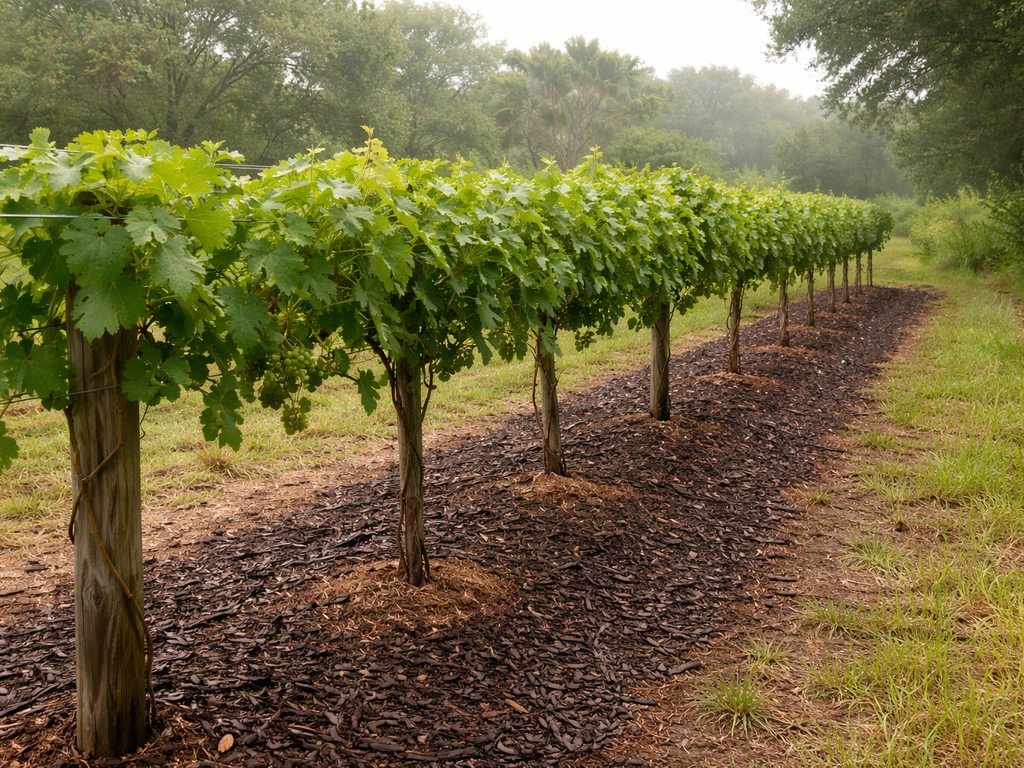
This is muscadine country. The heat is intense, humidity is high, and winters are mild. Bunch grapes without serious disease resistance will be a constant battle here. Stick with muscadines: Carlos, Noble, Fry, Ison, or Supreme. Self-fertile varieties are especially practical if you're only planting a vine or two. Plan for 10-12 vines minimum if you want enough fruit to juice or make wine.
Midlands (zones 7b-8a)
The Columbia area and surrounding Midlands are also excellent muscadine territory. You have a little more flexibility here to experiment with disease-resistant bunch grape hybrids like Chambourcin if you want wine grapes, but muscadines remain the path of least resistance. Summer heat is significant, so good airflow and a well-drained site matter a lot.
Upstate and mountain foothills (zones 6b-7b)
This is where your options open up a bit more. Muscadines still work in the lower Upstate (Greenville, Spartanburg area), but choose cold-hardier cultivars. In the higher elevations toward the Blue Ridge, winter temperatures can drop to levels that damage muscadine canes, so French-American hybrids like Chambourcin, Vidal Blanc, or Norton become more attractive. American bunch grapes like Concord also have a better shot here than anywhere else in the state.
Climate, seasons, and what to expect in the SC growing calendar
South Carolina's growing season is long, which is actually an asset for grapes. Most of the state gets 200-plus frost-free days per year. Muscadines bud out in late March to April, bloom in May or June, and ripen from late July through September depending on the variety. Early-ripening muscadines like Fry can be ready by late July in the Lowcountry. Later varieties like Noble or Ison ripen in August or September.
Summer heat is your biggest challenge, not cold. High humidity from June through August drives fungal diseases, especially black rot, downy mildew, and powdery mildew. This is why variety selection is so critical: muscadines shrug most of this off naturally, while susceptible bunch grapes can lose their entire crop without regular fungicide applications. If you're growing bunch grapes, start your spray program at bud break and keep it going through harvest.
Winter in most of SC is mild enough for grapes. Hard freezes below 0°F are rare in the Midlands and Lowcountry, so winter kill is rarely an issue for muscadines. In the mountains, occasional deep cold can damage less cold-hardy muscadine cultivars, so pay attention to each variety's cold hardiness rating before you plant.
How to set up your grape planting for success
Site: sun and airflow are non-negotiable
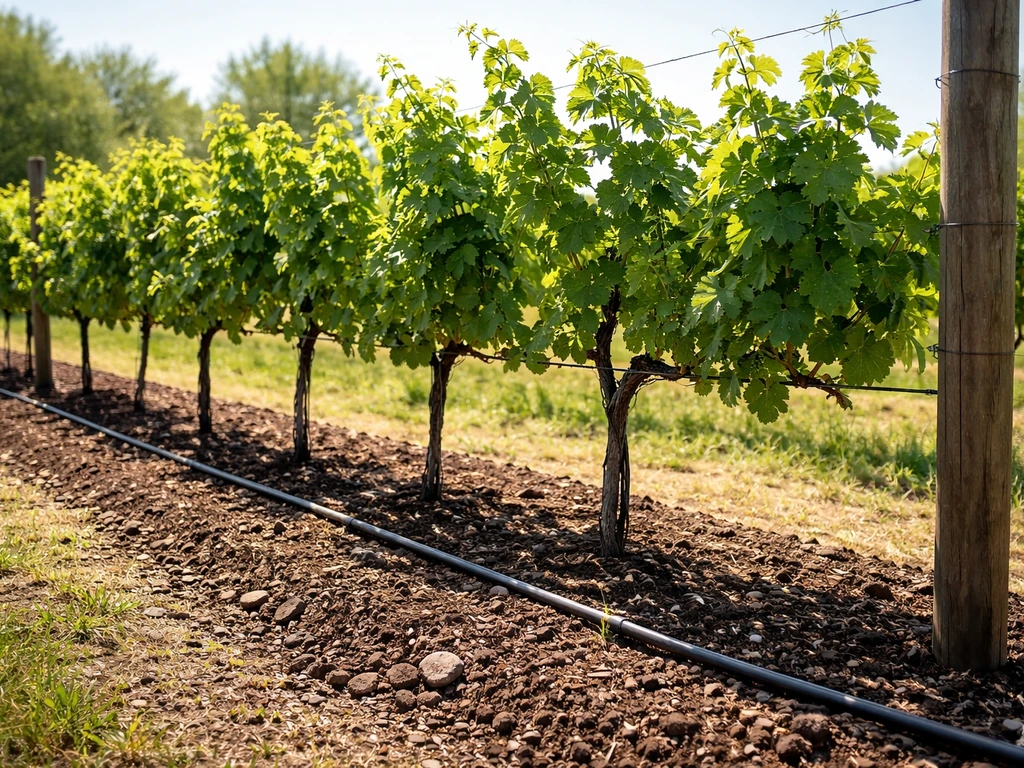
Grapes need at least 8 hours of full sun per day. In SC's humid climate, airflow is almost as important as sun: good air circulation dries leaves faster after rain and dramatically reduces fungal disease pressure. Avoid low spots where cold air pools in winter or humid air stagnates in summer. A gentle south or southeast-facing slope is ideal. Stay away from large trees that will compete for water and block light.
Soil: drainage first
Grapes don't like wet feet. Well-drained, slightly acidic soil with a pH between 5.5 and 6.5 is the sweet spot for muscadines. SC's sandy soils in the Lowcountry drain well and work great. Clay-heavy Piedmont soils can hold too much water, so amend with compost before planting and consider planting on a slight raised berm if drainage is questionable. Get a soil test through Clemson Extension before you plant: it's cheap, fast, and tells you exactly what amendments your soil needs.
Spacing and trellis
Muscadines are vigorous and need room. Space them 20 feet apart in the row, with rows 10-12 feet apart. For bunch grapes, 8 feet between plants and 10 feet between rows is typical. A two-wire trellis is the standard setup for muscadines: a cordon wire at about 5.5 feet and a catch wire 12 inches below that. Set your end posts firmly (4x4 treated wood or T-posts work), anchor them well, and run 12-gauge wire. The trellis investment pays off for 20-plus years, so don't cut corners on post depth.
When to plant
Plant dormant bare-root vines in late winter, from January through March, before bud break. Container-grown plants can go in through spring and even early fall, but avoid planting in the heat of June through August. Dormant planting gives roots time to establish before the vine has to support vigorous top growth. Most SC gardeners aim for February as the sweet spot: soil is workable, frosts are winding down, and the plant can settle in before summer heat arrives.
Taking care of your grapes in South Carolina's climate
Watering
New vines need consistent moisture for the first two growing seasons: aim for about an inch of water per week during active growth, supplementing rainfall as needed. Once established, muscadines are surprisingly drought-tolerant in SC's climate, though they'll produce more fruit with irrigation during dry spells. Drip irrigation is ideal because it keeps foliage dry and reduces disease risk. Avoid overhead watering if you can.
Pruning
Prune in late winter, ideally January through February before bud swell. Muscadines fruit on new growth from one-year-old spurs, so the goal is to maintain a permanent cordon along the trellis wire and cut back lateral shoots to 2-4 buds each year. It sounds complicated until you do it once, and then it becomes quick and intuitive. Skipping pruning leads to tangled, unproductive vines and worse disease problems, so make it a habit. Bunch grapes are typically trained on a 4-arm Kniffin system or VSP (Vertical Shoot Positioning), which takes a couple of seasons to establish.
Disease: the biggest challenge in SC
Black rot is the primary disease threat for bunch grapes in South Carolina. It can destroy an entire crop if not managed. Downy mildew and powdery mildew follow closely. For susceptible varieties, a spray program starting at bud break with fungicides like captan, myclobutanil, or copper-based products is usually required. Muscadines are far more naturally resistant, but they're not completely immune: in wet years, even muscadines benefit from a couple of preventative fungicide applications during bloom and early fruit development. The most effective disease management is always choosing resistant varieties in the first place.
How SC compares to neighboring states
South Carolina's growing conditions are very similar to those in Georgia and North Carolina's Piedmont and coastal regions: muscadines dominate home production across all three states for the same reasons. Gardeners in Tennessee and Virginia, by contrast, have cooler summers and lower humidity in many areas, which opens the door to more bunch grape varieties and European hybrids that would struggle in SC's heat.
If you're wondering can you grow grapes in tennessee, it comes down to the same key idea: your variety has to match your local climate. If you are wondering can you grow grapes in Virginia, the key is choosing varieties matched to your specific part of the state and managing disease pressure. The core advice here applies across much of the mid-Atlantic and Southeast: lean into what the climate gives you, and muscadines are what SC's climate gives you.
Your success checklist and next steps
If you're ready to get started, here's the practical sequence to follow. You can realistically get vines in the ground this coming winter if you start planning now.
- Identify your region: Lowcountry, Midlands, or Upstate. This determines whether muscadines alone are enough or whether you have hybrid bunch grape options too.
- Get a soil test: contact your local Clemson Extension office or use their online service. Test pH and amend to 5.5-6.5 if needed.
- Choose your varieties: for most of SC, start with one self-fertile muscadine like Carlos or Noble, then add a pollinator variety like Fry or Ison if you want more fruit. Plan for 20-foot spacing.
- Order bare-root vines now: most SC-appropriate cultivars sell out by November or December. Order from reputable nurseries that ship bare-root stock for winter planting.
- Build your trellis before you plant: set posts, run two wires (5.5 feet and 4.5 feet high), and have everything ready so you can plant directly onto the support structure.
- Plant in January-March: get dormant bare-root vines in the ground before bud break. Water in well and mulch with 3-4 inches of pine straw or wood chips to retain moisture.
- Train patiently in year one: let the vine establish roots, pick one strong shoot to become the trunk, and resist the urge to let it fruit in the first year. Year three is when real production begins.
- Start a pruning habit: every February, prune back lateral shoots to 2-4 buds. It takes 20 minutes per vine once you know the system.
- Scout for disease in summer: check leaves weekly during humid weather. For bunch grapes, begin fungicide applications at bud break and follow a spray calendar. Muscadines need much less intervention but watch during wet bloom periods.
The honest reality is that South Carolina is a genuinely good state for growing grapes if you work with the climate rather than against it. Muscadines will reward you with heavy, reliable crops for decades with relatively modest effort. Clemson HGIC notes that muscadines are adapted to South Carolina’s [warm, humid climate](https://hgic. clemson.
edu/pruning-muscadines/) and are relatively low maintenance in care. Pick the right variety for your part of the state, get your site and soil right, build a solid trellis, and you'll be harvesting your own grapes within two to three years. If you're wondering can you grow grapes in North Carolina, the key is matching the variety to your local climate and disease pressure. That's not a long wait for a crop that keeps producing for 30 years or more.
FAQ
Can I grow grapes in South Carolina if I only want to plant one or two vines?
Yes, but your outcome depends on timing and variety. If you want table or juice from muscadines, plant at least two vines if you choose non-self-fertile types, and plan to get fruit the first meaningful harvest in about 2 to 3 years. If you choose a self-fertile muscadine, you can start with one vine, but you may still see better yields with a second vine nearby (also helps with pollination if any flowers don’t fully self-set).
What should I check before buying a grape vine in South Carolina?
Buy vines that match your microclimate, not just your state. In the mountains and Blue Ridge foothills, winter lows can damage muscadine canes if the cultivar is not cold-hardy enough, so verify the variety’s cold hardiness rating before ordering. In the Midlands and Lowcountry, prioritize resistance to black rot and mildew (for bunch grapes hybrids) and site airflow, because disease pressure is where most harvest failures happen.
How long does it take to start getting grapes in South Carolina?
For muscadines, expect fruit after establishment rather than a quick payoff. Bud break typically starts late March to April, and ripening happens late July through September depending on variety, so even when vines look vigorous, you are usually waiting about a season for meaningful harvest volume. Also, newly planted vines often need light pruning and careful training the first year to build structure instead of pushing maximum fruit.
Can you grow grapes in South Carolina in containers?
It’s possible, but it is usually disappointing for home gardeners because SC’s humidity is relentless and container root volume limits vigor and stability. If you try anyway, choose the largest container you can manage, use a trellis or sturdy stakes so the plant grows upright, and rely on drip irrigation plus strict disease monitoring. Muscadines are the better candidate for containers than bunch grapes, but expect lower yields than in-ground vines.
Can I grow grapes in South Carolina without using fungicides?
Not always. Even muscadines, which are naturally more resistant, can benefit from preventative fungicide during bloom and early fruit development in wet years. Bunch grapes are far more sensitive and often require a start at bud break through harvest. If you prefer “no-spray,” your practical options narrow mainly to muscadines and well-chosen resistant hybrids.
What’s the most common reason bunch grapes fail in South Carolina?
Yes, but plan for a realistic disease workflow. If you’re doing bunch grapes, watch for early signs starting around active growth, and do not wait until problems are obvious, because black rot and mildew can spread quickly in humid weather. Keep a consistent schedule beginning at bud break, and pair it with site choices that improve airflow, because the same spray may not protect vines planted in stagnant, low airflow spots.
How should I fertilize grapes in South Carolina, and what should I avoid?
You should fertilize based on a soil test, but avoid heavy nitrogen “boosts.” Too much nitrogen can create lush, dense growth that stays wet longer and increases fungal risk, especially for bunch grapes. For muscadines, focus on building strong trellis structure in the early years, then shift toward balanced nutrition after your soil results guide what your ground actually needs.
My yard has clay and sometimes stays wet. Can grapes still work?
Good drainage beats “perfect” soil. If you have heavier clay, amend with compost, and if puddling happens after rain, consider a slight raised berm or planting where water moves away from the roots. Also avoid low areas where cold air and humidity pool, because those conditions raise disease pressure and can increase winter damage risk in colder parts of the state.
Where should I plant the trellis for best results in SC?
Airflow and sun direction can reduce disease pressure more than people expect. Use a trellis site with at least 8 hours of full sun and avoid planting near large trees that compete for water and block light. A gentle south or southeast-facing slope often dries leaves faster after rain, which helps prevent mildew issues for susceptible grapes.
What watering method should I use for grapes in South Carolina?
Overhead watering is a common mistake. Even if you water enough, wet foliage increases mildew risk, so drip irrigation is the better choice because it keeps leaves drier. For young vines, aim for about an inch per week during active growth, but adjust based on rainfall so you do not create consistently wet conditions.
Do I need to protect grape vines from winter cold in South Carolina?
Expect winter protection only in colder pockets or for less cold-hardy cultivars. In most of the Midlands and Lowcountry, hard freezes below 0°F are rare, so winter kill is uncommon for muscadines. In the higher elevations, verify cold hardiness for your specific cultivar, and be ready to protect canes if your temperatures often dip lower than the variety tolerates.