
When a grapevine starts to grow, the first thing you'll see is almost underwhelming: a tiny green tip poking out from a bud that looked completely dead just weeks before. That's it. No dramatic unfurling, no overnight explosion of leaves. Just a small, fuzzy green point barely visible against the brown cane. If you know what to look for, that little green tip is one of the most satisfying sights in the garden. If you don't, you might miss it entirely or, worse, assume your vine is dead when it's perfectly fine.
What Grapes Look Like When They Start to Grow

Marcus Whitfield
12 Apr 2026
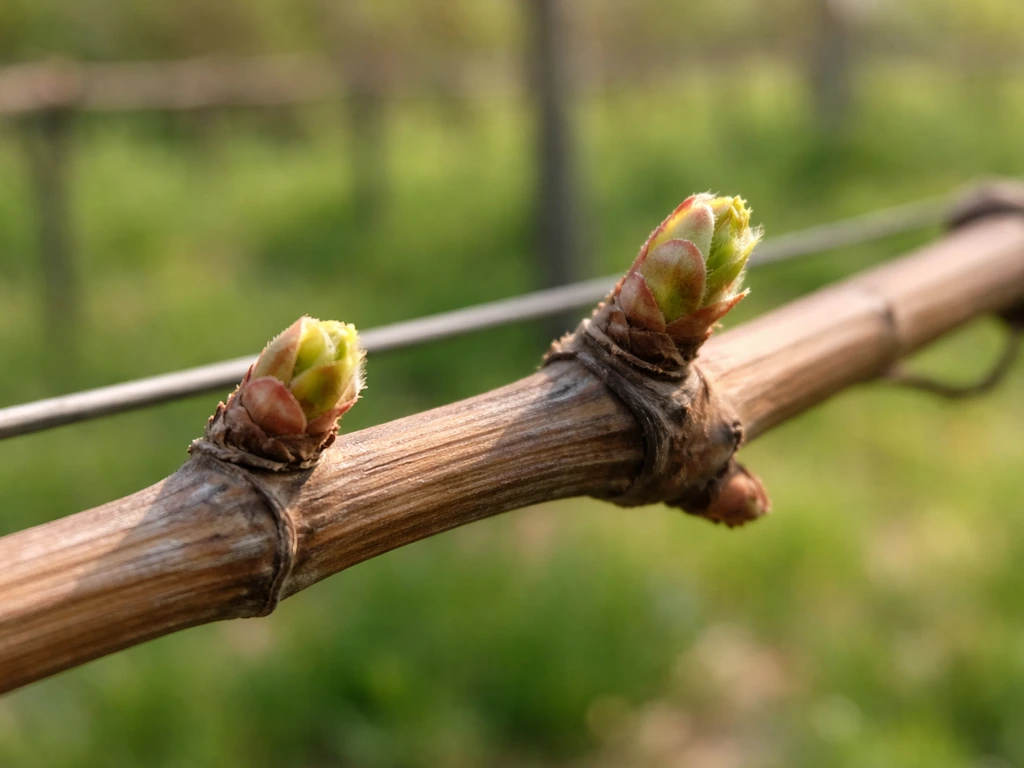
What new growth actually looks like on a grapevine
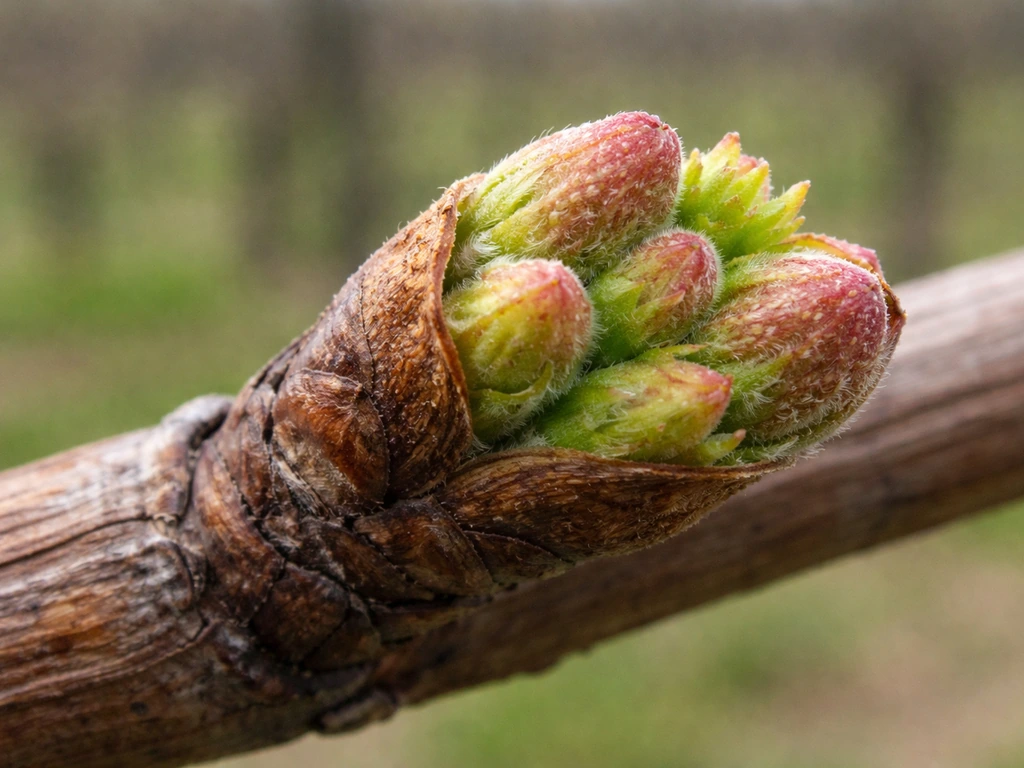
The very first visible stage is called bud swell. The bud, which spent winter sealed under protective scales, starts to plump up and push those scales apart. At this point you might notice a woolly or cottony texture around the bud tip, viticulture researchers call this the 'wool stage' (BBCH 05 on the grape phenology scale). It looks almost like a tiny bit of fuzz or lint caught on the cane. Don't confuse it with mold or insect damage, it's completely normal.
A few days to a week after bud swell (depending on temperatures), you hit the moment researchers formally define as budbreak: green tissue becomes visible at the tip of the bud. Penn State Extension describes this as 'appearance of green tissue through the bud scales,' and UC Davis material pins it similarly, green tissue visible at the tip. On the BBCH scale this is stage 07, described as 'green shoot tips just visible.' You're looking for a color shift from brown to a bright, almost yellow-green. The new tissue is soft and somewhat translucent at first.
From there, things move faster. The shoot extends, still compact and tightly folded, and the first tiny leaves begin to separate from the tip. BBCH stage 10 is described as 'leaves appear,' and BBCH 11 is 'first leaf unfolded and spread away from shoot.' Those first leaves are often a reddish or bronze color rather than green, especially in cooler weather or on certain varieties. That redness is normal and usually fades to green as temperatures warm and the leaf matures.
Budbreak to early shoots: what you're looking at day by day
Once the first leaf has unfolded, the shoot starts elongating quickly. The Connecticut homeowner vineyard guide lays out a helpful set of milestones: after budbreak you progress through shoots at 1/2 to 1 inch long, then 3 to 5 inches, then 10 to 12 inches, then eventually to 'trace bloom.' Each of those stages has its own visual signature, and tracking where your vine sits in that sequence tells you a lot about whether growth is on schedule.
At the 1- to 3-inch stage, the shoot looks like a small, slightly fuzzy wand with one or two tiny crinkled leaves at the tip. The leaves are not fully flat yet, they're still a bit cupped or folded. The University of Minnesota Extension actually uses this size range (1–3 inches of shoot length) as a trigger for early-season spray applications, which gives you a sense of how meaningful that window is. Missouri State University's phenology work similarly identifies shoots around 2–4 cm as a recognizable stage during early shoot development.
By the time shoots hit 4 to 6 inches, the leaves are more fully open and flatter, the shoot itself is more clearly jointed (you can see the nodes), and the whole thing starts to look like a miniature version of what a mature grapevine shoot looks like in summer. The color shifts to a cleaner green, the early redness mostly fades, and the shoot gets firmer.
Tendrils and the first hints of fruit clusters
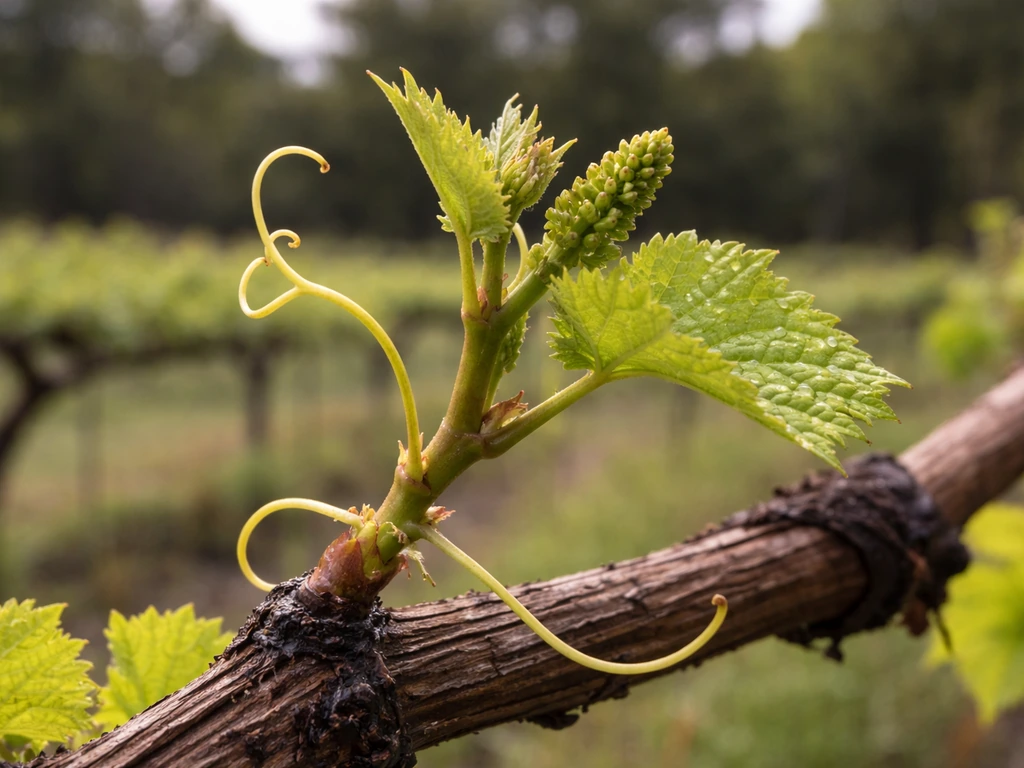
As shoots extend past a few inches, you'll start to notice tendrils. These are the curling, thread-like structures that grapevines use to grab onto whatever they can find. They grow opposite a leaf at the node, meaning if you look at a node (a joint on the shoot), there's a leaf on one side and either a tendril or a developing flower cluster on the other. That's a reliable visual pattern to learn.
Here's the interesting part: tendrils and flower clusters (inflorescences) share the same developmental origin in the vine. Early in the season, before clusters are clearly visible as clusters, you might see small, branched structures opposite the leaves that don't quite look like simple tendrils. These are the early inflorescences. Developmental anatomy research describes a 'green tip' period when it first becomes possible to distinguish inflorescence beginnings from plain internodes, and the very early cluster structure is bordered by a bract (a small leaf-like covering) before it fully opens into a visible bunch.
The formal transition from vegetative growth to fruit development is captured at BBCH 71, called 'fruit set,' when young fruits begin to swell and flower remains are shed. But you won't see actual grape berries until much later in the season. In early growth, what you're looking for is simply: does this vine have inflorescences emerging opposite the leaves, or just tendrils? Inflorescences are branched and compact; tendrils are thinner and more spiral. Both are good signs that the shoot is healthy and growing normally.
Is that delayed growth normal, or is something wrong?
This is the question I get the most in spring. Someone looks at their vine in late March or April, sees nothing happening, and assumes it's dead. Sometimes it is. But often the vine is fine and just operating on its own schedule. Here's how to think through it.
First, timing varies enormously by region and variety. In warmer climates like Eastern Washington wine country, chardonnay buds have been observed breaking as early as March 21. In colder zones, think the upper Midwest or New England, you might not see any movement until late April or even May. So 'delayed' really only means something when you compare it to what's typical for your specific location.
Second, warm-climate gardeners face a different problem: if your vine didn't get enough cold-weather chilling hours over winter, it can show erratic, uneven budbreak even when spring temperatures are warm. Research on warm-climate grape production specifically flags inadequate chilling as a cause of delayed and irregular bud break. HortTechnology reports that lack of chilling can cause delayed and uneven budbreak inadequate chilling as a cause of delayed and irregular bud break. So if you're growing in a mild-winter region and your vine seems to be waking up unevenly, that chilling-hours issue is worth investigating.
Third, and most importantly: dead-looking buds don't always mean a dead vine. A cane can look perfectly healthy on the outside while cold damage has killed the primary buds inside. You won't know without cutting into them. If you've had an unusually cold winter and your vine isn't breaking when it should, bud damage is a likely explanation.
Quick checks you can do today
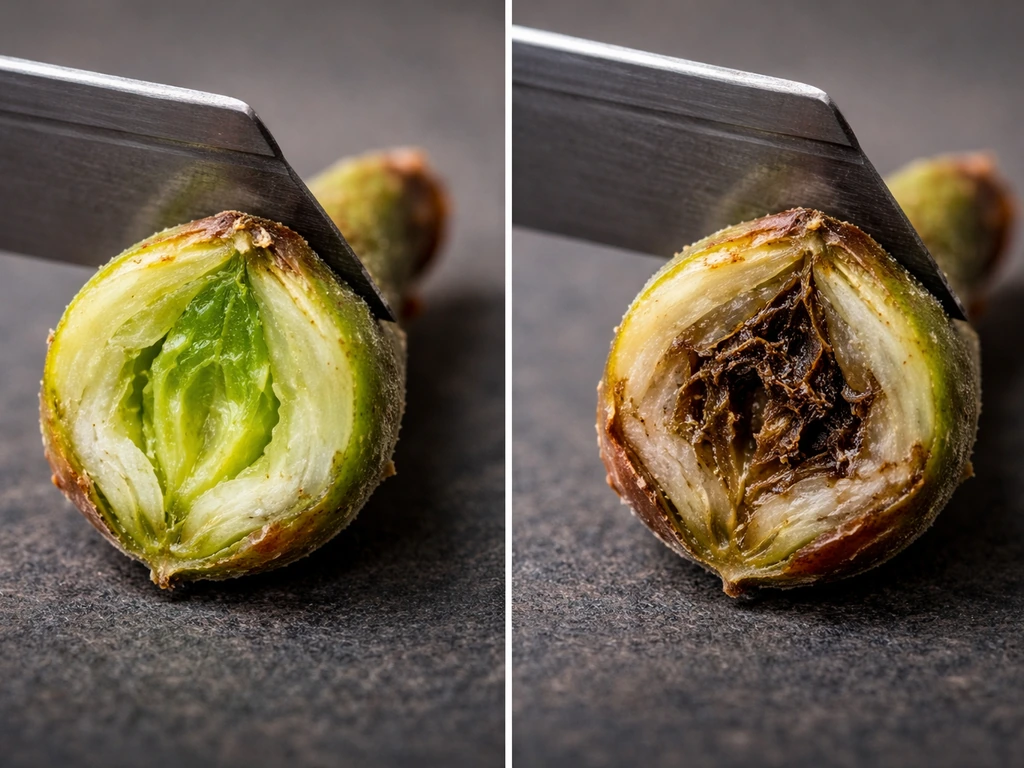
If you're standing in front of your vine right now trying to figure out what's going on, here are four things to check:
- The bud scratch test: Use a sharp razor blade or knife to cut a cross-section through a bud. Healthy primary bud tissue is green inside. Brown or black tissue means that bud is dead from cold injury. University of Maryland Extension recommends this exact method before you make pruning decisions — it tells you the proportion of live vs dead buds and guides how aggressively to prune or how many buds to retain.
- Shoot progress: Find the most developed bud on the vine and check its stage. Is there a visible green tip? A tiny shoot 1/2 inch long? Leaves starting to unfurl? Compare that to the milestones above. If the vine is at 'bud swell' and temperatures have been consistently above 50°F for several weeks, something may be slowing it down.
- Soil warmth: Grapevines respond to soil temperature, not just air temperature. If your soil is still cold (below 50°F in the root zone), even warm air temperatures won't push growth quickly. Touch the soil at 4–6 inches deep. If it still feels like early winter, the vine may simply be waiting.
- Sunlight check: Is the vine getting at least 6 to 8 hours of direct sun daily? A vine in too much shade is a vine that grows slowly and reluctantly, even when conditions are otherwise favorable. If nearby trees have leafed out and are now blocking light that was available in early spring, that could explain sluggish growth.
Common reasons grapes don't start growing (and what to do)
| Problem | What you'll see | What to do |
|---|---|---|
| Cold-damaged buds | Canes look intact but few or no buds break; cut cross-section shows brown inside | Test multiple buds, adjust pruning to leave more buds if primary bud mortality is high, wait for secondary bud break |
| Insufficient chill hours (warm climates) | Uneven, patchy budbreak across the vine; some buds break, many don't | Research chill-hour requirements for your variety; consider low-chill varieties in future seasons |
| Transplant shock (new vines) | Very little shoot growth, wilting, or slow bud swell in the first season | Keep soil consistently moist but not waterlogged; don't over-fertilize; give it time |
| Soil still too cold | No visible bud movement despite warm air temperatures | Mulch lightly to warm soil, check temperature at 4–6 inch depth, wait for sustained warmth |
| Too much shade | Very slow or weak growth, pale color on emerging leaves | Prune nearby vegetation, relocate the vine if possible, or manage surrounding trees |
| Pruning errors | Only a few buds left on the vine, growth concentrated in one or two spots | Understand bud viability before pruning; use the cross-section bud test prior to spring cuts |
Transplant shock is worth calling out specifically because it's so common with new vines. A first-year grapevine may look like it's doing almost nothing for weeks, then suddenly put on 12 inches of growth in a short burst. That's normal. The vine is establishing its root system first. Don't make the mistake of overwatering or fertilizing heavily to 'encourage' it, that usually backfires. Consistent, moderate moisture and good sun are what matter most.
For cold damage specifically, it's worth knowing that even if your primary buds are dead, many grapevine varieties will push secondary or even tertiary buds. These buds are less productive (fewer clusters, shorter shoots) but they keep the vine alive and growing. That's why you might see weak, scattered growth on a vine that had a tough winter rather than no growth at all. Timing your pruning correctly before growth begins is one of the best things you can do to reduce cold damage risk in future seasons.
Region and climate timing: when to expect growth where you live
If you want to understand when grapes typically grow in your part of the country, the honest answer is that it's driven more by accumulated warmth (growing degree days) than by the calendar date. But general regional patterns do hold up pretty well for planning purposes.
| Region | Typical budbreak window | Notes |
|---|---|---|
| Pacific Coast (CA, OR, WA coast) | Late February to mid-March | Warm-winter areas may have chilling-hour issues for some varieties |
| Inland Northwest / Eastern WA | Mid-March to early April | Eastern Washington vineyards have observed chardonnay budbreak as early as March 21 |
| Southwest (AZ, NM, TX Hill Country) | Late February to late March | Warm springs but watch for late frosts at elevation |
| Midwest (IL, MO, IN, OH) | Late April to mid-May | Cold winters mean bud damage testing is important; cold-hardy varieties recommended |
| Northeast (NY, CT, PA, NJ) | Late April to mid-May | Connecticut homeowner guides build their entire early-season timeline around late April budbreak |
| Southeast (GA, NC, SC, VA) | Late March to mid-April | Humidity management becomes important quickly once growth starts |
| Upper Midwest/Great Plains (MN, WI, IA, ND) | Early to late May | Short seasons demand early-budbreak cold-hardy varieties; frost risk extends late |
California growers face a unique situation worth mentioning separately. The state has such a wide range of climates that budbreak timing varies dramatically between coastal Sonoma and the San Joaquin Valley. If you're curious about when grapes grow in California specifically, the answer depends heavily on which part of the state you're in and which varieties you're growing.
One variety that deserves a mention when discussing regional timing is sea grape (Coccoloba uvifera), which grows along subtropical and tropical coastlines and operates on an entirely different growth calendar than wine or table grapes. If you're in South Florida or the Caribbean and looking at a coastal shrub, you might want to read about where sea grapes grow, since the appearance and growth patterns of that plant are distinct from Vitis vinifera or American hybrid varieties.
For everyone else: the most reliable way to calibrate your expectations is to talk to other growers in your county or look at your local cooperative extension office's phenology reports. Extension agents track BBCH stages in local vineyards and publish updates, this is exactly the kind of real-world regional data that tells you whether your vine is on pace or actually lagging behind.
What to do right now based on what you see
If your vine shows green tips or is at the 1- to 3-inch shoot stage, you're in great shape. Keep the area around the base weed-free, make sure water isn't pooling around the trunk, and start watching for any pest activity (mites, mealybugs, and scale insects tend to appear right around budbreak). Don't fertilize heavily at this stage, wait until shoots are 6 or more inches long.
If your vine is showing nothing and it's past the typical budbreak window for your region, do the bud scratch test on several buds across the vine. If you find mostly brown inside, the primary buds are likely gone from winter injury. Look for any green secondary buds pushing, and consider leaving those to develop rather than cutting back hard. If you find green inside and still no visible shoot, give it two more weeks of consistent warmth before worrying further.
And if you're still figuring out whether grapes will work in your yard at all, understanding the full season timeline is just as important as watching for spring growth. The full grape growing season from budbreak to harvest is longer than most beginners expect, and matching that timeline to your first-frost date is the foundation of picking the right variety for your location.
The bottom line: grapevines start as a green speck, grow into fuzzy little shoots with crinkled bronze-red leaves, extend out with tendrils spiraling off at each node, and eventually reveal those branched inflorescence structures that will become your fruit. Once you see it happen once, you'll recognize every stage immediately. And the first time you see that tiny green tip push through in spring, you'll understand exactly why grape growers keep at it year after year.
FAQ
My grapevine has no obvious green tip yet, does that mean it’s dead?
Not necessarily. A vine can appear “alive” but stay brown for weeks because primary buds may be delayed by chilling or cold injury, while secondary buds later take over. Do the bud scratch test on several buds at different heights, and look again after 10 to 14 days of consistent daytime warmth.
Can I fertilize or spray as soon as I see the first bud swell?
Yes, but the safest approach is to confirm growth visually first. If you see green tissue, you can wait a week and then follow your region’s guidance for early-season pest checks, but avoid heavy nitrogen before shoots are at least 6 inches long to prevent soft, vulnerable growth.
How can I tell normal “wool stage” fuzz from mold or insect damage?
The woolly fuzz is normal during bud swell, but true mold often looks fuzzy in a spreading, patchy way and may coincide with damp, stagnant conditions. Scale or mealybugs tend to be present as small stationary bumps or cottony clusters on the cane. If you are unsure, inspect with good light and check whether it is around the bud scales (normal) or across old cane and bark (more suspicious).
When I start to see tendrils or clusters, what’s the simplest way to tell them apart?
A practical rule of thumb is to look at the pattern opposite leaves at the nodes. Tendrils are thinner and more thread-like, they often curl or spiral. Inflorescences are branched and compact, so you will see a denser, more “bunch-like” structure develop on the opposite side of the leaf.
Why are my first grape leaves reddish or bronze instead of green?
Yes, depending on variety and conditions, the first leaves can be bronze or reddish, especially in cooler weather. That color should fade as the leaves expand and temperatures rise. If leaves remain very stunted, distorted, or the growth is weak across the whole vine, that suggests an issue beyond normal early-season color.
What if only a few buds are growing and the rest stay brown?
Bud break should show first at multiple buds, not just one random spot. If only one or two buds show green while the rest stay brown, suspect localized cane injury, winter dieback, or uneven chilling. Recheck multiple canes and buds, and consider whether the vine was pruned too hard or damaged during winter.
If cold damage killed my primary buds, will the vine still produce grapes?
You can still see green secondary buds even after primary buds were killed, but yield and shoot vigor usually drop because secondary buds often produce fewer, smaller clusters. Plan on a lighter crop year, and focus on training and recovery, not forcing early fruit production.
My newly planted vine looks stuck in early stage, is that transplant shock or a problem?
For new transplants, the biggest “mistake” is trying to push growth with excessive water or fertilizer. A first-year vine often prioritizes root establishment, then shoots later in a flush. Keep moisture consistent (not soggy), ensure good sun, and reduce fertilizer until shoots are well underway.
Should I change my pruning if my vines seem delayed or damaged?
If you prune before growth begins, choose buds/canes that show some interior greenness from the scratch test, and avoid cutting back everything just because the outside looks dormant. Also, remember that regrowth from secondary buds may need different placement to form a strong future structure.
Do grapes and sea grape start growing at the same time?
Sea grape (Coccoloba uvifera) grows on a different calendar than Vitis vinifera and American hybrid grapes, so you cannot use the same budbreak expectations. If you are growing a coastal subtropical shrub, confirm the plant ID first, then use local care guidance for that specific species.
What’s the best step-by-step check if my vine is behind schedule?
If you are seeing no shoot after your local typical budbreak window, use the bud scratch test on several buds across the vine (top, middle, and lower canes). If most are brown inside, cold damage is likely. If some are green but no shoot yet, give the vine additional consistent warmth before concluding it is dead, since shoot emergence can lag.