
Sea grapes grow naturally in warm, shallow, salt-rich coastal waters across the tropical and subtropical world, and if you want to grow them at home, that single fact is the most important thing to understand. Their entire biology is built around stable salinity, strong sunlight, and mild temperatures year-round. Get those three things right, and sea grapes are surprisingly easy to establish. Get even one of them wrong, and they'll melt away within a season.
Where Do Sea Grapes Grow: Species, Habitats, and Growing Tips

Marcus Whitfield
8 Apr 2026
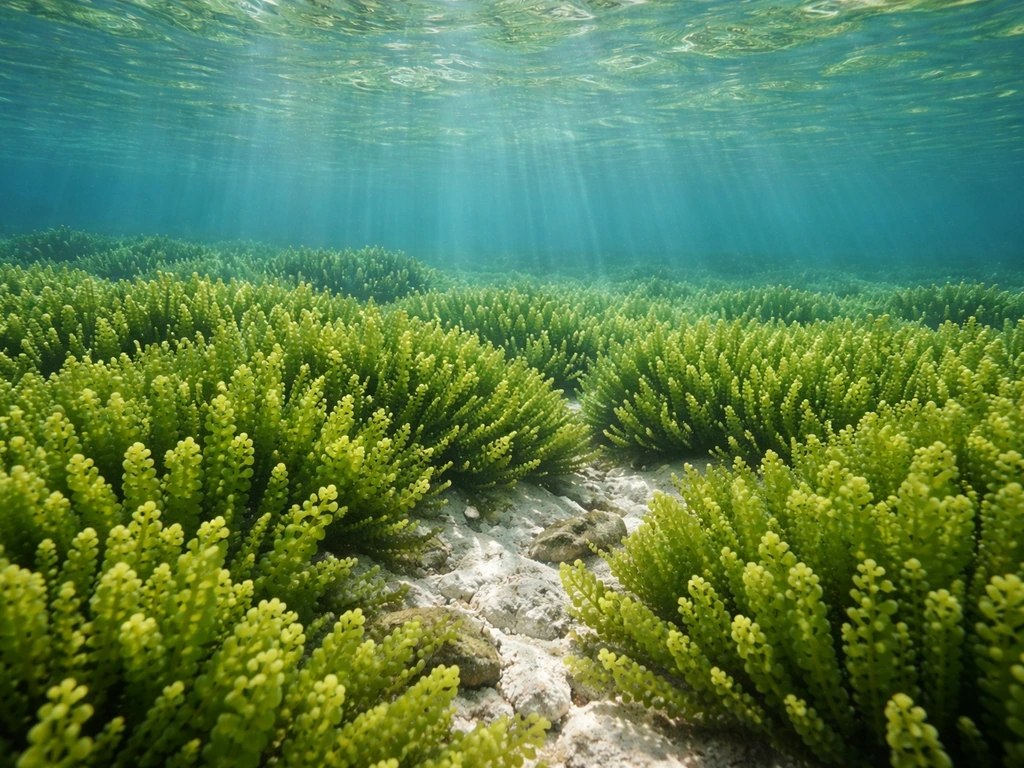
What sea grapes are and why their habitat tells you everything
The term "sea grape" is genuinely confusing because it gets used for more than one organism. In gardening and aquaculture circles, it almost always refers to species in the genus Caulerpa, a group of salt-tolerant macroalgae. The two most commonly grown are Caulerpa racemosa (the species most often sold in the Americas) and Caulerpa lentillifera (the edible "sea grape" popular across the Indo-Pacific). There's also Caulerpa sertularioides, sometimes called feather caulerpa, which turns up in Gulf of Mexico and Caribbean collections.
Caulerpa are not true plants in the botanical sense. They're siphonous macroalgae, meaning the entire organism is essentially one giant cell with no internal walls dividing it. The structure you see includes frond-like branches connected by creeping stolons, with rhizoids that reach down into sandy or muddy substrate to anchor the plant. That anchor system is important to understand: sea grapes are not free-floating. They need a physical substrate, a stable saline environment, and consistent light all the way to the bottom to thrive.
Why does habitat matter so much? Because Caulerpa can't compensate for the wrong conditions the way a terrestrial plant might. Drop the salinity too low and the tissue dissolves. Drop the temperature below about 50°F (10°C) for long and growth stops entirely. Cut off the light and the stolons just stop extending. Understanding where sea grapes grow in the wild gives you a direct blueprint for whether they'll work in your setup.
Where sea grapes grow naturally around the world
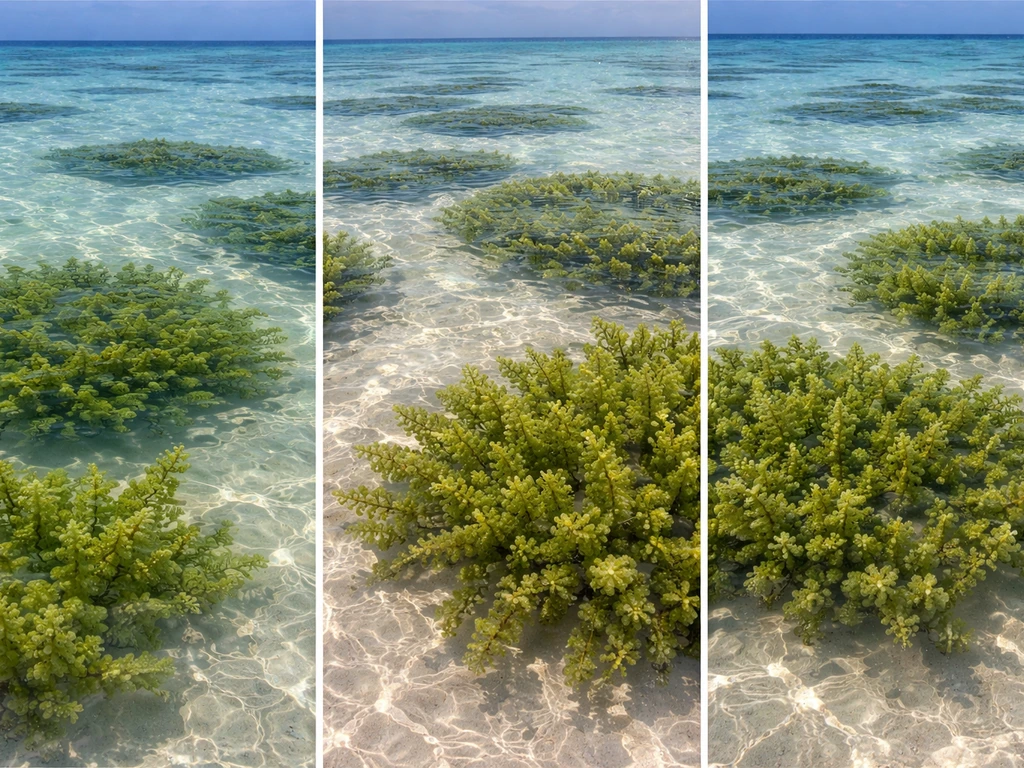
In the wild, Caulerpa species are concentrated in shallow tropical and subtropical coastal waters. Caulerpa racemosa is found throughout the Caribbean, around Bermuda and the Bahamas, and along the Atlantic coast of the Americas from Florida down to Brazil. It also appears in the Gulf of Mexico. Caulerpa sertularioides overlaps with that range and extends through the Gulf of California and down along Mexico's Pacific coast into the tropical eastern Pacific. Caulerpa lentillifera is the Indo-Pacific species, native to coastal areas from the Philippines and Indonesia through coastal East Asia and into the Pacific island chains. The PROSEA profile for Caulerpa lentillifera also reports it as widely distributed across tropical areas of the Indian and Pacific Oceans, including records from Thailand, Vietnam, Malaysia, Singapore, Indonesia, the Philippines, and Papua New Guinea blank" rel="noopener noreferrer">widely distributed across the Indian and Pacific Oceans. Wikipedia likewise describes Caulerpa lentillifera as the Indo-Pacific sea grape native to coastal areas from the Philippines and Indonesia through coastal East Asia and into the Pacific island chains Caulerpa lentillifera is the Indo-Pacific species native to coastal areas.
Depth-wise, these species typically occupy shallow intertidal and subtidal zones from the surface down to about 23 meters, though most commercial collection happens in the 5 to 20 foot range. In the wild, you'll find them on sandy bottoms, in seagrass beds, around mangrove roots, and occasionally on coral rubble. Brackish lagoons are also part of the natural range for several species, which is useful to know: sea grapes can handle slightly reduced salinity as long as it doesn't drop too far or too fast.
One thing worth noting if you're in the United States: certain Caulerpa strains, particularly a strain of Caulerpa taxifolia, became a serious invasive species concern in California and there is state legislation restricting possession, transport, and sale of specific species. Before you source any sea grapes, it's worth checking current rules for your state, especially on the West Coast.
The coastal conditions sea grapes actually need
If you're serious about growing sea grapes, treat these requirements as non-negotiable. Meeting most of them won't cut it if one critical factor is missing.
| Condition | What Sea Grapes Need | What Will Kill Them |
|---|---|---|
| Salinity | 30 ppt or above (full marine or near-marine salinity) | Salinity below 25 ppt, especially after heavy rainfall |
| Temperature | Consistent 65–85°F (18–30°C); growth starts around 59°F (15°C) | Sustained temperatures below 50°F (10°C); above 104°F (40°C) |
| Light | Bright, direct light reaching the substrate; water shallow enough to see the plants from the surface | Turbid water, shading, or depth that blocks adequate light |
| Substrate | Sandy or muddy-loam bottom; tolerates coral rubble | Excessively soft, deep mud with no stable anchor point |
| Water source | Clean, unpolluted seawater or synthetic marine mix | Freshwater runoff, proximity to rivers or creeks |
| Water movement | Gentle to moderate flow; protection from wave action | Strong wave surge or high-turbidity storm events |
Salinity deserves extra attention. The FAO's cultivation guidelines for Caulerpa lentillifera are explicit: pond salinity must be maintained at or above 30 ppt, and after heavy rain events, growers are instructed to drain and refill ponds to restore salinity before it has a chance to drop and damage the crop. If you're growing in an outdoor pond or tidal pool setup, this is the single most common cause of failure during rainy seasons.
Temperature is the biggest geographic limiter for U.S. gardeners. Research on Caulerpa taxifolia shows the plant can survive (but not grow) at around 50–54°F (10–12°C), and growth resumes at about 59–63°F (15–17°C). Optimal photosynthesis and growth happen in the 68–95°F (20–35°C) range. Above 104°F (40°C), photosynthesis becomes negative and the plant declines. For most of the U.S., this means sea grapes are only viable outdoors in South Florida, coastal Hawaii, Puerto Rico, and similar year-round warm zones.
How sea grapes grow from establishment to maturity
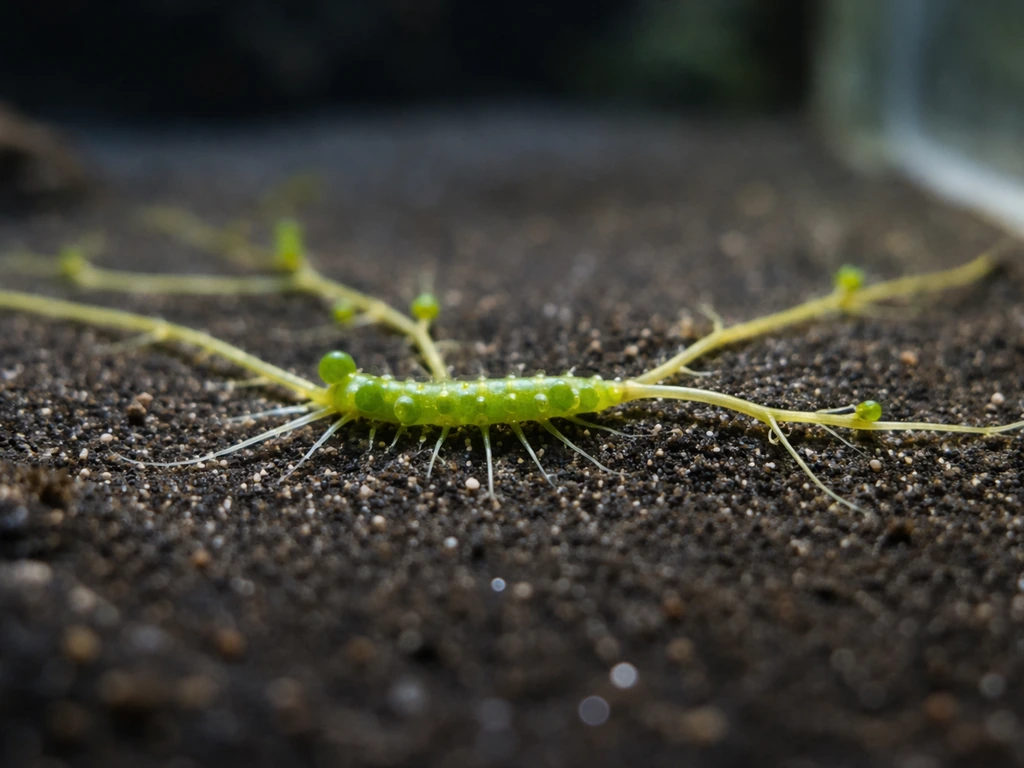
Sea grapes establish through their stolon system. When you introduce a fragment or a small starter culture, the stolons begin extending across the substrate while rhizoids anchor down into the sand or mud. Growth actually happens primarily at night, at the tips of the stolons and fronds, so don't panic if you don't see dramatic daytime changes in a new setup.
In commercial pond culture of Caulerpa lentillifera, growers expect the plants to form a uniform carpet across the pond bottom within about two months of initial planting. After that point, harvests can happen every two weeks as long as conditions remain stable. For home pond or tank setups, the two-month establishment window is a reasonable benchmark: if your sea grapes haven't spread noticeably in that timeframe, something in the environment needs adjusting, usually salinity, light, or both.
Seasonal growth patterns vary by location. In the Mediterranean, Caulerpa racemosa starts producing new stolons and erect branches in April and continues growing through December, then goes partially dormant over the coldest months. In consistently warm tropical environments like the Philippines or South Florida, growth is much more continuous throughout the year with only minor seasonal variation tied to water temperature fluctuations.
One important characteristic of Caulerpa: it spreads aggressively via fragmentation. Even a small fragment can regenerate into a full plant under the right conditions. This is great for propagation at home but it's also why certain species are regulated. Handle trimmings and cuttings carefully and never release Caulerpa into natural water bodies.
How to check if sea grapes will actually work where you live
Before you spend money on starter cultures, run through this checklist. It's the same kind of viability-first thinking that applies to any climate-sensitive plant, and it's worth being honest with yourself before you commit.
- Temperature: Does your location stay above 59°F (15°C) year-round, or at least for 8 or more months? If you have regular winter temperatures below 50°F, outdoor growing is not viable without a heated indoor tank setup.
- Salinity access: Do you have access to natural seawater, or are you willing to use a quality synthetic marine salt mix? If your only water source is brackish (mixed fresh and salt), can you maintain 30 ppt reliably?
- Light: Can you provide bright direct light, either from natural sun hitting the water surface or from a high-output aquarium light? Caulerpa needs light reaching all the way to the substrate.
- Substrate: Do you have a sandy or muddy-loam bottom in your pond or tank? The rhizoids need something to anchor into.
- Freshwater risk: Is your growing site near a creek, drainage ditch, or area that floods with rainwater? If salinity regularly crashes after rain, you'll need a drainage management plan.
- Regulatory status: Have you checked whether the specific Caulerpa species you're sourcing is legal to possess and grow in your state? This matters especially in California and other West Coast states.
For U.S. gardeners, the realistic viable zones for outdoor sea grape growing are USDA zones 10 and 11, basically coastal South Florida, the Florida Keys, Hawaii, and U.S. territories like Puerto Rico and Guam. Zone 9 coastal areas (parts of coastal Southern California, the Gulf Coast of Texas and Louisiana) are borderline: you might get away with outdoor growing through a mild year, but a cold snap will wipe things out. For anyone outside those zones, an indoor saltwater tank or controlled pond is the only realistic path.
It's also worth thinking about timing. When to grow grapes of any kind depends heavily on your local season and temperature window, and sea grapes are no different: starting your culture in late spring or early summer, when water temperatures are climbing and light intensity is high, gives you the best establishment window.
How to grow sea grapes successfully at home
Choosing your growing site
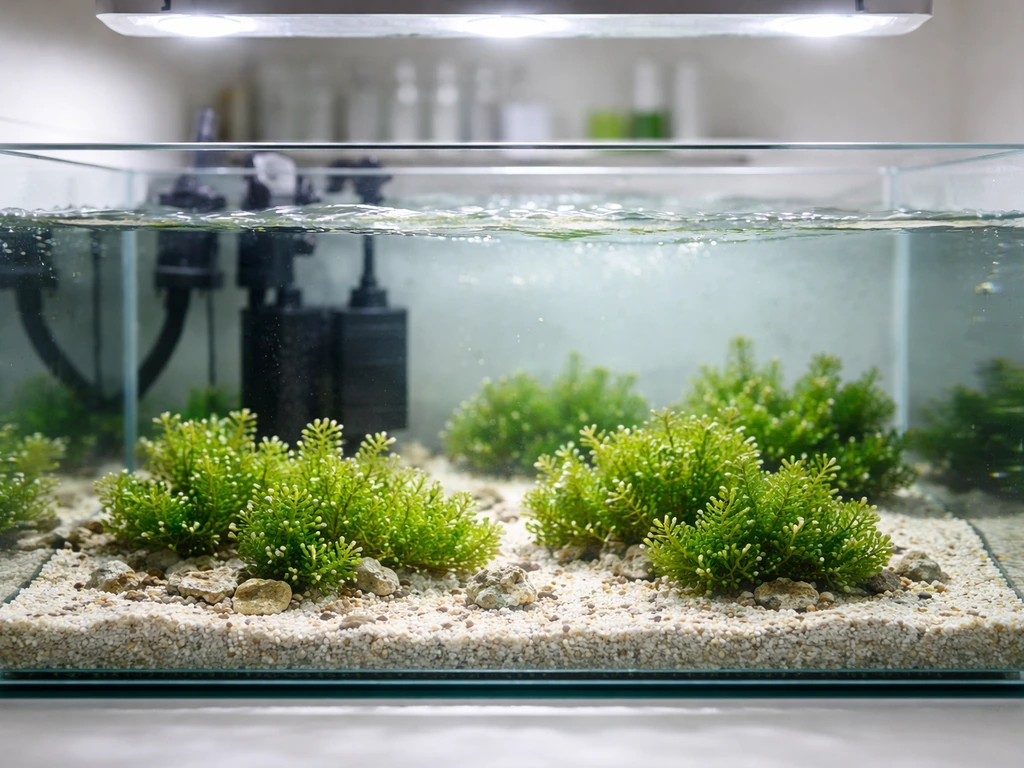
If you're going the outdoor pond route (most common in South Florida, Hawaii, or tropical regions), site selection follows the same logic as commercial operations. Place your pond close to your seawater source but away from freshwater inflows. Position it at or just above low tide level if you're using tidal exchange. Protect the site from direct wave surge that can erode the substrate and uproot your Caulerpa before it establishes. A south-facing site that gets full sun for most of the day is ideal.
For indoor tank setups, the principles are the same: bright light (high-output LED or T5 reef lighting is standard), consistent salinity at 30 ppt or above, stable warm temperatures, and a sandy substrate layer for the rhizoids to grip. Sea grapes actually do very well in refugium sections of home saltwater aquariums, where they help with nutrient export while producing harvestable biomass.
Planting and early establishment
Start with a healthy cutting or starter culture from a reputable source. Lay the stolons loosely across the substrate rather than burying them deeply. The rhizoids will anchor down on their own within days. Don't add too much material at once; a sparse initial spread that is well-lit and well-anchored will outperform a dense clump that shades itself. Keep flow gentle and consistent during the first two to three weeks while anchorage develops.
Resist the urge to harvest anything in the first two months. Let the plants form that uniform carpet before you start removing material. Early harvesting disrupts the stolon network before it's stable enough to recover. Once you're past the two-month mark and the coverage looks dense and healthy, you can begin harvesting portions every two weeks, always leaving the majority of the carpet intact to regenerate.
If you're curious about what healthy early growth should look like in practice, check out this guide on what grapes look like when they start to grow, which walks through the early visual signs of healthy establishment that apply broadly to any new planting you're monitoring.
Ongoing care and realistic expectations
Monitor salinity after every significant rain event. This is the single most important routine task for outdoor growers. Keep a refractometer or digital salinity meter on hand and check before and after major storms. If salinity drops, drain and replace water before the plants have been stressed for more than a day or two.
Don't expect linear growth. Sea grapes grow mostly at night, and you may notice the colony looking different in the morning than in the evening. That's normal. What you're watching for over weeks is an overall increase in stolon coverage across the substrate. Stalled growth almost always points to light, salinity, or temperature being outside the optimal range.
It's also useful to understand the broader seasonal arc of what you're working with. When grapes grow in any form is tied to the interplay of temperature and day length, and for sea grapes, the trigger for seasonal slowdown is water temperature dropping below that 59–63°F threshold. In South Florida, that's rarely a problem. In zone 9 and below, it means outdoor growing has a natural end date in autumn.
Where to find sea grapes and what to do next
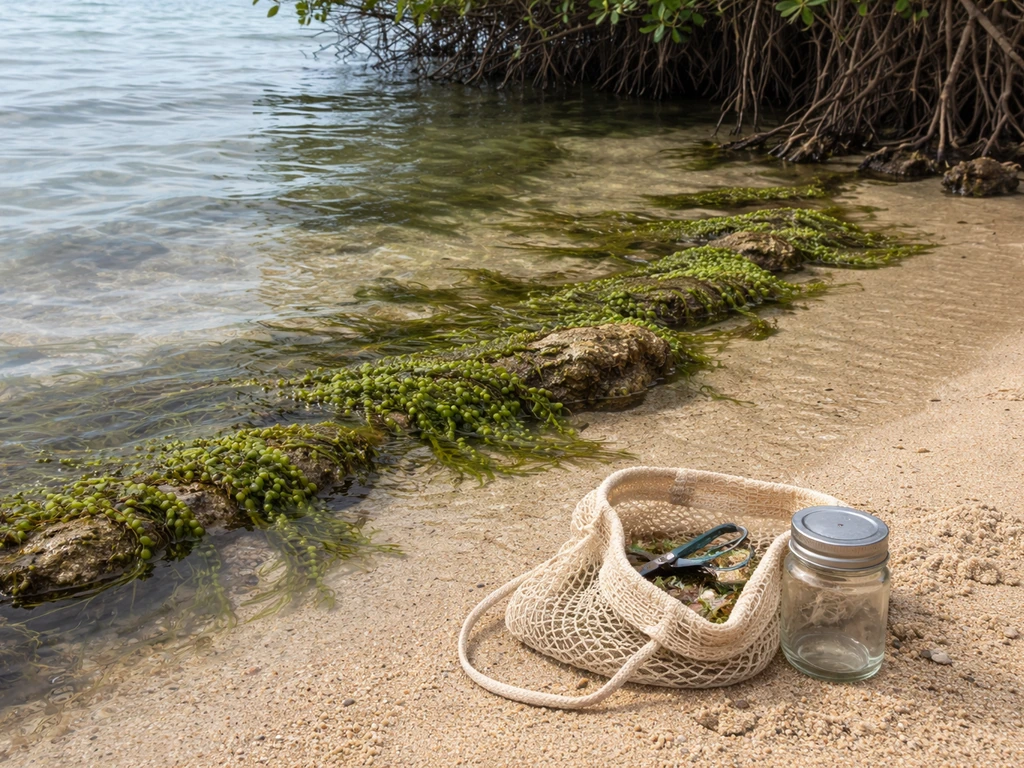
If you're in South Florida or Hawaii and want to see sea grapes in the wild, look at shallow seagrass beds, protected lagoons, and areas near mangrove edges at low tide. Caulerpa racemosa in particular is common in these zones and is easy to identify once you know what the small grape-like fronds look like.
For sourcing starter cultures, your best options are specialty marine aquarium retailers and online aquaculture suppliers. When buying, make sure you're getting Caulerpa racemosa (the Americas species) rather than Caulerpa lentillifera (the Asian edible variety) unless you specifically want the latter. One practical sourcing tip: reputable marine plant retailers will clearly distinguish between these two and often note collection origin. Be cautious about purchasing from sources that are vague about species identity.
If you're on the West Coast, check your state's current regulations before ordering. California in particular has restrictions on certain Caulerpa species due to invasive strain concerns, and it's important to source only from legal, compliant vendors. NOAA is worth consulting for current regulatory guidance if you're unsure.
For indoor tank growers anywhere in the continental U.S., the regulatory and climate barriers are much lower. A heated, lit saltwater refugium tank can support thriving Caulerpa colonies regardless of your outdoor climate. This is honestly the most accessible entry point for most home gardeners outside the tropics.
If you're also exploring how sea grape timing fits into a broader coastal growing calendar, it's worth looking at when grapes grow in California for context on how warm-season coastal conditions shape growing windows, since many of the same temperature and light dynamics apply to marine plants in that region.
Here's a practical action plan you can start on today:
- Check your average winter water or air temperature for your growing zone to confirm basic viability.
- Decide whether you're going outdoor pond or indoor saltwater tank based on your climate and available space.
- Source a salinity meter if you don't already have one. This is your most important tool.
- Contact a specialty marine plant retailer (AlgaeBarn, live-plants.com, or similar) and ask specifically for Caulerpa racemosa if you're in the Americas, confirming it is not the Asian lentillifera variety.
- Prepare your substrate (sandy layer, at minimum 2–3 inches deep) and confirm your light source reaches it.
- Introduce your starter culture in late spring or early summer for the best establishment conditions.
- Set a two-month hands-off establishment window before your first harvest.
Sea grapes are genuinely rewarding to grow once you match their environment. They're fast-establishing, visually interesting, useful for nutrient export in marine tanks, and edible in the case of Caulerpa lentillifera. The biggest mistake new growers make is underestimating how quickly salinity crashes can wipe out an otherwise healthy colony. Stay on top of that one variable and you'll be harvesting in two months.
FAQ
Do sea grapes need to be planted in sand, or can they float?
They grow on “the seafloor,” not as free-floating plants. In practice, you need a stable sandy or muddy bottom for rhizoids to anchor, and you want light to reach the substrate depth you’re planting at. A bare bottom with poor light penetration, or shifting substrate, is a common reason colonies fail.
What happens if the water salinity drops a little, or I top off with freshwater?
Freshwater is a fast failure trigger. Even if they survive briefly during handling, you should match tank or pond salinity quickly and avoid sudden osmotic changes. When acclimating, raise or lower salinity gradually and confirm with a refractometer, not just by water source labels.
Can I grow sea grapes outdoors in a borderline climate if daytime temps are warm?
Yes, cold water is a common limit, even if temperatures look “warm enough” during the day. Check typical nighttime water temperatures (especially in zone 9 coastal areas and inland heatwaves). Short cold snaps can stop growth, and repeated dips below about 50 to 54°F (10 to 12°C) can reduce survival.
How do I prevent sea grapes from dying during rainy season?
For outdoor setups, growth often stalls after heavy rain because salinity drops before you notice. Keep a plan for immediate response, check salinity after every storm, and be ready to drain and refill (or otherwise restore salinity) within a day or two if your readings move below safe levels.
Is it safe to dump trimmings or rinse water from sea grapes?
They can spread from small fragments, so “escapes” are possible if you toss trimmings or rinse water near drains, creeks, or coastal shorelines. Treat all cuttings and wastewater as contaminated, collect them for disposal, and never dump remaining culture water outside.
Should I bury the stolons/rhizoids when starting a culture?
Burying the colony can slow anchorage. Lay stolons on the surface so rhizoids can attach naturally to the substrate, then let them anchor over the first days. Deep burial also increases shading and can create areas where light never reaches the active tips.
My sea grapes aren’t spreading after a couple of months, what should I troubleshoot first?
If growth is weak after 4 to 8 weeks, prioritize diagnostics in this order: salinity stability, light intensity and coverage, substrate contact, then temperature swings. A dense clump that shades itself can look “healthy” at first but fail to spread, so avoid starting too thick.
Can I do water changes, or will salinity swings hurt the colony?
Yes. Rapid salinity changes can damage tissue even if the average salinity later looks okay. Top-offs should be made with saltwater (or properly mixed marine saltwater), and any exchange should be matched to current tank salinity to avoid large swings.
Why does my colony look unchanged some days, then suddenly bigger?
They often look different at different times of day because growth is active mainly at night. What matters is whether stolon coverage expands across the bottom over weeks. If you only watch during the day and see no change, your colony may still be establishing at night.
When is it safe to harvest, and will early harvesting permanently stunt them?
Not for the same reason as terrestrial “grapes.” Sea grape “carpets” spread by fragmentation into stolons that regenerate, so harvesting too early can disrupt the network before it stabilizes. Wait until the colony forms strong, uniform coverage, then harvest portions while leaving most of the carpet intact to regrow.
How do I confirm whether sea grapes are legal to buy and keep where I live?
Regulations vary by state and by species/strain, and rules can change. Before ordering or importing, confirm what is explicitly restricted, what is allowed with permits, and what documentation your supplier must provide. West Coast locations are especially important to double-check.