Grapevines grow actively from roughly early spring through mid-to-late fall, but the exact calendar window depends entirely on where you live. In a warm climate like central California, vines can break bud as early as late February. In Michigan or upstate New York, you might not see the first green tips until late April or early May. The core growth arc is the same everywhere: dormancy breaks, the vine flowers, berries set and slowly develop, color change (called veraison) signals ripening, and then harvest closes out the season before the vine goes back to sleep. What changes is the calendar date attached to each of those stages.
When Do Grapes Grow? Timing by Season and Region
Marcus Whitfield
4 Apr 2026
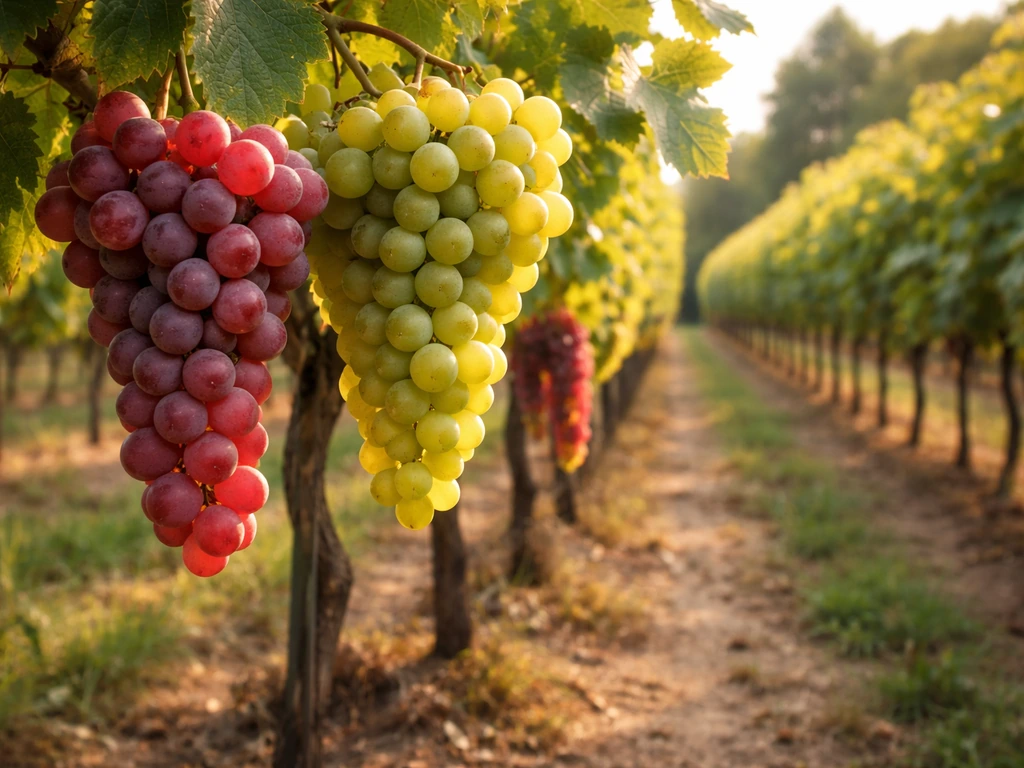
The full grapevine growth timeline, from dormancy to harvest
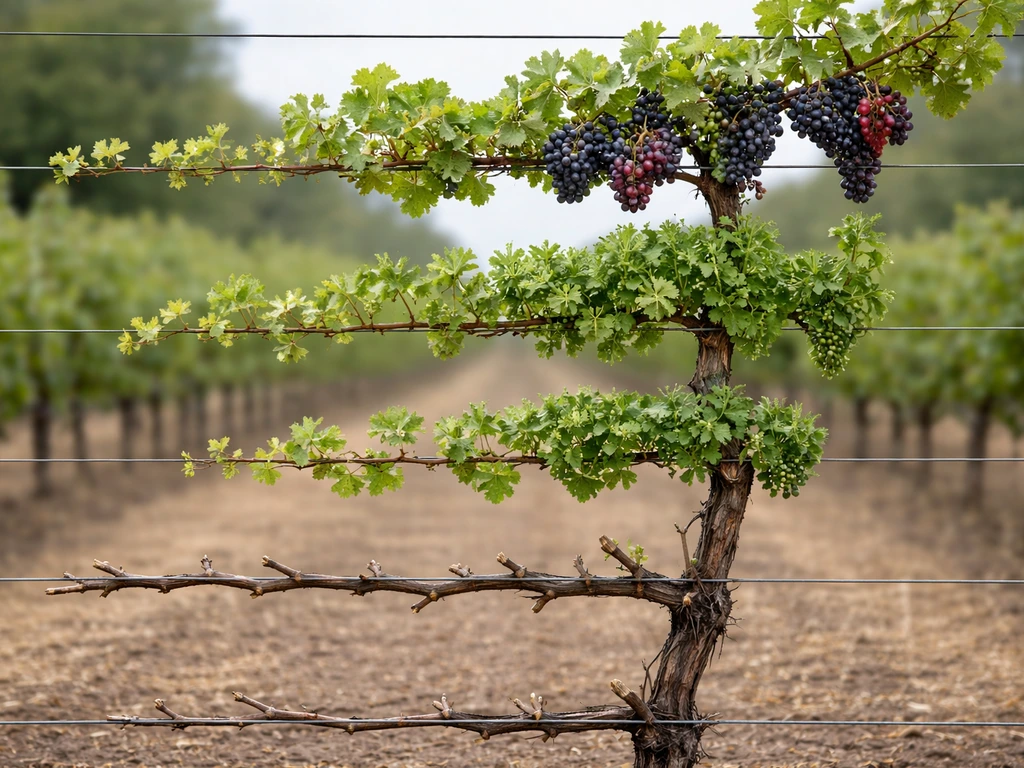
Grapevines follow the same annual rhythm every year. Once you understand the sequence, you can map it onto your local climate and stop guessing. Here is the full arc, from the moment a vine wakes up in spring to the moment it shuts down in fall.
- Endodormancy (winter): The vine is fully dormant. Buds are locked internally by the plant itself, not just by cold weather. Chilling hours (accumulated as "chill portions" over winter nights) must be satisfied before the vine can even respond to warm temperatures.
- Ecodormancy (late winter into early spring): Internal dormancy has lifted. Now the bud is just waiting for external warmth. Once daily temperatures rise consistently above 50°F (10°C), heat starts accumulating and budbreak is close.
- Budbreak (early spring): Green tips push out of the buds. This is the most frost-vulnerable moment of the year. In warm zones (8–10), this can happen in late February to early March. In cooler zones (5–6), expect mid-April to early May.
- Shoot and leaf development (spring): Shoots extend rapidly. About a month after budbreak, leaves are fully unfurled and the vine is building the canopy it needs to ripen fruit.
- Flowering (late spring to early summer): Tiny flower clusters open roughly 40–80 days after budbreak. Pollination happens fast, often within a week or two.
- Fruit set (early summer): Immediately after flowering, fertilized flowers develop into small, hard green berries. Unfertilized flowers drop off.
- Berry development (summer): Berries grow slowly through two distinct phases. They stay hard and acidic while accumulating size, then pause briefly before veraison.
- Veraison (mid-to-late summer): Berries change color (red varieties turn purple or red; white varieties turn golden or translucent) and begin accumulating sugars rapidly. This stage starts roughly 40–50 days after fruit set.
- Ripening and harvest (late summer through fall): Sugar rises, acidity drops, and flavor develops. Veraison to harvest typically takes another 40–50 days, depending on variety and climate.
- Post-harvest dormancy (fall into winter): After harvest, the vine hardens off its canes, drops leaves, and re-enters dormancy.
If you want to dig into what each of these stages actually looks like on the vine, what grapes look like when they start to grow is worth a read before your first budbreak arrives.
When grapevines break bud in spring, and how to predict it
Budbreak is not a fixed date. It is a response to two things happening in sequence: the vine satisfying its winter chilling requirement (endodormancy), and then accumulating enough spring warmth (heat units, also called growing degree days) to push those first green tips out. Both steps have to happen. If you live somewhere with mild winters, your vines may not accumulate enough chilling hours, which delays or disrupts budbreak. If you live somewhere with a long, cold spring, heat accumulates slowly and budbreak comes late even if chilling was adequate.
The practical tool for predicting budbreak is the growing degree day (GDD). The concept is straightforward: on any given day, take the average of the daily high and low temperature, blank" rel="noopener noreferrer">subtract the base temperature of 50°F (10°C), and the result is the GDDs accumulated that day. If the average temperature is at or below 50°F, the vine gains zero GDDs and essentially marks time. Once daily GDDs start stacking up consistently after your last hard frost, you can estimate how far out budbreak is. For Cabernet Sauvignon, one detailed phenology model puts the GDD requirement from budburst through harvest at roughly 1,352°C·days total, with budburst itself triggered after meaningful heat accumulation following the satisfaction of chilling.
A warm spell in late winter can accelerate this. Research from New Mexico State University notes that a warm stretch can push budburst from April into March in some years, which matters enormously for frost planning. If your vine breaks bud three weeks earlier than normal because of an unusual warm spell, the new growth is now exposed to frosts that would normally have passed.
As a rough anchor: in Zone 7 (most of the mid-Atlantic and parts of the South), expect budbreak around late March to mid-April. Zone 6 (upper Midwest, New England) tends to see it in late April to early May. Zone 8 and warmer (Pacific Northwest lowlands, most of California, the Deep South) can see budbreak in late February or early March in some years.
Flowering, fruit set, and veraison: the timing chain
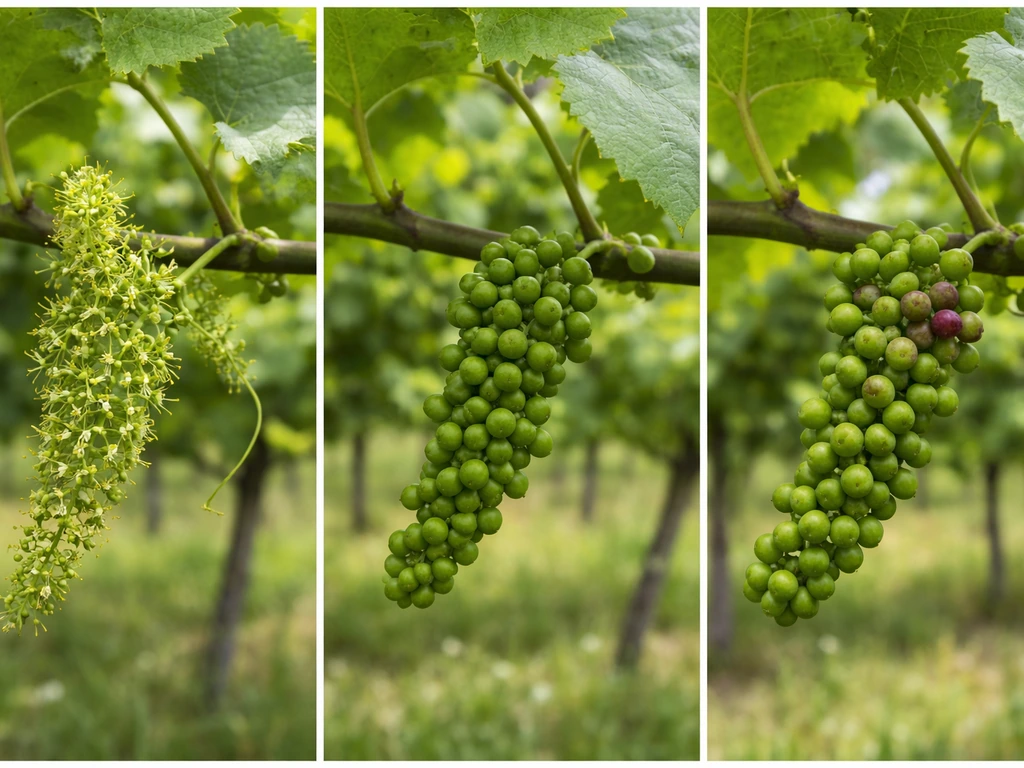
Once budbreak happens, the rest of the season follows in a predictable chain. Each stage feeds into the next, and each one has a rough GDD or time-based estimate you can use to plan.
| Stage | Timing after previous stage | GDD reference (Cabernet Sauvignon model) | What to watch for |
|---|---|---|---|
| Budbreak to flowering | 40–80 days | ~253°C·days from budbreak | Tiny flower clusters visible; caps begin falling |
| Flowering to fruit set | 1–2 weeks | ~171°C·days from flowering | Small green berries replace flowers |
| Fruit set to veraison | 40–50 days | ~455°C·days from fruit set | Color change in berries (red turns purple, white turns golden) |
| Veraison to harvest | 40–50 days | ~473°C·days from veraison | Brix rising, acidity dropping, seeds browning |
The GDD numbers above come from a Cabernet Sauvignon phenology model and will vary by cultivar, but they give you a useful planning framework. The key practical point: if you know your average daily temperatures from budbreak onward, you can calculate roughly when to expect flowering, veraison, and harvest. If your spring is running 10°F warmer than average, those stages compress. A cool, cloudy summer stretches them out.
Veraison deserves special attention for home gardeners. It is the clearest visual signal the vine gives you all season, and it is your countdown clock to harvest. Once veraison starts, you are typically 40–50 days from ripe fruit. That is when to stop worrying about vine growth and start monitoring sugar levels (with a refractometer if you want to get precise, or just by tasting).
Wine grapes vs. table grapes: how their growing windows differ
Both types follow the same seasonal arc, but their harvest windows diverge in meaningful ways. Table grapes are typically harvested earlier in the season. Penn State Extension puts table grape harvest in temperate climates starting in mid-August and running through late September. They are also non-climacteric, meaning they do not continue ripening after you pick them. What you harvest is what you get. That makes on-vine timing critical: you pick when the berries are exactly where you want them, not a week early hoping they finish on the counter.
Wine grape varieties (both red and white) are generally harvested later in the season and are managed specifically for sugar/acid balance and phenolic maturity, which take longer to develop. Many classic wine varieties require significantly more heat accumulation to reach full ripeness, which is exactly why not every wine grape grows well in every state. Cabernet Sauvignon, for example, needs a long, warm growing season. Plant it in a short-season climate in Zone 5 and you will be fighting underripe fruit every single year. Varieties like Marquette, Frontenac, or Concord were bred or selected for shorter seasons precisely because not every garden has 1,350-plus degree days available before frost.
If you are in California and wondering how your specific region affects wine grape timing, when grapes grow in California breaks down the differences between coastal and inland zones in detail, because the spread is dramatic.
How your region and climate zone shift the calendar
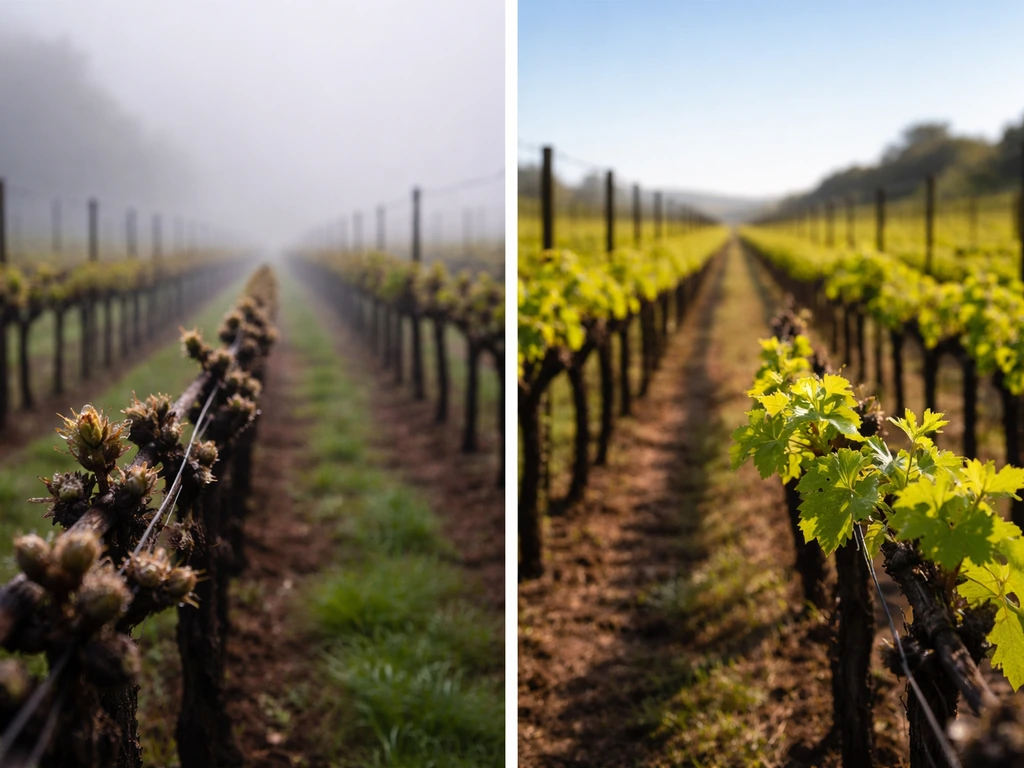
Your USDA hardiness zone tells you about winter cold. Your blank" rel="noopener noreferrer">Winkler region tells you about summer heat. For grape growing, both matter, but it is the heat accumulation from April through October that most directly determines which varieties can ripen in your garden.
The Winkler system uses GDDs with a base of 50°F, tallied from April 1 through October 31, to classify wine grape regions from Region I (the coolest, under 2,500 GDDs) through Region V (the hottest, over 4,000 GDDs).
A UC Davis Site Suitability document explains Winkler region growing degree day thresholds and how they relate to climate and wine style suitability, such as Region Ib around 2,000, 2,500 GDD and Region V over 4,000 GDD Region I (the coolest, under 2,500 GDDs) through Region V (the hottest, over 4,000 GDDs).
To show how much location shifts phenology: in Los Carneros, a cool coastal region in California, budbreak and bloom run roughly 7–14 days behind other Napa Valley vineyards because of maritime cooling. That gap can mean the difference between catching a late frost and missing it, or between ripening Pinot Noir fully and coming up short. Inland regions with higher GDD accumulation, like the Clarksburg AVA in the Sacramento Delta, run warmer and ripen fruit faster. The San Luis Obispo Coast sits somewhere in between, with maritime cooling slowing heat accumulation significantly compared to warmer inland neighbors. And in the Contra Costa AVA, differences in temperature directly affect harvest timing and the balance between sugar accumulation and acidity.
For home gardeners outside California, the same logic applies. A gardener in coastal Oregon or Washington will have a very different GDD budget than someone in Missouri or Virginia. Missouri's University Extension notes that when average daily temperature is 50°F or below, no growing degree days accumulate at all, which is a simple but important reminder: cool springs do not just delay budbreak, they shorten the effective growing season.
Here is a rough regional guide to typical budbreak and harvest windows:
| Region / Zone | Typical budbreak | Typical table grape harvest | Typical wine grape harvest |
|---|---|---|---|
| Zone 5 (upper Midwest, New England) | Late April to early May | Late August to September | September to mid-October (short-season varieties only) |
| Zone 6 (mid-Atlantic, Ohio Valley) | Mid- to late April | Mid-August to late September | September to October |
| Zone 7 (VA, NC, TN, Pacific NW lowlands) | Late March to mid-April | August to September | Late September to October |
| Zone 8 (parts of CA, OR, WA, Gulf Coast) | Late February to March | July to August | September to October |
| Zone 9–10 (central/southern CA, AZ, TX) | Late February or earlier | July to August | August to September (or earlier for some varieties) |
Keep in mind these are general windows. Elevation, slope, proximity to large bodies of water, and even the aspect of your garden (south-facing slopes warm faster) all shift the dates. If you are curious about a unique type of grape that thrives in truly coastal conditions, where sea grapes grow is an interesting detour, though that is a very different plant from the vinifera or hybrid varieties most home gardeners are working with.
Your planning checklist for right now
If you are reading this in early spring, the timing is perfect to get organized before your vines wake up for the season. Here is a practical sequence to work through today.
Step 1: Know your last frost date and your GDD budget
Look up your average last spring frost date for your zip code (the USDA frost date tool or your local extension service are reliable sources). Then estimate your GDD budget: how many degree days do you typically accumulate between April 1 and October 31? If you are in Zone 5 with roughly 2,000–2,500 GDDs available, you cannot ripen Cabernet Sauvignon. If you are in Zone 8 with 3,500-plus GDDs, your options open up considerably.
Step 2: Match your variety to your climate
This is the single most important decision you make. A variety that needs 1,400+ GDD to ripen will underperform or fail completely in a short-season climate. For Zone 5–6, look at cold-hardy hybrids: Marquette, Frontenac, Concord, Niagara, and similar varieties bred for northern conditions. Zone 7 opens the door to Norton, Chambourcin, Traminette, and some Vitis vinifera varieties in protected sites. Zone 8 and warmer lets you grow most vinifera varieties. For a deeper look at when to grow grapes relative to your specific climate and planting window, that guide covers the timing decision in more detail.
Step 3: Time your pruning carefully
Pruning timing is a genuine balancing act in spring-frost-prone regions. OSU Extension notes that pruning later, closer to the natural start of the growing season, delays budbreak and can also reduce trunk disease infection risk. University of Maryland Extension adds that cane pruning (rather than cordon/spur pruning) gives you a frost management advantage: the top buds on long canes break first, and if those get hit by frost, the basal buds you actually want for fruit production may still be protected. The University of Georgia reinforces this tradeoff honestly: delayed pruning can reduce yield if no frost actually occurs, so you are making a calculated risk/reward decision based on your local frost history.
In regions with persistent late-frost risk (most of Zone 5–6, and even parts of Zone 7), the double-pruning strategy is worth considering: leave extra buds on canes initially, let the top buds break first and absorb any frost damage, then go back and prune to your final bud count once the frost window has passed.
Step 4: Have a frost protection plan ready
Once budbreak happens, new growth is extremely vulnerable to frost damage. If a late frost is forecast after your vines have broken bud, you have a few options. Row cover or low tunnels can protect young shoots in a home garden setting. WVU Extension recommends ventilating low tunnels during the day if several consecutive frost days are forecast, to prevent heat buildup that stresses the vine.
The tricky part is that frost events after budbreak can wipe out an entire season's crop, since the fruitful buds are the ones most exposed. University of Maryland Extension recommends using site factors (slope, aspect, elevation) to your advantage: a slightly elevated site with good air drainage is naturally less frost-prone than a low-lying frost pocket.
Step 5: Use veraison as your harvest countdown
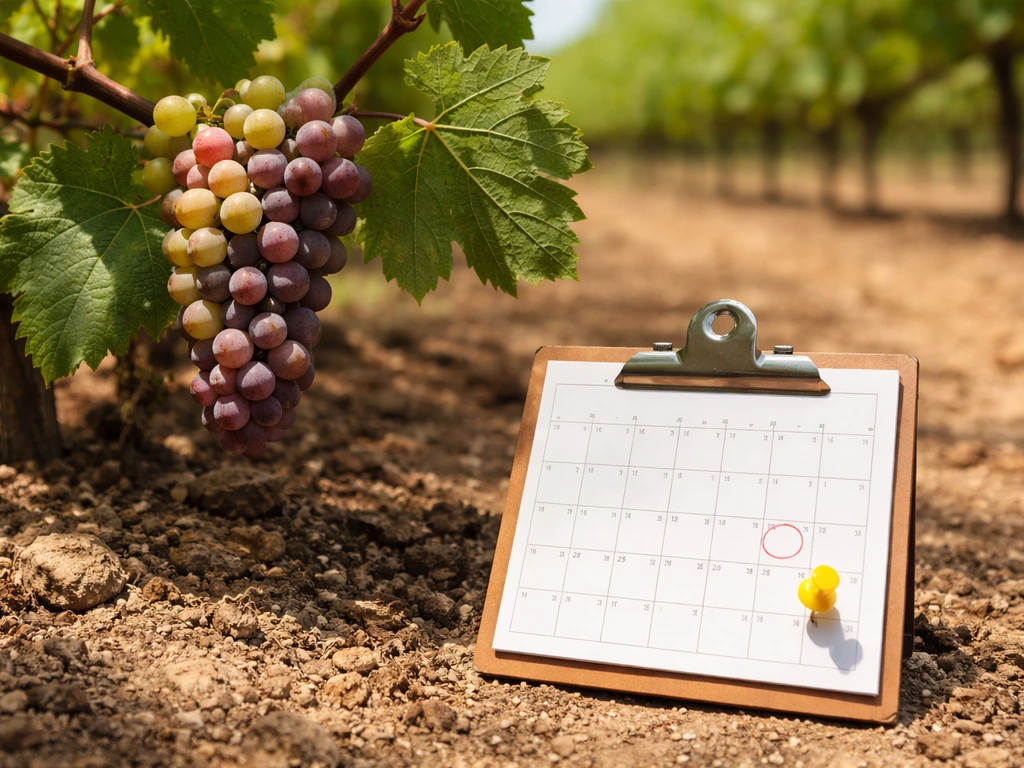
Once your vines are growing, mark the date of full fruit set and the date veraison begins. From veraison, count roughly 40–50 days to get a harvest target. For table grapes, plan to pick on-vine at peak ripeness since the fruit will not continue developing after harvest. For wine grapes (or if you are making juice), you have a little more flexibility to manage timing, but do not push it too far: overripe fruit loses acidity and the flavors fall apart quickly in hot weather. Ohio State's multi-year vineyard maturity data supports the point that harvest timing is best monitored by maturity signals on the vine, not a fixed calendar date.
Getting this all right in your first season or two is genuinely satisfying. Grapes are not the easiest crop, but they are absolutely manageable for a home gardener who understands the seasonal arc and plans around their specific climate. Know your GDD budget, pick a variety that matches it, prune at the right time with an eye on frost risk, and use veraison as your ripening clock. That framework works whether you are growing a backyard arbor of Concord in Minnesota or trying to ripen Syrah on a south-facing slope in Virginia.
FAQ
If I plant new grapevines, will “when do grapes grow” be the same as for established vines in my yard?
Use the fruiting site plus the weather the vine actually experienced. Start by predicting budbreak with chilling and spring warmth, then re-check frost forecasts once shoots are 2 to 6 inches long. The biggest practical shift is that early budbreak increases how likely you are to lose the fruitful buds, so even if the calendar “says” harvest should be normal, a frost event can reset your timing by eliminating that year’s crop.
Why do my grapevines grow at different times than my neighbor’s, even though we are in the same hardiness zone?
They won’t be. Budbreak and later stages depend on the variety and the location-specific microclimate, but pruning also changes it. If you prune very early or very late, you can shift budbreak by days to weeks. Also, vines that are stressed (drought, poor drainage, heavy nitrogen) often break later and develop unevenly, which makes a single calendar window unreliable.
Can I pick table grapes early and let them ripen after harvest?
Yes, but only within limits. Table grapes are non-climacteric, so you typically must pick at peak flavor and texture because ripeness does not keep improving after harvest. For wine grapes or juice, fruit can sometimes stay on the vine a bit longer to adjust sugar, but delaying too far can reduce acidity and make flavors flat, especially during hot spells.
Should I use standard GDD dates (April 1 to October 31) or my own frost dates when planning harvest timing?
Growing degree days calculated from April 1 to October 31 (often used for classification) can miss reality for your yard because your last frost date can be earlier or later. A better approach is to compute your “effective GDD budget” starting from your first safe growing period (near budbreak) and ending at your first likely fall frost or harvest target date. This helps you avoid choosing a variety that looks feasible by zone averages but fails in your specific year.
How accurate are growing degree days if my spring temperatures hover near the 50°F base?
Assuming the base temperature is fixed at 50°F is usually fine for planning, but the real-world problem is thresholds. When average temperatures sit near the base, accumulation can be slow and “false starts” happen, especially with warm spells followed by cold snaps. For that reason, treat GDD forecasts as ranges, and verify with budbreak and shoot height once growth starts.
What would cause veraison to start later than expected even if budbreak happened on time?
It can be normal. You may see bloom and even berry set, but then clusters can loosen or berries can lag if pollination is poor, weather is very cold during bloom, or vines lacked resources (water stress, nutrient imbalance). In those cases, veraison can come later and ripening may be uneven across the cluster.
Does the 40 to 50 days from veraison to harvest always hold for my grapes?
The 40 to 50 day rule from veraison is a useful home planning target, but it changes with temperature and management. Cooler summers usually stretch the interval, while hot weather can shorten it and also push acidity down faster. If you get uneven ripening, you may need to extend monitoring beyond the rule-of-thumb window rather than picking all at once.
What’s the best way to protect vines from a frost after budbreak?
You can, but do it with prevention in mind. Because frost after budbreak can destroy the most fruitful buds, focus on protecting shoots during the forecast window. Low tunnels and row covers work better when they are vented during the day to prevent heat stress, and they must be secured so the fabric does not let cold air and radiating frost contact the canopy.
How much does site selection (slope, aspect, elevation) really change frost risk and growth timing?
On a slope and in good airflow, the biggest benefit is reduced “frost pocket” risk. Cold air drains downhill and warms air moves in, so an elevated, well-drained spot can delay damaging frost compared with a low basin. If you can, observe your yard during past frost nights or track where ice forms first, then match your planting to the warmest site.
If I’m making my own wine or juice, how should I decide the harvest date versus just using a calendar?
It depends on the grape type and your goals. For wine, you generally have a window where fruit can be managed for sugar, acidity, and phenolic maturity rather than a single date. For table grapes, you must pick at your exact desired eating ripeness because the fruit will not keep improving after harvest.