
Grape vines start to grow when temperatures consistently warm above 50°F (10°C) after winter dormancy, a moment viticulturists call budbreak. Depending on where you garden, that can happen anywhere from late February in the warmest U.S. climates to mid-May in cold northern states. In India, it ranges from October in cooler hill stations to as early as January in tropical regions. The exact date shifts every year based on how cold your winter was, how quickly spring warms up, and which variety you're growing, but once you understand those three levers, you can predict your vine's wakeup call pretty reliably.
When Do Grape Vines Start to Grow: Budbreak Timing Guide

Marcus Whitfield
27 Jul 2026
What budbreak actually is (and why it matters)
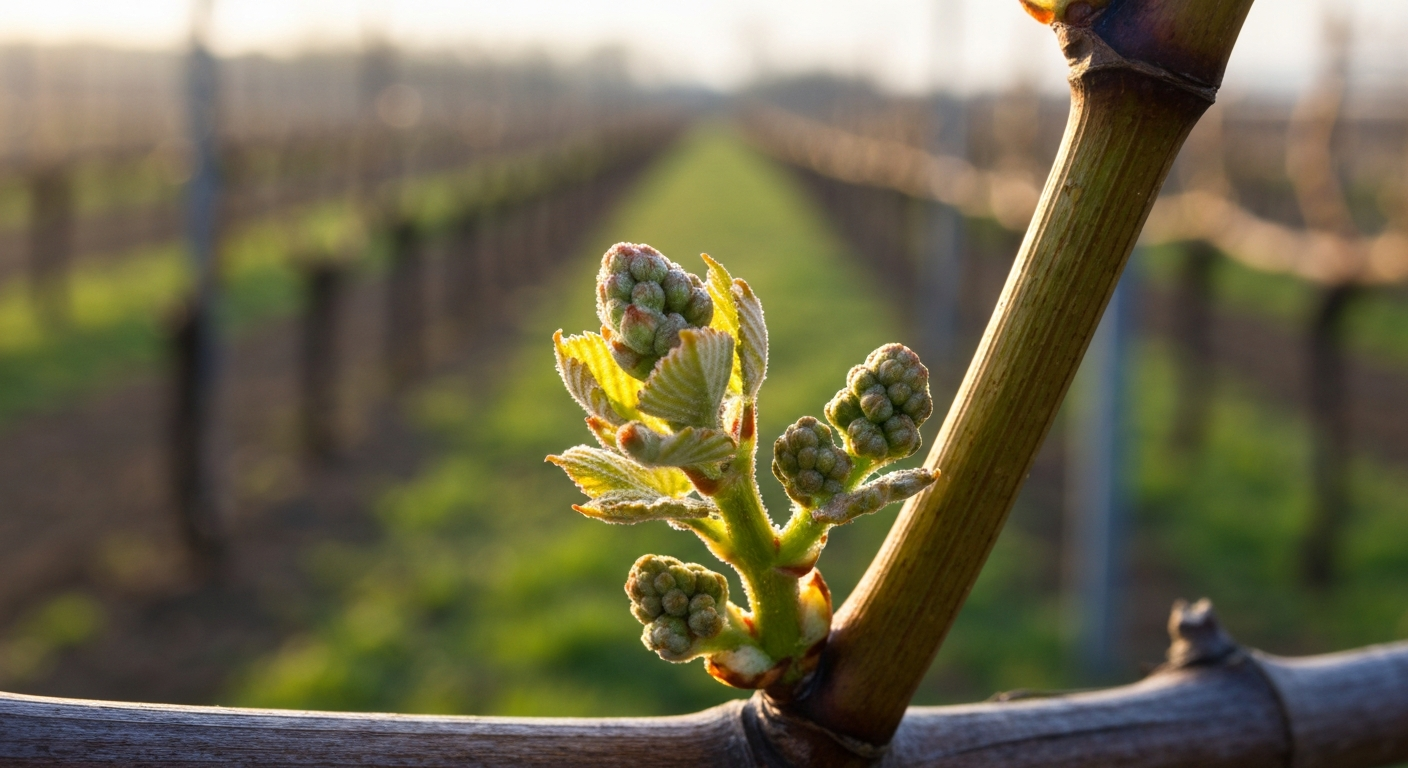
Budbreak, sometimes called bud burst, is the phenological transition when a grapevine shifts out of winter dormancy and begins active shoot growth. Viticulturists track it using BBCH scale codes: bud swell is BBCH 01–03, green tip (the first green tissue peeking out from the bud scales) is BBCH 05–07, and true budbreak is BBCH 07–09, when the green shoot tip is clearly visible and separating from the bud scale. You don't need to memorize the codes, but recognizing these stages helps you time two of the most important management decisions of the year: when to do any final pruning adjustments and when to start watching for frost.
This is also the stage most closely related to the sibling questions about when grape vines grow leaves and what month grapes grow, because leaf expansion follows budbreak by only a few days, and the whole seasonal clock starts ticking from this moment. For more on the typical locations and conditions for foliage, see the section on where do grape leaves grow. If you also want to know what season does grapes grow, see our guide on seasonal grape growth for regional timing and care recommendations. Getting the timing right in your specific location is the foundation of everything else. For specific month-by-month timing in different climates, see our guide on what month do grapes grow.
What actually triggers budbreak
Four things combine to push a vine out of dormancy: accumulated chill hours, rising soil and air temperatures, root moisture, and sometimes a final pruning cue. Here's how each one works in practice.
Chill hours: the winter debt the vine has to pay
Grapevines won't break dormancy reliably until they've accumulated enough cold exposure, what we call chill hours. The simplest measure counts hours where temperatures sit at or below 45°F (7.2°C). Most Vitis vinifera cultivars need somewhere between 50 and 400 chill hours depending on the variety, which makes them relatively low-chill compared to many fruit trees. Interspecific hybrids and wild Vitis species often need more. If your winter doesn't deliver enough chilling, a real issue in subtropical Florida or low-elevation Arizona, you'll see delayed, uneven budbreak with some buds sprouting weeks apart. For warmer climates, viticulturists now increasingly use the Dynamic Model (measured in Chill Portions rather than simple hours) because it handles warm, fluctuating winters more accurately. Practically speaking: if you're in USDA Zone 9 or warmer, chill hours are a variable you want to track.
Spring warming: the heat that flips the switch
Once the vine has paid its chill debt, it sits in what's called ecodormancy, ready to grow but waiting for sustained warmth. Soil temperatures above 50°F and consistently mild air temperatures are the practical trigger. A few warm days in February won't do it alone; the vine needs the pattern to hold. This is why sites with slow-warming, north-facing slopes delay budbreak beneficially in frost-prone areas, while south-facing slopes or raised beds with good sun exposure can push budbreak noticeably earlier.
Pruning timing
Pruning itself can influence budbreak timing. If you prune early in the dormant season, you remove the terminal buds that were partly suppressing the lower buds, which can slightly advance budbreak. In frost-prone regions like the Finger Lakes in New York or elevated Appalachian sites, many growers deliberately delay dormant pruning until late winter or even until bud swell begins, the idea being that the vine stays slightly more dormant longer, reducing the window where a late frost can destroy an already-opened bud. It's a practical trick worth considering if you've lost crops to late frosts.
Soil moisture
Adequate soil moisture is necessary for the vine's root system to begin pushing water and nutrients into the buds. Extremely dry soils after a dry winter can slightly delay or weaken budbreak. This isn't usually a gardener's biggest concern in humid climates, but if you're in a dry-winter region like much of the Southwest or California's Central Valley, making sure the root zone has reasonable moisture heading into spring is worth doing.
Hardiness zones, chill hours, and heat accumulation, what the numbers mean for your timing
Three different measurement systems are commonly used when planning grape phenology, and they do different jobs. Understanding which one answers which question will save you a lot of confusion.
| System | What it measures | What it tells you | Best used for |
|---|---|---|---|
| USDA Hardiness Zone | Average annual winter minimum temperature | Whether a variety will survive winter without dying | Variety selection and rootstock choice |
| Chill Hours / Chill Portions | Cumulative cold exposure during dormancy (hours ≤7.2°C or Dynamic Model Chill Portions) | Whether the vine will break dormancy uniformly and on time | Warm-climate suitability checks (Zones 8–10+) |
| Growing Degree Days (GDD / Winkler Index) | Heat accumulation above base 50°F (10°C) from a start date | When budbreak, flowering, veraison, and harvest will occur | Season planning, spray timing, harvest prediction |
GDD (also called the Winkler Index in wine-grape contexts) is probably the most directly useful tool for day-to-day planning. Growing Degree Days (GDD), often calculated via the Winkler convention, and the Huglin Heliothermal Index (HI), which weights maximum temperature and includes a latitude/daylength factor, are standard heat‑accumulation models used to predict grapevine phenology (flowering, veraison, harvest) Growing Degree Days (GDD) and the Huglin Heliothermal Index (HI). You sum up the daily average temperature minus 50°F, starting April 1 in most northern U.S. extension recommendations. As a practical rule of thumb: budbreak tends to occur around 50–100 GDD accumulation, flowering follows at roughly 300–500 GDD from budbreak, veraison arrives around 900–1,300 GDD, and harvest falls somewhere in the 1,800–3,000 GDD range depending on your variety and target ripeness. Washington State University's viticulture extension uses exactly this kind of GDD clock to schedule spray programs and forecast harvest windows in the Columbia Valley.
Your USDA Hardiness Zone (updated to the 2023 map) is a good starting screen, it tells you whether a variety's canes and buds will survive your coldest nights, but it doesn't predict budbreak timing or growing-season length on its own. A Zone 6b gardener in Pennsylvania and a Zone 6b gardener in Kansas both survive the same minimum temperatures, but their spring timing, frost risk windows, and summer heat accumulation are quite different. Use the zone as a filter for variety selection, then use GDD and local frost dates for actual calendar planning.
When budbreak happens by climate zone, U.S. regional guide
The ranges below are typical windows for home gardeners based on observed budbreak timing across major U.S. regions. Your microsite, slope aspect, elevation, urban heat, proximity to water, can shift these by two to four weeks in either direction. Use these as a planning baseline, not a guarantee.
| Region / Climate Type | Typical Budbreak Window | Example States / Areas | Notes |
|---|---|---|---|
| Pacific Coast / Central Valley California | Late February – March | Central Valley CA, coastal Southern CA | Earliest U.S. budbreak; coastal sites slightly later due to cool marine air |
| Pacific Northwest | March – April | Willamette Valley OR, Columbia Valley WA | WSU tracks GDD from April 1; flowering often follows in May |
| Southeast / Deep South | February – March | Georgia, Alabama, Mississippi, coastal Carolinas | Warm but variable; frost risk can persist into March in parts of the region |
| Texas | February – March | Hill Country TX, High Plains TX | Highly site-dependent; elevation and continental air masses create large local variation |
| Mid-Atlantic | April – May | Virginia, Maryland, Pennsylvania | April budbreak common in lower elevations; May more typical in elevated Appalachian sites |
| Northeast / Great Lakes | April – May | Finger Lakes NY, Lake Erie corridor OH/PA | Delayed pruning strategy common to push budbreak closer to last frost date |
| Upper Midwest / Cold Climates | Late April – May | Minnesota, Wisconsin, Michigan UP | Hardy hybrid varieties essential; budbreak often late May in coldest sites |
| Intermountain / High Desert | March – May | High desert NM, elevated AZ, CO foothills | Elevation matters enormously; 1,000 ft gain can delay budbreak 1–2 weeks |
| Subtropical Low Elevation (AZ/FL) | Variable / multiple flushes | Low desert AZ, South Florida | Insufficient chilling causes irregular budbreak; low-chill varieties required |
One practical note on late-spring frost risk: a large climatological analysis of NWS freeze warnings found the U.S. average last spring freeze warning date falls around April 17, with enormous regional variation. That means a vine breaking dormancy in early April in the Mid-Atlantic or Northeast is statistically at meaningful frost risk. Comparing your local NOAA 30-year median last-frost date to your expected budbreak window is the single most useful planning exercise you can do in late winter.
Budbreak timing in India, region by region
India's grape growing season is essentially inverted compared to northern hemisphere temperate norms because most production regions use a different pruning-and-forcing calendar rather than relying on natural winter dormancy. For gardeners in warm or tropical regions, also see when do grapefruits grow for guidance on citrus seasonality and harvest timing in those climates. Understanding this helps Indian home gardeners recognize why their timing looks so different from U.S. See our guide on in which season grapes grow in India for a region-by-region calendar and pruning practices. or European guidance.
| Region | Typical Budbreak / Active Growth Start | Example Growing Areas | Notes |
|---|---|---|---|
| Peninsular Plateau (Maharashtra / Karnataka) | October – November (after pruning for Rabi/second crop) or January – February (Kharif/first crop) | Nashik, Sangli, Solapur (MH); Bijapur, Bangalore Rural (KA) | Two-crop system common; pruning forces budbreak; Nashik is India's largest wine-grape district |
| Andhra Pradesh / Telangana | October – November | Anantapur, Rangareddy | Similar to Maharashtra plateau; table grape dominant |
| Tamil Nadu (elevated zones) | November – December | Dindigul, Theni, Madurai | Higher elevations allow slightly more defined rest period |
| Punjab / Haryana / North India plains | February – March | Ludhiana, Hisar | More defined winter dormancy; budbreak follows warming of plains spring |
| Himachal Pradesh / Kashmir (hill stations) | March – April | Kinnaur (HP), Sopore / Pulwama (J&K) | True temperate dormancy similar to European/North American timing; quality wine and table grapes grown at elevation |
In the Nashik and Sangli belts, India's most commercially significant grape zones, growers trigger budbreak deliberately by pruning and sometimes applying hydrogen cyanamide, a chemical that breaks bud dormancy in warm climates where natural chilling is insufficient. Home gardeners in these regions who grow table varieties like Thompson Seedless (Sultana) or Sharad Seedless need to understand that their vine's 'start of growth' is a managed event, not a purely seasonal one. In northern hill stations like Kinnaur in Himachal Pradesh, the season behaves much more like a temperate European vineyard, with natural dormancy from November through February and budbreak following spring warming in March or April.
How variety choice changes your calendar
Variety is probably the single biggest variable most home gardeners underestimate. Two vines planted side by side can have budbreak dates three weeks apart and harvest dates six weeks apart, purely because of genetics. Early-ripening varieties both break dormancy earlier and ripen faster, which is a huge advantage in short-season climates. Late-ripening varieties need longer heat accumulation and are better suited to warm, long summers.
- Early varieties (Marquette, Frontenac, Concord, Interlaken, Himrod): budbreak can be 1–3 weeks earlier than mid-season types; these are your best bet in Zones 4–6 or anywhere with fewer than 150 frost-free growing days
- Mid-season varieties (Chardonnay, Merlot, Cabernet Franc, Reliance): budbreak in the middle of the regional window; need 160–180+ frost-free days for reliable harvest
- Late-ripening varieties (Cabernet Sauvignon, Zinfandel, Mourvèdre, Muscat of Alexandria): later budbreak and need 180–220+ days and substantial heat accumulation (Winkler Region III–V); unsuitable for short or cool seasons
- Low-chill varieties (Prime, Perlette, Thompson Seedless/Sultana): selected specifically for warm climates with limited chilling; used throughout California's Central Valley and peninsular India
If you're in a cold-climate state like Minnesota or upstate New York, the University of Minnesota's cold-hardy hybrids (Marquette, Frontenac, La Crescent) and Cornell's NY series are specifically bred to break dormancy at the right time for your season and survive your winters. Planting Cabernet Sauvignon in Zone 5 doesn't just risk winter kill, even if the vine survives, it likely won't accumulate enough heat to ripen the fruit before fall frost. Matching variety to growing-season length is as important as matching it to winter hardiness.
The full growth-stage timeline from budbreak to harvest
Once budbreak happens, the vine runs through a fairly predictable sequence of stages. The timing between stages is measured in days and GDD, not fixed calendar dates, so a cool, cloudy May will push everything later even if budbreak was on schedule. Here's the practical timeline you can use to plan your whole season.
- Budbreak (BBCH 07–09): Green shoot tips visible, typically at 50–100 GDD from your tracking start date. This is day zero for your season clock.
- Leaf expansion and shoot growth (BBCH 11–16): Rapid shoot elongation begins within days of budbreak. By 2–3 weeks in, shoots can be growing an inch or more per day in warm conditions. This is when tying and early training begins.
- Flowering / bloom (BBCH 57–65): Small yellowish-green flower clusters open, typically 30–60 days after budbreak and around 300–500 GDD accumulation. Pollination is usually wind and self-pollination; most V. vinifera and hybrids are self-fertile.
- Fruit set (BBCH 71–73): 10–20 days after full bloom. Small green berries develop from pollinated flowers; unpollinated flowers drop (shatter). Heavy shatter can signal boron deficiency or poor weather at bloom.
- Berry development / green growth (BBCH 75–79): Berries grow rapidly through cell division and expansion. This stage typically runs 40–70 days after bloom.
- Veraison (BBCH 81–85): Berries change color (red/black varieties turn color; white varieties go from green to translucent yellow-green) and begin softening and sugar accumulation. Occurs roughly 900–1,300 GDD from your start date, typically 40–70 days after bloom.
- Ripening (BBCH 87–89): Sugar continues rising, acids drop, flavors develop. Duration of 3–6 weeks depending on variety and climate.
- Harvest (BBCH 89): Most home gardeners harvest 90–150+ days after bloom, when sugar levels (Brix), flavor, and seed color meet your target. Early varieties can be done by late July in warm climates; late varieties in cool climates may push into October or November.
These GDD windows are rules of thumb, not precise predictions, weather in any given year can compress or stretch them by weeks. The value is in understanding the sequence and using it to anticipate the next stage, so you're ready with trellising, pest scouting, or irrigation before the vine needs it.
Is your vine actually growing? Signs of healthy budbreak and how to check vine health
One of the most common anxious questions I hear from first-year gardeners in spring is some version of: 'My vine looks dead, is it dead?' The answer is almost always no, but there's a right way to check. Here are the diagnostic steps to run when your neighbors' plants are leafing out and your vine is still sitting there looking like a stick.
The scratch test
Take your fingernail or a small knife and lightly scratch through the bark on a one-year-old cane. If the tissue underneath is green and slightly moist, the cane is alive. If it's brown, dried out, or hollow, that section is dead. Work your way down from the tip toward the base, it's common for the tips of canes to have some winter dieback while the cane is alive below. As long as you find green tissue somewhere, the vine has living wood to push from.
Bud flexibility and condition
Gently bend a cane, live wood is pliable and slightly springy; dead wood snaps crisply or crumbles. Cut a bud open crosswise with a sharp knife and look inside: a healthy bud shows green, slightly waxy tissue with distinct bud primordia visible inside. A dead bud is brown or black throughout. Cold-injured buds often show browning of the primary bud only, with secondary and tertiary buds intact, which means the vine can still produce a crop, just likely a reduced one.
What healthy vs. weak early growth looks like
- Healthy budbreak: buds along the cane swell and open within 1–2 weeks of each other, shoots are deep green and growing vigorously, tendrils develop early, and the vine bleeds (clear sap drips from pruning cuts) in early spring
- Weak or delayed budbreak: only a few buds open while others remain closed well past the regional average; shoots are pale, stunted, or fail to elongate after the initial green tip appears — this can signal inadequate chilling, cold injury, root problems, or severe trunk disease
- Uneven budbreak: some buds open 3–4 weeks before others on the same vine — common in warm climates with insufficient chill hours; also a sign of Esca or other vascular trunk diseases in older vines
- No budbreak by mid-season: if the regional budbreak window has passed by 4–6 weeks and no buds have opened on any cane, do the scratch test on the trunk near the graft union — if the trunk is dead, the vine is gone and needs to be replaced
What to do right after budbreak
Once shoots are 2–4 inches long, this is your action window. Finish any final spur adjustments you didn't complete during dormant pruning. Check your frost forecast immediately, newly opened shoots are far more frost-sensitive than dormant buds; even a light 28–30°F frost can wipe out an entire year's crop. If you use overhead irrigation or frost cloth, have it ready to deploy. Start your first fungicide or dormant-oil spray if you're in a humid climate where Botrytis, black rot, or powdery mildew are concerns. And hold off on high-nitrogen fertilizer until shoots are at least 6 inches long, pushing too much nitrogen too early encourages excessive vegetative growth at the expense of the fruit clusters developing inside those young shoots. For another relevant comparison, see when do grape vines grow leaves.
FAQ
When exactly do grape vines start to grow (budbreak)?
Budbreak is the transition from winter dormancy to visible green shoot tips (BBCH ~07–09). Timing depends on chill fulfillment and spring warming: commonly late February–March in warm, low‑elevation/southern U.S. or subtropical areas; March–April in Pacific Northwest and many western sites; April–May in Northeast, Mid‑Atlantic and cooler Midwest; March–May in high‑elevation or interior continental sites. In India, budbreak often occurs February–March in cooler hill regions and as early as January–February in milder plains, but local altitude and variety change timing.
What triggers budbreak and what climatic metrics predict it?
Two main controls: chilling during winter (endodormancy release) and spring heat accumulation (ecodormancy leading to growth). Chill models (hours <7°C, Utah or Dynamic Chill Portions) estimate dormancy release; heat models (Growing Degree Days/GDD and related indices) predict progression to budburst and later stages. Insufficient chill delays or makes budbreak irregular; warm spells after chilling accelerate budbreak.
How do I translate budbreak timing into concrete month windows for major regions?
Typical home‑gardener windows (generalized): Pacific coastal California: late Feb–March; Central Valley CA: Feb–March; Pacific Northwest (WA/OR): March–April; Intermountain/high deserts: March–May (later at elevation); Northeast/Mid‑Atlantic/Finger Lakes: April–May; Upper Midwest/cold climates: late April–May; Southeast/Deep South and much of Texas: Feb–March (variable). India: hill regions (Himachal/Nilgiris) Feb–Mar; plains (Maharashtra/Karnataka) Jan–Mar depending on variety and microclimate.
What is the concise growth‑stage timeline after budbreak?
Typical sequence and rough timing (varies by variety & climate): bud swell → green tip (days to weeks) → budbreak (first green shoots) → rapid shoot and leaf expansion (days–weeks) → flowering (bloom) ~30–60 days after budbreak → fruit set within ~10–20 days after full bloom → berry growth → veraison (colour change) ~40–70 days after bloom → ripening and harvest commonly 90–150+ days after bloom depending on variety and target ripeness.
How can I tell if my vines are alive or truly dormant in spring?
Scratch test: remove a small patch of bark on a cane—green under the bark = living; brown and dry = dead. Flex test: living shoots are pliable and not brittle. Bud inspection: swollen or green buds indicate activity; fully closed, dry buds are still dormant or dead. Smell and sap: fresh cut cane often emits slight fresh plant scent and may exude moist sap when active.
What immediate chores should I do when shoots first appear?
Key immediate actions: check and complete any late pruning (avoid heavy pruning after budbreak); protect against spring frost (covering, row covers, wind machines or frost fans/micro‑sprinkler where applicable) until last‑frost risk passes; apply delayed dormant or bud‑swell copper/sulfur sprays only as recommended for disease control; begin regular monitoring for pests and fungal diseases; avoid heavy nitrogen early—manage irrigation to avoid sudden flushes.