
Possum grapes grow naturally across the eastern and southeastern United States, primarily in moist woodland edges, streambanks, and shaded slopes from Virginia and Kentucky south through the Carolinas, Tennessee, Georgia, and Alabama. The plant most commonly called possum grape is Vitis baileyana, a native wild grape that thrives in humid, partly shaded environments with well-drained but consistently moist soil. If you are in the Southeast or lower Midwest and have woodland or riparian areas nearby, there is a good chance possum grape is already growing near you.
Where Do Possum Grapes Grow and How to Grow Them
Marcus Whitfield
7 Jul 2026
What exactly is a possum grape? (The name gets used loosely)
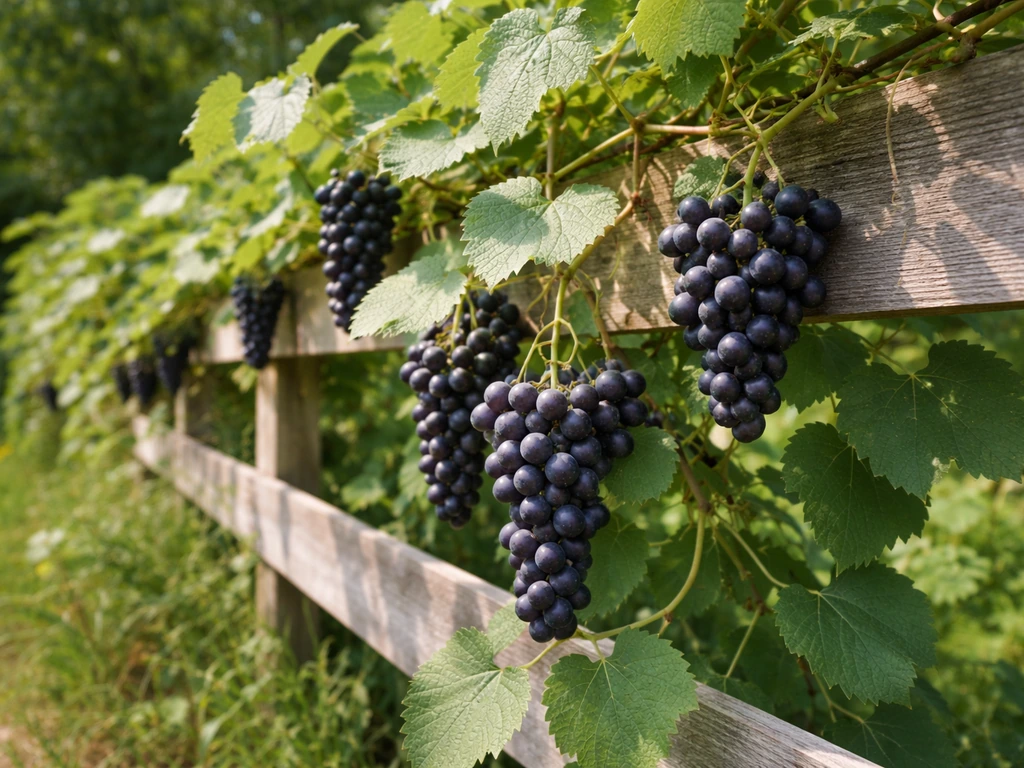
The name 'possum grape' causes real confusion because it gets pinned to more than one plant depending on where you live. In most of the Southeast and up into southern Ohio, possum grape refers to Vitis baileyana, a true grape species in the Vitaceae family. NatureServe Explorer also documents Vitis baileyana as a commonly referenced possum grape in the U.S. Southeast. Some botanical treatments fold it into Vitis cinerea as the variety baileyana, but either way it is a woody, deciduous vine that produces small, dark grapes in clusters, typical of wild grape species. The Flora of the Southeastern United States project specifically uses 'Possum Grape' as the accepted common name for Vitis baileyana, so that is the plant this article focuses on.
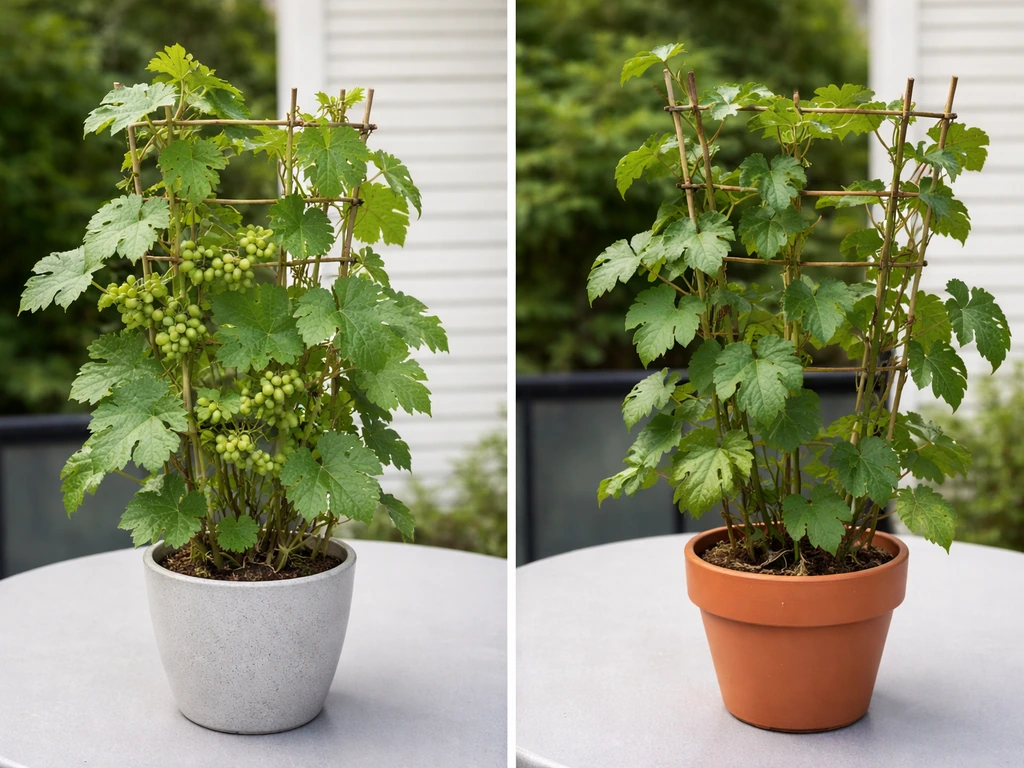
The other plant that sometimes picks up the possum grape name, especially in Florida, is Cissus verticillata, also called seasonvine or princess vine. In the U.S. Southeast, especially Florida, “possum grape” is also used for Cissus verticillata blank" rel="noopener noreferrer">Cissus verticillata, also called seasonvine or princess vine. Cissus verticillata is not a true grape at all. It is in a related family but looks similar at a glance, which is why the name gets borrowed. If someone in South Florida tells you they have possum grapes, they may well be talking about Cissus verticillata rather than Vitis baileyana. The two plants have different growing needs, different hardiness levels, and behave differently in a garden, so getting the ID right before you try to propagate or source plants matters a lot.
Quick ID comparison: Vitis baileyana vs. Cissus verticillata
| Feature | Vitis baileyana (Possum Grape) | Cissus verticillata (Florida Possum Grape) |
|---|---|---|
| Family | Vitaceae (true grape) | Vitaceae (related, not true Vitis) |
| Deciduous/Evergreen | Deciduous | Semi-evergreen to evergreen |
| Fruit clusters | Small dark grapes, typical Vitis clusters | Small dark berries, looser clusters |
| Leaf shape | Broad, heart-shaped, woolly underside | Smaller, glossy, less lobed |
| Hardy to | Roughly USDA zones 6-9 | USDA zones 9-11 (frost-sensitive) |
| Primary range | VA, KY, NC, TN, GA, AL, SC, southern OH | South Florida, Caribbean |
Where Vitis baileyana naturally grows
Vitis baileyana's native range runs through the Appalachian foothills and the broader Southeast. You will find it documented in Virginia, West Virginia, Kentucky, Tennessee, North Carolina, South Carolina, Georgia, Alabama, and into southern Ohio. The Ohio State University Extension wild grape guide specifically notes that possum grapes occur in southern Ohio, which gives you a northern limit to work with. It is not a plains grape or a Pacific Coast grape. This is an eastern woodland species, adapted to the humid summers and moderate winters of that corridor. where do grape hyacinths grow.
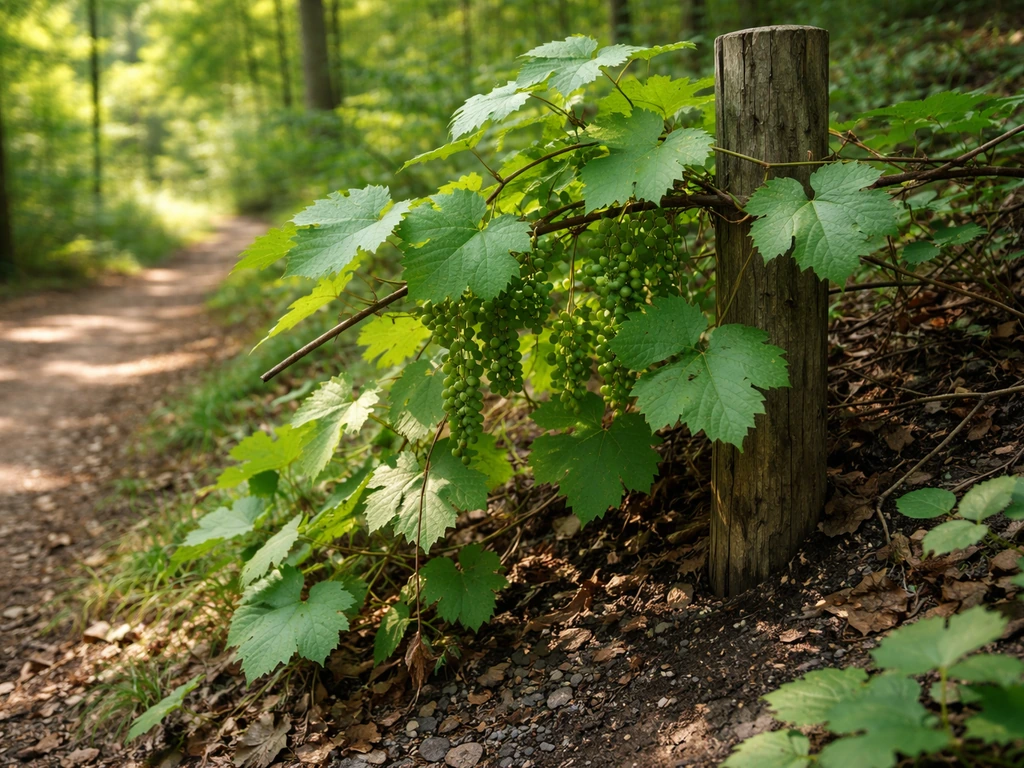
In the wild, it favors moist, partially shaded habitat: woodland edges, floodplain margins, creek and river banks, and the slopes of ravines. It climbs using tendrils just like other Vitis species and can reach the forest canopy in mature stands. You are most likely to encounter it in disturbed woodland edges rather than deep forest interiors, because it needs some light to fruit well. If you are hiking the Appalachian foothills from southern Virginia down through Georgia and see a vigorous grape vine climbing into the canopy along a creek, Vitis baileyana is a strong candidate, especially if the underside of the leaves has a distinctive woolly or rust-colored coating.
Growing conditions it actually needs
Vitis baileyana is adapted to the same general conditions that define its native habitat. Give it what it gets in the wild and it will perform well. Here is what that looks like in practical terms:
- Sunlight: Partial to full sun. It will survive in dappled shade but fruits best with at least 6 hours of direct sun. Woodland edge conditions are ideal, not deep shade and not fully exposed hot western exposures.
- Soil: Loamy, well-drained but moisture-retentive. It does not want to sit in waterlogged soil, but it also does not want to dry out the way a classic Mediterranean grape does. Think 'moist woodland floor' rather than 'rocky hillside vineyard.'
- Drainage: Good drainage is important, but unlike cultivated wine grapes, this species tolerates heavier clay-influenced soils better than most, especially if organic matter is present.
- Moisture: Consistent moisture during the growing season. Natural rainfall across its range is typically 40-55 inches per year, spread reasonably well across seasons. In dry summers, supplemental irrigation helps establishment.
- pH: Slightly acidic to neutral, roughly 5.5 to 7.0, matching the forest soils of its native range.
- Temperature: Hardy through most of USDA zones 6 to 9. It handles the cold winters of the mid-Atlantic and upper South without problems and tolerates the humid heat of the Deep South.
Which regions and zones are a good fit
If you are in USDA hardiness zones 6 through 9 in the eastern half of the country, you are in the right ballpark for Vitis baileyana. The core sweet spot is the Southeast and the mid-Atlantic: Tennessee, the Carolinas, Virginia, Kentucky, Georgia, and Alabama are all essentially home territory. Southern Ohio, West Virginia, and parts of Maryland and Pennsylvania in zone 6 are viable but represent the cooler, northern edge of its comfort zone.
Moving further north than zone 6 gets uncertain. In zone 5, winter cold may push past what this species handles comfortably, and there are better-adapted wild grape options. In zone 5, winter cold may push past what this species handles comfortably, and there are better-adapted wild grape options like where do moon drop grapes grow. Moving further west, the lower humidity and drier summers of the Great Plains and Southwest are a mismatch. This is genuinely a southeastern woodland grape, and trying to grow it in a dryland climate without significant irrigation and soil amendment is fighting the plant's natural preferences. For those in the far West who want a wild grape type, the sibling topic on where wild grapes grow covers species better suited to that context.
In the Deep South, zones 8 and 9 in states like Mississippi, Louisiana, and coastal Georgia work well. North Florida (zone 8b-9a) is viable, but if you are in central or South Florida you are likely looking at Cissus verticillata territory rather than Vitis baileyana, since baileyana needs a real winter dormancy period that South Florida does not reliably provide.
How to spot it in the wild and confirm the ID
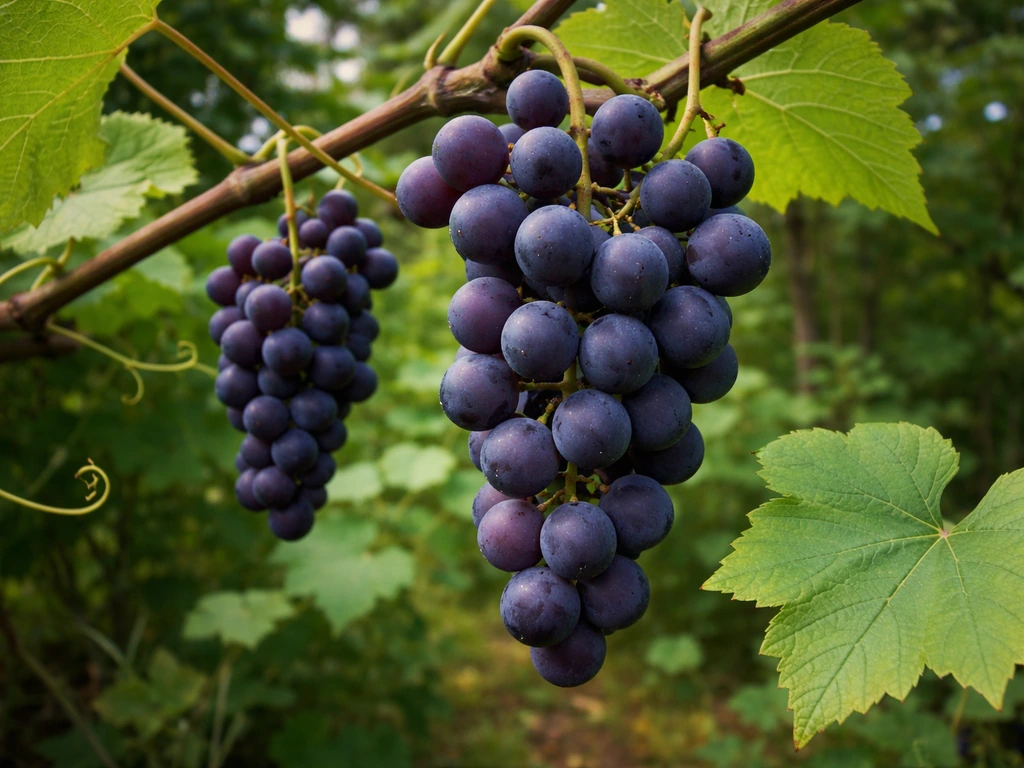
Vitis baileyana looks enough like other wild grapes that you need to check a few specific features before declaring a vine to be possum grape. The most reliable field markers are the leaf underside and the bark characteristics. Vitis baileyana leaves have a densely woolly or tomentose underside, often with a rust or grayish coloring, which distinguishes it from fox grape (Vitis labrusca) and several other common wild species. The upper surface of the leaf is also somewhat hairy but less dramatically so. Leaves are broad and heart-shaped at the base, typically 3-lobed or only shallowly lobed compared to more deeply cut Vitis species.
The fruit ripens in late summer to fall, producing small dark purple to black grapes in moderate clusters. The berries are edible but seedy and fairly tart compared to cultivated table grapes. If you find a vine matching this description along a creek bank or woodland edge in the Southeast during summer and want to confirm the species before taking cuttings, cross-reference with your state's native plant herbarium records or iNaturalist. The USDA PLANTS database and NatureServe Explorer both have county-level range maps that can help you confirm whether Vitis baileyana is documented in your specific county before you invest time in an identification.
One common confusion point: Vitis rotundifolia (muscadine) shares much of the same range and also gets called various folk names. If you meant muscadine grapes, they are a different grape with its own native range, so where muscadines grow depends on that species rather than possum grape. Muscadine has a distinctly different leaf texture (much smoother underside), different bark that does not peel in strips the same way, and characteristically round, large fruit in loose clusters rather than tight bunches. If the grapes you are looking at are large and round and the leaves are shiny and smooth underneath, you are looking at a muscadine, not possum grape.
Can you actually grow it in your backyard?
Yes, if you are in the right region. If you are wondering specifically about moon drop grapes, note that this article focuses on possum grape (Vitis baileyana), which has different requirements than moon drop varieties grow it in your backyard. Vitis baileyana is not a commonly cultivated garden grape, but it is a native species that responds well to a naturalistic garden setting. It is not a wine or table grape, so do not go into this expecting vineyards-worth of edible production. Think of it more as a native landscaping vine that also happens to produce small grapes useful for wildlife, jelly-making, and supporting a habitat-focused garden. That framing sets honest expectations.
Site selection
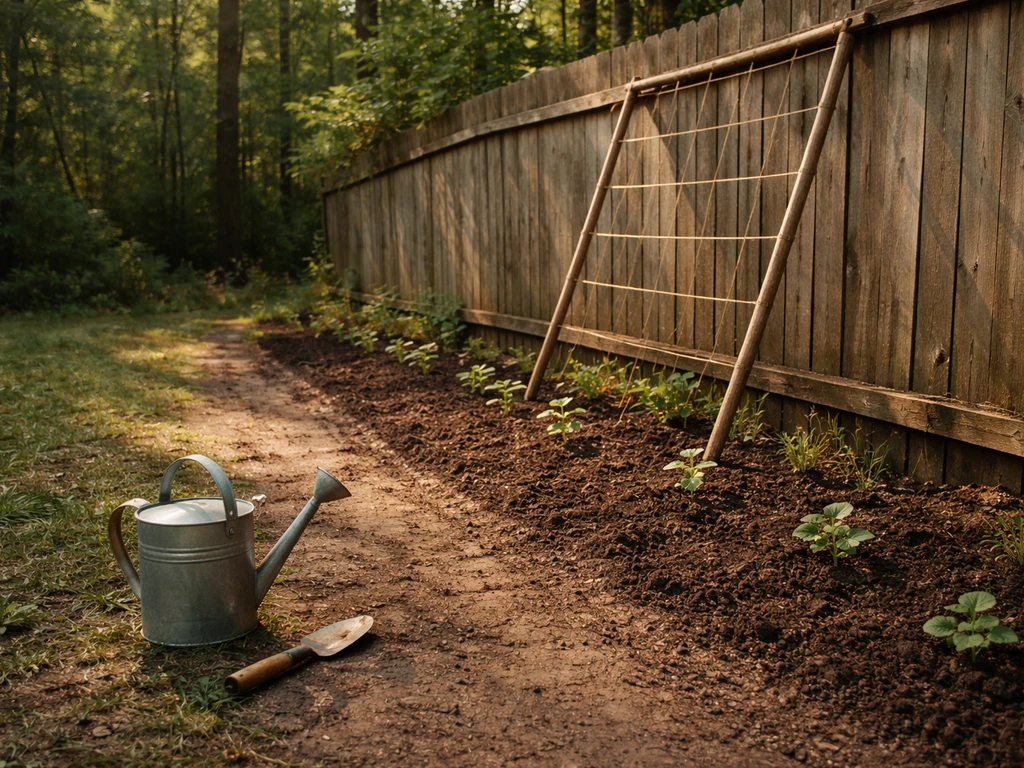
Pick a spot that mimics woodland edge conditions. A fence line along a treeline, the north or east side of a structure that gets morning sun, or the edge of a property where it meets a wooded area are all natural fits. Avoid planting in a hot, fully exposed south-facing bed with poor moisture retention. The vine will need something to climb: a sturdy fence, an arbor, or existing trees work well. Give it 10-15 feet of horizontal run at minimum, because this is a vigorous grower once established.
Planting basics
Plant in early spring after frost risk passes or in early fall at least 6 weeks before first frost. This gives roots time to establish before heat stress or winter. Amend heavy clay with compost to improve drainage, or amend sandy soil to improve moisture retention. Aim for that 'moist but never waterlogged' sweet spot. Dig a hole twice as wide as the root ball, set the crown at ground level, backfill with amended soil, and water thoroughly. Mulch with 3-4 inches of wood chips or leaf mulch to retain moisture and mimic the natural forest floor environment. Water regularly the first full growing season, then reduce once the plant is established and growing strongly.
Sourcing plants and your next steps
Vitis baileyana is not a plant you will find at a big-box garden center. Your best sources are native plant nurseries specializing in southeastern U.S. flora, state native plant society sales (many of which happen in spring and fall), and university extension plant sales. Search for 'native plant nursery' combined with your state name, and specifically ask for Vitis baileyana or Vitis cinerea var. baileyana by its scientific name to avoid getting a different species.
If you have identified a local wild population, you can propagate from hardwood cuttings taken in late winter while the vine is dormant. Take 6-8 inch cuttings from healthy one-year-old wood, wound the base slightly, dip in rooting hormone, and stick in a moist propagating mix. Keep them in a cool but frost-free spot until they root and leaf out, then harden off and transplant to your prepared site. Seed propagation works but requires cold stratification for 60-90 days before germination.
iNaturalist is genuinely useful here beyond just identification. Check observations in your county to see if other locals have documented Vitis baileyana and, if so, where. Native plant Facebook groups and state-specific gardening forums often have members willing to share cuttings from established plants in your area. Starting from locally sourced material has real advantages for climate adaptation, so it is worth the extra effort to find a regional source rather than ordering from a nursery in a distant part of the range.
If you are drawn to wild grapes in general rather than specifically to possum grape, it is worth looking into other native Vitis species that may be even better suited to your exact location. For a broader look at the species beyond possum grape, see the guide on where wild grapes grow in North America. The related topics on where wild grapes grow and where muscat grapes grow can help you think through alternatives if you are in a marginal zone for Vitis baileyana or want a grape with more edible fruit production as a primary goal.
FAQ
How can I tell whether “possum grapes” near me are Vitis baileyana or the look-alike seasonvine in Florida?
If you are in South Florida, confirm the plant before propagating. Vitis baileyana is a true grape that forms woody tendrils, has a densely woolly or tomentose leaf underside (often rust or gray), and grows like a woodland-edge grapevine with winter dormancy. Cissus verticillata is not a true grape, so its leaf underside and vine behavior will differ, and it generally does not rely on the same winter dormancy period.
If I’m on the edge of the range (around USDA zone 6 or colder), what’s the biggest failure point when trying to grow possum grape?
Winter cold and inconsistent dormancy are the common problem, so microclimate matters. Choose a spot buffered from wind and extremes, such as along a north or east side that gets morning sun but stays shaded from drying afternoon heat, and use a thick wood-chip mulch layer to moderate freeze-thaw cycles.
Does possum grape grow in deep forest, or do I need a woodland edge?
Woodland edges and floodplain margins are the typical places to find it, because it fruits best with some light. In dense interior forest, you can still see vines, but they are more likely to be less vigorous and less productive, so if your goal is fruit, prioritize partial shade rather than full canopy shade.
What soil problem should I watch for, and how do I fix it?
The main target is “moist but not waterlogged.” If you have heavy clay or poor drainage, amend with compost and consider raised placement, because roots in stagnant wet soil can struggle. If you have very sandy soil, you can boost moisture retention with compost and deeper mulch, but avoid leaving the crown buried under thick, wet organic layers.
How much sunlight is enough for possum grape to fruit?
A practical guideline is partial shade with some direct light, especially in the morning. If your planting is in bright shade with no sun, the vine may climb and look healthy but set fewer clusters. Morning sun on the foliage usually gives the best balance for this native woodland-edge grape.
Are the grapes worth eating, or are they mainly for wildlife?
The berries are edible but typically seedy and tart, and clusters are smaller than cultivated table grapes. If you are planting primarily for wildlife or native habitat, treat the fruit as a bonus, for jelly or preserves it can work well once you accept the tart flavor.
When should I plant, and does that timing change if I’m starting from cuttings versus buying a plant?
For established plants, early spring after frost risk or early fall at least 6 weeks before first frost supports root establishment. For hardwood cuttings, late-winter dormant cuttings are typically started in a frost-free environment, then transplanted after they leaf out and are hardened off. In both cases, the goal is to avoid letting roots sit in cold, waterlogged soil.
What’s the best way to confirm identification before I take cuttings from a wild vine?
Use multiple traits, not just the fruit description. Focus on the leaf underside (dense woolly or tomentose texture, often rust or gray), and check vine and bark characteristics. Then cross-check whether the species is documented in your county using local herbarium records or county range maps, so you do not remove material from the wrong plant.
Can I propagate possum grape from softwood cuttings or just hardwood cuttings?
The article approach is hardwood cuttings taken while dormant in late winter. If you try softwood cuttings, success rates can be lower because soft tissue dries and rots more easily, and they still require a consistently moist, well-aerated rooting mix. If you want higher reliability, stick with dormant hardwood cuttings and keep the rooting area cool and frost-free.
Do I need a male and female plant, or is it self-pollinating?
Because you are dealing with a native grape vine, don’t assume sex requirements without checking local information for the specific species and your source material. If you want predictable fruiting, the safest next step is to plan for at least two nearby genetically different vines (or confirm that your particular Vitis baileyana source fruits reliably on its own) rather than relying on a single plant.