
Yes, grapes grow well in Nebraska, but your success depends almost entirely on picking the right variety for your specific corner of the state. Nebraska's climate is genuinely tough on grapes: brutal winters in the Panhandle, humid disease pressure in the east, and summer heat that swings wildly year to year. The good news is that cold-climate hybrid varieties, developed largely by the University of Minnesota program, were practically made for conditions like Nebraska's. Stick with those, match your choice to your zone and whether you're in the wet east or dry west, and you can absolutely harvest grapes from your backyard.
Best Grapes to Grow in Nebraska: Top Varieties & Tips for Home Gardeners

Marcus Whitfield
12 Jul 2026
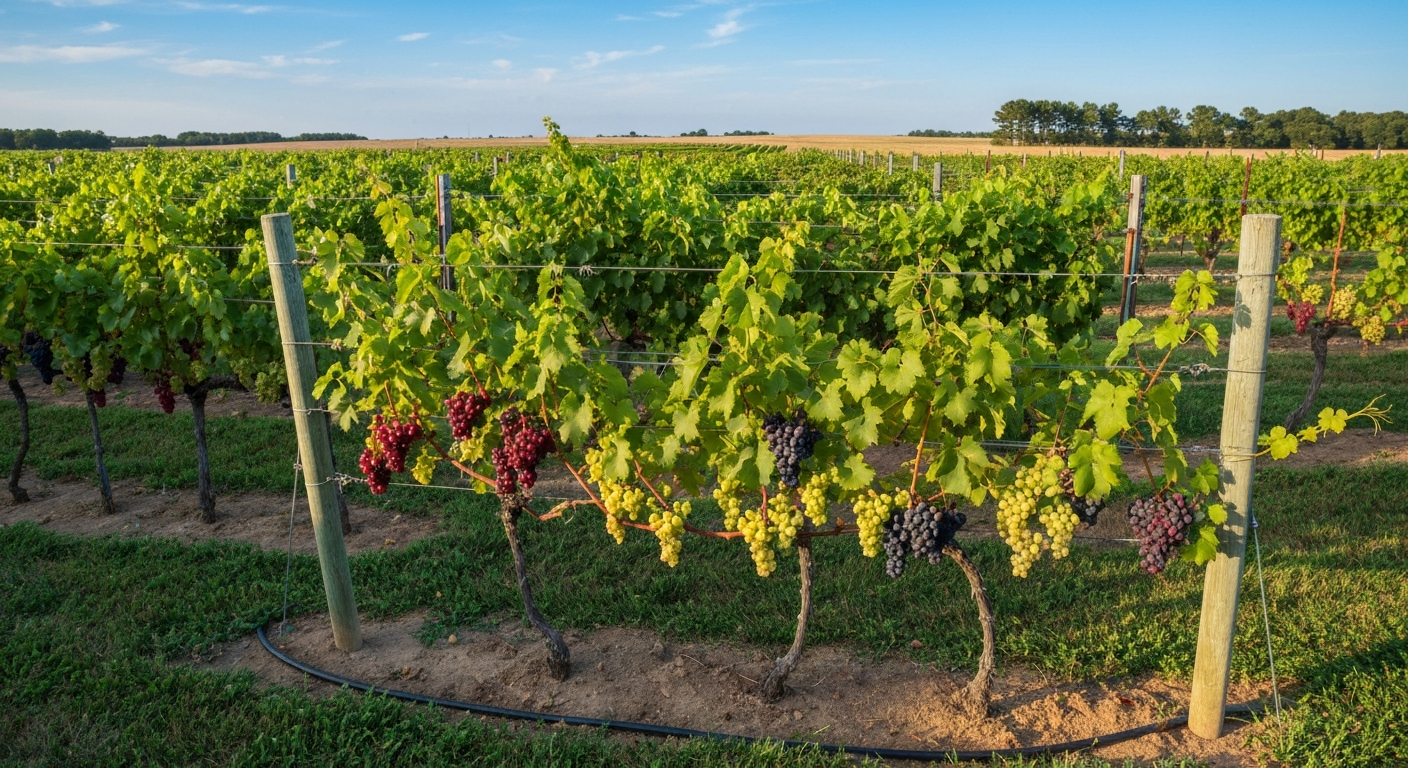
Will Grapes Grow in Nebraska? Here's the Honest Answer
Grapes will grow in Nebraska, full stop. Hobbyists and home gardeners across the state are already doing it, from Scottsbluff in the Panhandle to Omaha in the east. What you should not expect is to plant standard European wine grapes (Vitis vinifera varieties like Cabernet Sauvignon or Chardonnay) and have them survive a Nebraska winter without significant protection. Most vinifera varieties can't handle temperatures below about -10°F, and the Nebraska Panhandle regularly sees colder than that. Even in the milder southeast, a bad cold snap can wipe out vinifera buds or kill trunks to the snowline.
What you can expect with the right cold-climate hybrids: hardy vines that establish in two to three seasons, first meaningful crops in year three or four, and reliable annual production once the vines are mature. You will deal with some disease management in the east and some irrigation planning in the west, but neither is overwhelming for a backyard grower. Nebraska grape growing is genuinely doable, it just rewards growers who take variety selection seriously from the start.
Nebraska's Climate and What It Means for Your Vines
Nebraska spans USDA Plant Hardiness Zones 4b through 6a based on the 2023 USDA map. The Panhandle sits in zones 4b to 5a, most of central Nebraska falls in zone 5a or 5b, and the warmest southeastern counties touch zone 6a. That zone spread matters enormously for variety selection, especially when it comes to cold-hardiness ratings, which are tied directly to those zone designations.
Winter minimum temperatures are only part of the story. Spring frost risk is a serious concern because late freezes in April can kill newly emerged buds even on otherwise hardy vines. Frost-free growing seasons range from around 130 days in the cooler northwest to roughly 175 days in the southeast. Heat accumulation (measured in growing degree days, or GDDs) is also shorter in the Panhandle than in Omaha, which means early- to mid-ripening varieties are essential in the west. Nebraska Extension links growers to the Midwest Regional Climate Center's GDD tools, which let you look up county-level heat accumulation data, and I'd strongly encourage using those before you commit to a late-ripening variety.
The 2024 Nebraska Climate Assessment also flags increasing year-to-year precipitation variability across the state and notes a warming trend statewide (average temperatures have risen more than 1.6°F since the early 20th century). For grape growers, that means the rules aren't completely fixed: the southeast is warming slightly, and snow cover that once offered winter root and crown protection is becoming less reliable in some areas. Plan your site and variety choices conservatively, not optimistically.
East vs. West: How Nebraska's Regional Differences Shape Variety Choices
Nebraska is really two distinct growing environments stitched together, and your strategy should reflect which one you're in. Eastern Nebraska (roughly east of the 100th meridian, including the Omaha-Lincoln corridor) gets more rainfall, higher humidity, and warmer winters, conditions that favor faster vine growth but also create ideal conditions for fungal diseases like black rot, powdery mildew, and downy mildew. Growers in this region need to prioritize disease-resistant varieties and expect to follow a basic fungicide program during wet seasons.
Western Nebraska, including the Sandhills and the Panhandle, is drier and colder. Disease pressure drops significantly in the drier air, but winter hardiness becomes the dominant concern, and irrigation planning matters much more. In the Panhandle, you're looking at zone 4b to 5a winters, which means even some otherwise cold-hardy hybrids can suffer bud damage in harsh years. The good news is that with lower disease pressure, you can get away with less spraying and focus your energy on winter protection and irrigation instead.
How to Choose the Right Grape Variety for Nebraska
Before you buy a single vine, work through these priorities in order. Cold-hardiness comes first, because a variety that can't survive your winter is a waste of money no matter how delicious the fruit. Disease resistance comes second, especially if you're in eastern Nebraska. Intended use comes third: are you growing for fresh eating (table grapes), home winemaking, or juice? Your answer shapes which varieties even make the list.
- Look up your USDA hardiness zone using the 2023 USDA map — use your zip code, not a general region.
- Check your county's average last spring frost date and first fall frost date to estimate your frost-free window.
- Use the MRCC GDD tool (linked through Nebraska Extension) to estimate heat accumulation in your county and match it to a variety's ripening window.
- Decide your primary use: table/fresh eating, home wine, or juice/preserves.
- Identify whether your site is east (humid, disease pressure) or west (dry, cold, irrigation needed) of roughly the 100th meridian.
- Cross-reference your zone, use, and regional disease/drought risk against the variety list below.
- Check UNL Extension's G2279 cultivar adaptability table as a secondary confirmation before purchasing.
The Best Grape Varieties for Nebraska
The varieties below are organized by hardiness tier and intended use, drawing on UNL Extension's Nebraska adaptability recommendations (G2279), University of Minnesota breeding program data, and performance patterns observed across the state. Every variety listed has a documented track record in Nebraska or in directly comparable Midwestern zone conditions.
Very Cold-Hardy Varieties for Northern Nebraska and the Panhandle (Zones 3–4)
If you're gardening in the Nebraska Panhandle or the northern tier, this is your starting point. These varieties are rated for zones 3 to 4 and can survive temperatures well below -20°F in most cases. They're your safest bets in the most demanding Nebraska winters.
| Variety | Type | Hardiness Zone | Disease Resistance | Notes |
|---|---|---|---|---|
| Valiant | Table/Juice | Zone 3 | Moderate | Very small blue-black fruit, high acidity, excellent juice and jelly grape. Extremely cold-hardy. Limited winemaking use due to foxy flavor. |
| Beta | Table/Juice | Zone 3 | Good | Very hardy Concord-type cross. Good for juice, jelly, and fresh eating. Vigorous grower; needs consistent pruning. |
| Frontenac | Red Wine/Juice | Zone 3-4 | Excellent | One of the most cold-hardy wine-quality grapes available. LT50 bud tests confirm it outperforms most hybrids in hard freezes. Dark fruit, cherry notes; excellent for red wine and port-style wines. Harvest target around 22–25 °Brix. |
| Brianna | White Wine/Table | Zone 4 | Good | Aromatic white hybrid with tropical fruit notes. Reliable producer and performs well across Nebraska zones. Works as both a table grape and white wine variety. |
Cold-Hardy Table Grapes for Home Gardens (Zones 4–5)
These are the varieties I'd recommend to most Nebraska backyard growers who just want to eat fresh grapes or share them with neighbors. They're reliable, most are disease-resistant enough to manage with minimal spraying, and several are seedless, which matters a lot at harvest time.
| Variety | Seedless? | Hardiness Zone | Flavor Profile | Notes |
|---|---|---|---|---|
| Concord | No | Zone 4-5 | Classic 'grape' flavor, rich and foxy | The standard against which Nebraska table and juice grapes are measured. Reliable and productive. Excellent for juice, jelly, and fresh eating. Moderate disease resistance. |
| Somerset Seedless | Yes | Zone 4 | Sweet, strawberry-like | One of the hardiest seedless options available. Excellent for fresh eating. Smaller clusters than Concord but very reliable in colder Nebraska zones. |
| Swenson Red | No | Zone 4 | Sweet, mild, slightly fruity | Good early-season table grape. Works across most of Nebraska. Moderate disease resistance; watch for black rot in humid sites. |
| Edelweiss | No | Zone 4 | Sweet white, mild muscat notes | White table grape that performs well in Nebraska. Good vigor and disease tolerance. Works for fresh eating and white juice. |
| Prairie Star | No | Zone 4-5 | Sweet, mild white | Reliable white variety listed in UNL's Nebraska adaptability table. Good disease resistance. Dual use as table and light wine grape. |
Wine and Wine-Hybrid Grapes for Nebraska (Zones 4–5)
If home winemaking is your goal, the cold-climate hybrids from the University of Minnesota program are your best avenue in Nebraska. These are not consolation prizes for northern growers who can't have vinifera, they make genuinely good wine. The limitations to be honest about: they don't taste identical to European varietals, and some (particularly Frontenac) have distinctive flavor profiles that take some adjusting to. But blended or made as single-variety wines, they can be excellent.
| Variety | Wine Color | Hardiness Zone | Disease Resistance | Flavor Notes / Limitations |
|---|---|---|---|---|
| Frontenac | Red | Zone 3-4 | Excellent | Cherry, dark fruit. High acidity needs management (cold stabilization or blending). Harvest at 22–25 °Brix. Doubles as a dessert/ice wine grape. |
| Marquette | Red | Zone 4-5 | Very Good | More complex red wine profile than Frontenac; black cherry, pepper, earth. Intermediate cold-hardiness (harder than La Crescent, slightly less than Frontenac per LT50 studies). Harvest around 22 °Brix. |
| La Crescent | White | Zone 4 | Good | Apricot, citrus, floral aromas. Excellent quality aromatic white. Slight disease vulnerability compared to Frontenac; watch for powdery mildew in humid eastern sites. Harvest at 22–25 °Brix. |
| Brianna | White | Zone 4 | Good | Tropical fruit, pineapple notes. Easier to grow than La Crescent. A good entry-level white wine hybrid for Nebraska growers. |
| St. Croix | Red | Zone 4-5 | Good | Mild red wine grape; easier to grow than Marquette. Less complex but consistent producer. Good starting point for first-time Nebraska home winemakers. |
Disease-Resistant Hybrids for Humid Eastern Nebraska
Eastern Nebraska growers face meaningful fungal disease pressure during wet summers. Black rot, downy mildew, and powdery mildew can all cause serious crop losses if you plant a susceptible variety and skip fungicide applications. The answer is not just to spray more, it's to start with varieties that are naturally resistant and then use a light, targeted spray program as backup. UNL Extension specifically calls out this east-west split in G2279, and it's real. For eastern Nebraska, Frontenac and Marquette both carry excellent disease resistance alongside their cold-hardiness. Brianna and Prairie Star are solid disease-resistant white options. Among table grapes, Concord has more resistance than many people expect. Avoid Swenson Red and La Crescent as sole-source plantings if you're in a very humid microsite, they're less forgiving.
Rootstock and Propagation for Home Growers
Most home gardeners in Nebraska can plant own-rooted vines without worrying about rootstock, and that's what most nurseries sell for cold-climate hybrids. Phylloxera (the root louse that devastated European vineyards) is present in Nebraska soils, but the cold-climate hybrids listed here carry enough native American Vitis genetics to tolerate it on their own roots. You'd only need to think about grafted rootstock if you were planting vinifera varieties, which I'd generally steer beginners away from anyway.
For propagation, home growers have a few options. Hardwood cuttings taken in late winter (after pruning) are the most reliable method for most of the cold-climate hybrids listed here. Take 12- to 18-inch cuttings with two to four nodes, bundle them, and store in slightly damp peat or sawdust in a cool location (32–40°F) until spring. Plant them out after your last frost date. Layering (bending a long cane to the ground and burying a node) also works well for propagating established vines in-place. Buying bare-root or potted vines from a reputable nursery is the lowest-risk option for beginners.
Checklist: Picking Your Variety and Scouting Your Planting Site
Before you plant, walk through your intended site carefully. Use the NRCS Web Soil Survey | Natural Resources Conservation Service (NRCS) for county‑level soil maps and parcel‑specific properties (texture, drainage class, depth, and pH indicators) to choose planting sites and plan rooting and irrigation needs for vineyards in Nebraska. A mediocre variety in a great site will outperform a great variety in a terrible site every time. Here's what to check:
- Sun exposure: grapes need at least 8 hours of direct sun daily. South or southeast-facing slopes are ideal in Nebraska.
- Drainage: probe or dig a test hole about 18 inches deep after a rain. If standing water persists more than a few hours, find a different site or build raised rows. Grapes absolutely cannot tolerate wet feet.
- Soil texture: sandy loams, silty clay loams, and loamy sands are ideal. Verify with an NRCS Web Soil Survey lookup for your parcel.
- Soil pH: test before planting. Target 5.5–6.5. Nebraska's Mollisol prairie soils can run slightly alkaline; amend with sulfur if needed.
- Frost pocket risk: low spots collect cold air. Avoid planting at the base of hills or in areas where frost settles. Mid-slope positions are better.
- Wind exposure: Nebraska wind can desiccate vines and damage shoots. A windbreak on the prevailing wind side (usually west or northwest) helps, but don't shade the vines.
- Air circulation: good airflow reduces fungal disease pressure, especially in eastern Nebraska. Avoid planting in tight enclosed spaces.
- Proximity to wild grapes: native Vitis species in nearby hedgerows or woodlands can harbor diseases and pests. Not disqualifying, but worth noting for disease management planning.
Site Preparation and Planting
Start with a soil test, ideally the fall before you plan to plant. Your local Nebraska Extension office can point you to a testing lab, and a basic test covering pH, phosphorus, potassium, and organic matter runs around $15–25. Amend based on results: add sulfur to lower pH if above 6.5, and incorporate organic matter (compost) if you're working with very sandy or compacted soils. Avoid adding heavy nitrogen at planting, it encourages excess vegetative growth at the expense of root establishment.
Plant bare-root vines in early spring, as soon as the soil can be worked and after the worst freeze risk has passed (late April to early May across most of Nebraska). Dig holes 12 inches deep and 12 inches wide. Set the vine at the same depth it was growing in the nursery, spread the roots out naturally, backfill with native soil, and water thoroughly. Space vines 6 to 8 feet apart in the row for most trellis systems, with rows 8 to 10 feet apart. Cut the new vine back to two to three buds at planting, this feels harsh but directs energy into root establishment, not top growth.
Trellis and Training Systems for Backyard Vineyards
Your trellis doesn't need to be fancy, but it does need to be sturdy. Nebraska wind will test any weak structure. The most practical system for home growers is a two-wire vertical shoot positioning (VSP) trellis: a row of posts (wood or metal T-posts) 8 to 10 feet apart with a lower wire at 36 to 40 inches (for the cordon arms or cane positioning) and an upper wire at 5 to 6 feet to support shoot growth. End posts should be set at least 2.5 feet deep and braced.
For training style, you have two main options. Cordon (high-wire or VSP cordon) training works well for vigorous varieties like Concord, Valiant, or Beta. You train two permanent horizontal arms along the lower wire and allow fruiting spurs to develop annually. Cane pruning works better for varieties like Marquette and La Crescent that fruit best on new wood from last year's canes. With cane pruning, you select two to four strong canes each dormant season and tie them to the wire, removing the previous year's fruiting canes entirely. A simple arbor also works well for table grapes used decoratively, though it's harder to manage disease and pruning on an overhead system.
Pruning and Year-by-Year Vine Development
Patience is the main skill required in the first three years. Resist the temptation to let vines fruit heavily before they're established, it weakens the vine and delays your long-term production.
- Year 1: Focus entirely on root establishment and growing a single strong trunk. Remove all flowers and any lateral shoots below the intended cordon height. Tie the main shoot to a stake as it grows. Goal: reach trellis wire height.
- Year 2: Train two cordon arms along the lower wire (or select two canes for cane-pruned systems). Remove flower clusters or allow only one cluster per shoot to avoid overloading the young vine. Begin shaping the structure you'll maintain for years to come.
- Year 3: Your first real harvest is possible. Keep crop load light: no more than one to two clusters per shoot. Continue building the fruiting structure. Vines that are pushed too hard in year 3 often underperform in years 4 and 5.
- Year 4 and beyond: mature production mode. For cordon-trained vines, prune back to two-bud spurs every dormant season. For cane-pruned vines, select healthy renewal canes each year. Remove any winter-damaged wood completely.
Prune during dormancy, after the worst cold risk has passed but before buds swell in spring, late February to late March works for most of Nebraska. Summer pruning (removing leafy shoots that shade fruit clusters) improves air circulation and fruit quality; do it in June to early July. Never prune after early August, late pruning encourages soft new growth that won't harden off before winter.
Irrigation and Fertilization for Nebraska Home Vineyards
Eastern Nebraska growers often get by without supplemental irrigation during establishment, especially in years with adequate summer rainfall. Western Nebraska growers almost always need irrigation from the start. During the first two years, consistent moisture matters more than in mature vines: aim to keep the root zone moist but not saturated, which usually means about 1 inch of water per week from rain or irrigation during the growing season. Drip irrigation is the best option for established vines, it delivers water to the root zone without wetting foliage, which reduces disease pressure.
For fertilization, let your soil test guide you. Grapes in Nebraska's fertile Mollisol soils often don't need heavy fertilization. State soil surveys note that Mollisols are widespread in Nebraska and many mapunits are classified as well‑drained to moderately well‑drained; growers should check SSURGO/NRCS mapunits for drainage class because grapes fail on poorly drained mapunits (Soils of Nebraska (state soil survey materials)) State soil surveys note that Mollisols are widespread in Nebraska and many mapunits are classified as well‑drained to moderately well‑drained; growers should check SSURGO/NRCS mapunits for drainage class because grapes fail on poorly drained mapunits (Soils of Nebraska (state soil survey materials)).. A light application of balanced fertilizer (such as 10-10-10) in early spring, before bud break, is a reasonable starting point for young vines. Mature vines may need only nitrogen, and only if shoot growth is weak (less than 12 to 18 inches of new growth per season). Avoid fertilizing after mid-July, late-season nitrogen promotes soft growth that winter-kills easily.
Seasonal Timeline: From Planting to First Harvest
Here's what a realistic timeline looks like for a Nebraska backyard grower starting with healthy bare-root vines:
| Year | What to Expect | Harvest? |
|---|---|---|
| Year 1 | Roots establish; shoot growth begins. Focus on trunk development. Remove all flowers. | No |
| Year 2 | Cordon or cane structure begins forming. Limited crop allowed (1 cluster per shoot max). | Very light / optional |
| Year 3 | First meaningful harvest possible. Keep crop light (1–2 clusters per shoot). | Yes, modest crop |
| Year 4 | Vine approaching full production. Harvest timing depends on variety and zone. | Yes, good crop |
| Year 5+ | Mature production. Full yields of 8–15 lbs per vine typical for well-managed backyard vines. | Full harvest |
Harvest timing varies significantly by variety and location. In southeastern Nebraska (zone 5b-6a), early varieties like Somerset Seedless or Brianna typically ripen in late August to early September. Mid-season varieties like Marquette and Swenson Red follow in mid to late September. Frontenac and Concord usually ripen in late September to early October. In the Panhandle (zone 4b-5a), push those dates two to three weeks earlier to stay ahead of fall frost. Check sugar content (Brix) with an inexpensive refractometer rather than relying on color alone, most wine grapes should hit 20–25 °Brix at harvest.
Winter Protection in Nebraska: Don't Skip This Step
Winter protection is where Nebraska grape growing gets a little more demanding than what you'd face in Missouri or Oklahoma. Even the hardiest varieties can suffer significant bud damage in a severe Panhandle winter, and the 2024 Nebraska Climate Assessment notes that reduced snow cover in some areas is removing the insulating buffer that vines once counted on.
The most important protection is site selection, mid-slope positions avoid the coldest air that settles in low spots, and good windbreaks on the prevailing wind side (northwest to west in Nebraska) reduce desiccation damage. For Panhandle growers in zones 4b to 5a, consider hilling soil up around the base of the trunk in late fall (after dormancy, before the ground freezes) to protect the crown and lower trunk from the coldest temperatures. Mound 4 to 6 inches of soil over the graft or crown area, then remove it in spring before bud break.
For varieties rated to zone 5 planted in zone 4b areas, wrapping the lower trunk with burlap or commercial vine wrap adds an extra layer of protection. Keep in mind that wraps must breathe, airtight wraps trap moisture and cause more problems than they solve. The varieties I'd recommend here (Frontenac, Valiant, Beta, Brianna) are genuinely cold-hardy, and in most Nebraska winters they won't need heroic measures. The goal is to eliminate the worst-case scenarios, not to bubble-wrap every vine.
Pests, Diseases, and Management
Nebraska grape growers face a predictable set of challenges. Knowing what they are and catching them early makes management much less overwhelming.
Fungal Diseases
Black rot is the most serious disease threat in eastern Nebraska. It causes dark lesions on leaves and eventually mummifies fruit clusters, if you see shriveled black grape clusters, this is likely the culprit. Downy mildew and powdery mildew are also common in humid conditions, especially during warm, wet May and June weather. The Midwest Fruit Pest Management Guide (a multi-university regional extension collaboration) is the standard reference for fungicide timing and product selection. For home growers, a minimal program using sulfur or copper fungicides applied at bud break, bloom, and 2 to 3 weeks after bloom covers the main risk window for all three diseases. Choosing resistant varieties (Frontenac, Marquette, Brianna, Prairie Star) significantly reduces how much spraying you need.
Insects and Other Pests
Japanese beetle is a nuisance for many Nebraska backyard growers, especially in the east, they skeletonize foliage in July and August. Hand-picking in small gardens works surprisingly well, or use neem oil or spinosad-based sprays as low-toxicity options. Grape leafhoppers are small insects that cause stippled foliage; they're rarely serious enough to require treatment in home vineyards. Wasps become a significant problem at ripening time, particularly in humid eastern Nebraska where fermenting fruit attracts them. Yellow jacket traps placed around the vineyard perimeter starting in August help. Grape berry moth can damage fruit clusters; management is simpler with the pheromone-based monitoring traps to time any treatment. Phylloxera (the root louse) is present in Nebraska, but the cold-climate hybrids and American varieties listed in this guide carry enough native Vitis genetics to tolerate it on their own roots, it should not be a significant concern for home growers using the recommended varieties.
Troubleshooting Common Problems
| Problem | Likely Cause | What to Do |
|---|---|---|
| Vines not fruiting after year 3 | Over-pruning, excessive nitrogen, or too little sun | Check that vines get full sun; reduce nitrogen fertilizer; ensure you're leaving adequate fruiting wood at pruning |
| Widespread winter dieback of canes | Variety not cold-hardy enough for your zone, or late fall growth not hardened off | Select hardier variety; avoid late fertilization; ensure good pruning timing |
| Black, shriveled fruit clusters | Black rot infection | Improve air circulation; apply fungicide program starting at bud break next season; remove mummified clusters from site |
| Powdery white coating on leaves/fruit | Powdery mildew | Apply sulfur-based fungicide; improve air circulation; avoid overhead irrigation |
| Poor fruit set (flowers drop, few grapes form) | Late frost damage to flowers, vine stress, or poor pollination conditions | Check frost timing against flowering date; evaluate site drainage and fertility |
| Stunted growth and yellowing leaves | Nutrient deficiency (often iron or manganese in alkaline soils) or poor drainage | Check soil pH; amend if above 6.5; verify drainage |
| Disease outbreak after a wet spring | Delayed or missed fungicide timing | Follow the Midwest Fruit Pest Management Guide timing; prioritize pre-bloom and post-bloom applications |
Where to Buy Vines and What to Look For
Buy from reputable nurseries that specialize in cold-climate or Midwestern grape varieties. The University of Minnesota's list of licensed nurseries for their patented cultivars (Frontenac, Marquette, La Crescent, Itasca, and others) is a good starting point. Stark Bro's Nursery, Grapevine Specialties, and several Midwest-based small nurseries stock the varieties recommended here. Avoid generic big-box store plants unless you can positively identify the cultivar and confirm it's rated for your zone, mislabeled or vague 'Concord-type' plants are common and may not perform as expected.
When buying, look for bare-root or potted vines with at least 2 to 3 healthy roots that are plump and not dried out, a clear cultivar tag with the variety name, and no visible signs of disease (discoloration, mold, galls). One-year-old vines establish faster than older potted vines with circling roots. Order early, quality stock of popular cold-climate varieties like Marquette and Frontenac sells out by late winter.
Next Steps and Local Resources
University of Nebraska-Lincoln Extension is your best local resource. Their publication G2279 (Grape Growing for the Home Garden) is free, Nebraska-specific, and covers variety adaptability, trellis systems, and pest management in more detail than almost any other single document available to home growers in the state. Download it before you do anything else. UNL Extension offices in your county can also provide soil testing referrals, frost date lookups, and sometimes connect you with local Master Gardener programs where experienced Nebraska grape growers can share what's working in your specific area.
The Nebraska Winery and Grape Growers Association is worth looking into if you're serious about winemaking, they host events, share regional trial data, and connect home growers with small commercial vineyards that have already figured out what performs best in different Nebraska regions. For GDD and frost date data, the Midwest Regional Climate Center (MRCC) tools linked through Nebraska Extension will give you county-level growing season data for free.
Nebraska sits in the middle of a rich belt of Midwestern grape-growing states, and comparing notes with neighboring regions is genuinely useful. Iowa growers deal with similar cold-hardy variety requirements and humid disease pressure. See the guide to the best grapes to grow in Iowa for variety recommendations and regional tips. Kansas gardeners in the south face warmer conditions where a slightly different variety mix makes sense. For recommendations tailored to warmer southern conditions, see guidance on the best grapes to grow in Kansas. Missouri has one of the most developed cold-climate wine grape scenes in the Midwest and is worth studying for winemaking variety performance. For a focused list of the best grapes to grow in Missouri, see our guide to the best grapes to grow in Missouri. Minnesota is where most of the best cold-hardy hybrid varieties originated, and their extension resources are directly applicable to northern Nebraska. Oklahoma's warmer southern conditions represent the other end of the spectrum for comparison. If you're curious how Nebraska stacks up against its neighbors or want to see how a specific variety performs just across the state line, the guides for those states cover conditions that sometimes overlap with Nebraska's southern or eastern zones. For growers in warmer southern climates, see our guide to the best grapes to grow in Oklahoma for variety recommendations and climate-specific tips.
FAQ
Will grapes grow in Nebraska (quick yes/no)?
Yes — home gardeners can reliably grow grapes across Nebraska by matching grape type to local USDA hardiness zone (roughly 4b in the Panhandle to 6a in southern counties), choosing cold‑tolerant cultivars for the Panhandle and central/northern counties, and using appropriate site selection and winter‑protection/pruning. Success is common in zones 5–6 with many hybrids; extreme western/rural sites (4b) require the coldest‑hardy cultivars and extra winter protection.
How does Nebraska’s climate and growing‑season affect grape choice and care?
Nebraska spans roughly zones 4b–6a with east–west moisture and temperature gradients: eastern Nebraska is warmer and more humid (higher disease pressure), central has fertile Mollisols and variable precipitation, and the Panhandle is colder and drier with shorter summers. Key constraints: winter minimum temperatures (bud/cane cold hardiness), length of frost‑free period (ripening risk/GDD), and summer moisture (disease vs drought stress). Use NRCS Web Soil Survey for drainage/soil depth; consult county GDD and frost‑date tools (UNL/MRCC) when assessing ripening risk.
Which grape varieties are recommended for Nebraska — organized by cold‑hardiness, disease resistance, and use?
Cold‑hardy (best for zones 4b–5a): Frontenac (UMN) — very winter hardy, red wine, late ripening, good disease resistance for a hybrid; Marquette — winter‑hardy, red wine, earlier than Frontenac, moderate disease tolerance; Beta, Valiant — highly winter hardy, useful for juice/jam. Cold‑tolerant/versatile (zones 5a–6a): La Crescent — aromatic white wine, good cold tolerance; Brianna, Edelweiss — table/juice, moderate hardiness. Classic American/juice/table (zones 5–6): Concord, Somerset Seedless, Niagara — good for juice/table, tolerant of Nebraska soils but need disease attention in humid east. Notes on disease resistance: hybrids from UMN and similar programs tend to have better winter hardiness and some disease resistance versus Vitis vinifera; UNL Extension (G2279) provides a cultivar adaptability table with local notes — check that table for per‑variety disease/trellis recommendations. Always select cultivar by local zone, expected ripening days, and disease pressure (east vs west).
How should I select a planting site and variety? (step‑by‑step checklist)
1) Determine your USDA zone and local frost dates/GDD (UNL/MRCC county tools). 2) Use NRCS Web Soil Survey to confirm well‑drained mapunits (avoid poorly drained units). 3) Pick a microsite: gentle slope or rise, full sun (≥6–8 hrs), high point to avoid cold pockets and improve air drainage. 4) Test soil pH (aim 5.5–6.5) and texture; amend organic matter and adjust pH as needed. 5) Choose cultivar(s) matched to zone/ripening window and intended use (see cultivar list). 6) Plan trellis system and spacing based on cultivar vigor. 7) Source certified plants from reputable suppliers or local nurseries and note rootstock (own‑root vs grafted) for cold/disease tolerance.
Planting and first‑season how‑to (planting, soil prep, spacing, irrigation starter tips)
Planting: dig a hole twice the root spread but no deeper than nursery root collar; set crown at original soil line. Soil prep: improve drainage with organic matter if heavy; avoid planting in compacted/poorly drained spots. Spacing: vigorous hybrids 8–12 ft between vines (12+ ft for cordon systems); rows 8–12 ft apart for home plots; adjust for training system. Mulch 2–3 in. around plant but keep away from trunk. Starter irrigation: give a deep soak at planting, then water regularly to keep roots moist but not soggy for first season (approx. 1–2 in/wk including rainfall). Stakes/temporary support: provide a stake first season for training a trunk.
Recommended trellis/training systems and basic annual pruning timeline for Nebraska home gardens
Common home systems: Vertical Shoot Positioning (VSP) for vinifera and many hybrids; single or double high‑cordon (permanent cordon) for vigorous hybrids; Geneva Double Curtain for very vigorous varieties (splits canopy). Yearly pruning timeline: Year 1 — establish single trunk and remove side shoots; Year 2 — train to desired system, allow limited fruiting; Years 3–4 — develop cordons/canes and increase fruiting; Annual late‑winter dormant pruning (late Feb–Mar after worst cold passes) to select renewal canes and set fruiting wood; summer (green) pruning to remove excess lateral shoots and manage canopy for airflow. Avoid heavy pruning in late fall; leave enough 1‑yr wood for fruiting and renewal.