
Yes, you can grow grapes in Maine, but you need to be strategic about it. Maine's cold winters and shorter growing season rule out most European wine grapes entirely, but cold-hardy American and hybrid varieties like Marquette, Frontenac, and Reliance thrive here when you pick the right site and put in the right prep work. Southern Maine gardeners have the easiest path, but even gardeners in central Maine can pull off a solid harvest with the right variety and a bit of winter-protection planning. You can use the same cold-hardy, hybrid variety approach when planning whether you can grow grapes in Pennsylvania can you grow grapes in Pennsylvania.
Can You Grow Grapes in Maine? How to Do It Right

Marcus Whitfield
18 Jun 2026
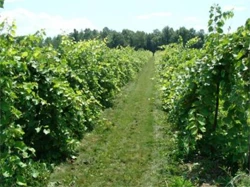
Quick Maine viability check

Maine is genuinely viable grape-growing territory, with some honest caveats. The state spans USDA hardiness zones 3b to 6a, meaning the conditions vary dramatically from Caribou in the north to Portland on the southern coast. Southern Maine is the sweet spot. Portland and the surrounding coastal communities get roughly 25 more frost-free days than inland Bangor, which in turn gets far more than Caribou, where the average first frost arrives as early as late September. That frost window matters enormously for grapes because berries need a long hang time to ripen fully.
Maine's growing season averages around 155 days statewide, but that number hides a lot of regional variation. For grape growing, the practical question is whether your specific location offers enough heat units between your last spring frost and first fall frost for your chosen variety to ripen. In southern Maine, that's a comfortable yes. In central Maine, it's doable with cold-hardy varieties. In northern Maine, you're fighting an uphill battle unless you have a particularly warm, sheltered microclimate and a very early-ripening cultivar.
| Location | Avg. First Fall Frost | Season Length Estimate | Grape Viability |
|---|---|---|---|
| Portland (southern coast) | Mid-to-late October | ~170+ days | Very good |
| Bangor (central/inland) | Oct 1–10 | ~145–155 days | Good with hardy varieties |
| Caribou (northern Maine) | Sep 21–30 | ~120–130 days | Difficult; very early cultivars only |
The bottom line: if you're in the southern half of Maine or on the coast, growing grapes is realistic and rewarding. If you're in northern Maine, it's a stretch, and I'd honestly suggest starting with one of the very earliest-ripening hardy cultivars and accepting that some years you won't get full ripeness. Either way, variety selection and site placement are the two levers that matter most.
What grapes actually need in Maine's climate
Sun and warmth
Grapes are sun-hungry plants. You need a minimum of 6 to 8 hours of direct sun daily, and more is better. A south- or southwest-facing slope is ideal in Maine because it captures maximum solar heat, warms the soil earlier in spring, and extends your ripening window into fall. Avoid planting at the bottom of hills or in low-lying areas, those are frost pockets where cold air settles and can wipe out early buds in May or delay vine growth in the spring. Keep in mind that vines won't start growing until soil temperatures warm up adequately, so anything you can do to maximize soil warmth (southern exposure, dark mulch, good air drainage) pays dividends.
Soil and drainage
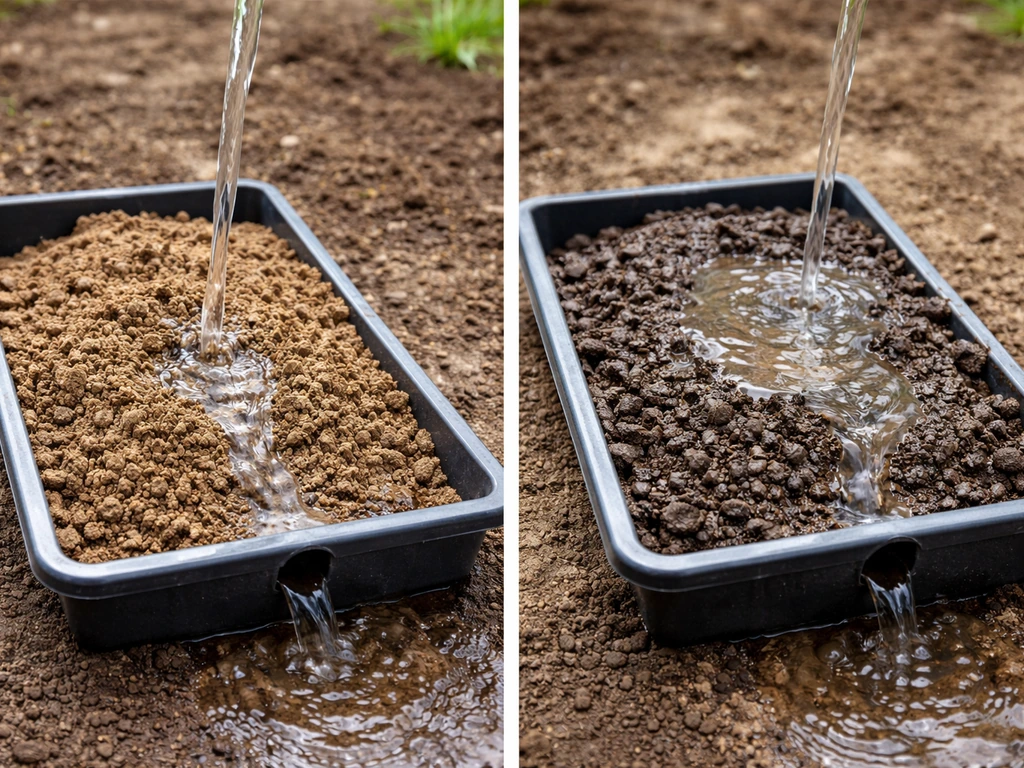
Grapes hate wet feet. You want well-drained soil, ideally a loam or sandy loam with a pH around 5.5 to 6.5. Maine's soils tend toward acidity, which is usually fine, but get a soil test before planting. If your site drains slowly or holds water after rain, grapes will struggle regardless of variety. Raised rows or slight slopes help. Avoid adding heavy nitrogen fertilizer; MOFGA specifically warns that excess nitrogen causes rampant vine growth that doesn't harden off properly before winter, setting you up for winter injury.
Wind protection
Maine's coastal and interior winds can stress vines and amplify cold damage in winter. A windbreak to the north and west (a fence, hedgerow, or building) helps enormously without blocking your southern sun. Prevailing wind protection is one of the most underrated site factors for Northeast grape growers, and it shows up repeatedly in regional extension guidance for good reason.
Best grape varieties for Maine
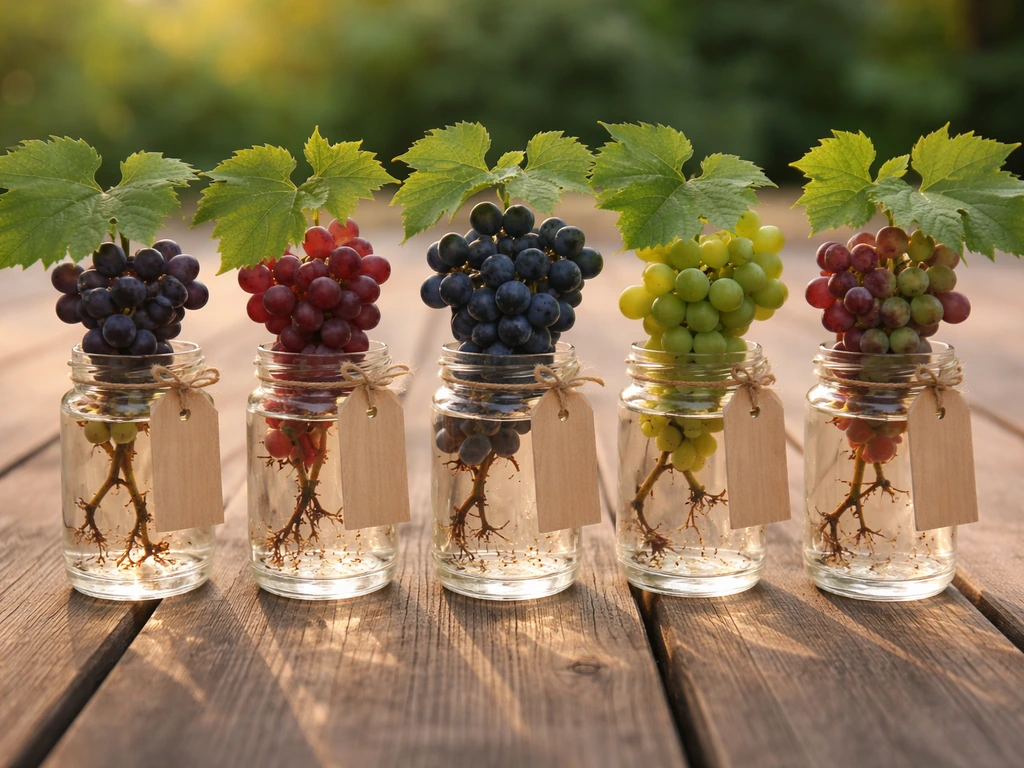
This is where most Maine gardeners go wrong: they pick the wrong variety. European Vitis vinifera grapes like Cabernet Sauvignon or Chardonnay are simply not cold-hardy enough for most of Maine without extraordinary protection. Skip them entirely unless you're in the mildest corner of the southern coast and even then, it's a gamble. You want American species grapes or cold-hardy hybrids bred specifically for climates like ours.
| Variety | Type | Hardiness Zone | Best For | Notes |
|---|---|---|---|---|
| Marquette | Cold-hardy hybrid | Zone 4 | Wine/juice | Complex flavor, excellent disease resistance, ripens early Sept in southern ME |
| Frontenac | Cold-hardy hybrid | Zone 3 | Wine/juice/jam | Very hardy, productive, high acid; great for northern gardens |
| Frontenac Gris | Cold-hardy hybrid | Zone 3 | White wine/fresh eating | Pink-skinned sport of Frontenac, same hardiness |
| Reliance | American hybrid | Zone 4–5 | Fresh eating (seedless) | One of the best seedless table grapes for cold climates |
| Concord | American (Vitis labrusca) | Zone 4–5 | Juice/jam/fresh eating | Classic, reliable, disease-resistant; ripens mid-Sept |
| Beta | American hybrid | Zone 3 | Juice/jam | Extremely cold-hardy; small berries, tart flavor, good for far northern ME |
| Swenson Red | Cold-hardy hybrid | Zone 4 | Fresh eating/wine | Good flavor, moderate disease resistance, mid-season ripener |
| Somerset Seedless | Cold-hardy hybrid | Zone 4 | Fresh eating | Seedless, sweet, earlier ripening than Concord; beginner-friendly |
For beginners in southern or central Maine who want fresh eating grapes, I'd start with Reliance or Somerset Seedless. Both are forgiving, seedless, and ripen well within Maine's season. If you're interested in juice or wine, Frontenac and Marquette are the workhorses of cold-climate grape growing. They're disease-resistant, reliably cold-hardy, and produce interesting, usable fruit. For northern Maine, Beta or Frontenac are probably your safest bets given the shortened season and harsher winters. Compare notes with growers in similar short-season states like those working in upstate New York or northern New Hampshire for insight on how these varieties perform in comparable conditions.
Planting and site setup
When and where to plant
Plant in spring as soon as the ground has warmed and the risk of hard frost has passed, typically mid-May in southern Maine, late May or early June in central and northern areas. Bare-root vines should go in as soon as you get them; don't let the roots dry out. Pick your sunniest, best-drained spot with that south or southwest exposure. If you're planting on a slope, run your rows across the slope rather than up and down it to reduce erosion and maximize sun exposure along each vine.
Spacing and trellis setup
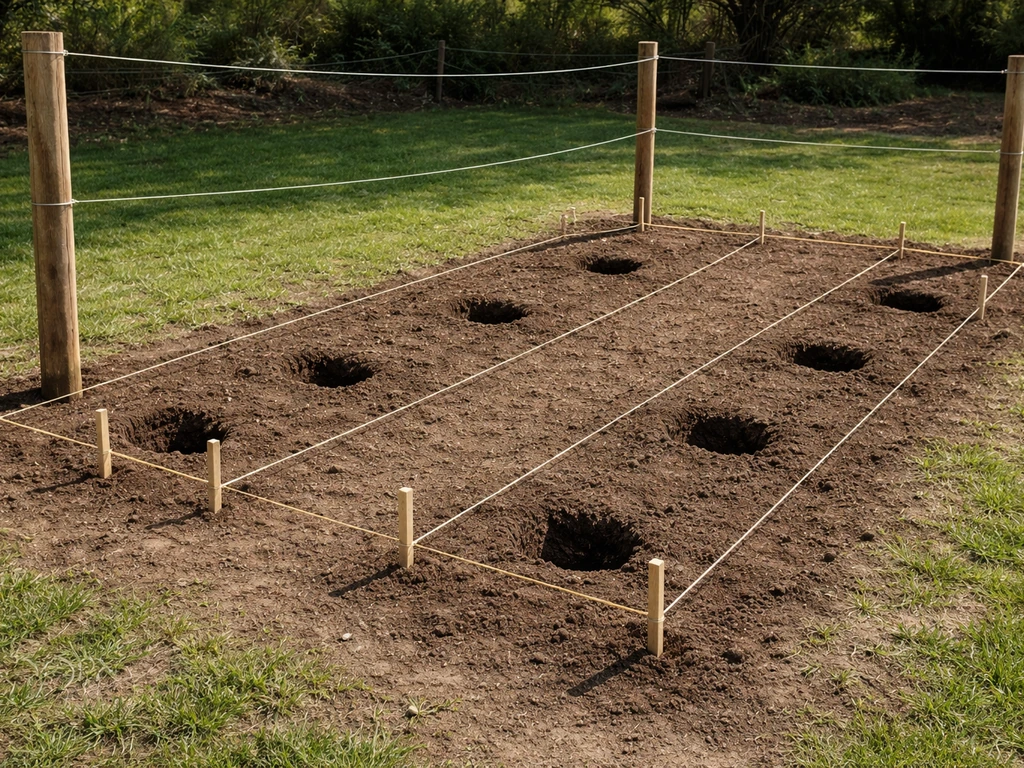
Space vines 6 to 8 feet apart within rows, with rows 8 to 10 feet apart if you're planting multiple rows. Each vine needs its own dedicated space on the trellis. Your trellis needs to be sturdy and in place before you plant. A standard two-wire trellis works well for most home gardens: set posts 8 to 10 feet apart and string the first wire at about 3 feet high, the second at about 5 to 5.5 feet. Use treated wood or metal T-posts with durable galvanized wire. Don't skip the trellis thinking you'll add it later because vines start training from day one and improper early growth is hard to undo.
Planting the vine
Dig a hole wide enough to spread the roots without bending them. Plant the vine at roughly the same depth it was growing in the nursery. Backfill with native soil, water thoroughly to settle everything, and keep the soil consistently moist through the first growing season. You can use a grow tube over the young plant to trap heat, accelerate early growth, and give the vine a head start on reaching trellis height. University of Maine recommends using cover crops on the site the season before planting to improve soil organic matter, so if you're planning ahead, that's a good preparatory step.
Caring for your vines through the season
Watering
Keep soil moist (not wet) right after planting and through the first season. After establishment, grapes are surprisingly drought-tolerant and Maine's rainfall usually handles most of what they need. MOFGA's guidance is practical here: water when you have prolonged drought, but don't over-irrigate because soggy soil hurts roots and encourages disease. Critically, reduce or stop supplemental watering in late August and September. This helps canes harden off before winter, which is one of the most important things you can do to prevent cold injury.
Fertilizing
Less is more with grape fertilizer, especially in Maine. A light application of compost or a balanced fertilizer in early spring is usually all established vines need. Avoid heavy nitrogen, which pushes lush vegetative growth that doesn't harden properly before winter. If your vines are growing vigorously and producing dark green foliage, hold off on fertilizing altogether. Save supplemental feeding for young vines in their first or second year when you're trying to push establishment growth.
Training and pruning basics
In Maine's climate, a cane-pruned system is almost always a better choice than a cordon-trained system. The reason is practical: the basal buds of American and hybrid grapes are often vegetative rather than fruitful, meaning you need longer canes to get fruit. More importantly, cane-pruned systems are less vulnerable to winter injury than permanent cordons, which can be killed or severely set back during a bad Maine winter.
Train a single trunk up to the lower trellis wire, then select two to four canes each year to carry your fruiting growth. [Prune in late winter or very early spring (late March through mid-April in Maine), never in fall or early winter. ](https://extension. unh.
edu/resource/pruning-and-training-grapes-home-vineyard-fact-sheet) Fall pruning can actually stimulate the vine and increase winter damage.
In the first year, don't try to get fruit. The whole goal is establishing a strong root system and getting the main trunk to the first wire. Remove all flower clusters that appear in year one. In year two, let a few clusters develop, but don't push for a big crop. By year three, you can start pruning canes to about 10 buds and allowing full fruiting. Prune to 10 buds per cane as a general starting point, adjusting based on vine vigor.
Year-by-year timeline: what to expect
- Year 1: Focus entirely on establishment. Plant in spring, water consistently, train the main shoot up toward the trellis, remove any flower clusters. You're building roots, not harvesting grapes. By fall you want a vine that's reached or nearly reached the first wire.
- Year 2: The trunk should be established. Allow limited fruiting (one to three clusters per vine maximum) to test the vine without stressing it. Continue training the permanent trunk and selecting strong canes. Begin learning to prune over the dormant season.
- Year 3: The vine is ready to start producing in earnest. With proper cane pruning (roughly 10 buds per selected cane, two to four canes per vine), you can expect a partial to moderate crop. This is your first real taste of what your variety will produce.
- Year 4 and beyond: Full production. A healthy, well-managed vine can produce 10 to 15 pounds of fruit per vine at maturity. In Maine, expect ripe grapes from late August through early October depending on your variety, location, and the specific year's weather.
Patience really is the key word in those first two years. I know it's frustrating to remove flower clusters from a vine that's clearly trying to fruit, but letting it focus on root development pays off dramatically in years three, four, and beyond. Vines that are pushed too hard too early are weaker and more vulnerable to winter injury.
Winter protection and keeping disease in check
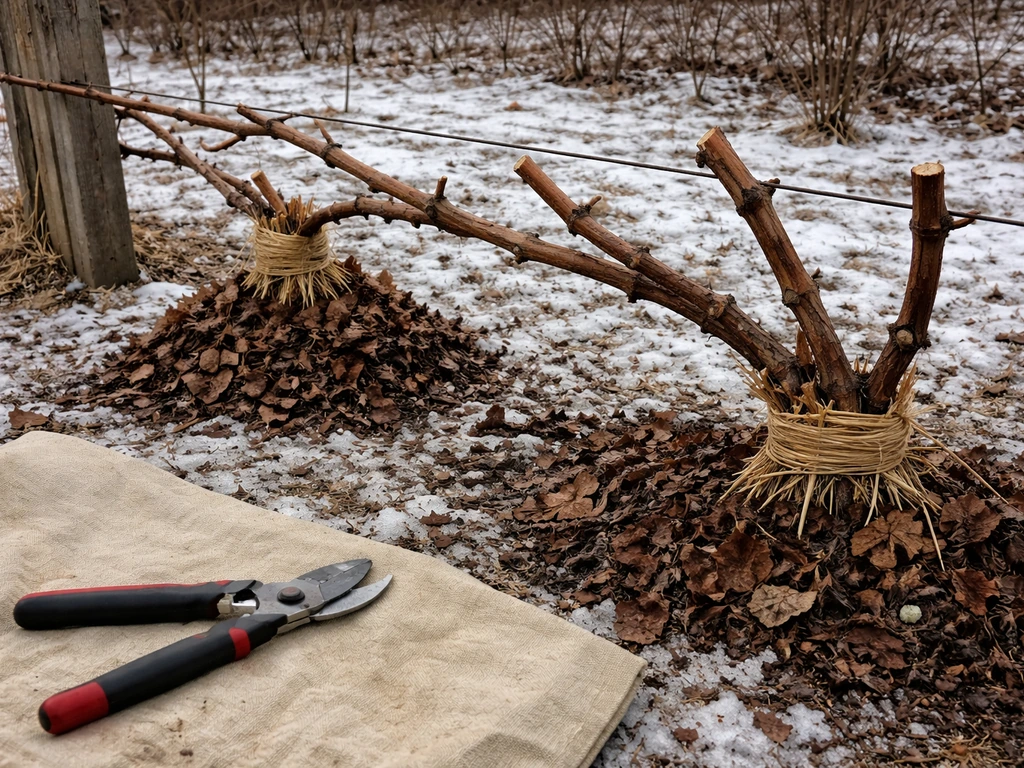
Winter protection strategies
Cold-hardy hybrid varieties like Frontenac and Marquette are bred to survive Maine winters without being buried, unlike vinifera grapes that need to be detached from the trellis and buried under soil or mulch in cold climates. That said, young vines in their first or second year are more vulnerable than mature ones, so a loose mulch of straw or shredded leaves around the base of each vine in late fall helps protect the root zone. For established vines, the most important winter protection is cultural: reduce fall watering, avoid late-season nitrogen, prune in late winter not fall, and choose varieties rated at least a full zone colder than your location.
In particularly harsh winters, you may still see some cane dieback on even cold-hardy varieties. This is normal and not necessarily a disaster. When you prune in late March or April, look for green cambium under the bark to identify living wood. Prune back to healthy tissue, select your best living canes, and the vine will usually recover and fruit that season.
Disease prevention in Maine
Black rot is the most serious grape disease in Maine, and it can destroy up to 80% of your crop in a bad year if you're not managing it. The fungus overwinters in mummified berries and infected tissue, so the single most important thing you can do is sanitation: remove and dispose of (don't compost) any mummified berries, infected leaves, and pruned material every season. The University of Maine Cooperative Extension publishes a spray schedule tied to growth stages specifically for Maine conditions; I'd strongly recommend downloading it and following it, especially if you're growing less disease-resistant varieties.
Downy mildew and powdery mildew are also present in Maine. The CT DEEP/CAES fact sheet for home grape plantings lists common Connecticut grape diseases like black rot, powdery mildew, and downy mildew and outlines a spray schedule framework for home plantings. Good air circulation (proper vine spacing, keeping the canopy open with summer shoot positioning) reduces both significantly. Choosing disease-resistant varieties like Frontenac, Marquette, or Concord is your best long-term insurance. If you stick to the recommended spray schedule (even just a few well-timed applications starting at 4-inch shoot growth), keep the vineyard floor clean, and grow resistant varieties, you'll avoid most of the serious losses.
Other common issues to watch for
- Japanese beetles: hand-pick or use row covers during their peak feeding window in July and August
- Grape berry moth: most problematic in southern Maine; remove old bark and vineyard debris where larvae overwinter
- Late spring frost damage to young shoots: if a late frost is forecast after budbreak, cover young vines with frost cloth overnight
- Poor fruit set: often caused by rain or cold during bloom; not much you can do except choose early-ripening varieties to shift your bloom window earlier
Your next steps right now
If you're reading this in spring or early summer, now is a great time to prepare your site and order vines for planting this season or next. Get a soil test from the University of Maine Cooperative Extension so you know your pH and any nutrient gaps before you plant. Pick your location based on southern exposure, good drainage, and wind protection.
If you’re wondering about NJ specifically, check your region’s heat units and frost dates, then pick a cold-hardy grape variety matched to that window can you grow grapes in nj. Order bare-root vines from a reputable cold-climate nursery (look for UMN-bred varieties like Marquette or Frontenac, or trusted American varieties like Concord or Reliance). Build your trellis before the vines arrive. Then plant, water, and resist the urge to let them fruit in year one.
If you're planning ahead for next spring, use this fall to amend your soil, run a cover crop on the site if possible, and set your posts and wire so the trellis is ready to go when the ground thaws. Download UMaine Cooperative Extension's 'Growing Grapes in Maine' guide and their spray schedule so you have them on hand. Maine is absolutely a grape-growing state. It just rewards gardeners who plan a season or two ahead and pick varieties bred for exactly these conditions.
FAQ
What’s the best time to plant grapes in Maine if I want the highest chance of success?
Aim to plant bare-root vines as soon as the ground warms and you are past hard frost risk, typically mid-May in southern Maine and later in inland regions. If you buy container plants, you still want to plant when you can keep the site evenly moist for the first several weeks, and avoid planting right before a hot, dry stretch that can overwhelm new roots.
Can I grow grapes on a fence or without a trellis in my Maine yard?
You can train vines only if you provide a real trellis structure, even for home grapes. Without a trellis, vines sprawl, the canopy stays wet longer, and disease pressure rises, plus winter cane training becomes inconsistent. If you use a fence, make sure it provides stable support and airflow, and consider orienting the fruiting zone so it still gets good southern or southwest sun.
How do I choose between Reliance and Somerset Seedless for Maine conditions?
Reliance is often the more forgiving option for beginners because it tends to perform reliably in short seasons and cooler sites. Somerset Seedless can be a great choice if you specifically want seedless fruit, but treat it as a variety choice tied to your exact site warmth and sun, since seedless varieties still need enough ripening time to avoid under-ripeness.
What frost-protection steps actually help in Maine, and what’s usually a waste of effort?
Row covers or temporary protection can help with spring frost when buds are exposed, but they only work if you can cover fully and remove the cover once temperatures rise to prevent overheating and mildew. Heavy winter burial methods are generally not the best fit for cold-hardy hybrids in Maine, since the article’s approach relies more on cold-hardy genetics plus reduced fall watering and proper pruning timing.
Do I need to spray for disease in Maine even if I plant disease-resistant hybrids like Frontenac or Marquette?
Resistant varieties greatly reduce risk, but they do not remove it entirely, especially in wetter years or if canopy airflow is poor. If you skip all spray entirely, you may still get losses from black rot or mildew when conditions favor them. A practical compromise is to follow the growth-stage schedule for the first season or two while you learn your site’s disease pressure, then scale based on results.
Is overwatering in Maine ever a bigger problem than underwatering?
Yes, especially after planting and during periods of cool, wet weather. Grapes “hate wet feet,” so constant moisture or slow-draining soil can lead to root stress and higher disease risk. After establishment, water during prolonged drought, but stop or sharply reduce supplemental watering in late August and September so canes harden off before winter.
How can I tell whether my vine is healthy enough to keep fruiting in year two?
A simple check is vigor and cane maturation. If the vine has produced strong growth and canes are sufficiently developed by late summer, you can allow a small crop, but if growth is weak or foliage is pale and growth seems stunted, prioritize establishment and reduce or remove clusters again. Also confirm that you stopped late-season nitrogen and avoided late-summer irrigation that delays hardening.
What pruning mistake most often causes winter damage in Maine?
Pruning too late in fall or early winter can stimulate growth when you need dormancy, increasing winter injury. For Maine, stick to late winter or very early spring timing (late March through mid-April), and when you do winter dieback trimming, prune back to tissue with green cambium under the bark.
Should I compost infected grape material in Maine?
No, do not compost mummified berries, infected leaves, or pruned material when black rot is present or suspected. Because the fungus overwinters in infected tissue, composting can spread inoculum back into your vineyard. Instead, remove and dispose of diseased material each season.
How much space do I need if I want multiple grape vines in a small Maine backyard?
Even if you have limited space, vines need dedicated room for airflow and training. Plan on 6 to 8 feet between vines in the row and adequate spacing between rows (about 8 to 10 feet if you run multiple). If you can’t fit the spacing, it’s better to plant fewer vines with a more open canopy than to overcrowd, which increases mildew and reduces fruit quality.
Can I start with a single vine and expand later, or is it better to plant multiple from the start?
For most cold-hardy home grape systems, starting with one vine is fine and often smart because you can learn your microclimate, trellis setup, and disease pressure. Expanding later is easier if you already have trellis posts installed and a known layout, but remember that new vines are more vulnerable, so your site prep and sanitation routines should stay consistent even when the vineyard is small.