
Yes, you can absolutely grow grapes in Maryland, and plenty of home gardeners do it successfully. Maryland's climate is genuinely workable for grapes: the growing season runs roughly 170 to 200 days depending on where you live, summers are warm and long enough to ripen most varieties, and winters are cold enough to give vines the dormancy they need. The real challenge isn't cold winters or short seasons. It's humidity. Maryland's wet summers create serious disease pressure, especially from downy mildew, black rot, and powdery mildew. Pick the right varieties, stay on top of your spray schedule, and get your site and trellis right, and you'll be harvesting your own grapes within three to four years of planting.
Can You Grow Grapes in Maryland? How to Succeed

Marcus Whitfield
11 Jun 2026
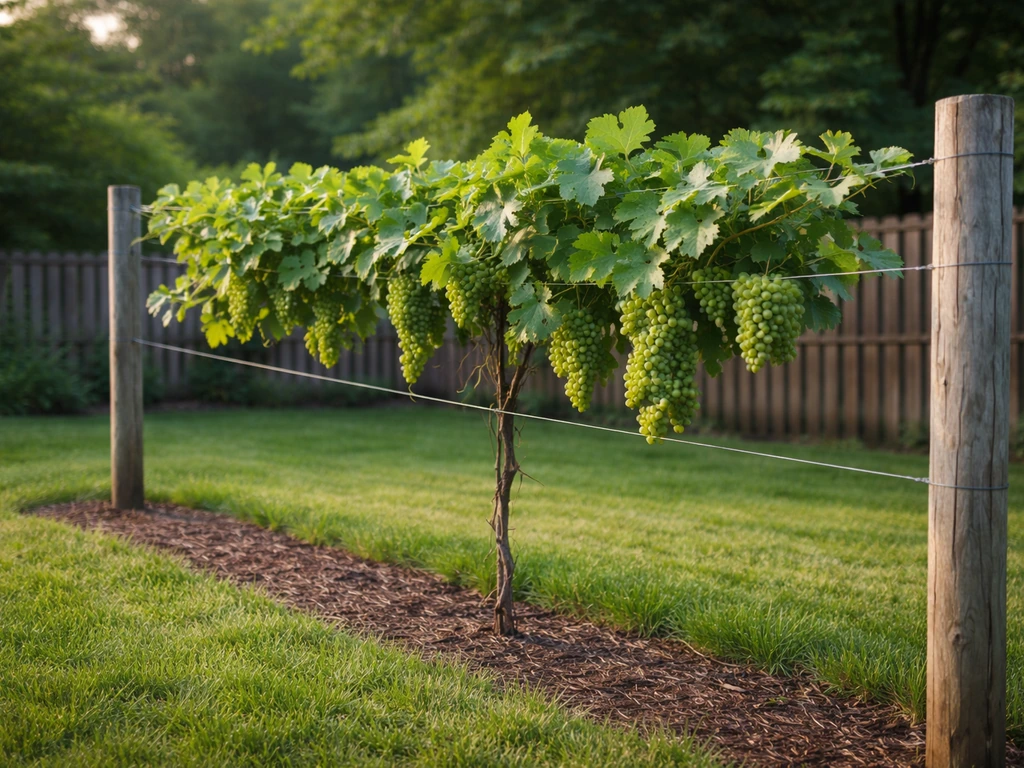
Maryland's climate and how it affects grapes
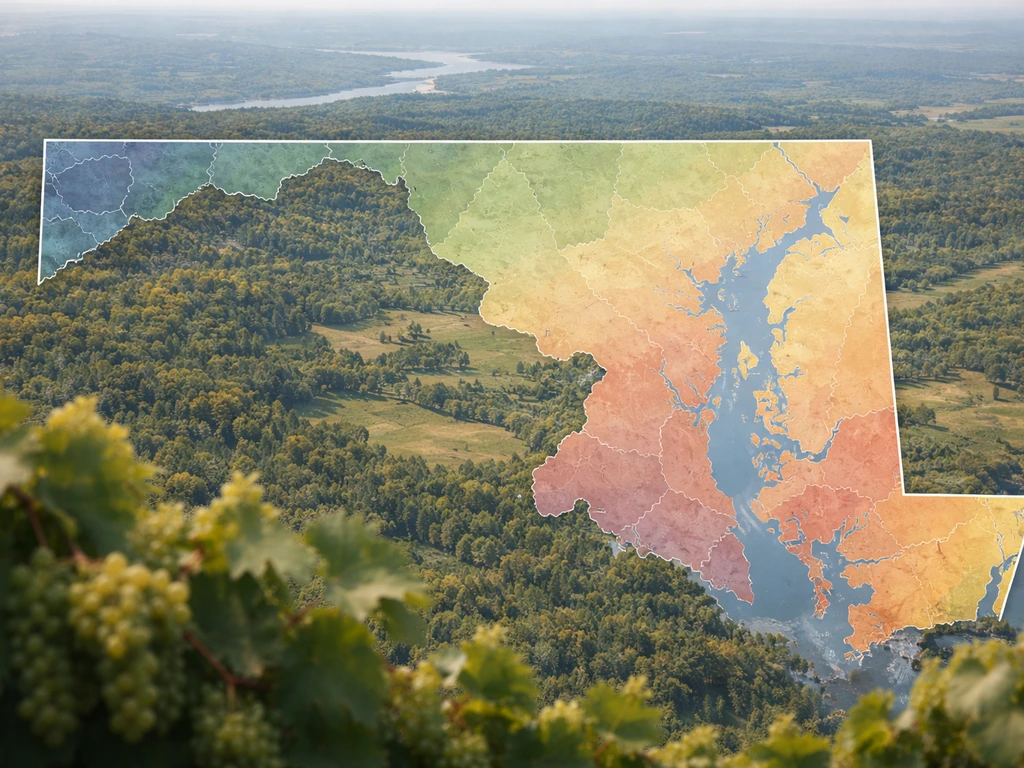
Maryland spans USDA hardiness zones 5b through 8a, which is a wide range for a relatively small state. Garrett County in the Appalachian highlands sits in the colder zones (5b to 6a), where winter lows can dip below minus 10°F and you'll need to choose cold-hardy varieties carefully. The Piedmont region through central Maryland falls mostly in zones 6b to 7a, which is a sweet spot for a broad range of both American and European-hybrid grape varieties.
Head toward the Chesapeake Bay or the Eastern Shore and you're into zone 7b to 8a, with winter lows rarely dropping below 5°F to 15°F and a longer frost-free season that opens the door to more Vinifera varieties. PlantMaps’ Maryland hardiness-zone listing provides example winter-low ranges by city/area, such as Adelphi showing zone 7b with about 5°F to 10°F and Annapolis showing zone 8a with about 10°F to 15°F.
The growing season in most of Maryland is long enough to ripen grapes well, but summer rainfall and humidity are the factors you have to plan around. Maryland averages 40 to 45 inches of rain annually, with a good chunk of that falling during the growing season. That moisture, combined with heat and leaf density, creates ideal conditions for fungal diseases. This is why variety selection and canopy management matter just as much as any other factor here. It's not that grapes can't thrive in Maryland. It's that you have to grow them the right way for this specific climate.
Best grape varieties for Maryland by region
Choosing the right variety is probably the single most important decision you'll make. Growing something poorly suited to your zone or disease environment is a recipe for frustration. University of Maryland Extension maintains an official recommended wine grape variety list for the state, which is a great starting point, but here's a practical breakdown for home gardeners.
American and hybrid varieties (best for most Maryland gardeners)
For the majority of Maryland home growers, especially in zones 6 through 7, French-American hybrids and native American varieties are your most reliable bet. They handle humidity better, tolerate cold more comfortably, and don't require the intensive spray programs that European Vinifera grapes demand.
- Chambourcin: A red French-American hybrid that performs extremely well across Maryland's Piedmont. It ripens in mid-season, shows decent disease resistance, and produces good wine and juice. One of the most widely planted varieties in Maryland commercial vineyards for good reason.
- Vidal Blanc: A reliable white hybrid with good cold hardiness and solid disease resistance. It ripens late but holds well on the vine. Excellent for juice and wine.
- Noiret: A newer red hybrid developed by Cornell that shows strong disease resistance and handles Maryland's climate well. Good flavor complexity for a hybrid.
- Niagara and Concord: Classic American varieties (Vitis labrusca) with excellent cold hardiness and strong natural disease resistance. These are ideal for home table grapes and juice in zones 5b through 7. They have a pronounced 'foxy' grape flavor some people love and others don't, but they're nearly bulletproof in terms of survivability.
- Marquette: A cold-hardy red hybrid that handles zones down to 6a and even 5b with some protection. Worth considering in western Maryland.
- Traminette: A white hybrid with good disease tolerance and aromatic flavor. Works well in central Maryland zones.
Vinifera varieties (for warmer zones and experienced growers)
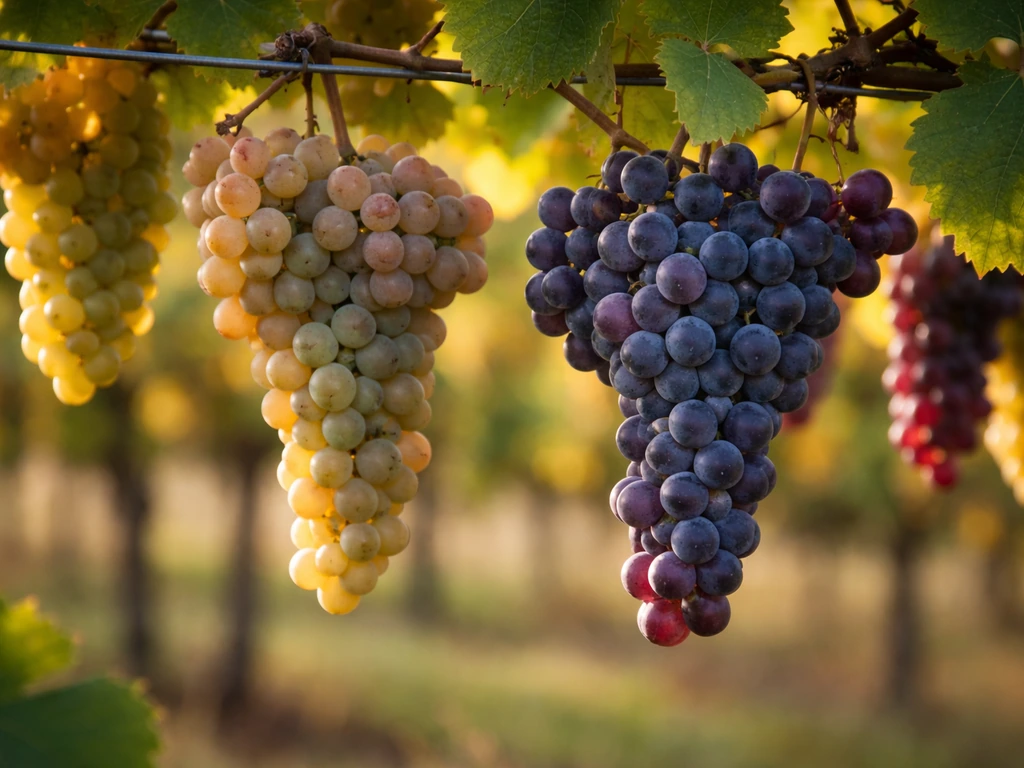
If you're in zone 7b or 8a near the Bay or Eastern Shore and you want to try European Vinifera grapes like Chardonnay, Cabernet Franc, or Merlot, it's possible but significantly more demanding. These varieties are more susceptible to disease and cold injury, so you'll need a premium site, a disciplined spray program, and consistent canopy management. Cabernet Franc is generally the most forgiving Vinifera red in Maryland conditions. For Vinifera in western Maryland or higher elevations, the risk of winter cold damage becomes a serious concern.
Table vs. wine vs. juice grapes: a quick guide
| Purpose | Best Maryland Varieties | Notes |
|---|---|---|
| Table (fresh eating) | Concord, Niagara, Reliance (seedless), Himrod (seedless) | Seedless varieties like Reliance and Himrod work well in zones 6–7; American types are most disease-tolerant |
| Wine | Chambourcin, Vidal Blanc, Noiret, Traminette, Cabernet Franc (warmer zones) | Hybrids give best disease resistance; Vinifera needs premium site and spray program |
| Juice | Concord, Niagara, Vidal Blanc | High sugar and good flavor; American types especially easy for home juice production |
Picking the right spot on your property
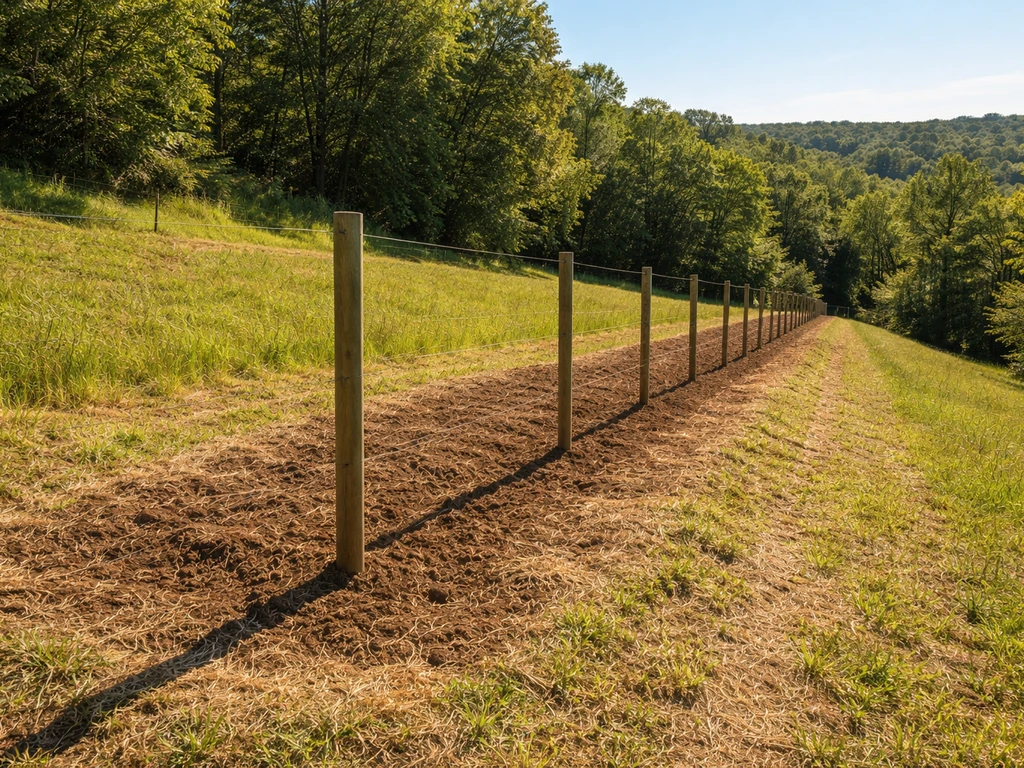
Site selection is where a lot of home growers cut corners, and it costs them later. University of Maryland Extension even has a formal site suitability evaluation process for this reason. You don't need to go through a full vineyard-scale assessment, but you do need to take these factors seriously.
- Full sun, minimum 8 hours per day: Grapes need maximum sun exposure to ripen properly and to dry out foliage quickly after rain, which reduces disease pressure. A south or southeast-facing slope is ideal.
- Good air circulation: This is non-negotiable in Maryland's humid climate. Avoid low spots, frost pockets, or areas surrounded by dense trees or structures. Air movement through the canopy is one of your best tools against fungal disease.
- Well-drained soil: Grapes hate wet feet. Avoid areas where water pools or stands after rain. A gentle slope naturally improves drainage and also helps cold air drain away, reducing frost damage in spring.
- pH between 5.5 and 6.5: Get a soil test (Maryland Cooperative Extension offers these inexpensively) before planting. Grapes are tolerant of a range, but this is the sweet spot. Adjust with lime to raise pH or sulfur to lower it.
- Distance from woods: Deer, birds, and raccoons are serious problems in Maryland. Sites with natural barriers or where you can install fencing are much easier to manage.
If you're on a flat property with heavy clay soil, you can still make it work, but you'll need to invest more effort in drainage (raised rows or berms) and be especially aggressive about canopy management to compensate for reduced airflow.
Planting and trellis setup
When and how to plant
Early spring is your planting window in Maryland, typically late March through mid-April once the ground is workable and hard frost risk is fading. Bare-root vines are the most common and affordable way to start, and they establish well when planted early in the season while soils are still cool and moist. Potted vines give you a little more flexibility on timing (you can plant into May), but they cost more and don't necessarily establish faster than a healthy bare-root planted at the right time. Either way, plant on a cloudy day or in the evening to reduce transplant stress.
Space vines 6 to 8 feet apart in the row for most varieties, with rows 8 to 10 feet apart if you're planting more than one row. Dig your hole wide enough to spread roots out without bending them, set the graft union (if present) just above soil level, and backfill with your native soil without amendment. Grapes generally don't benefit from heavy soil amendment at planting time. Water in well and mulch around the base to retain moisture and suppress weeds.
Trellis setup
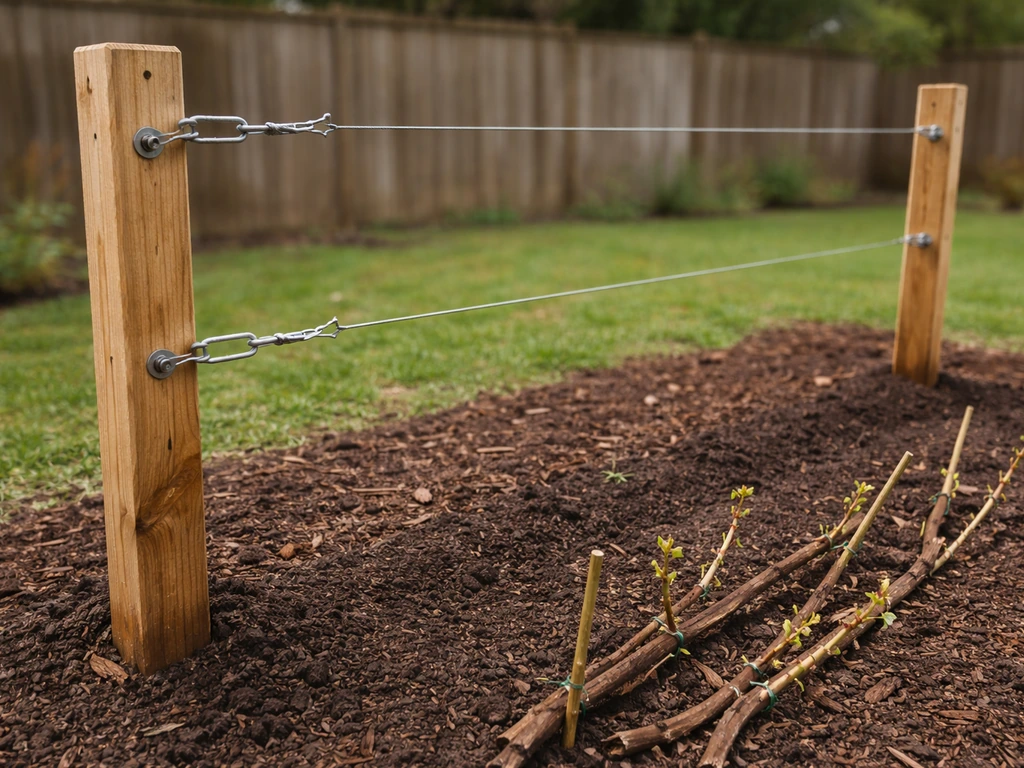
Build your trellis before or at the time of planting, not two years later. The most practical system for home growers in Maryland is the high cordon or a simple two-wire vertical trellis. Use sturdy 8-foot wooden or metal posts set at least 2 feet deep, spaced 15 to 20 feet apart, with end posts anchored at an angle for tension support. Run two or three horizontal wires: a training wire at about 3 feet for the cordon or canes, and one or two foliage catch wires above at 4.5 to 5.5 feet. The Geneva Double Curtain (GDC) is another good option for vigorous varieties as it spreads canopy and improves airflow, which is especially valuable in humid Maryland summers.
Year-round care calendar
Winter (December through February)
Vines are dormant and this is when you do your most important work of the year: pruning. Prune in late winter, ideally late February into early March before buds begin to swell. Remove 80 to 90 percent of the previous year's growth. Yes, really. This is the step most beginners resist, and it's why their vines overproduce poor-quality fruit or become unmanageable. For cane-pruned systems, leave two to four fruiting canes with 8 to 15 buds each. For cordon (spur) systems, prune back to two-bud spurs spaced 4 to 6 inches apart along the cordon arms. Pruning also helps airflow and reduces overwintering disease.
Spring (March through May)
Once buds swell and shoots emerge (bud break), your disease spray program needs to begin. This is not optional in Maryland. Apply a protective copper or sulfur-based fungicide at bud break, then follow up every 7 to 14 days or after significant rain events as shoots develop. Shoot positioning: as shoots grow, tuck them between the trellis catch wires to keep the canopy open and organized. Fertilize lightly in early spring with a balanced fertilizer, but don't overdo nitrogen or you'll push excessive leafy growth and increase disease susceptibility.
Summer (June through August)
This is the high-maintenance season in Maryland, primarily because of disease pressure. Keep up your fungicide rotations, especially from bloom through about four weeks post-bloom when fruit clusters are most vulnerable to downy mildew and black rot. After that four-week window, clusters become much more resistant, but foliage remains susceptible all season. Do your canopy management: trim shoot tips, remove suckers from the trunk, and pull leaves around the fruit zone to improve air circulation and sun exposure on the clusters. Water consistently if rainfall is lacking, aiming for about 1 inch per week, but avoid overhead watering. Drip irrigation is ideal.
Fall (September through November)
Harvest timing is critical. Grapes will not improve in sugar or flavor after picking, so don't rush it. After clusters reach full color, you can leave them on the vine for up to about a week while you check for full ripeness. Taste is your best guide, but measuring Brix with a refractometer (aiming for 17 to 22+ Brix depending on variety and purpose) removes the guesswork. As harvest approaches, protect ripening fruit from birds using mesh bags or netting over clusters. Deer and raccoons also become more active, so check your fencing. After harvest, let vines harden off naturally as temperatures drop. Don't fertilize after August. Clean up fallen leaves and debris to reduce overwintering disease inoculum.
Pest and disease management: what to watch for in Maryland
Disease is the biggest challenge Maryland grape growers face, and being proactive beats being reactive every time. By the time you can see serious symptoms on your vines, you've already lost ground. Here's what to know and watch for. The WV U Extension notes that grape disease pressure commonly includes black rot, powdery mildew, and downy mildew, each with characteristic symptom patterns such as brown spots and mummified fruit for black rot, and yellow spots with white cottony growth underneath for powdery mildew Here's what to know and watch for.
The big three fungal diseases
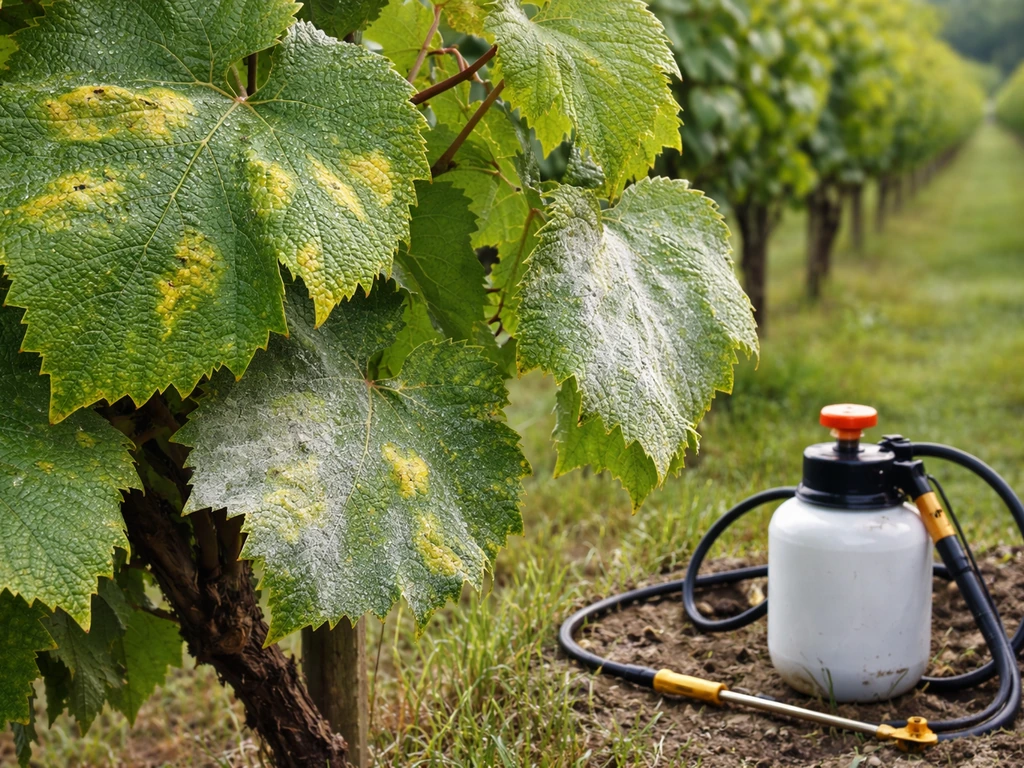
- Downy mildew: This is Maryland's most persistent grape disease and a season-long challenge. It causes yellowish oily spots on the upper side of leaves, with a white cottony growth underneath. In severe cases it causes premature defoliation, which weakens vines, reduces fruit sugar content, and can increase susceptibility to winter cold injury. Typical management involves 7 to 8 protective fungicide applications per season specifically targeting this disease. Canopy management and air circulation are your structural defenses. If you see active symptoms, apply a fungicide with both protective and post-infection activity immediately and rotate product classes to prevent resistance buildup.
- Black rot: Causes brown circular spots on leaves, and more damaging, turns fruit into hard, shriveled black mummies. It spreads rapidly in warm wet weather during bloom and the early fruit development period. Remove and destroy mummified fruit rather than leaving it on the vine or ground. Preventive fungicide coverage from bud break through fruit set is your best defense.
- Powdery mildew: Shows up as yellow spots on the upper leaf surface with white cottony growth underneath (different from downy mildew, which shows white growth on the underside). It also infects young fruit. Sulfur-based fungicides are effective and widely used.
Animal and insect pests
In Maryland, birds, deer, and raccoons can destroy a crop quickly as harvest nears. Use netting over entire rows or cluster-level mesh bags for birds. Deer fencing (at least 8 feet tall or a two-fence system) is worth the investment if deer pressure is high in your area. Japanese beetles feed on grape foliage heavily in Maryland during summer and can cause significant defoliation if populations are large. Hand-picking or targeted sprays early in the season before populations build are the most practical responses for home growers.
How long until you're actually harvesting grapes
Set your expectations clearly from the start: you will not harvest grapes in year one or year two. The first real crop from home-garden bunch grapes typically comes in year three after planting, and it will likely be light. That's normal and actually the right outcome. Letting vines establish strong root systems and framework in those early years is what sets up productive, long-lived vines. A vine that tries to carry too much fruit too early weakens itself.
By years four and five, a well-managed vine will start producing a meaningful harvest. Mature vines in full production, which usually means years six and beyond, can yield 8 to 15 pounds of fruit per vine for American and hybrid varieties, sometimes more depending on the variety and how well the season goes. The vines themselves can remain productive for 20 to 30 years with proper care. So while three years feels like a long time to wait, you're building something that will produce for a very long time if you start it right.
If you're comparing notes with gardeners in neighboring states, the experience in Maryland is broadly similar to what growers in Pennsylvania and New Jersey deal with, especially in terms of humidity and disease pressure. If you're wondering can you grow grapes in New York, the same overall lessons about humidity, disease pressure, and choosing the right varieties still apply, just with local timing and winter lows in mind neighboring states. Can you grow grapes in NJ?
The good news is the experience is broadly similar to Maryland, especially when it comes to managing humidity and disease. The good news is that many of the same humidity and disease-management principles also apply if you want to grow grapes in Pennsylvania. Growers in cooler states like Maine face different constraints around season length and cold hardiness.
The good news is you can still grow grapes in Maine by choosing cold-hardy varieties and planning for shorter seasons and harsher winter conditions Growers in cooler states like Maine face different constraints around season length and cold hardiness.. Because Maine has shorter seasons and harsher winters, focus on cold-hardy varieties and plan for extra protection when temperatures drop grow grapes in Maine. Maryland's position puts you in a genuinely favorable middle ground, warm enough for good ripening, cold enough for proper dormancy, with the main job being managing that summer humidity consistently.
Your next steps to get started
If you're ready to move forward, here's a practical sequence to start your Maryland grape garden the right way.
- Get a soil test this season through Maryland Cooperative Extension to know your pH and nutrient baseline before you plant anything.
- Pick your site based on the sun, airflow, and drainage criteria above. Walk it after a heavy rain and watch where water moves.
- Choose your varieties based on your zone and purpose. If you're in zones 6 to 7 and want reliability, start with Chambourcin, Vidal Blanc, or Concord. Don't try Vinifera as your first planting unless your site is exceptional and you're ready for the management it requires.
- Order bare-root vines from a reputable nursery in late winter for early spring delivery. They sell out. Order by January or February.
- Build your trellis before planting day, not after.
- Plan your disease spray program before buds break. Have your first fungicide products on hand before you need them.
- Be patient with the first two years. Focus on vine establishment, not fruit production.
FAQ
Can you grow grapes in Maryland without spraying fungicides at all?
You can try, but your odds drop sharply in most of Maryland because downy mildew, black rot, and powdery mildew often build quickly in humid summers. If you want to reduce chemical use, prioritize disease-resistant American or French-American hybrids, keep the canopy open, remove infected leaves early, and use drip irrigation. Still, plan on at least a minimal protective spray starting at bud break if you want a reliable crop.
What’s the best grape type for beginners in Maryland: table grapes, wine grapes, or both?
For most beginners, French-American hybrids or native American varieties are the easiest route because they tolerate humidity better. Wine-focused grapes can be more forgiving than finicky table grapes, since “perfect” aesthetics matter less, and you can harvest based on flavor and Brix. If you mainly want fresh eating, choose hybrids bred for table quality and confirm they are hardy for your exact zone.
How do I choose a variety that will survive Maryland winters where I live?
Match the variety’s cold-hardiness rating to your specific winter lows, not just your USDA zone. Western Maryland and higher elevations face more winter cold injury risk, even if a variety is listed for nearby zones. Look for explicitly cold-hardy selections (and consider that young vines usually suffer more than established ones), then add winter protection like mulch over the graft area if recommended for that variety.
Do I need a trellis right away, or can I wait until the first season?
Build or install the trellis before planting or at the same time. Grapes grow fast once shoots emerge, and trying to retrofit later usually damages roots, stresses the vine, or forces awkward canopy positions. A properly trained vine also improves airflow, which directly reduces fungal disease pressure.
What spacing should I use if I only have room for one vine?
Even with one vine, give it enough room to manage airflow and pruning. A common approach is keeping the vine trainable into a vertical system, with about 6 to 8 feet of space on each side for canopy movement and working space. Plan for a trellis that supports the vine’s eventual size so you can remove suckers and maintain light exposure without crowding.
How late can I prune in Maryland before it becomes a problem?
Aim for late winter, ideally before buds swell. Once buds are actively swelling, pruning can reduce yields and increase stress because you are removing already-preparing growth. If you missed the window, pause and switch to careful “training” adjustments rather than heavy pruning until the next dormant season.
Is it better to water with sprinklers or drip irrigation in Maryland?
Drip irrigation is strongly preferred. Overhead watering increases leaf wetness, which fuels fungal disease. If you must use a hose, water at the base only and early in the day, and avoid frequent light watering that keeps foliage damp.
How do I know when it’s time to spray if the weather keeps changing?
Use bud break as your starting trigger, then adjust your timing after rainfall. Maryland guidance often means protecting on a regular interval, but rain events can change the risk level quickly. Keep notes on rainfall and growth stage, and tighten the schedule around bloom through about four weeks post-bloom when clusters are most vulnerable.
What can I do if my vines grow lots of leaves but barely make grapes?
This usually points to pruning and canopy balance issues. If you leave too much previous growth, vines can overproduce foliage and reduce fruit quality. Re-check your pruning target (often removing most of last year’s growth), manage shoot positioning so light reaches clusters, and avoid excess nitrogen, which pushes vegetative growth at the expense of fruit.
Can I expect a harvest in year two in Maryland?
Sometimes you may get a few clusters, but a real crop is usually year three for home-grown bunch grapes, and it often starts light. The best strategy is to let the vine build a strong framework in the first years instead of trying to carry a full crop early, because that can weaken the vine and hurt longer-term production.
How should I protect grapes from birds and raccoons without creating disease problems?
Use mesh bags on clusters for targeted protection, or row netting for larger plantings. Ensure netting is secure, and keep it off the fruit so it does not stay constantly wet. After harvest, remove netting promptly and clean up debris so you reduce overwintering disease inoculum.
What should I do about Japanese beetles on grape vines?
Early action matters because beetles can defoliate vines quickly during summer. Hand-picking works for small to moderate populations, and targeted control early is more effective than waiting until leaves are badly damaged. Also consider timing and foliage management so vines maintain enough leaf area for ripening even under pest pressure.
Is it safe to fertilize grapes in late summer in Maryland?
Avoid fertilizing after August. Late-season nitrogen can delay hardening off, reduce winter survival, and increase vulnerability to disease because tender growth remains. If you’re using fertilizer, apply lightly in early spring and let the vine’s natural growth cycle guide what happens after midsummer.
Do I need to test soil before planting grapes?
It helps, especially for pH and nutrient imbalances that can limit vigor and fruit quality. Grapes generally do not want heavy amendments at planting, but soil testing can prevent unnecessary fertilization. If your soil is very clayey or poorly drained, prioritize drainage work (raised rows or berms) since wet roots are a long-term problem even if nutrients are correct.