
Yes, you can absolutely grow grapes in New Jersey, and they can thrive there with the right variety choices and basic care. New Jersey's climate is genuinely well-suited to grapes: the state has a long enough growing season, enough summer heat to ripen fruit, and winters that, while cold, are manageable for a good range of hybrid and even some classic vinifera varieties. The key is picking varieties that match your specific part of the state and setting up your vines correctly from day one.
Can You Grow Grapes in NJ? How to Plant and Succeed

Marcus Whitfield
28 May 2026
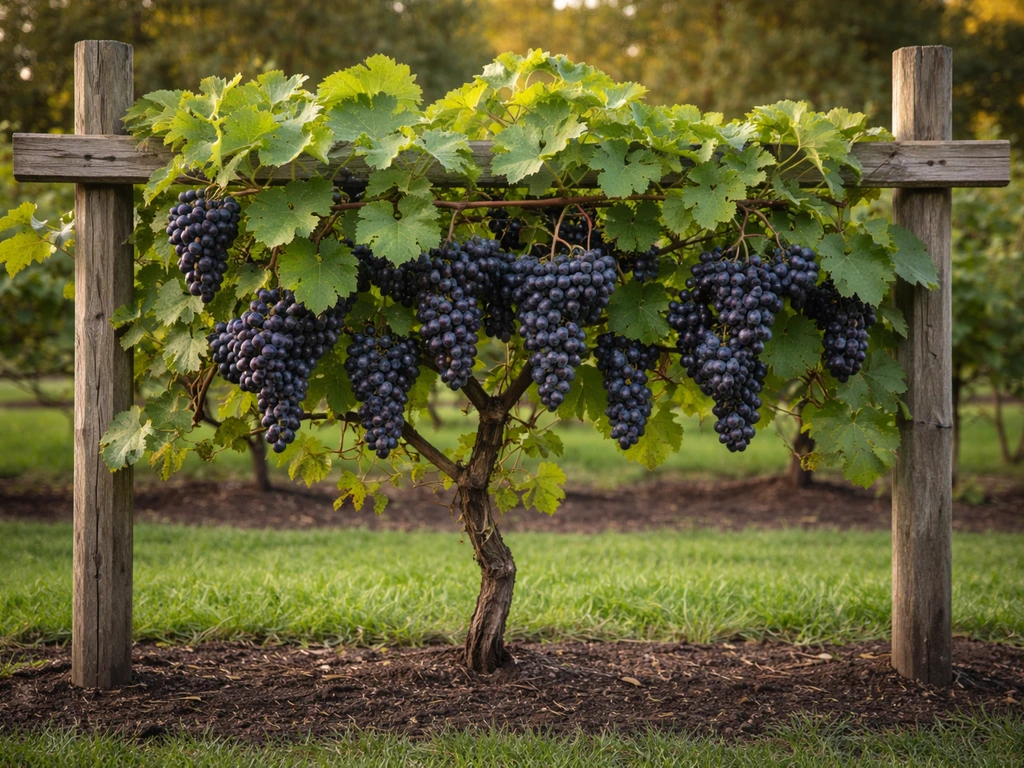
Why New Jersey's Climate Works for Grapes
New Jersey spans USDA hardiness zones 6a through 7b, which covers a wide range of conditions. Northern NJ up near the Highlands and Sussex County sits in zone 6a, where winter lows can dip below -10°F in harsh years. South Jersey near the coast and the Pine Barrens runs warmer, closer to zone 7b, where winters rarely push past 0°F. That difference matters a lot when you're choosing grape varieties.
The growing season in most of NJ runs roughly 160 to 190 frost-free days, which is plenty for grapes to develop and ripen. Summers are warm and humid, which is great for vine growth but does mean disease pressure (more on that later). The bigger concern is winter: a cold snap in January that drops to -5°F or lower can damage or kill buds on less-hardy varieties. That's why variety selection is the single most important decision you'll make.
If you're in central or southern NJ, you actually have more flexibility than growers just across the border in northern Pennsylvania or up in Maine. If you’re wondering can you grow grapes in Pennsylvania, many of the same site and variety choices apply, especially for cold-hardy hybrids northern Pennsylvania. Compared to neighboring states, NJ sits in a sweet spot: not as mild as Maryland but generally warmer and with a longer season than much of New England.
Yes, the same basic steps work in Maryland too: pick cold-hardy or well-suited varieties, plant in full sun, and manage disease and winter risk for your site. Growers in New York face similar decisions to NJ gardeners, especially in the Hudson Valley. If you're asking can you grow grapes in New York, many of the same steps apply, but you'll want to match varieties and timing to your local climate.
Best Grape Varieties for New Jersey
Your best bets in NJ are cold-hardy hybrids, whether you want table grapes to eat fresh or wine grapes to ferment. Pure Vitis vinifera varieties like Cabernet Sauvignon or Chardonnay can survive in southern NJ with some effort, but they need winter lows to stay above about 0°F to reliably avoid bud damage. Hybrids are a much safer bet, especially if you're north of Trenton or at any elevation.
| Variety | Type | Cold Hardiness | Disease Resistance | Best For |
|---|---|---|---|---|
| Marquette | Wine (red) | To about -37°C (-35°F) | Good: downy mildew, powdery mildew, black rot | North & central NJ; wine making |
| Frontenac | Wine (red) | To about -35°F | High: downy mildew; good: powdery mildew, botrytis | Northern NJ; bold reds |
| La Crescent | Wine (white) | To about -36°F | Good overall | Northern NJ; aromatic whites |
| Noiret | Wine (red) | To about -5°F to -10°F | Moderate | Central & south NJ; wine making |
| Concord | Table/juice | To about -20°F | Good | Statewide; fresh eating, juice, jelly |
| Niagara | Table (white) | To about -15°F | Moderate | Statewide; fresh eating |
| Reliance | Table (seedless) | To about -15°F | Moderate | Statewide; fresh eating |
| Catawba | Table/wine | To about -10°F | Moderate | Central & south NJ; dual purpose |
For most home gardeners in NJ, Concord is the reliable workhorse: it's cold-hardy, vigorous, disease-resistant, and produces a heavy crop of classic slip-skin grapes that are perfect for juice and jelly. If you want seedless table grapes, Reliance is the best cold-hardy option. For wine grapes, Marquette and Frontenac are hard to beat for northern NJ, while southern growers can experiment with Noiret or even some French-American hybrids like Chambourcin.
Muscadine grapes (Vitis rotundifolia) are a great choice for humid climates in the Southeast but are generally not reliably hardy in New Jersey winters. Most muscadine varieties are only rated to about 10°F, which puts them at serious risk in zone 6. Stick to the hybrids and native American varieties listed above and you'll save yourself a lot of heartbreak.
How to Grow Grapes in NJ: Step by Step
Picking the Right Site
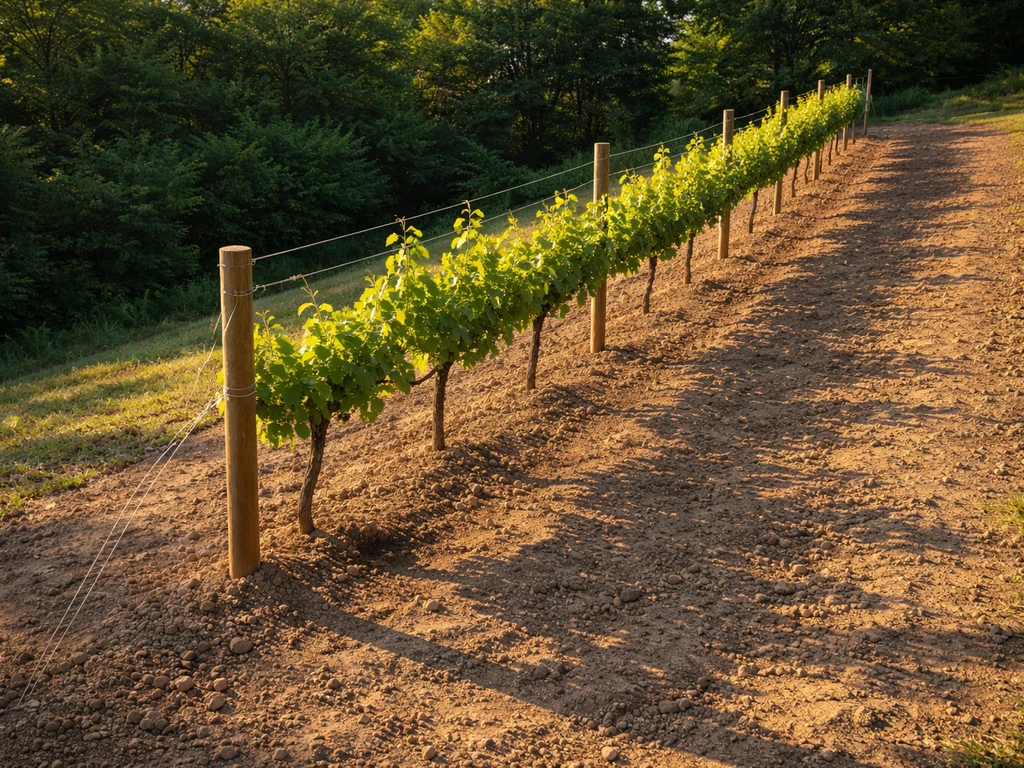
Grapes need full sun, and that means at least 8 hours of direct sunlight per day. This isn't negotiable: grapes growing in partial shade will ripen poorly, produce less fruit, and be far more prone to disease. Choose a south or southwest-facing slope if you have one. Good air drainage matters too: frost settles in low spots on calm spring nights, so planting on a gentle slope helps cold air drain away from your vines. Avoid planting at the bottom of hills or in areas surrounded by trees or structures that block airflow.
Soil drainage is just as important as sun. Grapes hate sitting in wet soil. If your site stays soggy after rain, either choose a different spot or build raised rows. A well-drained, deep loam is ideal, but grapes are adaptable to many soil types as long as drainage is good.
When and How to Plant
In New Jersey, plant bare-root vines in early spring as soon as the ground can be worked, typically late March through mid-April. Potted vines can go in a bit later, through May. Spring planting gives the vine a full growing season to establish before its first winter. Fall planting is riskier in NJ because young vines haven't had time to harden off before the cold hits.
When you plant, dig a hole wide enough to spread the roots out naturally without bending them. Set the vine so the graft union (if present) sits just above the soil line. Backfill with the native soil and water thoroughly. Don't add a bunch of compost or fertilizer into the planting hole; it can burn roots and encourage lush growth that isn't well-rooted.
Spacing Your Vines
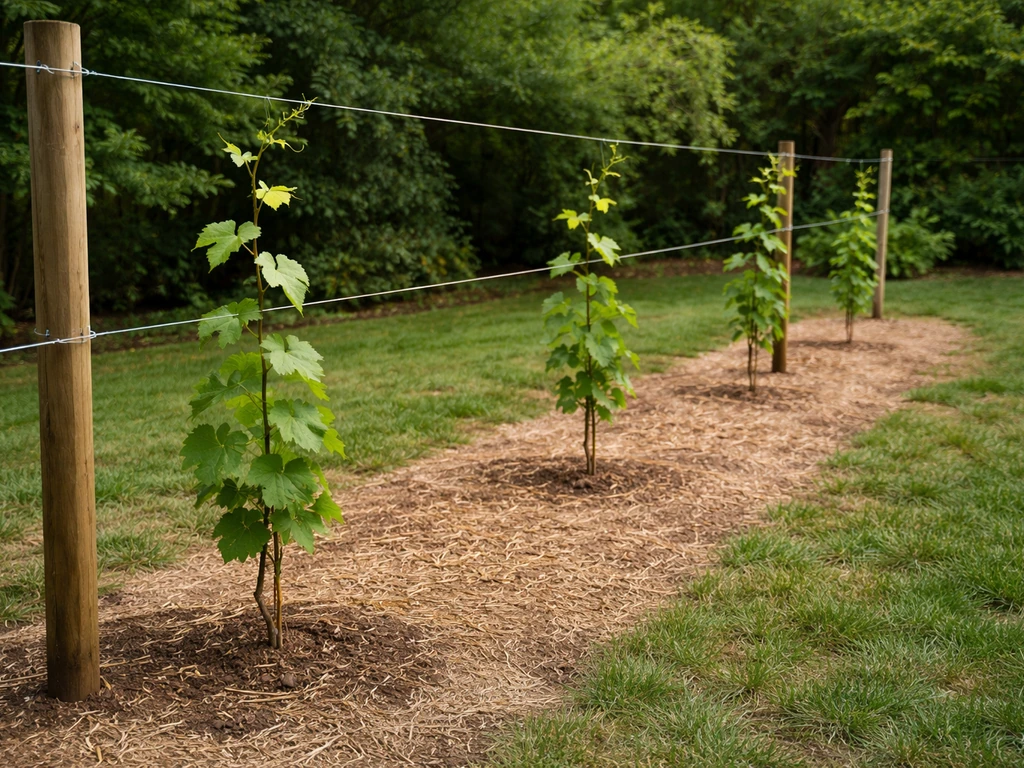
For most home trellis setups, space vines 6 to 8 feet apart in a row, with rows at least 8 to 10 feet apart if you're planting multiple rows. Tighter spacing leads to overcrowding, poor air circulation, and more disease pressure. For vigorous varieties like Concord, erring toward 8 feet gives you breathing room as the vine fills in.
Training and Pruning Your NJ Vines
Setting Up Your Trellis
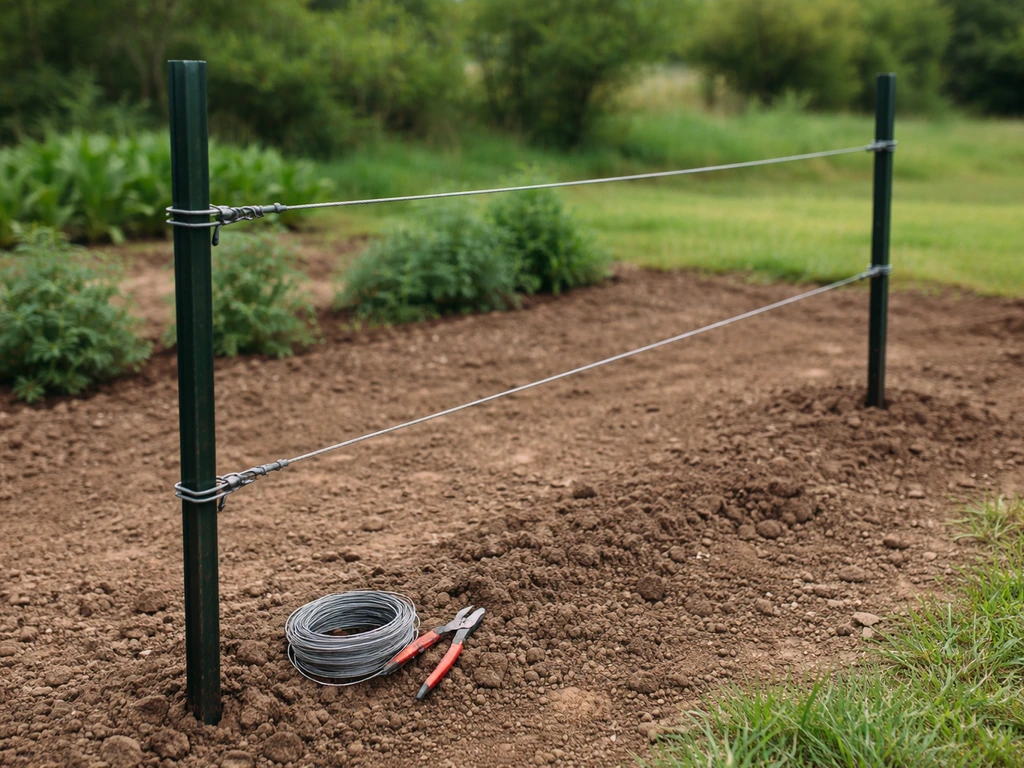
Before you plant, get your trellis in place. The standard two-wire trellis works well for home gardens: set sturdy posts (metal T-posts or 4x4 wood posts) every 8 feet, with the first wire at about 3 feet high and the second at about 5.5 to 6 feet. The lower wire supports the fruiting zone, and the upper wire supports the canopy. Posts at the row ends need to be anchored well since they take the most tension.
The First Year: Build Structure, Not Fruit
In the first year after planting, your only job is to build a strong root system and a straight trunk. After planting, prune the vine back to a single cane with just 2 to 3 buds. When shoots emerge, select the strongest, most vertical one and train it up to your trellis wire. Remove all flower clusters that form this year. I know it's tempting to let the vine fruit early, but removing those clusters directs energy into root development and sets you up for much better long-term yields.
Year Two and Beyond: Establishing Cordons
In the second year, once your main trunk reaches the lower trellis wire, select two strong lateral shoots and train one in each direction along the wire. These become your permanent cordons, the horizontal arms of the vine. Tie them loosely to the wire and let them grow out. Remove any other shoots that compete with this structure.
By year three, your cordons should be established and you can start developing spurs: short side shoots that are pruned back to just 1 to 3 buds each dormant season. These spurs produce the fruiting shoots each year. Prune every winter while the vine is fully dormant, typically late February to mid-March in NJ. Annual hard pruning isn't optional: skipping it or pruning too lightly dramatically reduces flower bud formation and your eventual harvest.
Soil, Sun, and Water
Get a soil test before you plant. Penn State Extension and your local NJ county cooperative extension office can process samples affordably. The target pH for grapes is roughly 5.6 to 6.4, though they can tolerate up to about 7.0. Outside that range, nutrients become unavailable to the vine even if they're present in the soil. If your pH is off, amend it before planting rather than trying to correct it after the vine is in the ground.
For watering, young vines need consistent moisture through the first growing season, roughly an inch of water per week if rain doesn't provide it. Established vines (year three and beyond) are more drought-tolerant but still benefit from deep watering during dry stretches, especially as fruit is developing. Avoid overhead irrigation once the canopy leafs out: wet foliage in NJ's humid summers is an invitation for disease. Drip irrigation at the root zone is ideal.
Keep the area under your vines clear of grass and weeds, especially when vines are young. A 2 to 3-inch mulch layer helps retain moisture and suppress weeds, but keep it pulled back from the trunk to prevent rot and rodent damage.
How Long Until You're Actually Harvesting Grapes
Here's the honest timeline: you'll plant in year one, build structure in years one and two, and see your first real (but modest) harvest in year three. A meaningful, satisfying crop usually comes in years four and five, once the root system is deep and the cordon structure is fully established. Don't let this discourage you: grapes are a long-term investment, but once they're established they can produce abundantly for 20 to 30 years with good care.
For NJ, most hybrid varieties ripen between late August and early October depending on the variety and your location. Concord is typically late September. Marquette and Frontenac tend to ripen a bit earlier, which is useful if you're in a cooler part of the state where early frosts are a risk.
NJ-Specific Challenges and How to Handle Them
Winter Cold and Bud Damage
If you've chosen cold-hardy hybrids like Marquette, Frontenac, or Concord, you generally don't need to do anything special for winter protection in most of NJ. These varieties are bred to handle the temperatures we see here. Where you do need to pay attention is if you're growing less-hardy vinifera varieties in northern NJ, or if you have a particularly exposed or low-lying site.
In those cases, consider hilling soil up around the trunk base after the first hard frost, and wrapping young trunks with burlap or frost cloth. For established vinifera vines in harsh spots, some growers detach the canes from the trellis and bury them under mulch, though this is labor-intensive.
Cornell's NEWA grape cold hardiness risk assessment tool is worth bookmarking: it uses local weather station data to estimate bud damage risk through the winter season, which helps you decide if protective action is warranted.
Disease: Black Rot, Downy Mildew, and Powdery Mildew
Disease is the biggest ongoing challenge for NJ grape growers. Our warm, humid summers are practically perfect conditions for black rot, downy mildew, and powdery mildew. Black rot (caused by Guignardia bidwellii) is probably the most destructive for home gardeners: it can destroy an entire crop of developing berries if left unmanaged. It spreads fastest during warm, wet weather from bloom through berry development.
A standard spray program with an approved fungicide starting around petal fall and continuing every 10 to 14 days through early summer is the core defense. Downy mildew thrives when conditions are wet and warm during vegetative growth, and the pathogen overwinters in infected leaf debris on the vineyard floor, so cleaning up fallen leaves each fall is a simple but effective step.
Powdery mildew tends to be worse in dry spells with warm days and cool nights.
Choosing disease-resistant varieties is your first and best line of defense. Marquette and Frontenac both carry meaningful resistance to multiple diseases. Good canopy management (which comes from proper pruning and training) improves airflow and reduces the humid microclimate that diseases love. Cornell's NEWA platform also offers a grape disease infection-risk model that can tell you when conditions in your specific area are favorable for black rot, downy mildew, and powdery mildew, which helps you time sprays more precisely instead of spraying on a rigid calendar.
Japanese Beetles and Other Pests
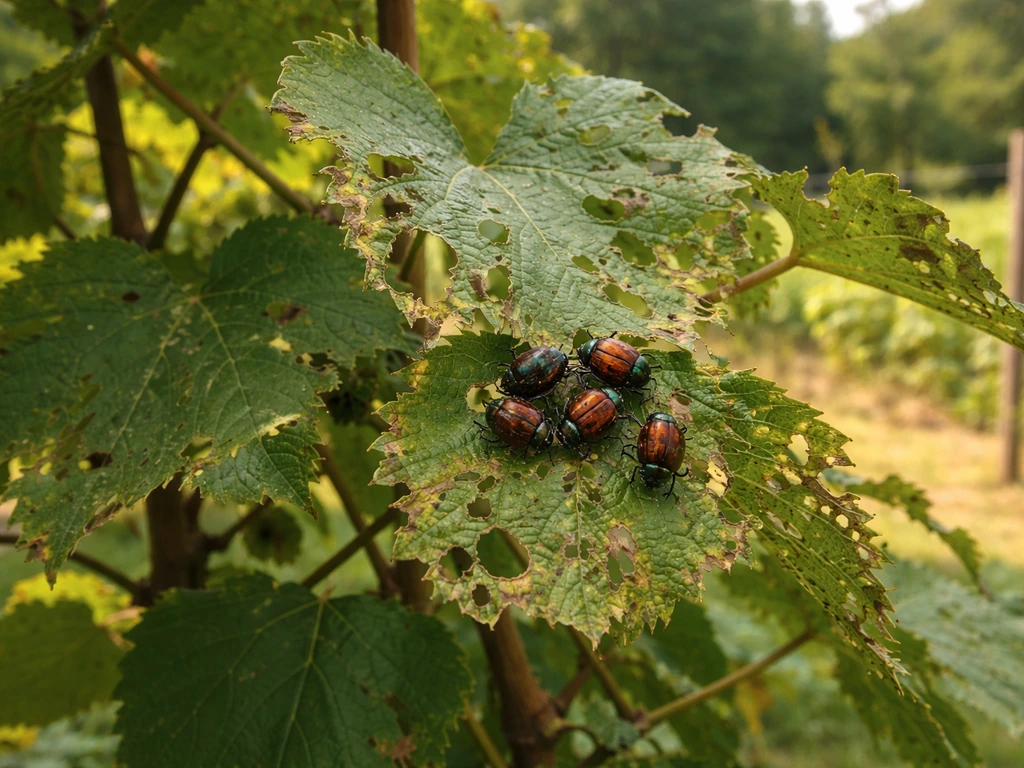
Japanese beetles are a real nuisance in New Jersey and will go straight for grape foliage and fruit from late June through August. For small home plantings, hand-picking into soapy water in the early morning (when they're sluggish) is surprisingly effective. Skip the Japanese beetle traps: they attract more beetles to your property than they catch. Row covers work during the brief peak beetle period but are impractical long-term. Other pests to watch for include grape berry moth (whose larvae burrow into berries) and leafhoppers. Maintaining a clean vineyard floor and monitoring regularly helps you catch infestations before they become serious.
Spring Frost
A late frost after budbreak can wipe out a season's worth of grape shoots in one night. In NJ, this is most relevant in April and early May. Planting on a gentle slope (rather than a frost pocket) is your best passive protection. If you know a frost is coming and your vines have already broken bud, you can cover small plantings with frost cloth overnight. The cold-hardy hybrids don't eliminate this risk: it's about the timing of budbreak relative to your last frost date, not just minimum winter temperatures.
Your Next Steps as an NJ Grape Grower
If you're ready to get started, here's the practical sequence to follow right now.
- Choose your variety based on your zone: Concord or Reliance for reliable table grapes statewide, Marquette or Frontenac for wine grapes especially in northern NJ, Chambourcin or Noiret for southern NJ wine production.
- Get a soil test through your county extension office or a commercial lab and adjust pH toward the 5.6 to 6.4 target before planting.
- Select a full-sun site with good drainage and airflow, ideally on a gentle slope away from frost pockets.
- Install your trellis posts and wire before or at planting time so you're ready to train from day one.
- Plant bare-root vines in late March to mid-April, prune to 2 to 3 buds, and remove any flower clusters that form in year one.
- Bookmark Cornell's NEWA platform for both cold hardiness tracking in winter and disease risk modeling during the growing season.
- Plan a fungicide spray program starting at petal fall, especially for black rot, and clean up leaf litter each fall to reduce overwintering disease inoculum.
Grapes in New Jersey aren't a gamble if you approach them the right way. The climate is genuinely suitable, the variety options are solid, and the main skills (pruning, training, disease scouting) are all learnable. Give your vines two to three years to establish, manage disease proactively, and you'll be rewarded with a productive planting that keeps giving for decades.
FAQ
Can you grow grapes in NJ without spraying fungicides?
You can reduce spraying by choosing the most resistant hybrids and keeping airflow high, but a zero-spray approach often fails in NJ’s humid summers. If you want the lowest-spray path, plan to scout weekly from petal fall onward and only spray when disease conditions are truly favorable, rather than on a fixed calendar.
Which NJ county or part of the state is safest for cold-hardy grapes?
Generally, the safest bet is central to south NJ for most hybrids, since winter lows are milder. However, cold pockets can form even in warmer areas, so pick a spot with good cold-air drainage and avoid low spots, even if you are not in northern NJ.
Is it okay to start with a small plant in a container before planting in the ground?
Yes, but plan to transplant once the vine is established, typically after the first season if it outgrows the pot. Keep container vines well-drained and do not let them sit soggy, and understand that containers can be colder than the ground, so protect the roots during winter.
How cold is too cold for grape buds in NJ, and does mulching help?
Mulching helps moderate temperature swings at the soil surface, but it does not reliably protect buds on the canes if winter lows are extreme. For less-hardy vines, focus on insulating the trunk base (and possibly canes if you already have a plan like burial) after hard frost rather than relying only on a mulch layer.
What’s the biggest mistake people make when planting grapes in NJ?
Planting in partial shade or in poorly drained soil. Even if the vine survives, you can end up with weak growth, lower yields, and persistent disease pressure. Before you buy plants, verify you have at least 8 hours of direct sun and that water does not pool after rain.
When should I prune if I’m not sure my vine is truly dormant?
Prune only when the vine is fully dormant, when there is no meaningful spring growth yet. In NJ, that usually means late February through mid-March, but if you see early buds pushing, wait a bit because premature pruning can reduce bud survival.
Do I need to remove flowers every year, even after the vine starts producing?
In year one and year two, removing clusters is important to build structure, but once you are in the fruiting cycle (often year three onward), you can thin rather than always removing. If you want larger, better-ripened fruit and less disease from overly dense clusters, consider removing a portion of berries or thinning clusters rather than leaving everything.
How do I know if my trellis spacing is too tight?
If vines repeatedly have shaded, crowded shoots and leaves that stay wet long after rain, spacing and training are too tight. A practical check is airflow: from row to row and within the canopy, you should be able to see light through the vine structure rather than having an impenetrable wall of leaves.
Can I grow grapes on a fence or arbor instead of a wire trellis?
You can, but many fence setups limit airflow and make winter pruning and canopy management harder. If you use a fence or arbor, choose a design that allows training to a permanent horizontal structure and supports consistent pruning, otherwise disease pressure increases quickly in NJ.
What water schedule should I use during fruit development in NJ?
Aim for steady root-zone moisture, then avoid overhead watering once leaves are fully out. During berry development, deep watering during dry spells is better than frequent light sprinkling, and drip irrigation helps keep foliage dry to reduce mildew and black rot risk.
Why are my grapes growing leaves but not fruit?
Common causes in NJ include insufficient sunlight, incorrect pruning (too light or too late), and letting the vine carry too many flowers during its early years. Also check that you did not over-fertilize with nitrogen at the expense of fruiting wood.
Are Japanese beetles the only major pest I should worry about?
No. Watch for grape berry moth, leafhoppers, and occasional issues like birds pecking ripe fruit. If birds are a problem when fruit ripens, netting works best when it is installed before berries start coloring, not after damage begins.