
Utah is actually a solid state for growing grapes, but only if you match the right variety to your specific location. The best table grapes for Utah home gardeners are Canadice, Reliance, Himrod, and Vanessa. If you’re aiming for Georgia instead, the main difference is choosing varieties that match Georgia’s warmer, more humid growing conditions and your local frost dates best grapes to grow in Georgia. These are seedless, cold-hardy varieties that handle Utah's hard winters, thrive in the intense summer sun, and ripen fast enough to beat the first fall frost. If you're in the Wasatch Front or St. George area, you have even more options. The key is understanding that Utah isn't one climate, it's several, and the wrong variety in the wrong spot will either winter-kill or fail to ripen.
Best Grapes to Grow in Utah: Top Varieties and Care Guide
Where grapes actually grow well in Utah
Utah spans USDA hardiness zones 4b through 9a depending on elevation and geography, so "will grapes grow in Utah?" doesn't have a single answer. The good news is that several regions are genuinely well-suited for grapes, and others can work with the right variety selection.
The Wasatch Front, including Salt Lake City, Provo, and Ogden, sits in zones 6b and 7a, which is a sweet spot for cold-hardy table grapes. These areas get reliably hot summers, enough freeze-free days to ripen early-to-mid season varieties, and winters that are cold but manageable for the right cultivars. USU Extension has done actual cultivar trials on the Wasatch Front and confirmed it's well-suited for grapes, especially the more cold-hardy types.
St. George and Washington County in southern Utah (zones 8a-9a) are the warmest parts of the state. Here you can grow a wider range of varieties including some classic European (Vitis vinifera) types that would winter-kill farther north. Cache Valley and the northern mountains are tougher, shorter seasons and colder winters push you toward strictly American-type grapes or the earliest-ripening hybrids.
USU Extension's grape guide is clear on this point: any Utah location with fewer than 130 freeze-free days should stick to American-type grapes or the earliest-maturing French-American hybrids. If you're above about 5,500 feet in elevation or in a mountain valley with frequent late-spring frosts, that rule applies to you. Check your local frost dates before you buy anything.
| Utah Region | Approx. Hardiness Zone | Best Grape Types |
|---|---|---|
| Wasatch Front (SLC, Provo, Ogden) | 6b–7a | Cold-hardy American hybrids, some French-American hybrids |
| Cache Valley / Northern Utah | 5b–6a | American types, earliest-ripening hybrids only |
| Southern Utah / St. George | 8a–9a | American hybrids, French-American hybrids, select vinifera |
| High Elevation / Mountain Valleys | 4b–5a | Hardiest American types only (Concord, Beta, etc.) |
How to choose the right table grape for Utah's climate
Before you fall in love with a variety at the nursery, run it through three filters: cold hardiness, days to maturity, and your site's actual conditions. Those three things will tell you whether a grape will survive the winter, ripen before the first fall frost, and produce consistently in your yard.
Cold hardiness is non-negotiable for most of Utah. You want table grapes rated to at least zone 6 for Wasatch Front gardeners, and zone 5 or lower if you're in Cache Valley or at higher elevations. Most American-type grapes (Vitis labrusca) and the cold-hardy seedless hybrids developed by Cornell and USDA programs hit that target. European vinifera types like Flame Seedless are risky north of St. George without significant winter protection.
Days to maturity matters because of Utah's fall frost window. The Wasatch Front typically sees first fall frosts in late October, giving you roughly 150-160 freeze-free days in a good year. That's enough for early-to-mid season varieties (90-110 days from bloom), but it cuts it close for late-season types. In northern Utah and higher elevations, early-ripening varieties (under 100 days) are the only safe bet.
Also think honestly about your microclimate. A south-facing slope near a brick wall in Salt Lake City behaves like a warmer zone than a low spot in a valley that collects cold air. Frost pockets are real, and a late-May frost can wipe out new growth on vines that survived the winter just fine. If you're in a low-lying area or surrounded by mountains, prioritize the hardiest varieties even if the USDA zone map suggests you have more flexibility.
The best table grapes to grow in Utah
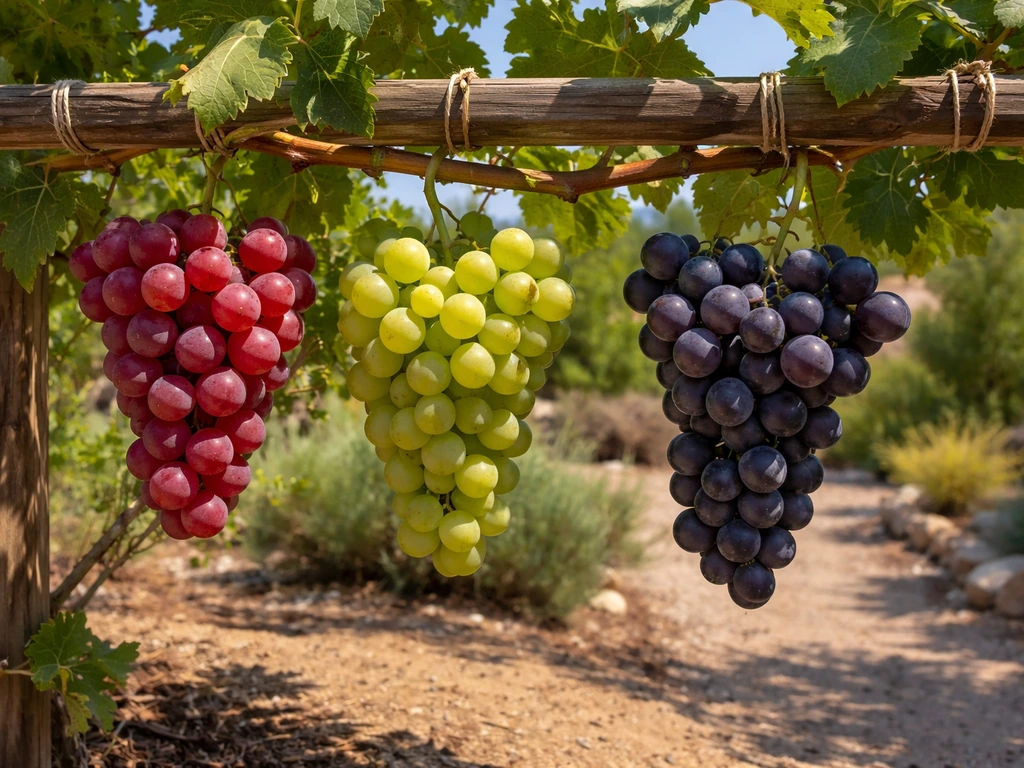
These are the varieties that consistently perform for Utah home gardeners based on USU Extension trial data, nursery feedback, and real-world results in the state's most common growing zones.
Canadice (top pick for most of Utah)
Canadice is a seedless red table grape and arguably the single best choice for Wasatch Front gardeners. It's hardy to zone 5, ripens early (late August to early September), and produces sweet, firm berries with a mild flavor that most people love fresh or as juice. The clusters are large and attractive. It handles Utah's temperature swings well and doesn't demand perfect soil. If you're planting your first grape in Utah, start here.
Reliance (the reliable red)
Reliance lives up to its name. It's one of the most cold-hardy seedless table grapes available, rated to zone 5 and sometimes surviving zone 4 winters. The berries are pink-red, seedless, and sweet with a slight strawberry note. It ripens in mid-season (mid-August through September) and produces heavy crops even after cold winters. This is the go-to recommendation for Cache Valley gardeners and anyone nervous about winter survival.
Himrod (best for fresh eating)
Himrod is a white (pale gold) seedless grape with exceptional sweetness and thin skin that makes it one of the best fresh-eating table grapes you can grow. It ripens early, often in mid-August, which is a big advantage in Utah. It's rated to zone 5, so it handles Wasatch Front winters reliably. The one caveat: Himrod tends to be a vigorous grower that needs consistent pruning to keep fruit quality high. Worth the extra attention.
Vanessa (great for northern Utah)
Vanessa is a red seedless variety with firm, crisp berries and a clean sweet flavor. It's cold-hardy to zone 5, ripens early to mid-season, and holds up well in Utah's dry heat without splitting or dropping clusters. It's a particularly good choice for Cache Valley and northern Utah locations where season length is the limiting factor.
Concord (the classic American grape)
Concord is seeded and has that distinctive "foxy" American grape flavor, great for juice, jelly, and jam. It's one of the hardiest varieties available (zone 4-5) and will survive conditions that kill most table grapes. If you want a grape for processing rather than fresh eating and you're in a tough location, Concord is a dependable choice. Just know that it ripens in late September to October, which can be tight in northern Utah.
Flame Seedless (southern Utah only)
Flame Seedless is the classic grocery-store red seedless grape and it does grow well in St. George and Washington County. If you're in the warm southwest corner of Utah, it's absolutely worth growing, sweet, crisp, and prolific in hot climates. But it's a vinifera type rated to zone 7 at best, so don't try it without serious winter protection if you're north of the Dixie region.
| Variety | Color | Seeded? | Ripening | Hardiness Zone | Best For |
|---|---|---|---|---|---|
| Canadice | Red | Seedless | Early (Aug–Sept) | Zone 5 | Wasatch Front, all-purpose |
| Reliance | Pink-Red | Seedless | Mid (Aug–Sept) | Zone 5 | Northern Utah, cold sites |
| Himrod | White/Gold | Seedless | Early (Aug) | Zone 5 | Fresh eating, Wasatch Front |
| Vanessa | Red | Seedless | Early-Mid (Aug–Sept) | Zone 5 | Cache Valley, northern Utah |
| Concord | Blue-Black | Seeded | Late (Sept–Oct) | Zone 4–5 | Processing, toughest locations |
| Flame Seedless | Red | Seedless | Mid (Aug–Sept) | Zone 7 | Southern Utah / St. George only |
Site prep and planting for Utah
Sun and site selection
Grapes need full sun, at least 8 hours per day, and more is better. In Utah, a south or southwest-facing slope or wall is ideal because it maximizes heat accumulation and helps grapes ripen fully before frost. Avoid low spots and frost pockets where cold air settles on calm nights. If you can plant near a south-facing masonry wall, the radiated heat will extend your effective season meaningfully.
Soil preparation
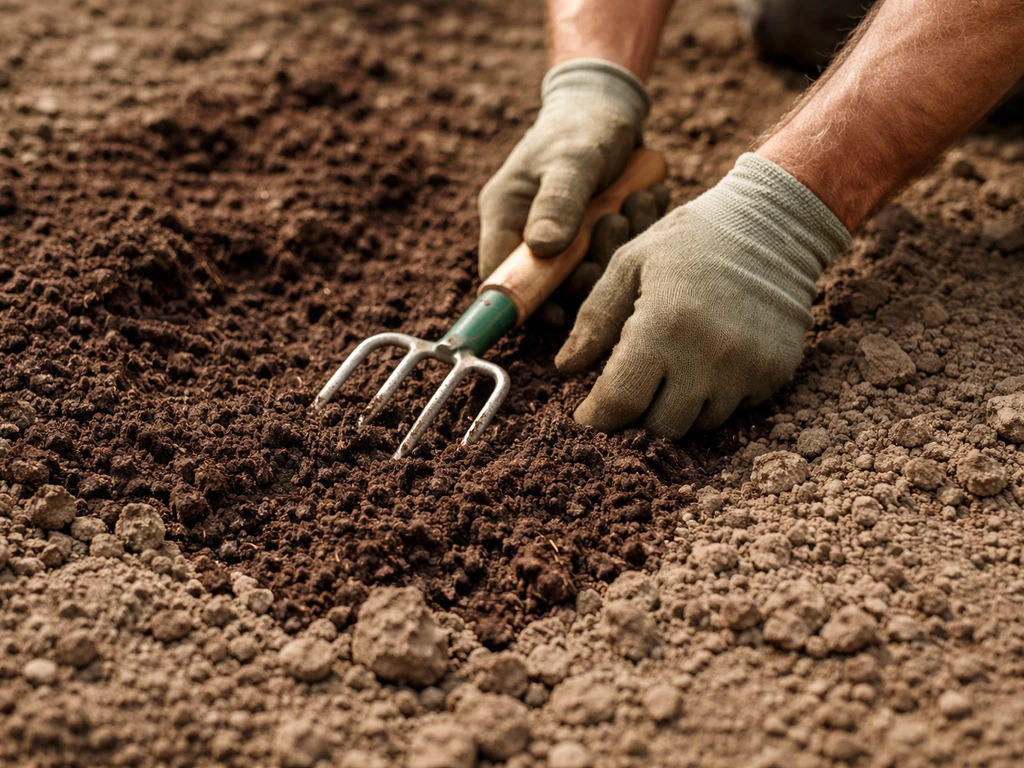
Utah soils are often alkaline (high pH) and can be heavy clay or sandy loam depending on your location. Grapes prefer well-drained soil with a pH between 6.0 and 7.0. Many Utah soils run pH 7.5 to 8.0, which can cause iron and manganese deficiencies in vines. Before planting, get a soil test through USU Extension. If your pH is high, you can work sulfur into the soil several months before planting to bring it down. More importantly, ensure excellent drainage, grapes sitting in wet soil will develop root rot, especially in clay-heavy Wasatch Front soils.
Amend heavy clay soils with compost to improve drainage and structure. Work compost 12-18 inches deep in a wide planting area. Avoid planting in low areas where water pools after irrigation or rain.
Planting time and spacing
Plant bare-root vines in early spring as soon as the soil can be worked, typically mid-March to mid-April on the Wasatch Front. Container-grown vines can go in a little later, through May. Plant too late and you miss the early growing season; plant too early into frozen soil and the roots won't establish well. Space vines 6-8 feet apart in the row for most table grape varieties, with rows 8-10 feet apart if you're planting multiple rows.
At planting, set the vine so the graft union (the knobby area near the base) is 2-3 inches above the soil line. Dig the hole 12 inches wide and deep, place the roots in naturally without cramping them, and backfill with native soil mixed with compost. Water deeply at planting and keep the soil consistently moist for the first growing season while roots establish.
Trellising, pruning, and training your vines
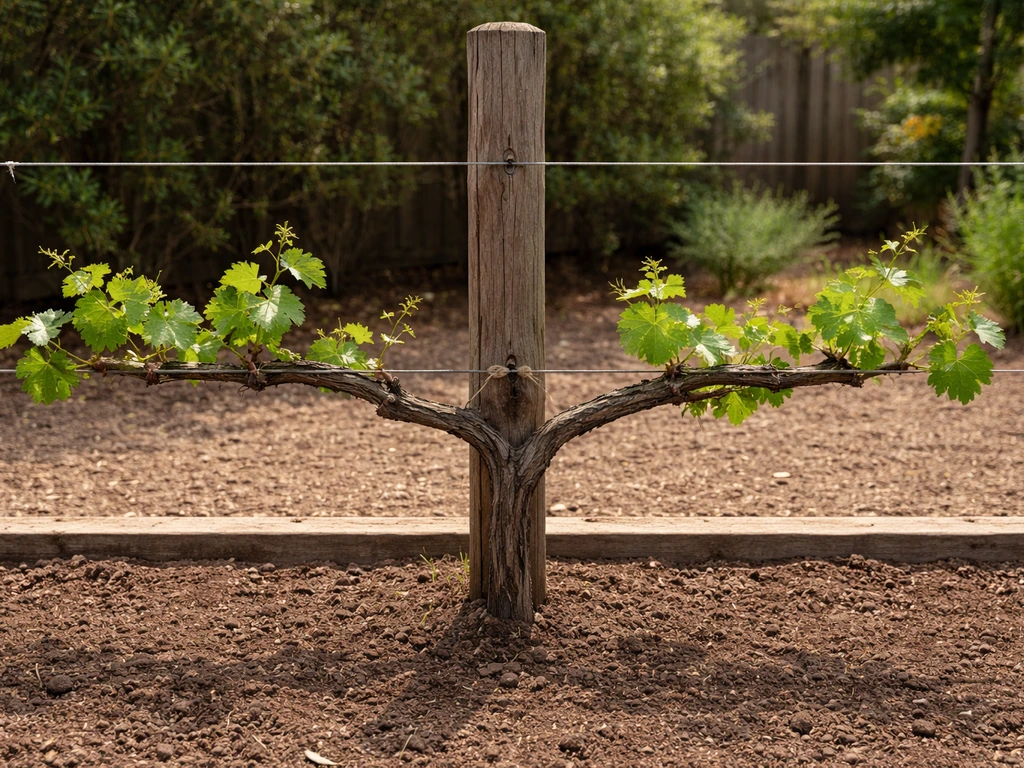
You need a trellis in place before or right at planting, trying to add one later after vines are established is a frustrating project. A simple two-wire trellis is the standard for Utah home gardeners: set posts 6-8 feet tall (with 2 feet in the ground) every 8-10 feet in the row, and run two wires at 3 feet and 5 feet height. Use 12 or 14 gauge galvanized wire tensioned with turnbuckles or wire crimps.
The most common training system for Utah home gardens is the bilateral cordon, sometimes called the 4-arm Kniffin system. The idea is to train two permanent horizontal arms (cordons) along the lower wire in both directions from the trunk, then allow fruiting shoots to hang down or grow upward from those arms. This keeps the vine organized, maximizes sun exposure in Utah's high-elevation light, and makes annual pruning straightforward.
Year one is all about establishment, not fruit. Let the strongest shoot grow upright and tie it to a stake. Remove all other shoots. Your only job this year is growing a strong trunk. In year two, train two horizontal cordons along the lower wire and begin establishing the framework. You'll likely see your first small crop in year three, with full production by years four and five.
Prune in late winter or very early spring before bud break, late February to mid-March on the Wasatch Front. Utah's cold winters mean you sometimes get winter dieback on canes, so wait until you can see which wood is alive (green under the bark when scratched) before making final cuts. Remove 80-90% of last year's growth. Each cordon arm should have spurs (short 2-bud stubs) spaced every 6-8 inches. This sounds drastic, but it's how you get big clusters of quality fruit instead of a jungle of tiny grapes.
Watering, fertilizing, and seasonal care
Watering
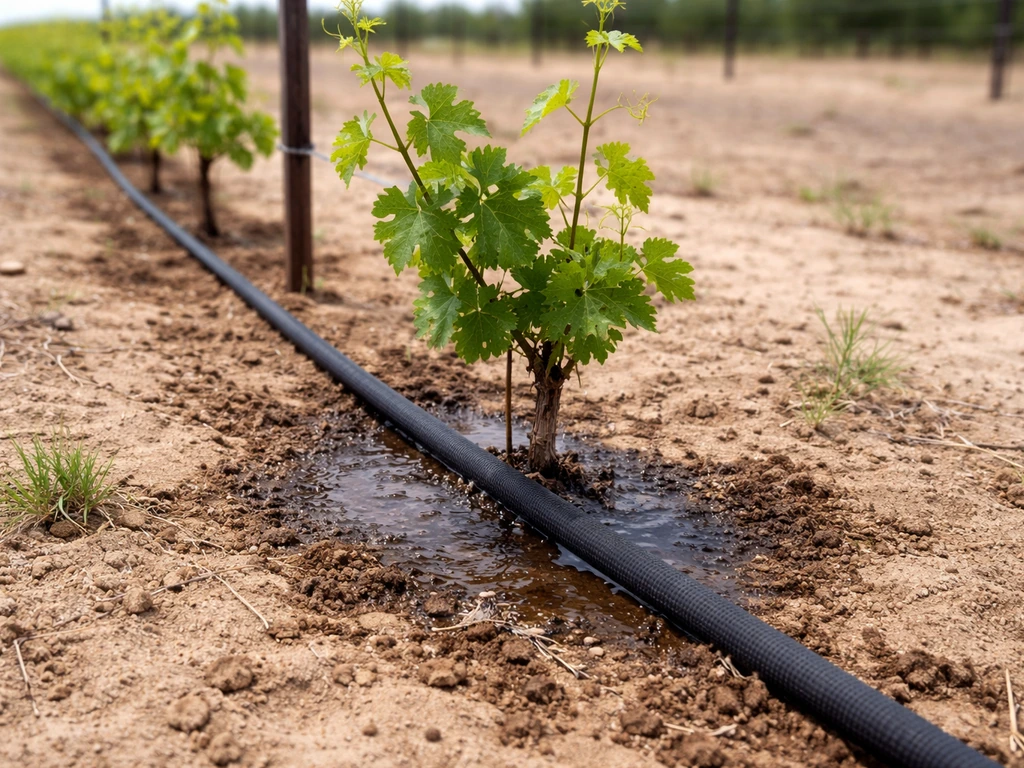
Utah is an arid state, and grapes need supplemental irrigation, don't assume rainfall will cover it. Young vines (years 1-3) need consistent moisture: water deeply once or twice per week during the growing season, delivering about 1-2 inches of water per week total. Established vines are more drought-tolerant but still need regular deep watering through the dry summer months. Drip irrigation is ideal, it keeps water off the foliage (reducing disease pressure) and delivers moisture directly to the root zone. Reduce watering significantly in August to help berries develop sugar and to encourage the vine to harden off for winter.
Fertilizing
Grapes don't want heavy feeding. Over-fertilizing with nitrogen produces lush foliage at the expense of fruit and makes vines more susceptible to winter damage. Apply a balanced fertilizer (10-10-10 or similar) in early spring just as buds begin to swell, about 1/4 pound per vine for young plants, up to 1/2 pound for established vines. That's typically it for the year. If your soil test shows specific deficiencies (iron is common in Utah's alkaline soils), address those separately with chelated iron or sulfur applications.
Seasonal care timeline
- Late February to mid-March: Prune vines before bud break; check for winter dieback; remove dead wood.
- April: As buds swell, apply balanced fertilizer; check trellis wire and ties; begin irrigation if soil is dry.
- May: Watch for late frosts — cover young shoots with row cover if temps will drop below 28°F; remove any frost-damaged shoots.
- June: Thin clusters if the vine is overloaded (more than 1 cluster per foot of cordon); tuck growing shoots into the trellis wires.
- July to August: Monitor irrigation; reduce watering in August to encourage ripening; watch for pest and disease pressure.
- September: Monitor fruit color and taste-test for ripeness; harvest when berries are fully sweet and slip easily from the stem.
- October to November: After leaf drop, apply a deep soaking watering before the ground freezes; mulch the root zone with 4-6 inches of straw or wood chips.
Pests, diseases, and protecting vines from Utah's cold
Common pests in Utah
Grape leafhoppers are the most common pest you'll encounter on the Wasatch Front. They feed on leaf tissue, causing stippling and early leaf drop. They rarely kill vines but can stress them and reduce fruit quality. Insecticidal soap or neem oil applied in early summer when populations are building is usually enough for home gardens. Japanese beetles, spider mites, and grape berry moth can also appear, check under leaves regularly and treat early when populations are small.
Disease management
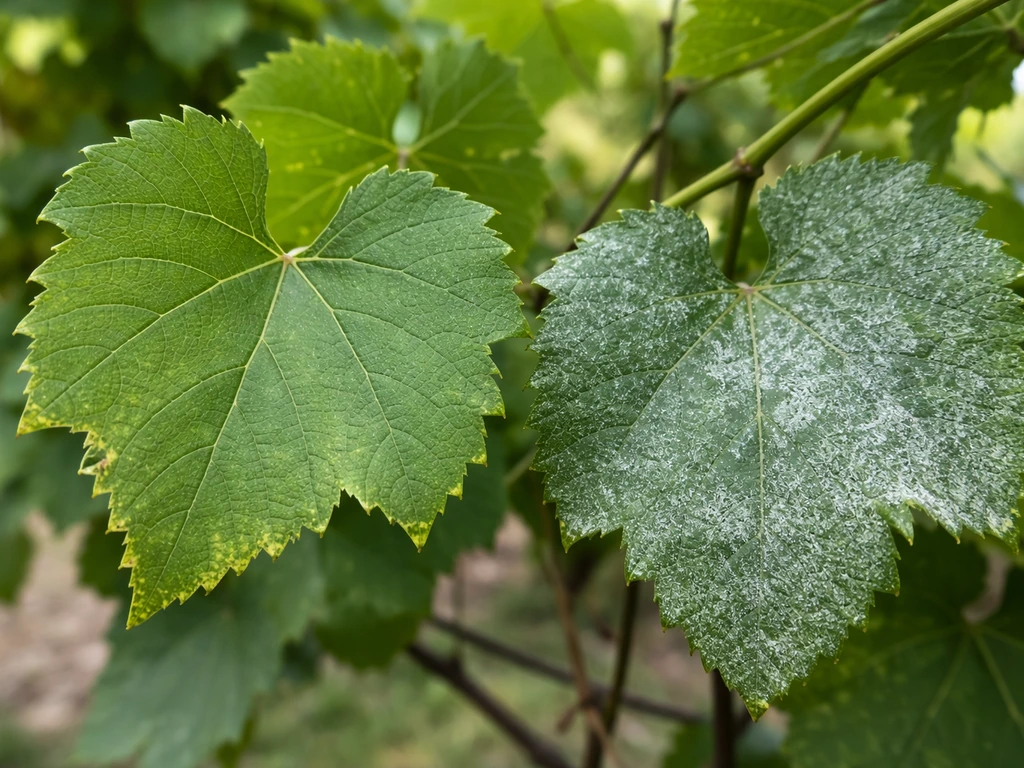
Utah's dry climate is actually a big advantage here. Powdery mildew is the main disease concern in Utah because it thrives in warm, dry conditions with cool nights, which describes summer nights on the Wasatch Front perfectly. The cold-hardy American hybrids like Reliance and Canadice have moderate resistance, but you should still apply a sulfur-based fungicide preventively when shoots reach 6-8 inches long, and repeat every 10-14 days during humid stretches. Good air circulation through proper pruning is your best long-term defense. Downy mildew is less of a problem in Utah's drier climate than in humid states, but it can occur in wetter years.
Winter cold and frost protection
This is where Utah gardeners have to be proactive, especially in the first 2-3 years while vines are still establishing their root systems. Mature, well-established vines of cold-hardy varieties like Reliance and Canadice typically survive Wasatch Front winters without extra protection once fully established. But young vines and any vinifera types (like Flame Seedless north of St. George) need help.
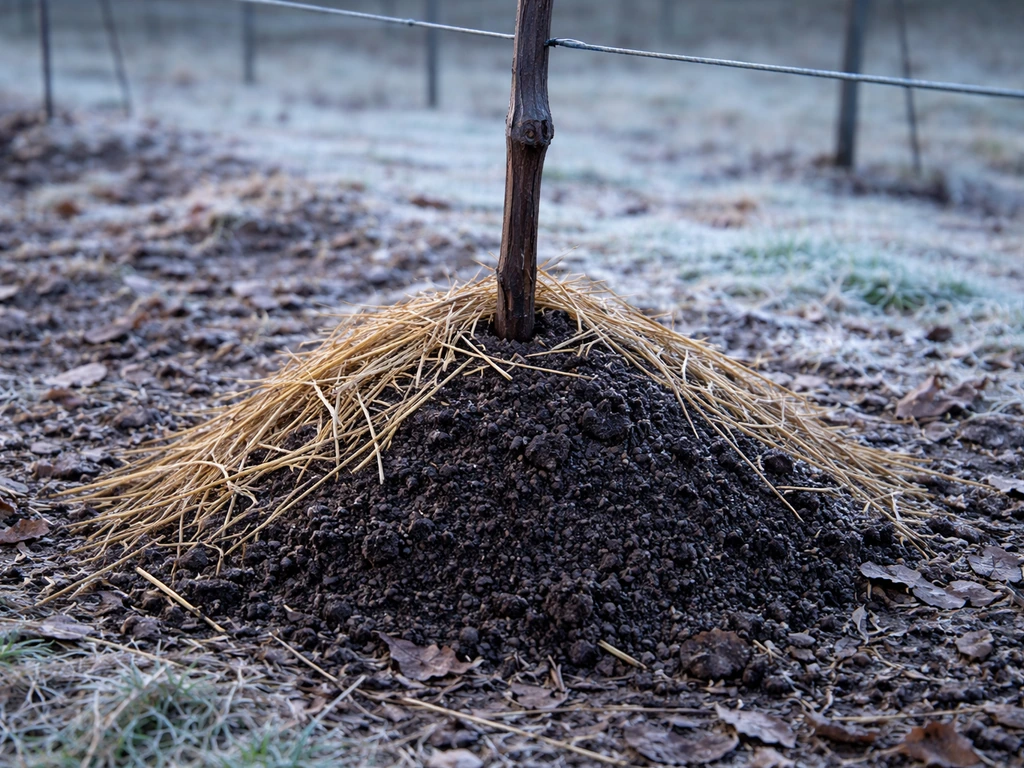
For young vines, mound 6-8 inches of soil or straw over the base of the trunk after the first hard frost in fall. This protects the graft union and root system from the hardest winter temperatures. For vinifera varieties in marginal zones, you can go further: after pruning, detach the canes from the trellis, bundle them, and bury the entire vine under soil or straw for the winter, a technique called burial. It's labor-intensive but it works.
Late spring frosts (May frosts are not uncommon at higher elevations) are often more damaging than winter cold because they hit tender new growth. Keep row cover or old bedsheets on hand through mid-May. If a frost is forecast after bud break, cover the vines the night before and remove the cover the next morning once temperatures recover. Losing new growth to a late frost sets the vine back by weeks and eliminates that season's crop, it's worth the effort to protect.
Your next steps: putting it all together
If you're just getting started, the simplest path forward is this: figure out your frost dates and hardiness zone (USU Extension's website has Utah-specific zone maps), pick one or two varieties from the list above that match your location, and order bare-root vines from a reputable mail-order nursery in January or February for spring delivery. If you're planning a Tennessee vineyard, focus on grapes that can handle your winter lows and your specific season length pick one or two varieties from the list above that match your location. Nurseries like Raintree Nursery, Indiana Berry, and Stark Brothers all carry the cold-hardy varieties recommended here and ship bare-root stock in early spring.
While you're waiting for your vines, build your trellis. Set posts, run wire, and have the system ready before the plants arrive. Grapes grow fast once they get going and a vine without support becomes a management headache quickly. Plan on spacing your posts every 8 feet, with your first vine position 2 feet from the end post.
Utah's growing conditions are genuinely favorable for grapes in most populated parts of the state. The Wasatch Front and southern Utah especially offer the heat, sunlight, and relatively dry summers that grapes love. The challenge is matching variety to site, something gardeners in similarly continental climates like Colorado or states with shorter seasons face too. If you're growing in Colorado, the best grapes to grow depend even more on your frost dates and which cold-hardy varieties can ripen before fall best grapes to grow in colorado. Get that match right and you'll be harvesting clusters within 3-4 years of planting. It's one of the most rewarding things you can grow in a Utah backyard.
FAQ
What grape should I choose if my site is in a frost pocket even though the USDA zone looks okay?
Pick the hardiest variety first, then still use a south-facing microclimate strategy. If late spring frosts happen at your address or in a nearby low spot, favor the earliest-ripening options from the list (Canadice or Himrod) and be prepared with temporary frost protection (row cover the night before).
Can I grow Flame Seedless (or other vinifera) in northern Utah if I’m willing to protect it?
It’s possible but high-risk and labor-heavy, because vinifera needs both winter protection and enough heat to fully ripen. If your freeze-free days are near the lower limit, prioritize American or French-American hybrids instead, since even perfect winter protection cannot fix a too-short season for ripening.
How do I know if my variety will actually ripen in Utah’s fall weather?
Compare the variety’s days to maturity to your local first fall frost date, not just the average Utah season. Use a conservative buffer (plan for ripening 2 to 3 weeks before the first frost) because cooler years, cloudy spells, or a late start after a spring frost can shift harvest beyond the window.
Do I have to prune aggressively in Utah, and what happens if I prune less?
Yes, aggressive pruning is key to quality in Utah because it limits vegetative growth and concentrates energy into fruiting wood. If you prune lightly, you get more canopy, poorer air flow, smaller clusters, and a higher chance of powdery mildew and reduced sweetness due to shade and delayed ripening.
When should I apply sulfur for powdery mildew, and do I need to spray even in dry weeks?
Treat preventively when shoots reach about 6 to 8 inches, then repeat on a schedule during periods when conditions stay favorable for the disease. In very dry stretches you can sometimes pause, but if temperatures swing and nights cool, mildew pressure can return, so don’t skip repeats during active growth.
What’s the biggest mistake Utah gardeners make with irrigation?
Overwatering or keeping soil constantly wet, especially in heavy clay. Young vines need consistent moisture while roots establish, but grapes still require drainage. Use drip, water deeply, and avoid frequent shallow watering that keeps the root zone saturated and increases root-rot risk.
Do grapes in Utah need fertilizer every year, and how do I avoid nitrogen burn to the vines?
Usually one light balanced feeding at bud swell is enough, then stop. Avoid extra nitrogen because it drives lush leaves and can reduce winter hardiness. If you suspect deficiencies, rely on a soil test first, since correcting pH-related issues (often iron availability) is different from adding more fertilizer.
How do I protect young vines in winter without harming them in spring?
Mound protection over the graft area after the first hard frost, then remove in early spring so new shoots can emerge without staying buried too long. Leaving protection on too late can trap moisture and delay bud break, which is especially harmful if your site is prone to late frost.
Are table grapes the only reasonable option for Utah, or can I grow juice or jelly grapes too?
You can, and processing grapes like Concord can be a smarter choice when your location has shorter or colder conditions. If you prioritize reliability over fresh eating, choose a hardier seeded cultivar and accept later harvest timing, since it can still fit Utah’s window better than less-hardy table types.
How long does it typically take to get fruit after planting grapevines in Utah?
Plan on no meaningful production in year one, small yield in year three, and full production around years four to five. This timeline assumes you build the trunk and cordons properly in years one and two, and you don’t try to force fruit by pruning too lightly.
Can I start with a bare-root vine and keep it in a container first?
It’s better to plant in the ground while conditions allow, but container starting can work if you can provide consistent watering and a strong trellis setup. If you keep it in a container, remember that roots still need winter hardiness support, and containers warm and cool faster than in-ground soil, which can stress young vines.