
Yes, grapes can absolutely grow in Arizona, but the variety you choose and where in the state you live make all the difference between a thriving vineyard and a dead vine by spring. The low desert around Phoenix and Yuma (USDA zones 9b to 10b) is actually excellent territory for heat-tolerant Vitis vinifera varieties like Thompson Seedless and Flame Seedless. The high country around Flagstaff and Show Low (zones 5 to 7) demands cold-hardy American varieties. And the mid-elevation zones in between, including Tucson (zone 9b) and Prescott (zones 6 to 7), sit in a sweet spot where you have real options. Figure out your zone first, then pick your variety, and you will be in much better shape than most people who just grab whatever is at the nursery.
Can Grapes Grow in Arizona? Varieties, Care Guide
Can Grapes Grow in Your Part of Arizona? A Quick Zone Breakdown
Arizona's USDA Plant Hardiness Zones run from roughly zone 4b in the high White Mountains to zone 10b in the Yuma and lower Colorado River areas. That is one of the widest climate ranges of any state, which means grape growing looks completely different depending on where you are.
| Arizona Region / City | USDA Zone | Main Challenge | Grape Viability |
|---|---|---|---|
| Phoenix / Yuma / Low Desert | 9b–10b | Extreme summer heat, low chill hours | Very Good — heat-tolerant vinifera excels |
| Tucson / Green Valley | 9a–9b | Hot summers, mild winters | Good — vinifera and some hybrids work well |
| Prescott / Chino Valley / Verde Valley | 6b–7b | Cold winters, short season | Good — hybrids and cold-hardy American varieties |
| Sedona / Camp Verde | 7b–8b | Heat swings, occasional freeze | Good — wide variety selection possible |
| Flagstaff / Show Low / White Mountains | 5a–6b | Hard winters, short growing season | Moderate — American varieties and cold-hardy hybrids only |
| Nogales / Sierra Vista | 7b–8b | Monsoon humidity, wind | Good — disease resistance matters more here |
One thing worth knowing: USDA zones are based on average annual minimum temperatures and tell you primarily about winter survival, not summer heat tolerance. UA Cooperative Extension emphasizes that microclimates and unusual freeze timing, like an early frost before vines have hardened off or a late freeze after bud break, can damage vines even in a zone where the average minimum looks fine. So the table above is a starting point. Walk your own yard, note frost pockets and reflected heat from walls, and factor that in.
Best Grape Types and Varieties for Arizona's Heat and Cold Swings
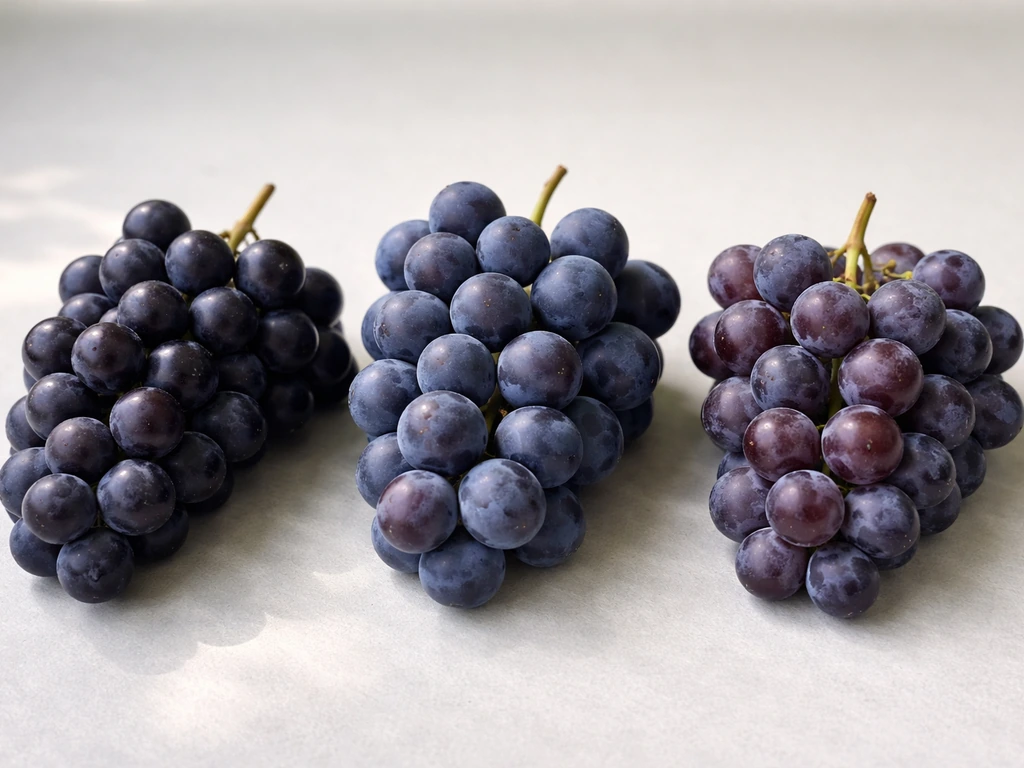
There are three main categories to think about: Vitis vinifera (European varieties), Vitis labrusca (American varieties), and French-American hybrids. Each has a clear home in Arizona's landscape.
Low Desert and Tucson: Vitis vinifera Shines
The low desert is genuinely one of the better places in North America to grow classic vinifera grapes. The dry heat suppresses the fungal diseases that plague growers in humid states. You get the high chill hours during winter nights that many varieties need, and the long, hot, dry summers push sugar accumulation hard. Thompson Seedless is the commercial workhorse for good reason. Flame Seedless is reliable and produces well. For wine grapes, Grenache, Syrah, Mourvedre, and Tempranillo handle heat well and are increasingly grown in southern Arizona's wine country around Elgin and Willcox.
Mid-Elevation Zones (Prescott, Sedona, Verde Valley): The Hybrid Sweet Spot
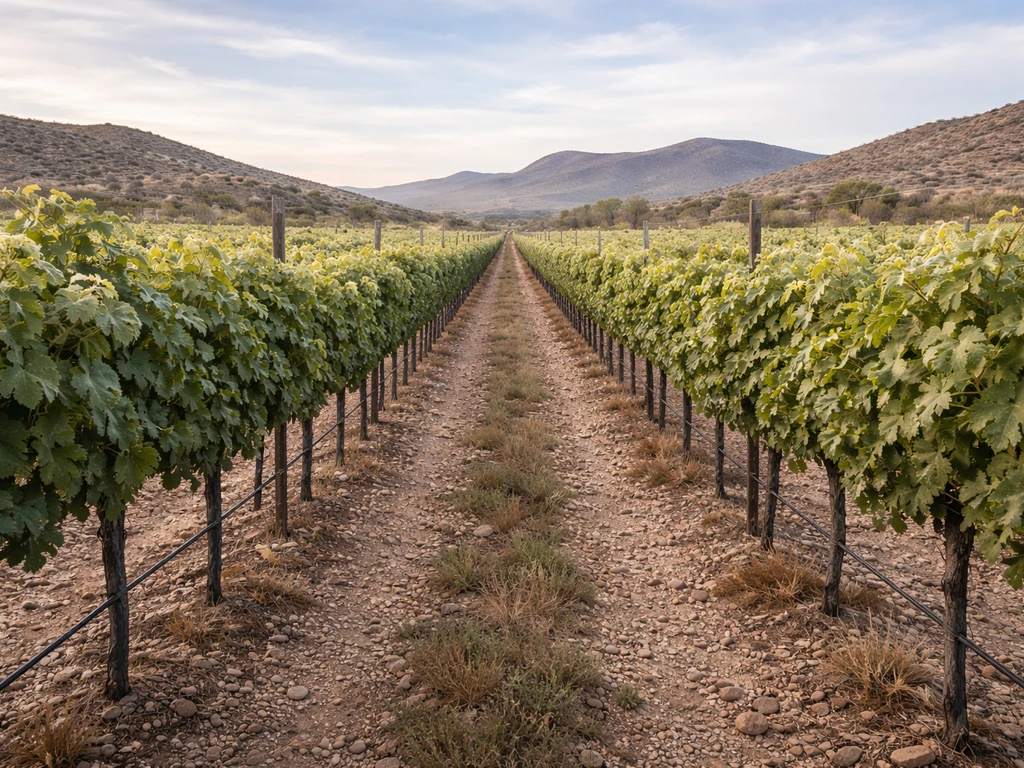
At 3,500 to 5,000 feet, you get cooler winters that can push vinifera varieties toward winter kill if temperatures dip hard. French-American hybrids like Marquette, Frontenac, and Chambourcin are excellent choices here because they combine decent cold hardiness with good fruit quality. Vidal Blanc works well as a white option. Some vinifera like Cabernet Franc and Merlot can survive in protected spots in zone 7b and 8a, but you are taking more risk.
High Elevation (Flagstaff, Show Low): Go American or Go Cold-Hardy
UA Cooperative Extension's bulletin on grapes for central Arizona at 5,000 to 7,000 feet is direct: American Vitis labrusca varieties are most likely to succeed because of their cold hardiness. Concord, Niagara, and Catawba are proven performers in these zones. Interestingly, a trial in Chino Valley at 4,700 feet showed Thompson Seedless produced vine growth comparable to many American varieties, which is encouraging, but the bulletin still notes vinifera can struggle with winter kill and short season at higher elevations. Stick with American varieties unless you are willing to experiment and potentially lose a vine or two.
| Variety | Type | Best Arizona Zone | Table/Wine/Juice | Notes |
|---|---|---|---|---|
| Thompson Seedless | Vinifera | 8b–10b | Table | Commercial standard; needs heat to sweeten fully |
| Flame Seedless | Vinifera | 8b–10b | Table | Earlier ripening than Thompson; reliable producer |
| Grenache | Vinifera | 8a–10b | Wine | Loves heat; southern AZ wine country staple |
| Syrah | Vinifera | 8a–10b | Wine | Handles summer heat well; bold flavor |
| Tempranillo | Vinifera | 8a–9b | Wine | Thrives in Willcox/Elgin elevation band |
| Marquette | Hybrid | 5b–8b | Wine | Excellent cold hardiness; good disease resistance |
| Frontenac | Hybrid | 5a–8a | Wine/Juice | One of the most cold-hardy; rich, dark fruit |
| Chambourcin | Hybrid | 6b–9a | Wine | Disease resistant; mid-elevation performer |
| Vidal Blanc | Hybrid | 6a–8b | Wine | White option for higher elevations |
| Concord | American (labrusca) | 5a–7b | Juice/Table | Classic cold-hardy; needs longer season than high AZ |
| Niagara | American (labrusca) | 5a–7b | Table/Juice | White labrusca; reliable at high elevations |
| Catawba | American (labrusca) | 5a–7b | Juice/Wine | Good cold tolerance; high-elevation option |
Picking the Right Spot in Your Yard
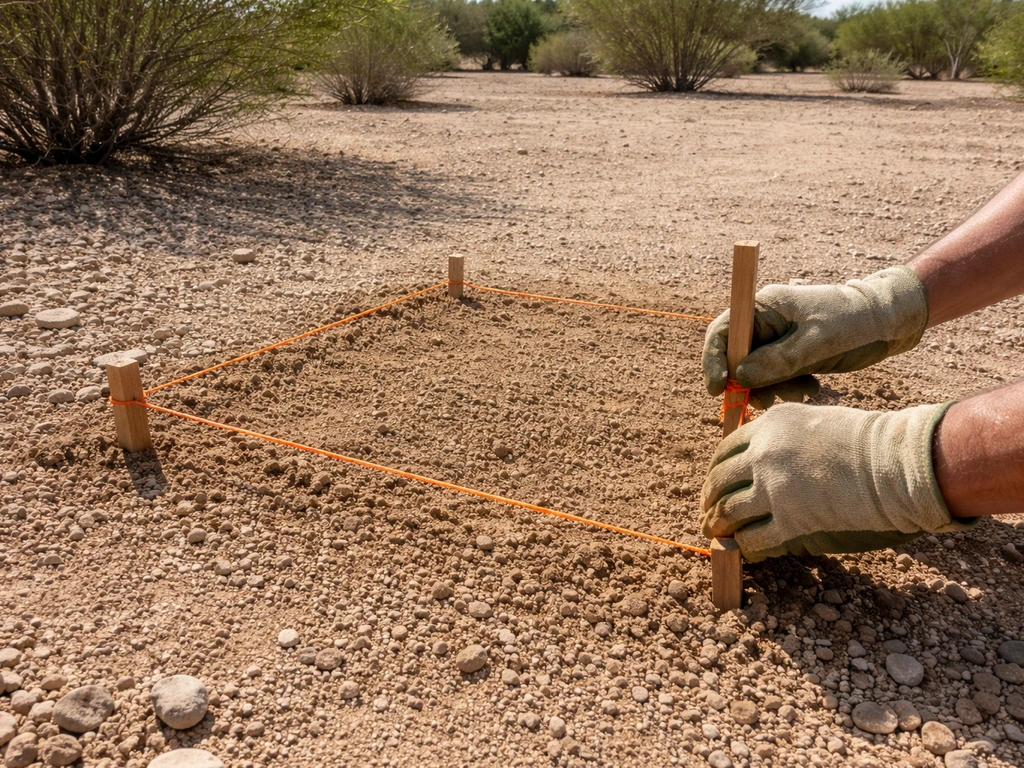
In most of the country, you are hunting for a warm, sunny spot. In Arizona's low desert, you are also thinking about how to keep vines from cooking. Here is what actually matters for site selection in Arizona.
Sun Exposure
Grapes need at least 6 to 8 hours of direct sun daily. Full sun is fine, but in Phoenix and Tucson, western exposures get brutal afternoon sun that can cause fruit sunburn and heat stress during June and July. An eastern or southeastern exposure that gets morning sun and some afternoon shade protection from a wall or structure is often the sweet spot in the low desert. At higher elevations, full southern exposure maximizes the shorter season.
Soil and Drainage
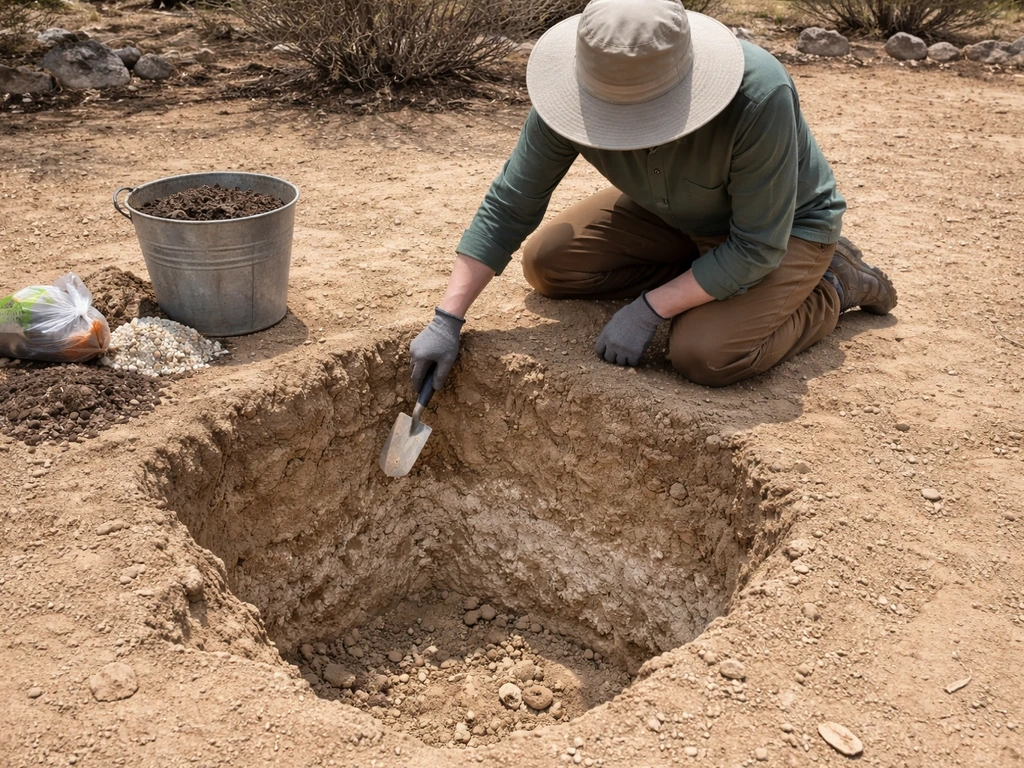
Arizona soils are mostly alkaline, often with a caliche layer a foot or two down that acts like concrete and blocks drainage. Before you plant, dig a 3-foot-deep hole and check for caliche. If you hit it, break through it with a jackhammer or tile spade or choose a raised bed location instead. Grapes hate wet feet, and if caliche traps water around roots after irrigation, you will get root rot fast. Amend with compost to improve structure, but do not fuss too much over soil richness because grapes actually produce better fruit in leaner soils.
Irrigation Reality
This is the big one in Arizona. Grapes are drought-tolerant once established, but 'established' in Arizona's desert heat takes two to three full years. During that period, and through every summer afterward, you need consistent deep irrigation. Drip irrigation is the standard approach here: one to two emitters per vine, running deep and infrequent rather than shallow and frequent. In the low desert summer, established vines may need 5 to 15 gallons of water per week per vine depending on vine size, temperatures, and soil type. Under-watering in summer causes berry shriveling and stress. Over-watering promotes root disease. Get a soil moisture meter and use it.
Wind
Arizona gets fierce wind, especially in spring during bud break and during monsoon season in July and August. Wind shreds young shoots, damages developing clusters, and accelerates water loss. A windbreak on the north or northwest side, whether that is a wall, fence, or dense shrub row, makes a real difference. For trellised rows, orient rows north to south when possible to maximize sun exposure while reducing broadside wind exposure.
Planting and Training Your Vines for Arizona Success
When to Plant
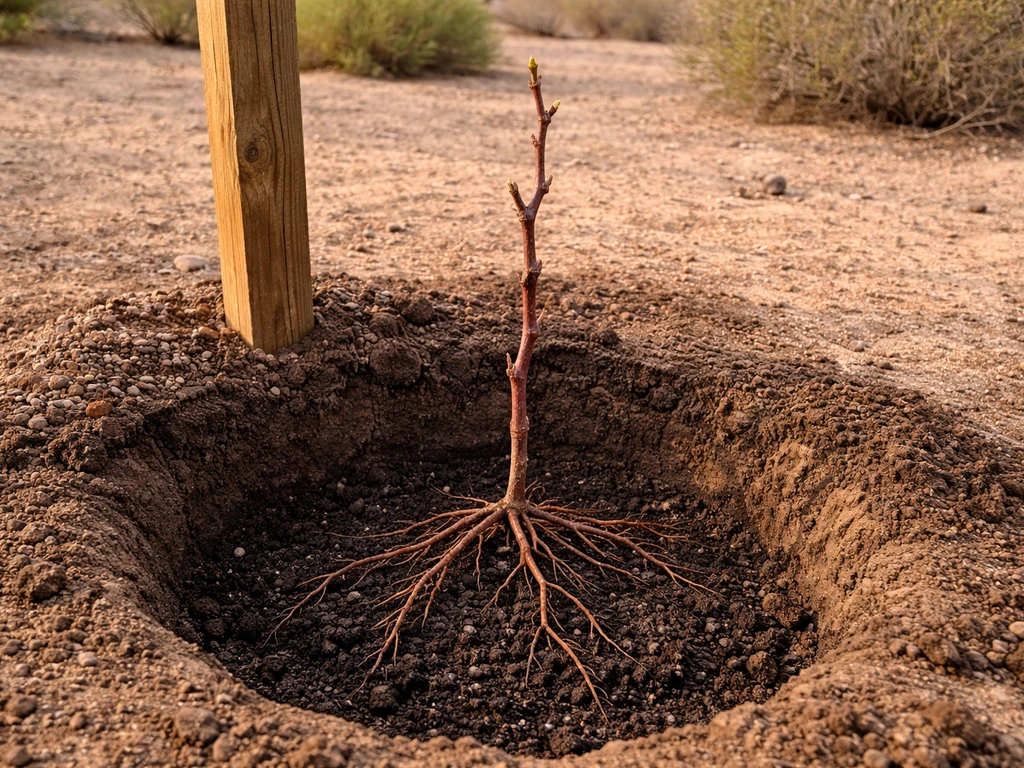
In the low desert (Phoenix, Tucson), plant bare-root vines in January through February when temperatures are mild. This gives roots time to establish before summer heat arrives. Container-grown vines can go in a little later, through March. At higher elevations, wait until after your last frost date: late April in Prescott, mid-May in Flagstaff. Planting into still-cold soil at elevation is better than planting too late and missing the short growing season.
Spacing
Space vines 6 to 8 feet apart on a trellis row, with rows 8 to 10 feet apart if you are planting more than one row. In a home garden with a single row along a fence or arbor, 6 feet between vines works well. Do not crowd them. Arizona's vines grow vigorously in the low desert heat, and crowding creates disease pressure and makes pruning a nightmare.
Trellis Systems
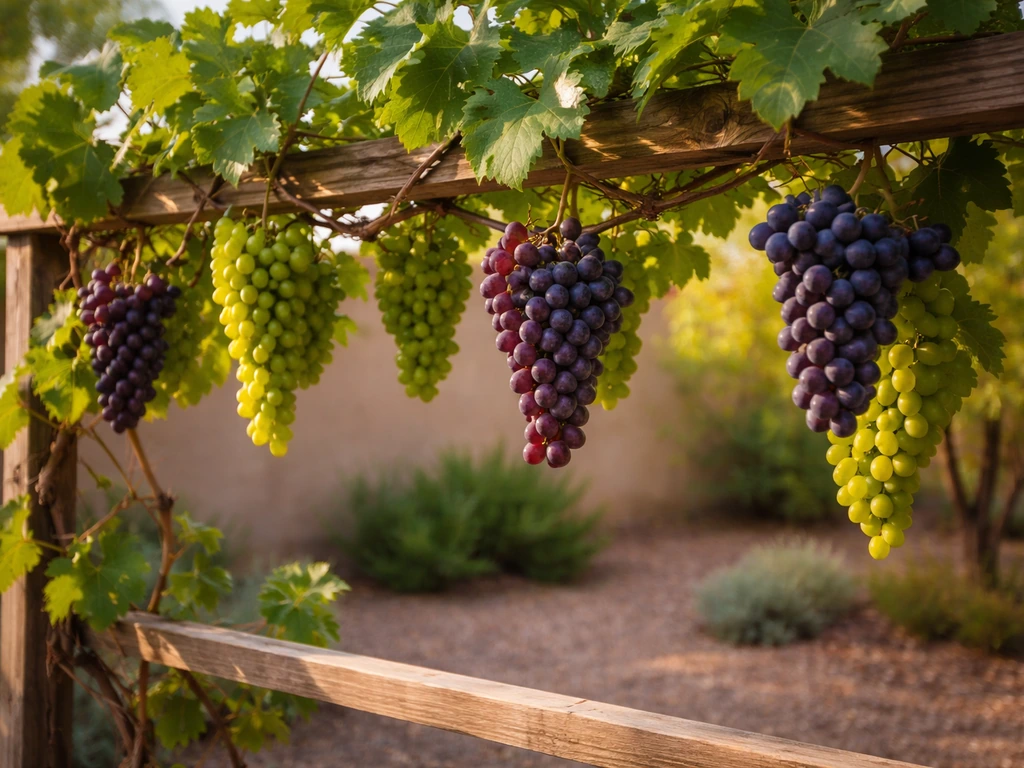
The two most practical trellis systems for Arizona home gardeners are the high-wire cordon (also called a bilateral cordon) and a simple overhead pergola or arbor. The high-wire cordon runs a main wire at 5 to 6 feet with the cordon arms trained horizontally along it, and shoots hanging down. This actually works well in the desert because the canopy shades the fruit, reducing sunburn. A pergola or overhead arbor is popular in Arizona backyards because the dense canopy provides shade for both fruit and the space below. For high-elevation growers, a vertical shoot positioning (VSP) system on a 4-foot trellis maximizes sun exposure for ripening during a shorter season.
First Two Years: Focus on the Vine, Not the Fruit
Remove flower clusters in year one and two. I know it is tempting to let a few develop, but letting the vine put energy into root development and trunk establishment instead of fruit during the first two years makes a massive difference in long-term productivity. Train one or two strong shoots up to the cordon wire and keep everything else trimmed back. Patience here pays off.
Arizona's Grape Growing Calendar
The timing below is calibrated for the low desert (Phoenix, Tucson area). Adjust everything two to four weeks later for mid-elevation zones, and four to six weeks later for Flagstaff and the high country.
| Month | What's Happening | What to Do |
|---|---|---|
| January | Dormancy; bare-root planting window opens | Plant bare-root vines; apply dormant spray if scale/mildew was an issue |
| February | Late dormancy; prune before bud swell | Complete dormant pruning; install or repair trellis |
| March | Bud break begins in low desert | Watch for frost (high elevation); begin drip irrigation; apply compost |
| April | Active shoot growth; flower clusters visible | Tie new shoots; watch for aphids and leafhoppers; adjust irrigation upward |
| May | Flowering and fruit set | Do not disturb vines during bloom; monitor for powdery mildew early signs |
| June | Berry development; heat intensifies | Increase irrigation; shade cloth over young vines if over 110°F is forecast |
| July | Monsoon arrives; veraison begins (color change) | Watch for fungal pressure from humidity; check drainage around roots |
| August | Harvest for early varieties (Flame Seedless, etc.) | Taste test regularly; harvest when brix/sweetness is right, not by calendar |
| September | Harvest for mid and late varieties (Thompson, wine grapes) | Finish harvest; reduce irrigation gradually after harvest |
| October | Shoots begin to harden; leaves yellow | Apply potassium fertilizer to help cane hardening; begin tapering water |
| November | Dormancy approaching | Minimal irrigation; remove fallen leaves to reduce disease overwintering |
| December | Full dormancy | Rest; plan variety additions; order bare-root stock for January |
For Flagstaff and the high country, bud break typically happens in late April to May, harvest runs August through September for American varieties, and the first killing frost can come as early as mid-October. Your window is tight but workable with the right varieties.
Common Arizona Grape Problems and How to Fix Them
Heat Stress and Sunburn
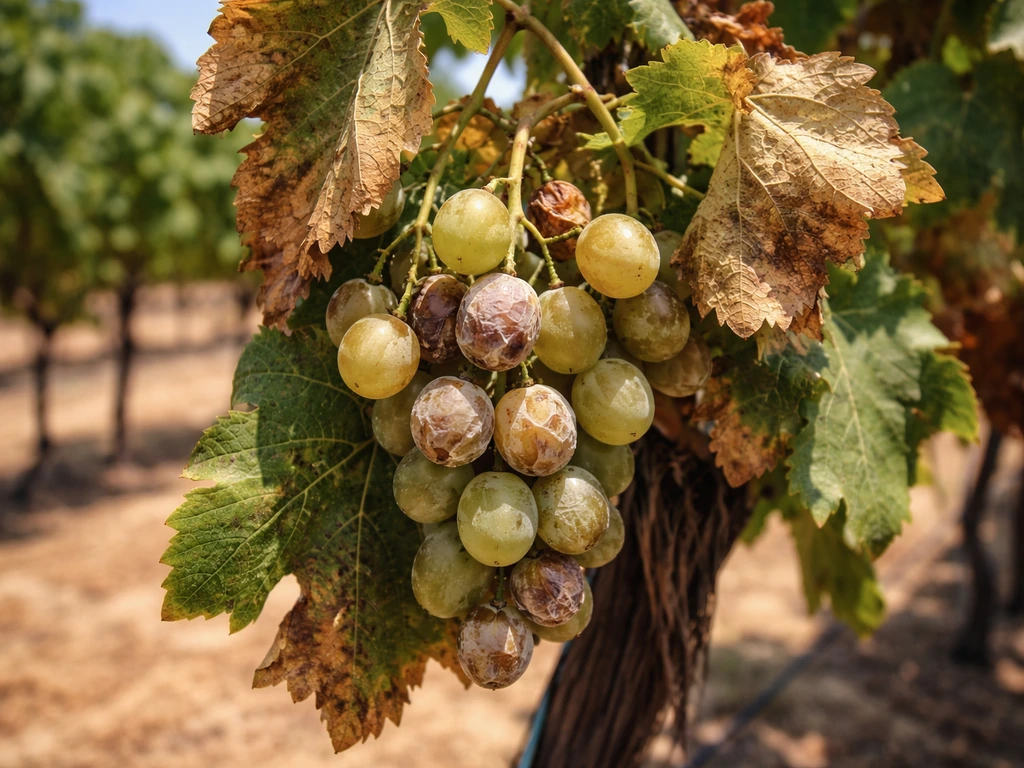
When temperatures exceed 105 to 110°F, which happens regularly in Phoenix from June through August, grape leaves can scorch and berries can develop sunburn: bleached, papery patches on the sun-facing side of clusters. The fix is canopy management. Keep enough leaf cover over the fruit zone to provide filtered shade. With a high-wire cordon system, let the shoots hang down to naturally protect clusters beneath the canopy. Shade cloth (30 to 40 percent shade rated) rigged over young vines or vulnerable clusters during the peak of summer gives real protection without blocking too much light.
Powdery Mildew
This is the most common disease issue in Arizona, and somewhat counterintuitively, the dry desert climate does not eliminate it. Powdery mildew thrives in warm, dry conditions with high temperatures (65 to 90°F) and does not need wet weather like most fungal diseases. You will see white powdery patches on leaves and young berries. It hits hardest during spring shoot growth. The fix is preventive sulfur sprays starting at bud break and continuing every 10 to 14 days through June. Once you see it on berries, it is very hard to reverse. Wettable sulfur or potassium bicarbonate are both effective organic options.
Grape Leafhoppers
Leafhoppers are a consistent pest in Arizona vineyards. They feed on the undersides of leaves, causing stippling damage that weakens the vine's photosynthesis. Heavy infestations stress the vine and reduce fruit quality. Look for tiny yellow insects on leaf undersides from late spring onward. Insecticidal soap or spinosad sprays targeted at nymphs in late spring before populations explode are the most effective approach. Parasitic wasps (Anagrus species) are natural predators, so avoid broad-spectrum pesticides that kill beneficial insects.
Grape Berry Moth and Vine Mealybug
These show up more in established Arizona vineyards. Grape berry moth larvae tunnel into berries, causing rot entry points. Vine mealybug hides under bark and in berry clusters, producing honeydew that leads to sooty mold. Both are harder to manage once populations build. Monitoring with pheromone traps for berry moth and doing regular bark inspections in winter helps catch problems early. Spinosad handles berry moth well. Mealybug often requires systemic treatments in severe cases.
Caliche and Root Problems
Vines that suddenly look stressed, fail to grow vigorously, or drop leaves early in the season often have a root problem tied to caliche or drainage failure. If you did not break through the caliche layer at planting, there is not much to do after the fact except improve surface drainage and hope. Going forward, always break through caliche or plant in raised berms. Root rot from Phytophthora can also develop in poorly drained spots after monsoon flooding.
Poor Fruit Set
If your vine flowers but you get very little fruit, a few things could be happening. High winds during flowering knock off pollen before fertilization. Temperatures above 104°F during bloom can damage flowers. Some varieties need a pollinator (though most table and wine grapes are self-fruitful). Check whether you had unusual heat or wind during your bloom window and adjust trellis orientation or add wind protection if so.
How Long Until Your First Real Harvest (and What to Do Next)
Expect your first meaningful harvest in year three. You might get a small cluster or two in year two if you let them develop, but the vine is still establishing. Year three is when you start to see what the vine can really do. A mature, well-managed vine in the low desert can produce 15 to 25 pounds of fruit per vine annually depending on variety and management. High-elevation vines tend to produce less, but quality for wine grapes can be excellent.
If you are in the low desert and want the fastest path to a harvest, plant Flame Seedless. It is reliable, ripens in August, handles heat well, and produces heavily once established. If you are at mid-elevation in Prescott or Sedona and want to make wine, Marquette is the variety I would start with today. If you are in Flagstaff or the White Mountains, start with Frontenac or Niagara. These are not glamorous choices, but they are the ones most likely to still be alive and producing three years from now.
Before you plant, do three things: look up your specific address on the USDA PHZM interactive map to confirm your zone, dig a test hole to check for caliche, and set up at least a basic drip line before the vine goes in the ground. The USDA Plant Hardiness Zone Map (PHZM) offers nationwide zone information through downloadable map products and an interactive lookup service USDA PHZM interactive map. Those three steps prevent the most common early failures. If your first season is rough and the vine seems stunted, check irrigation frequency and depth first. Most Arizona grape failures come down to inconsistent watering, not variety selection or climate. Water deeply, less often, and let the roots chase moisture down.
Arizona's neighbor states each have their own grape-growing quirks worth knowing about if you are near a border or considering varieties that cross state recommendations. Colorado's high-elevation, short-season challenges share a lot with northern Arizona's high country, and Utah's climate zones have overlap with the Four Corners region of Arizona. Both states lean heavily on cold-hardy hybrids for the same reasons Arizona's high-elevation growers do.
The bottom line is this: grapes grow well in Arizona when you match variety to zone, manage irrigation seriously, and give vines time to establish. If you are wondering which grapes do best in Tennessee, the same idea applies: choose a variety that matches your local winter lows and growing season best grapes to grow in tennessee. If you are also planning for Utah, the same idea applies: choose grapes that match your local Utah climate and winter cold so the vines can survive and thrive grapes grow well in Arizona. The state's dry climate is actually an asset for disease management that growers in humid states like Tennessee and Georgia do not get. Lean into that advantage, pick the right variety for your elevation, and you are set up for a genuinely rewarding harvest.
FAQ
Can grapes grow in Arizona if I only have a balcony or small yard, no space for a trellis?
Yes, but only if you keep temperatures and moisture under control. Vines in pots overheat in summer, dry out faster than drip can compensate, and freeze more easily in winter. If you try containers in Arizona, choose a large pot (plan on at least 15 to 30 gallons), use shade cloth during peak 105°F+ days, and only fertilize lightly after the vine is clearly established in the spring.
Do I need to spray for powdery mildew every year in Arizona, even if it was fine last season?
Use pest monitoring and pruning to decide, not the calendar alone. Powdery mildew prevention matters most at bud break through early summer, but if your canopy is overcrowded or leaf coverage is poor, disease pressure rises. Inspect weekly for white powdery patches on leaves and young berries, and adjust your sulfur schedule sooner if you see the first signs.
How do I know if my grape problem is too little water or too much in Arizona?
In Arizona, under-watering during summer usually hurts more quickly than many people expect. If berries shrivel or vines look stressed while temperatures are high, increase deep irrigation frequency slightly, not just duration. Aim to moisten deeper soil with fewer run times, and confirm with a soil moisture meter rather than relying on surface wetness.
My grapes keep dying back in winter or after spring frosts, but I’m in a “good” zone. What else should I check?
Check microclimates before you blame the variety. A spot near a north wall can stay cooler and protect clusters from afternoon sunburn, while a low spot can collect cold air and cause late or early freeze damage even if the USDA zone looks acceptable. If you consistently lose buds after specific frosts, move the trellis or add wind and frost protection rather than switching varieties immediately.
Can I grow Thompson Seedless or other table grapes at higher elevations like Flagstaff successfully?
Yes, but you should plan for tradeoffs. European vinifera generally needs more careful site selection and higher risk tolerance at elevation because winter kill and a short ripening window can be issues. If you want to experiment, start with a small trial row, provide extra winter protection, and be ready for lower yields.
Which trellis system is best in Arizona for preventing sunburn without increasing disease?
You can, but the trellis choice affects fruit temperature and disease pressure. High-wire cordon works well for filtered shade and reduces sunburn, while an overhead arbor can help keep fruit shaded but may increase humidity inside the canopy if airflow is poor. Choose orientation (rows north-south when possible) and keep pruning open so leaves shade the fruit without trapping stagnant air.
My new vine looks stunted. Is it a cold-hardy variety problem or an Arizona soil/drainage problem?
Often, yes. Many grape issues that look like “winter survival” are actually irrigation or drainage failures that show up in the first growing season. If new growth is weak, leaves drop early, or the vine struggles after monsoon events, dig carefully around the root area to look for signs of rot and confirm you broke through caliche or improved drainage at planting.
If my vine flowers but produces very little fruit, what are the most common causes in Arizona?
It depends on your bloom conditions, but you can verify quickly. If you see flowers but little fruit set, check for bloom-time heat (over about 104°F can damage flowering), wind exposure during bloom, and whether the variety is truly self-fruitful in your climate. Adding wind protection near flowering can improve set even when you cannot control temperatures.
Should I remove all grape flowers in Arizona, or can I let some fruit grow in year two?
Yes, and it’s usually worth doing. In the first year, removing flower clusters helps the vine put energy into trunk and root establishment instead of fruiting. In year two, keep the crop minimal or removed until the vine is strong enough to support a full canopy, then aim for heavier fruiting starting around year three.
When should I prune and start my “maintenance routine” in Arizona so I don’t miss the critical window?
It’s possible, but timing matters. In Phoenix and Tucson, late spring can mean intense heat during bud break and early shoot growth, which increases powdery mildew pressure and water demand. Start pruning and training in line with local bud break, then plan preventive sprays and irrigation schedules based on real conditions, not only average dates.