
Yes, you can absolutely grow grapes in Arkansas, and you have more options than most people realize. The state's climate supports muscadines across most of Central and Southern Arkansas, and with the right variety choices, you can grow table grapes and wine grapes in northern parts of the state too. The key is matching the right vine to your region, getting drainage right, and being honest about disease pressure from the start.
Can You Grow Grapes in Arkansas? How to Succeed
Marcus Whitfield
4 Jun 2026
Arkansas is genuinely good grape country
The University of Arkansas Cooperative Extension (UAEX) has been recommending grapes for Arkansas home gardens for years, specifically listing table grapes, wine grapes, and muscadines as all being readily available and workable for home gardens. That's not a stretch or wishful thinking. Arkansas has the heat, the long growing season, and enough summer rainfall to support vigorous vines. The challenge isn't whether grapes will grow here. It's managing the humidity-driven disease pressure and picking varieties suited to your corner of the state.
The state breaks into two main growing zones for grapes. Northern Arkansas is cooler, sits at higher elevation in places, and sees harder freezes in winter. Southern and Central Arkansas is warmer, has a longer frost-free season, and is perfectly suited for muscadines. If you're in Fayetteville or Harrison, you're working with different constraints than someone in Camden or Texarkana. Pay attention to that line and it simplifies every decision you make after it.
Best grape varieties for Arkansas by region
UAEX's cultivar recommendation sheet FSA-6130 breaks this down clearly, and it's the most reliable starting point for Arkansas home growers. Here's a practical look at what actually performs well across the state.
Central and Southern Arkansas: muscadines are your best bet
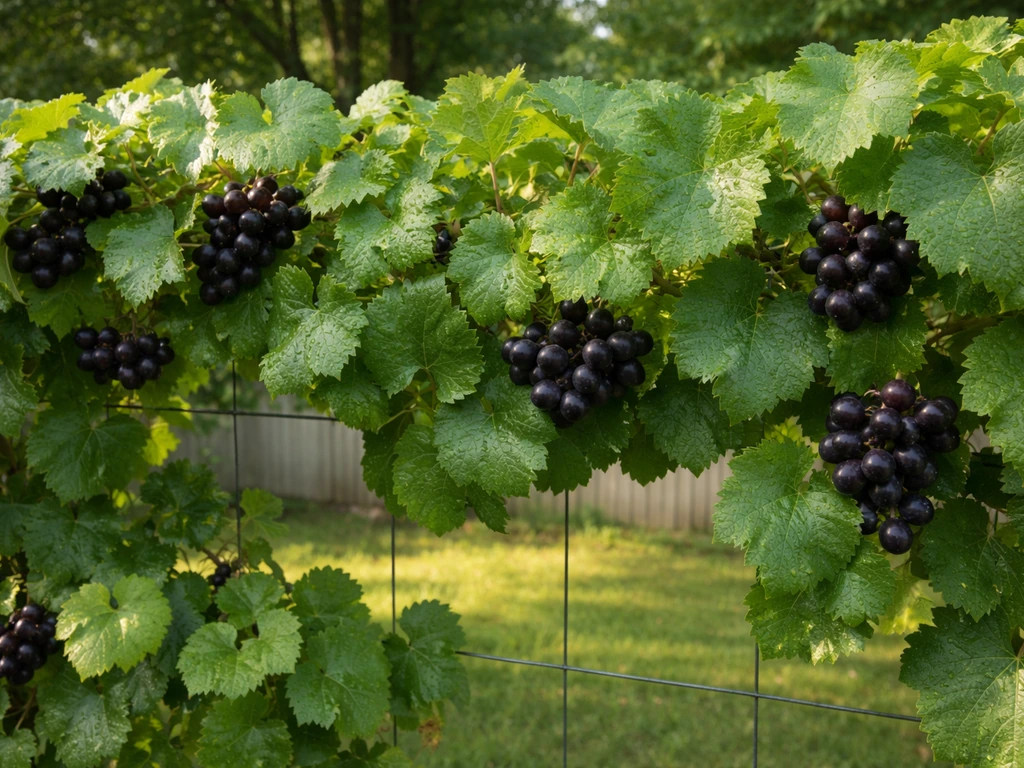
Muscadines are native and adapted to Central and Southern Arkansas according to UAEX guidance, and they show it. They handle heat and humidity far better than European or most American bunch grapes, and they're genuinely low-fuss compared to more finicky varieties. For home gardeners in this part of the state, muscadines should almost always be the first choice. Good self-fertile varieties to look for include Triumph, Carlos (a bronze type), and Nesbitt for black muscadines. If you want something you can eat fresh off the vine AND use for juice or jelly, these hold up well.
One thing to sort out before you plant: muscadines are not all self-fertile. Some varieties are female-only and need a self-fertile pollinator planted nearby (within about 50 feet) to set fruit. When you're buying vines, specifically ask whether the variety is self-fertile or requires a pollinator. This is one of the most common reasons muscadine vines grow beautifully but never produce fruit.
Northern Arkansas: bunch grapes and cold-hardy hybrids
In northern Arkansas, muscadines get risky because of winter cold. UAEX notes that muscadines are not recommended for the most northern counties. Up here, you want to look at bunch grapes, including some of the hybrid wine and table varieties. Chambourcin is a French-American hybrid that has done well in Arkansas conditions and is specifically listed in UAEX's wine grape recommendations. Cynthiana (also called Norton) is another one worth looking at for red wine grapes. It's cold-hardy, disease-tolerant compared to many European varieties, and produces interesting results in Arkansas conditions. For table grapes in northern Arkansas, Reliance and Concord-type varieties have enough cold hardiness to work well.
| Variety | Type | Best Region | Notes |
|---|---|---|---|
| Triumph | Muscadine | Central/South AR | Self-fertile, excellent fresh eating |
| Carlos | Muscadine (bronze) | Central/South AR | Self-fertile, good for juice |
| Nesbitt | Muscadine (black) | Central/South AR | Self-fertile, large berries |
| Chambourcin | Wine grape (red hybrid) | Statewide | Disease-tolerant, UAEX recommended |
| Cynthiana/Norton | Wine grape (red) | North/Central AR | Cold-hardy, good disease tolerance |
| Reliance | Table grape | North/Central AR | Seedless, cold-hardy to -15°F |
| Concord | Table/juice grape | North AR | Classic cold-hardy variety |
Picking the right spot and getting your soil ready
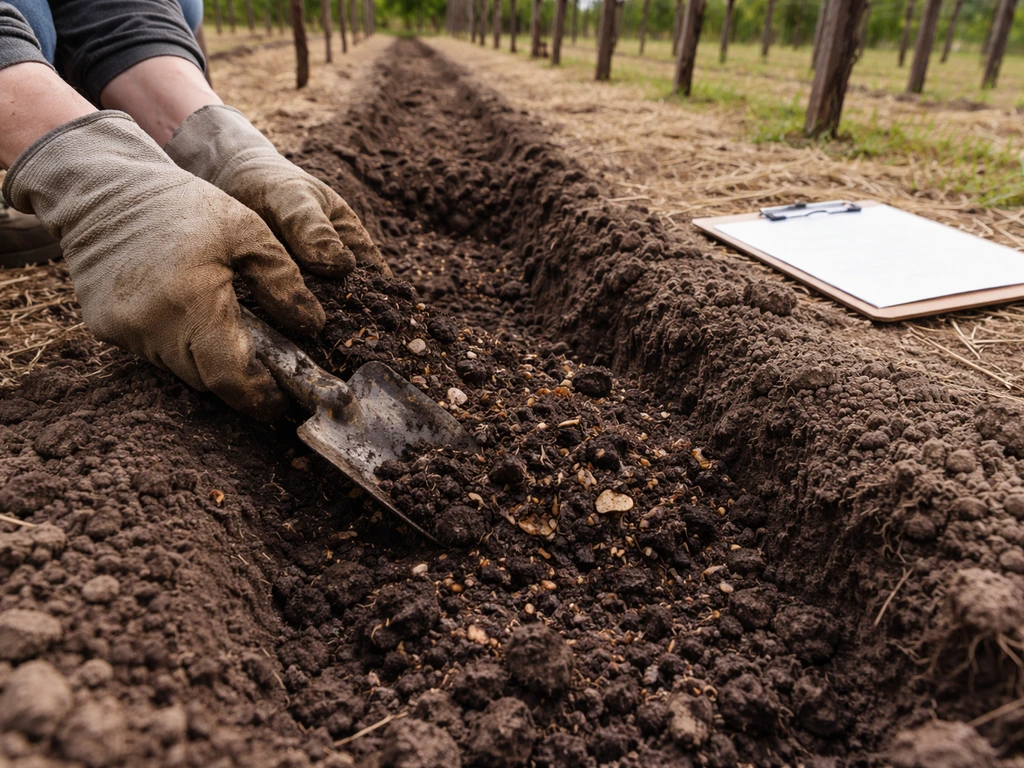
Site selection matters more for grapes than almost any other fruit crop you can grow. Get this wrong and you'll fight your vines for years. Get it right and half your problems disappear before you even plant.
Full sun is non-negotiable. Grapes need at least 8 hours of direct sun per day, and more is better. Shaded vines produce less fruit, grow more slowly, and suffer worse from fungal diseases because the leaves never dry out properly. In Arkansas, where humidity is already working against you, shade makes a tough situation worse.
Drainage is the other critical factor, and UAEX calls it out specifically: good internal soil drainage is very important for successful grape production. Grapes absolutely will not tolerate waterlogged roots. If your site stays wet after rain or has a hardpan layer that traps water, either fix the drainage before you plant or choose a different spot. A gentle slope is actually ideal because it improves both drainage and air circulation (which helps with disease). If you're planting on flat ground, raised rows can help.
For soil pH, grapes prefer 5.5 to 6.5. Get a soil test done before planting. Your local county extension office can run one cheaply, and it takes the guesswork out of lime and fertilizer applications. Sandy loam to clay loam soils both work as long as drainage is adequate. Arkansas's native soils vary a lot by region, so testing rather than guessing is worth it.
Planting plan and realistic timeline
Bare-root vs. container vines
You'll find grapes sold as bare-root vines in late winter/early spring (roughly January through March) and as container-grown vines at nurseries from spring through summer. Bare-root vines are usually cheaper and establish well if planted while dormant. Container vines give you more flexibility on timing but cost more. For muscadines especially, container plants from a reputable nursery are easy to find and transplant well. Either way, buy from a source that can tell you exactly what variety you're getting. Generic 'muscadine' plants from a big-box store with no cultivar name are a gamble.
When and how to plant
In Arkansas, plant bare-root vines in late winter to early spring, once the ground is workable but before new growth begins (typically February to mid-March depending on your county). Container vines can go in from spring through early fall, but spring planting gives roots the whole season to establish before summer heat arrives. Dig holes wide enough to spread roots without bending, and set the graft union (if present) just above the soil line. Backfill, firm the soil, and water deeply right away.
Space bunch grape vines 6 to 8 feet apart in rows 10 to 12 feet apart. Muscadines are more vigorous and need more room: 16 to 20 feet between vines in rows 10 to 12 feet apart. These spacing requirements surprise new growers but they matter. Crowded vines mean poor air circulation, more disease, and harder pruning.
Timeline from planting to first harvest
- Year 1: Focus entirely on establishment. Let the vine grow, water consistently, and train one or two main shoots upward toward your trellis wire. Don't let it fruit. Remove any flower clusters that form so the vine puts all energy into roots and structure.
- Year 2: Continue training the main trunk and begin developing lateral arms (cordons) along the trellis wire. You can allow a small crop late in the season if the vine looks vigorous, but don't push it.
- Year 3: Expect your first real harvest. A healthy, well-established 3-year-old vine can produce a few pounds of fruit. Muscadines tend to come into production a bit more reliably at this stage than bunch grapes.
- Years 4 and beyond: Full production. Mature muscadine vines can yield 15 to 25 pounds per vine in good years. Bunch grapes vary by variety but 10 to 20 pounds per established vine is a reasonable expectation.
Trellis setup
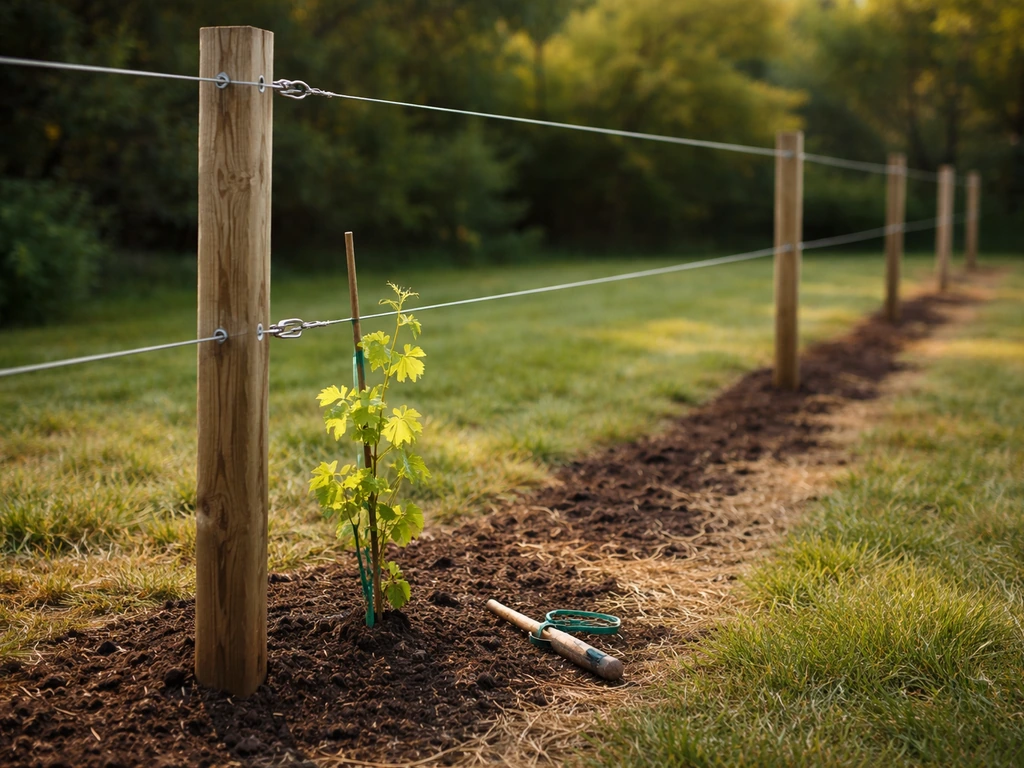
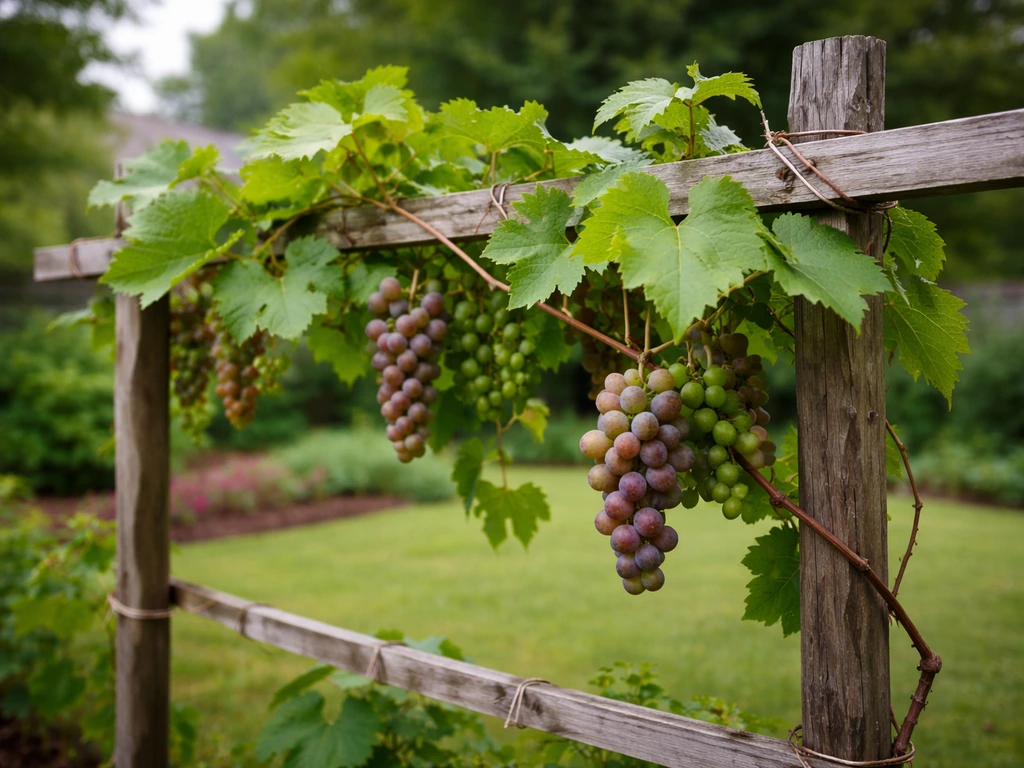
Get your trellis in place before or at planting time. The simplest system for home growers is the high cordon or a basic two-wire trellis. Set wooden or metal posts 8 to 10 feet apart, with posts at least 2 feet in the ground. Run a top wire at about 5 to 6 feet for the main cordon arms, and an optional lower wire at 3 feet to support developing shoots. For muscadines, a single high wire at 5 to 6 feet is standard and works well. The trellis doesn't need to be elaborate, but it does need to be sturdy because mature vines get heavy.
Seasonal care through the growing year
Watering
Established grapevines are surprisingly drought-tolerant once they're a few years old, but young vines (years 1 and 2) need consistent moisture to develop strong root systems. In Arkansas summers, plan to water deeply once or twice a week if rain doesn't cover it, especially during establishment. Drip irrigation is ideal because it keeps foliage dry (which reduces disease). Overhead sprinklers on wet foliage in Arkansas's humid summers are basically an invitation to fungal problems.
Fertilizing
In the first year, apply a small amount of balanced fertilizer (like 10-10-10) about a month after planting, once the vine shows active growth. A quarter cup per vine worked into the soil around the drip line is enough. Don't over-fertilize young vines. Too much nitrogen produces lush, leafy growth that's slow to harden off before winter and more susceptible to disease. In subsequent years, a spring application of fertilizer before bud break is the standard approach. Again, a soil test will tell you if you're actually deficient in anything versus just guessing.
Training and basic pruning
During the growing season, keep shoots tied to your trellis wires as they grow. Pinch back any lateral shoots that are getting unruly and shading the main canopy. The real pruning work happens in late winter while vines are dormant (January to February in Arkansas). This is when you remove the previous year's fruiting wood and leave only what you need for the coming season. Spur pruning (leaving short stubs with 2 to 3 buds each) works well for muscadines trained on a high cordon system. Don't skip annual dormant pruning. Vines that are never pruned become tangled, diseased messes that produce small, poor-quality fruit within a few years.
Weed and pest management
Keep a weed-free zone at least 3 feet around young vines for the first couple of years. Mulch works well for this and helps retain soil moisture. For pests, Japanese beetles can be a problem in Arkansas and will skeletonize grape foliage fast. Hand-picking works for small plantings. Birds love ripe grapes, and netting is the most effective protection if you're losing fruit to them. Grape berry moth and grape leafhopper show up occasionally but are rarely severe enough in home gardens to need treatment beyond basic sanitation.
Winter hardiness and disease: the two things that trip up Arkansas growers
Winter cold in northern Arkansas
Southern and Central Arkansas rarely sees temperatures cold enough to cause serious winter injury to properly hardened vines. Northern Arkansas is a different story. Temperatures in the Ozarks and Boston Mountains can dip to 0°F or below in cold winters, which is enough to kill less hardy varieties outright or damage fruiting wood. If you're in the northern part of the state, stick with cold-hardy varieties like Chambourcin, Cynthiana, Reliance, or Concord, and avoid planting muscadines unless you're in the warmer valleys. Mounding soil around the base of young vines in their first winter adds a layer of insurance.
Disease pressure: be honest about this
Arkansas's warm, humid summers create serious fungal disease pressure. UAEX is explicit that Arkansas-developed cultivars and hybrids are not resistant or immune to major fungal diseases like black rot, downy mildew, and powdery mildew. Black rot (caused by Phyllosticta ampelicida) is identified by UAEX as the most economically important disease of grapes and is a very real threat here. It causes shriveled, mummified berries and can wipe out an entire crop if not managed.
Managing disease in Arkansas means a combination of cultural practices and, often, a spray program. On the cultural side: good air circulation (don't plant too close together or allow dense canopies), removing mummified berries and diseased leaves rather than leaving them in the vineyard, and keeping the canopy open through proper pruning and shoot positioning. On the spray side: copper-based fungicides and sulfur sprays applied preventively from bud break through fruit set give solid protection against black rot and downy mildew. Timing matters more than frequency. Spray before rain events during the high-risk window (bloom through 4 to 6 weeks after bloom) when temperatures are between 50°F and 90°F.
Muscadines are naturally more tolerant of the diseases that devastate European bunch grapes in the South, which is one more reason they're the smart default choice for Central and Southern Arkansas. They won't be completely disease-free, but they're far more manageable.
Pruning, yields, and what to do when things go wrong
Annual pruning basics
Dormant pruning in late January to mid-February is the single most important maintenance task for grapes. The goal is to remove about 70 to 90 percent of the previous year's growth. That sounds aggressive, but grapevines are vigorous and it's the right call. For muscadines on a high cordon, leave spurs 2 to 3 buds long spaced every 6 to 8 inches along the cordon arms. For bunch grapes using cane pruning, leave 2 to 4 canes of the current year's wood (each with 8 to 12 buds) tied along the trellis wire and remove everything else. Clean up all pruned material and remove it from the vineyard area, especially any wood showing disease symptoms.
Realistic yields
Set your expectations realistically. In year 3, you might get a few pounds per vine. By years 5 to 7 with good management, muscadines can yield 15 to 25 pounds per vine in a good season. Bunch grapes like Chambourcin or Cynthiana typically yield 10 to 20 pounds per mature vine under home garden conditions. Arkansas has a long growing season (grapes in most of the state ripen between late July for early muscadines through October for later bunch grape varieties), which is genuinely an advantage.
Common problems and what's actually causing them
- Vine grows vigorously but no fruit: Most common cause is skipping pollinator plants for female-only muscadine varieties. Also check if vines are being over-fertilized with nitrogen, which promotes vegetative growth at the expense of fruiting.
- Berries shrivel up or turn dark before ripening: Almost certainly black rot. Remove affected clusters immediately, increase spray coverage, and improve air circulation in the canopy.
- Leaves show white powdery coating: Powdery mildew. Sulfur sprays work well. Open up the canopy and improve air flow.
- Poor growth in year 1 or 2: Usually a drainage problem or inadequate sunlight. Check that water isn't pooling at the roots and that the site is getting full sun.
- Winter dieback in northern Arkansas: Likely a variety hardiness mismatch. If it's a young vine, it may recover from the roots. If it happens repeatedly, switch to a hardier cultivar.
- No growth in spring after winter: Check if buds are viable by scratching the cane. Green inside means alive. Brown or dry means dead wood. Prune back to live wood.
Your next steps if you want to start this year
If you're in Central or Southern Arkansas, the first decision is easy: start with muscadines. Pick a self-fertile variety like Triumph or Nesbitt, or plant one self-fertile variety plus a female variety for better yields. If you're in northern Arkansas, contact your county extension office and ask specifically about their bunch grape and cold-hardy hybrid recommendations for your area. The UAEX FSA-6130 variety recommendation sheet is free and worth downloading directly.
Get a soil test done now if you haven't. Order or source vines from a reputable nursery that can name the exact cultivar. Plan your trellis before you plant. And go in knowing that disease management in Arkansas is real work but entirely manageable with the right cultural practices and a simple spray routine. The state's long growing season and genuine warmth are real advantages that growers in neighboring states like Kentucky or Kansas don't always have, and Arkansas growers in the south have an even longer frost-free window than those in Alabama's northern counties. Houston gardeners can also grow grapes, but they should prioritize heat and humidity tolerant choices and plan disease prevention early. While Arkansas has a long, warm growing season, the same general grape-growing principles can also help you plan whether you can grow grapes in Kansas. Kentucky can support grape growing too, but your results depend heavily on choosing cold-hardy varieties and planning for disease and winter cold grapes producing in Kentucky. If you’re trying to grow grapes in Alabama, the best approach is still to match variety and site conditions to your local climate and disease pressure Alabama's northern counties. Use that advantage by planting the right variety for your location, getting the site right from day one, and not skipping that annual dormant pruning. Do those things and you'll have grapes producing in three years.
FAQ
If I’m in Arkansas and my soil stays wet after rain, can I still grow grapes by just adding mulch or fertilizer?
Fertilizer and mulch will not fix the root problem. Grapes need internal drainage, so if water sits for more than a short period after rain, you should either choose a different spot or build raised rows and amend to improve percolation before planting. A site that stays wet also increases disease pressure, even if you use good sprays.
How do I tell whether I should plant muscadines or bunch grapes in my exact Arkansas county?
Don’t decide only by “north vs central vs south.” Look at your winter low temperatures (freeze severity) and your frost-free season length, then cross-check with what your nearby extension office recommends for your county. If you expect repeat hard freezes, muscadines become a gamble and cold-hardy hybrids or bunch types are usually the safer bet.
Can I plant a muscadine and assume it will pollinate itself?
Not safely. Some muscadine cultivars are female-only, meaning they need a self-fertile pollinator within roughly 50 feet. When buying, confirm the cultivar’s fertility category, then plan the second variety at the same time so you are not stuck with an orchard that grows leaves but no fruit.
What’s the most common reason Arkansas grape vines produce leaves but no or poor fruit?
The usual culprits are (1) wrong variety for local winter cold or humidity, (2) insufficient sun, and (3) pollination mismatch with muscadines. Crowding can also reduce fruit set because dense canopies stay damp. Start by checking sun hours first, then verify cultivar fertility and spacing.
Do I need a trellis for grapes in Arkansas home gardens, or will they grow on a fence?
You can train on a strong fence, but a basic trellis is usually more controllable for airflow and pruning. Use sturdy posts, keep rows spaced enough for ventilation, and plan wires at workable heights (about 5 to 6 feet for high cordon systems). Untrellised vines tend to tangle, trap humidity, and are harder to manage for disease and annual pruning.
Should I use overhead sprinklers to water during Arkansas summer heat?
Try to avoid overhead watering, especially in humid weather. Wet foliage increases the risk of fungal issues. Drip irrigation is the best default for Arkansas because it delivers water to the root zone and keeps leaves drier, which supports your preventive disease strategy.
How much should I prune in the first winter after planting?
The “remove most of the prior year’s growth” principle still applies, but the exact cuts depend on how well the vine established and how it is trained. If the vine is small or not fully trained to your cordon, you may prune differently to encourage structure. If you are unsure, follow a simple training plan first year, then scale up to the full annual fruiting pruning in subsequent winters.
I want to avoid sprays, can I skip fungicides in Arkansas?
You can reduce sprays only if you are willing to accept a higher chance of crop loss and more cleanup. Arkansas humidity creates real disease pressure, and even Arkansas-adapted cultivars are not immune to major fungal diseases. If you skip preventive timing, you will often end up doing late, less effective rescue management.
When should I start worrying about bird damage to grapes?
Plan bird protection as soon as fruit begins to color or soften, because birds can find ripening clusters quickly. Netting is the most reliable approach, but install it early enough that birds are not already consuming berries. Make sure netting is secured so it does not gap as vines grow.
How long will it realistically take before I get meaningful harvests in Arkansas?
Expect a slow ramp-up. You might see some fruit around year 3, then yields usually improve significantly by years 5 to 7 with consistent pruning, trellis training, and disease management. Muscadines often become more productive than many bunch grapes for home growers in Arkansas, once established.