
Yes, you can grow grapes in Houston, Texas, but you have to be smart about which varieties you choose. Kentucky can support grape growing too, but the key is matching the variety to local winter lows and disease pressure can you grow grapes in kentucky. Houston's combination of heat, humidity, and heavy clay soils rules out most European wine grapes entirely, but muscadine grapes and a few tough hybrids like Black Spanish and Blanc du Bois are genuinely well-suited to those conditions. Get the variety selection right, manage fungal disease proactively, and fix your drainage situation, and you have a realistic shot at harvesting grapes in your backyard within two to three years.
Can You Grow Grapes in Houston? How to Do It
Marcus Whitfield
20 Jun 2026
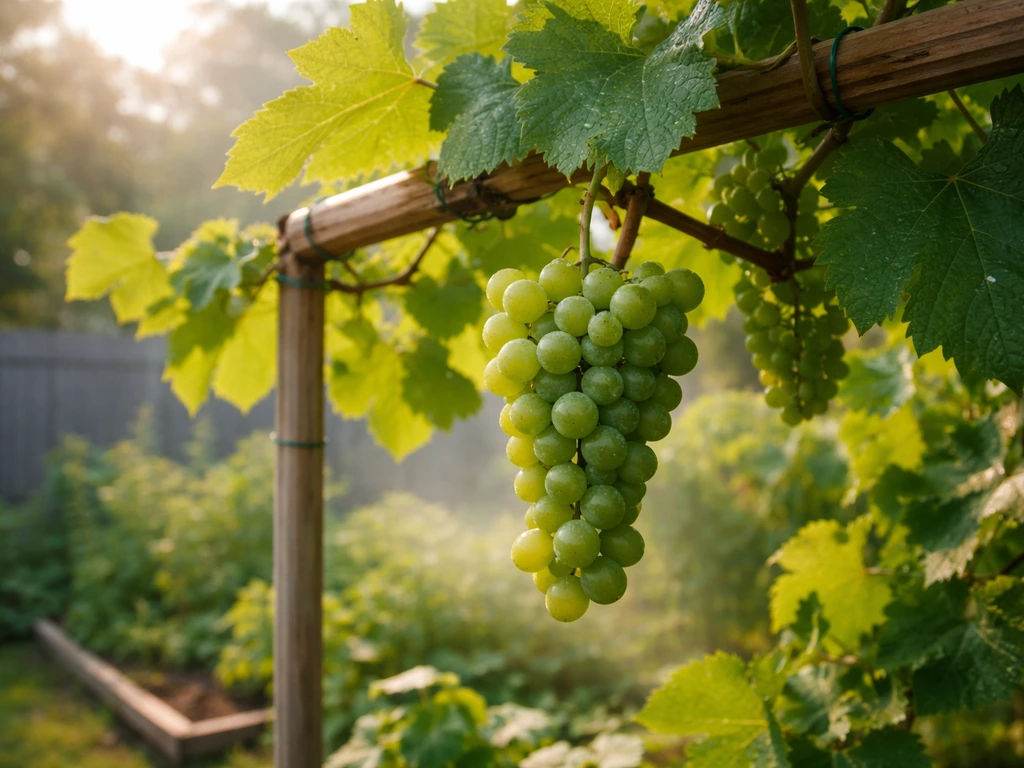
Can grapes actually grow in Houston? Here's the honest answer
Houston sits in USDA Hardiness Zone 9a, which means mild winters, brutal summers, and humidity that rarely lets up. If you're wondering can you grow grapes in Kansas, the answer depends heavily on choosing varieties that can handle colder winters and providing good site drainage. That combination is genuinely hostile to classic European vinifera grapes like Cabernet Sauvignon or Chardonnay, largely because of Pierce's disease, a bacterial infection spread by sharpshooter insects that kills vinifera vines in just a few seasons in the Gulf Coast region. The Texas Plant Disease Handbook flags Pierce's disease (caused by Xylella fastidiosa) as one of the major grape diseases relevant to Texas, and in Houston's climate, it's the single biggest reason not to plant vinifera.
But here's the encouraging part: Houston is squarely within the native range of muscadine grapes, which are native to East Texas and the Southeast. These are not a consolation prize. Muscadines are productive, long-lived, and genuinely adapted to heat and humidity. Pair them with a couple of heat-tolerant hybrids, manage for fungal disease, and growing grapes in Houston becomes practical, not just possible. Compared to states like Alabama, Arkansas, or Kentucky where bunch grapes are more widely viable, Houston gardeners will have a narrower variety list, but the varieties you do have access to are proven performers. If you are wondering about Alabama specifically, the same basic approach applies: choose heat- and disease-tolerant varieties and plan for sun, spacing, and good airflow grow grapes in alabama.
Best grape varieties for Houston heat and humidity
Variety selection is the most important decision you'll make. Pick the wrong grape and no amount of good care will save it. For Houston, stick to this shortlist.
Muscadines: your most reliable option
Muscadine grapes are the workhorses of hot, humid Gulf Coast gardens. They have thick skins that resist the fungal diseases that plague thinner-skinned grapes, and they tolerate Houston's heat without flinching. For home growers, a few cultivars stand out. MSU Extension also recommends specific beginner-friendly muscadine varieties for hot, humid areas, including Alachua, Noble, and Supreme, with brief attributes by cultivar a few cultivars stand out. Noble is a classic purple muscadine that produces reliably and handles disease pressure well. Carlos is a bronze-skinned variety popular for fresh eating and juice. Alachua and Supreme are both purple-fruited options worth considering if you want variety. One thing to note: many muscadine cultivars are not self-fertile, meaning you need at least one self-fertile or male vine nearby to ensure pollination. Check the pollination requirements before you buy.
Hybrid bunch grapes worth trying
If you want something closer to a traditional bunch grape, Black Spanish (also called Lenoir) is a Texas standout. It has been grown in Texas for well over a century, tolerates Pierce's disease better than most varieties, and produces a dark, flavorful grape that works for wine, juice, or fresh eating. Blanc du Bois is another strong option developed specifically for warmer southern climates, with good Pierce's disease tolerance that makes it far more viable in Houston than standard wine grapes. The Texas Wine and Grape Growers Association recognizes both as commonly planted varieties for Gulf Coast and Southeast Texas conditions.
| Variety | Type | Color | Disease Tolerance | Best Use |
|---|---|---|---|---|
| Noble | Muscadine | Purple | Excellent | Fresh eating, juice, wine |
| Carlos | Muscadine | Bronze | Excellent | Fresh eating, juice |
| Supreme | Muscadine | Purple | Excellent | Fresh eating |
| Alachua | Muscadine | Purple | Excellent | Fresh eating, wine |
| Black Spanish (Lenoir) | Hybrid bunch | Dark red/black | Very good | Wine, juice |
| Blanc du Bois | Hybrid bunch | White/green | Good | Wine, fresh eating |
Site selection: sun, soil, drainage, and spacing
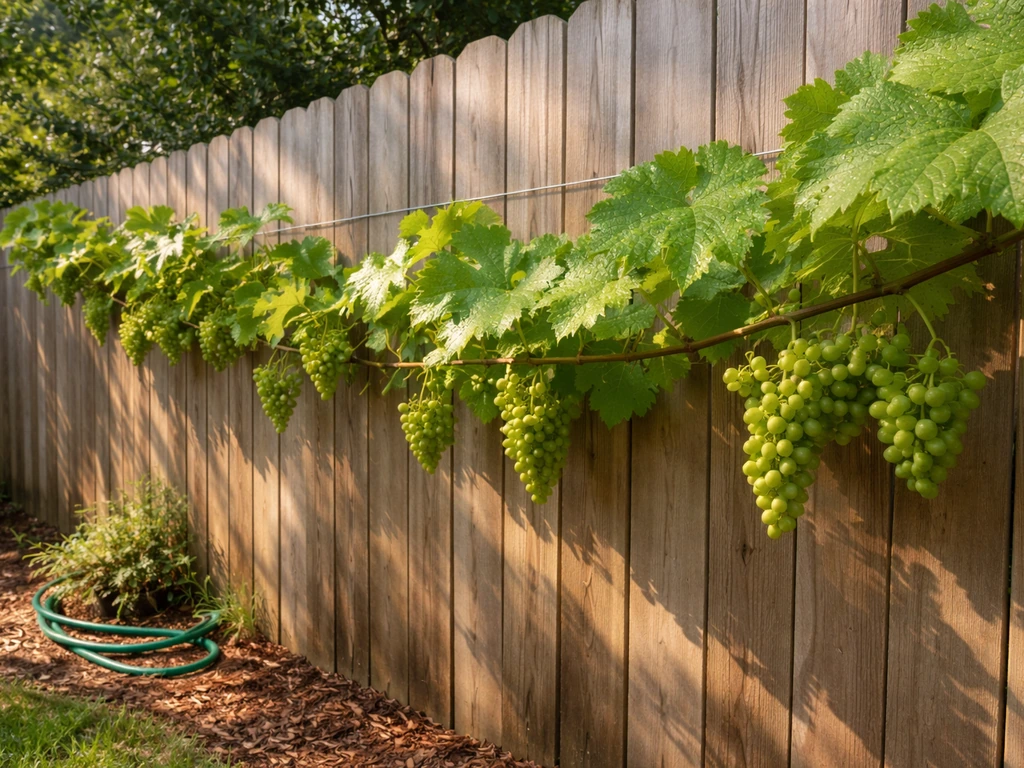
Where you put your vines matters as much as which varieties you choose. Grapes need full sun, which in Houston means at least eight hours of direct sunlight daily. A south- or west-facing fence line or a slope that gets unobstructed afternoon sun is ideal. Good air circulation is just as important as sun exposure, because stagnant humid air around the canopy is where fungal diseases get their start. Texas A&M AgriLife recommends open trellis systems that keep the canopy lifted and allow spray penetration, and that principle applies just as much to a backyard trellis as it does to a commercial vineyard.
Houston's heavy clay soil is a genuine challenge. Grapes want deep, well-drained, loamy soil with a pH around 6.0 for muscadines. Clay holds water, keeps roots wet, and creates the kind of anaerobic conditions grapevines hate. Texas A&M notes that if heavy clay is your only option, you can build an elevated bed using commercial potting mix and treat it like a large container planting. If your soil is workable, amend it generously with compost before planting and do a proper drainage test: dig a hole about 12 inches deep, fill it with water, and watch how quickly it drains. If water is still sitting there after several hours, you need to either raise the planting area or pick a different spot. Texas A&M's four essential site tests for vineyard establishment include soil analysis and drainage evaluation precisely because getting this wrong is one of the most common reasons vines fail.
Space muscadines at least 10 to 20 feet apart, as they're vigorous growers that will fill a trellis quickly. Black Spanish and Blanc du Bois can be spaced 6 to 8 feet apart on a standard trellis row. Give each vine room to breathe, because crowded canopies in Houston's humidity are an invitation for mildew and rot.
Planting timeline and how long until you get grapes
Houston's last spring frost typically falls in late January to mid-February, and the first fall frost rarely arrives before late November or December. That gives you a long growing season, but it also shapes your planting window. For dormant bare-root muscadines, Texas A&M recommends planting between December and April, when the vines are dormant. Planting in January or February in Houston takes advantage of the mild winters and gives roots time to establish before summer heat hits. If you're planting container-grown vines, you have a bit more flexibility, but earlier is still better so the roots have time to settle in.
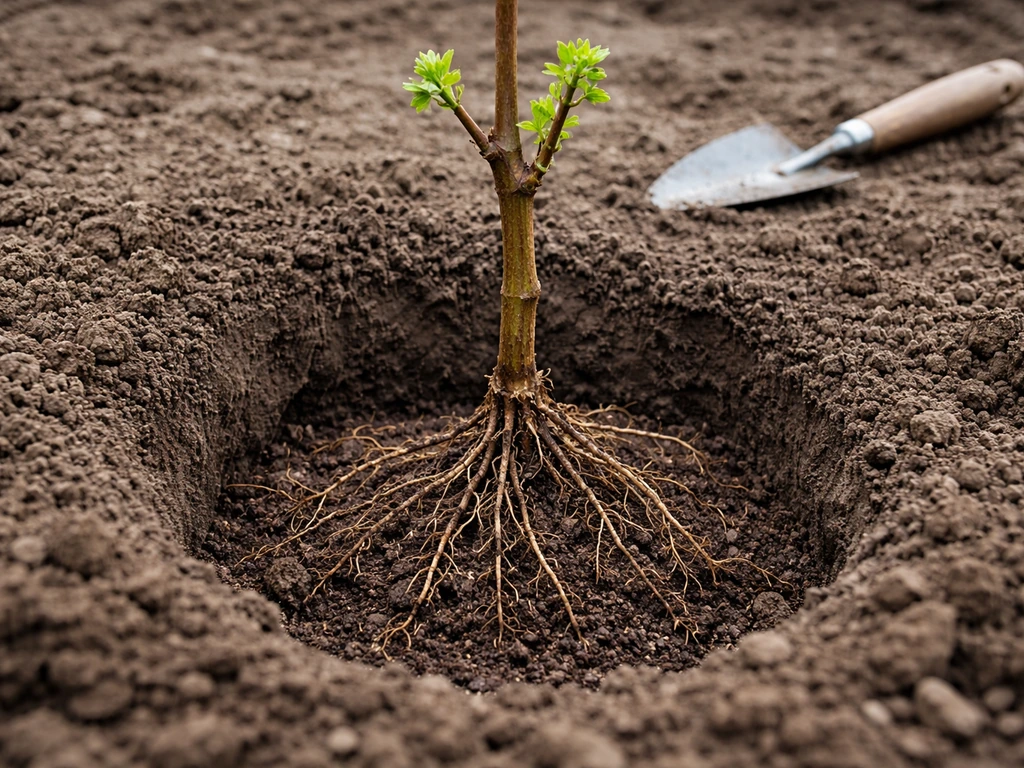
One critical warning: if you're planting bare-root vines, do not let the roots dry out at any point between purchase and planting. Root drying is the number one reason bare-root plants fail, according to Texas A&M. Keep them wrapped in damp burlap or in a bucket of water until the moment you're ready to plant.
As for when you'll actually eat grapes: plan for a two- to three-year wait from planting before you get a meaningful harvest. Year one is about root establishment, year two you'll see real vine growth, and by year three a well-managed vine can start producing. Resist the urge to let the vine fruit heavily in year two; it's better to pinch off early clusters and focus energy on building a strong root system and framework.
Setting up your trellis, watering, fertilizing, and training
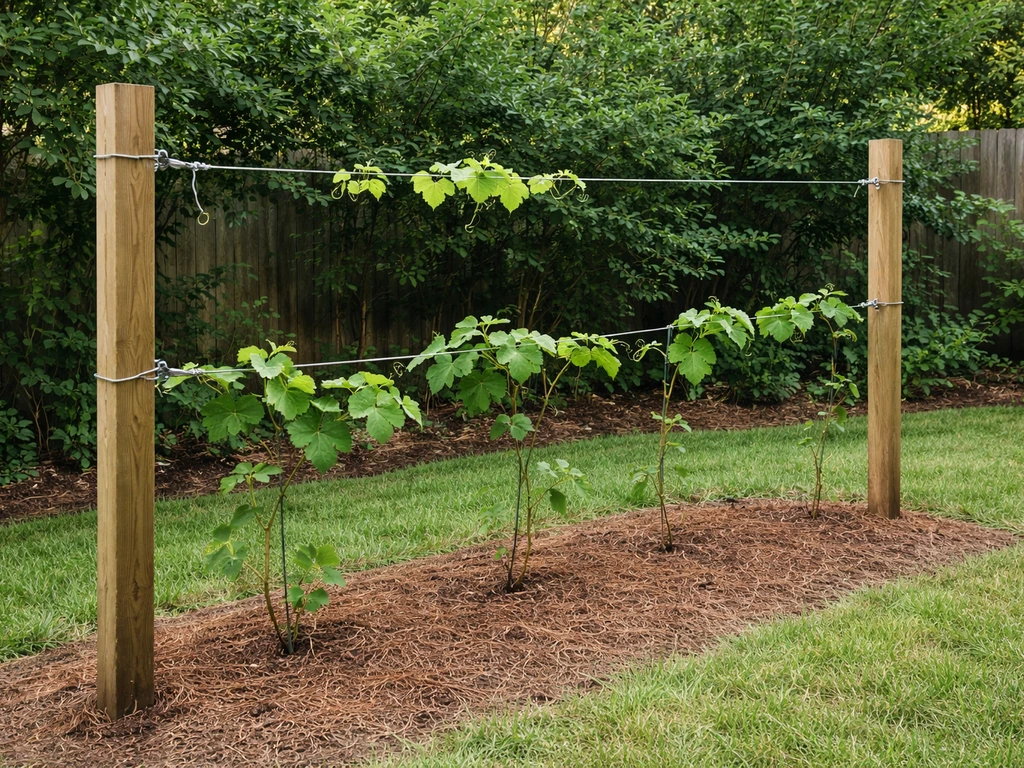
Trellis systems
A simple two-wire trellis works well for most Houston home gardens. Set sturdy posts (wood or metal) at least 6 feet tall, and run two horizontal wires at roughly 3 and 5 feet from the ground. For muscadines specifically, a single curtain system works well: train the vine up a central trunk to the top wire, then let two lateral cordons run in opposite directions along the wire. Texas A&M covers single curtain pruning systems for muscadines specifically, and it's a good starting point for beginners because it's easy to maintain and keeps the canopy open. If you have a fence or arbor, muscadines will happily grow on that too, though arbor-grown vines can be harder to spray for disease.
Watering
Muscadines are commonly grown without supplemental irrigation in East Texas, but Houston's summer rainfall can be inconsistent. During dry spells, especially in summer, water deeply once or twice a week to keep fruit sizing up. Drip irrigation is ideal because it keeps water off the foliage, reducing disease pressure. Overhead watering in humid Houston conditions is asking for mildew trouble.
Fertilizing
Muscadines are not heavy feeders. Texas A&M's guidance suggests about one pound of a balanced fertilizer per year of vine age, up to a maximum of four pounds, as a general rule. If you've amended your soil well with compost and don't see deficiency symptoms, you may not need much additional fertilizer at all. For soils with a pH above 7.0, which is possible in some Houston areas, adding compost can help bring it down toward the target of 6.0. Don't over-fertilize in Houston's heat, as pushing excessive leafy growth also means more surface area for fungal disease to take hold.
Training in the first two years
At planting, prune the vine back hard, to just two buds. This sounds drastic but it forces strong establishment energy into the root system. In year one, select the most vigorous shoot and train it straight up toward the top wire as the main trunk. Rub off any side shoots that try to develop low on the trunk. In year two, once the trunk reaches the top wire, pinch the tip and let two lateral shoots develop as your permanent cordons running in opposite directions. Texas A&M's dormant pruning guidance for Texas conditions is worth reading before your first winter pruning session.
Dealing with Houston's real growing challenges: heat and disease
Let's be straight about this: disease management is the biggest ongoing job for grape growers in Houston. The heat and humidity create ideal conditions for fungal pathogens, and if you go hands-off, you will lose fruit and eventually vines. The good news is that muscadines and the hybrid varieties listed above have meaningful built-in resistance. The bad news is that even resistant varieties benefit from a preventive spray program.
The diseases to know
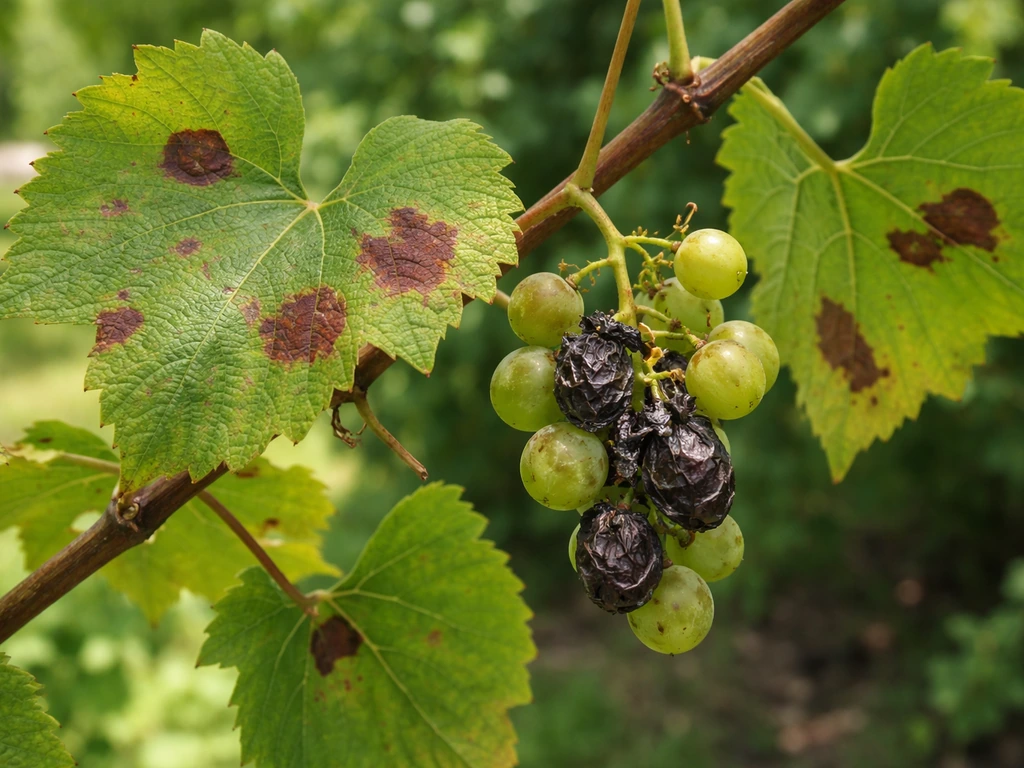
Black rot (Guignardia bidwellii) shows up as small reddish-brown spots on leaves and can turn berries into hard, black mummies. It thrives in warm, wet conditions, which describes Houston's spring perfectly. Powdery mildew causes young leaves to curl and wither and can stain shoots dark. Texas A&M notes the most critical management window for powdery mildew is about two weeks before bloom, so you need to be spraying before you see symptoms, not after. Downy mildew is more of a cool-and-wet-weather disease, but Houston's humid canopy microclimates can still create pockets where it develops. Downy mildew occurs mainly in regions where it is warm and wet during vegetative growth, and UC IPM describes symptom development that helps guide humidity-driven management decisions Downy mildew is more of a cool-and-wet-weather disease. Pierce's disease is the real threat for non-resistant varieties: early symptoms include delayed shoot growth, leaf mottling, and dwarfed new shoots. If you've chosen muscadines or the recommended hybrids, your Pierce's disease risk is dramatically lower, but it's still worth knowing the signs.
A practical spray approach
For a home garden, a simple preventive approach works: start a fungicide program as new growth emerges in spring and continue on a 10 to 14 day interval through fruit set. Sulfur-based fungicides handle powdery mildew well. For downy mildew, phosphorous acid products are effective as systemics, and Texas A&M has specific extension guidance on using them alone or in combination with other products. Rotate products so you're not relying on one mode of action all season. After any significant rain event in spring, prioritize getting a spray on quickly once leaves dry.
Managing summer heat stress
Houston summers are punishing, but established muscadine vines handle them surprisingly well. The main risk is water stress during fruit fill in July and August, which shrinks berry size and reduces yield. Keep irrigation consistent during this period. Avoid heavy fertilizer applications in summer that push soft new growth during the hottest months. By late summer, the vines will start hardening off naturally, and you'll be harvesting muscadines from late July through September depending on the variety.
Your step-by-step plan for starting a grape garden in Houston
- Choose your site this fall: look for the sunniest, best-drained spot in your yard with at least 8 hours of direct sun. Do a drainage test by digging a 12-inch hole, filling it with water, and checking how fast it drains. If it's still waterlogged after a few hours, plan to build a raised bed.
- Test your soil: get a basic soil test through Texas A&M AgriLife Extension's soil testing service or a local garden center. Aim for pH around 6.0. If you're above 7.0, work compost in deeply before planting.
- Order your vines in November or December: choose at least one self-fertile muscadine like Carlos or Noble, or a pair of varieties where one is a pollinator. If you want to try a bunch-type hybrid, add Black Spanish or Blanc du Bois to the order. Buy from a reputable nursery and get dormant bare-root plants.
- Install your trellis before you plant: set posts at least 3 feet into the ground, run two wires at 3 and 5 feet high. Don't try to plant and trellis at the same time, it's chaotic and the trellis always wins.
- Plant between January and March: keep bare roots moist right up until planting. Dig a hole wide enough to spread the roots without bending them, set the graft union above soil level if grafted, and backfill with amended native soil. Water in thoroughly. Prune back to two buds immediately.
- Year one focus: water regularly during dry spells, select the strongest shoot and train it upward, rub off competing shoots low on the trunk. No fruit this year. Apply a light balanced fertilizer in early spring.
- Start your disease spray program: beginning when new growth is a few inches long in spring, apply a sulfur-based fungicide every 10 to 14 days through fruit set. Note the two-week pre-bloom window as a critical spray timing. After any rain, prioritize re-application once foliage dries.
- Prune in winter (December through February): remove the previous season's side shoots back to one or two buds on each cordon spur. This is the annual rhythm that keeps the vine structured and productive.
- Year three: you should see your first real fruit clusters. Thin clusters slightly if the vine seems overloaded for its size, and enjoy watching the harvest come in from late July through September.
Growing grapes in Houston is genuinely doable, and it's more satisfying than people expect when they start with the right varieties. If you're wondering about Arkansas specifically, the key is choosing heat-tolerant, disease-resistant varieties and matching the planting site to your conditions. Muscadines in particular are tough, productive, and native to the region, which means once they're established, they want to succeed. The work is mostly front-loaded: site prep, variety selection, and getting those first two years of training right. Once you have a structured vine on a good trellis with a simple spray routine, Houston's long growing season becomes your advantage rather than your obstacle.
FAQ
Can you grow table grapes in Houston, or is it only for juice and wine?
You can grow for fresh eating, but in Houston most reliable “table grape” options are muscadines or tougher hybrids. Classic seedless bunch grapes are the hardest to make work because they struggle with Houston humidity and disease pressure, so if your goal is eating fresh, prioritize muscadine cultivars like Carlos or other bronze and purple types you know are grown locally.
Do muscadines need another vine to fruit?
Many muscadines are not self-fertile, so you may need to plant a compatible self-fertile variety or a male vine nearby. Before buying, check each cultivar’s pollination notes, because “muscadine” does not automatically mean “self-pollinating,” and one lone vine can sit for years without good set.
What’s the best way to choose between ground planting and an elevated bed in Houston clay?
If a drainage test shows water pooling for more than a few hours, skip ground planting and switch to raised beds or container-style planting with fresh mix. This is especially important after heavy rains, because grapes suffer when roots stay wet, and clay can trap moisture even if the surface looks dry.
How close can I plant to a fence or property line without creating disease problems?
Keep vines to spacing targets on the trellis row, but also plan for airflow. If the fence blocks wind or you cannot reach the canopy for spraying, it can become a disease hot spot, so choose a fence line only if you can maintain open access on both sides (or select an open trellis orientation).
Should I start with bare-root vines or container-grown plants in Houston?
Bare-root plants are often cheaper and can establish well if planted during the dormant window, but the roots must stay moist the whole time you handle them. Container-grown vines give you more planting flexibility, yet you still want to get them in early enough for roots to settle before peak summer heat.
What’s a realistic harvest timeline for Houston grapes?
Expect a longer ramp than many beginners anticipate. Year one is mainly root and vine framework, year two can produce a small amount if you avoid heavy cropping, and a meaningful harvest usually starts around year three with consistent trellis training and a preventive disease schedule.
Do I need a trellis, or can I let grapes sprawl on the ground in Houston?
You should plan on trellising. Ground-running vines in humid conditions create nonstop leaf wetness and airflow blockage, which accelerates mildew and rot. Even a simple two-wire or single curtain system improves sun, spray coverage, and pruning access.
How much water do muscadines need during the hottest months?
Water deeply during fruit sizing and fill (often July and August), then avoid keeping the soil constantly wet outside of heat stress. Drip irrigation is the safest choice for disease control because it reduces wet foliage, but monitor actual soil moisture rather than watering on autopilot every day.
When should I fertilize, and what’s a common mistake in Houston?
A common mistake is over-fertilizing in summer, which pushes tender growth right when humidity and heat favor fungal issues. Use the vine-age guideline (roughly about one pound of balanced fertilizer per year of vine age, capped), and rely more on compost and soil testing if growth looks normal.
What pruning mistakes most often lead to failure in Houston?
Avoid leaving a dense canopy and avoid cutting without a training plan. Prune to build trunk and cordons, remove low shoots early, and keep the canopy open so spray and airflow reach leaves and fruit zones, especially during humid spring growth.
How do I know if my problem is Pierce’s disease versus a fungal disease?
Pierce’s disease typically shows up as delayed shoot growth, leaf mottling, and dwarfed new shoots, while common fungal issues show visible leaf spots or mildew growth patterns. If you see abnormal stunting on newer shoots and you did not plant a resistant option, treat it as a red flag and consult local guidance before assuming it’s just another mildew outbreak.
How soon after rain should I spray for fungal prevention?
Houston’s spring rain and humidity can shift disease pressure quickly, so the practical rule is to prioritize a spray soon after leaves dry. Waiting until you see symptoms usually costs you time, because powdery mildew management is most effective before visible issues appear.