
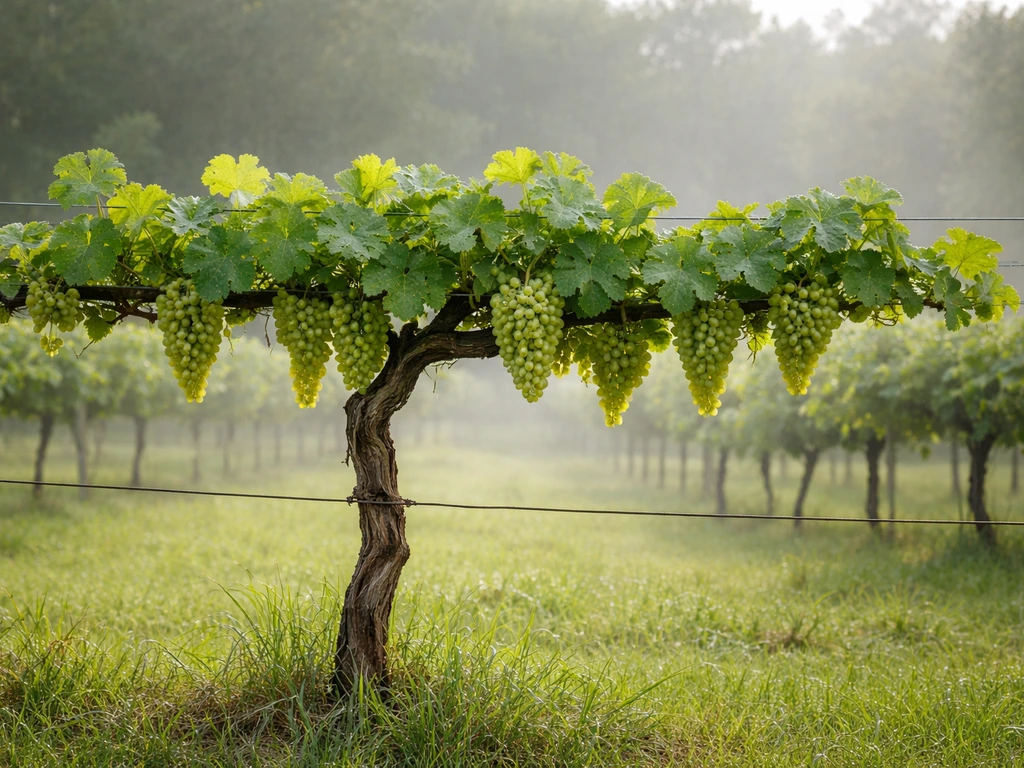
Yes, you can absolutely grow grapes in Louisiana, but you need to pick the right varieties and go in with your eyes open about the challenges. The heat and humidity are the real hurdles here, not the cold. Most of Louisiana falls in USDA Hardiness Zones 8a through 9b, which means winters are mild enough that cold damage to grapevines is rarely a serious threat. What will test you is the long, hot, wet summer season that creates perfect conditions for fungal disease. Pick disease-resistant muscadine or bunch grape varieties bred for the South, give them a well-drained sunny spot, and stay on top of a simple spray program, and you can reliably harvest grapes in Louisiana as a home gardener.
Can You Grow Grapes in Louisiana? How to Succeed Step by Step
Marcus Whitfield
30 Apr 2026
Will grapes actually grow in Louisiana?
Louisiana is genuinely viable grape-growing territory, and home gardeners have been doing it for generations. The state's USDA zones (mostly 8a to 9b) mean average winter lows ranging from about 10°F to 25°F depending on your parish, so most grapevines have no trouble surviving the dormant season. Northern Louisiana parishes like Caddo and Bossier sit in the cooler Zone 8a, while coastal and southeastern areas like Plaquemines and Jefferson parishes push into Zone 9b with very mild winters.
The honest challenge in Louisiana is not cold, it is the combination of high summer heat (regularly above 95°F), 60 to 70 percent humidity, and heavy rainfall. These conditions are a breeding ground for Pierce's disease, black rot, downy mildew, and powdery mildew. European vinifera grapes like Chardonnay or Cabernet Sauvignon will struggle badly here for exactly this reason. But muscadine grapes are native to the humid Southeast and laugh at Louisiana summers, and there are several southern-bred bunch grape varieties that handle the conditions well with proper care. Difficulty level: moderate if you choose the right variety, very hard if you don't.
Best grape varieties for Louisiana's climate
Muscadines are the top recommendation for Louisiana home gardeners, full stop. They are native to the southeastern United States, naturally resistant to Pierce's disease and most fungal pressure, and they thrive in the exact hot, humid conditions that kill other grapes. For table eating and fresh juice, Neelam, Triumph, and Fry are popular self-fertile selections. Carlos and Noble are excellent for wine making. If you want a variety that does double duty, Ison is productive, self-fertile, and widely available from Southern nurseries.
If you want to grow bunch grapes rather than muscadines, look at varieties developed specifically for the humid South. Blanc du Bois is a white wine grape with strong Pierce's disease resistance that has performed well in Louisiana trials. Cynthiana (also called Norton) is one of the most disease-tolerant red wine bunch grapes for the region, though it does best in northern Louisiana where summers are slightly less brutal. Conquistador is another option with decent disease resistance. Avoid standard European vinifera varieties unless you are prepared for very intensive spray programs and likely vine losses.
| Variety | Type | Best Use | Pierce's Disease Resistance | Notes |
|---|---|---|---|---|
| Muscadine (Triumph, Fry, Neelam) | Muscadine | Fresh eating, juice | Excellent | Self-fertile; easiest for beginners |
| Carlos / Noble | Muscadine | Wine making | Excellent | Need pollinizer unless both planted together |
| Ison | Muscadine | Fresh eating / wine | Excellent | Self-fertile; widely available |
| Blanc du Bois | Bunch grape | White wine | Good | Best bet for bunch grapes statewide |
| Cynthiana / Norton | Bunch grape | Red wine | Moderate | Better in northern Louisiana |
| Conquistador | Bunch grape | Fresh eating / wine | Good | Needs disease management program |
Picking the right site and preparing your soil
Sun is non-negotiable. Grapes in Louisiana need at least 8 hours of direct sunlight daily, and more is better. Full sun helps the canopy dry out after rain, which is one of your best tools against fungal disease. Avoid spots that sit in shade for any part of the morning, since wet leaves that take hours to dry are a direct invitation to mildew and rot.
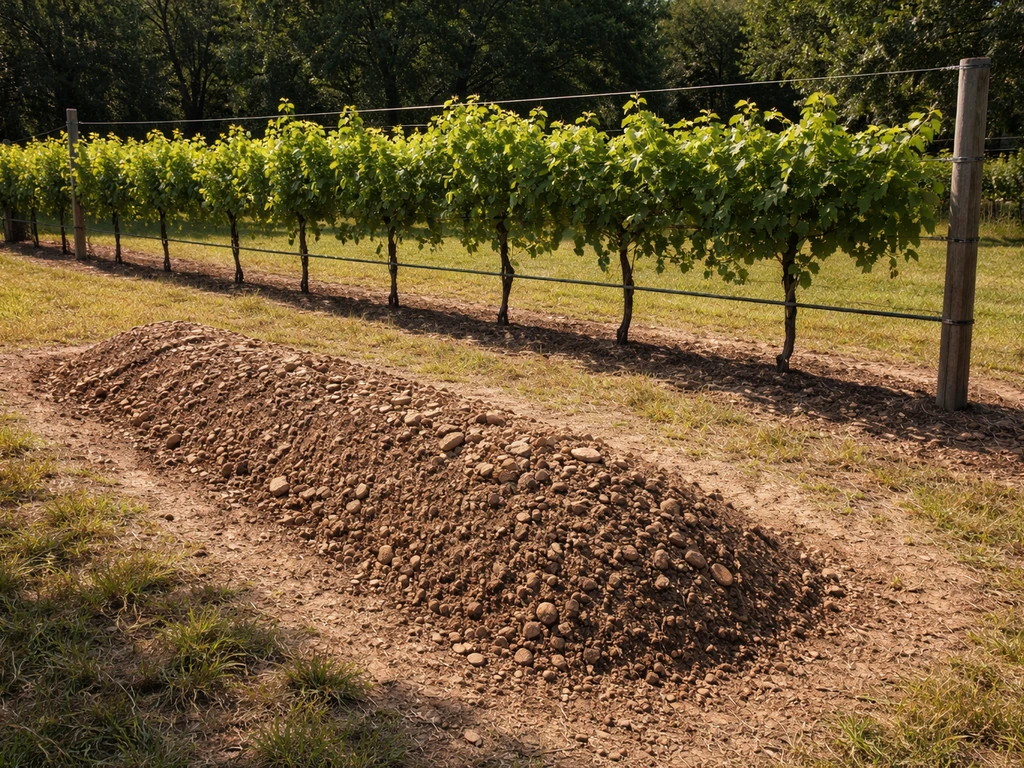
Drainage matters more in Louisiana than almost anywhere else. Do not plant grapevines in low-lying areas, clay-heavy spots that hold water, or anywhere that stays soggy after a heavy rain. If your soil drains slowly, build raised beds or mounded rows at least 12 to 18 inches above grade before planting. Many successful Louisiana grape growers plant on gentle slopes or slightly elevated ground specifically for this reason.
For soil pH, grapes prefer a range of 5.5 to 6.5. Louisiana soils vary widely, with many areas having naturally acidic soil in the 5.0 to 5.5 range, which is workable but may benefit from a modest lime application. Get a soil test before you plant. Your local LSU AgCenter extension office offers affordable testing and will give you amendment recommendations specific to your parish. Work any lime or sulfur amendments into the top 12 inches of soil at least a few months before planting so they have time to shift pH.
When and how to plant (timing and spacing)
The best planting window in Louisiana is late winter to early spring, typically late January through March. Planting dormant bare-root vines during this period lets the roots establish before the heat of summer arrives. Container-grown vines can be planted a little later, into April, but avoid planting anything after early May because the summer stress on new transplants is brutal. Avoid fall planting, unlike cooler states where fall planting works well, Louisiana's mild winters mean the plant won't go fully dormant and you risk stressing it before it's established.
For spacing, muscadine grapes need more room than most gardeners expect. Plant muscadines 16 to 20 feet apart in the row, with rows at least 10 to 12 feet apart if you are planting more than one row. Bunch grapes can be spaced a bit closer, around 8 to 10 feet within rows, with 10-foot row spacing. Wider spacing in Louisiana's humid climate is not just about root room, it directly improves air circulation through the canopy, which reduces disease pressure.
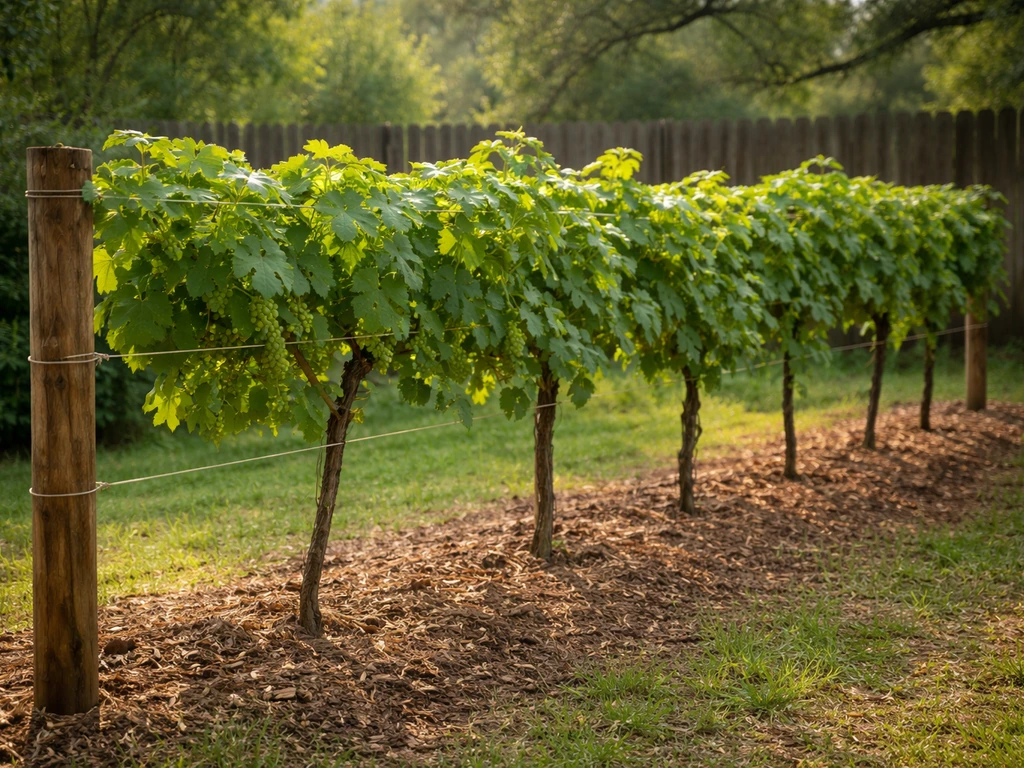
You will need a trellis system in place before or at planting time. A high-wire cordon system works well for muscadines and is the most commonly recommended in the Southeast. Set sturdy end posts at least 5 feet tall above ground, run two wires (one at about 3.5 feet, one at 5 feet), and plan to train a single trunk up to the top wire. For bunch grapes, a standard two-wire vertical shoot positioning trellis works well and makes disease management spraying easier.
Seasonal care: watering, fertilizing, and pruning
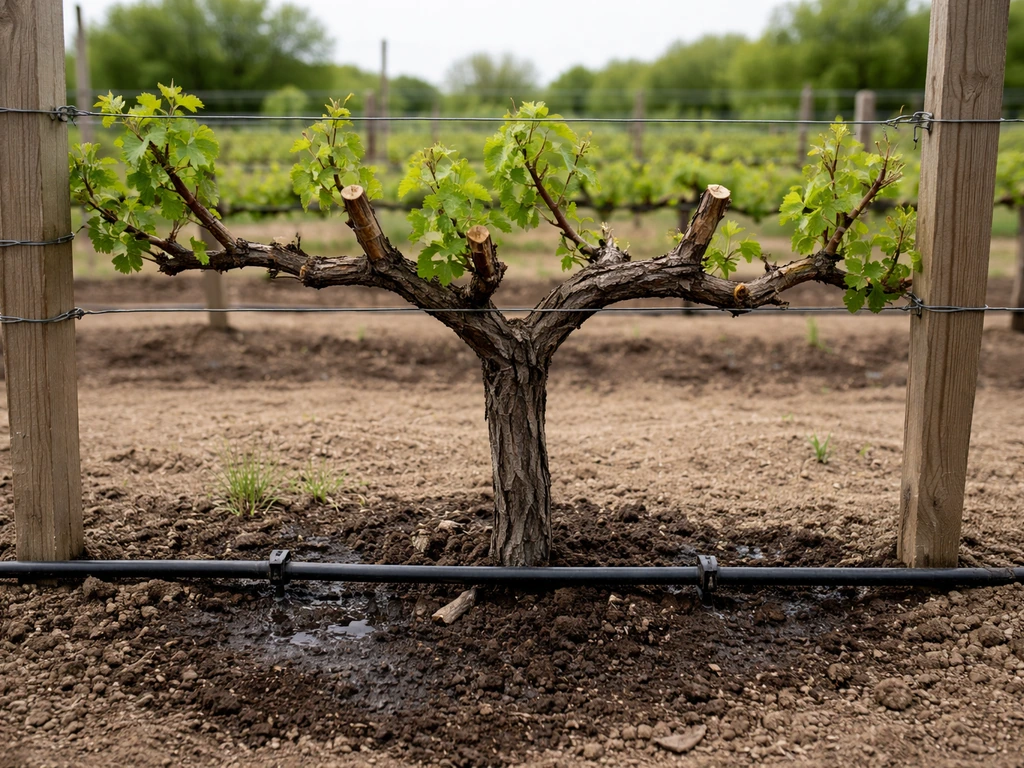
Watering
Newly planted vines need consistent moisture for the first growing season, roughly 1 inch of water per week from rain or irrigation. After establishment, grapes in Louisiana actually receive a lot of natural rainfall (most areas get 50 to 60 inches annually), so supplemental irrigation is mainly needed during dry spells in summer. When you do water, water deeply at the base rather than overhead, and try to water in the morning so the canopy stays dry. Drip irrigation is ideal if you want to invest in a system.
Fertilizing
Go light on fertilizer, especially nitrogen. Over-fertilizing grapevines produces excessive leafy growth that shades out fruit and creates the thick, dense canopy that traps humidity and feeds fungal disease. In year one, a small application of balanced fertilizer (10-10-10) in early spring when buds break is enough. In subsequent years, apply fertilizer in early spring based on your soil test results. Mature muscadines and bunch grapes in good soil often need very little added fertility beyond a spring application.
Pruning
Pruning is done in late winter during dormancy, typically January through mid-February in most of Louisiana before buds start to swell. For muscadines on a high-wire cordon system, prune the lateral spurs back to 2 to 3 nodes each winter. For bunch grapes, cane pruning or cordon spur pruning both work depending on the variety. Do not skip pruning years. Overgrown, unpruned vines produce less fruit, have worse disease problems, and are much harder to manage once they get out of hand.
Louisiana-specific challenges you need to manage
Fungal diseases
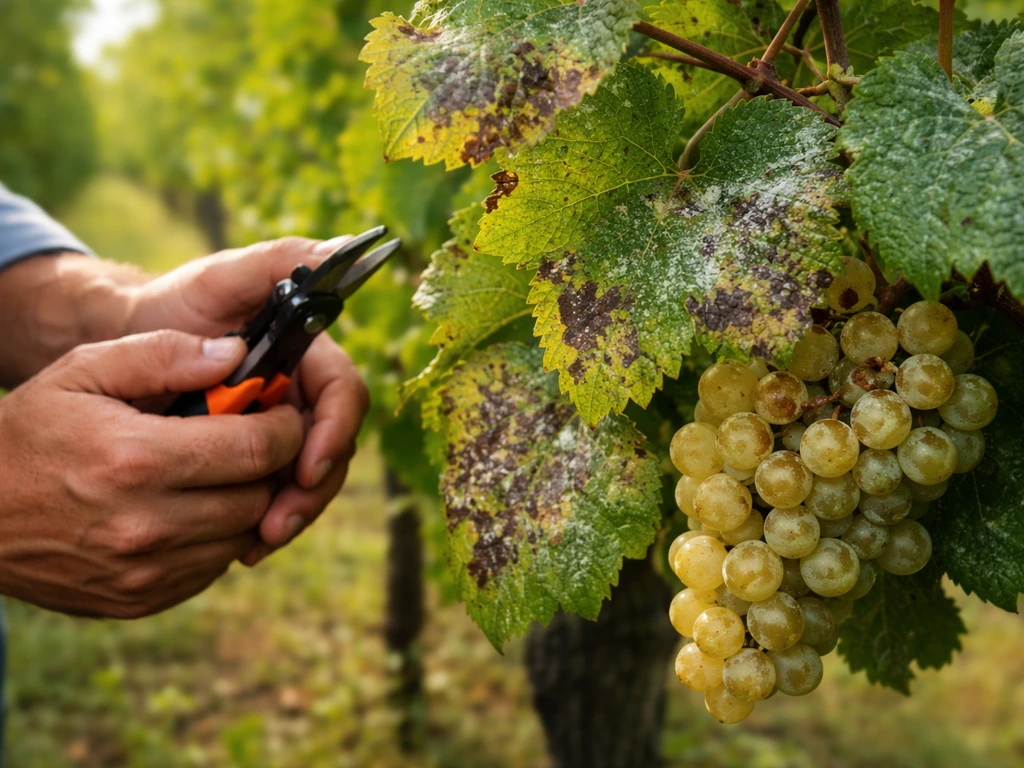
This is the biggest ongoing challenge for Louisiana grape growers. Black rot, downy mildew, powdery mildew, and Botrytis bunch rot are all common and can devastate a crop if you are not proactive. The key is a preventive spray program, not a reactive one. Once you see disease symptoms, you are already behind. Start a copper-based or sulfur-based fungicide program at bud break in early spring and repeat every 10 to 14 days through fruit set, adjusting to every 7 days during periods of heavy rain. LSU AgCenter’s Louisiana-focused muscadine and grape resource page can help back up recommendations for growing conditions and disease management in the state Start a copper-based or sulfur-based fungicide program at bud break. Using disease-resistant varieties cuts the intensity of spraying you need, but does not eliminate it entirely.
Pierce's disease
Pierce's disease is caused by a bacterium spread by sharpshooter leafhoppers and is a serious threat to bunch grapes in Louisiana. It kills susceptible vines within one to three years of infection. This is why variety selection is so critical: muscadines are immune, and varieties like Blanc du Bois have strong resistance. If you plant susceptible bunch grape varieties, monitor closely for symptoms (scorched leaf margins, shriveled fruit clusters, dying canes) and remove infected vines promptly to prevent spread.
Heat stress and canopy management
Louisiana summers with sustained heat above 95°F can stress vines and cause fruit to sunburn or shrivel if the canopy is too thin, or rot if it is too dense. The goal is a balanced canopy that shades the fruit clusters from the worst afternoon sun while still allowing airflow. Position shoots vertically as they grow, and remove any extra shoots or lateral growth that is crowding the interior of the canopy. Mulching around the base of the vine with 3 to 4 inches of wood chips or straw helps keep soil moisture consistent and root temperatures cooler during heat waves.
Pests
The main pest threats in Louisiana include grape berry moth, Japanese beetles, grape leafhoppers, and birds near harvest. Japanese beetles can be hand-picked or managed with neem oil for smaller plantings. Grape berry moth damage shows up as wormy, rotting berries and is managed with pheromone-based monitoring traps and targeted insecticide applications if pressure is high. Birds become a real problem as fruit ripens; bird netting draped over clusters or whole trellises is the most reliable protection for small home plantings.
Winter cold
Compared to states like Colorado or even Oklahoma, winter cold is not Louisiana's main grape-growing obstacle. Compared to states like Colorado or even Oklahoma, winter cold is not Louisiana's main grape-growing obstacle. If you are wondering about grapes in Colorado specifically, the cold-hardiness and winter protection challenges are the main issue to plan for can you grow grapes in colorado. Most established muscadine and southern bunch grape varieties are fully cold-hardy in Zones 8 to 9. In the very northern parishes of Louisiana that sit in Zone 7b or lower, an occasional hard freeze below 10°F could damage canes, so banking mulch around the base of young vines in their first winter is a reasonable precaution. Once vines are established (3 or more years old), they handle Louisiana winters without extra protection in almost all parts of the state.
What to expect at harvest and beyond
Muscadines typically begin bearing fruit in their second or third year after planting, with a meaningful harvest possible by year three. Bunch grapes like Blanc du Bois follow a similar timeline. Do not expect a full crop in year one or two; those early years are about establishing the root system and training the vine structure. In Louisiana, muscadines usually ripen from late July through September depending on the variety, with some early types ready in late July and later varieties running into October. Bunch grapes generally ripen slightly earlier, often in July and August.
A mature, well-managed muscadine vine in Louisiana can produce 15 to 25 pounds of fruit per vine per season, and some vigorous established vines produce more than that. Bunch grapes typically yield 8 to 15 pounds per vine depending on variety and management. Realistic expectations for a home grower: by year four or five, you should have enough fruit to make juice, jam, or a small batch of wine from even a modest planting of four to six vines.
For long-term maintenance, the annual rhythm is straightforward: prune in January or February, begin your fungicide program at bud break, monitor for pests through the growing season, harvest in late summer, and do a final cleanup of dead wood and debris after leaf drop. Renew your mulch layer each fall. Have your soil tested every two to three years and adjust pH and nutrients as needed. The vines that get this basic attention consistently will reward you for decades; muscadines especially are long-lived plants that can produce well for 20 to 40 years with proper care.
If you are comparing your options across the region, Louisiana's heat and humidity challenges are similar in some ways to what grape growers face in Florida, though Louisiana has slightly more favorable winters and somewhat more rainfall variation by region. Texas and Oklahoma growers face more cold-hardiness questions and different disease profiles. If you are trying to figure out can you grow grapes in Texas, the right variety and site selection will matter just as much Texas and Oklahoma growers. Louisiana's unique combination of subtropical heat and consistent moisture makes muscadines the undisputed best fit for this state, and starting with one or two self-fertile muscadine varieties is the single best move a beginner here can make.
FAQ
Can you grow European wine grapes like Cabernet or Chardonnay in Louisiana without intensive spraying?
Yes, but only if you can supply strict disease control and the right cultivars. If you cannot commit to frequent preventive sprays starting at bud break, start with muscadines or southern-bred resistant bunch varieties, because European vinifera usually fails from mildew and rot even when winter cold is not an issue.
When will grapes start producing in Louisiana, and should I expect a crop the first year?
For muscadines, plan for a longer wait. Many backyard vines look healthy in year one but only begin meaningful production in year two or three, with a more reliable crop by year three. If you start with bunch grapes, do not expect much fruit in years one to two either, because training and root establishment come first.
How do I know if I am over-fertilizing my grapevines in Louisiana?
Bigger is not always better. In high humidity, overly lush growth from extra nitrogen creates a dense canopy that traps moisture and drives fungal pressure. Use a soil test to decide fertilizer needs, and if you are unsure, err on the lower side and focus on pruning and airflow.
Should I water grapes on a set schedule during Louisiana summers?
You can adjust watering, but avoid overhead watering, because wet leaves for long periods increase mildew and rot. Use drip irrigation or water at the base in the morning, and if it has rained heavily recently, skip irrigation rather than trying to “catch up” on a schedule.
What should I do if my vines keep getting fungal diseases even with a spray program?
Start with drainage and canopy management, not just fungicide. If your yard has recurring sogginess after storms, raised beds or mounded rows are the easiest fix. Also improve airflow by maintaining proper spacing and pruning, because sprays are less effective when leaves stay wet for hours.
Do I need more than one grape variety to get fruit in Louisiana?
Muscadines are usually the easiest route for beginners, but variety choice and pollination can still matter. If you plant a self-fertile muscadine, you may not need a second vine, but if you choose a variety that is not reliable for your source, adding a second compatible variety can improve set.
Can I plant grapevines in late spring or fall in Louisiana?
Yes, but it is higher risk and often reduces yields if the vine does not fully establish before the first heavy summer heat. For best odds, use late winter to early spring planting for bare-root vines, and if you are using containers, plant into April and avoid anything after early May.
If I suspect Pierce’s disease in a bunch grape, what is the next step?
Pierce’s disease is a major concern for susceptible bunch grapes, so act fast. Remove infected vines promptly, and do not wait for “confirmation later,” because the bacterium can spread via leafhoppers. Also control leafhoppers and monitor canes and fruit early.
How do I know when my Louisiana grapes are actually ready to harvest?
Typical harvest timing is late summer for both types, but exact dates vary by variety and location. Muscadines often ripen from late July through September, while many bunch grapes ripen slightly earlier (often July and August). The practical tip is to harvest based on taste and color readiness, not just calendar dates.
How should I use mulch around grapevines in Louisiana, and can it cause problems?
Mulch is helpful for consistent soil moisture and root temperature, but keep it from touching the trunk. Spread 3 to 4 inches of wood chips or straw around the base and leave a small gap at the vine so you do not create a constant damp collar that can encourage rot.