
Yes, you can absolutely grow grapes in Texas, and in many parts of the state they do remarkably well. Texas is actually one of the more interesting grape-growing states in the country because it has so many distinct climates packed into one place. The key is matching the right variety to your region. Pick the wrong grape for your corner of Texas and you will fight disease, heat stress, and cold damage every single season. Pick the right one and you could be harvesting fruit faster than you expect.
Can You Grow Grapes in Texas? Varieties, Timing, and Care
Marcus Whitfield
14 Apr 2026
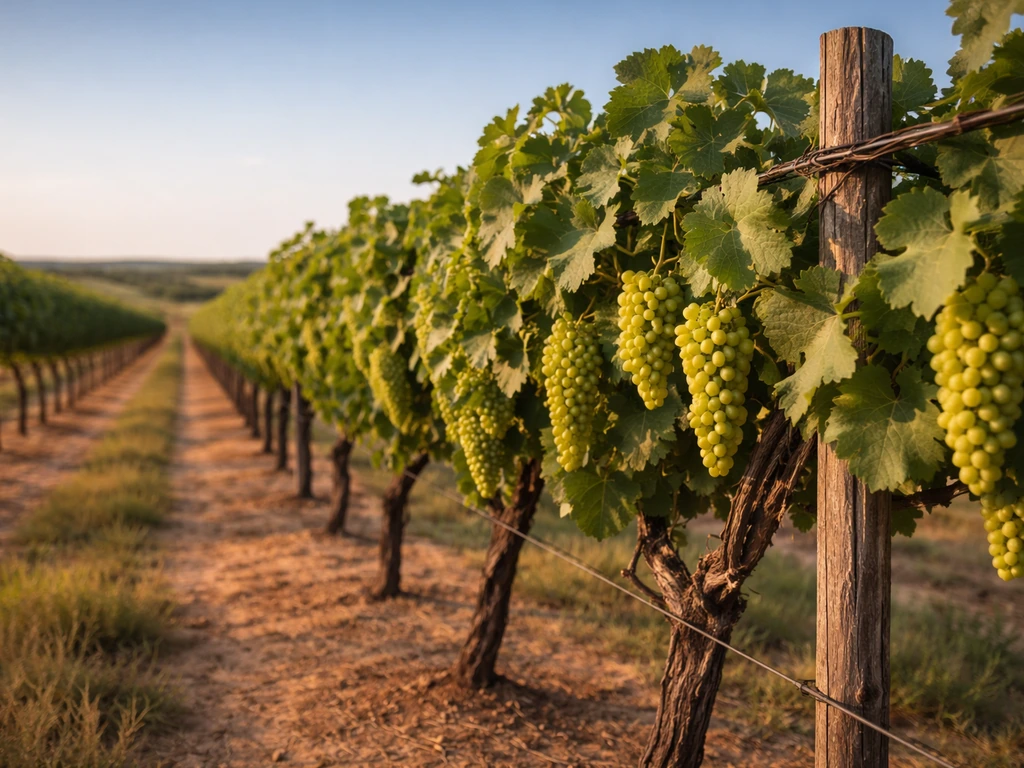
How Texas climate shapes your grape growing
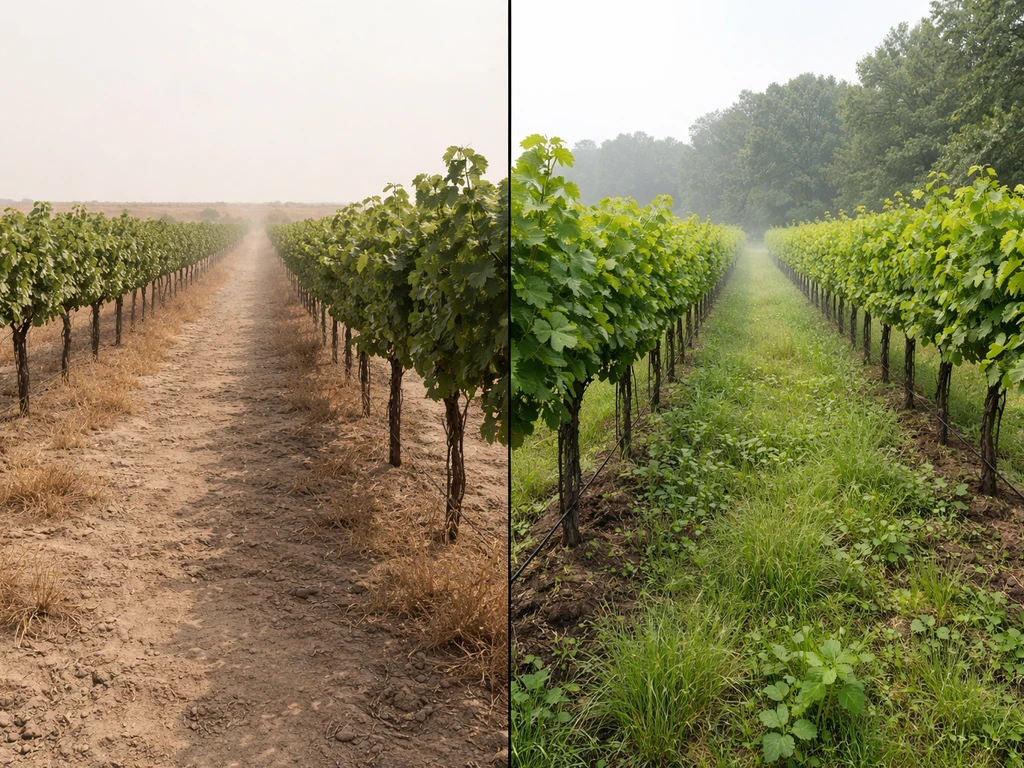
Texas is not one climate, it is five or six packed together. That matters enormously for grapes. The Texas High Plains around Lubbock sits at 3,000 to 4,000 feet elevation, runs cool nights, and has very low relative humidity. That low humidity is a genuine advantage because it drastically reduces disease pressure from fungal problems like downy mildew and black rot.
The Hill Country around Fredericksburg is warmer, drier than East Texas, and has become the heart of Texas wine country. East Texas is a different world entirely: humid, with heavier rainfall and acidic soils. Then you have South Texas with brutal heat and minimal chill hours, and the Panhandle with real winter cold risk. Your zip code genuinely changes what is possible.
The heat is intense across most of Texas in summer, and grapes actually handle heat better than many gardeners expect, as long as they have deep roots and consistent moisture. What kills more Texas grapes than heat is humidity combined with wet springs, which creates the perfect conditions for fungal disease. Black rot in particular becomes a serious problem in Texas vineyards during wet growing seasons, especially in the eastern half of the state. The drier your region, the less you will deal with this.
Winter cold snaps are a real concern, especially for less cold-hardy varieties. The Texas Panhandle can dip well below zero on bad nights. Even the Hill Country and North Texas see hard freezes that can kill tender canes or damage buds. A late spring frost after bud break is one of the most frustrating events in Texas grape growing because you can lose an entire year's crop in one night. This is one reason variety selection and site choice are so critical here.
Rainfall in Texas ranges from about 8 inches per year in far West Texas to over 50 inches in the Pineywoods of East Texas. If you are in a dry part of the state, plan on irrigation from the start. If you are in East Texas or near the Louisiana border, plan your disease management program before you plant a single vine.
Which grape varieties actually work in Texas
This is where I see most beginner Texas grape growers go wrong. They buy European wine grapes (Vitis vinifera varieties like Cabernet Sauvignon or Chardonnay) because that is what they want to drink, plant them in East Texas or Central Texas, and wonder why they collapse by year three. Vinifera grapes are finicky about humidity and disease. They can work in the High Plains and parts of the Hill Country with serious management, but they are not the easiest starting point for a home gardener.
For East Texas specifically, muscadines (Vitis rotundifolia) are the standout choice. They are native to East Texas, thrive in the humid conditions there, and have built-in disease resistance that makes them dramatically easier to grow than any European variety. They prefer the loamy, acidic soils typical of East Texas, doing best at a soil pH around 6.0. Muscadine harvest produces a distinct bronze or dark purple fruit with a thick skin and musky flavor that is not the same as a grocery store grape, but many people love them fresh, in jams, and in juice.
For wine production, Texas-bred and Texas-adapted hybrids are increasingly the smart move. The Texas Wine & Grape Growers Association maintains a list of Texas-adapted wine grape varieties, including Texas-bred hybrids like 'Favorite,' which is used for red-wine style production. Texas A&M AgriLife Extension has a full resource on winegrapes of Texas that connects growers with variety guidance and local extension experts, and I would strongly suggest using it before you buy plants. For the Hill Country and High Plains, varieties like Tempranillo, Viognier, Mourvèdre, and Sangiovese have shown real promise at commercial and home scale.
Variety comparison by Texas region and goal
| Variety Type | Best Texas Region | Goal | Disease Resistance | Notes |
|---|---|---|---|---|
| Muscadine (Vitis rotundifolia) | East Texas | Table fruit, juice, jam | High | Native to region; loves humid, acidic soil; pH ~6.0 |
| Tempranillo (Vitis vinifera) | Hill Country, High Plains | Red wine | Low-Moderate | Drought tolerant once established; needs dry air |
| Viognier (Vitis vinifera) | Hill Country, High Plains | White wine | Moderate | Performs well in Texas heat; popular in Hill Country |
| Texas-bred hybrids (e.g., 'Favorite') | Hill Country, North Texas | Red wine, table | Moderate-High | Bred for Texas conditions; good option for beginners |
| Black Spanish (Lenoir) | East/Central Texas | Red wine, table | High | Old hybrid; proven Texas performer with good disease tolerance |
| Blanc Du Bois | East Texas, Gulf Coast | White wine, table | High | Pierce's disease resistant; excellent humid-climate choice |
If you are near the Oklahoma border or in North Texas, the conditions there share a lot with what gardeners deal with just across the state line, and growing grapes in Oklahoma follows many of the same rules around variety selection and disease management. Similarly, if you are in far East Texas near the Louisiana border, you will find the disease and humidity challenges very similar to what is discussed in guides on growing grapes in Louisiana.
Where and when to plant your vines
Site selection is one of the most important decisions you will make. Grapes want full sun, ideally at least 8 hours per day. A south or southeast facing slope is ideal in Texas because it maximizes morning sun exposure and can improve air drainage, which helps reduce fungal disease pressure. Avoid low-lying spots where cold air pools on frosty nights and where water sits after rain. Grapes need well-drained soil. If your site stays soggy after a rain event, find a different spot or build raised rows.
Soil for most grapes should be a well-drained sandy loam. Deep soils are better because they encourage deep rooting, which helps with drought tolerance and winter hardiness. For muscadines in East Texas, you are already working with naturally acidic soils that suit them well. For vinifera or hybrid varieties in other regions, a soil test before planting is worth the small cost so you can amend pH and nutrients correctly.
The best time to plant grapevines in Texas is February to April. Texas A&M AgriLife Extension recommends planting young vines on well-drained sandy loam in February or March, and a separate AgriLife resource on starting a vineyard in Texas puts the window at March to April. In practice, earlier is usually better in most of Texas because it gives roots time to establish before summer heat kicks in. If you are buying bare-root vines, keep them moist in their packaging and store them in a cool, dark place until you are ready to plant. Do not let those roots dry out.
Spacing depends on your trellis system and variety. For most home plantings, 8 to 10 feet between vines in a row and 10 to 12 feet between rows is a reasonable starting point. Muscadines are vigorous and need more room, often 16 to 20 feet between vines. Give them space. Crowding creates poor airflow and that invites disease, especially in humid parts of the state.
The Texas grape season, week by week
One of the things that surprises new Texas grape growers is how early the season moves compared to other regions. Texas harvest typically starts in July, roughly two months earlier than California and earlier than most French wine regions. That is a consequence of the heat. The vines run hard and fast once spring arrives, and the fruit ripens before the worst of summer is truly over.
Here is a rough seasonal timeline for most of Texas (adjusting a few weeks earlier for South Texas and later for the High Plains and Panhandle):
- February to March: Dormant pruning window. This is when you do your main annual pruning before bud break. Prune cold-hardy varieties first and finish with the least cold-hardy ones so you can assess any winter damage before cutting.
- March to April: Bud break. Vines begin pushing new growth. This is also your frost-risk window, so watch the forecast closely. A hard freeze after bud break can wipe out the season's crop.
- April to May: Shoot growth and leaf development. Rapid canopy growth happens here. This is when you start managing shoots on your trellis and watching for early fungal disease signs.
- May to June: Bloom and fruit set. Small flower clusters appear and fruit begins to form. Keep humidity and wet foliage to a minimum during this stage to protect against disease.
- June to July: Fruit development and early veraison (color change and sugar accumulation begin). In the hottest parts of Texas, veraison can arrive in late June for early varieties.
- July to August: Primary harvest window for most white varieties and early reds. Red wine grapes and muscadines can extend into August and September depending on region and variety.
- September to October: Late harvest, post-harvest canopy care, and preparation for dormancy.
- November to January: Full dormancy. Vines are resting, and this is the window for any infrastructure work on trellises, soil amendments, and planning.
How long before you get a real harvest
Here is the honest answer: year one is not about fruit. Your job in the first growing season is to let the vine build a strong root system and develop its basic structure. Texas A&M AgriLife Extension's muscadine guidance is direct about this: during the first year, you let growth develop from dormant buds specifically to build that root system, not to rush toward fruit. Texas A&M AgriLife Extension also provides a general [vineyard establishment timeline](https://agrilifeextension.
tamu. edu/asset-external/general-timeline-of-events-for-the-establishment-of-a-commercial-vineyard-in-texas/) for Texas grape growers that outlines key steps and timing from planting through growing and harvesting. Resist the urge to let any fruit clusters develop in year one, even if the vine sets them. Pull those clusters off.
It sounds painful, but a vine that exhausts itself producing fruit in year one will be weaker and slower for years after.
Year two you may see some fruit, but it will be light, and your priority is still training the vine onto your trellis system and building the permanent cordon or trunk structure. Year three is typically when you start getting a meaningful taste of what your vine can do. A mature, established vine in year four and beyond can produce 10 to 15 pounds of fruit per vine under good conditions in Texas, with muscadines often producing even more once fully established.
The timeline is very similar in other warm southern states. If you want to read about how things play out in a comparable climate, the approach to growing grapes in Florida covers a lot of the same establishment-year patience required in humid, hot conditions. For a completely different reference point on how altitude and drier air change the equation, the guide on growing grapes in Colorado is a useful contrast showing how the same plant behaves in a high-elevation, low-humidity environment.
What to do right now: your practical starting checklist
Buying your plants
Buy from a reputable Texas nursery or a mail-order nursery that ships bare-root vines appropriate for your region. Avoid general-purpose garden center grapes unless you can confirm the variety and rootstock. Ask specifically about Pierce's disease resistance if you are in East, Central, or South Texas because this bacterial disease (spread by sharpshooters) will kill susceptible vinifera vines within a few years. Blanc Du Bois and Black Spanish (Lenoir) are two varieties with strong reputations for Pierce's disease tolerance in humid Texas regions.
Setting up your trellis
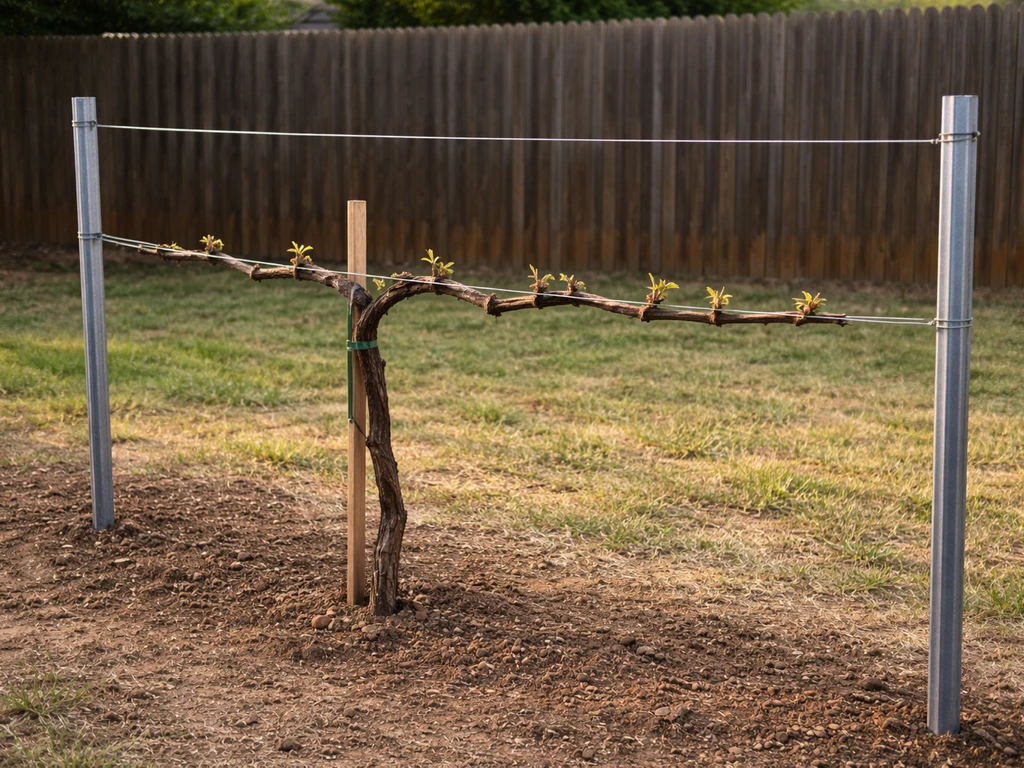
Build your trellis before you plant, not after. The most common training system used in Texas vineyards is cordon-trained spur-pruned, which accounts for 85 to 90 percent of Texas commercial plantings. For a home setup, a simple two-wire trellis with sturdy end posts works well. Set end posts at least 3 feet deep and use a gauge wire that will not sag under the weight of a loaded canopy. Trellis height of about 5 to 6 feet works well for most varieties, with the cordon wire at roughly 3 to 4 feet.
Basic ongoing care
Water consistently during the first two growing seasons while roots are establishing. After that, most Texas varieties become reasonably drought tolerant, though irrigation during dry summers will improve fruit quality and vine health. Fertilize in late winter, typically February or March, with a balanced fertilizer. Do not over-fertilize with nitrogen or you will push excessive vegetative growth at the expense of fruit. Prune during dormancy each year. When making pruning cuts, especially larger ones on the trunk and cordon, use a wound protection product to reduce the risk of trunk disease pathogens entering fresh cuts.
The problems you are most likely to face
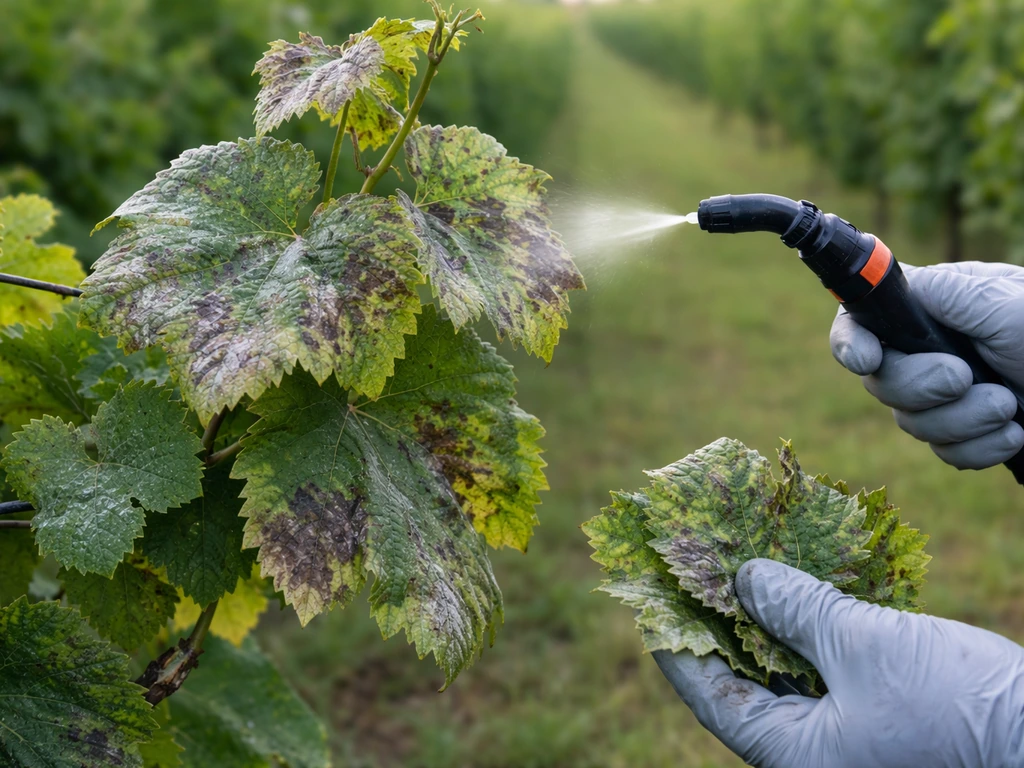
- Fungal disease (black rot, downy mildew, powdery mildew): Highest risk in East Texas and during wet springs statewide. Use disease-resistant varieties and apply preventive fungicide sprays starting at bud break in high-risk regions. Improve airflow by keeping your canopy thinned.
- Pierce's disease: A bacterial disease lethal to vinifera grapes in warm, humid regions. Choose resistant varieties if you are in Central Texas or east of I-35.
- Heat stress and sunburn: Use irrigation to keep vines from wilting during peak summer heat. Some growers in South and West Texas provide afternoon shade cloth for young vines in establishment years.
- Bird pressure: As fruit ripens in summer, birds will find it fast. Bird netting is the most reliable solution for home growers.
- Late spring frost: Monitor forecasts closely between March and mid-April. Have frost cloth ready for young vines or newly budded vines. Even a brief hard frost at bud break can eliminate the season.
- Winter injury in the Panhandle and North Texas: Plant cold-hardy varieties and mound soil around the base of young vines in the first few winters for added protection.
The bottom line is that Texas is a genuinely viable grape-growing state, and with the right variety in the right region, you can get to harvest in three to four years with relatively straightforward care. The biggest mistakes are planting the wrong variety for your humidity and disease environment, skipping the trellis setup, and expecting fruit in year one. Get those three things right and you are well ahead of most first-time Texas grape growers.
FAQ
Can you grow grapes in Texas in containers or pots?
Yes, but in most of Texas you should choose a variety suited to your local disease pressure and chilling hours, then plan on irrigation. For container growing, the major constraint is winter protection, because pots freeze faster than ground, and that can kill buds or damage canes even when the same variety survives in the yard.
If my Texas grape vine sets fruit the first year, should I leave the clusters?
For most home growers, expect a true crop start around year 3, even when the vine flowers earlier. If you let clusters hang in year 1, the vine often prioritizes fruit over establishing roots and permanent structure, which slows yields in years 3 and 4.
Is it possible to grow European wine grapes in Texas if I’m careful with care?
You can, but most Texas grape problems are driven by humidity, rainfall timing, and winter lows, not just general “heat.” If you choose vinifera in a humid East Texas site, you will almost certainly need a consistent disease program, proper airflow, and a trellis layout that keeps foliage dry.
Are muscadines the best option for all of Texas?
Muscadines are usually easier in humid parts of Texas, but they are not automatically the best choice everywhere. In the High Plains and Panhandle, you still need cold-hardy selections and winter protection, and you may get different fruit quality depending on your local season length.
What site problems cause the most failure in Texas grape plantings?
A north- or low-lying site is the fastest route to weak growth and disease in Texas because cold air pools and humidity lingers after rain. Aim for full sun with good air drainage, and if the area stays wet after storms, raised rows or a different location will outperform trying to “treat” a bad site.
Do I need a soil test before planting grapes in Texas?
Yes. Before you amend, measure your soil pH and nutrient levels, then correct based on the test rather than guesswork. Grapes, especially outside muscadines, can struggle when pH is far off, even if the soil feels fertile.
What kind of soil is best for grapes in Texas, and what if my soil is clay?
Deep, sandy loam helps most Texas grapes because it supports deep rooting and reduces waterlogging stress. If your soil is heavy or clay-like, plan raised rows or mechanical soil improvement, because soggy conditions promote root issues and increase fungal disease pressure.
What is the best planting window in Texas, and what about late frosts?
In many areas, February through April is a good window, earlier usually helps the roots establish before summer heat. For late frosts, the practical move is to time planting so the vine is established enough to survive but not so far ahead that tender growth is hit repeatedly.
How tight can I space grapevines in Texas without causing disease?
The spacing guidance depends on training system and vigor, but the disease and airflow logic stays the same. Crowding reduces ventilation, which can turn a manageable season into a black rot year, especially in humid regions.
How much should I water grapes in Texas, especially in years 1 and 2?
Your first priority is building the trellis and the vine’s permanent structure, then consistent watering during establishment. After year 2, most Texas varieties tolerate some drought, but skipping irrigation during dry summers can reduce fruit quality and stress the vine through heat.
If I’m in East, Central, or South Texas, what should I ask the nursery about Pierce’s disease?
Because Pierce’s disease is a serious concern in many parts of Texas, ask nurseries specifically about resistance for your region before purchase. This is one of those “buy right the first time” items, since susceptible vines can decline quickly after sharpshooter spread begins.
Do I really need to build the trellis before planting?
Yes, but don’t postpone trellis building. Installing after planting often leads to root disturbance and rushed training, which can weaken the long-term cordon and make pruning more difficult over time.
What fertilizer mistake do Texas grape growers make most often?
Yes. Over-fertilizing with nitrogen is a common mistake that drives excessive leafy growth, which then increases disease risk and delays proper ripening. Stick with late-winter fertilization and avoid “feeding schedules” that are heavier than your vine needs.
Should I protect pruning cuts on grapevines in Texas?
If you prune in dormancy, that timing helps limit disease spread, but protection of fresh cuts still matters, especially on larger pruning wounds. Use a wound protection approach on bigger cuts to reduce entry points for trunk pathogens.
When should I expect harvest in Texas, and how do I avoid harvesting too early or too late?
Grapes ripen earlier than you might expect in Texas, so you need to plan harvest timing by your variety and microclimate. Check ripeness often near the end, since heat can accelerate sugar development quickly and can reduce quality if you wait too long.
How do I adapt my Texas grape plan if I’m near the Oklahoma border or in North Texas?
If you are near the Oklahoma border or far North Texas, cold risk and growing-season timing can shift what varieties work best. Keep variety selection and the trellis and disease plan consistent with your local conditions rather than copying someone’s strategy from a very different Texas sub-region.