
Yes, you can absolutely grow grapes in Virginia, and plenty of home gardeners do it successfully every year. The state's mix of climate zones, long growing season, and history of commercial viticulture all work in your favor. That said, success comes down to three things: picking a variety suited to your part of the state, finding the right spot on your property, and staying on top of disease pressure from spring through harvest. Skip any of those and you'll struggle. Get them right and you'll have fruit within a few years.
Can You Grow Grapes in Virginia? How to Do It Right
Marcus Whitfield
27 May 2026
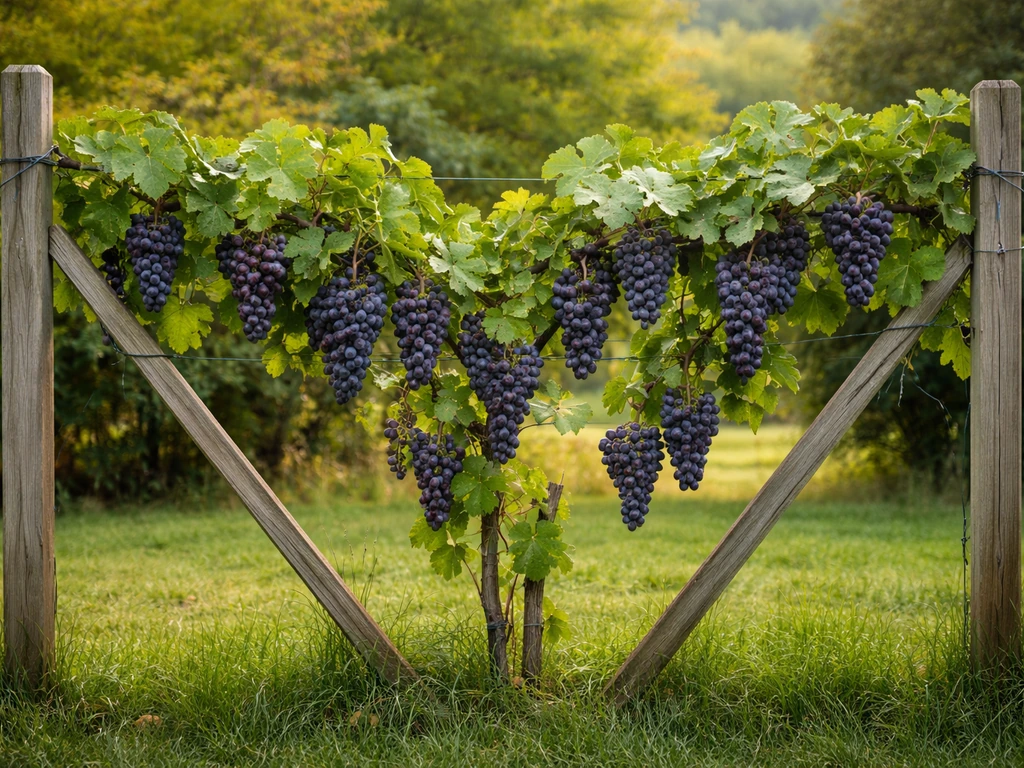
Virginia's growing conditions and what grapes need
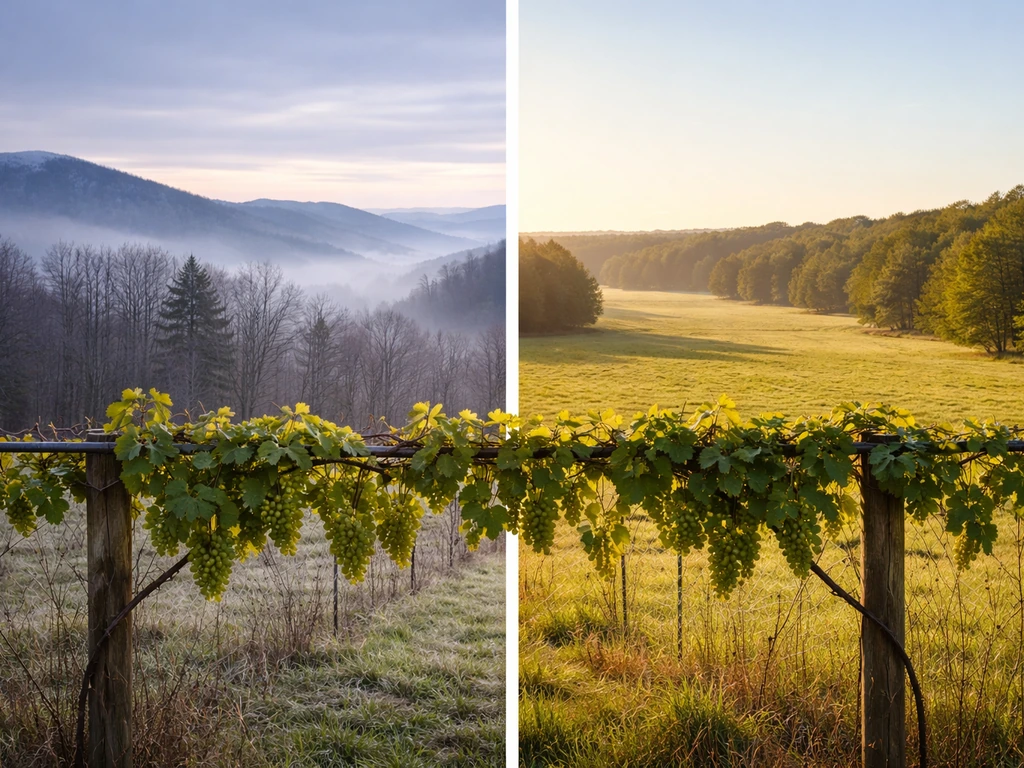
Virginia spans USDA hardiness zones 5b through 8a, so where you live in the state matters a lot. The Shenandoah Valley and western mountains run colder, while Coastal Plain areas around Hampton Roads stay mild through winter. As a general baseline, Virginia Cooperative Extension recommends that home gardeners plant grapes only in zones 7b or warmer if they want muscadine types, while cold-hardy hybrid varieties push that range further west and north without major issues.
Grapes need at least six to eight hours of direct sun daily. Full sun is non-negotiable. Beyond that, air circulation is critical in Virginia because the state's warm, humid summers create perfect conditions for fungal disease. Choose a site on a gentle slope or ridge top if you can, where air moves freely around the vines. Avoid low spots where cold air and moisture settle.
Soil should drain well. Grapes are deep-rooted plants that can penetrate six to eight feet under good conditions, so they hate waterlogged soil. A loamy or sandy loam with a pH between 6.0 and 6.8 is ideal for most varieties. Get a soil test before you plant. If your drainage is poor, raised rows or a slight slope will help far more than any amendment.
Best grape varieties for Virginia home gardens
This is where a lot of beginners go wrong. They buy whatever sounds appealing at a nursery without checking whether it fits their region or disease pressure. Virginia's humidity punishes European wine grapes (Vitis vinifera) hard. They can work in the right microclimate with the right spray program, but they are not beginner-friendly. For most home gardeners, hybrids and native-based varieties are the smarter starting point.
Wine and juice grapes
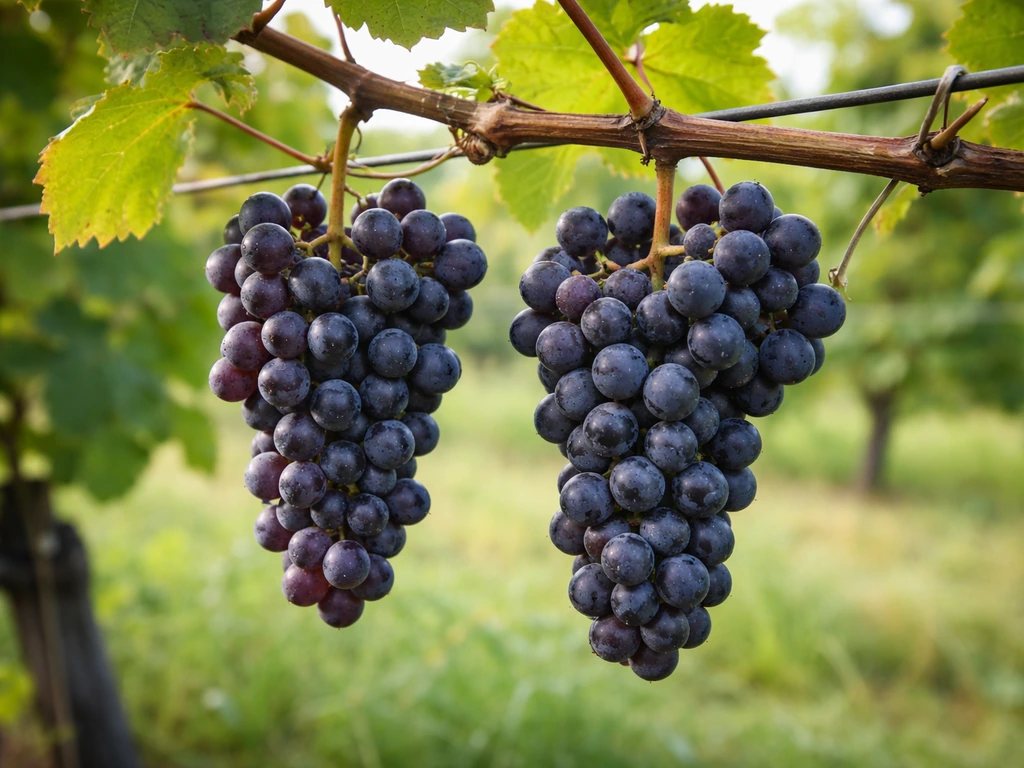
- Chambourcin: A French-American hybrid red that performs reliably across much of Virginia. It handles humidity better than pure vinifera, produces decent yields, and makes a solid red wine. One of the most practical choices for home wine-making.
- Norton (also sold as Cynthiana): A black grape with small clusters and berries that has deep roots in Virginia's wine history. It is very disease-resistant and cold-hardy, making it an excellent long-term choice for home gardeners who want wine grapes with less fuss.
- Vidal Blanc: A white hybrid that is widely grown in Virginia's commercial industry. It handles cold reasonably well and is moderately disease-resistant. Good choice for home white wine or juice.
- Traminette: A cold-hardy white hybrid with aromatic, Gewurztraminer-like flavor. Performs well in cooler parts of the state and shows better disease resistance than pure vinifera whites.
Table and fresh-eating grapes
- Concord: The classic American table and juice grape. It is one of the most forgiving varieties you can grow in Virginia, with strong disease resistance and cold hardiness across most of the state. If you just want reliable fruit for eating, juice, or jelly, start here.
- Reliance: A seedless red table grape with good cold hardiness and decent disease resistance. Sweet, easy to eat, and a crowd-pleaser for fresh use.
- Mars: A seedless blue table grape with excellent disease resistance and cold hardiness. Works well in Virginia's climate and produces consistently.
Muscadines (southern Virginia only)
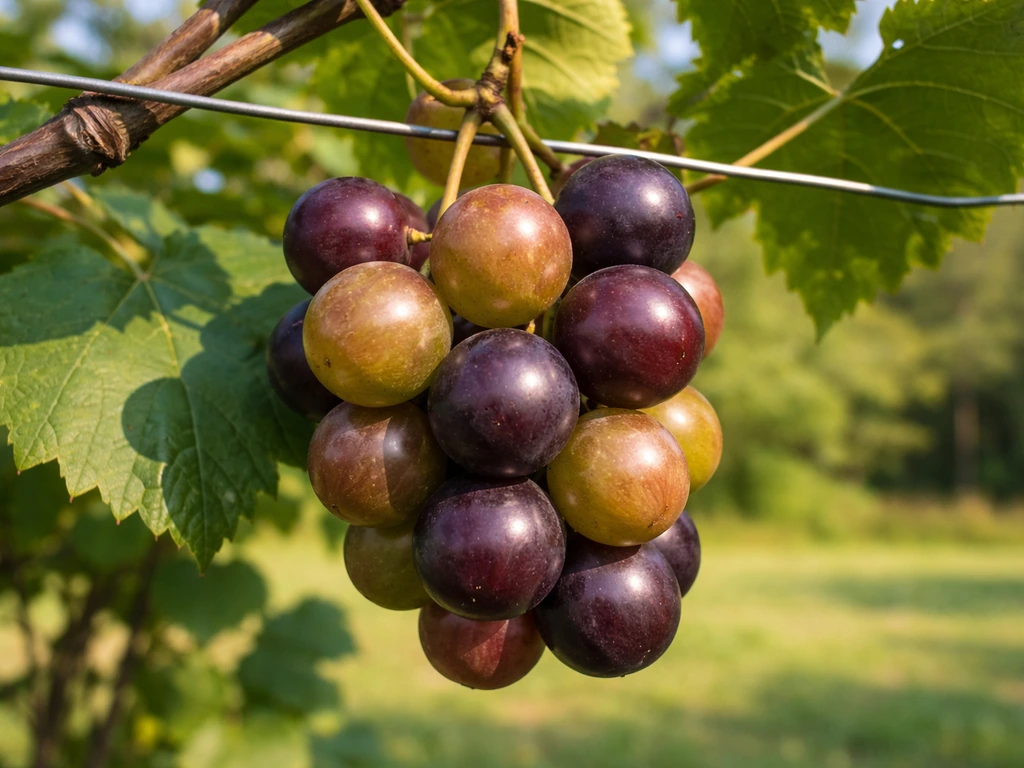
Muscadine grapes thrive in Virginia's southeastern Coastal Plain and Piedmont where temperatures rarely drop below 5°F. VCE is clear that muscadines should not be planted where temps regularly hit that threshold. If you are in zones 7b and warmer, Carlos (bronze) and Nesbitt (black) are reliable home-garden varieties. If you are in zone 7a or colder, skip muscadines and go with hybrids instead.
| Variety | Type | Best Virginia Region | Disease Resistance | Cold Hardiness |
|---|---|---|---|---|
| Concord | Table/Juice | Statewide | High | Excellent |
| Norton | Red Wine | Statewide | Very High | Excellent |
| Chambourcin | Red Wine | Statewide | Moderate-High | Good |
| Vidal Blanc | White Wine | Statewide | Moderate | Good |
| Traminette | White Wine | Central/Western VA | Moderate-High | Very Good |
| Reliance | Table (seedless) | Statewide | Moderate | Very Good |
| Mars | Table (seedless) | Statewide | High | Very Good |
| Carlos (Muscadine) | Table/Wine | Southern/Coastal VA only | High | Poor below 5°F |
Planting: timing, spacing, and setting up your site
Plant bare-root grapevines in early spring, as soon as the soil is workable and after the risk of a hard freeze has passed. For most of Virginia this means late March through April. Container-grown plants can go in a bit later, into May, but earlier is better so vines can establish before summer heat hits.
Space vines 6 to 8 feet apart within rows if you are running a standard two-wire trellis. If you are using a Geneva Double Curtain system (which splits the canopy across two parallel wires), blank" rel="noopener noreferrer">you can space vines a bit further, 8 to 10 feet, to allow room for canopy development. Row spacing of 10 feet works well for most backyard situations and lets you move through for pruning and spraying without a struggle.
Before planting, work the soil well and dig a hole wide enough to spread the roots naturally without bending them. Set the vine so the graft union sits just above the soil line if it is a grafted plant. Backfill, firm the soil, and water thoroughly. Apply a 2 to 4 inch layer of mulch in a circle around the plant, keeping it a few inches away from the trunk. Mulch is the best soil management tool for home grape plantings because it suppresses weeds and conserves moisture without the need for constant cultivation.
Trellis systems, training, and pruning basics
Getting the structure right early is the single biggest factor in how productive and manageable your vines will be for the next twenty years. For most Virginia home gardeners, a simple two-wire vertical trellis is the best starting point. Set posts 8 to 10 feet apart with the first wire at about 36 inches and a second at 60 inches. This supports the basic four-arm Kniffin training system, which is tried-and-true for American and hybrid varieties.
The Geneva Double Curtain is worth considering if you want higher yields and have the space. It uses two parallel wires about 4 feet apart on a T-bar trellis, effectively doubling the fruiting surface. It does cost more to set up and requires careful canopy management to keep the divided curtains separated and light-exposed. If canopy management slips, yields and fruit quality drop. For a first-time grower, master the basics on a simpler system before going the GDC route.
Pruning for beginners
Prune when the vine is fully dormant, ideally in late winter before bud swell, typically February into early March in Virginia. Do not prune too early in fall or in the middle of winter during a warm spell. Pruning before dormancy is fully set can reduce cold hardiness and increase injury risk. Waiting until just before growth begins in spring is the safest window.
The key concept is that fruit forms on second-year wood, so cane pruning means leaving the right number of healthy one-year-old canes and cutting the rest. For cane pruning, select two to four vigorous canes per vine, each with 8 to 12 buds, and remove everything else. Tie the retained canes to the trellis wire. Leave short renewal spurs of one to two buds near the main trunk to produce next year's fruiting canes. That cycle, year after year, is what keeps production consistent.
Season-by-season care
Watering and fertilizing
Young vines need consistent moisture during establishment, roughly 1 inch of water per week during dry spells. Once established, grapevines are surprisingly drought-tolerant thanks to their deep root systems. Overwatering or irrigating when it is not needed encourages disease and excessive leafy growth at the expense of fruit quality.
Fertilize based on a soil test rather than guessing. For nitrogen specifically, split applications work best: apply one dose around bud break in spring and a second close to bloom or within about two weeks after bloom. Applying it all at once early risks leaching before the vine can use it. Spread fertilizer in a circle roughly 10 to 12 inches out from the trunk, not right against it. Avoid heavy nitrogen inputs on established vines because excessive shoot growth shades the fruit, reduces air circulation, and worsens disease pressure.
Disease management: the biggest challenge in Virginia
Disease pressure is real in Virginia, and managing it is not optional if you want reliable fruit. The three main threats are downy mildew, powdery mildew, and black rot. All three can explode during Virginia's warm, wet springs and early summers. Bloom is the most critical window. Cluster infections during that period can devastate your entire crop before you even realize it.
Downy mildew is a season-long challenge in the Mid-Atlantic region. It can develop into an epidemic quickly when weather turns warm and wet. Start protectant sprays early, around 3 to 5 inches of new shoot growth, and maintain coverage through the post-bloom period. Do not assume one early spray is enough. Timing and consistency matter more than any single application.
For powdery mildew, be aware that there is widespread resistance to QoI fungicides (products like Abound and Flint) among Virginia isolates. Do not rely on those materials for powdery mildew control. Sulfur-based products remain effective and are among the most practical options for home gardeners. The powdery mildew fungus overwinters in bark crevices, so starting coverage early in spring before symptoms appear is important.
For home gardeners, a practical spray program built around protectant fungicides like captan, sulfur, and copper-based products, timed to growth stages rather than the calendar, gives the best results. Virginia Tech publishes a home fruit spray schedule that is worth bookmarking. Varieties with strong disease resistance (Norton, Concord, Mars) will require far less intervention than vinifera varieties, which is another good reason to start with hybrids.
Winter care
In most of Virginia, established vines of hardy hybrid and American varieties will survive winter without special protection. In the colder mountain and western regions (zones 6 and lower), vinifera varieties may suffer significant cold injury most winters. In those areas, practices like burying canes or mounding soil over the graft union can protect fruitful buds during extreme cold events. Hardy hybrids and American varieties are a much safer bet if you are in the western part of the state.
How long until you get fruit
Set your expectations realistically here. In year one and two, your job is building the vine, not harvesting fruit. VCE and UMD Extension both recommend removing flower clusters during the first couple of years so the vine puts energy into root and shoot development rather than fruiting. It feels frustrating, but it pays off. Vines that are pushed to fruit too early tend to be weaker and less productive long-term.
Most home gardeners see their first meaningful harvest in year three or four. A full, reliable crop typically comes in years four to five as the vine matures and the root system gets established. From that point, a healthy vine can produce for twenty to thirty years, so the patience in early years is well worth it.
Common mistakes and how to fix them
- Choosing the wrong variety: Planting European vinifera in a humid, disease-prone location without a serious spray program is the fastest way to fail. Start with disease-resistant hybrids or American varieties and add vinifera later if you want a challenge.
- Poor site selection: Low spots with bad air drainage create disease pressure that no spray program can fully overcome. Move the vines if you can, or plan on fighting disease every season.
- Skipping pruning or pruning too lightly: Unpruned vines become a tangled mess that shades themselves out, reduces fruit quality, and becomes nearly impossible to spray effectively. Heavy pruning feels scary the first time, but grapes need it.
- Pruning at the wrong time: Pruning too early in fall or during a mid-winter warm spell can reduce the vine's cold hardiness. Wait until late winter, just before bud swell, for the safest results.
- Ignoring disease until symptoms appear: By the time you see black rot lesions or downy mildew sporulation, infection already happened days or weeks earlier. Protectant sprays applied before infection are far more effective than trying to rescue already-infected tissue.
- Overfertilizing with nitrogen: Lush, dense canopies look impressive but trap humidity, reduce air flow, and create ideal conditions for every fungal disease on this list. Less nitrogen and better canopy management will serve you better.
- Expecting fruit too soon: Trying to get a crop in year one or two weakens the vine. Remove flower clusters early on and invest in the root system instead.
How Virginia compares to neighboring states
Virginia sits in a similar zone to much of North Carolina and Tennessee when it comes to grape viability. Because North Carolina has similar growing zones and comparable humidity-driven disease pressure, the same general grape-growing approach works there too. The same general approach can work in Tennessee too, but you will want to pick varieties and time disease control based on your local conditions grow grapes in Tennessee. The disease pressure from humidity is comparable across the region, and many of the same variety recommendations apply. Gardeners in Georgia or South Carolina deal with even more heat and a longer growing season, which shifts the variety calculus toward muscadines and heat-tolerant hybrids. If you are wondering can you grow grapes in South Carolina, the short answer is yes, but you will want to lean toward muscadines and heat-tolerant hybrids because of the longer, warmer season. If you are wondering, can you grow grapes in Georgia, the approach is similar, but you will likely lean more toward muscadines and heat-tolerant hybrids. If you are growing near the Virginia-North Carolina or Virginia-Tennessee border, variety choices and disease timing will be very similar on both sides of the line.
Your next steps
If you are ready to get started, here is what to do right now. Get a soil test from your local VCE office or a private lab. Pick two or three disease-resistant varieties that fit your part of the state, starting with Norton, Concord, or Chambourcin if you are unsure. Choose your site with full sun and air circulation as the top priorities. Order bare-root vines for early spring planting, set your trellis posts before the vines arrive, and commit to a consistent spray schedule from the moment new growth begins. The first couple of years are about building the vine, not the harvest. Do that right and you will have productive, healthy vines for decades.
FAQ
Can you grow grapes in Virginia in a container or on a small patio?
Yes, but only if you can hit the sunlight requirement consistently and manage humidity. Aim for at least 6 to 8 hours of direct sun, and use a large container (often 15 to 25 gallons) with excellent drainage. Expect the same disease pressure as in-ground plantings, and plan to water more frequently in containers, since deep roots cannot grow as far to find moisture. Trellising in containers is still important to keep clusters off wet foliage and improve airflow.
Can I grow grapes from seed in Virginia?
You can start from seed, but it is not the fastest or most reliable route for getting known fruit quality. Many grapes are hybrids, and seedlings can take years to fruit and may not match the parent variety's flavor or disease resistance. For home growers in Virginia, bare-root or rooted cuttings are the practical choice because they establish structure and can produce within a predictable timeline (after the first couple years of training).
How deep should I plant a grafted grapevine in Virginia, and what if I need winter protection?
If you have a grafted vine, the graft union location matters long-term. Plant so the graft union sits just above the soil line (not buried), and avoid repeatedly piling soil up over it each year, since burying the union can change how the plant behaves and may weaken the intended rootstock benefits. If you need winter protection in colder areas, protect canes or the grafted area in a controlled way, but keep the planting depth principle in mind.
What is the biggest mistake people make with disease control in Virginia vineyards?
Rainy springs in Virginia can make a “spray only when you see problems” plan fail. A common mistake is starting too late, especially around bloom, when cluster infections can devastate the crop. Build your plan around growth stage rather than only calendar dates, and be prepared to reapply based on rainfall and new growth, not just time intervals.
Is vinifera (European wine grapes) ever a good beginner choice in Virginia?
Skip the European vinifera mindset unless you have a good microclimate and are willing to be consistent. In many parts of Virginia, hybrids and native-based varieties give more predictable results with less intensive disease management. If you try vinifera, treat it as a higher-effort project, and use disease-resistant neighbors in your overall plan to reduce how much coverage you need.
Can I train grapes on a fence or arbor instead of a trellis?
Yes, but spacing and training need adjustment. If you are planting multiple vines, you still want good airflow, so do not cluster them too closely just because you have a fence. Use the correct vine spacing for your trellis style, prune for open canopy structure, and keep foliage from touching structures, since trapped moisture raises disease risk.
Do I really need to remove all grape clusters in the first couple of years?
You should expect to do “fruit removal” only when the vine is still establishing. In most home-garden situations, removing clusters in years one and two is recommended so the vine invests in roots, trunk thickness, and strong fruiting cane development. If the vine looks unusually vigorous by late year two, you can consider leaving a very small number of clusters as an experiment, but keep expectations modest and prioritize canopy health.
Can I use a more minimal spray schedule in Virginia, and what should I prioritize first?
Yes, but make the timing deliberate. For example, if powdery mildew is a concern, sulfur-based options are often used early before symptoms explode, and coverage on new growth is critical. Also, be careful about mixing products or changing active ingredients without a plan, since some materials have compatibility limits and may not address all diseases (downy versus powdery). When in doubt, follow a growth-stage spray approach and adjust based on which disease you are seeing.
What if my yard has heavy clay soil or a low spot, can I still grow grapes?
You can, but it depends on your site drainage and how much sunlight you truly get. Poor drainage increases root stress and can make vines more susceptible to disease, and low spots can trap cold air. If you cannot move the planting location, raised rows or a raised bed can help, but you still need full sun and airflow, otherwise mildew risk remains high even if the soil is improved.
How should I protect grapes during Virginia winters in zone 6 or colder?
In very cold pockets, protection strategies are about insulating the fruitful wood, not just covering leaves. For colder western zones, consider methods like mounding soil over the graft union and tying and burying canes to protect the buds from repeated freeze-thaw cycles. Also, remove protection at the right time in spring so buds do not break underground or under trapped moisture.
How do I know the pruning window is right in Virginia?
Track it by growth and canopy condition, not just calendar pruning. If you prune too early in the wrong warm spell, you can reduce winter hardiness, and if you prune too late, you may miss the dormant timing. A useful rule is to wait for deep dormancy, prune before bud swell, then watch for even bud break and balanced shoot growth as a sign your timing and cane selection were right.