
Yes, you can absolutely grow grapes in Illinois. This is not a stretch or a gardening experiment that might sort of work on a good year. Illinois has real commercial and home vineyard history, and with the right variety and a little planning, you can get reliable fruit from your backyard vines. The key word there is variety. Choose the wrong grape and you will spend years nursing frost-damaged canes back to health. Choose the right one and grapes become one of the most rewarding perennial crops you can plant.
Can You Grow Grapes in Illinois? How to Succeed
Marcus Whitfield
20 Apr 2026
Illinois grape viability: can grapes really thrive here
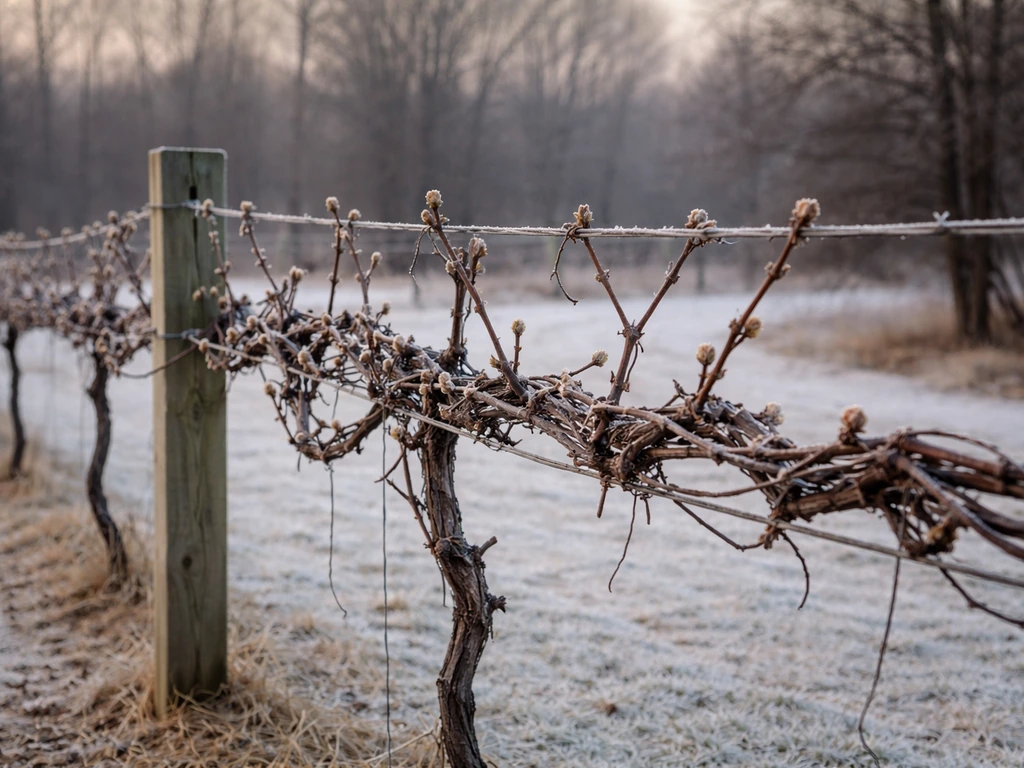
Illinois Extension puts it plainly: grapes can be grown in Illinois if you choose a variety hardy enough to survive cold winter temperatures. That is the short version of everything you need to know about viability. The state is not too cold, too hot, too wet, or too dry for grapes as a category. It is simply too cold for the wrong grapes.
American varieties (think Concord, Catawba, Niagara) and French-American hybrids (like Chambourcin or Vidal Blanc) are the two groups that work reliably in Illinois. Of those two, American varieties carry the most cold hardiness and better natural disease resistance. French-American hybrids open up more wine-quality options and can still survive Illinois winters, but they are a step down in hardiness and a step up in disease management demands. European Vinifera varieties like Cabernet Sauvignon or Chardonnay are largely a losing bet in most of Illinois, especially in the north, because their buds simply cannot handle the temperatures that show up here in January and February.
If you are in southern Illinois, you have a meaningful advantage. The growing season is longer, winters are milder, and the list of viable varieties expands. If you are in the Chicago suburbs or northern Illinois, you need to be strict about hardiness ratings. Neighbors in Ohio, Michigan, Wisconsin, and Minnesota face similar decisions, and the pattern holds everywhere in the upper Midwest: variety selection is the single biggest factor in whether your vines survive and produce.
Neighbors in Ohio, Michigan, Wisconsin, and Minnesota face similar decisions about hardiness, so if you are also wondering can you grow grapes in michigan, the same variety-first logic applies. Because Minnesota winters are similar to the upper Midwest, the same approach of choosing cold-hardy varieties and planting with good site conditions can help you succeed can you grow grapes in minnesota.
Ohio can fit grapes too, as long as you choose the right cold-hardy varieties for your USDA zone and give them a sunny, well-drained site can you grow grapes in ohio. The same basics about variety choice, sun, and drainage apply when you are figuring out can you grow grapes in ohio.
Illinois climate realities: winter hardiness, frost, and growing season
Illinois winters are genuinely cold. Springfield, which sits in the central part of the state, sees its last frost (temperatures at or below 36°F) around April 25 on average, and its first fall frost arrives around October 9. That gives central Illinois roughly 165 frost-free days. The northern part of the state gets closer to 160 days, and southern Illinois stretches to more than 190 days. Those numbers matter because some grape varieties need 150 to 160 days to ripen properly, and others need 180 or more.
The freeze risk is the bigger concern. Illinois winters can push well below zero in the northern regions, and even central Illinois sees sub-zero nights in bad years. Grape buds, trunks, and canes all have different cold tolerance thresholds, and a late hard freeze in April or an early one in October can damage or wipe out a season's fruit even on cold-hardy varieties. This is not a reason to avoid grapes. It is a reason to pick varieties rated for your USDA hardiness zone (most of Illinois falls in zones 5b to 6b, with the far south touching 7a) and to avoid pushing the calendar on planting or leaving vines unprotected in the first winter.
The heat and light side of the equation is actually favorable in Illinois. If you are in Minnesota, look for similarly cold-hardy varieties and plan around the state’s shorter, colder winters can you grow grapes in minnesota. Summers are warm, sun hours are solid, and the growing season has enough heat accumulation to ripen most American and French-American varieties without trouble. Southern Illinois in particular has a climate that supports a wide range of hybrid wine grapes that would struggle further north.
Pick the right varieties for Illinois (and what to avoid)
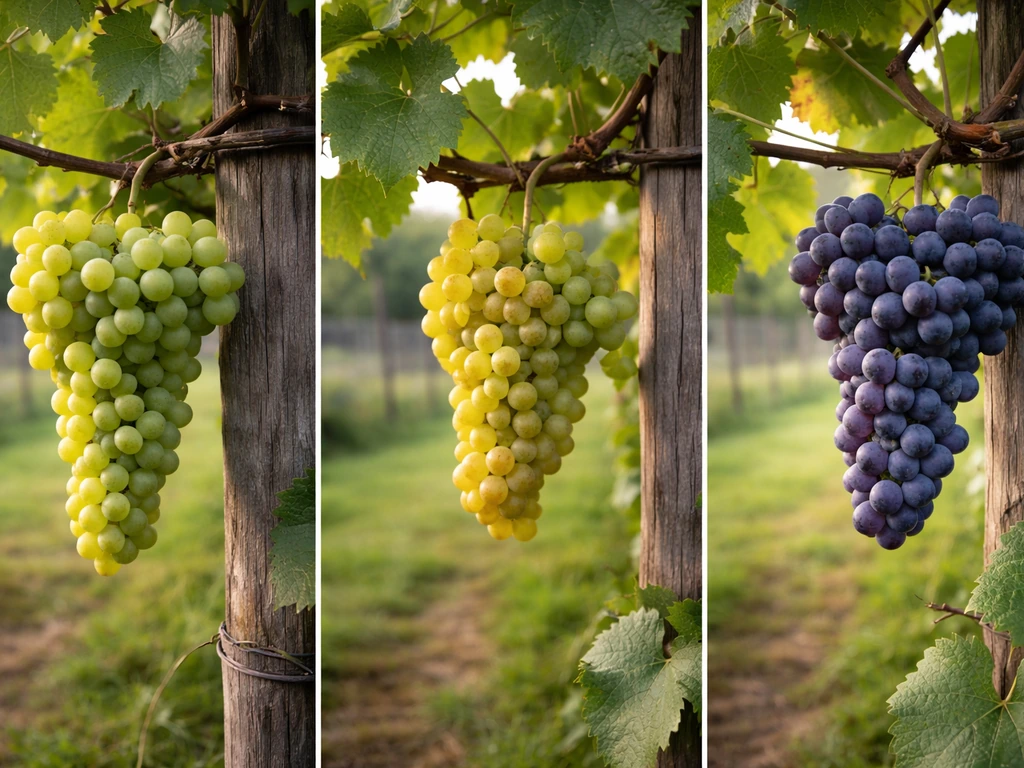
Your variety choice should be driven by three things: winter hardiness, your intended use (fresh eating, juice, or wine), and how early the variety ripens. Early and midseason varieties are safer bets in the northern half of the state because they finish ripening well before October frosts arrive.
| Variety | Type | Hardiness | Season | Best Use |
|---|---|---|---|---|
| Concord | American | Excellent (Z5) | Midseason | Juice, jelly, fresh |
| Niagara | American (white) | Excellent (Z5) | Midseason | Fresh, white juice |
| Catawba | American | Very good (Z5) | Late-midseason | Juice, wine |
| Mars | American (seedless) | Hardy (Z5) | Early | Fresh eating |
| Reliance | American (seedless) | Hardy (Z5) | Early | Fresh eating |
| Chambourcin | French-American | Good (Z5-6) | Midseason | Red wine |
| Vidal Blanc | French-American | Good (Z5-6) | Late | White wine |
| Cabernet Sauvignon | European Vinifera | Poor (Z6-7) | Late | Not recommended for most of IL |
Concord is the default recommendation for most Illinois home gardeners because it is proven, cold-hardy, productive, and forgiving. If you want seedless table grapes for fresh eating, Mars and Reliance are both rated hardy and ripen early, which is a genuine advantage in the northern half of the state. Reliance in particular shows up in Illinois Extension demonstration gardens as a solid performer. If you want to make wine and are willing to do more disease management work, Chambourcin is a popular French-American hybrid in Illinois's wine country around the Shawnee Hills region.
What to avoid: any variety described as Zone 7 or warmer as its lower limit. Most Vinifera wine grapes fall into this category. They can occasionally survive a mild Illinois winter, but they are not a reliable choice for a home garden where you want fruit most years, not some years.
Site and soil setup: sun, drainage, pH, and spacing
Grapes are sun-hungry plants. You want a site with full sun, meaning at least 8 hours of direct sunlight daily, ideally on a south or southwest-facing slope if you have one. Good air circulation matters too, not just for ripening but for keeping foliar diseases like downy mildew and black rot under control. Avoid planting in low spots where cold air settles on spring nights and where moisture lingers after rain.
Soil drainage is non-negotiable. Grapevine roots rot in standing water, and Illinois clay-heavy soils can be a real challenge. If your site drains slowly, raise the planting area or amend heavily with organic matter before planting. Sandy or loamy soils with good drainage are ideal. Grapes prefer a slightly acidic soil pH in the range of 6.0 to 6.5, though they can tolerate anywhere from about 5.5 to 7.5. Get a soil test before planting and adjust with lime (to raise pH) or sulfur (to lower it) based on the results.
For spacing, a standard home trellis row typically places vines 6 to 8 feet apart, with rows spaced 8 to 10 feet apart if you are planting multiple rows. Tight spacing looks appealing when vines are young and small, but grapes grow aggressively and crowded vines create disease pressure and make pruning miserable. Give them the room they need from day one.
Planting and trellising for Illinois home gardens
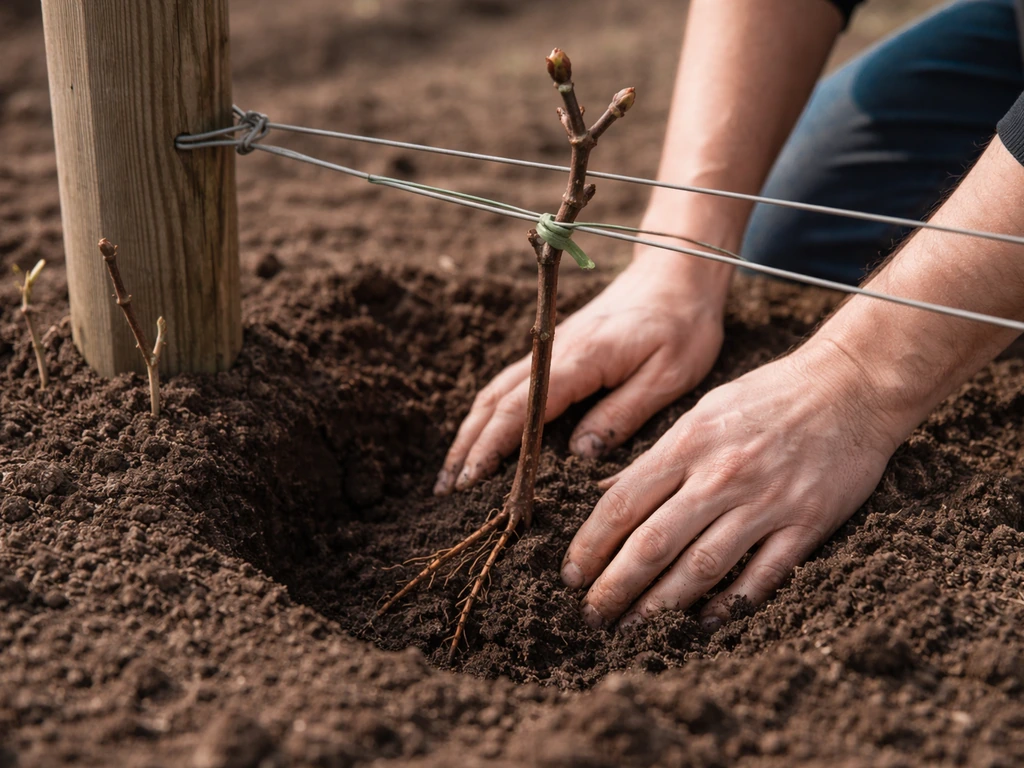
When and how to plant
Plant in early spring as soon as the soil can be worked. Illinois Extension is direct about this: get vines in the ground in early spring. Dormant, bare-root vines from a nursery are the standard starting point and they establish well when planted before bud break. Dig a hole wide enough to spread the roots without bending them, set the crown at soil level, and backfill. If you are using grafted vines (which offer phylloxera resistance), keep the graft union 4 to 6 inches above the soil surface. Burying the graft union defeats its purpose and can lead to long-term problems.
One practical warning from Illinois Extension: keep vines well away from areas where you use lawn herbicides containing 2,4-D. Grapes are highly sensitive to 2,4-D drift and even small exposures can cause serious leaf distortion and growth problems. This catches a lot of new grape growers off guard when they see their young vines looking twisted and stunted in early summer.
Trellis setup
Build your trellis before or at planting time, not after. The standard for home gardens is a two-wire trellis on wooden posts: set 8-foot posts about 2 feet deep every 15 to 20 feet in the row, with the first wire at about 3 feet off the ground and the second at about 5 to 5.
For a four-arm Kniffin training system, that two-wire setup is described with wires at about 3 feet for the first wire and at the top of the post for the second wire in the UGA Extension trellis guidance [two-wire trellis on wooden posts](https://extension. uga. edu/publications/detail. html?
number=C1087). 5 feet. This supports a simple four-arm Kniffin or cane-pruned training system, which is the most practical approach for home gardeners in Illinois.
More elaborate systems like the Geneva Double Curtain use 3 to 4 wires and a crossbar setup that increases the fruiting surface area. This can boost yield, but it also adds complexity to pruning and management. For most home gardeners growing a row or two, the simple two-wire system is the right call. Get comfortable with basic cane pruning first, then expand your system if you want to scale up.
First-year training
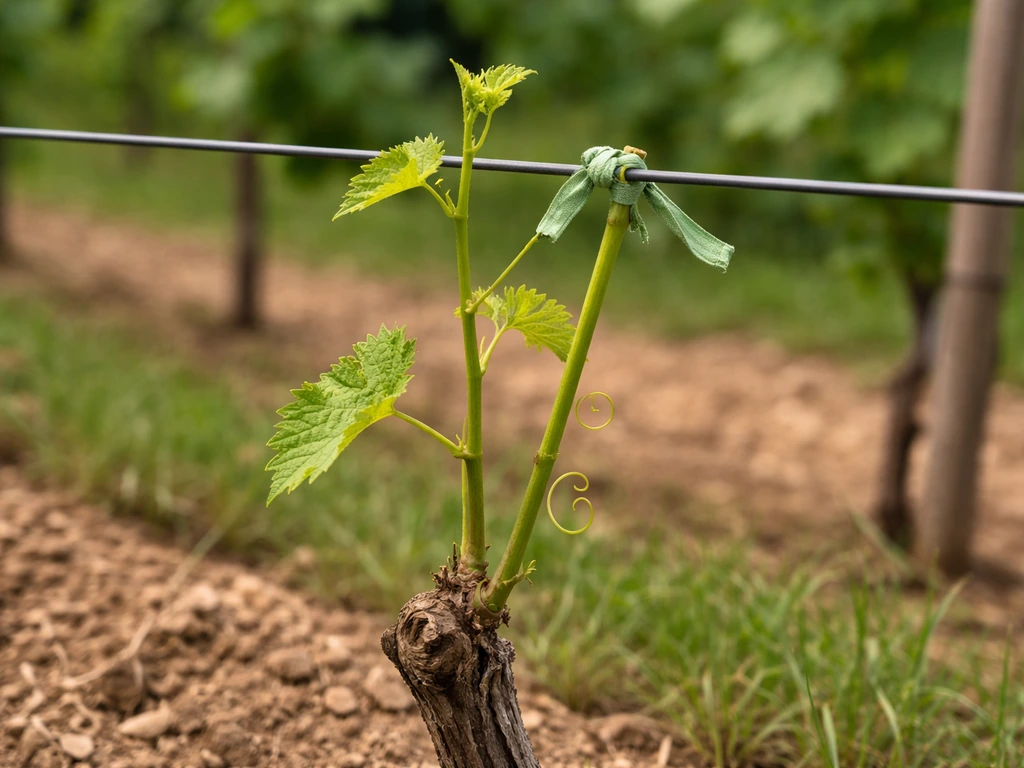
In the first year, the goal is root establishment, not fruit. Select one or two strong upright shoots and tie them loosely to the trellis. Remove any flowers that form (yes, really) so the vine directs energy into the root system. Year two, you start developing the permanent trunk and main canes. By year three, most home gardeners see their first meaningful harvest. Do not rush this phase. Vines pushed for fruit too early tend to be weaker and shorter-lived.
Season-by-season care: watering, feeding, and pest basics
Spring
Late winter to early spring (before bud swell) is pruning time. This is the single most important task in your grape calendar. Grapes produce fruit only on one-year-old canes, so each year you remove the majority of the previous season's growth and select a small number of new canes to carry fruit this season. Illinois Extension calls this "severe annual pruning," and it is not an exaggeration. Leaving too many canes leads to overcrowded shoots, poor fruit quality, and disease problems. A mature vine might have 50 to 60 buds worth of new canes after pruning. That sounds like a lot until you see how many canes a vine actually produces.
Early summer
Once shoots reach 12 to 18 inches, tuck or tie them onto the trellis wires to keep the canopy open and airy. This is the time to start watching for black rot, which is the most common and damaging fungal disease in Illinois vineyards. Wet spring weather drives black rot infections. If your area is experiencing a rainy May and June, applying a fungicide approved for home garden use on a 10 to 14 day schedule starting at bud swell through fruit set is worthwhile. Illinois Extension's Midwest Fruit Pest Management Guide has a specific grape spray schedule if you want exact timing by growth stage.
Midsummer
Watering needs are moderate once vines are established. Deep, infrequent watering is better than frequent shallow irrigation. In dry Illinois summers, aim for about an inch of water per week through the fruit development period. Avoid wetting the foliage when you water. Drip irrigation or soaker hoses at the base of the vine are ideal. Downy mildew becomes the bigger disease concern from midsummer onward (black rot is more of a spring-early summer problem). Keep the canopy thinned to maintain airflow and reduce mildew pressure.
For fertilizing, a light application of balanced fertilizer in early spring (before bud break) is generally sufficient for established vines on decent Illinois soil. Over-fertilizing with nitrogen pushes excessive vegetative growth at the expense of fruit and makes disease problems worse. If you did a soil test before planting and corrected any deficiencies, you may need very little annual feeding beyond a small nitrogen application.
Late summer
Stop fertilizing by midsummer so the vines can begin hardening off their canes for winter. This is important. Soft, succulent growth heading into fall does not survive Illinois winters as well as properly hardened wood. Reduce supplemental watering in late summer for the same reason, letting the vine sense the shift toward dormancy.
Harvest timing and winter protection
When to harvest in Illinois
Most American and French-American varieties ripen in Illinois between late August and mid-October depending on variety, location, and year. Early-ripening varieties like Mars and Reliance typically come in late August to early September, which gives you a comfortable buffer before frost in even the northernmost parts of the state. Concord usually ripens in September. Later varieties like Catawba and Vidal Blanc push into October in Illinois, which is fine in the central and southern parts of the state but can be a gamble in the north some years.
Taste is the best harvest indicator. Grapes do not continue to ripen after picking the way some fruits do, so wait until they taste right before harvesting. Sugar levels climb and acid drops as grapes ripen. A refractometer can confirm Brix (sugar percentage) if you are making wine, but for fresh eating and juice, your palate is the guide.
Protecting vines through winter
After harvest and after leaves drop in fall, let the vines enter dormancy naturally. Do not prune in late fall. Wait until late winter (late February to early March in most of Illinois) when the worst cold has passed but before buds begin to swell in spring. Pruning too early exposes fresh cuts to hard freezes; pruning too late risks cutting off swelling buds.
Young vines in their first one to two winters are the most vulnerable. In northern Illinois especially, mounding loose soil or straw mulch around the base of young vines after the ground freezes adds meaningful protection for the root system and lower trunk. Established older vines on cold-hardy American varieties typically survive Illinois winters without any additional protection beyond choosing the right site and doing good cultural practices throughout the season. If you experience significant winter injury (dead canes, split trunks), assess in early spring after the last hard freeze and prune back to live wood. Most healthy vines will recover from partial winter damage if the root system and lower trunk are intact.
The cycle then repeats: prune in late winter, manage the canopy through summer, harvest in late summer and fall, let the vine harden off, protect young vines through winter. Once you have done this loop two or three times it becomes second nature, and grapes start feeling like one of the easier perennial crops in your garden rather than the intimidating one.
FAQ
What USDA hardiness zone should I use for grape buying in Illinois?
Use your specific yard location, not just “Illinois” overall. Most of the state falls around zones 5b to 6b, but microclimates (near Lake Michigan, in a valley, or on a south slope) can act warmer or colder. If you are between zones, lean toward the colder rating for winter-kill safety, especially for fruiting buds.
Can I grow grapes in Illinois without treating for diseases at all?
You can reduce risk, but you generally cannot eliminate it. In Illinois, black rot risk is tied to wet spring weather, and downy mildew pressure rises in summer. If you skip sprays, choose hardy, disease-faster varieties like American types, keep the canopy airy, remove infected leaves, and expect lower yields some years, especially after rainy seasons.
How do I avoid getting poor fruit from Concord or other hardy varieties?
Poor flavor usually comes from under-ripening, not “bad soil.” Confirm ripeness by taste, and do not harvest early just because grapes look colored. Also check that your canes are trained for airflow, because crowded canopies shade fruit and delay sugar buildup, increasing the chance that berries taste sour or thin even when they are technically mature-looking.
What’s the biggest mistake new growers make with trellises?
Building too small, too late, or leaving the vines unmanaged. The article emphasizes building the trellis at planting time, spacing vines widely, and keeping shoots tied up early. Another common issue is using the wrong wire height for your training style, which can force canes to grow where air movement is poor and pruning becomes impossible.
Do I need a male or female grape plant in Illinois?
Most commonly planted table and wine grapes are self-fertile, so you usually do not need a second variety for pollination. However, some specialty selections and seedless types can be less reliable depending on the cultivar. If you are buying something unusual, confirm “self-fertile” on the tag before investing in a whole trellis row.
When should I do winter protection for young vines, and how?
Protect after the ground has started to freeze and before extreme winter swings, typically in late fall once temperatures drop steadily. For the root zone, use mounded loose soil or mulch like straw, but keep mulch away from tight contact with fragile crowns. Remove or thin back in early spring when nights stabilize so vines can resume growth without staying too wet.
Is container growing realistic for grapes in Illinois?
It is usually not ideal long-term. Grapes are vigorous perennials with deep root systems, and containers create winter freeze exposure that can exceed what the variety is rated for. If you try it at all, treat it as a short-term project, use a large frost-protected pot system, and plan to transplant into the ground once you have confirmed the variety and site work.
Can I plant grapes near trees or a fence line?
Avoid it unless you have plenty of space. Grapes need full sun and airflow, and tree roots and shade can reduce vigor and ripening. A fence can be workable if it still allows at least 8 hours of direct sun and you can orient the trellis so foliage does not stay damp after rain.
How do I tell if my vines are getting enough water without overwatering?
Use the “deep and infrequent” approach, then check moisture at root depth. Overwatering is a bigger risk than mild drought because standing water triggers root issues. A practical method is drip at the base, then water only when the top soil dries and the surrounding ground is not staying wet for days after irrigation.
Should I fertilize right after planting, or wait?
If you had a soil test and amended at planting, wait for spring growth before adding more. In established vines, a light, balanced feed before bud break is usually enough, and excess nitrogen commonly leads to too much soft growth that does not harden off before winter. If you see lush leaf growth with few fruiting canes, cut back feeding next season.
When do I prune if I missed the late-winter window?
Aim for late winter to early spring before buds swell, after the worst cold has passed. If you prune too early, fresh cuts can be damaged by hard freezes. If you prune too late, you can remove swelling buds and reduce next season’s crop potential. If you are uncertain, wait for bud swell cues and then prune conservatively to live wood.