
Yes, you can absolutely grow grapes in Wisconsin. The key is picking cold-hardy varieties bred for exactly this climate and setting up your site thoughtfully. Skip that and you'll lose vines to winter. Get it right and you can be harvesting clusters of Frontenac, Marquette, or La Crescent within a few years of planting, even in central or northern Wisconsin.
Can You Grow Grapes in Wisconsin? How to Do It
Marcus Whitfield
23 Apr 2026
Can grapes actually thrive in Wisconsin? A quick viability check
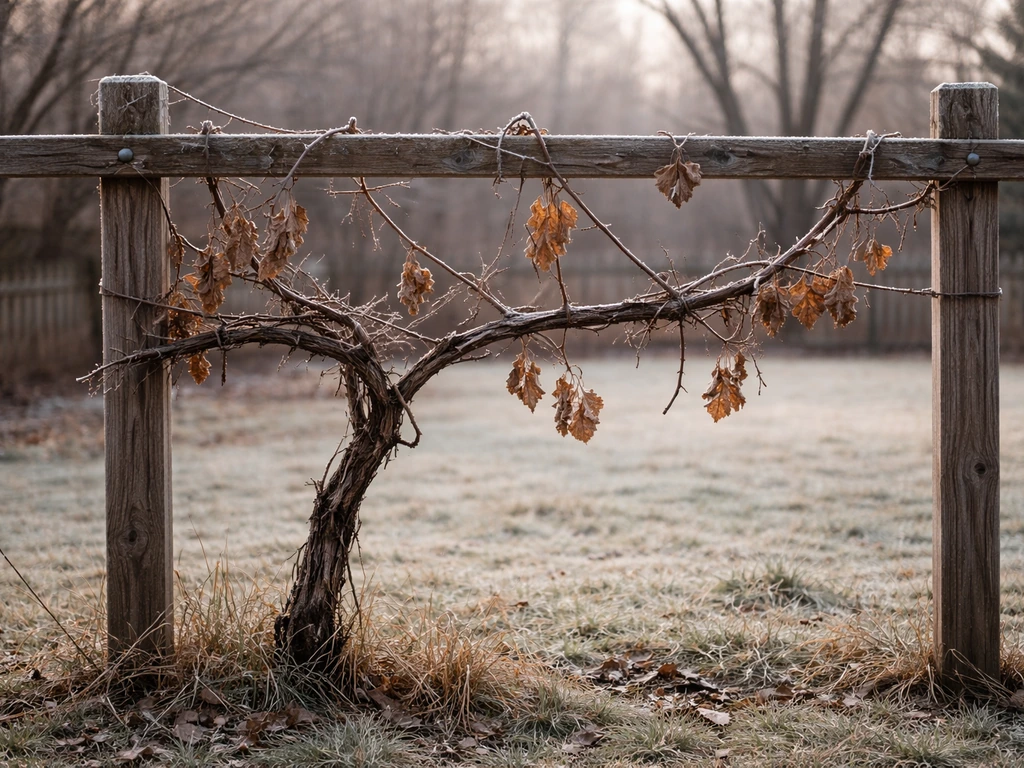
Wisconsin is genuinely challenging for grapes, but not because grapes won't grow here. The real issue is that the wrong varieties simply won't survive. European wine grapes (Vitis vinifera) like Cabernet Sauvignon or Chardonnay are not winter-hardy in Wisconsin. UW-Extension is direct about this: plant vinifera and you're gambling against brutal odds every January. The good news is that a whole generation of cold-hardy hybrid varieties, many developed just across the border at the University of Minnesota, were specifically designed to handle Wisconsin winters and still ripen before frost.
The other viability factor is your microclimate. Wisconsin's growing season is shorter than growers in Ohio, Illinois, or Michigan enjoy, so vines need every frost-free day they can get. Ohio growers can usually do better with earlier-ripening, cold-hardy varieties and by choosing a site that avoids frost pockets grow grapes in Ohio. The bigger trap is what UW-Extension calls 'frost pockets,' those low-lying valley bottoms where cold air settles overnight. Plant grapes there and you'll deal with both late spring frosts that kill new growth and a shortened effective season. A hillside or elevated site with good air drainage makes a meaningful difference.
The bottom line on viability: choose the right cultivar, pick a smart site, and Wisconsin grape growing is not just possible but genuinely rewarding. Plenty of home growers and small vineyards across the state do it successfully.
Best grape varieties for Wisconsin's climate
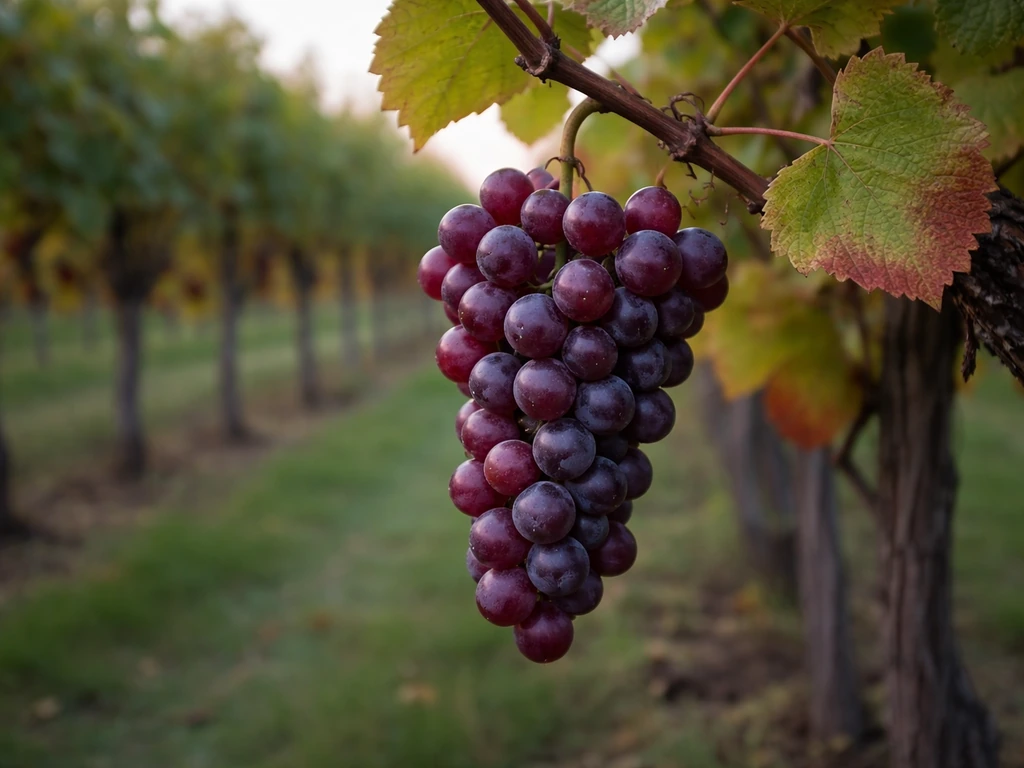
The guiding principle when selecting a variety for Wisconsin is finding the sweet spot between cold hardiness and early ripening. A variety that's ultra-hardy but ripens in October may not fully mature before your first hard frost. UW-Extension frames it as a compromise, and that's a useful way to think about it. Here are the cultivars that tend to perform best for Wisconsin home growers.
| Variety | Type | Hardiness | Ripening | Notes |
|---|---|---|---|---|
| Frontenac | Red/wine | Very high (to -30°F) | Early-mid season | Workhorse variety; highly recommended for northern and central WI |
| Frontenac Gris | White/rosé wine | Very high | Early-mid season | Pink-skinned sport of Frontenac; UW-Extension recommended |
| Marquette | Red/wine | High | Mid season | Complex flavor; productive and disease-resistant |
| La Crescent | White/wine | Moderate-high | Early-mid season | Aromatic; less hardy than Frontenac; better for southern WI |
| Brianna | White/table-wine | High | Early season | UW-Extension recommended; good for newer growers |
| Edelweiss | White/table | Moderate | Early season | Not as hardy as Frontenac; suits backyard growers wanting fresh fruit |
Frontenac is the variety I'd tell any Wisconsin beginner to start with. It's extremely cold-hardy, productive, and forgiving of the mistakes everyone makes in year one. Marquette is a step up in wine quality complexity but requires a bit more attention. La Crescent is aromatic and delicious but noticeably less hardy than Frontenac, so if you're in northern Wisconsin or a colder microclimate, lean toward the others first. Edelweiss is a nice backyard option if you want fresh-eating grapes rather than wine production, but don't count on it surviving every Wisconsin winter without some damage.
Site selection and soil needs in Wisconsin
Grapes are sun-hungry. You need at least six to eight hours of direct sunlight daily, and more is better. In Wisconsin, a south- or southwest-facing slope is ideal because it catches the most sun, warms up earlier in spring, and drains cold air away from the vines on clear nights. That air drainage piece is critical: avoid planting at the bottom of a slope or in any low-lying area where frost can pool. A gentle slope above a field or open area gives you the best natural air movement.
Well-drained soil is non-negotiable. Grapes sitting in waterlogged ground develop root problems fast and become vulnerable to disease and winter injury. The ideal soil pH for grapes in Wisconsin is between 5.5 and 7.0. Get a soil test before you plant, both to confirm pH and to identify any nutrient deficiencies you can correct ahead of time. Sandy loam or loamy soils that drain freely are ideal. Heavy clay soils can work if you amend them or build raised rows, but they require more attention.
Wind protection matters too, but this is a balancing act. A windbreak on the north or northwest side of your planting can protect vines from brutal winter winds without blocking the air drainage that prevents frost pockets. A row of evergreens or a fence 50 to 100 feet upwind can make a real difference in winter survival rates.
Planting timeline and what to do in year one
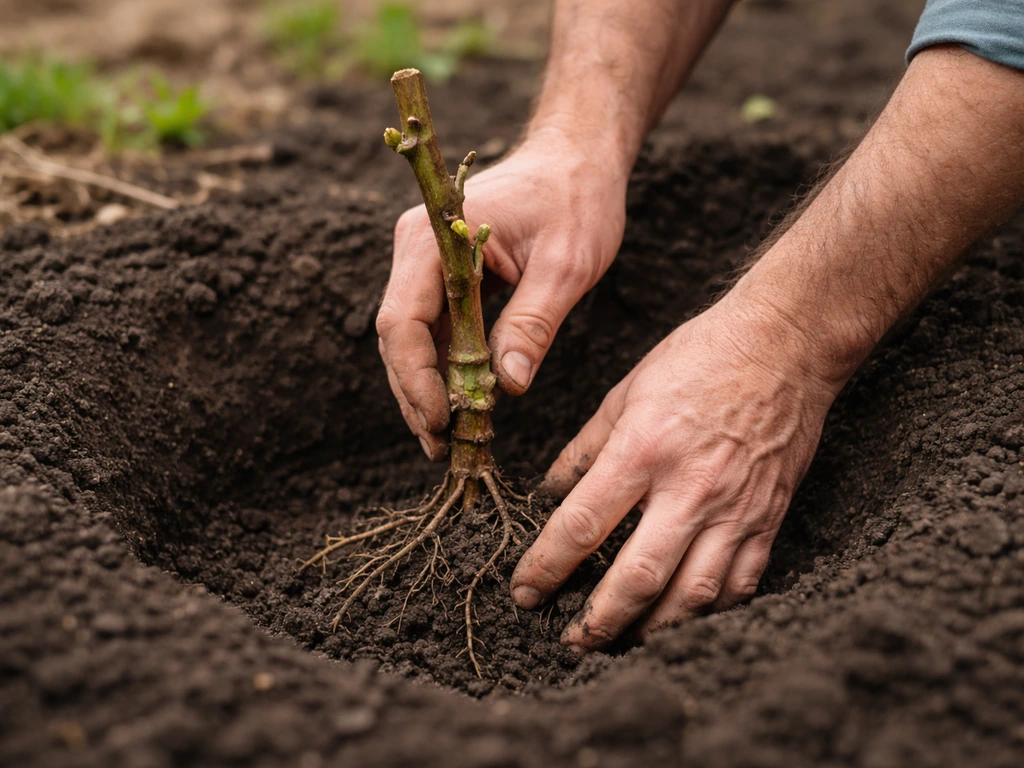
Plant bare-root or containerized vines in spring, once the soil has warmed and the risk of hard frost has passed, typically mid-April to mid-May in southern Wisconsin and a bit later further north. Planting too early in cold, wet soil stresses roots and slows establishment. Decide on your training system and trellis design before you plant, because vine spacing depends entirely on the system you choose. For the cordon system that UW-Extension recommends for Wisconsin, plan vine spacing of about 6 to 8 feet apart in the row.
At planting, trim the vine back to two or three buds on the strongest cane. This feels brutal but it forces the plant to focus energy on root establishment rather than trying to push a lot of top growth. Strong roots in year one are what determine how well the vine performs for the next 20 years. Water thoroughly after planting and keep the root zone consistently moist through the first growing season. A practical benchmark: apply about 5 gallons of water over a 3-by-3 foot area to deliver the equivalent of one inch of water.
Don't expect a harvest in year one, and honestly not in year two either. Year one is entirely about establishment. Let the vine grow, select the strongest shoot to become your future trunk, and stake it so it grows straight upward toward your trellis wire. Remove any flowers or fruit clusters that form in year one so the plant puts everything into roots and trunk development.
Building your trellis and training the vine
Set up your trellis before or at planting, because trying to install posts around established vines is a headache. A simple two-wire trellis works well for most Wisconsin home growers using a cordon system. Place sturdy posts (wood or metal) every 20 to 24 feet, with a bottom wire at about 3 feet off the ground and a top wire at 5 to 6 feet. The cordon system involves training two permanent horizontal arms (cordons) in opposite directions along the top wire, extending roughly 6 to 8 feet each way from the trunk.
In year two, once the trunk reaches the top wire, bend the strongest shoot horizontally and tie it to the wire in each direction to begin forming the cordons. Developing full cordons typically takes until the end of year two or into year three. Once the cordon framework is established, annual pruning is about managing the fruiting spurs that grow off that permanent structure.
Pruning: the most important annual task
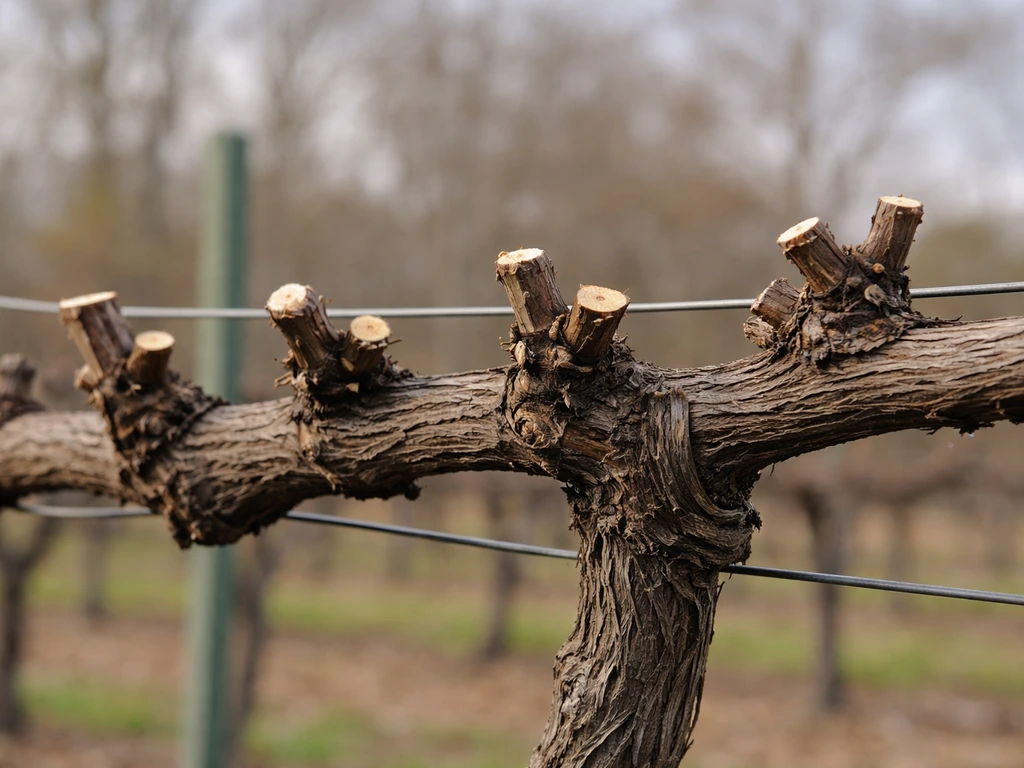
Pruning grapes in Wisconsin is done in late winter or early spring, typically late March to early April, after the worst cold has passed but before buds begin to swell. This timing matters because pruning before severe cold can increase winter injury risk, and pruning after bud break damages new growth.
With a cordon system, you're pruning back last season's canes to short spurs, each with two to three buds. These buds become this year's fruiting shoots. The number of buds you leave determines how many fruit clusters you get, so don't leave too many. Overloading a vine leads to poor fruit quality, underdeveloped wood, and increased winter injury vulnerability. For a young vine still developing, err on the side of leaving fewer buds and letting the vine build strength.
After a harsh Wisconsin winter, do a scratch test on your canes before final pruning. Scratch the bark lightly with your thumbnail. Green underneath means the tissue is alive. Brown or tan tissue is dead from winter injury. Prune back to live wood, even if that means cutting further than planned. Some years in Wisconsin that means starting over on a section of cordon, and that's just part of growing grapes here.
Pest and disease management in Wisconsin vineyards
Disease pressure is one of the biggest ongoing challenges for Wisconsin grape growers, and it's honestly more of a limiting factor than the cold once you have the right varieties. The major diseases to manage are Phomopsis cane and leaf spot, black rot, powdery mildew, downy mildew, and Botrytis gray mold. Timing your protection correctly is critical because each disease hits during different vulnerable periods.
Start your spray program early in the season at bud swell, well before bloom. Pre-bloom is arguably the most important disease protection window of the whole season. After wet periods, be especially alert for black rot and downy mildew, both of which spread aggressively in Wisconsin's warm, humid summer conditions. UW Fruit highlights late-season downy mildew as a consistent issue in Wisconsin vineyards, even on cold-hardy cultivars. Powdery mildew manages differently because it doesn't need free water to spread, so don't let dry conditions lull you into skipping coverage.
For product selection, consult the Midwest Fruit Pest Management Guide, which covers Wisconsin conditions and lists fungicide options organized by disease and resistance management considerations. Common insect pests to watch for include grape berry moth, Japanese beetle, and leafhoppers. Grape berry moth can cause significant fruit damage if untreated, and Japanese beetles can defoliate vines quickly in midsummer. Monitoring traps for grape berry moth help time your management responses accurately.
Watering, fertilizing, and keeping vines healthy all season
Consistent moisture during the growing season helps vines establish and fruit well, but grapes are not drought-tolerant in their first two to three years. After establishment, mature vines are more resilient, but Wisconsin's variable summer rainfall means you may still need to supplement during dry stretches. Using the 5-gallon-per-3x3-foot benchmark from year one is a useful guide anytime you're hand-watering young vines.
Fertilize conservatively. New growers often over-fertilize, which pushes excessive leafy growth at the expense of fruit and winter hardiness. In year one, a light application of balanced fertilizer in spring is sufficient. From year two onward, base fertilizer decisions on soil and tissue testing. Petiole tissue sampling at bloom gives the most accurate picture of what the vine actually needs. Over-vigorous vines going into winter are more vulnerable to cold injury, so the goal is steady, balanced growth, not maximum shoot length.
Canopy management during the growing season, tucking shoots, removing suckers, and occasionally thinning leaves around fruit clusters, improves air circulation and reduces disease pressure. In Wisconsin's humid summers this is worth the effort. Better airflow means faster drying after rain and lower disease risk.
When to harvest and what yields to realistically expect
Most cold-hardy varieties recommended for Wisconsin ripen from late August through late September, depending on variety and the specific growing season. Frontenac and Brianna tend to be on the earlier end, which is an advantage in northern Wisconsin where first frosts can arrive in late September. Marquette and La Crescent ripen a bit later, so they're better suited to southern Wisconsin locations with a longer frost-free window.
Don't expect fruit in year one. Most well-managed vines produce a modest first crop in year three, with yields improving significantly through years four and five as the vine matures. Winter injury can reduce crop size in any given year, sometimes severely after particularly harsh winters. This is the honest reality of Wisconsin grape growing: some seasons will surprise you with a great harvest and others will test your patience.
For a home grower with a small planting, realistic expectations are a few pounds per vine in the early years, building to meaningful harvests once vines are fully established and trained. A well-managed, mature Marquette vine, for example, can produce multiple pounds of fruit per plant under good conditions. The broader Wisconsin vineyard data shows there's always a time lag from planting to first reliable sales-quality production, typically several years in, and home growing follows the same curve.
Your next steps to get started
If you're ready to move forward, start by getting a soil test from your county UW-Extension office this spring. Choose a south-facing site with good air drainage and full sun. Order bare-root vines of Frontenac, Marquette, or Brianna from a reputable northern-climate nursery for spring planting. Install your trellis before the vines arrive. That's genuinely all it takes to get started. The learning curve in grape growing is real, but it's manageable, and there's nothing quite like harvesting clusters you grew yourself from a Wisconsin hillside.
If you're weighing your options across the region, growing conditions in neighboring states like Minnesota, Michigan, and Illinois each have their own quirks worth understanding. If you're specifically wondering can you grow grapes in Michigan, focus on cold-hardy varieties and protect vines from frost pockets. Minnesota is a similar cold-climate situation, so you can grow grapes there too by picking cold-hardy, early-ripening varieties and protecting against frost pockets grow grapes in Minnesota.
You can use the same approach in Illinois, focusing on cold-hardy varieties and choosing a site that avoids frost pockets. Minnesota in particular shares much of Wisconsin's cold-climate variety list, while the milder portions of Illinois allow a wider range of cultivars. Wisconsin sits in a sweet spot where the right cold-hardy varieties genuinely thrive, and that's an encouraging starting point.
FAQ
If I only have a backyard, how soon can I realistically expect grapes in Wisconsin?
In Wisconsin, you generally should not plan on training and pruning like a warmer-state grower. Start with cold-hardy hybrids and a cordon system, prune late March to early April, and only expect meaningful clusters by year three, even with good care. If you do a late frost-prune (after buds swell), you risk damaging the shoots that would become fruiting wood.
Can I grow Wisconsin grapes for eating, not wine, and still get reliable crops?
You can grow grapes without a wine press, but you should still think about purpose. Frontenac, Marquette, and Brianna are typically chosen for more winemaking-friendly flavor and hardiness, while fresh-eating options are more limited and may suffer more winter damage. If your goal is mostly eating, consider that you may need extra winter protection or accept some cane loss.
Can you grow grapes in Wisconsin in containers (pots) instead of in the ground?
Yes, but think in terms of “survival reliability,” not just growth. If your winter-cold microclimate is borderline (northern Wisconsin, exposed sites, or a frost-prone low area), container growing often fails when roots freeze repeatedly or the pot cycles through deep freeze and thaw. If you try it, pick a very large pot, insulate the container root zone, and expect reduced vigor compared with in-ground plants.
What’s worse for grapes in Wisconsin, winter cold or late-spring frost, and how do I tell if my yard is at risk?
Before you decide, check two risks: (1) frost pockets, and (2) low-warmth sites. Even with a cold-hardy cultivar, a valley-bottom location can wipe out new shoots after spring frosts and shorten the ripening window. A south or southwest slope with air drainage is usually the easiest “unlock,” because it reduces both winter pooling and spring injury.
Will the specific variety name be enough, or should I also worry about where the vine was grown?
Often, yes. The article emphasizes cold-hardy varieties and air drainage, but you still need winter-cold hardiness plus winter survival behavior. Some hybrids tolerate cold better than others, and even hardy types can lose part of the cordon after extreme winters. The practical next step is to buy from a reputable northern-climate nursery and confirm the vine is recommended for cold zones similar to your county.
Do I really need to spray grapes in Wisconsin, or can I skip chemicals and rely on cold-hardy varieties?
For a small planting, over-spraying is a common mistake. Use a schedule based on grape growth stages, especially bud swell and right before bloom, and adjust for weather-driven wet periods. If you skip early-season coverage because it looks dry later, you can still get leaf and cane diseases that later seasons cannot “fix.”
How often should I water grapes in Wisconsin, and what should I watch for to avoid overwatering?
Watering needs change with vine age. In years one to three, grapes are not reliably drought-tolerant, so you need consistent root-zone moisture during establishment and fruit development. A useful adjustment is to water less frequently but more thoroughly when needed, because soggy, poorly drained soil can cause root issues even if you are “watering enough.”
If my vines look small, is more fertilizer the right move in Wisconsin?
Yes, but it’s usually a bad trade if you’re trying to solve Wisconsin-specific problems. Extra nitrogen can push leafy growth that ripens poorly, increases disease susceptibility, and reduces winter hardiness. The safer approach is conservative feeding in year one, then use soil and petiole tissue results at bloom to target what you truly lack.
What do I do if my grapes looked dead after winter, can I recover them?
If you want to know whether you can “save” the vine after a bad winter, do a cane scratch test in late winter or early spring before final pruning. You can also look for the viability of the buds you plan to leave, not just the cane color, because a cane might show green but buds can still be compromised. Then prune back to live wood and adjust the cordon framework if needed.
My grapes never ripen well in Wisconsin, what’s the first thing I should change?
Because Wisconsin summers are short, timing matters more than in many regions. If ripening consistently ends too early, you likely need a combination change: a more sun-exposed site (south or southwest slope), and an earlier-ripening variety. Don’t just wait longer, because frost can arrive before sugars and flavor fully develop.
What training or trellis mistakes hurt the most in the first couple of years?
The most common training mistake is assuming you can postpone trellis setup until the vines are established. Posts and wire installation around older vines can cause physical damage and mis-train the trunk or cordons. Set the trellis up early, and confirm your spacing and wire heights match your chosen cordon system before the first serious growth.