
Yes, you can absolutely grow grapes in Michigan. But the honest answer is that where in Michigan you are, and which varieties you choose, will make or break the whole project. Michigan is one of the better Midwest states for grapes precisely because of Lake Michigan's moderating influence, but inland sites and the Upper Peninsula are a different story. Pick the right variety for your location and you will get fruit. Pick the wrong one and you will spend years babysitting vines that never fully recover from a bad February.
Can You Grow Grapes in Michigan? Varieties and Care Guide
Marcus Whitfield
17 Apr 2026
Where in Michigan grapes actually thrive
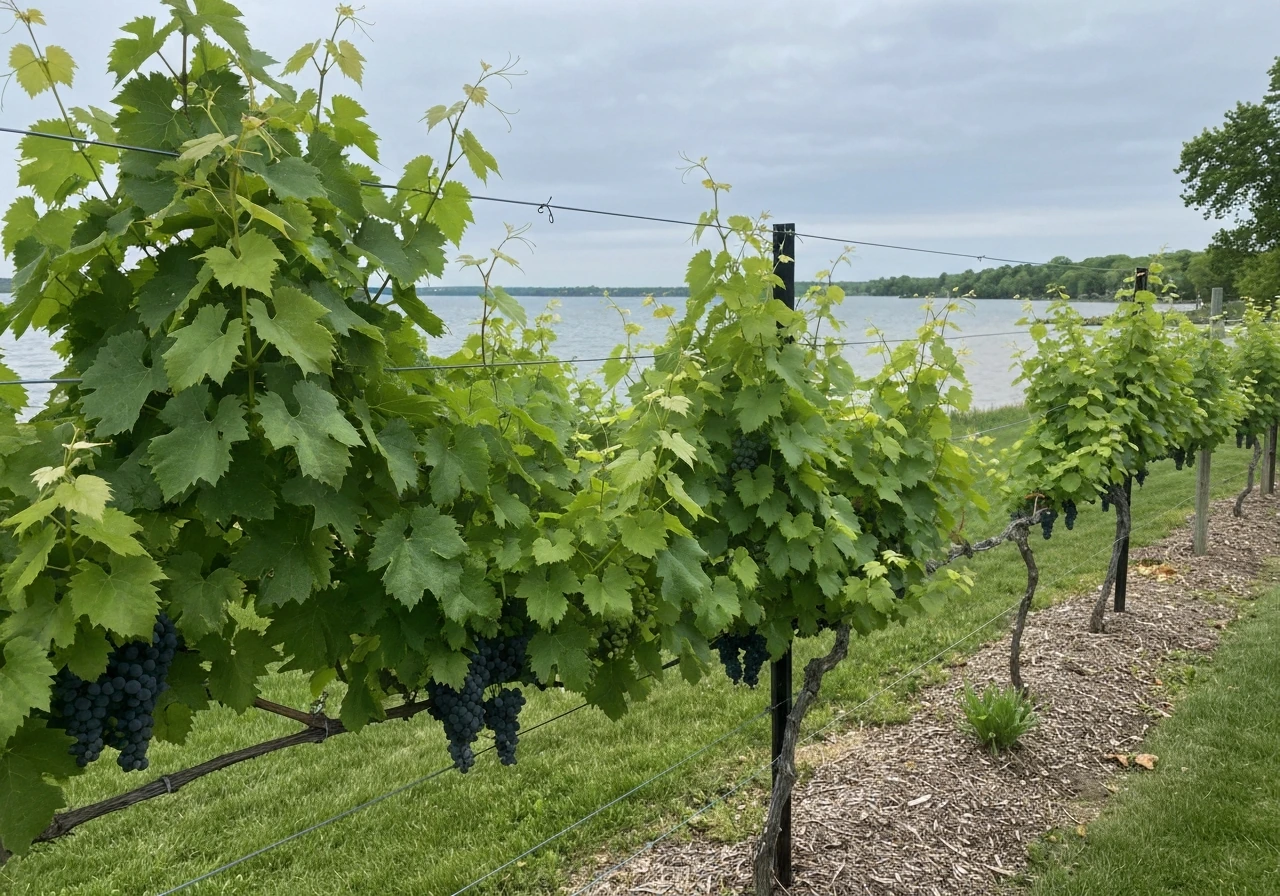
Michigan's grape-growing landscape is shaped almost entirely by Lake Michigan. The southwest and northwest regions along the lakeshore benefit from the lake's thermal mass, which delays both the first fall frost and the last spring frost. That buffer gives vines a longer, safer growing season and keeps winter lows from bottoming out as hard as they do just 30 or 40 miles inland. MSU's grape-growing-region framework splits the state into zones based on cold-hardiness suitability and growing-degree-day accumulation, and the differences between lakeshore and inland sites are significant enough that they are essentially different climates for viticulture purposes.
The southwest region, which includes the Lake Michigan Shore AVA, tends to accumulate more heat units (GDD base 50°F, April 1 through October 31) than the northwest, and both are considerably warmer than interior Lower Michigan or the Upper Peninsula. On lakeshore sites, V. vinifera varieties like Riesling and Pinot Gris are commercially viable, though they still carry real cold-hardiness risk in severe winters. On inland Lower Michigan sites, you are working with a colder winter floor, and your reliable choices narrow to cold-hardy American and hybrid varieties. In the Upper Peninsula, you are essentially limited to what MSU calls 'Super Hardy' varieties built for temperatures of −20°F to −35°F.
Spring frost is another pressure that does not get enough attention. MSU Extension has specifically flagged late-winter freezes and early spring frost events as a serious yield risk in Michigan, because mild winters can trigger earlier budbreak and then a late frost hits green tissue that has already lost its cold-hardiness. This is not a once-in-a-decade problem. It is something you need to site and plan around from day one.
If you are curious how Michigan compares to neighboring states, growing grapes in Wisconsin faces similar inland-cold challenges, and many of the same cold-hardy varieties work well on both sides of the state line.
Table grapes vs wine grapes: pick a lane first
Before you pick a single variety, figure out what you actually want to do with the fruit. Table grapes and wine grapes require the same basic care framework, but the varieties differ quite a bit, and so do your harvest targets and what 'success' looks like at the end of the season.
Table grapes are what most backyard growers want. You eat them fresh, share them with neighbors, maybe make juice. The standard is sweetness, good skin texture, and clusters that hold together nicely. Concord is the classic Michigan backyard grape and it is basically bulletproof in cold-hardy zones. It is an American variety (Vitis labrusca) with that distinctive 'foxy' grape-juice flavor, and it ripens reliably even in cooler inland Michigan summers.
Wine grapes push you toward the cold-hardy hybrid varieties developed by programs at the University of Minnesota and others. These hybrids carry Vitis vinifera genetics for flavor complexity alongside cold-hardy American species genetics for survival. They will not produce a Burgundy-style wine, but Marquette can produce a genuinely good red with serious structure, and La Crescent or Frontenac Gris produce aromatic whites that stand on their own. Pure European varieties (V. vinifera) are an option only if you are on a lake-influenced site in the southwest or northwest and you are willing to accept some winter-damage risk in bad years.
One practical note on the vinifera question: European wine grapes are susceptible to phylloxera, a root-feeding pest that devastated vineyards historically and still requires grafted rootstock to manage reliably. MSU Extension rootstock guidance covers this in detail for commercial settings, but for a backyard grower in inland Michigan, the simplest solution is just to grow cold-hardy hybrids or American varieties that are naturally less phylloxera-sensitive. Less expensive, less complicated, and more likely to survive a cold snap.
Best grape varieties for Michigan conditions
The varieties below are organized by use and cold-hardiness. For most Michigan gardeners outside the immediate lakeshore zones, start with anything in the 'Very Hardy' or 'Super Hardy' category and you will sleep better in February.
| Variety | Type | Cold Hardiness | Best Use | Notes |
|---|---|---|---|---|
| Marquette | Red wine hybrid | To about −35°F | Wine | Strong structure, good yields (~5.46 kg/vine); University of Minnesota program |
| Frontenac | Red wine hybrid | To about −30°F | Wine / juice | High acid, deeply colored; blends well |
| Frontenac Gris | White/pink wine hybrid | To about −30°F | Wine | Aromatic; pink-skinned mutation of Frontenac |
| La Crescent | White wine hybrid | To about −36°F | Wine | Citrus/apricot aromatics; very cold-hardy |
| Petite Pearl | Red wine hybrid | To about −30°F | Wine | Newer variety; low disease pressure |
| Foch (Marechal Foch) | Red wine hybrid | Very hardy | Wine | Early ripening; reliable in cool seasons |
| St. Croix | Red hybrid | Very hardy | Wine / table | Good all-around cold-climate performer |
| Concord | Table / juice | Very hardy | Table / juice | Classic Michigan backyard grape; easy to grow |
| Niagara | Table / white juice | Hardy | Table / juice | White counterpart to Concord; reliable in most Michigan zones |
| LaCrosse | White wine hybrid | Very hardy | Wine | Good acidity; performs in colder sites |
Marquette deserves special mention because it is the variety I see doing the best job of converting skeptics into Michigan wine-grape growers. It is cold-hardy to around −35°F, handles the humidity-driven disease pressure in Michigan better than many hybrids, and produces wines with real tannin and complexity. La Crescent is the white counterpart worth planting alongside it, with hardiness to about −36°F and an aromatic profile that makes genuinely interesting wine.
If you are in Illinois or Ohio and reading this while planning a Midwest vineyard, the variety logic is similar across the region. Growing grapes in Illinois and growing grapes in Ohio both follow the same cold-hardy hybrid playbook for inland sites, though Ohio's Lake Erie influence gives some northern Ohio growers a slightly wider vinifera window.
Picking a site, preparing the soil, and getting vines in the ground
Site selection
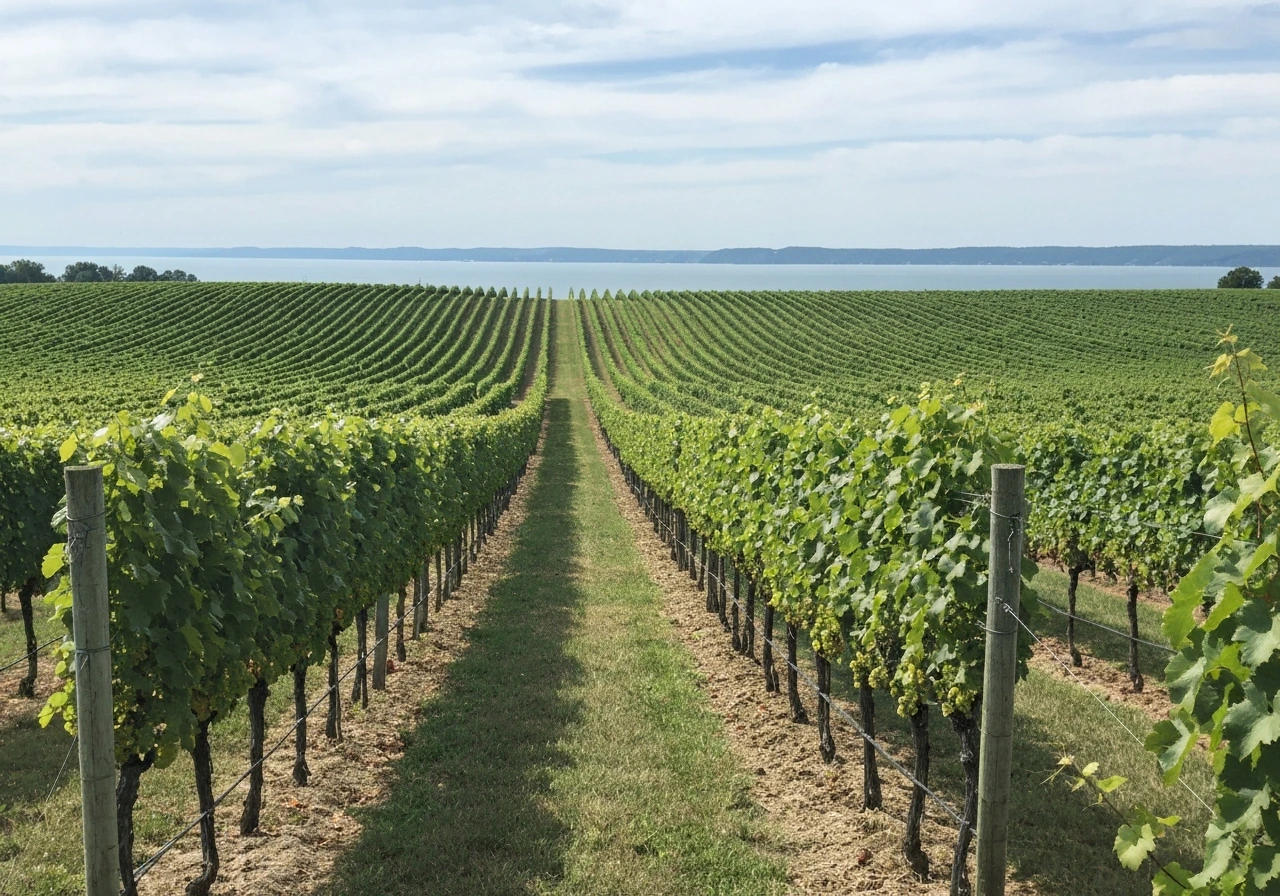
Full sun is non-negotiable. Grapes need it for fruitfulness and for ripening, and in Michigan's relatively short growing season you cannot afford to sacrifice light. Aim for a south- or southwest-facing slope if you have one. That slope does double duty: it captures more solar radiation and it lets cold air drain away from the vines on frost nights. MSU Extension specifically recommends sloped sites with good air drainage for small fruit including grapes because cold air pooling in low spots dramatically increases frost damage risk to blossoms and young shoots in spring.
Avoid low spots, frost pockets, and sites near dense tree lines on the north or west that block wind and trap cold. A gentle rise above a field or lawn is ideal. Even a modest slope makes a real difference when temperatures dip to 29°F on a May morning.
Soil and drainage
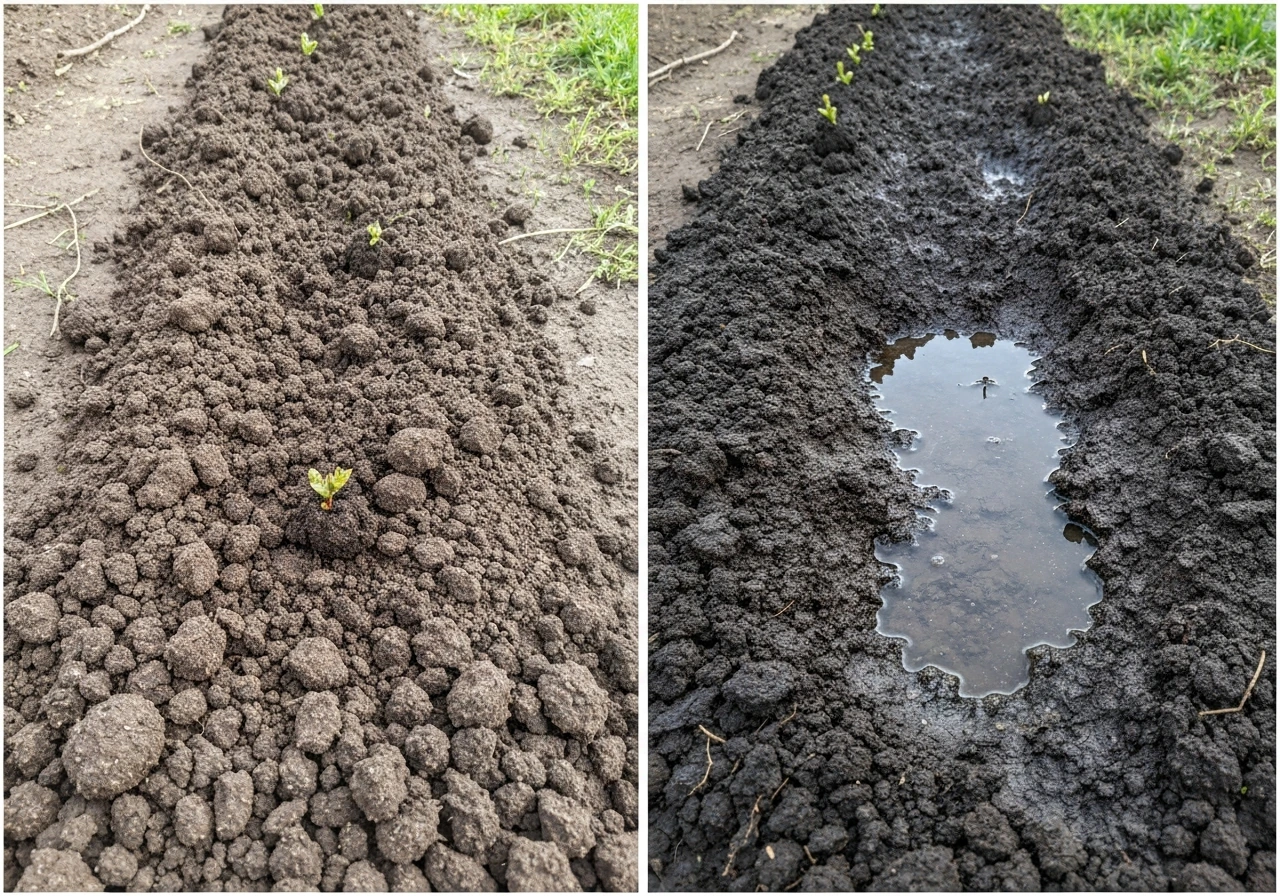
Grapes want well-drained soil. They will tolerate relatively poor, sandy, or gravelly soils better than they tolerate wet feet. In fact, overly rich soil tends to push excessive vegetative growth at the expense of fruit. Aim for a soil pH between 5.5 and 6.5. If you have heavy clay, work in organic matter and consider raised rows to improve drainage before planting. Avoid areas where water stands after heavy rain.
Planting timing and spacing
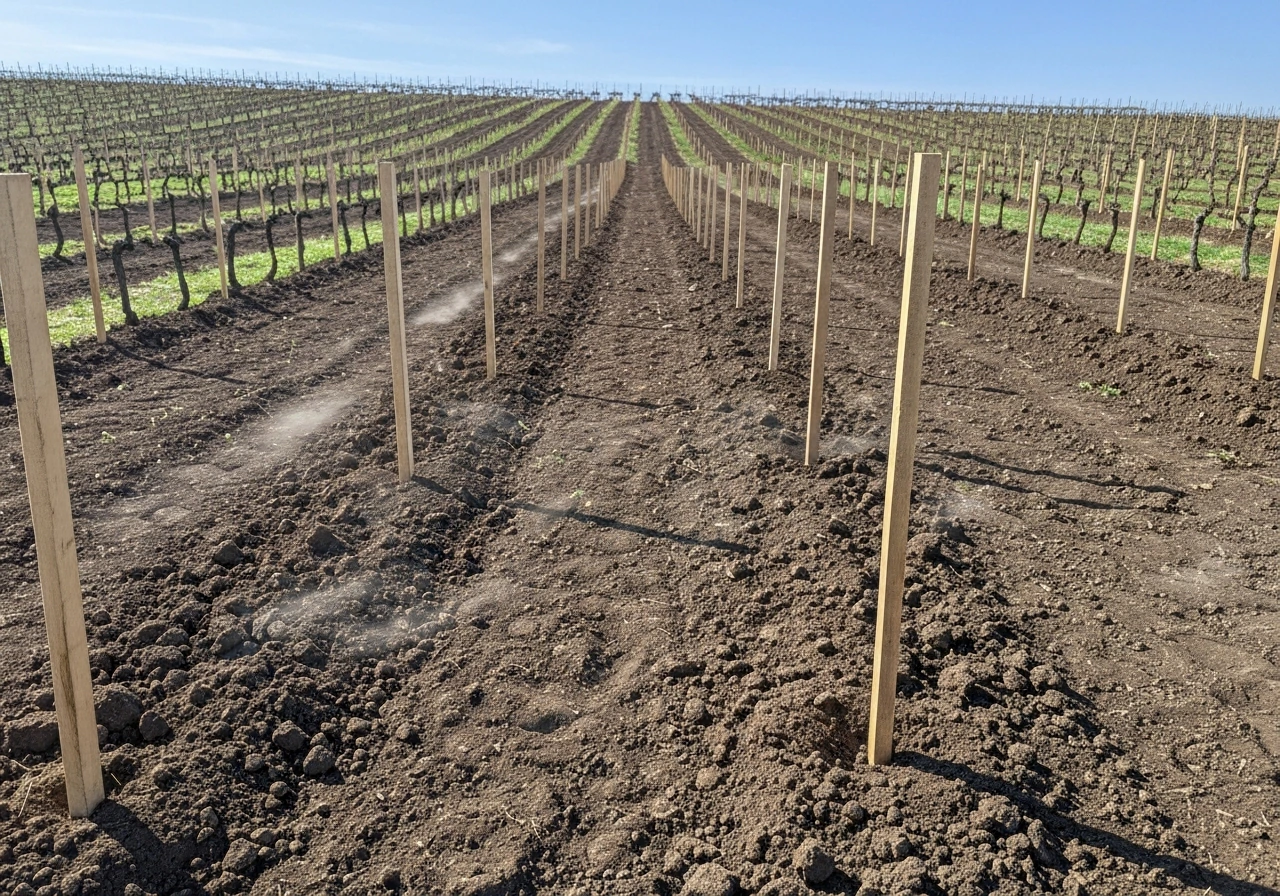
Plant in spring, as soon as the soil can be worked and frost risk is winding down, typically late April through mid-May in most of Lower Michigan. Bare-root vines should go in the ground promptly after you receive them and should not be allowed to dry out. Dig the hole deep enough to fully accommodate the root system without cramping or bending. UC IPM guidance notes that when planting bare-root vines, the buds left to grow should be positioned at or near the soil surface. Space vines 6 to 8 feet apart in the row, with rows 8 to 10 feet apart if you are running multiple rows. Closer spacing with a trellis is fine for a single backyard row.
Trellising, training, and what to expect in year one
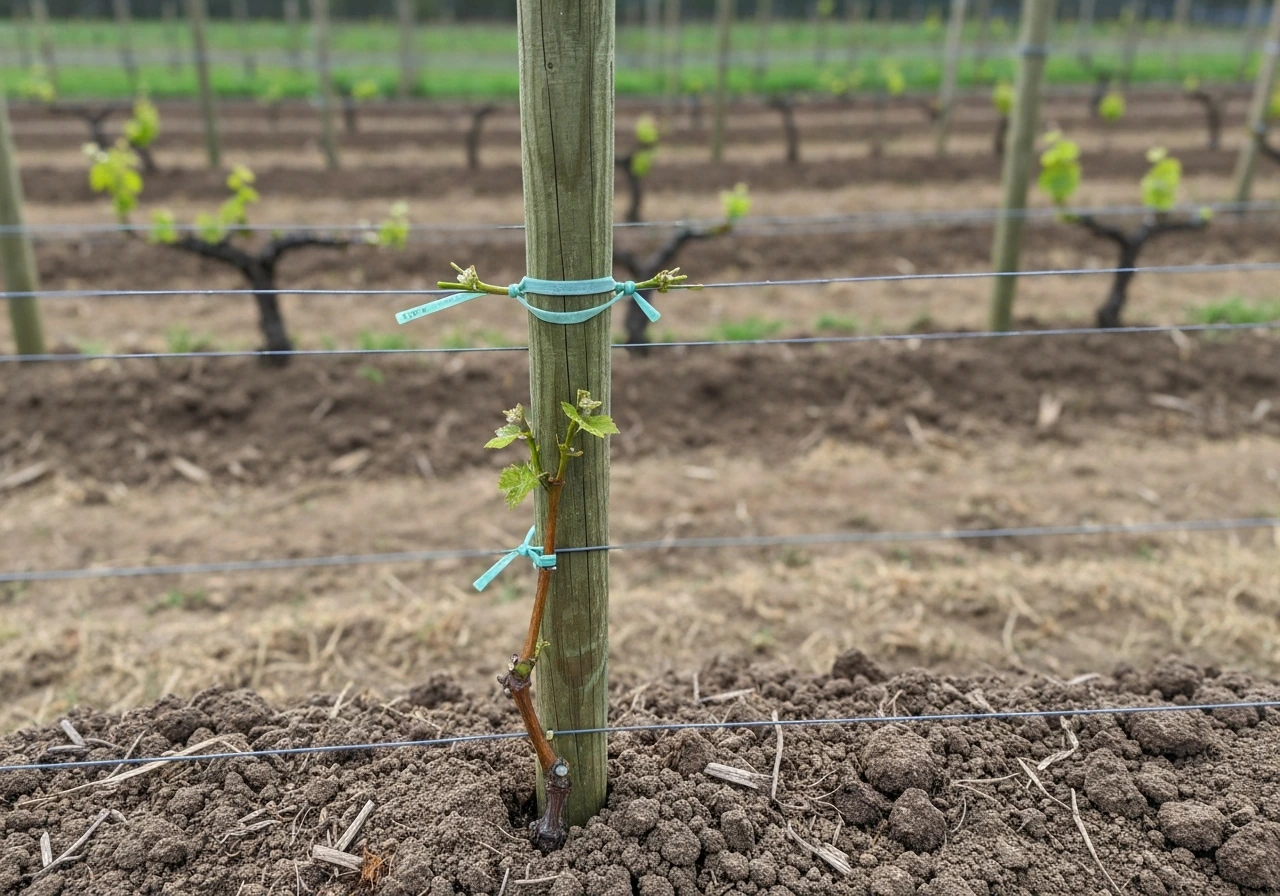
Set up your trellis before or right at planting. Do not wait until year two. Grapes grow fast and unsupported vines become a tangled mess quickly. MSU Extension identifies two primary trellis structures used in Michigan vineyards: the standard 2-wire trellis and the Geneva Double Curtain (GDC). For most backyard growers, a simple 2-wire trellis is the right starting point. Set posts 8 feet apart, run a lower wire at about 3 feet and an upper wire at about 5 to 5.5 feet, and tension them well because a mature vine in full leaf carries significant weight and wind load.
The Geneva Double Curtain is worth considering if you are planting a more vigorous variety like Concord or if you have a longer row and want to maximize yield by dividing the canopy. It runs two parallel wires at about the same height rather than stacking wires vertically, which splits the canopy into two downward-hanging curtains and improves light penetration. Iowa State's research station uses both Single High Wire and Geneva Double Curtain systems for cold-hardy varieties including La Crescent and Marquette, and it is a proven setup for the varieties most relevant to Michigan.
The standard training system in Michigan is cane pruning to a high cordon or a Kniffen-style system, where you develop a permanent trunk and train annual canes along the wires. In year one, your only real job is growing a strong, healthy trunk. Select the single most vigorous shoot and tie it loosely to a stake. Remove all other shoots. The goal is not fruit in year one. It is building a root system and a trunk that will support 20 or 30 years of production.
Expect essentially no usable fruit in year one and very little in year two. A full productive crop typically starts in year three or four. This is the part most beginners underestimate. The vine is building its foundation underground before it delivers above ground.
Pruning basics and timing
Prune annually, every dormant season. For Michigan, MSU Extension recommends delaying pruning to as late in the dormant period as practical, ideally late February through March or even into early April, because later pruning reduces the window of wound exposure during the coldest nights and lowers the risk of winter-injury complications. Pruning wounds are the primary entry point for fungal trunk diseases, and MSU Extension frames wound management as the 'front line' of preventing long-term grapevine decline. Sanitize your pruning shears between vines and remove all cut material from the vineyard rather than leaving it on the ground as a disease reservoir.
For cane-pruned varieties, leave 2 to 4 canes of the prior year's wood, each with 8 to 15 buds, and remove everything else. Keep a couple of short renewal spurs near the head of the vine to produce next year's replacement canes. It sounds complicated on paper but after one season of watching your vine grow it will make sense.
A practical Michigan care calendar
Early spring (March through April)
Finish pruning and remove debris. Watch the weather closely as budbreak approaches. Once buds begin to swell, vines lose their cold hardiness rapidly and even a temperature drop to 28°F can kill emerging shoots. If frost is forecast after budbreak, have frost cloth or row cover ready. This is also the time to apply a dormant-season copper spray if you had disease pressure the prior year.
Late spring through bloom (May through June)
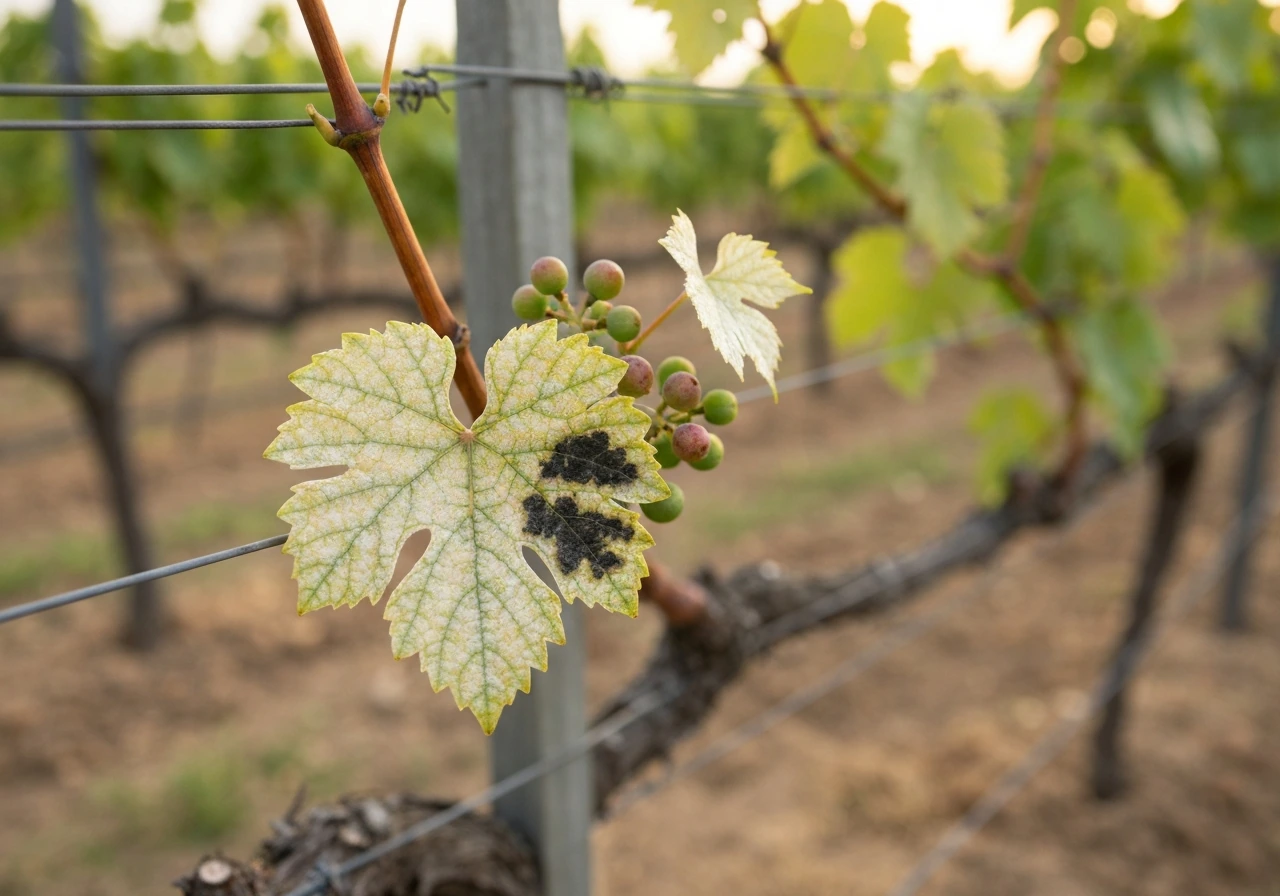
This is the highest-stakes disease management window. Powdery mildew and downy mildew infections that establish during bloom can compromise the entire crop. Black rot is another serious pressure in Michigan's humid summers, and it is most damaging from bloom through about 5 to 6 weeks after bloom, after which berries develop natural resistance. Start your fungicide program at budbreak and maintain coverage through the post-bloom period. Spray intervals need to tighten during wet weather. Track vine development using the MSU Enviroweather GDD tools, which MSU Extension recommends specifically for timing in-season management decisions in Michigan vineyards.
Summer (July through August)
Shoot positioning and canopy management become the main job. Tuck shoots behind the trellis wires, remove suckers from the trunk, and hedgehog any shoots that are growing well beyond the canopy edge to improve light penetration into the fruit zone. Grape berry moth is a significant pest in Michigan, and MSU Extension has a degree-day model for it via MSU Enviroweather that uses wild grape bloom as the starting point.
The second generation of egg-laying ramps up around 810 GDD and the third around 1,620 GDD after wild bloom. Keep scouting for Japanese beetle feeding on upper leaves, which can defoliate vines quickly in mid-summer. Late-season disease scouting should focus on phomopsis, black rot, anthracnose, and powdery mildew. MSU Extension also notes that Michigan vineyards can show disease symptoms such as Phomopsis cane, leaf spot, black rot, and anthracnose on susceptible cultivars [phomopsis, black rot, anthracnose](https://www.
canr. msu. edu/news/diseaseactivitypickingupin_grapes).
Watering and fertilizing
Young vines (years one and two) need consistent moisture, especially in dry spells. Water deeply once or twice a week rather than light daily watering. Once established, most Michigan sites get enough rainfall to sustain mature vines through a normal season, though drip irrigation is valuable during drought periods and in sandy soils. Fertilize conservatively. A soil test is the right starting point. In most Michigan soils, a light application of balanced fertilizer in early spring (before budbreak) is sufficient. Excessive nitrogen is one of the most common mistakes backyard growers make because it pushes so much leafy growth that the canopy becomes a disease trap.
Weed control
Keep the vine row weed-free in the first two years especially, since weeds compete directly for water and nutrients and can host pest insects. A 3- to 4-inch layer of wood chip or straw mulch under the vines suppresses weeds effectively, retains soil moisture, and moderates soil temperature. Keep mulch pulled back from the trunk itself to avoid promoting crown rot.
When and how to harvest, depending on your goal
Table grapes like Concord typically ripen in late August through September in most of Lower Michigan. Taste is your best tool. Concord is ready when the berries are deeply colored, slip easily from the skin, and taste sweet with that characteristic grape-juice flavor. Clusters do not ripen all at once, so pick and taste over a period of a week or two rather than harvesting everything in one pass.
Wine grapes require more precision. Ripeness for winemaking is measured by Brix (sugar content), pH, and titratable acidity (TA). For cold-hardy hybrids in Michigan, target ranges vary by variety, but as a general starting point you want Brix in the low-to-mid 20s for reds like Marquette and Frontenac, with pH around 3.2 to 3.5. La Crescent tends to develop high sugar quickly, so picking timing needs to balance sugar against retaining the acid that makes the wine interesting. Midwest berry composition reports track Brix and pH/TA by cultivar through the harvest window and are a useful reference for knowing what your variety typically looks like when it is ready.
In Michigan, most cold-hardy wine grape varieties are ready to harvest from mid-September through mid-October, depending on the season's heat accumulation. A cool, cloudy August can push harvest two weeks later than a hot one. Do not rely on a calendar date alone. Get a refractometer, taste your berries, and check the stems for lignification (turning from green to woody/brown), which is a sign the vine is pulling energy back and the fruit is finishing.
Your next steps for starting Michigan grapes
If you are in inland Lower Michigan or the UP, order Marquette, La Crescent, or Frontenac from a Midwest nursery this spring. If you are on the lakeshore and want to try vinifera, pick up a Riesling or Pinot Gris on a compatible rootstock and accept that a bad winter may set you back. Set up your trellis before your vines arrive. Choose a full-sun site with good slope if possible. Then plan to spend years one and two building the vine, not chasing fruit. The payoff in year three and beyond is real, and Michigan's lake-influenced climate makes it more achievable than most people expect.
If you are further north and want a worst-case-scenario hardiness comparison, growing grapes in Minnesota pushes the cold-hardiness envelope even further and uses many of the same varieties, which is a good read for anyone in the Upper Peninsula working with temperatures that regularly hit −20°F or colder.
FAQ
Can you grow grapes in Michigan in a container instead of the ground?
Yes, but it depends on where you are and what you want to grow. If you are inland or in the Upper Peninsula, containers are usually more for experimentation because winter storage is the hard part. If you try containers, choose a large, well-draining pot (plan on multiple gallons, not a small nursery pot), use a dwarf or highly manageable vine training approach, and plan to keep the roots from freezing and thawing repeatedly in late winter. For reliable Michigan production, in-ground cold-hardy hybrids usually outperform containers.
What usually causes grape crop failure in Michigan even when the variety is hardy?
The frost risk window often matters more than the overall winter cold. If your site tends to sit in low areas where cold air pools, you can lose buds after mild winters trigger earlier budbreak. The practical fix is site selection (slopes and good air drainage) plus having frost cloth or row cover ready to deploy once buds swell. Even with good cold-hardy varieties, a late frost after budbreak can wipe out the crop year.
Do I need to worry about phylloxera if I grow grapes in Michigan?
Phylloxera is mainly a concern for Vitis vinifera and grapes on susceptible roots. For backyard growers in inland areas, the simplest low-risk path is to plant cold-hardy American or hybrid varieties that are naturally less sensitive, rather than trying to build a vinifera vineyard on the wrong rootstock. If you insist on vinifera, you need grafted plants on appropriate resistant rootstock, and you should verify compatibility with your nursery rather than assuming.
How soon will my Michigan grapevines produce a real crop?
A single-year harvest expectation is the biggest planning mistake. Many gardeners get excited by vigorous growth but then assume they should have a full crop quickly. In Michigan, it is normal to get essentially no usable fruit in year one, very little in year two, and a more reliable productive crop in year three or four because the vine is building the foundation during those early years.
Should I prune early in fall or wait until winter for Michigan grapes?
Yes, and the timing is the deciding factor. If you prune after buds are swelling or after budbreak has started, you can dramatically increase injury risk and also reduce the cold-hardiness buffer the vine still has. The safer approach described in the guide is to prune late in the dormant period, and once buds begin to swell, focus on protection from cold snaps and frost rather than additional pruning.
Can I plant grapes in Michigan soil that stays damp after rain?
Grapes do not respond well to “wet feet,” especially in poorly drained spots. Heavy clay or areas where water stands after storms can cause root stress and long-term decline. If your yard has drainage issues, raised rows or improved drainage before planting make a bigger difference than trying to compensate with extra fertilizer or frequent watering.
What if my vines grow lots of leaves but make few grapes in Michigan?
If you are seeing thick leafy growth but limited fruit, it is often from too much nitrogen rather than a vine genetics problem. Excess nitrogen pushes the canopy into a disease-friendly, shade-heavy state and can delay ripening. Start with a soil test, use conservative fertilization, and if growth is overly lush, back off nitrogen rather than adding more.
Is it okay to plant my grape row next to a fence or tree line in Michigan?
You can, but the decision is mainly about your frost plan and disease pressure. Dense, sheltered edges like right against buildings or tall windbreak trees can trap humidity and reduce air flow, which can increase mildew and black rot pressure. A better approach is a clear, full-sun site with air movement, and if you use barriers, position them so they do not create a frost pocket at the vine height.
When should I use frost cloth or row cover for Michigan grapes?
For most backyard goals, frost protection is about preventing bud and shoot death, not saving a whole season. Once buds are swelling, a drop near freezing can kill emerging tissue, so have protection ready before you need it. If you use frost cloth or row cover, secure it so wind cannot lift it, and do not assume that covering in the morning only is enough if the temperature dips overnight.
Do I need to thin grape clusters in Michigan for better ripening?
Yes, but grapes must be thinned by variety expectations and your own taste targets. Concord clusters and wine grapes differ, but the common mistake is leaving too many clusters, which can reduce ripeness and flavor intensity in a short Michigan season. For wine grapes, thinning can also help you reach balanced Brix, pH, and acidity rather than relying only on later season sun.