
Yes, you can absolutely grow grapes in Ohio. The state has a long history of commercial viticulture, and home gardeners across the state grow perfectly good grapes in their backyards every year. The key is being realistic about which varieties will survive Ohio winters and understanding that cold hardiness, not flavor preference, has to be your first selection criterion. Pick the wrong variety and you will spend years nursing a vine that never produces. Pick the right one and you can be harvesting clusters within two to three years of planting.
Can You Grow Grapes in Ohio? How to Succeed Today
Marcus Whitfield
11 Apr 2026
Can grapes grow in Ohio, and when they won't
Ohio falls primarily in USDA hardiness zones 5b, 6a, and 6b, which means minimum winter temperatures ranging from around -15°F in the northeast interior to 0°F along the Lake Erie shoreline. Ohio State University divides the state into blank" rel="noopener noreferrer">three vineyard zones using those same designations: Zone 5b (-15 to -10°F), Zone 6a (-10 to -5°F), and Zone 6b (-5 to 0°F). Most of the state sits in Zone 6a. That range is perfectly workable for growing grapes, but only if you choose cultivars that are genuinely cold-hardy enough for your specific zone.
Where grapes fail in Ohio is almost always a cultivar mismatch. European Vitis vinifera varieties (the classic Cabernet Sauvignon, Chardonnay, Pinot Noir types) are not winter-hardy in Ohio and are not recommended for home gardens unless you are prepared to provide active winter protection every single year. If you plant a vinifera vine in Zone 5b or 6a without protection, you will likely see winter kill of the canes or outright vine death within a few years. That is not a gardening failure; it is just a physics problem. The good news is that American and French-American hybrid varieties are genuinely cold-hardy and absolutely thrive in Ohio conditions.
Ohio's climate: what you're actually working with
Ohio gets hot, humid summers and cold winters, and both of those facts matter for grape growing. The growing season is long enough to ripen most cold-hardy cultivars, but frost timing at both ends of the season creates real risk. The NWS Cleveland climatology data shows that the last spring freeze date for many Ohio locations can range from early April in the best years to as late as mid-May in bad ones, with the median last 32°F freeze landing somewhere around early to mid-May depending on your location. That spread matters a great deal because grape buds are extremely sensitive to freezing once they begin to swell and push in spring.
OSU maps bud break for most Ohio cultivars to somewhere in the April timeframe, which means late spring frosts are a real annual concern. Sites that warm up early in spring can look attractive but actually expose vines to more frost risk if bud break happens before the last freeze date has passed. This is one reason experienced Ohio grape growers prefer north-facing slopes or elevated sites that warm up more slowly: the delayed bud break provides a buffer against late frosts. Fall frost timing also matters because late-ripening varieties need a long enough season to reach full maturity. Ohio's first fall freeze typically arrives in October, which is why OSU's maturity group system (from under 95 days bloom-to-harvest for Early types, up to 120-130 days for Very Late types) is so useful for matching varieties to your location.
Humidity is the other climate reality to keep in mind. Ohio summers create ideal conditions for fungal diseases, particularly powdery mildew, downy mildew, and black rot. This is not a reason to give up, but it does mean that disease resistance should be on your checklist when selecting varieties, and that you should plan for a seasonal spray program from the start.
The best grape varieties for Ohio home growers
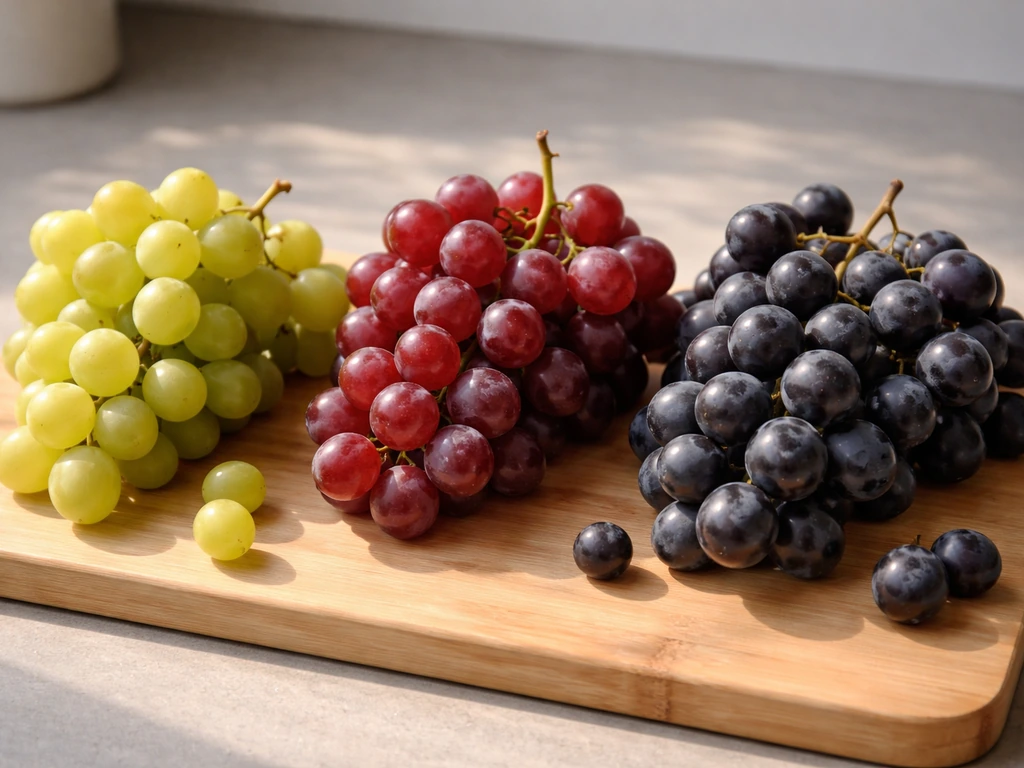
OSU groups Ohio-grown grapes into three categories: American cultivars (heritage varieties with Vitis labrusca ancestry), French-American hybrids, and European vinifera. For home growers, the recommendation is to focus on American cultivars and hybrids, in that order of safety. Vinifera are viable only in Zone 6b on the best sites with winter protection, and even then it is a serious commitment.
American cultivars: the reliable workhorses
OSU's list of American cultivars suggested for Ohio includes some of the most reliable backyard grapes you can plant anywhere in the Midwest. Concord is the big one: a blue-black, late-ripening variety that is genuinely cold-hardy and produces heavily. It is the quintessential Ohio backyard grape and is used for juice, jelly, and table eating. Fredonia is a midseason blue that ripens earlier than Concord, which makes it useful if your site has a shorter effective season. Steuben is a red midseason variety with good cold hardiness and a more complex flavor than straight Concord. Catawba is a classic Ohio wine and table grape, red and late-ripening, with strong hardiness. Delaware is a smaller red grape, midseason, and one of the oldest American cultivars still widely grown. Niagara is the white counterpart to Concord, late-midseason, with similar hardiness and a distinctly foxy, aromatic flavor.
French-American hybrids: more wine-focused options
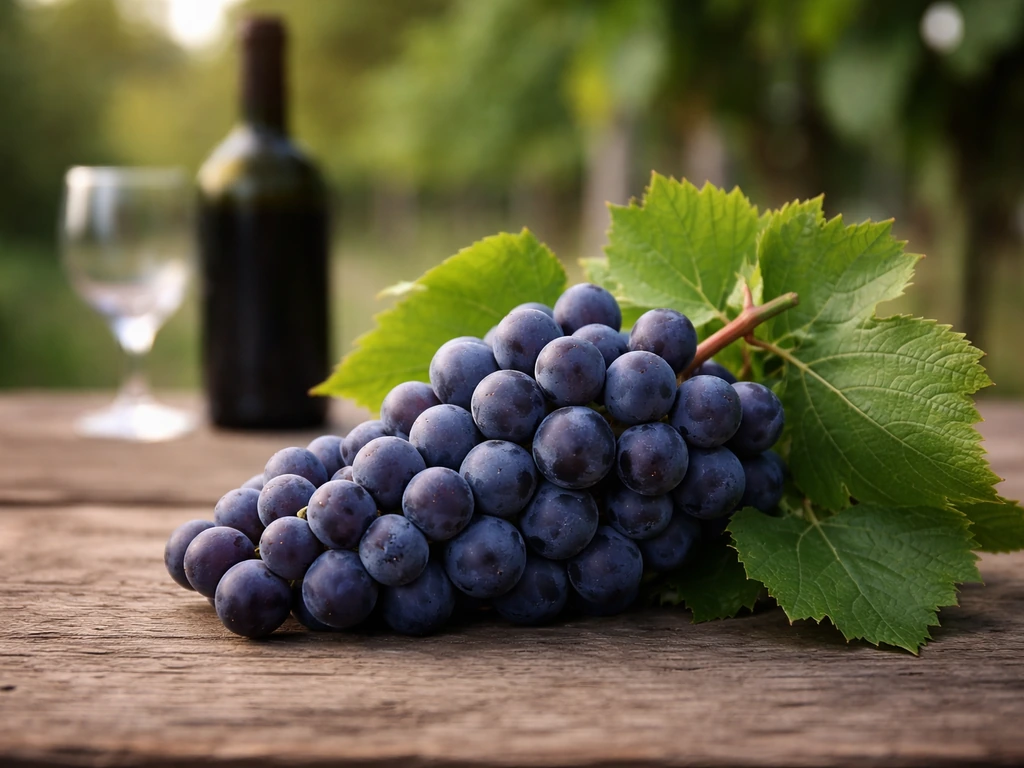
If you want to make table wine rather than juice or fresh eating, French-American hybrids are worth considering. Varieties like Chambourcin, Vignoles, Marquette, and Frontenac have been developed specifically for cold-climate wine production. They tend to be more cold-hardy than vinifera while producing grapes that make a more neutral, wine-style fermented product than the distinctly 'grapey' American types. OSU's rule of thumb for cultivar selection is that bud cold hardiness should be rated approximately 5°F lower than the coldest temperature expected in your zone, so match carefully to your zone before planting a hybrid. In Zone 5b, stick with the most cold-hardy hybrids (Frontenac, Marquette); Zone 6a opens up more options; Zone 6b near Lake Erie is where you can experiment with slightly less-hardy hybrids.
| Variety | Type | Color | Ripening | Best Use | Cold Hardiness |
|---|---|---|---|---|---|
| Concord | American | Blue-black | Late | Juice, jelly, table | Very hardy (Zone 5b+) |
| Fredonia | American | Blue | Midseason | Table, juice | Very hardy (Zone 5b+) |
| Steuben | American | Red | Midseason | Table, wine | Hardy (Zone 5b+) |
| Catawba | American | Red | Late | Wine, table | Hardy (Zone 5b+) |
| Delaware | American | Red | Midseason | Table, wine | Hardy (Zone 5b+) |
| Niagara | American | White | Late-midseason | Table, juice | Hardy (Zone 5b+) |
| Frontenac | Hybrid | Red/blue | Midseason | Wine | Very hardy (Zone 4+) |
| Marquette | Hybrid | Red | Midseason | Wine | Very hardy (Zone 4+) |
| Chambourcin | Hybrid | Red | Midseason | Wine | Moderately hardy (Zone 6a) |
| Vignoles | Hybrid | White | Midseason | Wine | Hardy (Zone 5b+) |
Setting up your site and getting vines in the ground
Site selection is where most home grape projects succeed or fail before a single vine is planted. Grapes need full sun, which means at least six to eight hours of direct sunlight per day, and ideally a south-facing or southwest-facing slope that maximizes heat accumulation. Avoid low spots, hollows, or areas surrounded by trees or structures on the south side. Those locations trap cold air and create frost pockets that will damage buds every spring.
Soil drainage is the other non-negotiable. Grapes will not tolerate wet feet. They want a well-drained, moderately fertile loam or sandy loam with a pH between 5.5 and 6.5. Heavy clay soils that hold standing water in spring will rot roots and kill vines. If that is what you have, either raise the planting bed or select a different location. A soil test before planting is worth the small cost: it tells you where your pH and nutrient levels stand and saves you from guessing on amendments.
For spacing, most American cultivars do well at 8 feet apart within rows, with rows spaced 10 feet apart if you are planting more than one row. Vigorous hybrids may want a bit more room. Plant bare-root vines in early spring, as soon as the ground can be worked but before buds have broken, typically late March to mid-April in most of Ohio. Container-grown plants give you a little more flexibility on timing but should still go in early to allow good root establishment before summer heat arrives. Plant at the same depth the vine grew in the nursery, set a stake immediately, and cut the vine back to two or three buds to force strong new growth from the base.
Trellising and training: keep it simple at the start
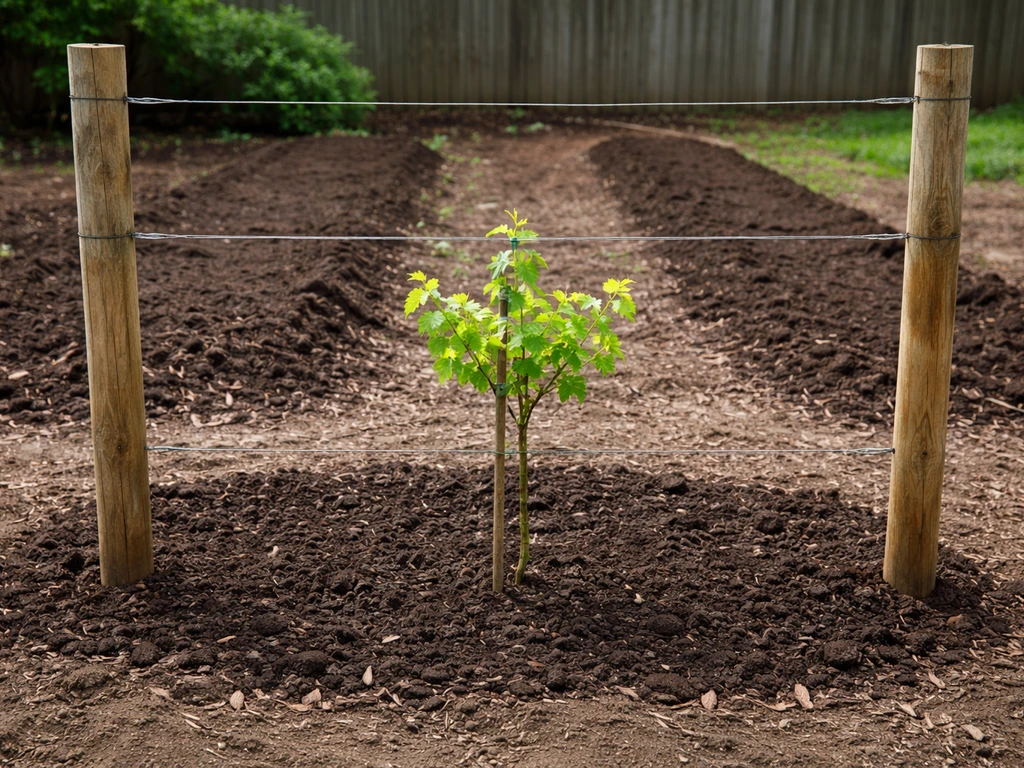
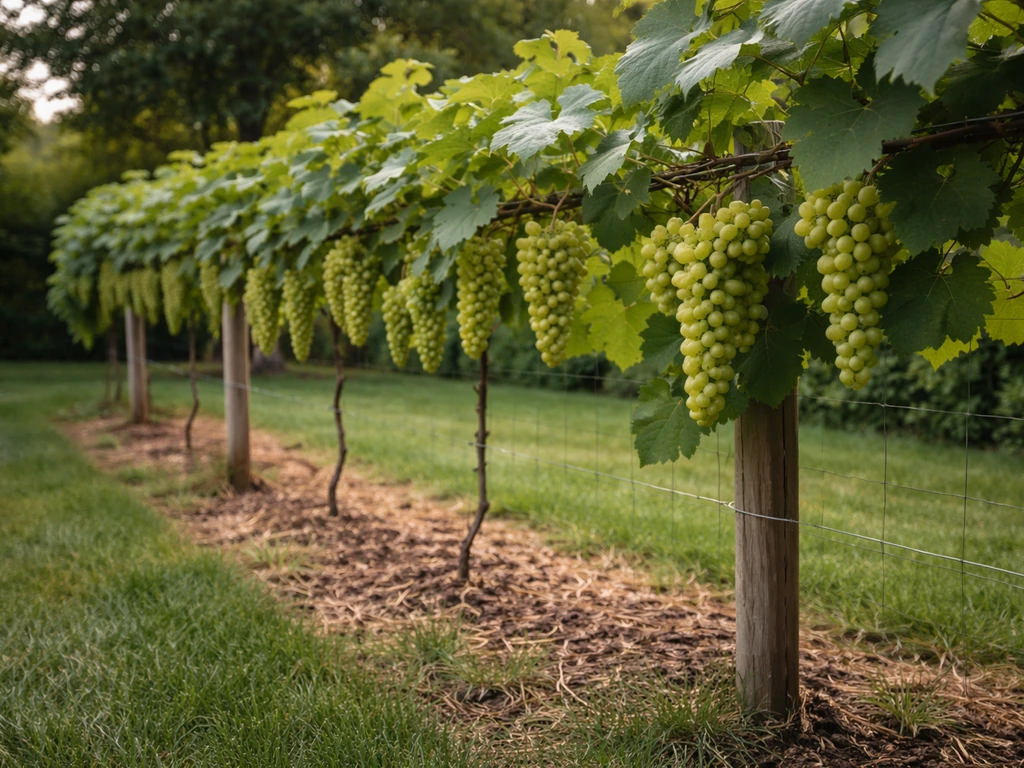
You need a trellis before you plant, not after. The most practical system for Ohio backyard growers is a simple two-wire bilateral cordon (also called a high cordon or Geneva Double Curtain-style setup depending on vine spacing). Set posts 8 to 10 feet apart, bury them at least 2 feet deep, and run two wires: one at about 3 feet and a top wire at 5 to 5.5 feet. The top wire is where you will establish the permanent cordon arms. End posts need to be heavier and braced or anchored because they take the most tension load.
Training is a multi-year process, and OSU is very clear that you should remove all fruit from the vine in years one and two. Every bit of energy the plant has in those early years needs to go into root development and building a strong trunk, not into ripening grapes. In year one, select the strongest, most vigorous shoot as your future trunk, stake it, and remove all other shoots from the base. Leave the leaves on the trunk shoot but remove lateral side shoots to keep growth focused upward. If that trunk shoot reaches the top wire by the end of the season (around 5 to 5.5 feet), pinch the tip and allow lateral shoots to grow horizontally along the wire in both directions to begin forming your two cordon arms.
In year two, continue extending those two main lateral arms along the top wire and pinch their tips to encourage secondary shoots to fill in along the cordon. Keep removing any fruit that tries to form. By the end of year two you should have a recognizable bilateral cordon structure. Year three is your first real fruiting year. At that point, during late-winter dormant pruning (late February through March), you prune the one-year-old lateral shoots back to three-, four-, or five-node spurs spaced evenly along the cordon, pointing downward. Those spurs produce the fruiting shoots that will carry your first real crop.
Year-round care in Ohio: what to do and when
Late winter and spring (February through May)
Do your dormant pruning in late February through March while vines are still fully dormant. This is your most important annual task for established vines. Prune back to your spur positions, remove dead or winter-killed wood, and assess how much of the vine survived the winter. Do not prune in fall because fall pruning can promote additional cold damage going into winter. Once buds begin to swell in April, watch the forecast closely: if temperatures are going to drop below 28°F after bud swell, you may need to cover young vines or run frost protection.
Bloom and early summer (May through June)
Bloom is your most critical window for disease management. OSU research shows that black rot, downy mildew, and powdery mildew all infect grapes in the window from the beginning of bloom through four weeks after bloom. After four weeks post-bloom, fruit becomes resistant to infection. This means your spray program needs to be running from just before bloom through late June or early July, not starting after you see symptoms. Starting fungicide applications at prebloom and continuing on a 7 to 14 day schedule through that critical window is the single most effective thing you can do for disease control. Japanese beetles also emerge in late June to early July; inspect vines regularly during that window and hand-pick beetles off if populations are manageable.
Summer through harvest (July through October)
Water consistently during dry periods, particularly in the first two years when roots are still establishing. Established vines are more drought-tolerant but will drop fruit quality if they are water-stressed during berry development. Aim for about an inch of water per week through irrigation or rainfall. Fertilize lightly: a light application of balanced fertilizer in early spring is usually enough for established vines in reasonable soil. Over-fertilizing, especially with nitrogen, causes excessive vegetative growth at the expense of fruit quality and disease resistance. Harvest timing depends on your variety's maturity group. Early varieties (under 95 days bloom-to-harvest) may be ready by late August; midseason varieties ripen in September; late and very-late varieties (Concord, Catawba, Niagara) typically hit October. Taste your grapes rather than relying purely on color.
Fall and winter prep (October through February)
After harvest and after the first hard frost has hardened the canes, any green tissue remaining will be killed. Allow the vine to go fully dormant naturally; do not rush it. In Zone 5b or colder parts of Zone 6a, if you are growing marginally-hardy varieties, you can protect canes by burying them. OSU specifically recognizes cane burial as a valid winter protection method for Ohio grapevines: you untie the canes, bend them gently to the ground, cover with soil or mulch, and uncover in spring before bud swell. This is a lot of work but it does protect canes from lethal cold if you are pushing the hardiness limits. For standard American cultivars and cold-hardy hybrids in Zone 6a and 6b, this level of protection is generally not necessary.
Ohio-specific problems and how to handle them
Fungal diseases: your biggest ongoing challenge
Ohio's hot, humid summers make fungal disease pressure a fact of life for grape growers. Black rot is probably the most damaging for home growers who skip their spray program: infected berries turn into hard, shriveled black mummies that drop or hang on the vine and become a source of reinfection the following year. For Ohio growers, OSU’s Fruit Pathology Laboratory also provides disease-focused guidance on grapes, including key issues like black rot and powdery mildew black rot is probably the most damaging for home growers. Sanitation matters here: remove mummified fruit and dispose of infected plant material rather than composting it. Powdery mildew thrives in warm, dry conditions with poor airflow, which means training your vines to keep the canopy open and removing leaves around clusters is not just aesthetic, it is disease management. OSU also recommends removing any wild grapes growing near your vineyard since they act as a reservoir for infection. Your fungicide timing for all three major diseases (black rot, downy mildew, powdery mildew) centers on the same critical window: prebloom through four weeks after bloom. Hit that window consistently and you will prevent the majority of fruit infections.
Japanese beetles and other pests
Japanese beetles are the most visible pest problem in Ohio vineyards. Adults emerge from late June into July and will skeletonize grape leaves if populations are high. For a small home planting, hand-picking is effective and avoids chemical residue concerns. The beetles are easiest to collect in the morning when they are sluggish. OSU notes that Concord vines rarely need special attention for Japanese beetles, while thinner-leaved cultivars may need more frequent monitoring. Grape berry moth is a secondary pest to watch for, and birds will become very enthusiastic about your crop as it ripens: bird netting installed before the fruit starts to color is the most reliable deterrent.
Winter kill and frost damage
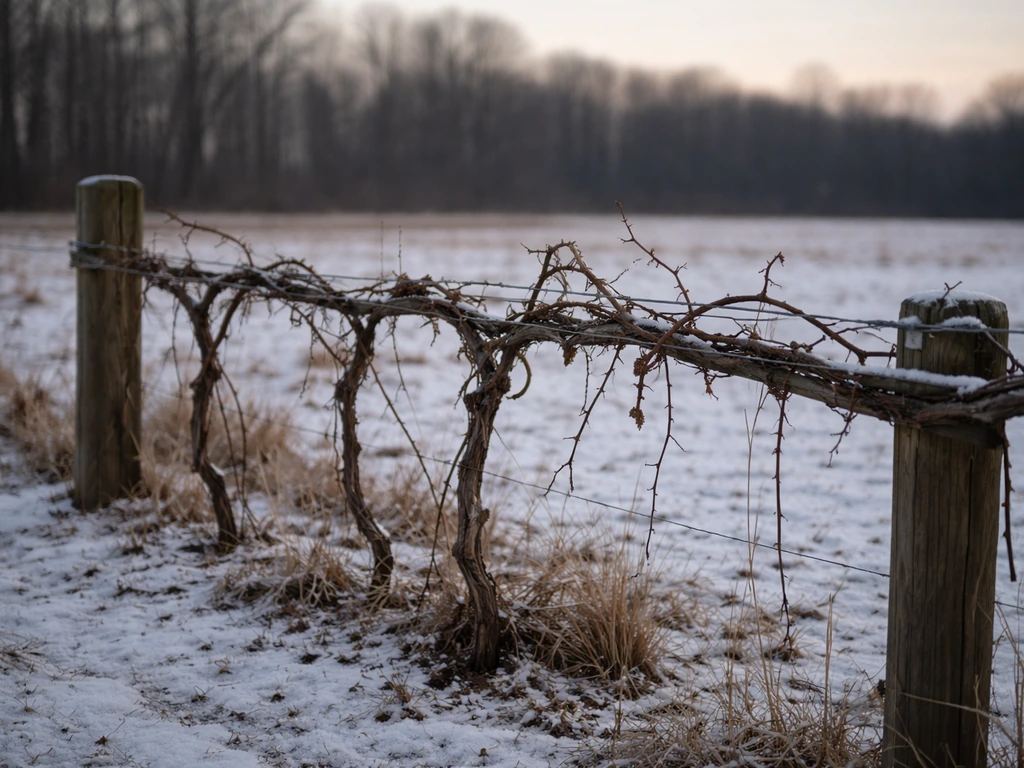
Winter injury is, as OSU states plainly, likely to occur at some point during the life of any Ohio grapevine. The question is whether your cultivar can survive it and regenerate from healthy wood. American cultivars like Concord and Fredonia handle Zone 5b and 6a winters without much drama. The more you push toward less-hardy hybrids or vinifera, the more winter damage you will see in cold years. When you find winter-killed canes in spring, prune them cleanly back to healthy wood. If the trunk is killed but the roots survive, you can retrain from new basal shoots, though this sets you back a year or two. This is exactly why OSU puts cold hardiness as the number-one selection criterion: the variety you choose sets your ceiling for how much winter trouble you will deal with.
What to do right now: your starter roadmap
If you are starting today in April 2026, you are right at the planting window for Ohio. Here is what a practical first move looks like:
- Figure out your zone: look up your ZIP code in the USDA hardiness zone map to confirm whether you are in Zone 5b, 6a, or 6b. That determines your cultivar options.
- Choose two or three vines to start: do not plant ten vines your first year. Start small, learn your site, and expand once you have the basics down. Concord is the safest first choice for most of Ohio.
- Order bare-root vines now if you haven't: late March through mid-April is the ideal planting window. If you have missed it slightly, container-grown plants from a local nursery will work through May.
- Build your trellis first: set posts and string your top wire before plants go in. Two posts and a wire is enough to get started for two or three vines.
- Do a soil test: contact your county OSU Extension office for a basic soil test kit. It takes two weeks but saves you from guessing on amendments.
- Plan your spray program: purchase a copper-based or sulfur-based fungicide approved for home use and mark your calendar for prebloom applications. You will not need it this year if you are planting now, but you will need it by year two.
- Remove all fruit in year one and two: I know it is tempting to let a cluster or two develop, but do not. The payoff of strong vines in year three is worth the patience.
Ohio is not an easy state for vinifera varieties, but it is genuinely well-suited for American cultivars and cold-hardy hybrids, and it has a rich history of both to prove it. If you want to see what neighboring states deal with in similar climates, growers in Michigan face many of the same cold-hardiness decisions but benefit from more lake-effect moderation along the western coast. To the west, Illinois gardeners navigate similar zone challenges with their own mix of American and hybrid options. Further north, Wisconsin grape growers lean heavily on the most cold-hardy hybrids developed specifically for shorter seasons, while Minnesota is where some of the toughest cold-climate varieties were bred and where cane burial and winter protection are nearly universal practice. Ohio sits in a genuinely favorable middle ground: cold enough to need cold-hardy varieties, but warm and long-seasoned enough to ripen them well. Pick the right variety, set up a proper trellis, stay on top of your disease timing, and you will have grapes worth harvesting.
FAQ
Can you grow grapes in Ohio without using fungicides?
You can plant and some years you will get berries, but skipping fungicides significantly increases losses from black rot, downy mildew, and powdery mildew in Ohio’s humid summer. If you want the “no-spray” approach, focus on the most disease-resistant American and hybrid cultivars you can find, keep the canopy open, remove infected berries and leaves, and expect you may still lose part of the crop in bad seasons.
What’s the easiest grape type for a first-time Ohio backyard planting?
American cultivars are the lowest-risk starting point, especially cold-hardy, reliable choices like Concord or Niagara. For many beginners, starting with one cultivar simplifies trellis planning, pruning decisions, and disease timing, compared with planting multiple varieties right away.
If my spring frost is late, can I reduce frost damage to grape buds?
Yes. In addition to choosing a site that delays bud break, protect very young vines or new growth when cold snaps follow bud swell (for example, covering plants overnight when forecasts drop near or below the mid-to-high 20s°F). Also avoid “early-warming” microclimates, like south-side walls or bare ground that absorbs heat quickly.
Should I plant on a slope or in a flat yard in Ohio?
Slopes and raised areas usually perform better because they reduce frost-pocket formation and help cold air drain away from the vines. If your yard is flat, try to locate grapes where water does not pool, and where they are not shaded by trees or structures that keep the canopy damp longer.
How do I know whether my problem is a cultivar mismatch versus poor site setup?
Winter-killed canes that return weakly, but only when the variety is marginal, usually points to hardiness mismatch. Chronic poor growth with standing water after spring rains points to drainage issues. If buds routinely fail after late freezes regardless of vine health, it suggests frost exposure more than soil or feeding problems.
What soil pH is best for grapes in Ohio, and do I need to adjust it before planting?
Aim for a pH in the 5.5 to 6.5 range. If your soil test shows you are outside that range, correct pH before planting rather than relying on fertilizer adjustments. Grapes can still grow in less-than-perfect conditions, but nutrient uptake and vine vigor often improve once pH is in range.
How much water should I give newly planted vines in Ohio?
In the first growing seasons, water steadily during dry spells, with an overall target around an inch per week from irrigation and rainfall combined. Watch the soil rather than the calendar, because sandy sites dry faster and clay sites can stay wet too long, so you may need to irrigate less frequently if drainage is already good.
Do I need to remove fruit in years one and two, or can I let the vine carry some grapes?
For the healthiest long-term vines, remove all fruit in years one and two. A small early crop can tempt you to “test” ripening, but it pulls energy away from building the trunk and cordons, which delays your first full harvest and can weaken winter resilience.
What’s the quickest way to tell if dormant pruning was done correctly?
After pruning, look for a clear spur system along the cordon with healthy wood selected and dead wood removed. In spring, the best sign is consistent bud break along the retained spurs rather than scattered weak growth from unexpected places. If only basal shoots appear, it often means the trunk or cordon suffered heavy winter damage and you may need retraining.
Can I grow vinifera (European grapes) in Ohio if I cover them in winter?
It’s possible but high risk. Even with protection, vinifera generally requires careful site selection and consistent winter management, because canes and buds can still be damaged in cold years. If your goal is reliable fruit without constant intervention, American or French-American hybrids are the more practical choice for most Ohio gardens.
When should I install bird netting for grapes in Ohio?
Install netting before berries start to change color (before ripening is obvious). Waiting until fruit is already colored often leads to quick damage because birds can start pecking as soon as sugars rise. Netting also needs to be properly secured at the ground so birds cannot push underneath.
How do I handle Japanese beetles on grapes without creating a bigger pest problem?
For small plantings, hand-picking early in the day can be effective and avoids chemical residue. Also monitor other pests like grape berry moth during the same general late June to July window, because the combined stress from beetles plus berry issues can cause disproportionate yield loss.
If my trunk dies but the roots survive, what should I do next spring?
You can often retrain from new basal shoots, but expect a setback of roughly a year or two. During training, remove weaker shoots and keep focusing energy on rebuilding a strong trunk and cordon structure rather than trying to force fruit too quickly.
Is it a good idea to plant multiple grape varieties in Ohio right away?
Usually it’s better to start with one proven variety or one tight selection set (for example, only American or only hybrids) so you can learn pruning, trellising, and disease timing without juggling different maturity groups. Once you have a working system and reliable winter survival, adding a second variety is easier because you already understand your site’s frost and humidity challenges.